

Table of Contents
Introduction
The Timeless Symbol of Strength and Leadership
Step into the early light of an African morning and the savannah feels like a cathedral. The air is still and cool, the grasses carry silver beads of dew, and far away guineafowl chatter like children who woke before their parents. In that hush, a lioness rises from tawny camouflage, stretches until her spine ripples, and lifts her head to scent the wind. It is not only a scene from wildlife television. It is a living emblem that humanity has carried in its imagination for thousands of years. The lion is more than a species. It is a symbol that suggests courage without cruelty, power tempered by responsibility, and a poised calm that comes from knowing where you stand in the great order of things.
When ancient storytellers looked for a face to place on courage, they found the lion. The mane caught the sun like a halo, and the deliberate walk suggested an awareness of borders that others respected without discussion. From caves and temples to coats of arms and city fountains, the lion appears wherever we have tried to depict leadership that protects rather than merely dominates. This symbolic gravity did not arise from chance. It grew from real encounters. People walking the grasslands saw that lions did not rush about wastefully. They chose their moments. They defended their families. They did not bark warnings like nervous sentries. They watched, they weighed, and then they acted. In a world where survival often rewards frenzy, the lion teaches an opposite lesson. True strength is economical. It is quiet until the right second.
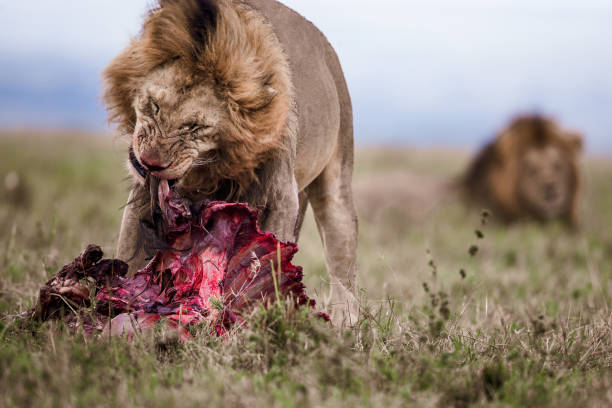
Yet the aura around lions is not built only on spectacle. Spend time with a pride and you will notice a rhythm that feels like a story told in chapters. There are naps that seem endless when heat presses down. There are whispers of movement at dusk, when shadows lengthen and the light turns to amber. There is the gentle practice of cubs as they stalk each other, learning balance and timing under the tolerant gaze of mothers. Even moments of tension, such as a dominant male standing over a disputed kill, carry a sense of order that prevents quarrels from spilling into chaos. This composure suggests not merely muscle and teeth but an intelligence adapted to life in a complex society, one that relies on cooperation as much as on strength.
Our admiration also springs from contrast. Lions live in a harsh environment where drought can empty waterholes and push herds far beyond yesterday’s routes. In such a place, to thrive requires flexibility and shared purpose. Watching a pride adjust to shifting prey movements, to the scent of rival males on an eastern wind, or to the sudden arrival of scavengers teaches us something about leadership through change. The pride moves as a loosely woven quilt, each member aware of the others, each thread tightening when the pattern demands. Leadership in this world is not a throne. It is a responsibility that passes through the group like a current, strongest where it is most needed, be that at the edge of a hunt or at the center of nursing and protection.
Perhaps the most compelling reason the lion became a timeless symbol is that it holds two truths comfortably. It is a fearsome predator and a gentle parent. It is a figure that can clear a field with a roar yet lie down for hours while cubs turn its tail into a toy. The archetype of strength that does not need to shout each minute, that can be both sentinel and nurse, reminds us of our own aspirations for balanced power. In every language where people have tried to name courage, there is a word that leans toward lionlike. In every era where leaders sought legitimacy, many tried to borrow the lion’s mantle. The animal did not ask for this role, but the role fits because the animal lives it. Calm in abundance. Force in proportion. Loyalty to kin. A presence that makes even silence feel full.
As modern observers, we can honor that symbolism while remembering the living creature behind it. The pride’s days are not parables written for us. They are the hard work of survival. When we watch a lioness roll an injured shoulder and still join a hunt, we are not witnessing a myth. We are seeing a being who must feed her family. When we see a territorial male pacing a boundary that exists only in scent and memory, we are not leafing through an emblem book. We are watching a manager of risk who knows that the difference between vigilance and negligence can be measured in cubs lost. The lion does not perform for human stories. It lives a story of its own, and perhaps that is exactly why it has become ours as well.
Why Lions Are Called “The King of Beasts”
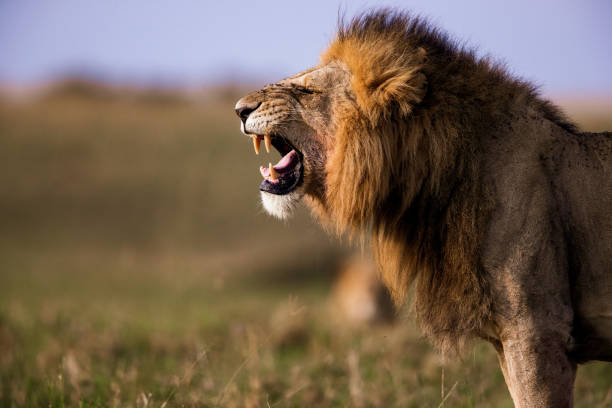
The phrase king of beasts did not emerge from a vote among animals. It arose from the human mind trying to make sense of what it saw. On the open plain, a lion is unmistakable. Broad head. Heavy shoulders. Eyes that do not skitter. A tail that ends in a neat tuft like a punctuation mark at the end of a sentence. When a male with a full mane steps into view, the impression is immediate. He looks dressed for state affairs. Even people who have never read a page about natural history feel that response. But the title is not only about looks. It is about a relationship between presence and place.
Consider the soundscape. A lion’s roar can carry across vast distances under certain conditions, traveling beyond ridges and through grass that flexes like an ocean. When that rolling call arrives at a herd of antelope, heads lift in a wave. When it reaches a rival male, it is not only a noise. It is a statement that says this ground is remembered, these families are accounted for, and this claim is not made lightly. In a realm where many predators rely on stealth and silence, the lion can afford declaration. Kingship here is not a crown. It is the rare ability to speak openly and be taken seriously.
Now look at social structure. Most big cats live solitary lives, meeting primarily to mate and then parting. Lions are different. The pride turns the landscape into a kind of neighborhood patrolled by relatives. Within this cooperative framework, responsibilities flow like water down a slope. Females synchronize efforts to hunt and to guard their young. Males stand at the rim of the group’s world and absorb the first shock of threats. Cubs weave through this network and learn by imitation as much as by instruction. A royal court is often imagined as a gathered family that stabilizes a realm. In the lion’s case, that is not metaphor. It is daily function.
The title also reflects a certain fearlessness that is not reckless. Lions sometimes confront competitors that other predators avoid. A pride may push hyenas off a carcass not because drama is appealing, but because ownership of food is ownership of tomorrow. An experienced lioness will evaluate odds with cool arithmetic. She will choose confrontation when it protects her investment and bypass it when risk exceeds reward. That tempered confidence, neither timid nor wasteful, looks to us like a form of leadership. It is leadership born of consequences. A poor decision can wound an experienced hunter and place cubs in danger. Good decisions present as quiet days in the shade, which is exactly the point.
There is also a human element in this coronation. For centuries, rulers borrowed the lion as a mirror. They placed it on banners and coins, carved it into thrones, and named regiments and cities after it. The animal’s calm stare offered a cloak of authority to those who sought it. In doing so, people carried the lion’s image far beyond its range, into places where few had heard an actual roar. The phrase king of beasts gained currency through that spreading iconography. It became a shorthand not only for strength but for a particular style of strength that promised protection and order.
If the title sits comfortably, it is because the lion carries it lightly. Kingship here does not mean tyranny. It means stewardship over a living territory that changes with rain and drought, with migrations and births. A king who devours his own people does not last. A lion that destroys the base of its prey cannot thrive. The lion’s inheritance is balance. By culling the weak and testing the fit, by defending space without senseless slaughter, the species maintains a dynamic that supports many others. That is not mythology. It is ecology wearing a crown made of behavior. The words king of beasts persist because they feel accurate, and they feel accurate because the animal behaves in ways that make the phrase seem like a description rather than a flattery.
Taxonomy and Classification
Scientific Name and Family Lineage
To understand the lion’s place in the family of life, imagine a branching tree that began deep in evolutionary time and has been putting out twigs ever since. On that tree, the lion’s leaf is labeled Panthera leo. The first word, Panthera, signals membership in a club of roaring cats. The second word, leo, is the specific name that distinguishes the lion from its cousins. Together they form a scientific address that anyone in the world can read the same way, regardless of language. This binomial name is more than a label. It encodes a hypothesis about relationships based on anatomy, genetics, and behavior.
The family to which lions belong is Felidae, the cat family. Within it, Pantherinae is the subfamily that houses the big roaring cats. The ability to roar arises from an elastic ligament and a specialized hyoid structure in the throat, which allow the voice box to vibrate at low frequencies with significant power. In lions this equipment becomes an instrument capable of sending a message across miles. The genus Panthera includes the lion, the tiger, the leopard, the jaguar, and the snow leopard. Shared features such as skull architecture, dental patterns, and genetic signatures bind this group together and tell a story of common ancestors that diverged as climates and continents shifted.
Inside Panthera leo, scientists describe populations and subspecies to capture geographic and genetic distinctions. The African lion represents the majority of the species, spread across several regions south of the Sahara. The Asiatic lion, confined to a small range in western India, carries a history shaped by isolation and near loss, a story we will return to when we discuss distribution and conservation. These designations are not academic quibbles. They inform how conservationists plan breeding programs, how they safeguard genetic diversity, and how they prioritize habitats for protection. A name becomes a map that guides action.
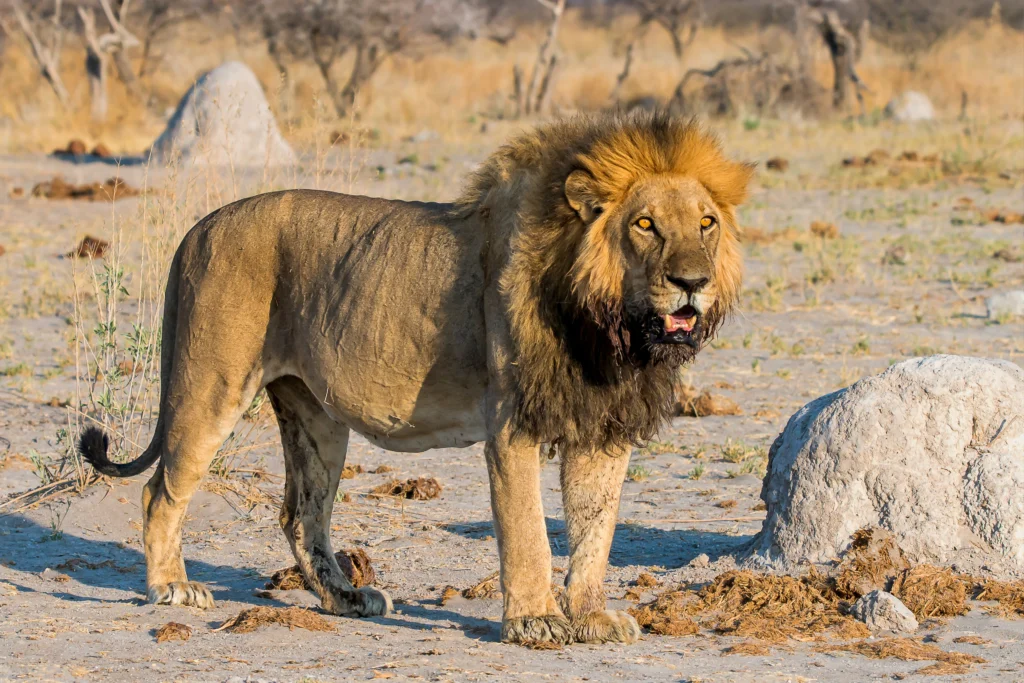
When we trace lineage backward, we meet ancestral cats that evolved as swift, muscular hunters adapted to open spaces and varied prey. Fossils and molecular clocks suggest that the Panthera line separated from smaller cats long ago, developing traits suited to taking large animals. Lions emerged as a special case within this story. Their path favored social living, with bodies and behaviors tuned to cooperative hunting and defense. The taxonomic label does not reveal all of that explicitly, but it points to a tradition of inquiry. Every time a researcher writes Panthera leo in a field notebook, they are also writing a question. How did this branch develop its peculiar strength. What traits does it share with its sister branches. Where do those shared traits end and the uniquely lion qualities begin.
Taxonomy is sometimes dismissed as a filing system, yet for living creatures it operates more like genealogy. Knowing your family tree does not tell you what to do today, but it explains why you might have your grandfather’s shoulders or your aunt’s voice. In the lion’s case, the family connection explains a skull built for powerful bites, paws that can fold back claws until needed, and eyes designed to gather scarce light at dusk. It also explains why the lion’s roar echoes a little of the tiger’s thunder and the leopard’s rasp. Each is playing variations on a theme written in the genome long before any of today’s prides drew breath.
Relation to Other Big Cats (Tiger, Leopard, Cheetah)
Place a lion beside a tiger, a leopard, and a cheetah and the similarities and differences read like a lesson in adaptation. The tiger, Panthera tigris, is the lion’s closest large cousin in terms of power. It carries the same deep chest and heavy forelimbs, the same capacity for explosive force, but it translates those traits into a solitary lifestyle in forests and wetlands rather than group living on open plains. The tiger’s stripes break its outline among reeds and trunks, allowing it to approach prey with near invisibility. Contrast that with the lion’s plain coat that blends with grass and dust, and the divergence becomes clear. The bodies rhyme, but the stanzas tell different stories.
The leopard, Panthera pardus, is smaller but astonishingly versatile. It is the poet of ambush, content to hunt alone across a wide sweep of habitats. Where a lion may depend on teamwork to subdue very large prey, a leopard relies on stealth and a dramatic burst, then often drags its prize into a tree to avoid theft. The leopard’s rosette pattern creates a dappled camouflage that disappears in leaf and shadow. If the lion carries the aura of a sovereign, the leopard carries the mood of a ghost. They share ancestry and some vocalizations, but their ecological roles diverge so sharply that they often coexist by partitioning time and space. In areas where they overlap, lions may displace leopards from kills, and leopards respond by shifting activity or choosing denser cover.
Then there is the cheetah, Acinonyx jubatus, a cousin outside the Panthera genus. It is the sprinting specialist, a creature redesigned for speed to a degree that almost seems improbable. Long limbs, a light frame, a flexible spine that acts like a spring, and semi retractable claws that grip like cleats turn the cheetah into a missile aimed at mid sized antelope. Where the lion bets on cooperation and power, the cheetah bets on acceleration and precision. Even the face tells the story with tear lines that may help reduce glare in bright light, the mark of a hunter who relies on eyesight to find and track a target at a distance. The cheetah’s voice is also different, closer to chirps and purrs than the deep roars of Panthera.
Comparisons among these cats underline how evolution can carve multiple answers from similar raw material. All four are carnivores. All four wear coats tuned to their environments. All possess retractable or nearly retractable claws for gripping at the decisive moment. Yet their strategies diverge so completely that they seldom compete directly at full strength. The lion owns the power lane, shaping its world through group tactics and territorial control. The tiger commands the ambush lane in dense habitats where solitude pays. The leopard slips through the cracks like water, succeeding by versatility. The cheetah rules the speed lane, taking prey that others might ignore because it can be caught by a burst rather than a brawl.
Understanding these relationships is more than a naturalist’s pastime. It guides conservation choices. Protecting lions means protecting open habitats that support large herds and allow group hunts. Safeguarding leopards often means ensuring corridors that link varied cover. Saving cheetahs requires landscapes where sprinting is possible and persecution is minimized. When we see how the cats relate, we also see how their futures interlock. A savannah rich enough for lions tends to be rich enough for many others, and a forest complex enough for tigers holds a library of life within it. The lion’s kin are not rivals in a human sense. They are fellow answers to the question of how to be a large cat in a changing world, and each answer helps explain the others more clearly.
Physical Characteristics and Adaptations
Body Size, Mane, and Coat Colors
To truly appreciate the lion’s grandeur, one must look closely—not just at the golden coat glimmering under the African sun, but at the engineering of nature that allows this predator to rule the savannah. Adult male lions typically weigh between 330 and 550 pounds (150–250 kilograms), with females being lighter at around 260 to 400 pounds (120–180 kilograms). Their bodies, muscular and compact, are built for power rather than endurance. Unlike cheetahs, lions cannot maintain long chases; instead, they rely on explosive bursts of speed lasting less than 10 seconds, reaching up to 50 miles per hour (80 kilometers per hour) when the situation demands.
Perhaps the most recognizable feature of the lion is the mane—a signature of masculinity, strength, and social standing. This thick halo of hair surrounding a male’s head and neck serves multiple purposes. It protects the neck during fights, signals maturity and dominance, and even influences attraction. Females are often drawn to males with darker, fuller manes—an evolutionary signal of health, higher testosterone, and resilience against parasites. Interestingly, manes can vary widely in color, from light blond to deep black, depending on genetics, age, and climate. In hotter regions, lions tend to have shorter, lighter manes, possibly to aid in heat dissipation, while cooler environments allow longer, denser manes.
A lion’s coat color blends perfectly with its habitat—an elegant camouflage of tawny gold, sandy beige, or silvery gray, allowing them to disappear against the dry grass of the savannah or the dust of a waterhole. Cubs, however, are born with faint rosettes or spots, remnants of their shared ancestry with leopards, which fade as they mature. These markings act as natural concealment during their vulnerable early months, helping them remain hidden from predators when mothers are away hunting.
Physically, lions are designed to combine strength, stealth, and balance. Their forelimbs are stocky with large muscles that deliver incredible pulling power—perfect for tackling heavy prey such as buffalo or zebra. The paws, equipped with retractable claws up to 1.5 inches long, are like nature’s grappling hooks, ensuring a firm grip during hunts. Their shoulders and back support the force of sudden pounces, and their tails, ending in that distinct tuft of dark fur, act as stabilizers during running and as communication tools within the pride. A subtle flick or wave of the tail can signal mood, direction, or alertness to others.
Their eyes are another masterpiece of adaptation. With round pupils and a reflective layer behind the retina called the tapetum lucidum, lions possess exceptional night vision—roughly six times more sensitive to light than humans. This gives them a massive advantage during nocturnal hunts, allowing them to move silently in low light where prey feels safest. The golden or amber hue of their eyes, often catching light at sunset, contributes to their mythical, almost regal presence.
The lion’s teeth are specialized tools for carnivory: long canines for gripping and suffocating prey, and carnassial teeth—sharp molars that act like scissors—to shear flesh cleanly. Combined with a jaw pressure of over 650 psi, these tools make quick work of even large carcasses. Despite their fearsome dentition, lions cannot chew in the human sense; they use their tongues, covered with tiny backward-facing spines called papillae, to scrape meat off bones like natural sandpaper.
Altogether, the lion’s physique represents an equilibrium between brute power and calculated economy. Every feature—mane, claw, muscle, and whisker—contributes to its efficiency as both hunter and protector. When viewed up close, it becomes clear that the lion is not simply “king” by legend; its very biology is built for command.
Differences Between Males and Females
While male lions often steal the spotlight with their majestic manes, it’s the females—the lionesses—who are the heart and muscle of the pride. Understanding their differences reveals the delicate balance of responsibilities within lion society and the evolutionary strategy that keeps the species thriving.
Male lions are the defenders. Their imposing size, averaging 30% heavier than females, gives them a significant advantage in combat. The mane not only offers a regal appearance but serves as a form of armor, cushioning blows to the neck and shoulders during territorial battles. Males’ broad skulls and stronger forelimbs provide leverage when fighting off rivals or when seizing control of a pride. Their presence alone—often marked by roaring at dawn and dusk—acts as a deterrent to intruding males or opportunistic scavengers.
Females, on the other hand, are the strategists and providers. They handle nearly all the hunting, using cooperation and precise timing to corner prey. Their sleeker, lighter bodies make them faster and more agile, essential for flanking or ambushing animals such as wildebeest, zebra, and antelope. A group of lionesses works like an orchestra, each knowing when to stalk, when to sprint, and when to strike. The result is a finely tuned hunting machine perfected over generations.
Behaviorally, the contrast extends beyond physical roles. Males may roam or form coalitions of brothers and cousins, working together to control and defend prides. These coalitions are fascinating social units—alliances that can last years and dramatically influence pride genetics. A coalition that secures a pride may stay for two to four years, during which they sire all the cubs before being ousted by stronger males.
Lionesses, in contrast, maintain lifelong bonds within their birth pride. They raise cubs communally, share responsibilities, and even synchronize births, ensuring better chances for all cubs to survive. Their loyalty to territory and kinship is one of the key factors behind the lion’s social success. Males may come and go, but the female lineage is the thread that binds generations.
Differences also appear in lifespan and mortality. In the wild, male lions live on average 8–10 years, often cut short by combat or injury, whereas females may reach 14–16 years, benefiting from less frequent fighting. Males spend much of their lives either competing for dominance or patrolling territory, whereas females focus on continuity—feeding, nursing, and maintaining the stability of the pride.
Even communication reflects this divide. Males roar to assert dominance across distances; females use softer sounds—grunts, purrs, and moans—to coordinate hunts or call cubs. Yet in crucial moments, their roles merge seamlessly. When danger threatens, both sexes unite, defending the pride with synchronized ferocity that no other land predator can match.
Adaptations for Hunting and Survival
Lions are apex predators, but their mastery of hunting is no accident. It is a product of countless generations of evolutionary fine-tuning—physical, behavioral, and sensory adaptations working in harmony. Every hunt on the plains tells a story of these refinements in action.
First, their muscular structure is optimized for short, explosive energy bursts rather than endurance. Lions do not chase endlessly; instead, they stalk with patience, often closing within 30 feet before launching a charge. Their powerful hind legs propel them forward in a single, silent burst that can cover nearly 40 feet (12 meters) in one leap. The combination of stealth, strength, and acceleration makes them lethal within a short radius.
Their claws and paws are tools of precision. During a pounce, lions extend their claws to anchor themselves onto prey, ensuring that the victim cannot easily shake free. These claws, usually hidden within protective sheaths to keep them sharp, are also essential for climbing, gripping, and even marking territory by scratching trees.
Then comes the element of teamwork. Lions are the only truly social big cats, and this sociability is a powerful weapon. Lionesses coordinate ambushes, each playing a role in surrounding or driving prey toward others. Communication through subtle tail flicks or eye contact keeps the group aligned without alerting targets. The success of such coordination has allowed lions to tackle animals far larger than themselves—buffalo, giraffes, and even young elephants.
Their senses are another marvel of adaptation. Exceptional night vision gives them an edge over most herbivores, allowing hunts to begin when darkness cloaks the savannah. Their sense of smell detects prey, carrion, and rival scents miles away. Their hearing can pick up the rustle of movement or the low-frequency calls of other lions, helping them navigate vast territories without direct contact.
When the hunt is over, survival depends on hierarchy and cooperation. Dominant males feed first, ensuring their strength for defense, followed by females and then cubs. It may seem unfair, but this system ensures that protectors remain strong enough to safeguard the pride. Even scavenging plays a role in survival. Lions are opportunistic; if a hyena or vulture leads them to a carcass, they won’t hesitate to claim it. Their physical presence alone is enough to drive away most competitors.
Adaptations also extend to energy conservation. Lions spend up to 20 hours a day resting, minimizing energy expenditure in the heat. This lifestyle is not laziness—it’s strategy. By conserving energy for critical hunts or territorial defense, lions optimize their chances of success while surviving in a climate where water and prey can fluctuate dramatically.
In the grand design of evolution, the lion’s adaptations are a testament to nature’s efficiency. Nothing is wasted; every trait serves purpose. The roar that warns rivals, the golden fur that melts into grass, the patience before the pounce—all of it ensures that the lion remains both feared and admired as the ultimate symbol of wild mastery.
Lion Behavior and Social Structure
Life in the Pride
When you watch a pride of lions scattered across a sunlit plain, it feels almost like witnessing a living village. Each lion has a place, a rhythm, and a reason. The pride is not a chaotic group of predators; it is an organized community where cooperation ensures survival. Typically, a pride consists of five to fifteen individuals, though some grow to over thirty when prey is abundant and conditions are favorable. At its core are related lionesses—sisters, mothers, aunts, and daughters—forming the backbone of the pride. Their relationships are built on years of shared hunts, mutual defense, and cub rearing, a level of coordination unseen in other big cats.
The males’ role is both simpler and more dramatic. Adult males—usually brothers or cousins forming coalitions—join or control a pride by challenging and displacing previous rulers. Their reign can last anywhere from two to four years, depending on their strength and unity. During this time, they protect the pride’s territory, father cubs, and defend their lineage against intruding males. When new males take over, they may kill existing cubs, forcing females back into estrus so they can sire their own offspring. It sounds brutal, but in evolutionary terms, it ensures the success of the new rulers’ genes.
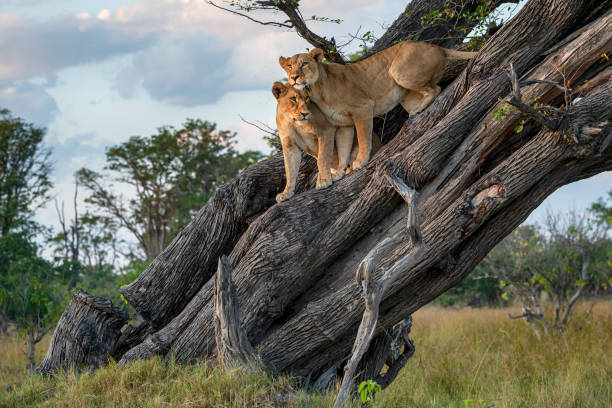
Daily life in the pride follows a gentle pulse. During the day, lions rest—often piled together in affectionate heaps beneath acacia trees or under tall grass. These moments of calm are punctuated by bouts of grooming, where lions lick and clean one another’s faces and coats. This allogrooming is more than hygiene—it is social glue, strengthening bonds and reducing tension. As dusk approaches, the pride awakens. Eyes glow in the fading light, tails flick lazily, and low contact calls ripple through the group as they begin to coordinate their movements. Soon, the hunters—usually the females—will rise and spread out like shadows.
The beauty of pride life lies in cooperative behavior. Lionesses synchronize hunts, nurse each other’s cubs, and share kills. Their cubs play together, practicing skills that will define their adult lives. The pride also provides safety in numbers. While hyenas or leopards might challenge a lone lion, few predators dare approach an entire pride. The collective strength ensures that even in lean times, they can defend kills and protect young.
But the pride’s harmony is fragile, balanced by hierarchy and necessity. Scarcity can lead to tension—especially around food. After a successful hunt, growls and swats may erupt as dominant individuals claim their share first. Yet even these quarrels rarely escalate to serious injury; social stability is too valuable to risk.
Every pride carries a shared memory, a silent archive of migrations, waterholes, and past conflicts. Older lionesses, the matriarchs, often lead by knowledge rather than force. They remember where prey herds migrate during droughts and where danger lingers. These memory keepers ensure the pride’s continuity across generations. In their world, experience is the truest currency of survival.
The pride system has made the lion not just a predator, but a model of social evolution—proof that even in the harshest environments, cooperation can outperform isolation.
Roles of Males, Females, and Cubs
Within the pride, every lion has a distinct purpose. Their division of labor reflects not dominance, but a carefully tuned strategy of survival. Females are the architects of stability—the hunters, caregivers, and decision-makers. Their bond to one another forms the foundation of the group, and their collective intelligence shapes every success the pride achieves. They are expert strategists, using coordinated tactics that rival military precision. When stalking prey, one female may act as a “driver,” flushing animals toward hidden “ambushers” waiting downwind. Timing and trust are everything. A single misstep can waste precious energy, and in the savannah, wasted effort can mean hunger.
While the lionesses feed the pride, the males protect it. Their massive size and strength make them formidable defenders. They patrol borders, roaring at dawn and dusk to warn intruders that the land is claimed. These roars are not just bluster—they are strategic deterrents, communicating strength over miles. A coalition of males can hold territory longer than a single one, sharing patrol duties and defense. But life as a male lion is perilous. From the moment they reach maturity, they are forced out of their natal pride to wander and form alliances. Many never succeed in taking control of a pride, and those who do often pay for it with injuries or death.
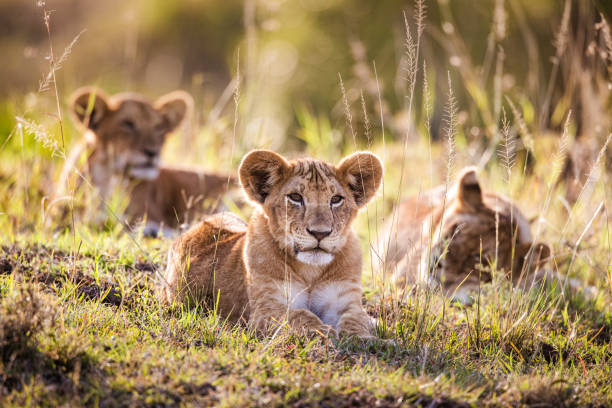
The cubs, meanwhile, are the future. They represent hope in a landscape where mortality runs high. Female lions synchronize births, creating a shared nursery. This communal care means that if one mother dies, others will nurse her cubs—an evolutionary insurance policy. Cubs spend their early months hidden in tall grass, shielded from predators and rival males. They emerge gradually, first playing near the den, then shadowing adults during hunts. Play may look frivolous, but it teaches vital skills—stalking, pouncing, teamwork, and balance. Through these games, cubs learn how to be lions.
Life for cubs, however, is not easy. More than half do not survive to adulthood. Starvation, disease, and takeovers by rival males pose constant threats. Yet those that do survive become part of an intricate cycle of renewal. Males will one day wander to find their place in the hierarchy; females will remain, becoming the next generation of hunters and mothers.
This interlocking system of roles gives the pride its strength. It is not the dominance of one sex over the other, but the synchronization of purpose—the protectors and providers working in silent agreement to preserve their lineage. In the wild, such unity is rare. In lions, it is everything.
Social Bonds and Hierarchy
The social world of lions is not a monarchy ruled by a single figure, but a network of shifting alliances and relationships. Hierarchy exists, but it’s fluid and context-dependent. Among lionesses, dominance is often based on experience and age rather than brute force. The matriarch—usually the oldest female—commands respect not because she fights for it, but because her wisdom guides the pride through tough times. Her leadership is quiet, rooted in memory and coordination rather than control.
Among males, hierarchy is far more volatile. When a coalition of males takes over a pride, their unity defines their success. The dominant male may breed most frequently, but loyalty within the coalition is vital. They fight together, share kills, and often sacrifice for one another in battles against rivals. However, as time passes and challenges mount, alliances can fray. Younger males within the coalition may eventually test their leader, leading to subtle power shifts or open conflict. This natural succession ensures that only the fittest and most capable continue leading, preserving genetic vigor.
Social bonds among lionesses are far more enduring. They spend years grooming one another, rubbing heads, and resting in close contact. This affectionate behavior maintains emotional cohesion. Researchers have found that lions who groom and rest together are more likely to cooperate effectively during hunts and defense. These bonds even extend across generations, as daughters inherit social ties from their mothers, maintaining an unbroken chain of connection.
Communication underpins this hierarchy. Lions use a vast range of sounds—roars, grunts, growls, purrs, and moans—to express rank, mood, or reassurance. A low grunt may serve as a check-in call across tall grass; a gentle chuff signals greeting. Physical gestures also play a role: nuzzling conveys trust, while tail flicks indicate alertness or irritation.
Unlike the rigid dominance systems found in some species, lion society thrives on cooperative flexibility. Each individual understands their part in the collective. When the pride eats, when it moves, and when it fights—these are decisions made not by command, but through instinctive understanding of shared purpose. The hierarchy ensures order, but the bonds ensure harmony.
Ultimately, the pride is more than a hunting group—it is a living legacy, a fusion of family, memory, and instinct. Their behavior mirrors an ancient truth: survival in the wild is not achieved by isolation but through unity bound by loyalty and understanding.
Diet and Hunting Techniques
Common Prey and Feeding Habits
When twilight paints the African sky in gold and crimson, the savannah begins to stir. Herds of wildebeest huddle together, zebras flick their tails nervously, and gazelles freeze at the faint rustle of grass. Somewhere in that golden half-light, lionesses are rising—stretching, yawning, and scanning the horizon. Nightfall is the lion’s domain. With vision finely tuned for the dark, they step into the shadows like rulers returning to court.
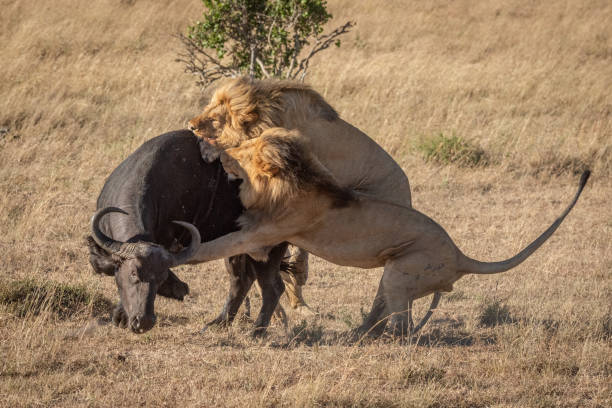
Lions are obligate carnivores, meaning meat is not a choice—it’s a necessity. Their menu, however, depends heavily on habitat and opportunity. In the open savannahs of East Africa, zebras, wildebeests, and buffaloes dominate the list. In more wooded areas, warthogs, antelopes, and giraffes are common prey. When larger game is scarce, lions will even hunt smaller animals like hares or birds, though the energy return is modest.
A typical adult lion consumes between 10 and 15 pounds (4.5–7 kilograms) of meat per day, but can gorge on up to 70 pounds (32 kilograms) in one sitting after a successful kill. The digestive system of a lion is remarkably efficient—designed for large but infrequent meals. They feast until their bellies swell and then rest for days, digesting in peace under acacia shade.
Interestingly, lions are opportunistic eaters. They do not shy away from stealing kills from other predators, especially hyenas, cheetahs, or leopards. Their sheer power and numbers allow them to dominate the carcass hierarchy. This behavior, while ruthless, conserves energy—a critical advantage in a land where missed hunts can mean starvation.
Feeding order follows strict rules. Males usually eat first, asserting dominance over the kill, followed by females and then cubs. To human eyes, this may appear unfair, but in ecological terms, it ensures the pride’s strongest defenders remain ready for threats. Yet mothers are protective; when food is plentiful, they’ll stand between cubs and impatient males, ensuring the little ones get their share.
What’s remarkable is that lions often display a sense of restraint when feeding. They do not hunt aimlessly or kill for sport. Their predatory instincts are guided by necessity and precision—take what is needed, conserve energy, and maintain balance within their territory. In this way, lions act as both takers and caretakers of their ecosystem’s health.
Teamwork in Hunting
The most iconic image of lion life is the coordinated hunt—a spectacle of intelligence, communication, and timing. Unlike solitary predators, lions hunt as a team, often in groups of two to six females, occasionally joined by males for larger prey. Each hunt unfolds like a silent ballet where instinct and experience merge.
Lionesses begin by assessing the herd. They observe from a distance, identifying weak, old, or isolated individuals. Their approach is patient and strategic. Using the tall grass as cover, they spread out, forming a semicircle. One or two females act as “drivers,” subtly herding prey toward hidden “ambushers” positioned downwind.
When the moment arrives, the silence shatters. A lioness bursts forward, muscles coiling with perfect synchronization. Panic ripples through the herd as dust clouds rise. Within seconds, the ambushers pounce. The target is seized—often at the throat or nose to suffocate quickly. It’s brutal but efficient, minimizing suffering and energy loss.
The success rate of hunts varies by environment and prey type, but coordinated efforts often yield results where solitary attempts fail. Studies show that group hunting increases success by up to 30%, especially for large prey like buffalo. This cooperation is not only practical—it reinforces the social bonds that define the pride. After a kill, lionesses call softly to others, summoning cubs and even distant males with short grunts and low roars.
Males rarely hunt, but their presence can be crucial. When they do join, their size and strength allow the pride to tackle enormous animals—buffalo, hippos, or even giraffes. However, their approach is less stealthy, and often the females prefer to hunt alone to maintain surprise. Still, after the kill, males use their authority to feed first, a dynamic that, while seemingly harsh, is accepted as part of natural order.
The teamwork of lions extends beyond hunting—it is an expression of their social intelligence. They learn roles through observation, perfect strategies through practice, and communicate with a sophistication that suggests understanding rather than mere instinct. It’s no exaggeration to say that a lioness leading a coordinated hunt exhibits something close to tactical thinking—a legacy passed down through generations.
Scavenging and Food Sharing
Though celebrated as hunters, lions are also highly skilled scavengers. This dual strategy ensures survival during lean times. If a lion hears hyenas laughing in the distance, it often investigates—not out of curiosity, but calculation. A carcass guarded by scavengers can easily become theirs, and few animals dare challenge an arriving pride.
This scavenging behavior is not a sign of weakness. It’s efficiency at its finest. By reclaiming carcasses from hyenas or leopards, lions minimize risk and energy expenditure. In ecosystems where competition is fierce and hunts sometimes fail, scavenging can provide up to 40% of a lion’s diet.
Within the pride, food sharing reveals a complex web of negotiation. The strongest—usually dominant males—eat first. Lionesses and cubs follow in descending order of rank and size. But beneath this seemingly rigid system, moments of tenderness appear. Mothers shield cubs with their bodies, letting them sneak bites even when larger lions grow restless. Occasionally, lionesses will allow unrelated cubs to feed beside their own, emphasizing that communal care extends even to mealtime.
Once the feeding is over, lions may stay near the kill for several days, guarding it from vultures and scavengers until little remains but bones. These carcasses, stripped clean, become nourishment for countless smaller creatures—jackals, beetles, and microbes. Thus, even in death, the lion’s kill sustains life, turning a single hunt into a cycle that feeds the entire ecosystem.
In many ways, scavenging and food sharing symbolize what it means to be a lion: strength balanced by strategy, dominance tempered by duty, and survival intertwined with generosity. The pride does not waste; it shares. The lion takes what nature offers, but it also gives back—its leftovers nourishing the soil of the savannah it rules.
Habitat and Distribution
African Savannahs and Grasslands
To understand lions, one must first understand their stage—the vast African savannah. Stretching across countries like Kenya, Tanzania, Botswana, and South Africa, these landscapes are a mosaic of golden grasslands, scattered acacia trees, and distant horizons. Here, the lion’s tawny coat blends so perfectly that it can vanish into the landscape with a simple crouch. This environment is both beautiful and brutal—a place where life and death exchange hands daily under the burning sun.
The African savannah offers what lions need most: space, prey, and visibility. Open plains make it easier to spot herds and coordinate hunts. Grass tall enough to conceal, yet thin enough to see through, provides a balance between cover and communication. The abundance of herbivores—from wildebeests to zebras—creates a dependable food supply, making the savannah the lion’s ancestral kingdom.
But survival here is not effortless. During dry seasons, prey moves in great migrations, forcing prides to travel vast distances or endure hunger. The environment demands adaptability. Lions often rest through the day’s heat, becoming active at dusk when temperatures drop. This nocturnal rhythm protects them from the blistering sun while granting them the advantage of their superior night vision.
Each pride maintains a territory ranging from 20 to 400 square kilometers, depending on prey density and the number of rival prides nearby. The boundaries are not marked by fences but by scent and sound. Males patrol these invisible borders, roaring at night to declare ownership. The echoes of these roars—deep, rhythmic, and commanding—travel across miles, warning intruders that they are approaching claimed ground.
In East Africa’s Serengeti and Ngorongoro Crater, lions thrive in some of the most studied ecosystems on Earth. The abundance of prey and protection from poaching have allowed prides here to flourish. Yet in many other regions, human expansion is shrinking their territory. What once was endless grassland is now fragmented by roads, villages, and farmlands, pushing lions closer to people—and to conflict.
The African savannah remains both the lion’s home and its battlefield. It is where their beauty is most visible and their survival most tested. To see a lion at dusk, mane glowing in the fading sun, is to witness not just an animal, but the heartbeat of the wild itself—ancient, patient, and enduring against time’s erosion.
Asiatic Lions in India’s Gir Forest
Far from the African plains, in the dry deciduous forests of western India, lives a rare and remarkable cousin—the Asiatic lion (Panthera leo persica). Once roaming from the Middle East to northern India, these lions were hunted nearly to extinction by the early 20th century. By 1907, fewer than 20 individuals remained. Today, thanks to decades of conservation in Gir National Park, Gujarat, their population has rebounded to over 600—a fragile but inspiring recovery.
The Asiatic lion differs subtly from its African relatives. It is slightly smaller, with males averaging around 350 pounds (160 kilograms), and sports a shorter, sparser mane that reveals its ears. This adaptation may be due to the warmer, denser forests where excessive hair could trap heat. They also have a distinct belly fold of skin, a characteristic unique to their subspecies.
Unlike the open savannah, Gir Forest is a tapestry of teak trees, scrubland, and rocky hills. Here, lions have adapted to a more wooded lifestyle, relying on stealth rather than open pursuit. Their prey includes chital deer, sambar, nilgai (blue bull), and wild boar, though they occasionally prey on livestock—bringing them into conflict with local communities. Remarkably, however, coexistence between people and lions in Gir has been largely successful, thanks to compensation programs and community involvement in conservation.
Socially, Asiatic lions form smaller prides, often consisting of two to five females and one or two males. The limited prey base and denser environment make large groups less practical. Despite their smaller scale, their behavior mirrors that of African lions—cooperation in hunting, communal care for cubs, and strong bonds among females.
Conservation in Gir stands as one of the world’s greatest wildlife success stories. From the brink of extinction, these lions have reclaimed their forest, symbolizing resilience and harmony between nature and people. Yet, the population’s confinement to a single area remains a concern. Disease outbreaks, forest fires, or habitat loss could still devastate their fragile comeback. For this reason, India’s wildlife authorities are developing relocation projects to establish new populations in other sanctuaries.
The Asiatic lion is not just a survivor—it is a living reminder that humanity, when choosing stewardship over exploitation, can rewrite even the bleakest chapters of nature’s history.
Territory and Range
A lion’s territory is more than land—it’s the physical expression of pride identity. It encompasses hunting grounds, water sources, den sites, and paths etched by generations. To control a territory is to ensure the pride’s survival, and maintaining it requires constant vigilance.
Male lions are the primary defenders. Their roars echo across the plains, a low thunder that carries both warning and challenge. Each roar announces, “This land is taken.” They reinforce their claims by scent marking—spraying urine on bushes, scratching trees, and rubbing their manes against vegetation to leave chemical messages. These invisible signposts inform intruders of ownership long before a confrontation occurs.
The size of a lion’s range depends on prey availability and pride size. In prey-rich regions like the Serengeti, territories can be relatively small—around 20–40 square kilometers—because food is abundant. In arid zones, where herds are scattered, territories may stretch over several hundred square kilometers. Lions are not nomads by choice; they settle where the balance of resources supports stability.
Conflicts between prides are fierce. When intruding males challenge a resident coalition, the outcome is often brutal. Battles may last minutes but determine years of dominance. Victorious males gain mating rights and territory, while defeated ones are forced into exile—wandering alone or forming new coalitions in search of opportunity.
Interestingly, boundaries between prides aren’t always rigid walls. During droughts or migrations, territories may overlap temporarily, with prides avoiding each other through vocal cues rather than direct fights. This dynamic balance keeps bloodshed minimal and allows the ecosystem to function.
In many ways, the pride’s territory mirrors human concepts of home, security, and legacy. Each roaring male is both guardian and historian, defending the memory of generations before him. Every pawprint pressed into the dust is a signature in an unwritten map that stretches far beyond what the eye can see.
Reproduction and Cubs
Mating Rituals and Gestation Period
In the kingdom of the savannah, where survival demands both strength and strategy, reproduction is not a casual event—it’s a carefully choreographed ritual. Lions don’t mate according to seasons like many animals; instead, they breed throughout the year, depending on food availability and pride stability. Yet when mating begins, it becomes the center of their world for several days.
When a lioness comes into estrus, her behavior changes subtly at first. She rubs her body against pride members, rolls on the ground more frequently, and releases scents that announce her readiness. A dominant male—often one of the coalition leaders—pays close attention. His demeanor shifts too; he becomes more alert, more possessive, sometimes growling at rivals who approach too closely. Once the female accepts his presence, the two begin a ritual that seems both fierce and tender.
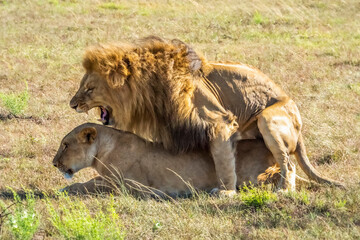
Mating occurs repeatedly—every 15 to 30 minutes over a span of several days, sometimes resulting in more than 200 copulations. This frequency ensures successful fertilization, as ovulation in females is often triggered by the act of mating itself. During this time, the pair isolates themselves from the pride, choosing a quiet spot under bushes or in the shade of acacia trees. They rest between sessions, with the male standing guard while the female dozes.
The act itself is brief and intense. The male’s barbed penis stimulates ovulation but also causes pain, prompting the female to snarl or swipe immediately after mating—a paradox of nature’s design. This roughness, though unsettling to human observers, is nature’s way of ensuring continuity. The temporary seclusion between the pair creates a brief partnership, one driven by instinct rather than affection, yet deeply symbolic of life’s persistence amid struggle.
After mating, the female returns to the pride, and life resumes its rhythm. If conception occurs, the gestation period lasts around 110 days (about 3.5 months). She will separate from the pride once more to give birth, seeking a secluded den hidden in tall grass, rocky crevices, or dense bushland. The secrecy of this location is essential—it shields the vulnerable cubs from predators, rival lions, and even the harsh gaze of the sun.
Nature has made the lioness both a hunter and a mother—a balance of ferocity and tenderness. During this period of isolation, she becomes a ghost, feeding alone and returning silently to nurse her newborns. It’s a fragile, sacred time when the roar of the savannah softens to a mother’s heartbeat and the tiny mewls of her cubs.
Birth, Cubs, and Early Development
When the cubs finally arrive—usually two to four per litter—they are born blind, helpless, and weighing less than five pounds each. Their spotted coats offer camouflage, a subtle inheritance from their leopard-like ancestors. For the first few weeks, they depend entirely on their mother’s milk, warmth, and vigilance.
The lioness moves them frequently, carrying each cub gently in her mouth to prevent predators from tracking their scent. Hyenas, jackals, and even large birds pose threats, but none more dangerous than rival male lions who take over a pride. Such males often kill existing cubs to bring females back into estrus. This grim reality makes secrecy and timing crucial.
After six to eight weeks, the mother leads her cubs to the pride for the first time—a reunion filled with tension and curiosity. Other lionesses approach cautiously, sniffing the newcomers before accepting them. This acceptance is vital because lionesses often synchronize breeding, allowing multiple mothers to rear cubs communally. This shared maternity ensures survival: if one mother is lost, others can nurse her young.
Cubs grow quickly, their lives a blend of play and learning. They chase tails, pounce on insects, and wrestle with siblings—each motion refining muscles and instincts needed for adulthood. Play is their classroom, and patience their teacher. Through mimicry, they learn stalking, timing, and discipline. Females observe and correct with gentle nips; males tolerate their antics, sometimes allowing cubs to tug their tails with royal patience.
By three months, cubs begin eating meat, though they continue to nurse for up to eight months. Feeding times are lessons in both survival and hierarchy. Cubs must wait until adults finish eating, and even then, they must compete fiercely for scraps. Many die from starvation during lean periods, victims not of weakness but of nature’s harsh arithmetic.
Despite the odds, those that survive grow rapidly. At one year, they join in mock hunts; by two years, young males start showing independence, their manes sprouting like golden fire. The pride’s older females watch them with knowing eyes—some will stay and inherit the pride’s traditions, while others will be driven out, beginning a solitary journey that defines their destiny.
Parental Roles and Survival Rates
Parenthood in lions is not just biology—it is a collaboration defined by instinct, protection, and sacrifice. The lioness bears the bulk of parenting duties. She nurses, protects, and teaches her cubs how to live in an unforgiving world. Her patience seems boundless; she will fast for days to guard her den or walk miles to find a safe hiding place. Her vigilance is constant—one ear always attuned to distant sounds, one eye open even while she rests.
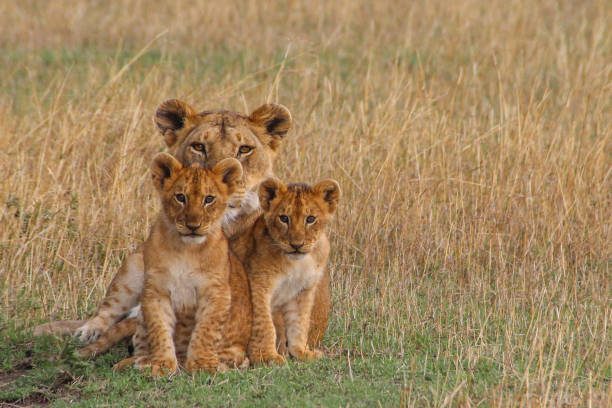
Male lions, while less directly involved in nurturing, play a critical role as guardians. Their presence alone deters rival males and predators. When cubs approach their fathers, there’s an unmistakable shift—the once-fierce protector softens, allowing tiny paws to climb over his massive frame. These moments of gentleness are rare glimpses into the emotional depth of lion society. Males may not nurse or hunt often, but their watchful dominance ensures that the pride remains secure and stable.
Survival rates, however, tell a sobering story. Only about one in four cubs survives to adulthood in the wild. Starvation, disease, and male takeovers are the primary causes of death. Yet, this harsh selection strengthens the species. The cubs who endure inherit the resilience, instincts, and caution needed to thrive.
By two years old, young males begin to face a difficult truth—they must leave. Driven by instinct and subtle aggression from older males, they wander into the wilderness, forming coalitions with brothers or cousins. These groups roam vast territories, honing their strength until they are ready to challenge for a pride of their own. It’s a journey of exile and ambition, one that forges the next generation of kings.
Females, in contrast, stay with the pride, reinforcing the lineage that defines their society. They become hunters, mothers, and eventually matriarchs—custodians of memory and stability. Through their wisdom, the cycle continues.
In every stage of lion life, from the first breath of a cub to the final roar of a dying king, one truth remains: survival depends on unity. The pride is more than family—it is a living circle of protection, love, and continuity carved into the heart of the savannah.
Communication and Roaring
Meaning Behind the Roar
In the vast openness of the African night, when the sky glows with a billion stars and the wind whispers through the grass, a single sound can roll across miles like thunder—the lion’s roar. Deep, resonant, and primal, it vibrates through the earth and into the bones of every creature that hears it. The roar is more than a display of power. It is the lion’s language of authority, connection, and identity.
A lion’s roar can be heard from as far as five miles (eight kilometers) away, depending on terrain and weather. It is produced through a unique vocal apparatus—the hyoid bone in the throat is only partially ossified, allowing the larynx to stretch and vibrate deeply. Combined with a powerful diaphragm and specialized vocal folds, this anatomy creates a low-frequency sound that travels immense distances.
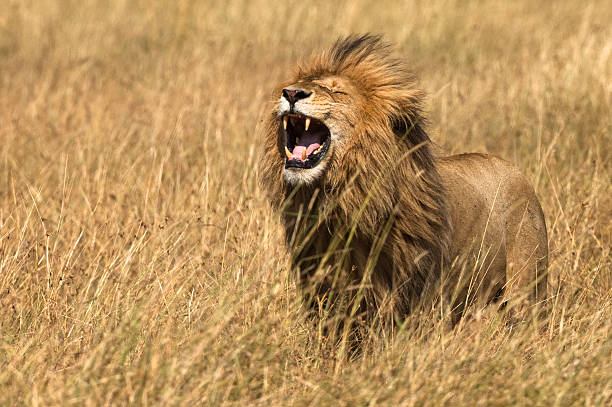
But roaring is not merely about making noise; it carries specific meaning. Each pride has its own acoustic signature, and individuals can recognize one another through these vocal cues. When a male roars, he announces his dominance and territorial claim, warning rivals: This land, this pride, this domain—belongs to me. It’s a way of enforcing boundaries without the need for constant physical confrontation.
Females roar too, though less frequently and often for different reasons. Their calls can summon cubs, signal the start of a hunt, or locate pride members scattered in the tall grass. In the stillness before dawn, a chorus of roars from both males and females often serves as a roll call—a way to reaffirm unity and territory after the long night.
Interestingly, roaring also strengthens social bonds. When lions roar together in sequence, it’s a form of collective declaration—a sonic wall of belonging. Scientists believe this synchronized roaring helps maintain pride cohesion and intimidate rival groups, a psychological advantage in territorial defense.
To other animals, the roar is both warning and prophecy. Herbivores hear it and instinctively tighten their herds. Hyenas, the lion’s cunning rivals, sometimes answer back with their eerie laughter—a taunt or acknowledgment of shared danger. But the roar of a lion remains unmatched, not just in volume, but in symbolic gravity. It is the sound of the wild announcing itself.
When you hear it at night, echoing across the savannah, you don’t just hear a predator—you hear the ancient pulse of nature reminding the world that balance still holds.
Body Language and Scent Marking
If the roar is a lion’s public proclamation, body language is its private conversation. Much of lion communication happens through subtle gestures, glances, and movements that convey emotion and intent long before a sound is made.
A flick of the tail can signal alertness, irritation, or coordination during a hunt. When lions walk side by side and brush against one another, it is not random contact—it’s reassurance, a reaffirmation of familiarity. Rubbing heads, often called “nuzzling,” releases pheromones from glands near the face, reinforcing bonds. A lioness will nuzzle her sister before a hunt or greet returning males with a low grunt and a gentle brush of her cheek.
Facial expressions carry meaning too. Flattened ears warn of aggression; half-closed eyes convey trust. A relaxed mouth indicates calm, while a curled lip paired with a low growl warns that the boundary of tolerance is near. These nonverbal cues maintain peace within the pride and prevent unnecessary conflict.
Yet perhaps the most sophisticated form of communication comes through scent marking—the lion’s invisible signature across its realm. Males especially use scent to define territorial boundaries. They spray urine on bushes and trees, rich with chemical markers that tell any intruder exactly who rules this patch of land. These marks can last for days, even through light rain, serving as a constant reminder of presence.
Females also use scent for communication during mating cycles. Their pheromones signal fertility, drawing males from great distances. A male often performs the Flehmen response, curling his lip and inhaling deeply through the vomeronasal organ on the roof of his mouth. This strange-looking grimace allows him to “taste” pheromones in the air, identifying whether a female is ready to mate.
The combination of roar, scent, and gesture forms a complete language system, one that functions without words yet communicates everything necessary for survival—affection, dominance, warning, or desire. It’s a language as old as time, written not in letters but in instincts shared across generations.
When we observe lions communicating—through a rumbling growl before dawn, a lazy nuzzle at dusk, or a deliberate scent mark along a trail—we witness something deeper than behavior. We glimpse the social intelligence that has allowed them to reign not just by force, but through understanding. The pride’s success depends on this constant dialogue, a silent agreement that every member honors.
In the quiet moments between roars, when the wind carries faint scents and the pride rests in golden light, that invisible web of communication holds them together—a family bound by signals more eloquent than speech.
Ecosystem Role
Apex Predator Status
In the grand theater of the savannah, lions stand at the very top of the food chain—the apex predators. This title doesn’t just describe power; it represents responsibility. As apex predators, lions shape the structure and health of their entire ecosystem. Their decisions—what to hunt, where to roam, and when to rest—ripple across the landscape, influencing species far beyond their immediate prey.
To understand their impact, imagine the African plains without lions. Wildebeests, zebras, and antelopes would multiply unchecked, overgrazing the land. Vegetation would dwindle, water sources would degrade, and soil erosion would follow. The balance of life would collapse under its own abundance. Lions prevent that chain reaction by controlling herbivore populations, ensuring that nature remains in dynamic equilibrium.
Lions typically target the weak, the sick, and the old. This selective predation strengthens prey species over time, maintaining genetic health. A wildebeest herd, for example, grows faster and stronger because predators constantly test its members. By removing those least likely to survive, lions contribute to natural selection in its purest form—a process scientists call “the ecology of fear.”
Even their leftovers play a role. When lions finish a meal, scavengers—hyenas, jackals, vultures—move in to feed on the remains. This chain of consumption recycles nutrients back into the soil, enriching the environment. The bones left behind decompose, providing calcium and other minerals that feed insects and plants. Thus, every kill becomes part of a greater cycle of renewal.
Their presence also affects the behavior of prey species. Herds learn to avoid certain areas heavily patrolled by lions, allowing vegetation there to recover. This spatial pressure creates a mosaic of grazed and ungrazed zones, enhancing biodiversity. It’s a subtle form of ecological management that no human park ranger could replicate so perfectly.
The disappearance of lions from an ecosystem often triggers what ecologists call a trophic cascade—a domino effect that disrupts the entire web of life. Without lions, hyenas may overpopulate, herbivores may overgraze, and smaller predators may compete to fill the vacuum, leading to instability. In this way, the lion’s roar is not only a sound of dominance—it is the heartbeat of balance itself.
As apex predators, lions remind us that power in nature is not about conquest—it is about harmony. They take only what is necessary and give back by maintaining the health of everything beneath them. In the endless rhythm of life and death, their existence ensures continuity, diversity, and resilience across the plains they rule.
How Lions Maintain Ecological Balance
Lions are often described as destroyers because of their hunting prowess, but in truth, they are architects of balance. Their interactions with prey, scavengers, and even competitors weave a pattern that holds ecosystems together. Every decision they make—when to hunt, what to kill, how to share—plays into an invisible equilibrium that sustains the natural world.
At first glance, lions might seem to take more than they give, yet the opposite is true. By keeping herbivore numbers in check, they prevent overgrazing, which allows grasses to regenerate. This, in turn, supports insects, small mammals, and birds that rely on healthy vegetation. The chain continues upward and outward: more plants mean better soil, more insects mean more pollination, and more stability means the survival of countless other species.
Their influence extends beyond prey control. The carcasses they leave behind provide food for a vast array of scavengers—from hyenas and jackals to vultures and even dung beetles. This cascading effect spreads nutrients through the ecosystem. It’s no exaggeration to say that every lion kill becomes a community feast. Without lions, entire populations of scavengers would suffer, altering the balance of species interaction.
Moreover, lions indirectly shape the behavior of herbivores, which scientists call a “landscape of fear.” In areas where lions are active, grazers like zebras and antelopes avoid lingering too long. They move more frequently, allowing the land to recover between visits. This creates patches of lush regrowth that attract smaller species and promote plant diversity. In short, lions act as gardeners of the wild, pruning excess and ensuring regeneration.
Their competition with other predators—such as leopards, cheetahs, and hyenas—also defines ecological niches. Each species finds its own strategy to coexist. Cheetahs hunt during the day when lions rest, leopards retreat to trees to avoid confrontation, and hyenas scavenge what lions leave behind. These delicate interactions form a network of balance where every predator plays its part.
In modern conservation terms, lions are recognized as a keystone species—organisms whose presence holds ecosystems together. When they disappear, the structure collapses. When they thrive, everything beneath them thrives. Conservationists studying rewilding projects in Africa have found that reintroducing lions to controlled areas quickly restores natural order—prey behavior normalizes, vegetation rebounds, and biodiversity blooms.
Thus, the lion’s true legacy is not the fear it inspires but the life it sustains. Every step it takes, every roar it sounds, every hunt it completes—each act resonates through the savannah like a conductor guiding an orchestra. Their strength, far from being destructive, is the unseen hand that keeps the symphony of the wild in tune.
Threats and Conservation
Poaching and Habitat Loss
For centuries, lions have reigned over the African plains, but today their kingdom is shrinking. Once roaming freely across vast continents—from Greece and the Middle East to India and almost all of Africa—lions now occupy less than 10% of their historic range. The causes of this decline are rooted in human activity, the most pressing being poaching and habitat loss.
Poaching is not always for meat or survival—it is often driven by status, superstition, and trade. Lions are hunted illegally for their bones, teeth, claws, and skins, sold on black markets where they are used in traditional medicine or as luxury trophies. In some parts of Asia, lion bones have become substitutes for tiger bones in medicinal tonics, fueling a shadowy trade that perpetuates cruelty and ecological loss. Each lion killed for a trinket or potion is not just an individual lost—it is a blow to the genetic diversity and stability of entire populations.
Beyond direct killing, the lion’s world is being squeezed by human expansion. Africa’s population has grown rapidly, leading to widespread agricultural development and urbanization. Grasslands once filled with antelope and zebra are now dotted with farms and fences. The open savannahs that sustained large prey herds are fragmented into isolated pockets, making it difficult for lions to hunt and reproduce successfully.
When natural prey disappears, lions turn to livestock—an act of desperation, not aggression. This inevitably leads to conflict with local herders who see them as a threat to their livelihood. Retaliatory killings—often through poisoning—are devastatingly common. A single poisoned carcass meant for one lion can wipe out an entire pride and even harm scavengers like vultures and hyenas that feed on the remains.
The cumulative effect of poaching, habitat loss, and conflict has been catastrophic. A century ago, there were an estimated 200,000 lions across Africa. Today, fewer than 20,000 remain in the wild. Populations are isolated, genetic diversity is declining, and some regions that once echoed with roars have fallen silent.
Yet, amidst these grim statistics, hope persists. Conservationists are working tirelessly to combat these threats through anti-poaching patrols, habitat restoration, and community-based programs that promote coexistence. But the reality is stark: unless these efforts intensify, the lion—once the very emblem of wilderness—may vanish from large parts of its ancestral home within our lifetime.
Human–Wildlife Conflict
Among all challenges lions face, human–wildlife conflict is perhaps the most complex. It sits at the intersection of survival and misunderstanding. For rural communities living near lion habitats, the big cat represents both beauty and danger—a creature admired in legend but feared in reality.
When lions prey on livestock, it is rarely an act of defiance; it is a symptom of ecosystem imbalance. Shrinking prey populations, droughts, and habitat encroachment force them closer to human settlements. A single lion can wipe out an entire herd of goats or cattle in one night, devastating a family’s income. Faced with such losses, retaliation becomes understandable, even inevitable.
Traditional responses—spears, guns, or poison—have proven disastrous, leading to rapid population declines. Conservationists have learned that punishing communities for defending their livelihoods only deepens hostility. Instead, modern programs now focus on collaboration. Initiatives such as Lion Guardians in Kenya and Living with Lions in Tanzania employ local Maasai warriors as protectors and monitors of lion populations. These programs transform former adversaries into allies by providing income, education, and early warning systems that prevent attacks.
Innovative solutions are also emerging. Some farmers now use “lion lights”—flashing LED bulbs surrounding livestock enclosures that mimic human movement at night, successfully deterring lions. Others receive compensation or insurance payments when livestock losses occur, reducing the incentive for revenge killings.
The key to ending conflict lies in coexistence, not domination. When local people see tangible benefits—such as tourism revenue, employment, and pride in protecting national heritage—they become stewards of the species. In places where communities and conservationists work hand-in-hand, lion numbers are stabilizing or even rising.
Human–lion coexistence tells a larger story about our relationship with nature. The question is not whether we can live alongside predators, but whether we can learn to respect the boundaries that keep the wild alive. The lion’s survival will ultimately depend not just on reserves or laws, but on a shared understanding that their fate and ours are deeply intertwined.
Global Conservation Programs
Amid the growing threats, a worldwide movement has arisen to save the lion—a coalition of governments, NGOs, scientists, and local communities working together to secure a future for the species. These efforts blend science, policy, and empathy, recognizing that conservation must protect both lions and the people who share their land.
Organizations such as the African Parks Network, Panthera, and the Born Free Foundation are leading initiatives across Africa. Their work includes anti-poaching operations, the establishment of protected areas, and translocation projects that reintroduce lions to regions where they have disappeared. For instance, lions have successfully been reintroduced to Malawi’s Majete and Liwonde National Parks after decades of absence, a triumph that demonstrates nature’s capacity for recovery when given a chance.
International collaboration plays a critical role. The Convention on International Trade in Endangered Species (CITES) regulates the trade of lion parts, though enforcement remains uneven. Conservation scientists also use genetic tracking, satellite collars, and camera traps to monitor populations and movements, providing data crucial for long-term management.
Tourism has emerged as both a challenge and a solution. In countries like Kenya, Tanzania, and Botswana, eco-tourism provides major revenue that funds park management and local livelihoods. A single lion, through tourism, can generate over one million dollars in lifetime economic value for surrounding communities—far outweighing what poachers or trophy hunters gain. This economic reality is slowly transforming lions from liabilities into assets worth protecting.
Education remains the most powerful conservation tool. Programs that teach schoolchildren about lions, ecology, and coexistence plant the seeds of stewardship in future generations. Conservation storytelling—through documentaries, photography, and digital campaigns—connects people globally to the lion’s plight, turning empathy into action.
The path ahead is not easy. Climate change, land pressure, and poverty continue to challenge progress. But each protected pride, each cub born in safety, each roar that still echoes through the savannah represents victory. The goal is not to cage the wild, but to allow it to coexist with human progress, in balance and respect.
The lion’s story, once written in myths, is now being rewritten in science and compassion. Its survival will be one of humanity’s greatest tests—and, hopefully, one of our finest achievements.
Lions and Humans
Ancient Symbolism and Mythology
From the earliest flicker of civilization, the lion has walked beside humanity—not as a pet or servant, but as an idea, an embodiment of the qualities we most revere and sometimes fear. Across continents and centuries, people have gazed upon the lion’s golden form and found reflected in it courage, nobility, and divine power. Its presence in myth and religion is as enduring as the sunrise over the savannah.
In ancient Mesopotamia, lions symbolized kingship and divine protection. The goddess Ishtar, patron of love and war, was often depicted standing upon lions, their strength reinforcing her authority. In Assyrian palaces, stone carvings of lions adorned gates and walls—guardians warding off evil and asserting the might of the ruler within. The famous Lion Hunt of Ashurbanipal reliefs from the 7th century BCE show the king battling lions in a ritual display, not for sport but as a demonstration of cosmic order: man, representing civilization, subduing chaos symbolized by the beast.
In ancient Egypt, lions embodied both destruction and guardianship. The goddess Sekhmet, fierce and radiant, bore the head of a lioness and was said to breathe fire against the enemies of the sun god Ra. Yet, the same lioness energy was invoked to protect the pharaoh in battle and to bring balance through divine retribution. Even the sphinx—a creature with a lion’s body and a human head—represented the fusion of human intellect and animal power, a union of wisdom and strength guarding the horizon of eternity.
Travel east, and you find lions in Hindu mythology, where Durga rides a lion into battle against demons, symbolizing the victory of good over evil. In Buddhism, the lion is the protector of the dharma; the Buddha’s teachings are called the “lion’s roar,” echoing truth across the world. Stone lion statues—Simhas—stand before temples throughout Asia, guardians of spiritual thresholds. In China, the imperial “Fu Lions” or “Shi Shi” flank palaces and tombs, embodying prosperity and vigilance. Their presence persists today, carved in marble or cast in bronze before banks and gates, silent sentinels of fortune.
Even in European and Middle Eastern traditions, the lion reigns as a moral and heraldic figure. The Book of Daniel tells of the prophet unharmed among lions, a miracle of faith overcoming fear. The Lion of Judah, in Judeo-Christian symbolism, represents both the tribe of Judah and later Christ himself—majestic, powerful, and righteous. During the medieval era, lions roared across coats of arms, banners, and royal seals. To be “lion-hearted,” as King Richard was called, meant to be brave beyond measure. In art, literature, and scripture, the lion became a shorthand for divine strength under moral order.
These depictions were not coincidental. Humanity saw in lions something we aspired to be—leaders who protect rather than destroy, beings who command without cruelty. Over millennia, this reverence molded our cultural identity, weaving lions into stories, flags, and dreams. Long before we understood ecosystems, we understood the lion’s spiritual ecology: its power tempered by purpose, its authority grounded in the duty to preserve.
Lions in National Symbols and Modern Culture
If ancient civilizations carved lions into stone, modern ones have etched them into identity. The lion continues to stride across flags, emblems, currencies, and sports teams, representing bravery, leadership, and pride. Nations like Ethiopia, Sri Lanka, England, and Singapore all bear lions on their flags or coats of arms—a testament to the animal’s global resonance as a symbol of sovereignty and courage.
In Ethiopian tradition, the Lion of Judah remains a powerful cultural and religious emblem. It adorns the country’s imperial flag and resonates deeply within Rastafarianism, where the lion represents Emperor Haile Selassie I, regarded by followers as a messianic figure. For millions, the lion symbolizes freedom, spiritual power, and resistance against oppression—a roaring emblem of dignity.
In Europe, the lion has been a heraldic symbol for over a thousand years. The British Royal Arms feature three golden lions, their fierce grace representing courage and dominion. Statues of lions guard bridges, museums, and city squares—from Trafalgar Square’s monumental guardians to the Venetian Lion of St. Mark, symbolizing wisdom and majesty. Even in modern corporate logos—MGM’s roaring lion, Peugeot’s emblem, ING’s banking lion—the creature continues to signify authority, reliability, and strength.
The lion’s cultural presence extends far beyond politics and art; it roars through literature, cinema, and collective imagination. From Aesop’s fables to Shakespeare’s King Lear, from The Chronicles of Narnia’s noble Aslan to Disney’s The Lion King, storytellers have continually turned to lions to represent leadership, integrity, and the eternal balance between power and compassion. Aslan’s gentle wisdom and Mufasa’s moral guidance echo ancient archetypes—the king as protector, the ruler as servant of justice. These depictions remind us that strength alone is never enough; true kingship requires heart.
Even the digital age has not diminished the lion’s grandeur. In modern conservation campaigns, social media hashtags like #SaveTheLions and #RoarForLife rally millions across the globe. Influencers, photographers, and filmmakers present lions not as trophies but as sentient beings worthy of respect. Documentaries such as The Last Lions and Big Cat Diary have rekindled empathy for these magnificent creatures, reminding humanity that the mythic king is also a living, breathing species on the brink of peril.
The lion’s image has transcended symbolism to become a mirror of human values. Where once we saw a fierce adversary, we now see a reflection of our duty to coexist. The king of beasts, long a metaphor for dominance, now represents harmony—a world where humanity wields its own power not to conquer nature, but to protect it.
Lions have walked with us from cave paintings to digital screens, from temples to textbooks. In their amber eyes, we continue to see the story of ourselves: proud, fragile, striving for meaning. As long as we honor that reflection—not with fear or vanity, but with reverence—the roar of the lion will never truly fade.
Quick Facts About Lions
Before we close this journey through the lion’s world, here’s a concise look at some of the most fascinating facts about these majestic creatures—snapshots of science, wonder, and survival that reveal how perfectly they’re built for their role as rulers of the wild:
- Scientific Name: Panthera leo
- Current Range: Sub-Saharan Africa and a small population in India’s Gir Forest
- Average Lifespan: 10–14 years in the wild; up to 20 years in captivity
- Weight: Males average 330–550 lbs (150–250 kg); females 260–400 lbs (120–180 kg)
- Cubs per Litter: Usually 2–4; survival rate to adulthood is around 25%
- Roar Distance: Up to 5 miles (8 kilometers)
- Activity Pattern: Mostly nocturnal; hunt at night and rest for up to 20 hours per day
- Top Speed: 50 mph (80 km/h) for short bursts (less than 10 seconds)
- Diet: Carnivorous—mainly wildebeest, zebra, buffalo, and antelope
- Territory Size: Between 20 and 400 square kilometers depending on prey density
- Hunting Strategy: Cooperative group hunts led by lionesses
- Unique Trait: The only truly social cats, living in organized prides
- Manes and Climate: Darker, fuller manes are linked to higher testosterone and cooler climates
- Conservation Status: Vulnerable (IUCN Red List); fewer than 20,000 remain in the wild
- Economic Impact: One lion can generate more than $1 million in eco-tourism revenue during its lifetime
These facts remind us that the lion’s grandeur isn’t just legend—it’s biology, history, and ecology woven together in golden fur.
FAQs — Pillar
How many lions are left in the wild today?
According to the IUCN (International Union for Conservation of Nature), there are fewer than 20,000 wild lions remaining across Africa and about 600 Asiatic lions in India’s Gir Forest. A century ago, their numbers were over 200,000. Their decline is due mainly to habitat loss, poaching, and human conflict, but conservation programs are working hard to stabilize populations across protected reserves.
Are lions really endangered?
Lions are currently classified as Vulnerable, which means they’re at a high risk of becoming endangered if threats continue. Some regional populations, such as those in West Africa, are already considered Critically Endangered due to severe habitat fragmentation and extremely small population sizes. Without sustained protection and habitat management, their status could worsen within a few decades.
What is the difference between African and Asiatic lions?
While both belong to the same species (Panthera leo), Asiatic lions (Panthera leo persica) differ in several key ways. They are slightly smaller, have a shorter mane, and display a distinctive belly fold of skin. Socially, Asiatic lions form smaller prides and inhabit forests rather than open plains. Today, all remaining Asiatic lions live in Gir National Park, India, making them one of the most geographically restricted big cats on Earth.
How loud can a lion’s roar be heard?
A lion’s roar can reach 114 decibels—as loud as a jet engine taking off—and travel up to five miles (eight kilometers) under the right conditions. Lions use their roar to declare territory, locate pride members, and warn rivals. The deep, rolling frequency allows the sound to carry far across the savannah.
Do female lions hunt more than males?
Yes. Lionesses are the primary hunters in the pride. They work in coordinated groups, using stealth and teamwork to ambush prey. Males typically assist only during hunts for very large or dangerous animals like buffalo. Their main duties are to defend the pride and its territory, ensuring safety for females and cubs.
How do lions mark their territory?
Lions mark territory through scent marking and roaring. Males spray urine mixed with pheromones on vegetation to signal ownership. They also use vocal announcements—deep roars that serve as acoustic borders. These cues reduce direct confrontation by warning other lions before they enter a defended area.
Resources
To ensure factual accuracy and ecological depth, this article draws on data and insights from reputable wildlife and conservation organizations, as well as peer-reviewed research:
- International Union for Conservation of Nature (IUCN) – Red List of Threatened Species: Panthera leo
- World Wildlife Fund (WWF) – Lion Facts & Conservation Efforts
- National Geographic Society – African Lion Species Profile
- Panthera Organization – Lion Recovery Fund & Big Cat Conservation Reports
- African Parks Network – Habitat Restoration and Anti-Poaching Programs
- Born Free Foundation – Human–Wildlife Coexistence Initiatives
- Smithsonian National Zoo & Conservation Biology Institute – Lion Behavior Studies and Genetics Research
- BBC Earth & Oxford Wildlife Research Unit – Behavioral Ecology of Lions in the Serengeti and Ngorongoro Crater
- Gir National Park, India – Asiatic Lion Conservation History and Population Reports
Final Reflection
The lion’s roar is fading in many corners of the world, but its story is far from over. From the golden plains of Africa to the forests of India, every surviving pride carries the memory of a time when the world was wilder, freer, and more balanced. Our task now is not to romanticize that world, but to protect what remains—to ensure that the next generation will still hear the roar that once defined the rhythm of the earth.
The lion does not need our pity. It needs our respect, our stewardship, and our willingness to share the planet. Because when the last roar echoes across the horizon, the silence that follows will not just mark the loss of a species—it will mark the dimming of our own humanity.
Recommended Readings
- Where Do Lions Live? Exploring Their Habitat and Range
- Lion Diet and Hunting
- Lion Behavior and Social Structure
- Lion Reproduction and Cubs
- Lion Conservation and Threats
- Lion Subspecies and Types
- Lion’s Role in Ecosystem
- Lions in Mythology and Culture
- Lion vs Tiger vs Leopard vs Cheetah — Ultimate Big Cat Showdown


