
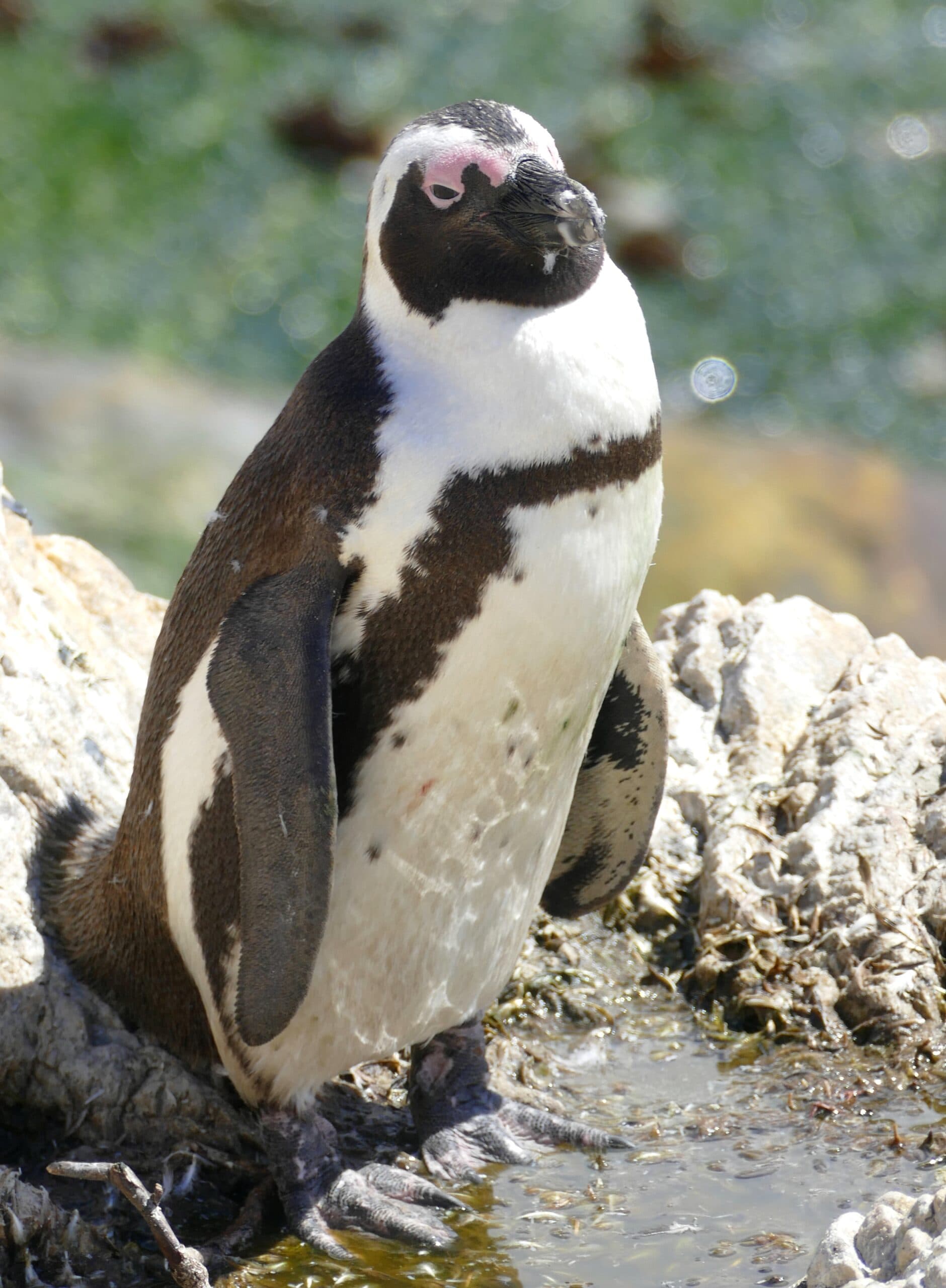
A penguin native to southern Africa
The African penguin, Spheniscus demersus, is the only penguin species that breeds in Africa. Colonies occur along the cold, productive Benguela and western Agulhas coasts from Namibia to South Africa. It is also called the Cape penguin, black-footed penguin or jackass penguin, the last name referring to its loud, donkey-like braying call.
These penguins do not live on Antarctic ice. They nest on islands and mainland shores in a temperate coastal climate, then forage at sea. Their dependence on a narrow current system and a small number of breeding colonies makes them vulnerable when fish shift away from nesting areas or when disturbance and pollution reduce safe breeding habitat.
Black, white and built for swimming
Adults stand about 60–70 centimetres tall. They are black above and white below, with a broad black band across the chest and a unique pattern of dark spots on the belly. The pattern can help researchers identify individuals. Pink bare skin above the eyes contains blood vessels that release heat; it becomes brighter when the bird is hot.
Wings have evolved into stiff flippers, and dense waterproof feathers trap insulating air. A streamlined body and powerful feet make the penguin agile underwater, although its upright walk looks awkward on land. Countershading helps conceal it at sea: a dark back blends with deep water from above, while a pale belly merges with bright surface light when viewed from below.
Life between colony and ocean
African penguins breed on rocky islands, sandy shores and a few mainland sites. Historically, many excavated burrows in deep guano deposits. Large-scale guano removal stripped much of that nesting material, leaving birds to use shallow scrapes, vegetation, rock crevices or artificial nest boxes. Exposed nests are more vulnerable to heat, flooding and predators.
At sea, birds commute between colonies and feeding grounds over the continental shelf. Adults must return regularly while incubating eggs or feeding chicks, so prey close to a colony is especially valuable. Outside breeding, penguins travel farther and may follow shifting fish schools. They come ashore to rest, breed and replace all their feathers during an annual catastrophic moult.
Following sardines and anchovies
Small schooling fish form the core diet, especially anchovy and sardine, with squid and crustaceans taken when available. Penguins chase prey underwater using vision and rapid turns. Groups may concentrate fish, but each bird captures its own meal. Adults carry food in the stomach and regurgitate it for chicks back at the nest.
Food availability is now a central conservation problem. Commercial fishing competes for some of the same small pelagic fish, while climate-driven changes in ocean conditions shift prey away from historic colonies. A parent forced to travel farther spends more energy and leaves its mate or chicks fasting longer. Poor feeding conditions lower adult survival and cause some nests to be abandoned.
Pairs, eggs and growing chicks
African penguins are social colony breeders and many pairs reunite across seasons, although partnerships can change. Courtship includes braying calls and mutual displays. A typical clutch contains two eggs. Both parents incubate in alternating shifts for roughly 38–41 days and share brooding and feeding after hatching.
Young chicks have down that insulates them on land but is not waterproof. As they grow, chicks from nearby nests may gather in crèches while parents forage. They replace down with juvenile plumage before going to sea. Juveniles lack the adult chest band at first and may travel hundreds of kilometres before returning toward breeding colonies when mature.
Moult, heat and coastal hazards
Once each year, an adult replaces its entire coat of feathers. During this two-to-three-week moult it cannot enter cold seawater, so it fasts on land using fat stored beforehand. A shortage of prey before moulting can leave a bird without enough reserves. Heat waves compound the stress, particularly at exposed nests without deep burrows.
Natural predators include Cape fur seals and sharks at sea, while gulls, mongooses, caracals and other animals may take eggs or chicks on land. Oil spills can destroy feather waterproofing and poison birds as they preen. Entanglement, vessel traffic, disease, human disturbance and introduced predators add pressure to a population already weakened by food scarcity.
Critically Endangered after a severe collapse
The IUCN uplisted the African penguin to Critically Endangered in 2024. The assessment estimated about 19,800 mature individuals and found a continuing, extremely rapid decline. Historical populations numbered in the millions; modern counts represent only a small fraction of that abundance. The principal drivers are competition with fisheries and climate-mediated changes in prey, together with habitat damage and episodic disasters.
Conservation combines fishery management, protected colonies, artificial nests, predator control, disease surveillance, oil-spill preparedness and rescue. SANCCOB rehabilitates injured and oiled seabirds and hand-rears abandoned chicks for release. BirdLife South Africa and partners are working to establish a colony at De Hoop closer to productive feeding habitat. These measures buy time, but recovery depends on enough fish remaining accessible around breeding colonies.
Responsible penguin viewing
Accessible colonies such as Boulders Beach attract visitors from around the world. Boardwalks and marked paths protect nests and allow penguins to move between sea and land. Visitors should keep their distance, never touch or feed birds, secure food and rubbish, and avoid blocking well-used paths. A penguin that pants, retreats, snaps or abandons shade is being disturbed.
Choosing tour operators that follow colony rules and supporting verified conservation programs helps turn tourism into protection. Consumers can also consult locally relevant sustainable-seafood guidance. African penguins are charismatic ambassadors, but their crisis reflects a wider problem: coastal ecosystems cannot support predators when prey, nesting space and clean water are all diminished at once.