
Home/Animals/Mammalia/African Wild Ass
Species profileIUCN: CR

African Wild Ass

Equus africanus

A critically endangered desert equid and the wild ancestor of the domestic donkey.

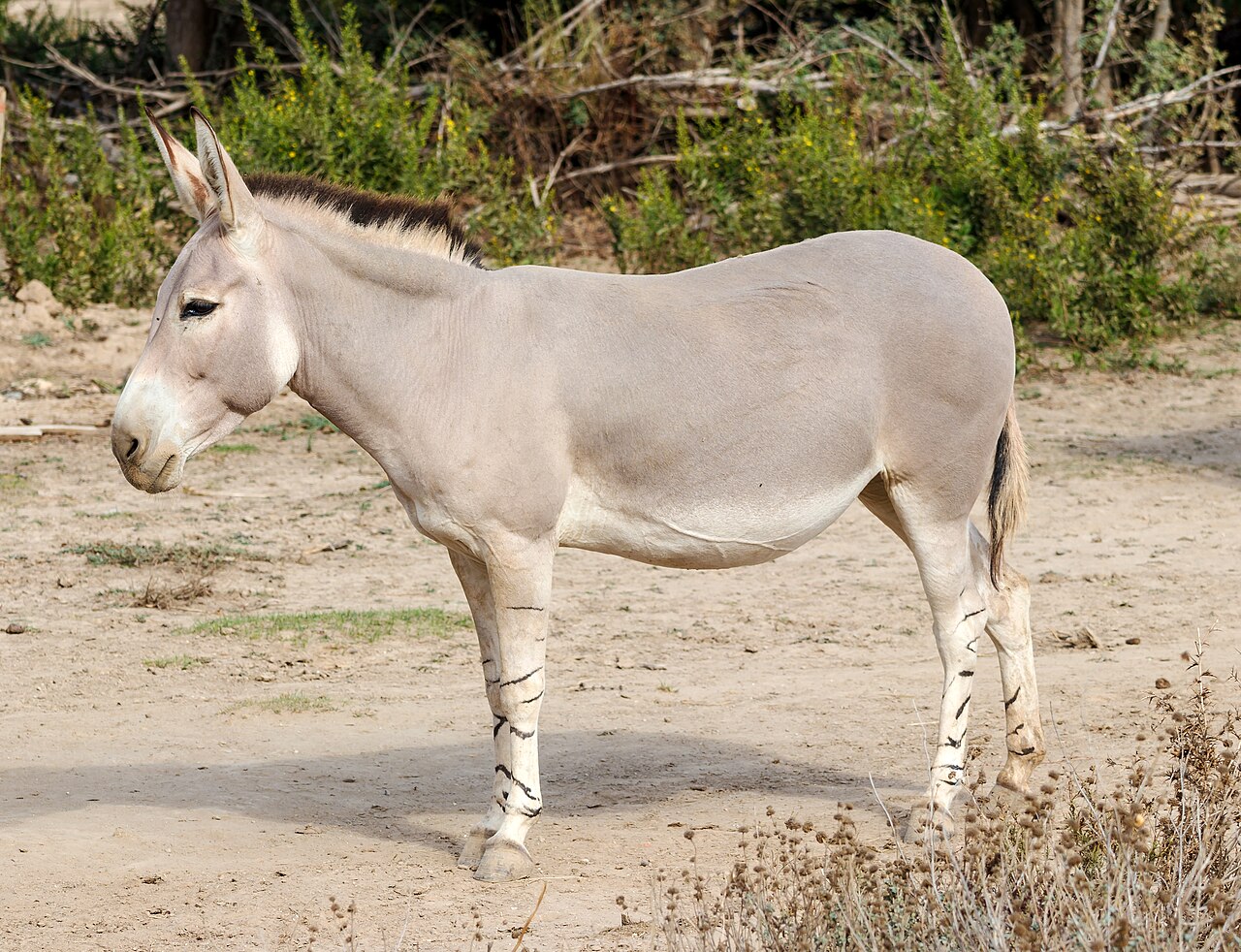
Somali wild ass standing in a dry enclosure with striped lower legs visible
H. Zell / Wikimedia Commons / CC BY-SA 3.0
๐ŸŒ Read in Language:

โšก At a Glance

Species profile
Also Known As
African wild donkey
Diet Category
Herbivore
Activity Rhythm
Most active in cooler morning, evening and night hours.
Wild Lifespan
Often 20 years or more under favorable conditions
Typical Weight
roughly 200โ€“275 kg
Conservation Status
CR
๐Ÿ’ก Key Biological Insight: Domestic donkeys descend from African wild ass ancestors domesticated in northeastern Africa.

๐ŸŒณ Scientific Taxonomy Hierarchy

The African wild ass is an equid closely related to zebras and the ancestor of domestic donkeys.

KingdomAnimalia
PhylumChordata
ClassMammalia
OrderPerissodactyla
FamilyEquidae
GenusEquus
SpeciesEquus africanus

Distinguishing Anatomical Features

  • โœ“A slender gray equid with a pale underside, upright mane, dark tail tuft and narrow legs; Somali wild asses show strong black bars on the lower legs.
  • โœ“Large ears release heat
  • โœ“Hard narrow hooves cross rocky ground
  • โœ“Efficient digestion uses coarse forage
  • โœ“Can tolerate substantial water loss

๐Ÿ“ Physical Measurements

Total Lengthabout 6.6 ft body length
Body Weightroughly 440โ€“610 lb
Tail Lengthabout 12โ€“20 in
WingspanNot applicable
Top SpeedNo dependable universal maximumMovement changes with context and conditions.

๐ŸŽจ Appearance & Distinctive Markings

GrayFawnWhiteBlack

Skin / Covering: Short hair over tough skin

Sexual Dimorphism: Males and females are similar in color; males are often heavier and defend resource territories.

๐Ÿ—บ๏ธ Geographic Distribution & Habitat

The remaining confirmed wild populations are concentrated in arid Eritrea and northeastern Ethiopia; historical range extended farther across northeast Africa.

Rocky desert, semi-desert, lava fields and sparse dry grassland where scattered forage and water remain accessible.

Country-level distribution map

Native range
FijiTanzaniaWestern SaharaCanadaUnited StatesKazakhstanUzbekistanPapua New GuineaIndonesiaArgentinaChileCongo - KinshasaSomaliaKenyaSudanChadHaitiDominican RepublicRussiaBahamasFalkland IslandsNorwayGreenlandFrench Southern TerritoriesTimor-LesteSouth AfricaLesothoMexicoUruguayBrazilBoliviaPeruColombiaPanamaCosta RicaNicaraguaHondurasEl SalvadorGuatemalaBelizeVenezuelaGuyanaSurinameFranceEcuadorPuerto RicoJamaicaCubaZimbabweBotswanaNamibiaSenegalMaliMauritaniaBeninNigerNigeriaCameroonTogoGhanaCรดte dโ€™IvoireGuineaGuinea-BissauLiberiaSierra LeoneBurkina FasoCentral African RepublicCongo - BrazzavilleGabonEquatorial GuineaZambiaMalawiMozambiqueEswatiniAngolaBurundiIsraelLebanonMadagascarPalestinian TerritoriesGambiaTunisiaAlgeriaJordanUnited Arab EmiratesQatarKuwaitIraqOmanVanuatuCambodiaThailandLaosMyanmar (Burma)VietnamNorth KoreaSouth KoreaMongoliaIndiaBangladeshBhutanNepalPakistanAfghanistanTajikistanKyrgyzstanTurkmenistanIranSyriaArmeniaSwedenBelarusUkrainePolandAustriaHungaryMoldovaRomaniaLithuaniaLatviaEstoniaGermanyBulgariaGreeceTรผrkiyeAlbaniaCroatiaSwitzerlandLuxembourgBelgiumNetherlandsPortugalSpainIrelandNew CaledoniaSolomon IslandsNew ZealandAustraliaSri LankaChinaTaiwanItalyDenmarkUnited KingdomIcelandAzerbaijanGeorgiaPhilippinesMalaysiaBruneiSloveniaFinlandSlovakiaCzechiaEritrea โ€” Native rangeJapanParaguayYemenSaudi ArabiaCyprusMoroccoEgyptLibyaEthiopia โ€” Native rangeDjiboutiUgandaRwandaBosnia & HerzegovinaNorth MacedoniaSerbiaMontenegroKosovoTrinidad & TobagoSouth Sudan
Highlighted countries are recorded profile locations, not precise biological range boundaries.Map boundaries: Natural Earth

Recorded Native Countries & Territories:

๐Ÿ’ก Did You Know?

  • ๐Ÿ’กLarge ears release heat
  • ๐Ÿ’กHard narrow hooves cross rocky ground
  • ๐Ÿ’กEfficient digestion uses coarse forage
  • ๐Ÿ’กCan tolerate substantial water loss

๐ŸŒฟ Conservation Status & Threats

IUCN: CR โ€” Critically Endangered

โ€œCritically Endangered, with only a small and fragmented wild population remaining.โ€

Population Trend๐Ÿ“‰ Decreasing
Wild Population EstimateNo dependable global total is available.

โš ๏ธ Major Threats to African Wild Ass

  • โ€ขCompetition with livestock
  • โ€ขLimited water
  • โ€ขHunting
  • โ€ขHybridization with domestic donkeys
  • โ€ขDrought and habitat degradation

๐Ÿ”„ Life Cycle & Reproduction

Wild vs. Captivity Lifespan Comparison

๐ŸŒฟ In the WildOften 20 years or more under favorable conditions
๐Ÿ  In Captivity (with veterinary care)Can differ under managed care.
Clutch / Litter SizeOne foal; twins are very rare.
Incubation / GestationGestation lasts about 12 months
Fledging / WeaningFoals stand soon after birth and remain with the mother while learning travel routes and forage.
Sexual MaturityAbout two to three years
Mating SystemPolygynous territorial mating
Nesting / Den TypeNo nest; foals are born on open ground

๐Ÿฆ… Behavior & Field Ecology

Herbivore

๐ŸŒ Ecological Food Web & Relationships: A mobile desert grazer that shapes vegetation and supports nutrient movement across dry landscapes.

Social Group SizeSmall female groups and territorial adult males
Activity RhythmMost active in cooler morning, evening and night hours.
Feeding StrategyHerbivore

๐Ÿฅฉ Primary Prey & Preferred Diet

โœ“ Dry grassesโœ“ Forbsโœ“ Leavesโœ“ Woody browse

๐Ÿ“ข Communication & Territorial Signals

  • Brays
  • Scent marks
  • Ear and body posture

๐Ÿพ Wild Temperament & Traits

โ€ข Alertโ€ข Hardyโ€ข Socially flexible

๐Ÿค Human Interaction & Pet Advisory

โš ๏ธ Strictly Wild Species
๐Ÿšซ

Can You Keep a African Wild Ass as a Pet?

Critically endangered wildlife, not a pet.

Domestication StatusWild and not domesticated
Danger to HumansLarge wild equid capable of kicking or biting
Economic & Ecotourism RoleEvolutionary, ecological and cultural importance as the ancestor of domestic donkeys.

โš ๏ธ Behavioral Risk Factors & Wildlife Safety

  • Powerful hooves
  • Defensive behavior when cornered

๐ŸŒ Ecological Food Web & Relationships

๐Ÿฆ… Natural Predators (3)

Spotted HyenaCrocuta crocuta
LionPanthera leo
HumansHomo sapiens

๐Ÿงฌ Related Species (2)

Domestic DonkeyEquus africanus asinusDomesticated descendant
Grevyโ€™s ZebraEquus grevyiRelated arid-land equid

African Wild Ass (Equus africanus) survives in arid parts of the Horn of Africa. This guide separates well-supported biology from common assumptions and covers identification, range, habitat, diet, behavior, reproduction and conservation.

Identification

A slender gray equid with a pale underside, upright mane, dark tail tuft and narrow legs; Somali wild asses show strong black bars on the lower legs. Males and females are similar in color; males are often heavier and defend resource territories.

Identification should combine body shape, markings, size, voice or movement, and location. One feature by itself can overlap with a related animal, a juvenile, or an individual in unusual light.

Photographs are most useful when they preserve scale and show several diagnostic features. Handling or repositioning a wild african wild ass for identification can cause stress and is unnecessary.

Size and physical adaptations

African Wild Ass typically measures about 2 m body length and weighs roughly 200โ€“275 kg. Subspecies, sex and condition affect measurements.

Its useful adaptations include large ears release heat, hard narrow hooves cross rocky ground, efficient digestion uses coarse forage, can tolerate substantial water loss. These traits work together in the animal’s normal setting rather than serving as isolated curiosities.

Published measurements may use different methods, life stages or sample locations. Comparing figures responsibly means checking what was measured rather than selecting the largest number available.

Range and distribution

The remaining confirmed wild populations are concentrated in arid Eritrea and northeastern Ethiopia; historical range extended farther across northeast Africa. The native range includes Eritrea, Ethiopia.

A country-level map indicates broad distribution, not continuous occupation. Climate, elevation, water, vegetation, prey, breeding sites, barriers and survey effort all affect where records occur.

Records near the edge of the range deserve careful documentation because they may reflect natural movement, improved survey coverage, accidental transport or a genuine distribution change.

Habitat

Rocky desert, semi-desert, lava fields and sparse dry grassland where scattered forage and water remain accessible.

Animals travel between patchy grazing and drinking sites, using shade and cooler hours to limit heat stress. Protecting a population therefore requires the feeding, shelter and breeding features that make a site usable, along with connections that allow movement.

Microhabitat matters. Shade, soil, current, moisture, shelter or host plants can determine whether a small area is usable even when the surrounding landscape appears suitable.

Diet and feeding

African Wild Ass is a herbivore. Important foods include dry grasses, forbs, leaves, woody browse. It crops sparse plants and can process fibrous, low-quality forage unavailable to many grazers.

Diet changes with age, season, location and food supply. A dramatic prey record does not establish what most individuals eat most of the time; repeated field observations provide a stronger picture.

Feeding opportunities also create risk. An animal focused on prey may be less alert to predators, traffic or people, while contaminated prey can transfer pollutants through the food web.

Behavior and communication

Most active in cooler morning, evening and night hours. Females and young form small flexible groups; adult males may hold large territories around important resources.

Brays carry over open terrain, while scent marking and posture communicate identity and territorial status. Behavior should be interpreted in context: alarm, courtship, feeding and temperature regulation can produce very different actions from the same animal.

Daily schedules are flexible responses, not rigid rules. Weather, breeding condition, disturbance, tides or food can move activity into a different part of the day.

Reproduction and development

Breeding can occur through the year when conditions allow. One foal; twins are very rare. undefined

Young animals face different risks and may use different microhabitats or food than adults. Breeding success depends on adult condition, suitable sites and the survival of offspring through vulnerable early stages.

Counts of eggs or young describe reproductive output, not the number expected to reach adulthood. Mortality is normally greatest during eggs, larval or juvenile stages.

Predators and ecological role

A mobile desert grazer that shapes vegetation and supports nutrient movement across dry landscapes. Documented or likely predators include Spotted Hyena, Lion, Humans.

This animal is both a consumer and a food source. Its influence comes through many repeated interactions, so ecological claims should be based on measured populations rather than assumptions drawn from appearance.

Predator and prey relationships differ among places. A species can be ecologically influential without being abundant everywhere, and its role can change across its range.

Relationship with people

Pastoral livelihoods overlap its last habitat, making cooperative water and grazing management central to recovery.

Observe from a distance and never block access to water. Responsible observation means keeping an appropriate distance, avoiding capture or feeding, protecting habitat and following local wildlife or invasive-species guidance.

Wildlife guidance should come from the responsible local agency because collection rules, reporting requests and appropriate responses differ between native and introduced ranges.

Conservation

Critically Endangered, with only a small and fragmented wild population remaining. The reported global trend is Decreasing.

Important pressures include competition with livestock, limited water, hunting, hybridization with domestic donkeys, drought and habitat degradation. Global status can hide local decline or recovery, so current regional monitoring and habitat management remain necessary.

The most useful conservation action follows the documented pressure. Protecting breeding sites, reducing road deaths or limiting pollutants can require different tools in different populations.

Field surveys must distinguish genuinely wild animals from free-ranging domestic donkeys and hybrids. Genetic sampling, photographs and repeated observations improve population estimates and guide protection of the remaining wild lineages.

Sources and further reading

โ“ Frequently Asked Questions

Answers to frequently asked questions verified against peer-reviewed zoological research.

Yes. Genetic and archaeological evidence links domestic donkeys to African wild ass ancestors from northeastern Africa.