
Home/Animals/Reptilia/Agama Lizard
Species profileIUCN: LC

Agama Lizard

Agama agama

A sun-loving African lizard whose adult males can display a brilliant orange head and dark body.

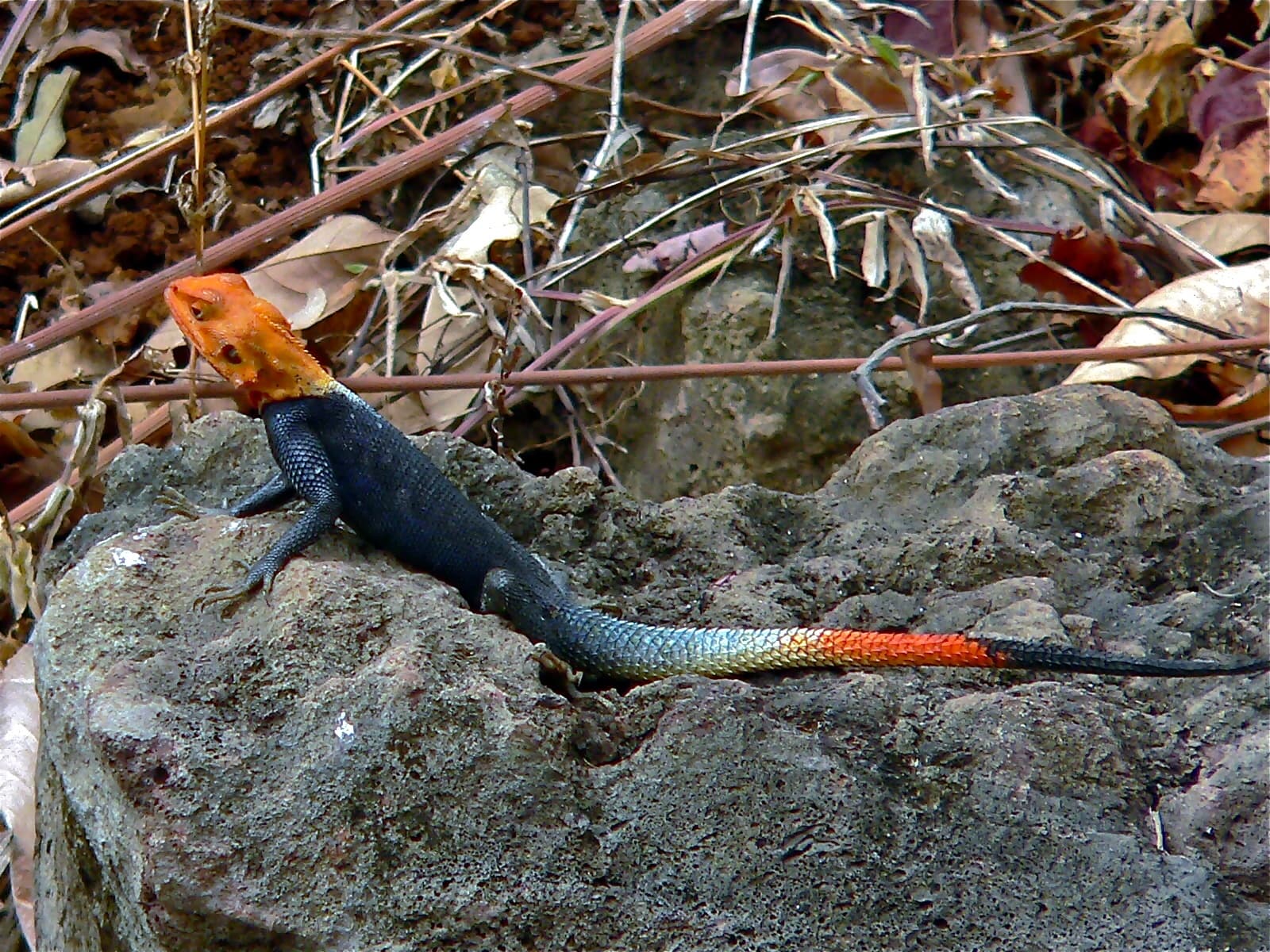
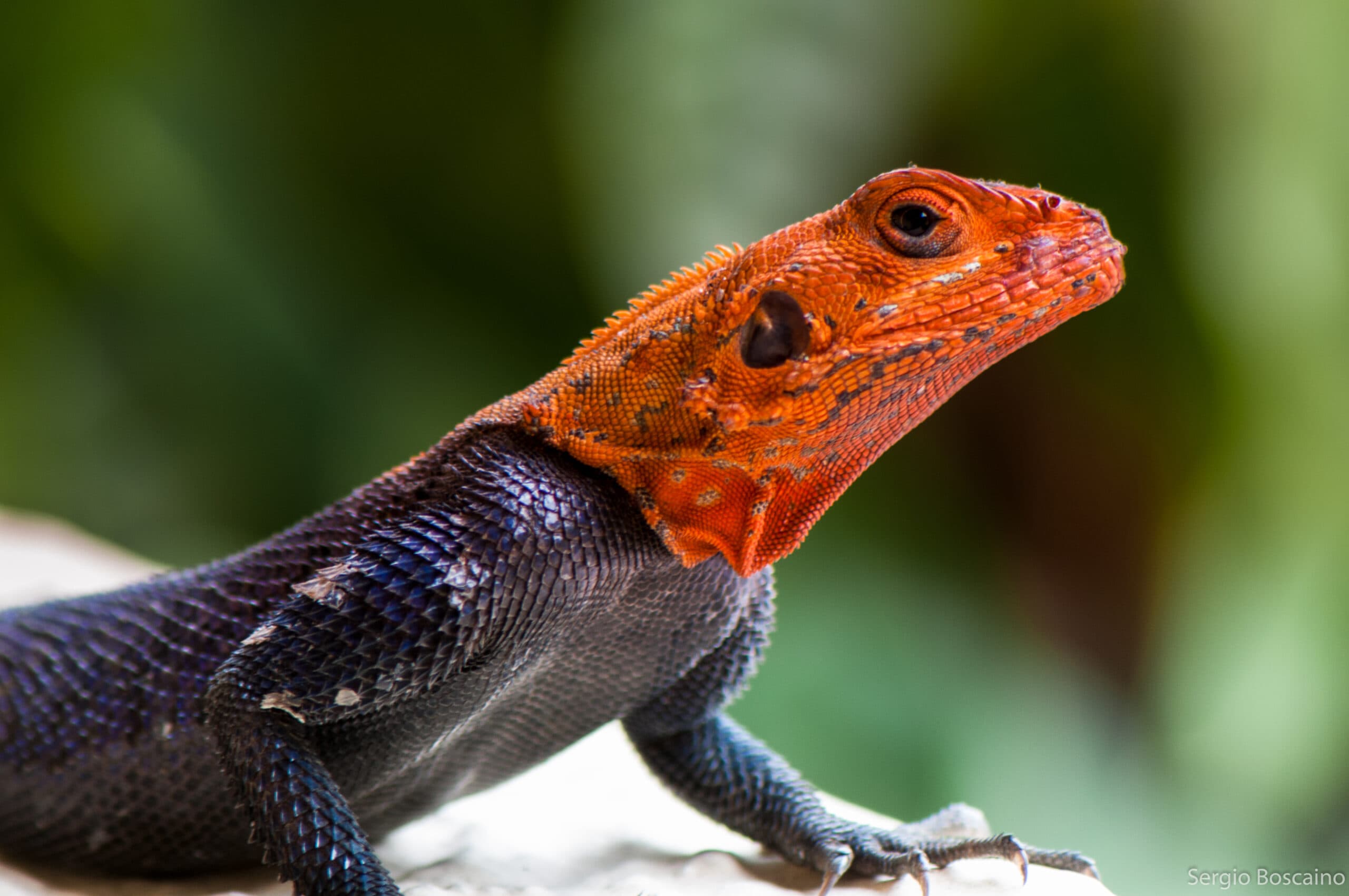
Adult male common agama basking on a rock
Bernard DUPONT and Sergio Boscaino / Wikimedia Commons
๐ŸŒ Read in Language:

โšก At a Glance

Species profile
Also Known As
Common agama; rainbow lizard; red-headed agama
Diet Category
Mostly insects and other arthropods
Activity Rhythm
Diurnal
Wild Lifespan
No reliable range-wide estimate
Typical Weight
Variable by sex and locality
Conservation Status
LC
๐Ÿ’ก Key Biological Insight: Dominant breeding males can shift into vivid orange-red and dark blue-black display colors.

๐ŸŒณ Scientific Taxonomy Hierarchy

This profile covers the common agama, Agama agama, a valid species in family Agamidae; it does not represent every species in genus Agama.

KingdomAnimalia
PhylumChordata
ClassReptilia
OrderSquamata
FamilyAgamidae
GenusAgama
SpeciesAgama agama

Distinguishing Anatomical Features

  • โœ“Triangular head
  • โœ“Long tapering tail
  • โœ“Strong clawed limbs
  • โœ“Rough keeled scales
  • โœ“Orange-red adult male head
  • โœ“Dark breeding male body

๐Ÿ“ Physical Measurements

Total LengthCommonly about 8โ€“12 in total length
Body WeightVariable; no dependable range-wide average
Tail LengthLonger than the snout-to-vent length
WingspanNot applicable
Top SpeedNo reliable measured maximumUses short rapid sprints to reach cover.

๐ŸŽจ Appearance & Distinctive Markings

BrownGrayOrangeDark blueRedBlackCreamOlive

Skin / Covering: Dry, rough keeled scales

Sexual Dimorphism: Adult males are larger and more vividly colored; females and juveniles are generally brown or gray with lighter markings.

๐Ÿ—บ๏ธ Geographic Distribution & Habitat

Native across a broad part of tropical sub-Saharan Africa; introduced populations occur in parts of Florida.

Savanna, scrub, open woodland, rocky ground, gardens, villages and city structures with basking sites and refuges.

Country-level distribution map

Native rangeIntroduced range
FijiTanzaniaWestern SaharaCanadaUnited States โ€” Introduced rangeKazakhstanUzbekistanPapua New GuineaIndonesiaArgentinaChileCongo - KinshasaSomaliaKenyaSudanChad โ€” Native rangeHaitiDominican RepublicRussiaBahamasFalkland IslandsNorwayGreenlandFrench Southern TerritoriesTimor-LesteSouth AfricaLesothoMexicoUruguayBrazilBoliviaPeruColombiaPanamaCosta RicaNicaraguaHondurasEl SalvadorGuatemalaBelizeVenezuelaGuyanaSurinameFranceEcuadorPuerto RicoJamaicaCubaZimbabweBotswanaNamibiaSenegal โ€” Native rangeMali โ€” Native rangeMauritaniaBenin โ€” Native rangeNiger โ€” Native rangeNigeria โ€” Native rangeCameroon โ€” Native rangeTogo โ€” Native rangeGhana โ€” Native rangeCรดte dโ€™Ivoire โ€” Native rangeGuinea โ€” Native rangeGuinea-BissauLiberia โ€” Native rangeSierra Leone โ€” Native rangeBurkina Faso โ€” Native rangeCentral African Republic โ€” Native rangeCongo - BrazzavilleGabonEquatorial GuineaZambiaMalawiMozambiqueEswatiniAngolaBurundiIsraelLebanonMadagascarPalestinian TerritoriesGambia โ€” Native rangeTunisiaAlgeriaJordanUnited Arab EmiratesQatarKuwaitIraqOmanVanuatuCambodiaThailandLaosMyanmar (Burma)VietnamNorth KoreaSouth KoreaMongoliaIndiaBangladeshBhutanNepalPakistanAfghanistanTajikistanKyrgyzstanTurkmenistanIranSyriaArmeniaSwedenBelarusUkrainePolandAustriaHungaryMoldovaRomaniaLithuaniaLatviaEstoniaGermanyBulgariaGreeceTรผrkiyeAlbaniaCroatiaSwitzerlandLuxembourgBelgiumNetherlandsPortugalSpainIrelandNew CaledoniaSolomon IslandsNew ZealandAustraliaSri LankaChinaTaiwanItalyDenmarkUnited KingdomIcelandAzerbaijanGeorgiaPhilippinesMalaysiaBruneiSloveniaFinlandSlovakiaCzechiaEritreaJapanParaguayYemenSaudi ArabiaCyprusMoroccoEgyptLibyaEthiopiaDjiboutiUgandaRwandaBosnia & HerzegovinaNorth MacedoniaSerbiaMontenegroKosovoTrinidad & TobagoSouth Sudan
Highlighted countries are recorded profile locations, not precise biological range boundaries.Map boundaries: Natural Earth

๐Ÿ’ก Did You Know?

  • ๐Ÿ’กTemperature-dependent color intensity
  • ๐Ÿ’กStrong climbing claws
  • ๐Ÿ’กLong balancing tail
  • ๐Ÿ’กVisual prey tracking
  • ๐Ÿ’กRapid sprinting
  • ๐Ÿ’กRough protective scales

๐ŸŒฟ Conservation Status & Threats

IUCN: LC โ€” Least Concern

โ€œThe common agama is assessed as Least Concern, although local populations can still be affected by habitat change, pesticides, traffic and collection.โ€

Population TrendNot summarized consistently across the broad range
Wild Population EstimateNo global population estimate
CITESNot listed

โš ๏ธ Major Threats to Agama Lizard

  • โ€ขHabitat alteration
  • โ€ขPesticide exposure
  • โ€ขRoad mortality
  • โ€ขPersecution
  • โ€ขCollection
  • โ€ขIntroduced predators

๐Ÿ”„ Life Cycle & Reproduction

Wild vs. Captivity Lifespan Comparison

๐ŸŒฟ In the WildNo reliable range-wide estimate
๐Ÿ  In Captivity (with veterinary care)Husbandry-dependent; not a guide to wild survival
Clutch / Litter SizeCommonly reported around 5โ€“7 eggs in studied populations
Incubation / GestationAbout 8โ€“10 weeks in older field accounts; temperature dependent
Fledging / WeaningNot applicable; hatchlings are independent
Sexual MaturityVaries with growth and local conditions
Mating SystemPolygynous territorial social groups are commonly described
Nesting / Den TypeShallow soil nest chamber

๐Ÿฆ… Behavior & Field Ecology

Primarily insectivorous opportunist

๐ŸŒ Ecological Food Web & Relationships: Predator of insects and other arthropods and prey for birds, snakes and mammals.

Social Group SizeOften social around shared habitat, with territorial adult males
Activity RhythmDiurnal and temperature-dependent
Feeding StrategyPrimarily insectivorous opportunist

๐Ÿฅฉ Primary Prey & Preferred Diet

โœ“ Antsโœ“ Termitesโœ“ Beetlesโœ“ Grasshoppersโœ“ Other small arthropods

๐Ÿ“ข Communication & Territorial Signals

  • Head bobs
  • Push-up displays
  • Body posture
  • Color signals
  • Chasing

๐Ÿพ Wild Temperament & Traits

โ€ข Alertโ€ข Territorial malesโ€ข Fast to retreatโ€ข Watchful

๐Ÿค Human Interaction & Pet Advisory

โš ๏ธ Strictly Wild Species
๐Ÿšซ

Can You Keep a Agama Lizard as a Pet?

Poor choice for casual keeping because it needs specialized heat, ultraviolet light, diet, space and social management.

Domestication StatusWild species; not domesticated
Danger to HumansHarmless when left undisturbed
Economic & Ecotourism RoleWildlife viewing, education, research and insect predation.

โš ๏ธ Behavioral Risk Factors & Wildlife Safety

  • Handling causes stress
  • Wild collection may be illegal
  • Tail and limbs can be injured during capture
  • Introduced animals should be reported to local authorities

๐ŸŒ Ecological Food Web & Relationships

๐Ÿฆ… Natural Predators (3)

Birds of preyAccipitriformes
SnakesSerpentes
Small carnivorous mammalsMammalia

What is an agama lizard?

The name agama lizard is often used broadly, but this profile focuses on the common agama, Agama agama. It is an African member of the family Agamidae and is also called the rainbow lizard or red-headed agama. ITIS lists the species as valid, while the Reptile Database records its current taxonomy and literature. That scope matters because the genus Agama contains many species with different ranges, colors and conservation needs. Statements here refer to A. agama unless a wider group is named.

Common agamas are medium-sized, long-tailed lizards that spend much of the day watching their surroundings from rocks, walls, logs and other raised surfaces. Their alert posture, rough scales and vivid adult males make them conspicuous. Females, juveniles and non-breeding males are usually browner and less contrasting, which helps them blend into the ground and masonry. Bright color is a social signal rather than a permanent uniform.

Range and habitat

Agama agama is native to tropical sub-Saharan Africa. Animal Diversity Web describes it across much of the region and notes its use of wild, suburban and urban habitats where insects and suitable cover are available. Individuals shelter in cracks, under rocks, in vegetation and around structures. Sunlit surfaces provide basking sites, while nearby shade and crevices let the lizards regulate temperature and retreat from danger.

The species can live in savanna, scrub, open woodland and human-modified landscapes. That flexibility does not mean every agama species has the same distribution. Some relatives occupy restricted rocky or dry habitats. Introduced populations of African agamas also occur outside their native range, including Florida, where University of Florida guidance treats Peters’s rock agama as a nonnative reptile. Observers should never release captive reptiles or move wild ones.

Appearance and color

The common agama has a triangular head, visible ear openings, strong limbs, clawed toes and a tail longer than the body. Scales along the neck and back can form a low crest. Adult size varies with sex, locality and measurement method, so a single exact length is misleading; many adults fall around 20โ€“30 centimeters in total length. Males tend to be larger and more robust than females.

Breeding or dominant males can develop an orange to red head and tail with a dark blue or blackish body. The color can intensify during display and fade with social condition, temperature or stress. Females and young animals are generally brown, gray or olive with lighter marks. These differences are useful for recognition, but photographs alone may not establish species because several African agamas have similar patterns.

Daily life and social behavior

Agamas are diurnal ectotherms. They warm themselves in the morning, alternate between sun and shade, and reduce activity when conditions become unsuitable. A good perch serves as a lookout and display platform. The species commonly uses head bobs, push-up movements, body posture and color to communicate. Animal Diversity Web reports groups organized around a dominant male, females and subordinate males, with territorial confrontations between mature males.

When threatened, an agama usually runs toward a crack, rock pile, wall opening or vegetation. Its claws and powerful limbs help it climb rough surfaces. Stillness and duller colors can reduce detection. Basking is essential physiology, not idleness: body temperature affects digestion, movement and other processes. Repeated disturbance can drive a lizard away from its best thermal and refuge sites.

Diet and ecological role

Common agamas are primarily insectivorous visual predators. They wait from a perch, notice moving prey and rush forward to seize it. Animal Diversity Web lists ants, grasshoppers, beetles and termites among important foods and also records occasional plant material and small vertebrate prey. Diet varies with local availability, season and body size, so the animal is better described as an insect-focused opportunist than as a strict specialist.

By consuming abundant arthropods, agamas transfer energy from insects into larger predators such as birds, snakes and mammals. They also compete for perches and refuges with other small reptiles. In towns they may be welcomed because they eat insects, but feeding them can change their behavior and concentrate animals unnaturally. Watching quietly from a distance preserves normal hunting and display.

Reproduction and development

Courtship involves visual signals, including male color and head-bobbing displays. Fertilization is internal, and females lay eggs in soil. Animal Diversity Web describes females digging a shallow chamber in damp, sun-exposed ground and reports clutches commonly around five to seven eggs for the studied population. Incubation and clutch size depend on local conditions, and older accounts should not be stretched into universal figures for every population.

Hatchlings are independent and begin taking very small prey. Juveniles are less colorful and initially avoid the social risks faced by adult males. Growth, maturity and survival are shaped by food, temperature, predators and shelter. There is no dependable single lifespan figure for wild common agamas across their broad range, so precise claims should be treated cautiously unless tied to a particular study.

Conservation and introduced populations

The common agama is listed as Least Concern, but that label does not mean every local population is secure. Habitat clearance, persecution, pesticide exposure, road traffic and collection can affect lizards locally. Protecting rocky refuges, reducing unnecessary pesticide use and leaving wild reptiles where they are are practical measures. Conservation assessments should also distinguish A. agama from similar species whose status may differ.

Outside Africa, introduced agamas can create ecological concerns. Florida guidance asks residents to report nonnative reptiles and avoid moving or releasing them. Identification can be difficult because the pet trade and historical naming have mixed several agama labels. Local wildlife agencies are better placed than social-media guesses to confirm records and advise on management.

Living alongside agama lizards

Agamas are not dangerous to people. Give a basking animal space, keep cats from hunting wildlife where possible, and avoid grabbing the tail or blocking its escape route. A wild agama has demanding needs for heat, ultraviolet light, diet, space and social management, so it should not be collected as a casual pet. Laws may restrict capture or possession.

For photography, use a long lens and stop if the animal repeatedly flees, flattens, gapes or abandons its perch. Never stage the lizard with a handler or confine it for a picture. The most informative observations record location, habitat and behavior without touching the animal. Those practices produce better natural-history evidence and reduce stress.

Sources

โ“ Frequently Asked Questions

Answers to frequently asked questions verified against peer-reviewed zoological research.

It covers the common agama, Agama agama, rather than every species in the genus Agama.