
What is an albino corn snake?
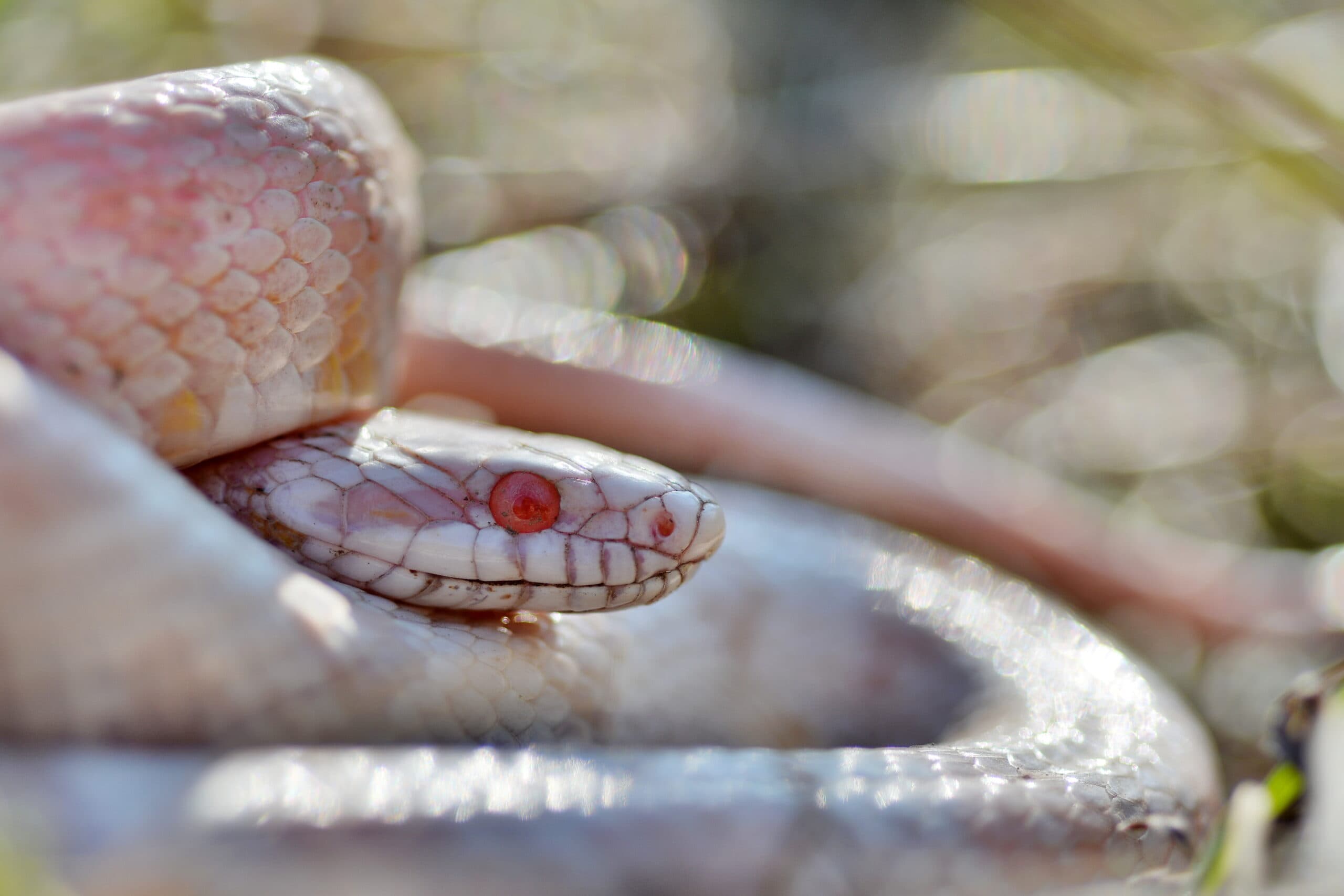
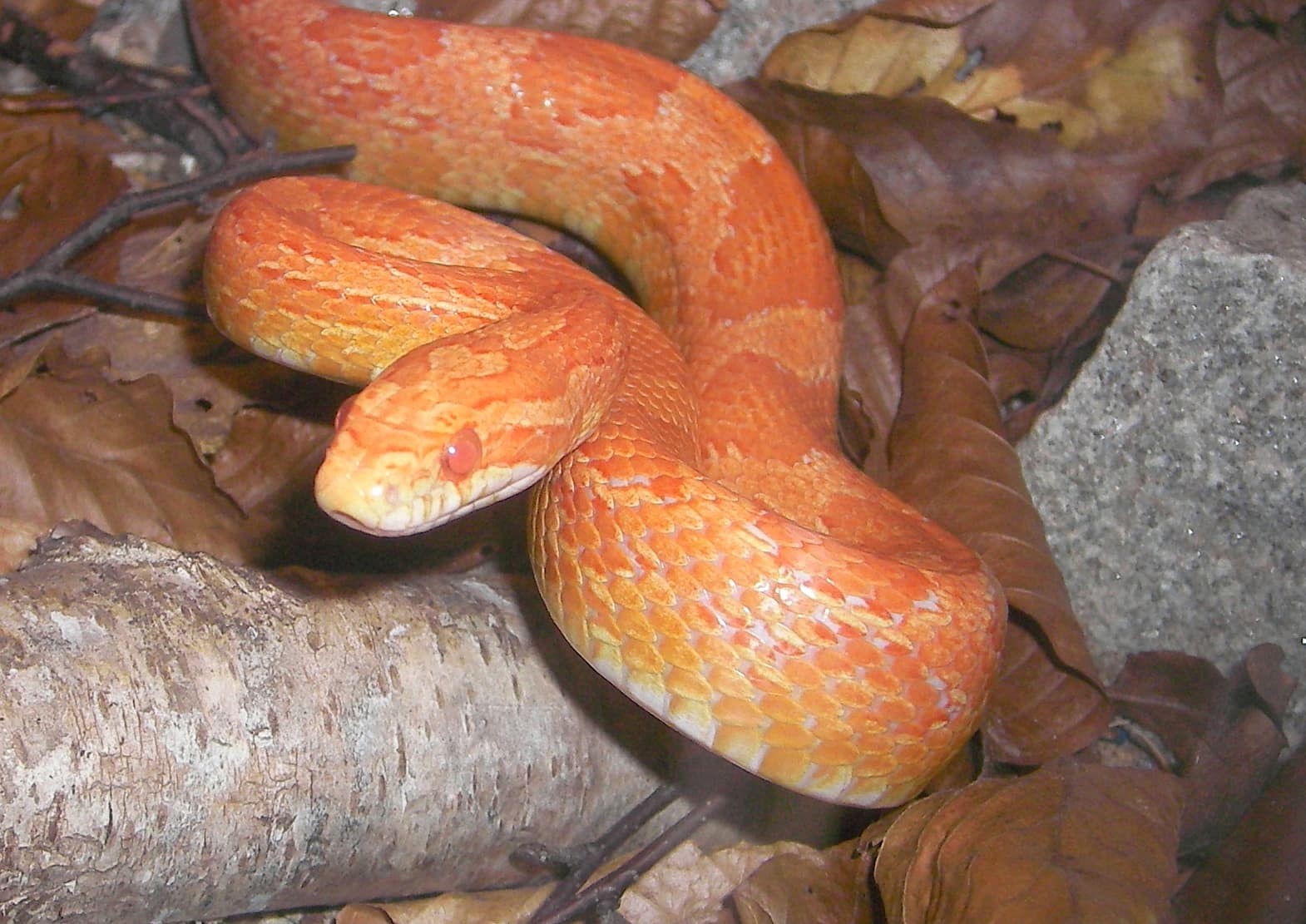
An albino corn snake is the familiar pet-trade name for an amelanistic corn snake, an inherited color morph of the corn snake, Pantherophis guttatus. It is not a separate species, subspecies or naturally isolated population. ITIS recognizes P. guttatus as the species, while the morph name describes one visible genetic trait. “Amelanistic” is more precise than “albino” because the animal lacks normal dark melanin but retains red and yellow pigments.
The result is a bright snake with red or orange saddles, pale cream borders and pink to red eyes. Its body shape, behavior and basic biology remain those of a corn snake. Captive breeders have combined amelanism with other inherited traits, creating many named appearances, but those combinations should not be confused with taxonomic categories.
Genetics behind the missing black pigment
A peer-reviewed genetic study by Saenko and colleagues traced classic corn snake amelanism to a mutation affecting OCA2, a gene involved in pigmentation. The mutation is an insertion of retrotransposon-derived DNA that disrupts normal gene function. Snakes with two copies of the recessive allele show the amelanistic appearance; carriers with one copy usually retain normal dark pigment.
This explains why two normally colored carriers can produce some visibly amelanistic young. It also explains why the morph keeps red and yellow colors: the mutation interferes chiefly with dark melanin rather than removing every pigment system. Breeding predictions still depend on verified parentage and accurate records. Appearance alone cannot reveal every hidden allele in a snake’s lineage.
Appearance and identification
Amelanistic corn snakes have the same slender build, smooth scales and alternating saddle pattern typical of the species. Black borders around the dorsal blotches are absent or greatly reduced, so red and orange markings meet cream, yellow or pale peach areas. The eyes are usually pinkish or red because dark pigment is missing from the iris. Belly checkering may remain visible in a paler red, orange or cream form.
Color changes with age and lineage. Hatchlings may look pinker or more sharply patterned, while adults often deepen toward orange and red. Lighting and camera processing can also change apparent tone. Identification should use the whole pattern and reliable breeding records rather than a single bright photograph. Similar pale morphs may involve different genes.
Corn snake range and natural habitat
The Smithsonian National Zoo describes wild corn snakes across the southeastern United States and into parts of the central region. They use pine woods, hardwood forests, fields, rocky hillsides, farm edges and buildings. They shelter under bark, logs, rocks and debris, and they can climb in search of prey or refuge. This broad habitat use belongs to the species, not specifically to the captive amelanistic morph.
Amelanistic corn snakes can occasionally occur through mutation in nature, but the bright morph seen in the pet trade is maintained mainly through captive breeding. A captive snake must never be released. It may fail to survive, spread disease, disrupt local wildlife or violate law. Escaped snakes should be recovered promptly and reported when local rules require it.
Behavior and feeding
Corn snakes are nonvenomous constrictors. Wild individuals take rodents and other small vertebrates, using scent, stealth and flexible movement to locate prey. In captivity, appropriately sized pre-killed rodents are the usual staple because they provide a complete whole-prey diet and cannot injure the snake. Feeding frequency should reflect age, body condition and veterinary advice rather than a rigid universal calendar.
The snakes are generally solitary and often most active around dusk or at night. They investigate with repeated tongue flicks, climb readily and squeeze through small gaps. A frightened animal may freeze, flee, musk, vibrate its tail or bite. Calm handling can reduce defensive responses, but handling should stop during shedding, after feeding or whenever the snake shows persistent stress.
Responsible captive care
The Royal Veterinary College recommends a secure, escape-proof enclosure with a temperature gradient, suitable humidity, clean water, hiding places and furnishings that allow normal movement. Heat sources need thermostatic control and guards so the snake cannot burn itself. Multiple snug hides let the animal choose temperature without sacrificing security. Substrate must be clean, low risk and monitored for ingestion or mold.
Bright coloration does not remove the animal’s normal physiological needs. Provide a stable day-night cycle, avoid constant intense light and make shaded retreats available. Weigh the snake periodically, watch for incomplete sheds, wheezing, mouth lesions, mites or abnormal stool, and consult a veterinarian experienced with reptiles. Quarantine new reptiles and keep careful feeding and health records.
Reproduction and life cycle
Corn snakes mate seasonally, and females lay eggs in warm, humid protected sites. Captive clutches often contain roughly 10 to 30 eggs, although female size, health and reproductive history cause substantial variation. Managed incubation commonly lasts around two months and is strongly temperature-dependent. Hatchlings are independent and begin with very small whole prey after the first shed.
Breeding should never be undertaken simply because a recessive pairing can be predicted. The keeper needs space for every hatchling, documented lineage, veterinary support and responsible homes. Repeated breeding can deplete a female. Selective breeding also concentrates hidden health problems when genetic diversity and records are ignored.
Conservation and welfare
The corn snake species is assessed as Least Concern, but that status does not separately evaluate the amelanistic morph. Wild populations still face road mortality, habitat change and persecution by people who mistake harmless snakes for dangerous species. Captive color morphs should not be counted as conservation populations unless a qualified program has a defined genetic and recovery purpose.
For owners, welfare depends on long-term planning. Corn snakes often live 15 to 20 years in good care and may live longer. That commitment includes reliable heating, whole prey, veterinary treatment and secure housing through moves or life changes. Purchase only captive-bred animals from sellers who provide feeding history and lineage information, and never buy an animal merely because its color is unusual.