
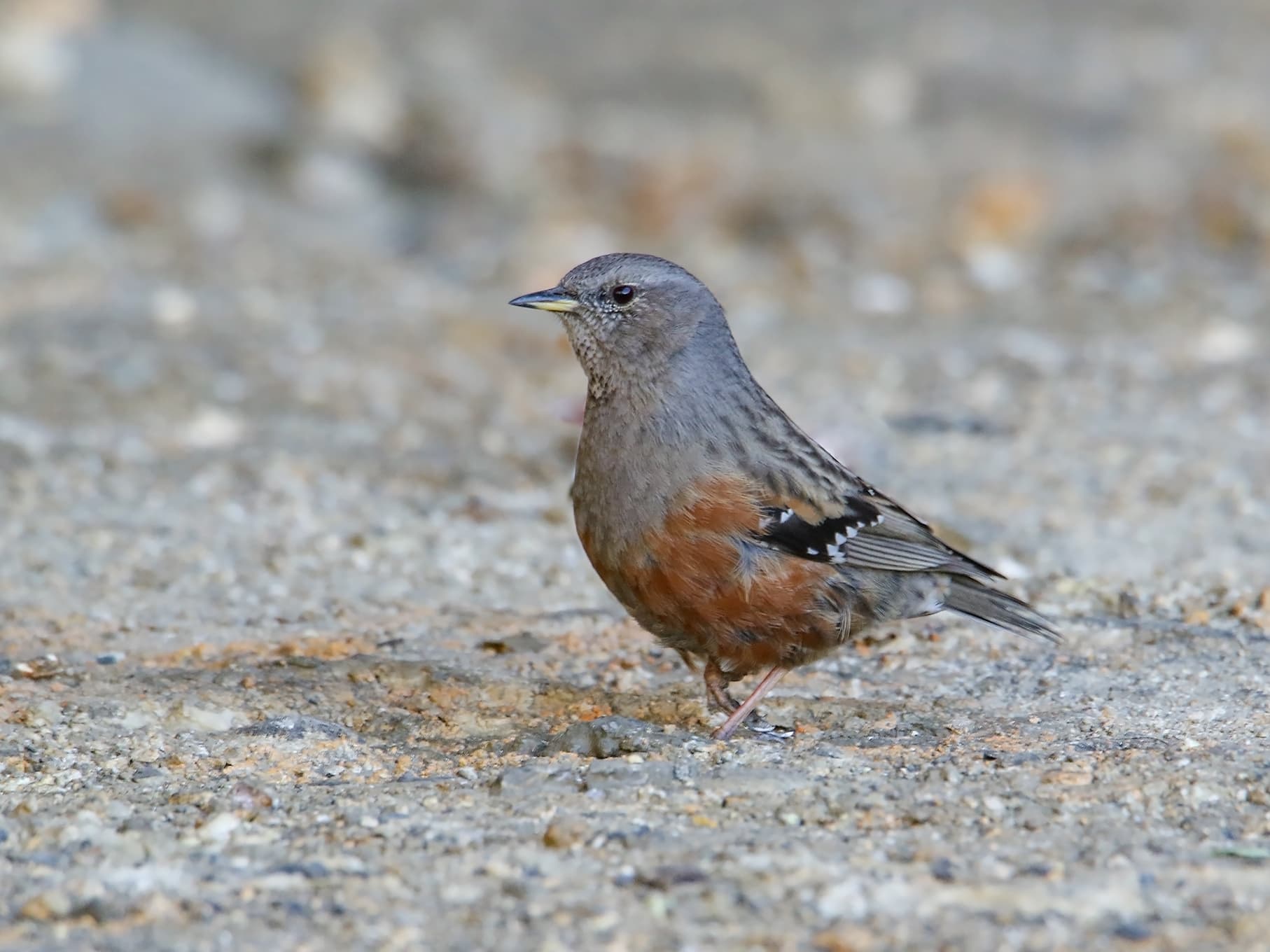
Alpine birds are birds that regularly breed, feed, or live in alpine habitat above the climatic treeline. This is an ecological group, not a branch of taxonomy. It includes unrelated species such as ptarmigans, accentors, pipits, rosy-finches, plovers, raptors, and scavengers. Some remain high in the mountains all year, while others arrive only for the short breeding season or move downslope when winter closes feeding grounds. Because the group spans many bird families and continents, it has no single body size, lifespan, diet, or conservation status.
What counts as an alpine bird?
Alpine habitat begins above the upper climatic treeline, where cold, wind, snow, a short growing season, and thin or unstable soils prevent upright forest from developing. The exact elevation changes with latitude, exposure, and regional climate: alpine ground can begin near sea level in far northern mountains but above 3,000 metres in warmer ranges. This profile includes birds that use that treeless zone as a regular part of their life cycle. It excludes species seen only while flying over a mountain and forest birds whose normal habitat remains below treeline.
The boundary is ecological rather than a fixed contour on a map. Krummholz, dwarf shrubs, wet turf, scree, cliffs, snowbeds, fellfields, and alpine lakes form a mosaic around treeline. A bird may nest in a rock crevice, forage on tundra, and shelter just below the boundary during storms. The useful question is how consistently the species depends on alpine resources.
Diversity and identification
There is no universal alpine-bird shape. White-tailed ptarmigan are compact, ground-dwelling grouse with feathered feet and seasonally changing plumage. Alpine accentors are streaked songbirds that walk over rocks and short turf. Rosy-finches have strong conical bills for seeds and insects, while pipits are slender walkers that pick small prey from open ground. Mountain plovers and sandpipers may use wet alpine flats, and eagles or falcons hunt across exposed slopes.
Identification therefore depends on region, season, plumage, voice, bill form, flight, and precise habitat. Snow can compress birds into small feeding areas, and juveniles may look unlike breeding adults. A photograph with the surrounding vegetation and landform often carries more useful evidence than a tightly cropped image. Field observers should avoid approaching nests or repeatedly flushing birds in cold, windy conditions, when replacing lost energy is difficult.
Adaptations to cold, wind, and thin air
Alpine environments challenge birds with low temperatures, intense solar radiation, strong wind, limited shelter, and lower oxygen pressure. Solutions differ among lineages. Dense contour feathers trap insulating air, while down protects the body beneath. Birds can reduce exposed surface area by tucking the bill and one leg into plumage. Some use sheltered rock cavities or the lee side of ridges, and ptarmigans may burrow into snow, which can be warmer and calmer than the air above.
High-elevation oxygen transport also varies. Research on Himalayan birds found that seasonal migrants can temporarily increase red-blood-cell concentration, whereas resident highland species may increase the amount of haemoglobin within cells. These are examples, not traits that should be assigned to every alpine bird. Flight style, heart and lung performance, body size, and the elevation reached all affect the challenge.
Camouflage is another recurring response. White-tailed ptarmigan replace mottled summer feathers with white winter plumage, while many alpine songbirds blend with stone and dry vegetation year-round. Large feathered feet spread weight on snow in ptarmigans. None of these traits defines the whole group; each evolved within a particular lineage and landscape.
Range and habitat
Alpine birds occur in suitable mountains on every continent except Antarctica, including the Rockies and Coast Mountains, Andes, European Alps, Caucasus, East African massifs, Himalaya, Tibetan Plateau, mountains of Japan, and New Zealand’s Southern Alps. The communities are not interchangeable. Isolation among peaks promotes regional endemism, and two mountains at similar elevations can support very different species.
Within the alpine zone, snowmelt timing shapes food and nesting opportunities. Wind-scoured ridges expose seeds and vegetation early. Moist hollows produce insects after thaw. Talus and cliffs provide nest cavities and refuge, while tundra turf supports leaves, buds, and invertebrates. Many birds track this shifting pattern during the season. Country shading on the accompanying map marks representative native mountain regions and should not be read as continuous coverage of each country.
Diet and ecological roles
Diets range from almost entirely plant-based to predatory. Ptarmigans browse willow, sedges, buds, leaves, flowers, and berries. Rosy-finches and accentors take seeds and insects, often searching along melting snow edges where wind and thaw concentrate food. Pipits and plovers pick flies, beetles, spiders, and other small invertebrates. Falcons capture birds, golden eagles hunt vertebrates and scavenge, and ravens exploit carrion and seasonal human food.
Food changes sharply through the year. Insects can be abundant during a brief summer pulse but unavailable under winter snow. Seeds accumulate in sheltered places, and carcasses may become important during storms. Alpine birds move nutrients, disperse some seeds, consume herbivores and insects, and feed predators. Their eggs and chicks support foxes, mustelids, raptors, and corvids. These interactions connect the alpine zone with valleys used during migration or winter.
Breeding and seasonal movement
The breeding window is usually short. Many species time nesting so chicks hatch when insects or fresh vegetation peak after snowmelt. Ground nests may be shallow scrapes hidden among rocks or plants; cliff and crevice nesters use cavities that reduce exposure. Clutch size, incubation, parental care, and age at maturity differ by species, so no group-wide figures are meaningful.
Strategies range from permanent residence to long-distance migration. White-tailed ptarmigan can remain above treeline throughout the year, shifting locally with snow and food. Brown-capped rosy-finches breed on alpine tundra and move lower in winter. Other birds cross continents before nesting in high mountains. Even residents may make short elevational migrations of a few kilometres that greatly change temperature and snow conditions.
Adults must balance feeding with vigilance because open terrain offers little cover. Nest disturbance can expose eggs or chicks to cold and predators. Keeping distance, staying on established routes, and controlling dogs are practical ways visitors can reduce pressure during the breeding season.
Conservation
“Alpine birds” has no single IUCN category or population trend. Each species and population must be assessed separately. The shared habitat is vulnerable because warming can move suitable climate upslope while the area of land generally shrinks toward a summit. Birds already near the top may have nowhere colder to move. Earlier snowmelt can also separate nesting schedules from food peaks or reduce snow-dependent camouflage.
Other pressures include recreation near nests, ski-area and road development, energy infrastructure, grazing changes, introduced predators, disease, pollution, and collisions. Effects differ by range. Long-term monitoring must distinguish ordinary year-to-year movement from sustained change. Protecting connected elevational gradients can preserve routes between breeding and winter habitat, while careful trail management can shield sensitive nesting sites.
Visitors can help by observing from a distance, carrying food waste out, avoiding playback around territorial birds, and reporting sightings through well-managed monitoring programmes. Conservation plans work best when they protect the entire annual cycle rather than only the scenic summit where a species breeds.
Sources and further reading
- IUCN Global Ecosystem Typology 2.0: temperate alpine grasslands and shrublands
- U.S. National Park Service: Alpine Tundra Ecosystem
- U.S. National Park Service: Birds of Great Sand Dunes
- Cornell Lab of Ornithology: White-tailed Ptarmigan life history
- Cornell Lab of Ornithology: oxygen demands at high altitude
- BirdLife International: climate change and birds