
Species profileIUCN: LC

Amano Shrimp

Caridina multidentata

A translucent East Asian river shrimp whose grazing habits made it a familiar algae eater in planted aquariums.

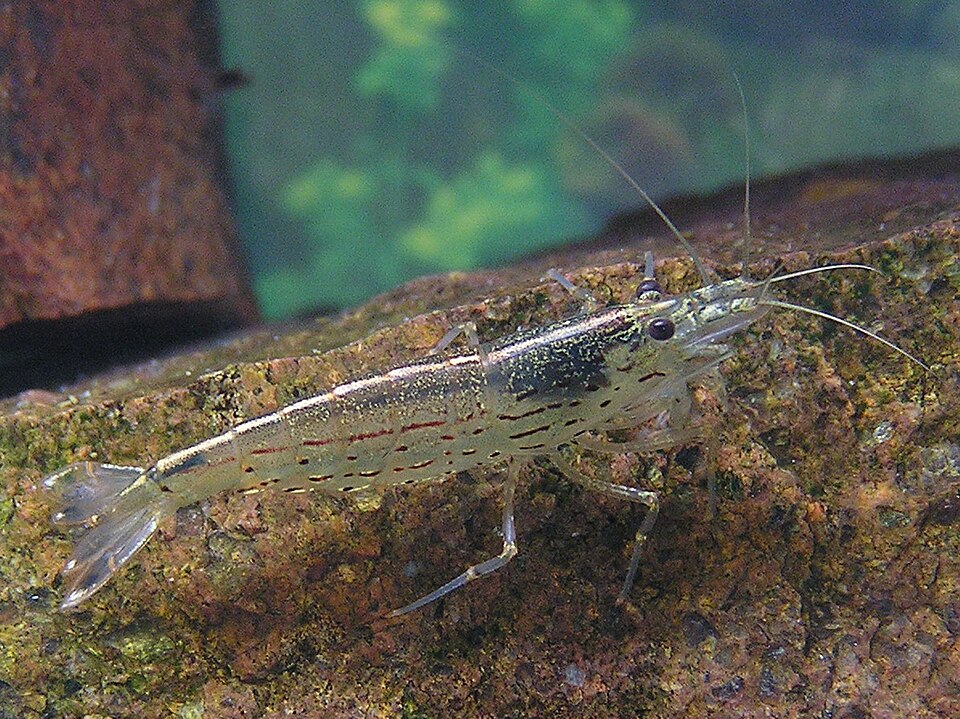
Amano shrimp Caridina multidentata resting on a stone in an aquarium
MdE / Wikimedia Commons / CC BY-SA 3.0 DE
๐ŸŒ Read in Language:

โšก At a Glance

Species profile
Also Known As
Yamato shrimp, Japanese shrimp, algae shrimp, Caridina japonica
Diet Category
Omnivorous grazer and scavenger
Activity Rhythm
Active by day and night, with more open foraging when secure and more hiding around molts.
Wild Lifespan
Commonly around two to three years in aquariums; wild longevity is poorly documented
Typical Weight
usually less than 5 g
Conservation Status
LC
๐Ÿ’ก Key Biological Insight: Unlike adults, newly hatched Amano shrimp larvae require brackish or marine-influenced water to complete early development.

๐ŸŒณ Scientific Taxonomy Hierarchy

Amano shrimp is the accepted common name for Caridina multidentata, an atyid shrimp formerly widely listed as Caridina japonica. This profile covers the biological species, not other shrimp sold informally as "Amano shrimp."

KingdomAnimalia
PhylumArthropoda
ClassMalacostraca
OrderDecapoda
FamilyAtyidae
GenusCaridina
SpeciesCaridina multidentata

Distinguishing Anatomical Features

  • โœ“The body is mostly translucent gray to tan, with rows of reddish-brown or dark lateral dots and dashes. A long toothed rostrum projects between the eyes, delicate walking legs support the body, and fanlike swimmerets sit beneath the abdomen. Internal organs and food in the gut may remain visible through the shell.
  • โœ“Brush-tipped feeding limbs sweep biofilm from surfaces
  • โœ“Translucent coloration provides camouflage among stones and plants
  • โœ“Numerous small eggs support a larval dispersal life cycle
  • โœ“Larvae tolerate saltier downstream water
  • โœ“Strong swimming and walking legs help negotiate flowing streams

๐Ÿ“ Physical Measurements

Total Lengthabout 1โ€“2 in
Body Weightusually less than 0.2 oz
Tail LengthAbdomen and tail fan make up roughly half the body length
WingspanNot applicable
Top SpeedNo dependable universal maximumMovement changes with context and conditions.

๐ŸŽจ Appearance & Distinctive Markings

Translucent grayTanReddish brownOliveBlue gray

Skin / Covering: Jointed chitinous exoskeleton shed during molts

Sexual Dimorphism: Adult females are usually larger and deeper-bodied than males. Their lateral markings often appear as elongated dashes, while males more often show separate dots, but size and the rounded abdominal underside are more dependable clues.

๐Ÿ—บ๏ธ Geographic Distribution & Habitat

Native records center on coastal river systems of Japan, including southern islands, and Taiwan. Its life cycle connects freshwater adult habitat with estuarine or coastal larval habitat.

Clear freshwater streams and rivers with stones, leaf litter, submerged wood, aquatic plants and access to downstream brackish water.

Country-level distribution map

Native range
FijiTanzaniaWestern SaharaCanadaUnited StatesKazakhstanUzbekistanPapua New GuineaIndonesiaArgentinaChileCongo - KinshasaSomaliaKenyaSudanChadHaitiDominican RepublicRussiaBahamasFalkland IslandsNorwayGreenlandFrench Southern TerritoriesTimor-LesteSouth AfricaLesothoMexicoUruguayBrazilBoliviaPeruColombiaPanamaCosta RicaNicaraguaHondurasEl SalvadorGuatemalaBelizeVenezuelaGuyanaSurinameFranceEcuadorPuerto RicoJamaicaCubaZimbabweBotswanaNamibiaSenegalMaliMauritaniaBeninNigerNigeriaCameroonTogoGhanaCรดte dโ€™IvoireGuineaGuinea-BissauLiberiaSierra LeoneBurkina FasoCentral African RepublicCongo - BrazzavilleGabonEquatorial GuineaZambiaMalawiMozambiqueEswatiniAngolaBurundiIsraelLebanonMadagascarPalestinian TerritoriesGambiaTunisiaAlgeriaJordanUnited Arab EmiratesQatarKuwaitIraqOmanVanuatuCambodiaThailandLaosMyanmar (Burma)VietnamNorth KoreaSouth KoreaMongoliaIndiaBangladeshBhutanNepalPakistanAfghanistanTajikistanKyrgyzstanTurkmenistanIranSyriaArmeniaSwedenBelarusUkrainePolandAustriaHungaryMoldovaRomaniaLithuaniaLatviaEstoniaGermanyBulgariaGreeceTรผrkiyeAlbaniaCroatiaSwitzerlandLuxembourgBelgiumNetherlandsPortugalSpainIrelandNew CaledoniaSolomon IslandsNew ZealandAustraliaSri LankaChinaTaiwan โ€” Native rangeItalyDenmarkUnited KingdomIcelandAzerbaijanGeorgiaPhilippinesMalaysiaBruneiSloveniaFinlandSlovakiaCzechiaEritreaJapan โ€” Native rangeParaguayYemenSaudi ArabiaCyprusMoroccoEgyptLibyaEthiopiaDjiboutiUgandaRwandaBosnia & HerzegovinaNorth MacedoniaSerbiaMontenegroKosovoTrinidad & TobagoSouth Sudan
Highlighted countries are recorded profile locations, not precise biological range boundaries.Map boundaries: Natural Earth

Recorded Native Countries & Territories:

๐Ÿ’ก Did You Know?

  • ๐Ÿ’กBrush-tipped feeding limbs sweep biofilm from surfaces
  • ๐Ÿ’กTranslucent coloration provides camouflage among stones and plants
  • ๐Ÿ’กNumerous small eggs support a larval dispersal life cycle
  • ๐Ÿ’กLarvae tolerate saltier downstream water
  • ๐Ÿ’กStrong swimming and walking legs help negotiate flowing streams

๐ŸŒฟ Conservation Status & Threats

IUCN: LC โ€” Least Concern

โ€œThe IUCN Red List assesses Caridina multidentata as Least Concern. Its migratory life cycle nevertheless depends on connected rivers, estuaries and suitable water quality.โ€

Population TrendUnknown
Wild Population EstimateNo reliable global population estimate is available.
CITESNot listed by CITES

โš ๏ธ Major Threats to Amano Shrimp

  • โ€ขRiver barriers that interrupt migration
  • โ€ขWater pollution
  • โ€ขEstuary alteration
  • โ€ขExcessive or poorly managed collection
  • โ€ขAquarium release outside the native range

๐Ÿ”„ Life Cycle & Reproduction

Wild vs. Captivity Lifespan Comparison

๐ŸŒฟ In the WildCommonly around two to three years in aquariums; wild longevity is poorly documented
๐Ÿ  In Captivity (with veterinary care)Well-kept aquarium individuals often live two to three years.
Clutch / Litter SizeOften several hundred to more than one thousand small eggs.
Incubation / GestationEgg development commonly lasts four to six weeks, depending strongly on temperature.
Fledging / WeaningLarvae are planktonic and far smaller than miniature adult shrimp, which is why ordinary freshwater aquarium conditions do not support a complete life cycle.
Sexual MaturitySeveral months under suitable conditions
Mating SystemInternal sperm transfer; females brood fertilized eggs on swimmerets
Nesting / Den TypeNo nest; eggs are carried beneath the female abdomen

๐Ÿฆ… Behavior & Field Ecology

Omnivorous grazer and scavenger

๐ŸŒ Ecological Food Web & Relationships: By scraping biofilm, algae and detritus, Amano shrimp help process organic material and transfer energy to fishes and other stream predators. Their migration also links upstream food webs with estuarine habitats.

Social Group SizeLoose aggregations around shelter and food
Activity RhythmActive by day and night, with more open foraging when secure and more hiding around molts.
Feeding StrategyOmnivorous grazer and scavenger

๐Ÿฅฉ Primary Prey & Preferred Diet

โœ“ Algae filmsโœ“ Diatomsโœ“ Bacteria-rich biofilmโœ“ Decaying plant materialโœ“ Small organic particlesโœ“ Occasional animal matter

๐Ÿ“ข Communication & Territorial Signals

  • Waterborne chemical cues
  • Antenna contact
  • Posture and movement

๐Ÿพ Wild Temperament & Traits

โ€ข Generally peacefulโ€ข Activeโ€ข Opportunistic at food

๐Ÿค Human Interaction & Pet Advisory

๐Ÿพ Domestic / Pet Companion
๐Ÿถ

Amano Shrimp as a Pet Companion

A popular freshwater aquarium invertebrate that needs mature, stable water, hiding places and supplemental food. Successful breeding requires a carefully managed saline larval phase.

Domestication StatusCaptive kept but not domesticated
Danger to HumansHarmless to people
Economic & Ecotourism RoleBiofilm grazing, detritus processing, aquarium interest and research on amphidromous migration.

โš ๏ธ Behavioral Risk Factors & Wildlife Safety

  • Cannot sting
  • Small claws do not present a meaningful injury risk
  • Poor handling can injure the shrimp rather than the person

๐ŸŒ Ecological Food Web & Relationships

๐Ÿฆ… Natural Predators (4)

Freshwater FishActinopterygii
Aquatic BirdsAves
Larger CrustaceansMalacostraca
HumansHomo sapiens

๐Ÿงฌ Related Species (3)

Cherry ShrimpNeocaridina davidiSmaller freshwater aquarium shrimp with direct development
Bamboo ShrimpAtyopsis moluccensisLarger fan-feeding atyid shrimp
Caridina typusCaridina typusRelated amphidromous shrimp sometimes sold under similar names

Amano Shrimp (Caridina multidentata) is an amphidromous freshwater shrimp native to Japanese and Taiwanese streams, with larvae that develop in brackish or marine-influenced water before returning upstream. This guide separates well-supported biology from common assumptions and covers identification, range, habitat, diet, behavior, reproduction and conservation.

Identification

The body is mostly translucent gray to tan, with rows of reddish-brown or dark lateral dots and dashes. A long toothed rostrum projects between the eyes, delicate walking legs support the body, and fanlike swimmerets sit beneath the abdomen. Internal organs and food in the gut may remain visible through the shell. Adult females are usually larger and deeper-bodied than males. Their lateral markings often appear as elongated dashes, while males more often show separate dots, but size and the rounded abdominal underside are more dependable clues.

Identification should combine body shape, markings, size, voice or movement, and location. One feature by itself can overlap with a related animal, a juvenile, or an individual in unusual light.

Photographs are most useful when they preserve scale and show several diagnostic features. Handling or repositioning a wild amano shrimp for identification can cause stress and is unnecessary.

Size and physical adaptations

Amano Shrimp typically measures about 2.5โ€“5 cm and weighs usually less than 5 g. Females commonly reach the upper end of the size range, while males remain smaller; exact adult size varies with age and conditions.

Its useful adaptations include brush-tipped feeding limbs sweep biofilm from surfaces, translucent coloration provides camouflage among stones and plants, numerous small eggs support a larval dispersal life cycle, larvae tolerate saltier downstream water, strong swimming and walking legs help negotiate flowing streams. These traits work together in the animal’s normal setting rather than serving as isolated curiosities.

Published measurements may use different methods, life stages or sample locations. Comparing figures responsibly means checking what was measured rather than selecting the largest number available.

Range and distribution

Native records center on coastal river systems of Japan, including southern islands, and Taiwan. Its life cycle connects freshwater adult habitat with estuarine or coastal larval habitat. The native range includes Japan, Taiwan.

A country-level map indicates broad distribution, not continuous occupation. Climate, elevation, water, vegetation, prey, breeding sites, barriers and survey effort all affect where records occur.

Records near the edge of the range deserve careful documentation because they may reflect natural movement, improved survey coverage, accidental transport or a genuine distribution change.

Habitat

Clear freshwater streams and rivers with stones, leaf litter, submerged wood, aquatic plants and access to downstream brackish water.

Adults shelter beneath stones and vegetation and graze submerged surfaces. Eggs hatch upstream; larvae drift toward estuaries or the sea, transform through planktonic stages, and juveniles migrate back into fresh water. Protecting a population therefore requires the feeding, shelter and breeding features that make a site usable, along with connections that allow movement.

Microhabitat matters. Shade, soil, current, moisture, shelter or host plants can determine whether a small area is usable even when the surrounding landscape appears suitable.

Diet and feeding

Amano Shrimp is a omnivorous grazer and scavenger. Important foods include algae films, diatoms, bacteria-rich biofilm, decaying plant material, small organic particles, occasional animal matter. Fine setae on the front limbs brush and pick edible films from rock, wood and vegetation. In captivity the shrimp also scavenges prepared food, so it should not be expected to survive on visible algae alone.

Diet changes with age, season, location and food supply. A dramatic prey record does not establish what most individuals eat most of the time; repeated field observations provide a stronger picture.

Feeding opportunities also create risk. An animal focused on prey may be less alert to predators, traffic or people, while contaminated prey can transfer pollutants through the food web.

Behavior and communication

Active by day and night, with more open foraging when secure and more hiding around molts. Amano shrimp repeatedly comb hard surfaces and plants for food. They may congregate at rich feeding patches, retreat after shedding the exoskeleton, and use rapid tail flips to escape sudden threats.

Chemical cues in the water help shrimp locate food and reproductive partners, while touch through antennae provides close-range information. Behavior should be interpreted in context: alarm, courtship, feeding and temperature regulation can produce very different actions from the same animal.

Daily schedules are flexible responses, not rigid rules. Weather, breeding condition, disturbance, tides or food can move activity into a different part of the day.

Reproduction and development

After mating in freshwater, a female carries hundreds to thousands of tiny eggs beneath her abdomen and ventilates them with her swimmerets until they hatch. Often several hundred to more than one thousand small eggs. Minute free-swimming larvae drift downstream and pass through multiple zoeal stages in brackish or marine-influenced water. After metamorphosis, benthic juveniles migrate into freshwater and grow through repeated molts.

Young animals face different risks and may use different microhabitats or food than adults. Breeding success depends on adult condition, suitable sites and the survival of offspring through vulnerable early stages.

Counts of eggs or young describe reproductive output, not the number expected to reach adulthood. Mortality is normally greatest during eggs, larval or juvenile stages.

Predators and ecological role

By scraping biofilm, algae and detritus, Amano shrimp help process organic material and transfer energy to fishes and other stream predators. Their migration also links upstream food webs with estuarine habitats. Documented or likely predators include Freshwater Fish, Aquatic Birds, Larger Crustaceans, Humans.

This animal is both a consumer and a food source. Its influence comes through many repeated interactions, so ecological claims should be based on measured populations rather than assumptions drawn from appearance.

Predator and prey relationships differ among places. A species can be ecologically influential without being abundant everywhere, and its role can change across its range.

Relationship with people

Aquascaper Takashi Amano popularized this shrimp for planted aquariums because it grazes algae and biofilm. Wild collection and international trade make correct identification, disease precautions and responsible disposal important.

For aquarium care, avoid copper-based medications unless specifically judged safe for invertebrates, maintain stable oxygenated water, cover filter intakes and acclimate shrimp slowly. Never release aquarium animals or water into natural waterways. Responsible observation means keeping an appropriate distance, avoiding capture or feeding, protecting habitat and following local wildlife or invasive-species guidance.

Wildlife guidance should come from the responsible local agency because collection rules, reporting requests and appropriate responses differ between native and introduced ranges.

Conservation

The IUCN Red List assesses Caridina multidentata as Least Concern. Its migratory life cycle nevertheless depends on connected rivers, estuaries and suitable water quality. The reported global trend is Unknown.

Important pressures include river barriers that interrupt migration, water pollution, estuary alteration, excessive or poorly managed collection, aquarium release outside the native range. Global status can hide local decline or recovery, so current regional monitoring and habitat management remain necessary.

The most useful conservation action follows the documented pressure. Protecting breeding sites, reducing road deaths or limiting pollutants can require different tools in different populations.

Sources and further reading

โ“ Frequently Asked Questions

Answers to frequently asked questions verified against peer-reviewed zoological research.

The accepted scientific name is Caridina multidentata. Caridina japonica is an older synonym still seen in aquarium literature.