
Animal group

Amberjack

Seriola

Powerful ocean predators in the jack family, found around reefs, banks and open water worldwide.

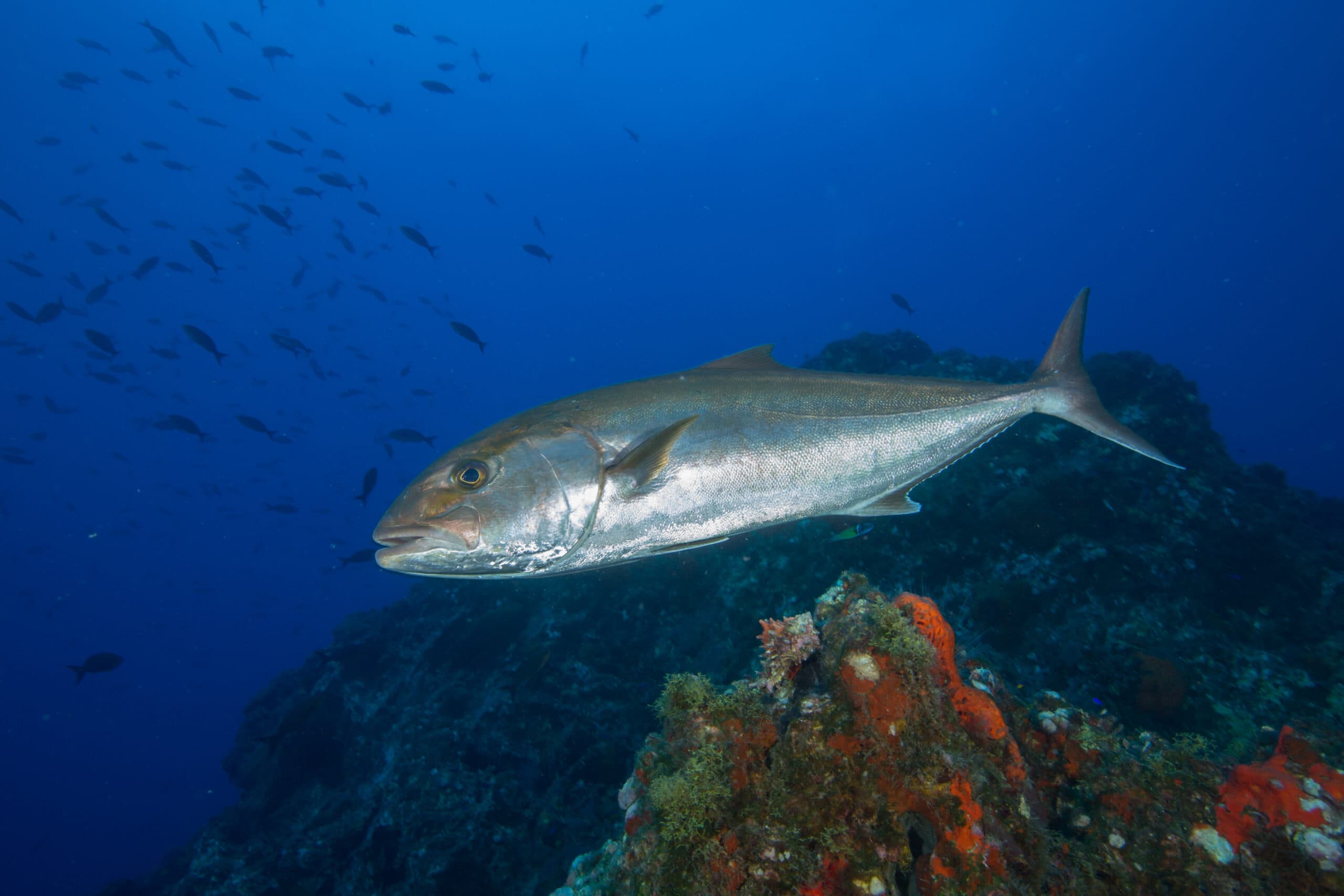
Greater amberjack Seriola dumerili swimming over a reef as a representative of the genus
NOAA Photo Library / Wikimedia Commons / CC BY 2.0
๐ŸŒ Read in Language:

โšก At a Glance

Animal group
Also Known As
Yellowtail, kingfish and regional names that vary by species
Diet Category
Carnivorous
Activity Rhythm
Active swimmers by day and night, with feeding shaped by prey and currents.
Wild Lifespan
Species have separate longevity records; greater amberjack can live to about 17 years
Typical Weight
Varies greatly among species and ages
Conservation Status
Varies by species
๐Ÿ’ก Key Biological Insight: The word amberjack names several species, so a fish identified only by that common name may not be the greater amberjack.

๐ŸŒณ Scientific Taxonomy Hierarchy

Amberjack is a shared name for fishes in the genus Seriola, within the jack family Carangidae. This is a genus profile; species differ in range, size, markings and fishery status.

KingdomAnimalia
PhylumChordata
ClassActinopterygii
OrderCarangiformes
FamilyCarangidae
GenusSeriola

Distinguishing Anatomical Features

  • โœ“Streamlined muscular body
  • โœ“Deeply forked tail
  • โœ“Narrow tail base built for fast swimming
  • โœ“Long pointed pectoral fins
  • โœ“Silvery sides with amber or yellow tones in many species

๐Ÿ“ Physical Measurements

Total LengthSpecies-dependent; greater amberjack can approach 6 ft
Body WeightSpecies-dependent
Tail LengthDeeply forked
WingspanNot applicable
Top SpeedNo dependable genus-wide maximumAll are capable swimmers, but performance differs by species and size.

๐ŸŽจ Appearance & Distinctive Markings

SilverBlue-grayOliveAmberYellowBrownWhiteBlack

Skin / Covering: Scales with a protective mucus layer

Sexual Dimorphism: Sexes often look similar externally, although females may grow larger in some species.

๐Ÿ—บ๏ธ Geographic Distribution & Habitat

Members of Seriola occur in warm-temperate, subtropical and tropical waters of the Atlantic, Indian and Pacific oceans; each species occupies only part of this combined range.

Offshore reefs, rocky banks, wrecks, drop-offs and open water; juveniles of some species shelter beneath floating objects.

Country-level distribution map

Native range
FijiTanzaniaWestern SaharaCanadaUnited States โ€” Native rangeKazakhstanUzbekistanPapua New GuineaIndonesiaArgentina โ€” Native rangeChileCongo - KinshasaSomaliaKenyaSudanChadHaitiDominican RepublicRussiaBahamasFalkland IslandsNorwayGreenlandFrench Southern TerritoriesTimor-LesteSouth Africa โ€” Native rangeLesothoMexico โ€” Native rangeUruguayBrazil โ€” Native rangeBoliviaPeruColombiaPanamaCosta RicaNicaraguaHondurasEl SalvadorGuatemalaBelizeVenezuelaGuyanaSurinameFrance โ€” Native rangeEcuadorPuerto RicoJamaicaCubaZimbabweBotswanaNamibiaSenegalMaliMauritaniaBeninNigerNigeriaCameroonTogoGhanaCรดte dโ€™IvoireGuineaGuinea-BissauLiberiaSierra LeoneBurkina FasoCentral African RepublicCongo - BrazzavilleGabonEquatorial GuineaZambiaMalawiMozambiqueEswatiniAngolaBurundiIsraelLebanonMadagascarPalestinian TerritoriesGambiaTunisiaAlgeriaJordanUnited Arab EmiratesQatarKuwaitIraqOmanVanuatuCambodiaThailandLaosMyanmar (Burma)VietnamNorth KoreaSouth Korea โ€” Native rangeMongoliaIndiaBangladeshBhutanNepalPakistanAfghanistanTajikistanKyrgyzstanTurkmenistanIranSyriaArmeniaSwedenBelarusUkrainePolandAustriaHungaryMoldovaRomaniaLithuaniaLatviaEstoniaGermanyBulgariaGreece โ€” Native rangeTรผrkiyeAlbaniaCroatiaSwitzerlandLuxembourgBelgiumNetherlandsPortugal โ€” Native rangeSpain โ€” Native rangeIrelandNew CaledoniaSolomon IslandsNew Zealand โ€” Native rangeAustralia โ€” Native rangeSri LankaChina โ€” Native rangeTaiwan โ€” Native rangeItaly โ€” Native rangeDenmarkUnited KingdomIcelandAzerbaijanGeorgiaPhilippinesMalaysiaBruneiSloveniaFinlandSlovakiaCzechiaEritreaJapan โ€” Native rangeParaguayYemenSaudi ArabiaCyprusMoroccoEgyptLibyaEthiopiaDjiboutiUgandaRwandaBosnia & HerzegovinaNorth MacedoniaSerbiaMontenegroKosovoTrinidad & TobagoSouth Sudan
Highlighted countries are recorded profile locations, not precise biological range boundaries.Map boundaries: Natural Earth

๐Ÿ’ก Did You Know?

  • ๐Ÿ’กForked tail produces strong thrust
  • ๐Ÿ’กStreamlined body reduces drag
  • ๐Ÿ’กNarrow caudal peduncle supports efficient cruising
  • ๐Ÿ’กLarge eyes aid hunting in offshore water
  • ๐Ÿ’กSchooling can improve feeding and protection

๐ŸŒฟ Conservation Status & Threats

No single assessment recorded

โ€œConservation and fishery status must be evaluated for each species and managed stock. Some populations are sustainably managed, while others have experienced overfishing.โ€

CITESNo genus-wide CITES listing

โš ๏ธ Major Threats to Amberjack

  • โ€ขOverfishing
  • โ€ขBycatch and identification errors
  • โ€ขDegradation of reefs and nursery habitat
  • โ€ขLost fishing gear
  • โ€ขClimate-driven shifts in temperature and prey

๐Ÿ”„ Life Cycle & Reproduction

Wild vs. Captivity Lifespan Comparison

๐ŸŒฟ In the WildVaries; greater amberjack can live to about 17 years
๐Ÿ  In Captivity (with veterinary care)Aquaculture survival depends on husbandry and species
Clutch / Litter SizeNot applicable; females broadcast many pelagic eggs, with number varying by species and size
Incubation / GestationPelagic eggs hatch after a short temperature-dependent development period
Fledging / WeaningNot applicable
Sexual MaturityDocumented separately for each species and population
Mating SystemBroadcast spawning
Nesting / Den TypeNo nest; eggs and sperm are released into open water

๐Ÿฆ… Behavior & Field Ecology

Carnivorous

๐ŸŒ Ecological Food Web & Relationships: Amberjacks are mid- to high-level predators that consume fishes, squid and crustaceans and in turn feed sharks, tunas and other large predators. Juveniles connect floating-surface habitats with reefs and offshore food webs.

Social Group SizeSolitary to large schools
Activity RhythmActive swimmers by day and night, with feeding shaped by prey and currents.
Feeding StrategyCarnivorous

๐Ÿฅฉ Primary Prey & Preferred Diet

โœ“ Schooling fishesโœ“ Squidโœ“ Crabsโœ“ Shrimpโœ“ Planktonic crustaceans as juveniles

๐Ÿ“ข Communication & Territorial Signals

  • Schooling position
  • Body orientation
  • Speed changes
  • Lateral-line sensing

๐Ÿพ Wild Temperament & Traits

โ€ข Activeโ€ข Predatoryโ€ข Schooling

๐Ÿค Human Interaction & Pet Advisory

โš ๏ธ Strictly Wild Species
๐Ÿšซ

Can You Keep a Amberjack as a Pet?

Unsuitable for home aquariums because of size, constant swimming and specialized marine needs.

Domestication StatusSeveral species are farmed, but they are not domesticated in the sense of a household animal.
Danger to HumansLow direct danger; food safety varies by region
Economic & Ecotourism RoleCommercial seafood, recreational fishing, aquaculture, tourism and marine research.

โš ๏ธ Behavioral Risk Factors & Wildlife Safety

  • Large fish can injure handlers with hooks or powerful movement
  • Large tropical individuals may carry ciguatoxin
  • Fishing around wrecks and offshore banks has environmental hazards

๐ŸŒ Ecological Food Web & Relationships

Species in this group

  • โ€”
  • โ€”
  • โ€”
  • โ€”
  • โ€”
  • โ€”
  • โ€”
  • โ€”
  • โ€”

๐Ÿฆ… Natural Predators (3)

SharkSelachimorpha
TunaThunnini
SeabirdAves

๐Ÿงฌ Related Species (4)

Greater AmberjackSeriola dumeriliLarge, widespread member of the genus
Almaco JackSeriola rivolianaDeep-bodied member found in tropical and subtropical seas
Japanese AmberjackSeriola quinqueradiataNorthwest Pacific member widely raised in aquaculture
Yellowtail AmberjackSeriola lalandiTemperate-water member also called yellowtail kingfish

What the name amberjack covers

Amberjack is a shared name for several fast, open-water fishes in the genus Seriola. It does not identify one species everywhere. The group includes the greater amberjack, almaco jack, lesser amberjack, banded rudderfish, yellowtail amberjack and Japanese amberjack, among other accepted members. Names also change by region: yellowtail, kingfish, hamachi and kanpachi may refer to different Seriola species or market forms. This profile therefore treats amberjacks as a genus and avoids assigning every member the size, range or conservation status of the greater amberjack.

Seriola belongs to the jack family Carangidae. The World Register of Marine Species recognizes the marine genus and records accepted species as well as many older synonyms. That taxonomic record matters because historical fishery and natural-history accounts may use names that are no longer accepted. NOAAโ€™s Gulf reef-fish list illustrates the diversity within the genus: greater amberjack, lesser amberjack, almaco jack and banded rudderfish all occur in the same management region but are tracked separately.

Shape, color and identification

Amberjacks share the streamlined, muscular shape expected of active predators. Their bodies are deeper than those of some other jacks, with a narrow tail base, deeply forked tail and long sickle-shaped pectoral fins. Most have a bluish, olive, brownish or gray back, paler sides and a silvery underside. Yellow or amber tones often appear along the flank, fins or tail, but markings differ among species and change with age.

Identification requires more than color. Greater amberjack can show a dark stripe from the snout through the eye toward the first dorsal fin, while juveniles have dark vertical bars. Almaco jacks tend to have a deeper, more compressed body and a taller dorsal-fin profile. Lesser amberjack remain smaller and have proportionally large eyes. Young banded rudderfish have strong body bands and often shelter beneath floating objects. Because these features overlap, location, fin proportions, body depth, size and counts made by trained observers may all be needed.

Ocean range and habitat

As a genus, amberjacks occur across warm-temperate, subtropical and tropical oceans. Individual species have their own ranges. Greater amberjack is broadly distributed in the Atlantic, Mediterranean and parts of the Indo-Pacific, while yellowtail amberjack occurs in temperate waters of the Southern Hemisphere and parts of the Pacific. Japanese amberjack is centered in the northwest Pacific. A single country map can only summarize representative waters for such a broad group; it cannot imply that every member occurs in every highlighted place.

Adults commonly associate with reefs, rocky banks, drop-offs, offshore pinnacles, wrecks and other structure where currents concentrate prey. Some occupy coastal shelves, while others move over deep offshore banks. Juveniles of several species live nearer the surface and gather beneath drifting algae, debris or other floating cover. Amberjacks are capable swimmers, and seasonal movements can connect feeding areas with spawning grounds.

Diet and hunting

Amberjacks are predatory fishes. Adults pursue schooling fishes and also take squid and crustaceans. Greater amberjack documented by the Florida Museum consumes both bottom-associated and open-water fishes, including scads and sardines. Juveniles start with smaller prey such as planktonic crustaceans and other invertebrates before shifting toward larger prey as their swimming and handling abilities develop.

The forked tail and firm, streamlined body support rapid bursts and sustained pursuit. Amberjacks may patrol reef edges or attack tightly packed baitfish in open water. Their role is not identical in every ecosystem, but large members can be high-level consumers that transfer energy from smaller fishes and squid to larger predators. Tunas, sharks and other large fishes may take them, while seabirds can capture small juveniles near the surface.

Growth, spawning and life cycle

Life histories vary across the genus, so measurements for greater amberjack should not be treated as universal. NOAA reports that greater amberjack can reach about six feet and live to 17 years, making it one of the largest familiar members. Lesser amberjack and banded rudderfish are smaller. Growth, age at maturity and spawning season also differ by species and population.

Amberjacks reproduce by broadcast spawning: females and males release eggs and sperm into open water. The buoyant eggs develop as part of the plankton, and larvae feed on minute organisms. In the western Atlantic, greater amberjack spawning occurs offshore during spring and early summer, but timing shifts with latitude and species. Young fish use floating material as shelter and feeding habitat before moving toward reefs and deeper structure. The large number of eggs does not guarantee survival; most larvae and juveniles become prey or fail to find suitable conditions.

Fisheries, aquaculture and food safety

Amberjacks support commercial fisheries, recreational fishing and aquaculture. Greater amberjack is managed as a reef fish in U.S. Atlantic and Gulf waters, with stock assessments, catch limits, seasons and size rules that vary by jurisdiction. Japanese amberjack and yellowtail are major aquaculture fishes in parts of Asia and elsewhere. Because common and market names overlap, consumers should look for the scientific name and harvest origin when those details matter.

Large tropical reef predators can accumulate ciguatoxins produced through the food web. The Florida Museum notes a ciguatera risk in large greater amberjack, particularly in affected regions. Cooking does not reliably destroy ciguatoxin, and a fish can look and smell normal. Local public-health and fishery advisories are therefore more useful than a general rule. Parasites may also occur, but handling and inspection guidance should come from local authorities and qualified seafood professionals.

Conservation and responsible management

There is no single conservation category for the genus. Each amberjack species and stock must be assessed separately. NOAA reports that U.S. greater amberjack stocks have had different histories: the South Atlantic stock was not overfished in its cited assessment, while the Gulf stock experienced excessive fishing and was declared overfished in 2001. Those findings describe managed stocks, not every greater amberjack worldwide and not all Seriola.

Fishing pressure is the clearest direct concern for heavily targeted populations. Habitat change around reefs and coastal nurseries, lost fishing gear, warming seas and altered prey fields may add stress. Effective management uses species-level identification, reliable landings data, age and growth studies, stock assessments and enforceable limits. Anglers can help by learning local identification rules, releasing prohibited or undersized fish carefully and reporting tags. Buyers can favor legally harvested seafood with traceable species and origin.

Watching amberjacks in the wild

Divers often encounter amberjacks cruising above reefs or circling wrecks, sometimes singly and sometimes in schools. Their confident approach and reflective flanks make them striking animals, but observers should give them room and avoid baiting wildlife. From a boat, anglers should prepare release tools before fishing so an unwanted fish spends as little time out of water as possible. Regulations can change, and identification should be confirmed before a catch is retained.

Seeing an amberjack is best understood as the start of identification rather than its end. Body proportions, fin shape, markings, size, location and habitat narrow the possibilities. A photograph showing the full side of the fish can help experts, but measurements or close examination may still be necessary. Treating the name as a genus-level label preserves that uncertainty and prevents the biology of the largest, best-known species from being imposed on its relatives.

Sources

โ“ Frequently Asked Questions

Answers to frequently asked questions verified against peer-reviewed zoological research.

No. Amberjack is a common name used for several fishes in the genus Seriola, including greater amberjack, lesser amberjack, almaco jack and yellowtail amberjack.