
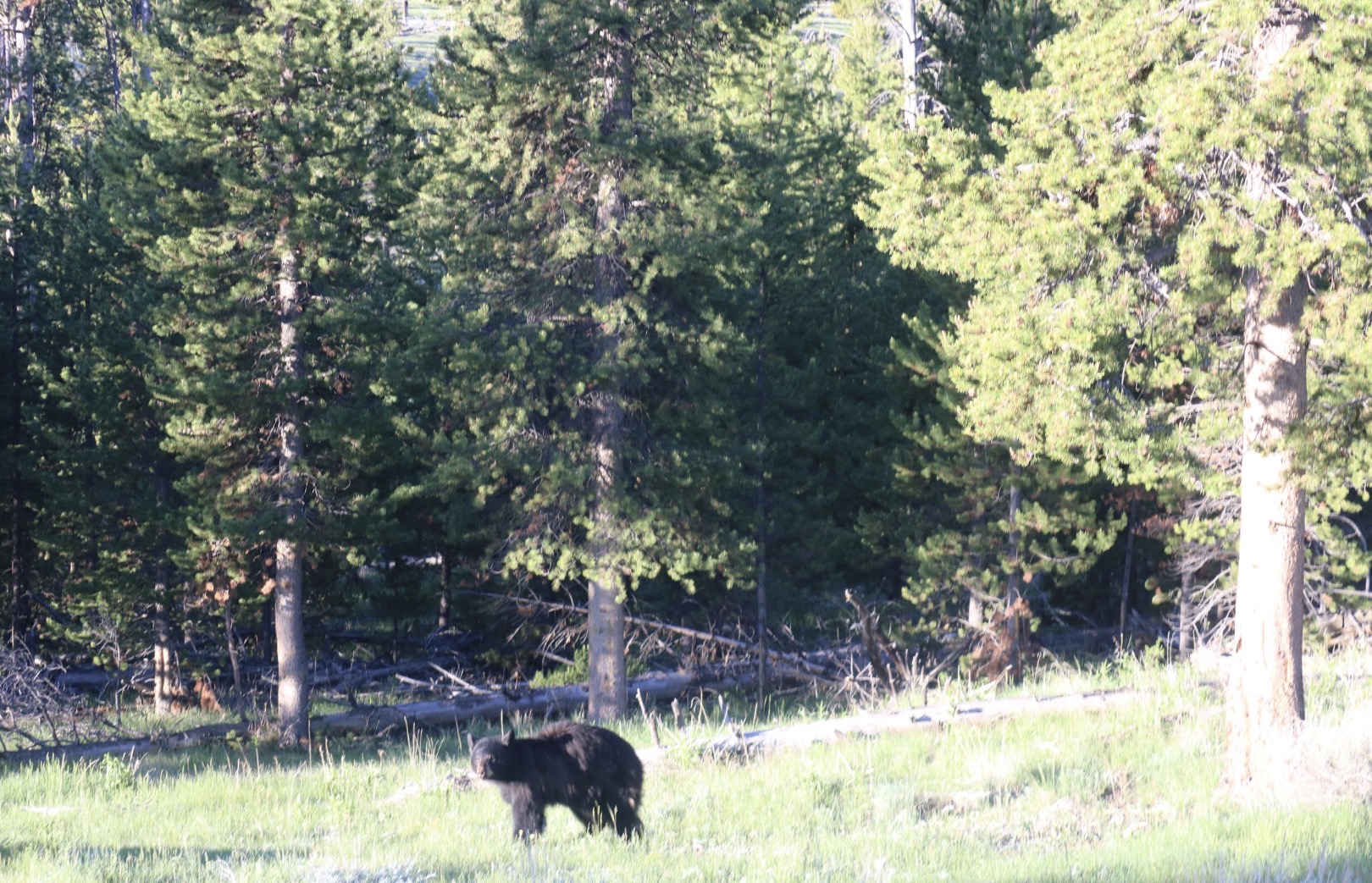
American Black Bear (Ursus americanus) is a medium-sized bear native to North America. Despite its name, its coat can be black, chocolate brown, cinnamon, blond, blue-gray or, in rare coastal populations, nearly white. Flexible feeding, excellent memory and strong climbing ability help it live from humid forests to mountains, swamps and northern coasts. This guide separates well-supported biology from common assumptions and covers identification, range, habitat, diet, behavior, reproduction and conservation.
Identification
Adults have a compact body, short tail, rounded ears, long muzzle and plantigrade feet with five non-retractable claws. The rump is often higher than the shoulders. Coat color varies geographically and individually, so the absence of black fur does not rule out the species. A pale chest patch occurs on some animals. Adult males are typically much heavier than females, but both sexes share the same broad color range and body plan.
Identification should combine body shape, markings, size, voice or movement, and location. One feature by itself can overlap with a related animal, a juvenile, or an individual in unusual light.
Photographs are most useful when they preserve scale and show several diagnostic features. Handling or repositioning a wild american black bear for identification can cause stress and is unnecessary.
Size and physical adaptations
American Black Bear typically measures 1.5–1.8 m commonly and weighs 45–272 kg typical adult range. Body mass varies greatly with sex, age, season, latitude and food supply; exceptional animals fall outside common ranges.
Its useful adaptations include curved claws and rotating forelimbs support tree climbing, exceptional smell detects distant food, powerful jaws process nuts, roots and carrion, seasonal fat storage sustains winter denning, delayed implantation aligns birth with denning, flexible activity reduces conflict with people. These traits work together in the animal’s normal setting rather than serving as isolated curiosities.
Published measurements may use different methods, life stages or sample locations. Comparing figures responsibly means checking what was measured rather than selecting the largest number available.
Range and distribution
American black bears occupy much of forested Canada and Alaska, broad parts of the contiguous United States and isolated mountain regions of northern Mexico. Historic range contracted with settlement but populations have recovered or expanded in many managed regions. The native range includes Canada, United States, Mexico.
A country-level map indicates broad distribution, not continuous occupation. Climate, elevation, water, vegetation, prey, breeding sites, barriers and survey effort all affect where records occur.
Records near the edge of the range deserve careful documentation because they may reflect natural movement, improved survey coverage, accidental transport or a genuine distribution change.
Habitat
Coniferous and deciduous forest, wooded mountains, swamps, coastal meadows, chaparral, alpine edges and mosaics that combine cover, water and seasonal foods.
Dense cover provides security and den sites, while forest openings, wetlands, berry patches, oak woods and shorelines provide changing foods. Home ranges expand when resources are sparse. Bears may cross roads and developed areas, especially when garbage or crops are accessible. Protecting a population therefore requires the feeding, shelter and breeding features that make a site usable, along with connections that allow movement.
Microhabitat matters. Shade, soil, current, moisture, shelter or host plants can determine whether a small area is usable even when the surrounding landscape appears suitable.
Diet and feeding
American Black Bear is a opportunistic omnivore, usually dominated by plant material. Important foods include berries and fruits, acorns and other nuts, grasses and forbs, roots, ants and beetle larvae, carrion, fish and occasional vertebrate prey. Seasonal food drives movement. Bears graze new vegetation in spring, seek insects and fruits in summer, and enter intense autumn feeding when nuts and berries allow rapid fat gain. Local diets vary: coastal bears may take salmon, while inland bears may rely heavily on mast crops.
Diet changes with age, season, location and food supply. A dramatic prey record does not establish what most individuals eat most of the time; repeated field observations provide a stronger picture.
Feeding opportunities also create risk. An animal focused on prey may be less alert to predators, traffic or people, while contaminated prey can transfer pollutants through the food web.
Behavior and communication
Often active by day in quiet habitat, shifting toward dawn, dusk or night around people. Adults are mostly solitary except during courtship and when mothers raise cubs. They climb, swim, dig and remember productive feeding sites. In cold regions they spend months in dens with sharply reduced metabolism, usually without eating, drinking, urinating or defecating, yet can wake if disturbed.
Black bears rely heavily on scent from urine, body rubbing and marking trees. Posture, ear position, jaw popping, huffs, bawls and grunts communicate alarm, stress or contact. Mothers and cubs use soft vocalizations at close range. Behavior should be interpreted in context: alarm, courtship, feeding and temperature regulation can produce very different actions from the same animal.
Daily schedules are flexible responses, not rigid rules. Weather, breeding condition, disturbance, tides or food can move activity into a different part of the day.
Reproduction and development
Mating occurs in late spring or summer. After fertilization, development pauses through delayed implantation. If a female has adequate fat reserves, embryos implant in autumn and cubs are born in the den during midwinter. Usually 1–3 cubs, sometimes 4 or more Cubs are born blind, nearly hairless and weighing only a few hundred grams. They nurse in the den, emerge in spring, learn foods and travel routes from their mother, and usually remain with her for about 16–18 months.
Young animals face different risks and may use different microhabitats or food than adults. Breeding success depends on adult condition, suitable sites and the survival of offspring through vulnerable early stages.
Counts of eggs or young describe reproductive output, not the number expected to reach adulthood. Mortality is normally greatest during eggs, larval or juvenile stages.
Predators and ecological role
By eating fruit and moving across large ranges, black bears disperse seeds. They turn logs and soil while seeking insects, consume carrion and sometimes prey on young ungulates. Their need for connected cover makes them an important focus of landscape conservation. Documented or likely predators include Humans, Brown Bear, Gray Wolf, Cougar.
This animal is both a consumer and a food source. Its influence comes through many repeated interactions, so ecological claims should be based on measured populations rather than assumptions drawn from appearance.
Predator and prey relationships differ among places. A species can be ecologically influential without being abundant everywhere, and its role can change across its range.
Relationship with people
Black bears are culturally important wildlife and support tourism and regulated harvests. Most avoid people, but access to garbage, birdseed, pet food or unsecured camping supplies can teach a bear to seek human spaces. Food conditioning increases property damage and can ultimately lead to the bear being killed.
Give bears space, never feed them and follow local food-storage rules. If you encounter a black bear, stay calm, group together, make yourself recognizable as human and back away without running. Use bear spray where recommended and follow the responsible land agency’s current guidance. Responsible observation means keeping an appropriate distance, avoiding capture or feeding, protecting habitat and following local wildlife or invasive-species guidance.
Wildlife guidance should come from the responsible local agency because collection rules, reporting requests and appropriate responses differ between native and introduced ranges.
Conservation
The IUCN Red List classifies Ursus americanus as Least Concern. The species is widespread and many populations are stable or increasing under regulated management, although isolated Mexican populations and local habitats require continued protection. The reported global trend is Increasing overall with regional variation.
Important pressures include habitat fragmentation, vehicle collisions, conflict removals, illegal killing and trade, poor mast years and climate change, human food conditioning. Global status can hide local decline or recovery, so current regional monitoring and habitat management remain necessary.
The most useful conservation action follows the documented pressure. Protecting breeding sites, reducing road deaths or limiting pollutants can require different tools in different populations.
