
Animal group

Anemonefish

Amphiprioninae

Small reef damselfishes that live among stinging sea-anemone tentacles in one of the ocean’s best-known mutualisms.

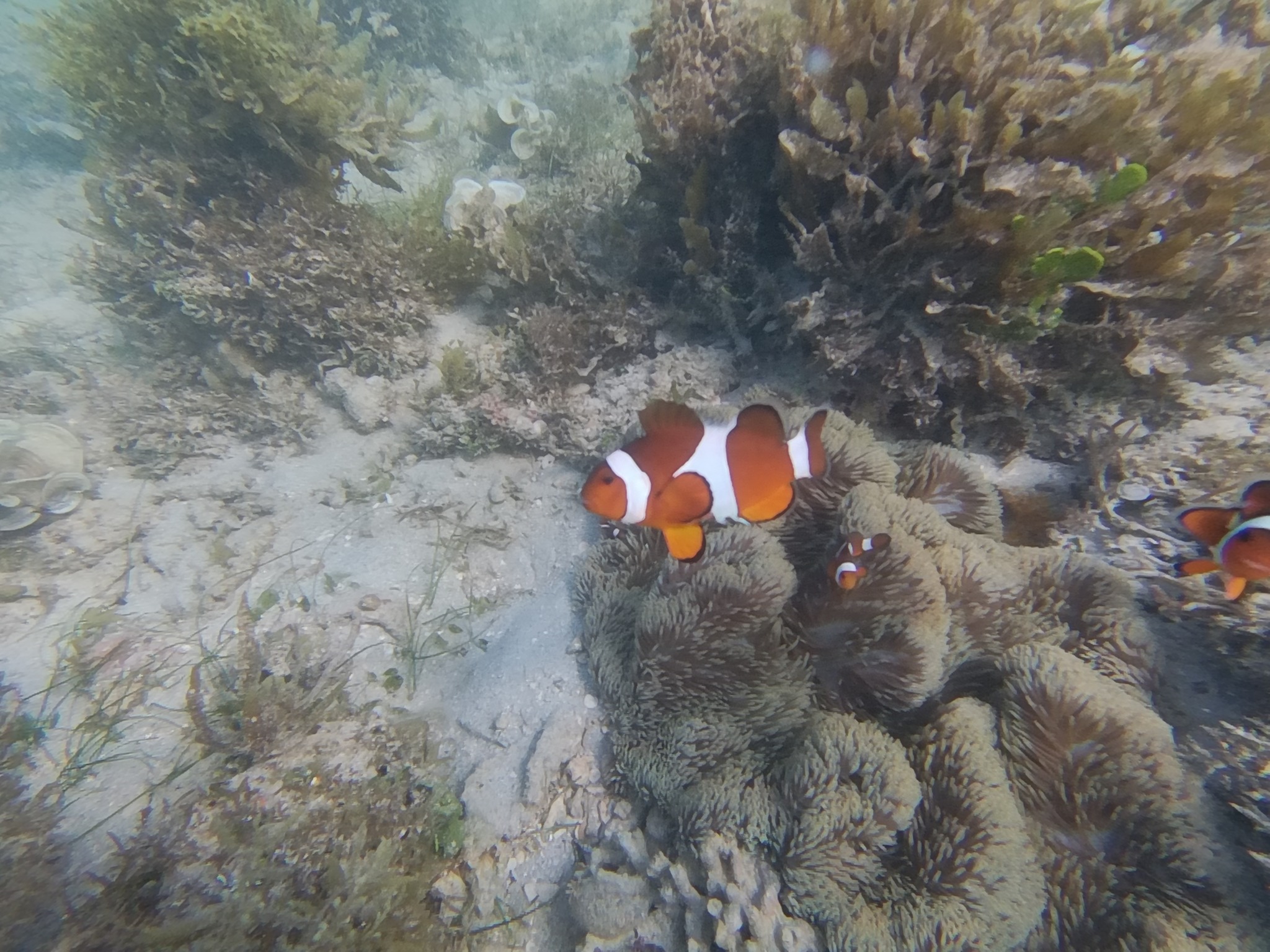
Ocellaris anemonefish Amphiprion ocellaris beside a host sea anemone in the Philippines
Zoltán Stekkelpak / Wikimedia Commons / CC0 1.0
🌐 Read in Language:

⚡ At a Glance

Animal group
Also Known As
Clownfish, clown anemonefish
Diet Category
Omnivore feeding on plankton, small benthic animals and algae
Activity Rhythm
Mostly diurnal and active around the host during daylight.
Wild Lifespan
Species-specific; some wild females may survive for decades
Typical Weight
Highly species- and size-dependent; no single reliable group range
Conservation Status
Varies by species
💡 Key Biological Insight: If the dominant female disappears, the breeding male can change sex and become female while the largest immature fish develops into the new male.

🌳 Scientific Taxonomy Hierarchy

Anemonefish form the damselfish subfamily Amphiprioninae within the family Pomacentridae. Current treatments place the living species in the genus Amphiprion, including the spinecheek anemonefish formerly separated as Premnas. This page describes the group; measurements, ranges and conservation status differ among species.

KingdomAnimalia
PhylumChordata
ClassActinopterygii
OrderOvalentaria
FamilyPomacentridae
GenusAmphiprion
SpeciesAbout 31 living species

Distinguishing Anatomical Features

  • ✓Anemonefish are small, deep-bodied reef fishes with a continuous dorsal fin and bright patterns of orange, red, yellow, brown or black, commonly crossed by one to three white or bluish bars. Species differ in bar width, fin color, body proportions and host preference, and juveniles can look different from adults.
  • ✓Protective mucus reduces discharge of host anemone stinging cells
  • ✓Laterally compressed body maneuvers through dense tentacles
  • ✓Size-based hierarchy limits conflict within a host
  • ✓Protandrous sex change preserves a breeding pair
  • ✓Strong site fidelity keeps adults close to shelter

📏 Physical Measurements

Total Lengthroughly 1.9–6.7 in across species
Body WeightHighly species- and size-dependent; no single reliable group range
Tail LengthShort to moderate, usually rounded or truncate
WingspanNot applicable
Top SpeedNo dependable universal maximumMovement changes with context and conditions.

🎨 Appearance & Distinctive Markings

OrangeRedYellowBlackBrownWhiteBlue-grayMaroon

Skin / Covering: Scales covered by a specialized mucus layer

Sexual Dimorphism: The dominant female in a social group is usually the largest individual. The breeding male is second largest; smaller nonbreeders remain below them in a size-based hierarchy.

🗺️ Geographic Distribution & Habitat

Warm shallow seas of the tropical Indo-Pacific, from the Red Sea and eastern Africa across the Indian Ocean to Southeast Asia, northern Australia and many western and central Pacific islands. No native anemonefish occurs in the Atlantic Ocean.

Coral reefs, reef lagoons and protected coastal slopes where suitable host sea anemones survive.

Country-level distribution map

Native range
Fiji — Native rangeTanzania — Native rangeWestern SaharaCanadaUnited StatesKazakhstanUzbekistanPapua New Guinea — Native rangeIndonesia — Native rangeArgentinaChileCongo - KinshasaSomalia — Native rangeKenya — Native rangeSudan — Native rangeChadHaitiDominican RepublicRussiaBahamasFalkland IslandsNorwayGreenlandFrench Southern TerritoriesTimor-LesteSouth Africa — Native rangeLesothoMexicoUruguayBrazilBoliviaPeruColombiaPanamaCosta RicaNicaraguaHondurasEl SalvadorGuatemalaBelizeVenezuelaGuyanaSurinameFranceEcuadorPuerto RicoJamaicaCubaZimbabweBotswanaNamibiaSenegalMaliMauritaniaBeninNigerNigeriaCameroonTogoGhanaCôte d’IvoireGuineaGuinea-BissauLiberiaSierra LeoneBurkina FasoCentral African RepublicCongo - BrazzavilleGabonEquatorial GuineaZambiaMalawiMozambique — Native rangeEswatiniAngolaBurundiIsraelLebanonMadagascar — Native rangePalestinian TerritoriesGambiaTunisiaAlgeriaJordanUnited Arab EmiratesQatarKuwaitIraqOmanVanuatu — Native rangeCambodiaThailand — Native rangeLaosMyanmar (Burma) — Native rangeVietnam — Native rangeNorth KoreaSouth KoreaMongoliaIndia — Native rangeBangladesh — Native rangeBhutanNepalPakistanAfghanistanTajikistanKyrgyzstanTurkmenistanIranSyriaArmeniaSwedenBelarusUkrainePolandAustriaHungaryMoldovaRomaniaLithuaniaLatviaEstoniaGermanyBulgariaGreeceTürkiyeAlbaniaCroatiaSwitzerlandLuxembourgBelgiumNetherlandsPortugalSpainIrelandNew Caledonia — Native rangeSolomon Islands — Native rangeNew ZealandAustralia — Native rangeSri Lanka — Native rangeChina — Native rangeTaiwan — Native rangeItalyDenmarkUnited KingdomIcelandAzerbaijanGeorgiaPhilippines — Native rangeMalaysia — Native rangeBruneiSloveniaFinlandSlovakiaCzechiaEritrea — Native rangeJapan — Native rangeParaguayYemenSaudi ArabiaCyprusMoroccoEgypt — Native rangeLibyaEthiopiaDjibouti — Native rangeUgandaRwandaBosnia & HerzegovinaNorth MacedoniaSerbiaMontenegroKosovoTrinidad & TobagoSouth Sudan
Highlighted countries are recorded profile locations, not precise biological range boundaries.Map boundaries: Natural Earth

💡 Did You Know?

  • 💡Protective mucus reduces discharge of host anemone stinging cells
  • 💡Laterally compressed body maneuvers through dense tentacles
  • 💡Size-based hierarchy limits conflict within a host
  • 💡Protandrous sex change preserves a breeding pair
  • 💡Strong site fidelity keeps adults close to shelter

🌿 Conservation Status & Threats

No single assessment recorded

“The anemonefish group is not assessed as a single Red List taxon. Species have different ranges and risk levels, so no one conservation category applies to all members.”

CITESNo single CITES listing applies to the entire group

⚠️ Major Threats to Anemonefish

  • •Coral-reef degradation
  • •Loss and bleaching of host anemones
  • •Marine heat waves
  • •Pollution and sedimentation
  • •Unsustainable aquarium collection
  • •Coastal development
  • •Ocean acidification

🔄 Life Cycle & Reproduction

Wild vs. Captivity Lifespan Comparison

🌿 In the WildSpecies-specific; some wild females may survive for decades
🏠 In Captivity (with veterinary care)Several species breed in aquaculture, reducing pressure on wild reefs when stock is responsibly sourced.
Clutch / Litter SizeOften hundreds of eggs; number varies greatly with species and female size
Incubation / GestationUsually about 6–10 days depending on species and temperature
Fledging / WeaningLarvae receive no care after hatching. Juveniles that survive settlement join a host hierarchy as small nonbreeders.
Sexual MaturityTiming depends on species, growth and position in the social hierarchy
Mating SystemA socially monogamous breeding pair within a size-ranked group
Nesting / Den TypeAdhesive egg patch on hard substrate beside or beneath the host anemone

🦅 Behavior & Field Ecology

Omnivore feeding on plankton, small benthic animals and algae

🌐 Ecological Food Web & Relationships: The fish-anemone association is mutually beneficial. Anemones shelter fish from many predators, while fish defend hosts, remove some debris and parasites, circulate oxygenated water and supply nutrients. The partnership varies among species and environments rather than operating identically in every case.

Social Group SizeDominance hierarchy centered on one breeding female and one breeding male
Activity RhythmMostly diurnal and active around the host during daylight.
Feeding StrategyOmnivore feeding on plankton, small benthic animals and algae

🥩 Primary Prey & Preferred Diet

✓ Copepods✓ Zooplankton✓ Small crustaceans✓ Worm fragments✓ Algae✓ Food scraps from host anemones

📢 Communication & Territorial Signals

  • Threat pops
  • Submissive body quivers
  • Chasing
  • Fin and body displays

🐾 Wild Temperament & Traits

• Territorial• Socially hierarchical• Host-attached

🤝 Human Interaction & Pet Advisory

🐾 Domestic / Pet Companion
🐶

Anemonefish as a Pet Companion

Some species can be kept by experienced marine aquarists, but they require stable saltwater chemistry, appropriate space, compatible tankmates and responsible sourcing. A host anemone is not automatically required in captivity and adds demanding care needs.

Domestication StatusCaptive-bred color varieties exist, but anemonefish are not domesticated in the agricultural sense.
Danger to HumansHarmless to people in normal encounters
Economic & Ecotourism RoleReef mutualism, public education, tourism, aquarium aquaculture and research on social control and sex change.

⚠️ Behavioral Risk Factors & Wildlife Safety

  • Territorial fish may nip but cannot seriously injure a person
  • Host anemones may sting sensitive skin
  • Reef contact can injure people and damage habitat

🌐 Ecological Food Web & Relationships

Species in this group

  • —
  • —
  • —
  • —
  • —

🦅 Natural Predators (4)

Large Reef FishActinopterygii
Moray EelMuraenidae
WrasseLabridae
CrabBrachyura

🧬 Related Species (3)

DamselfishPomacentridaeFamily that contains anemonefish
Clown AnemonefishAmphiprion ocellarisWidely recognized orange-and-white representative
Spinecheek AnemonefishAmphiprion biaculeatusLargest member of the group

Anemonefish (Amphiprioninae) are a group of about 31 small damselfish species whose adults maintain close relationships with a limited set of host sea anemones across tropical Indo-Pacific reefs. This guide separates well-supported biology from common assumptions and covers identification, range, habitat, diet, behavior, reproduction and conservation.

Identification

Anemonefish are small, deep-bodied reef fishes with a continuous dorsal fin and bright patterns of orange, red, yellow, brown or black, commonly crossed by one to three white or bluish bars. Species differ in bar width, fin color, body proportions and host preference, and juveniles can look different from adults. The dominant female in a social group is usually the largest individual. The breeding male is second largest; smaller nonbreeders remain below them in a size-based hierarchy.

Identification should combine body shape, markings, size, voice or movement, and location. One feature by itself can overlap with a related animal, a juvenile, or an individual in unusual light.

Photographs are most useful when they preserve scale and show several diagnostic features. Handling or repositioning a wild anemonefish for identification can cause stress and is unnecessary.

Size and physical adaptations

Anemonefish typically measures roughly 4.8–17 cm across species and weighs Highly species- and size-dependent; no single reliable group range. The smallest and largest values come from different species and must not be treated as the normal size of every anemonefish.

Its useful adaptations include protective mucus reduces discharge of host anemone stinging cells, laterally compressed body maneuvers through dense tentacles, size-based hierarchy limits conflict within a host, protandrous sex change preserves a breeding pair, strong site fidelity keeps adults close to shelter. These traits work together in the animal’s normal setting rather than serving as isolated curiosities.

Published measurements may use different methods, life stages or sample locations. Comparing figures responsibly means checking what was measured rather than selecting the largest number available.

Range and distribution

Warm shallow seas of the tropical Indo-Pacific, from the Red Sea and eastern Africa across the Indian Ocean to Southeast Asia, northern Australia and many western and central Pacific islands. No native anemonefish occurs in the Atlantic Ocean. The native range includes Red Sea and East African coastal states, Indian Ocean islands, South and Southeast Asia, Northern Australia, New Guinea, Western and central Pacific islands.

A country-level map indicates broad distribution, not continuous occupation. Climate, elevation, water, vegetation, prey, breeding sites, barriers and survey effort all affect where records occur.

Records near the edge of the range deserve careful documentation because they may reflect natural movement, improved survey coverage, accidental transport or a genuine distribution change.

Habitat

Coral reefs, reef lagoons and protected coastal slopes where suitable host sea anemones survive.

Adults remain within or close to a host anemone, retreating among its tentacles when threatened. Newly settled juveniles must locate a compatible host, and some species accept many host-anemone species while others specialize on one or a few. Protecting a population therefore requires the feeding, shelter and breeding features that make a site usable, along with connections that allow movement.

Microhabitat matters. Shade, soil, current, moisture, shelter or host plants can determine whether a small area is usable even when the surrounding landscape appears suitable.

Diet and feeding

Anemonefish is a omnivore feeding on plankton, small benthic animals and algae. Important foods include copepods, zooplankton, small crustaceans, worm fragments, algae, food scraps from host anemones. Fish pick drifting plankton from the water, graze algae near the host and take small prey or leftovers. Waste nutrients and water movement produced by the fish can benefit the anemone and its symbiotic algae.

Diet changes with age, season, location and food supply. A dramatic prey record does not establish what most individuals eat most of the time; repeated field observations provide a stronger picture.

Feeding opportunities also create risk. An animal focused on prey may be less alert to predators, traffic or people, while contaminated prey can transfer pollutants through the food web.

Behavior and communication

Mostly diurnal and active around the host during daylight. Each host commonly contains a dominant female, one breeding male and smaller nonbreeders arranged by size. Aggression maintains the hierarchy, while adults defend their anemone against rivals and some anemone-eating fishes.

Anemonefish use visual displays, chasing and sounds made during dominance encounters. Larger fish may produce threatening pops, while submissive individuals signal status through body posture and movement. Behavior should be interpreted in context: alarm, courtship, feeding and temperature regulation can produce very different actions from the same animal.

Daily schedules are flexible responses, not rigid rules. Weather, breeding condition, disturbance, tides or food can move activity into a different part of the day.

Reproduction and development

A bonded pair spawns on cleaned rock close to the host. The female lays adhesive eggs and the male fertilizes them externally, then fans, cleans and guards the clutch until hatching. Often hundreds of eggs; number varies greatly with species and female size Larvae hatch into open water and spend roughly one to two weeks in the plankton before settling to a reef and locating a host anemone.

Young animals face different risks and may use different microhabitats or food than adults. Breeding success depends on adult condition, suitable sites and the survival of offspring through vulnerable early stages.

Counts of eggs or young describe reproductive output, not the number expected to reach adulthood. Mortality is normally greatest during eggs, larval or juvenile stages.

Predators and ecological role

The fish-anemone association is mutually beneficial. Anemones shelter fish from many predators, while fish defend hosts, remove some debris and parasites, circulate oxygenated water and supply nutrients. The partnership varies among species and environments rather than operating identically in every case. Documented or likely predators include Large Reef Fish, Moray Eel, Wrasse, Crab.

This animal is both a consumer and a food source. Its influence comes through many repeated interactions, so ecological claims should be based on measured populations rather than assumptions drawn from appearance.

Predator and prey relationships differ among places. A species can be ecologically influential without being abundant everywhere, and its role can change across its range.

Relationship with people

Anemonefish are major aquarium-trade and ecotourism animals. Captive breeding is established for several popular species, but wild collection, destructive fishing and poor transport can harm reefs and fish welfare.

Observe without touching or pursuing the fish or its host. Sea anemones can sting skin, and standing on reefs damages living habitat. Aquarium keepers should use captive-bred fish where possible and match species, tank size and water quality to expert marine guidance. Responsible observation means keeping an appropriate distance, avoiding capture or feeding, protecting habitat and following local wildlife or invasive-species guidance.

Wildlife guidance should come from the responsible local agency because collection rules, reporting requests and appropriate responses differ between native and introduced ranges.

Conservation

The anemonefish group is not assessed as a single Red List taxon. Species have different ranges and risk levels, so no one conservation category applies to all members. Different species and reef systems show different trends.

Important pressures include coral-reef degradation, loss and bleaching of host anemones, marine heat waves, pollution and sedimentation, unsustainable aquarium collection, coastal development, ocean acidification. Global status can hide local decline or recovery, so current regional monitoring and habitat management remain necessary.

The most useful conservation action follows the documented pressure. Protecting breeding sites, reducing road deaths or limiting pollutants can require different tools in different populations.

Sources and further reading

❓ Frequently Asked Questions

Answers to frequently asked questions verified against peer-reviewed zoological research.

Yes. Clownfish is the familiar common name for anemonefish, a group of about 31 species in the damselfish family.