
What was Anteosaurus?
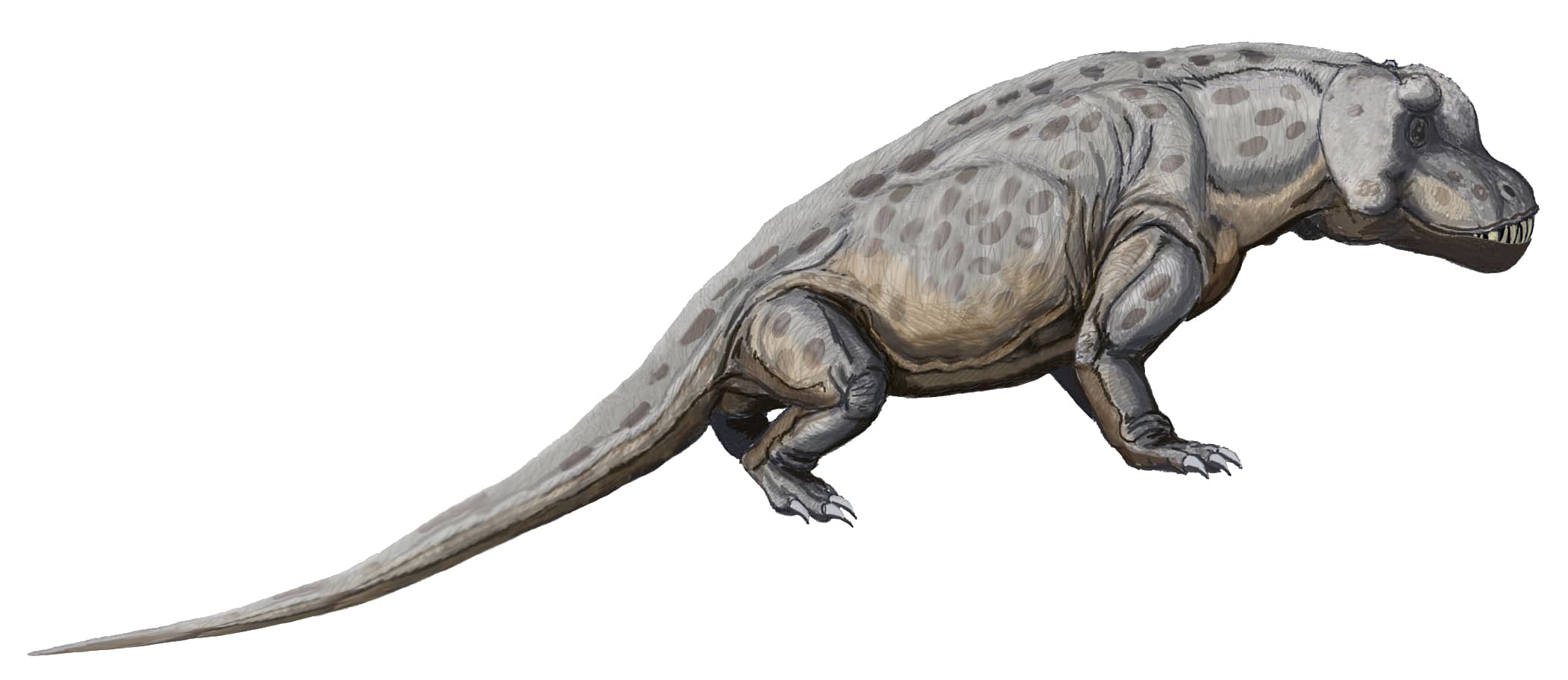
Anteosaurus magnificus was a large predatory therapsid from the middle Permian of what is now South Africa. It was not a dinosaur: it belonged to Synapsida, the broad evolutionary branch that also includes mammals. Within that branch it was a dinocephalian, one of an early radiation of large-bodied therapsids. The name Anteosaurus refers to Antaeus, the powerful figure of Greek mythology, while magnificus reflects the animal’s imposing skull.
This profile covers the species Anteosaurus magnificus. Fossils assigned to it come chiefly from the Tapinocephalus Assemblage Zone of the Beaufort Group in South Africa’s Karoo Basin. Researchers know the animal best from skulls and jaws; the postcranial skeleton is much less complete. Any full-body restoration therefore combines direct fossil evidence with cautious comparison to related anteosaurids.
Skull, teeth and body form
The skull was deep, broad and heavily built, with thickened bone above and around the eye sockets. Its snout carried large incisors and prominent canine-like teeth, followed by smaller cutting teeth. These features identify Anteosaurus as a carnivore capable of gripping and damaging substantial prey. The lower jaw was also robust, although exact bite force has not been measured directly from a living animal and depends on reconstruction assumptions.
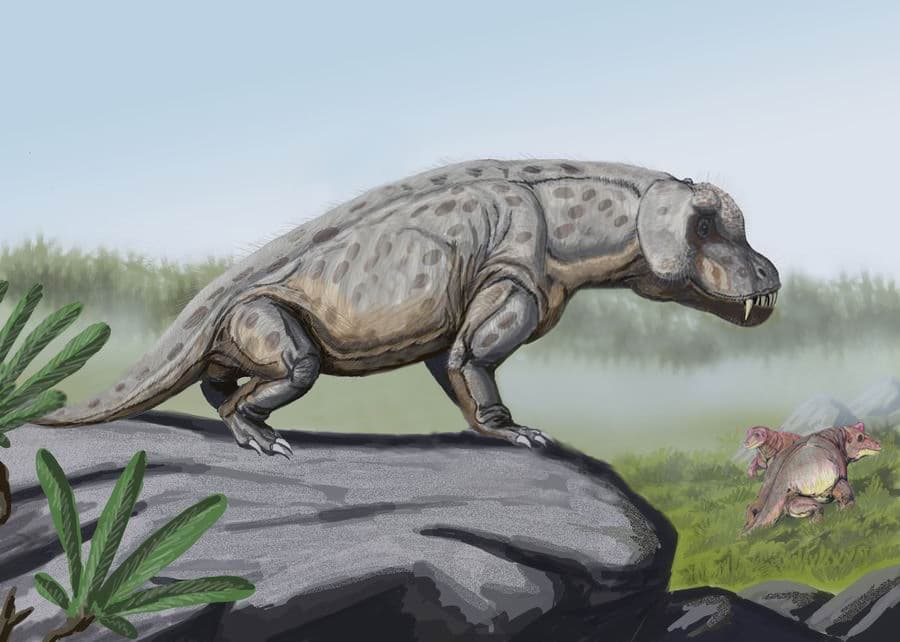
Published skulls reach roughly 80 centimetres in length, but total body length and mass remain estimates because no complete articulated skeleton is known. Reconstructions often place large adults near five metres long and several hundred kilograms. Those figures are useful scale guides rather than precise limits. Limb proportions inferred from related forms suggest a sprawling-to-semi-erect stance more capable on land than old, sluggish swamp-dweller images implied.
When and where it lived
Anteosaurus magnificus lived during the Capitanian stage of the middle Permian, more than 260 million years ago. That was tens of millions of years before the first dinosaurs. Smithsonian collection records identify specimens from the Tapinocephalus zone of the Beaufort Group near Beaufort West, while systematic studies place the species across fossil localities in the South African Karoo.
The Tapinocephalus Assemblage Zone preserves sediments laid down by rivers and floodplains. The landscape changed through time and included channels, muddy overbank areas and seasonal disturbances. South Africa then formed part of Gondwana within the supercontinent Pangaea and lay much farther south than today. A modern range map can only show fossil provenance; it does not represent a living distribution.
Diet and ecological role
Large canine-like teeth, cutting cheek teeth and a reinforced skull support a predatory diet. Ecological studies of the Beaufort Group classify Anteosaurus among the carnivorous dinocephalians. It shared its ecosystem with large herbivorous tapinocephalids, other therapsids, pareiasaurs and amphibians. Potential prey probably varied with the predator’s age and opportunity, and scavenging would also have been energetically sensible.
Calling it an “apex predator” is a useful ecological shorthand, but fossils do not preserve a complete food web. There are no direct observations of hunting technique, prey preference or group behavior. Reconstructions showing a specific kill should be treated as illustrations. Teeth and skull anatomy demonstrate capacity; they do not prove that every individual hunted the same animals in the same way.
Senses and movement
A 2021 computed-tomography study reconstructed parts of the braincase and inner ear. The work found features consistent with stabilizing the head and coordinating rapid movements, challenging the old idea that large dinocephalians were universally slow and clumsy. The authors also discussed relatively enlarged regions associated with gaze stabilization. These conclusions concern sensory and motor potential, not a measured running speed.
The same research showed that skull orientation differed from that of the herbivorous dinocephalian Moschognathus. This comparison helps researchers test how head posture and ecology varied within Dinocephalia. Exact vision, hearing range and daily activity remain unknown because soft tissues are not preserved. Claims about nocturnal habits, pack coordination or complex vocal signals would go beyond current evidence.
Growth and skull thickening
Juvenile and adult skulls show that proportions changed during growth. Younger individuals had less developed cranial thickening and different relative dimensions, while adults acquired the heavy bosses and robust architecture associated with the genus. Histological research on limb bones records rapidly deposited fibrolamellar tissue, indicating periods of fast growth, but it also warns that different skeletal elements can preserve different growth signals.
Thickened skull bones have prompted suggestions of head-butting or other combat. That behavior is possible, yet shape alone does not prove direct head-to-head impacts. The reinforced skull could have served several roles, including display, species recognition, resistance to feeding stresses or ritualized pushing. Without characteristic injury patterns or trackable behavior, social structure and mating contests remain unresolved.
Discovery and classification
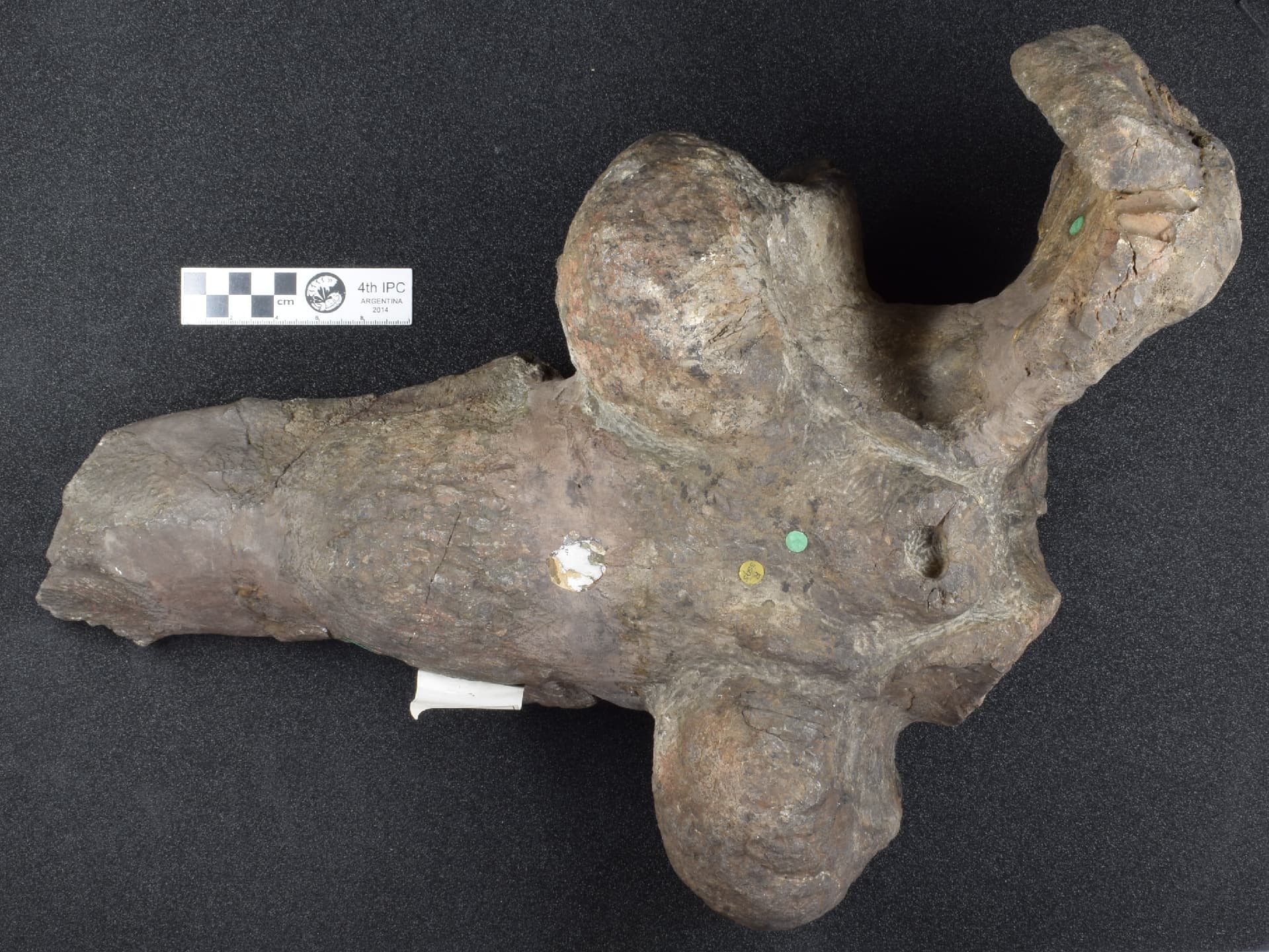
British paleontologist D. M. S. Watson named Anteosaurus magnificus in 1921. Later workers named additional large South African anteosaurs from incomplete material, producing a complicated list of genera and species. A modern systematic revision concluded that A. magnificus is the valid South African species and treated several historical names as synonyms or doubtful assignments. The holotype itself is an incomplete skull roof, so better-preserved referred specimens are crucial for understanding the animal.
Anteosaurus belongs to Anteosauridae within Dinocephalia and Therapsida. It is more closely related to mammals than any dinosaur is, but it was not a mammal or a direct human ancestor. “Mammal-like reptile” appears in older museum labels; modern classification usually prefers non-mammalian synapsid or therapsid because those terms describe the evolutionary relationship more accurately.
Extinction and the fossil record
Anteosaurus disappeared near the end of the Tapinocephalus Assemblage Zone, before the end-Permian mass extinction. Its disappearance occurred during a major faunal turnover that affected dinocephalians broadly. The fossil record is incomplete, so researchers cannot assign the extinction to one observed event. Environmental change, ecosystem disruption and sampling gaps all require consideration.
Karoo fossils are protected scientific resources. Their value depends on exact locality, rock layer and association with other fossils, information that illegal removal can destroy. Museum collections preserve specimens for repeated study with new methods such as CT scanning and bone histology. Photographs here include life restorations and a labeled fossil specimen; restorations are evidence-based interpretations rather than photographs of a living animal.