
What is an Asp?
The Asp profiled here is the living European snake Vipera aspis, commonly called the Asp Viper or Aspic Viper. It is a true viper in the family Viperidae and should not be confused with the many different snakes called “asp” in history, literature or popular culture. This page uses the short tracker name Asp while keeping the taxonomic scope to one species, Vipera aspis.
The species occurs in western and southern Europe. It is venomous and medically important, but it is also a native predator with an ecological role in rocky slopes, scrub, woodland edges and traditional farmland. An Asp usually depends on concealment and escape. Bites most often follow accidental close contact or attempts to handle or kill the snake. For the biological distinction between injected venom and passively encountered poison, see Venomous vs Poisonous Animals.
Identification and color variation
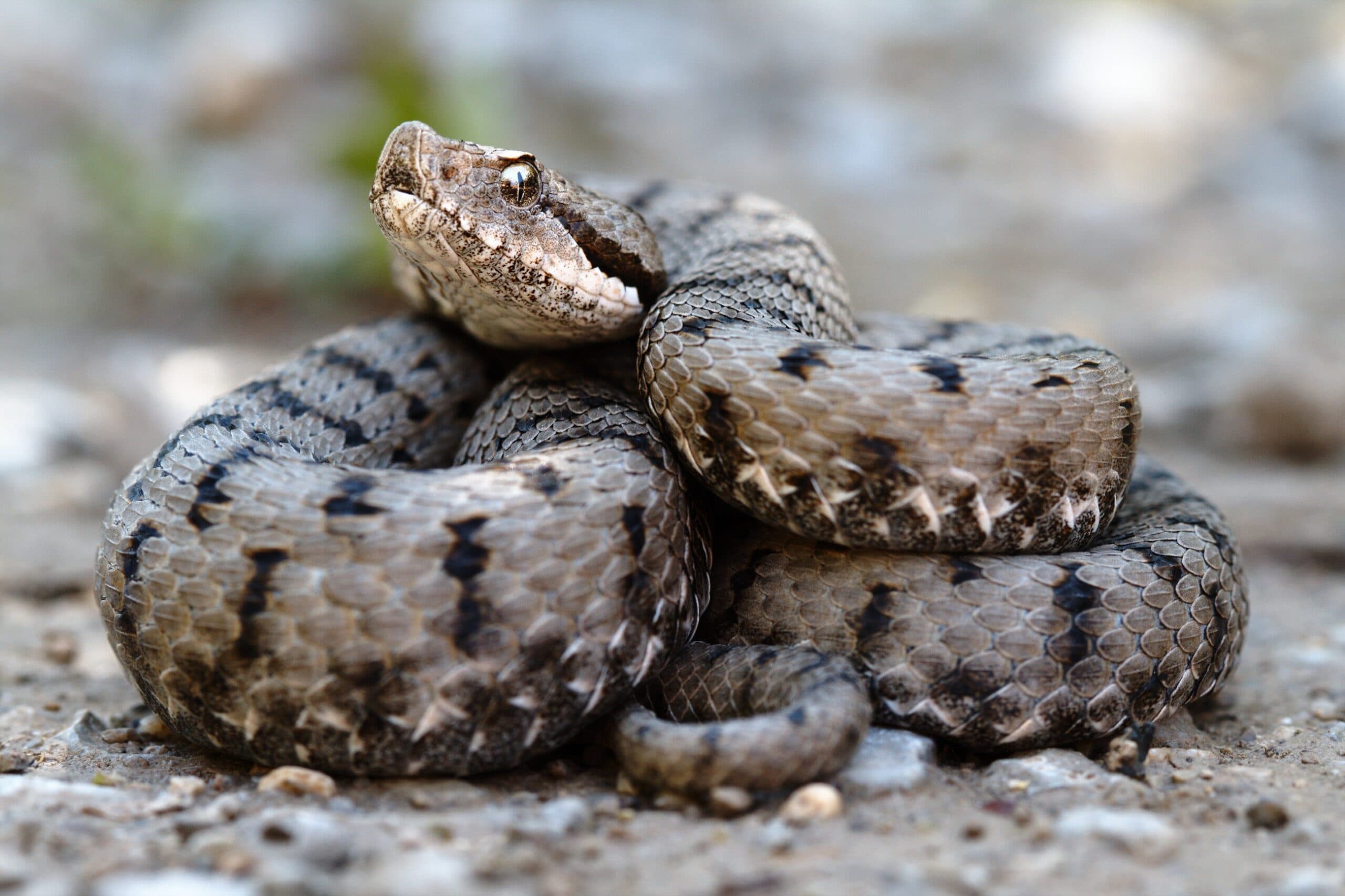
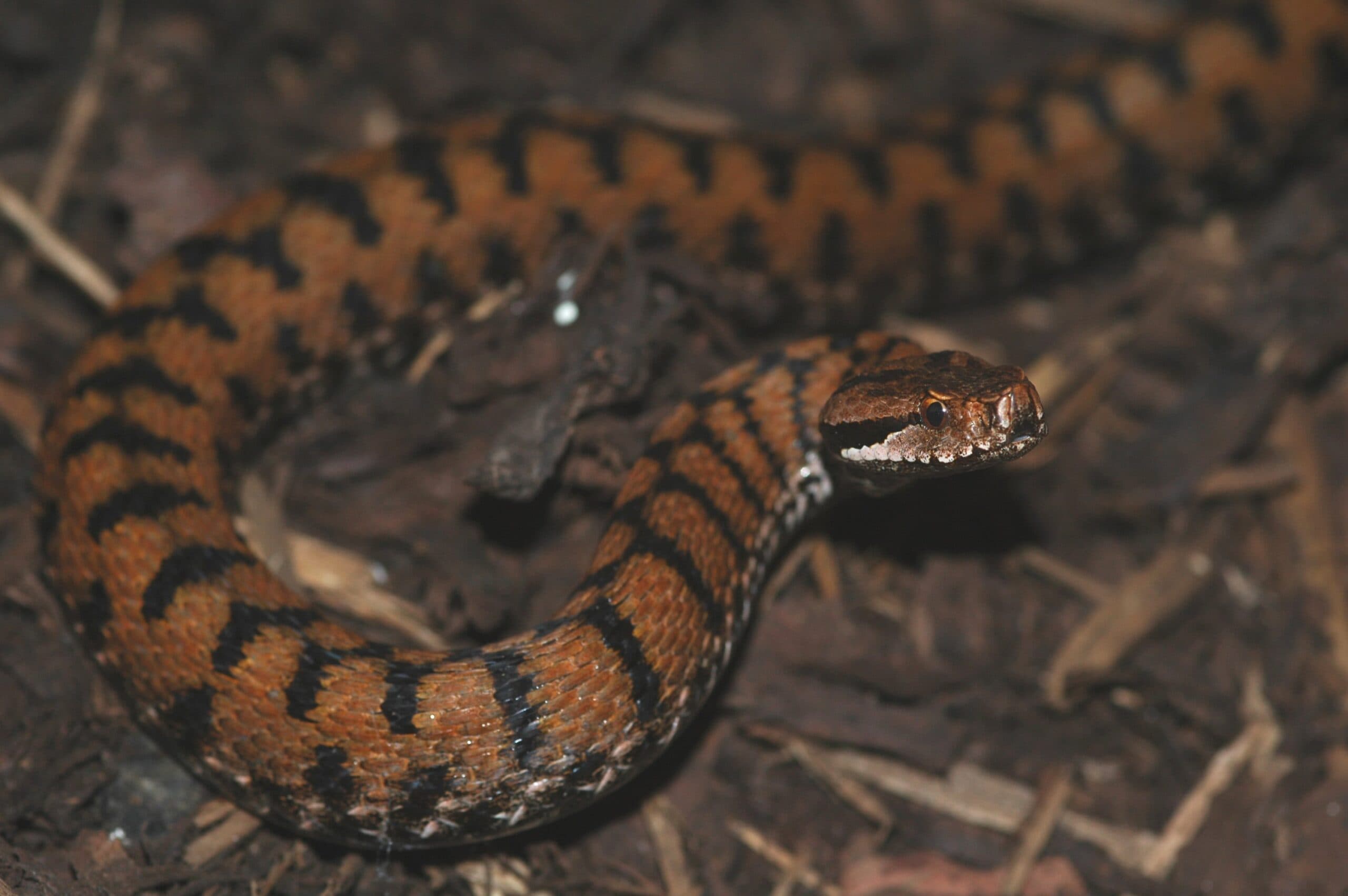
Asps have a relatively stout body, a distinct neck and a head that appears broad when viewed from above. The snout is slightly upturned, although it lacks the prominent horn of the Nose-Horned Viper. A strong brow above the eye contributes to an angular head profile. The pupils are vertical in ordinary light, and the scales on the body are keeled.
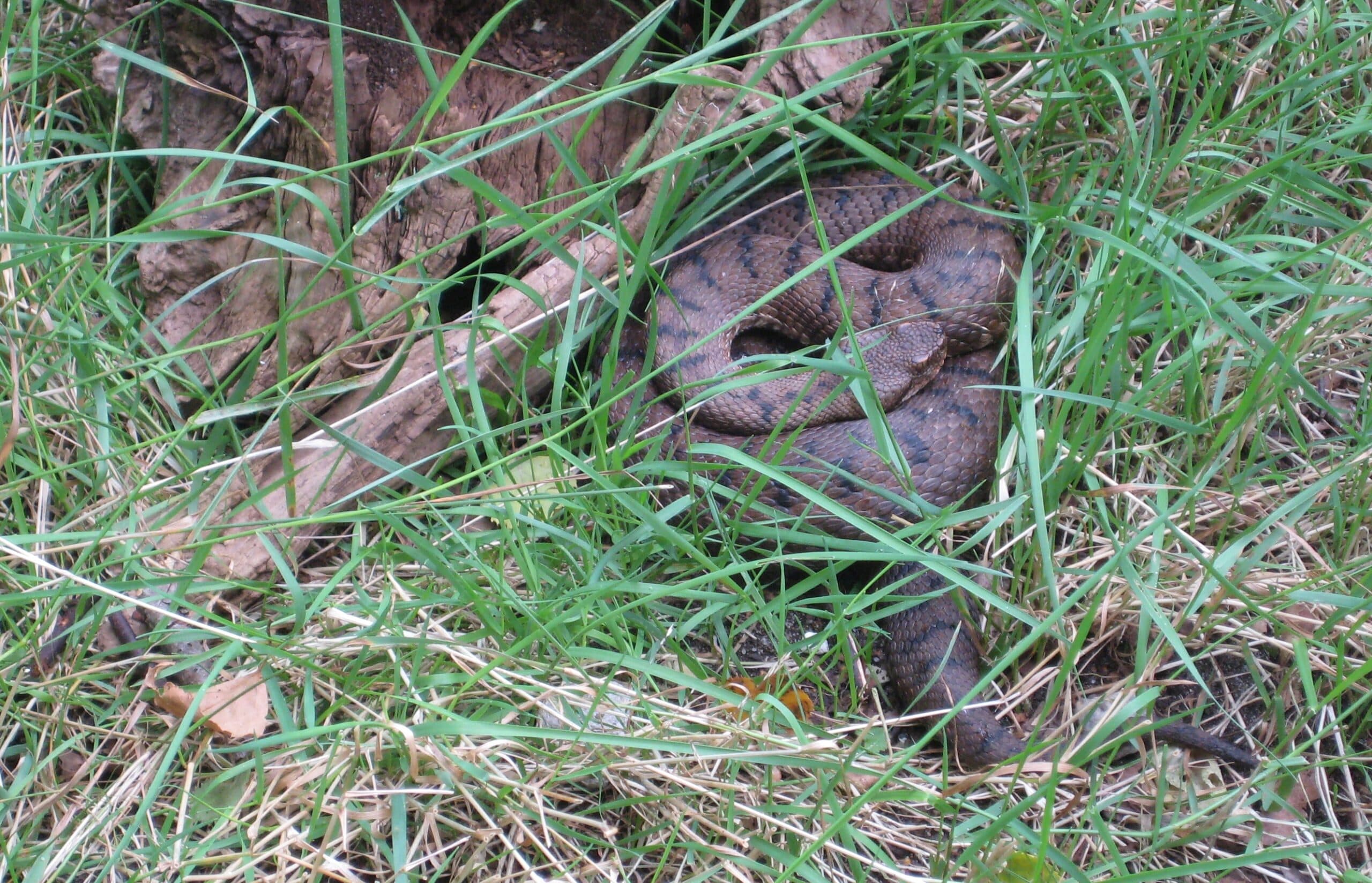
Color and pattern vary considerably across the range and among recognized subspecies. Gray, brown, reddish and nearly black individuals occur. Many show dark crossbars, spots or a zigzag-like dorsal pattern, while some have reduced markings. Melanistic snakes are especially dark. Because pattern varies and other European snakes can look similar, color alone is not a safe identification method.
Range and habitat
The Reptile Database records Vipera aspis in France, Andorra, northeastern Spain, southwestern Germany, Switzerland, Monaco, Italy, San Marino and northwestern Slovenia. Island populations occur on Sicily and several smaller Italian islands. The distribution is not continuous: climate, elevation, vegetation, geology and historical isolation create regional gaps.
Suitable habitat often combines sunny basking places with dense cover and frost-free shelters. Rocky hillsides, dry stone walls, woodland clearings, hedgerows, scrub, meadow edges and lightly farmed landscapes can all provide this mixture. In mountains, local populations may occupy high elevations, while northern populations tend to favor warm exposures. Intensive land use, road networks and the loss of structurally varied habitat can isolate colonies.
Daily activity and seasonal rhythm
As an ectotherm, the Asp regulates body temperature by moving between sun and shelter. It may bask in cool weather, retreat during excessive heat and shift activity toward morning, evening or night as conditions change. Seasonal timing differs across latitude and elevation. In cold regions, individuals spend winter in protected refuges and emerge when spring temperatures permit feeding and reproduction.
The snake commonly remains still when relying on camouflage. If disturbed, it may move away, flatten its body, hiss or strike when escape is blocked. These defensive actions do not mean it is pursuing a person. Hikers can reduce surprise encounters by watching where they place hands and feet, wearing closed footwear and leaving basking snakes an open route away.
Diet and hunting
Adult Asps primarily hunt small mammals, with lizards, birds and other small vertebrates contributing according to locality and age. Juveniles tend to take smaller prey. The snake uses tongue-flicking to sample chemical trails and can wait beside routes used by rodents or lizards. Its hinged front fangs inject venom that immobilizes prey and begins tissue breakdown.
After a strike, the viper may release mobile prey and follow its chemical trail before swallowing it headfirst. This strategy reduces the struggle with teeth, claws or beaks. By taking rodents and other small vertebrates, Asps help shape local food webs. They are also prey for raptors, mammals and other predators, particularly when young.
Venom and bite safety
Vipera aspis is one of Europe’s medically relevant vipers. Venom composition varies geographically, and clinical effects vary with the bite, the amount delivered, the population involved and the health of the patient. Pain, swelling, bruising, nausea and systemic effects can occur. Some French populations have caused unusual neurological signs, a pattern examined in clinical and venom studies.
Any suspected bite requires prompt professional medical assessment. Keep the person calm and as still as practical, remove tight jewelry near swelling and contact local emergency services. Do not cut or suck the wound, apply ice or chemicals, use electric shock, or tighten a tourniquet. Do not try to capture the snake. Medical teams decide whether monitoring, supportive care or antivenom is appropriate.
Reproduction and development
Asps are viviparous: females give birth to live young rather than laying shelled eggs in a nest. Mating generally follows seasonal emergence, though timing varies with climate. Females invest heavily in developing offspring and may not reproduce every year, especially in cool environments where feeding and gestation opportunities are limited.
Newborn vipers are independent and venomous. They must find small prey and secure shelter while avoiding predators. Growth depends on food, temperature and the length of the active season. Species-wide values for maturity, litter size and lifespan conceal meaningful regional variation, so local field studies provide better detail than one universal number.
Taxonomy and subspecies
The Reptile Database recognizes Vipera aspis and lists four subspecies: the nominate V. a. aspis, V. a. francisciredi, V. a. hugyi and V. a. zinnikeri. Their boundaries and names have been debated because color, scale counts and genetic lineages do not always divide into simple geographic units. Older references may list additional forms or use names now treated as synonyms.
This profile describes the species as a whole. Photographs can represent particular subspecies or regional forms and are labeled when the source identifies them. A field observation should not be assigned to a subspecies from pattern alone, especially near contact zones. Location, diagnostic characters and current regional research all matter.
Conservation and coexistence
The Asp Viper has historically been treated as Least Concern in Europe-wide assessments, but national and regional conditions differ. Persecution, road mortality, development, intensive agriculture, loss of hedgerows and the disappearance of sunny refuge sites can reduce local populations. Isolation is especially important where suitable habitat remains only in small fragments.
Coexistence depends on simple distance. Observe without approaching, keep dogs close on paths, avoid moving stones or logs bare-handed, and let wildlife authorities handle snakes found in buildings. Stone walls, rough grass margins and connected scrub can support vipers along with lizards, insects, small mammals and birds. Protecting these features preserves a whole habitat community rather than a single feared predator.