Home/Animals/Reptilia/Australian Gecko
Animal group

Australian Gecko

Gekkota of Australia

A diverse informal group of mostly nocturnal lizards adapted to Australian deserts, forests, rocky ranges and urban edges.

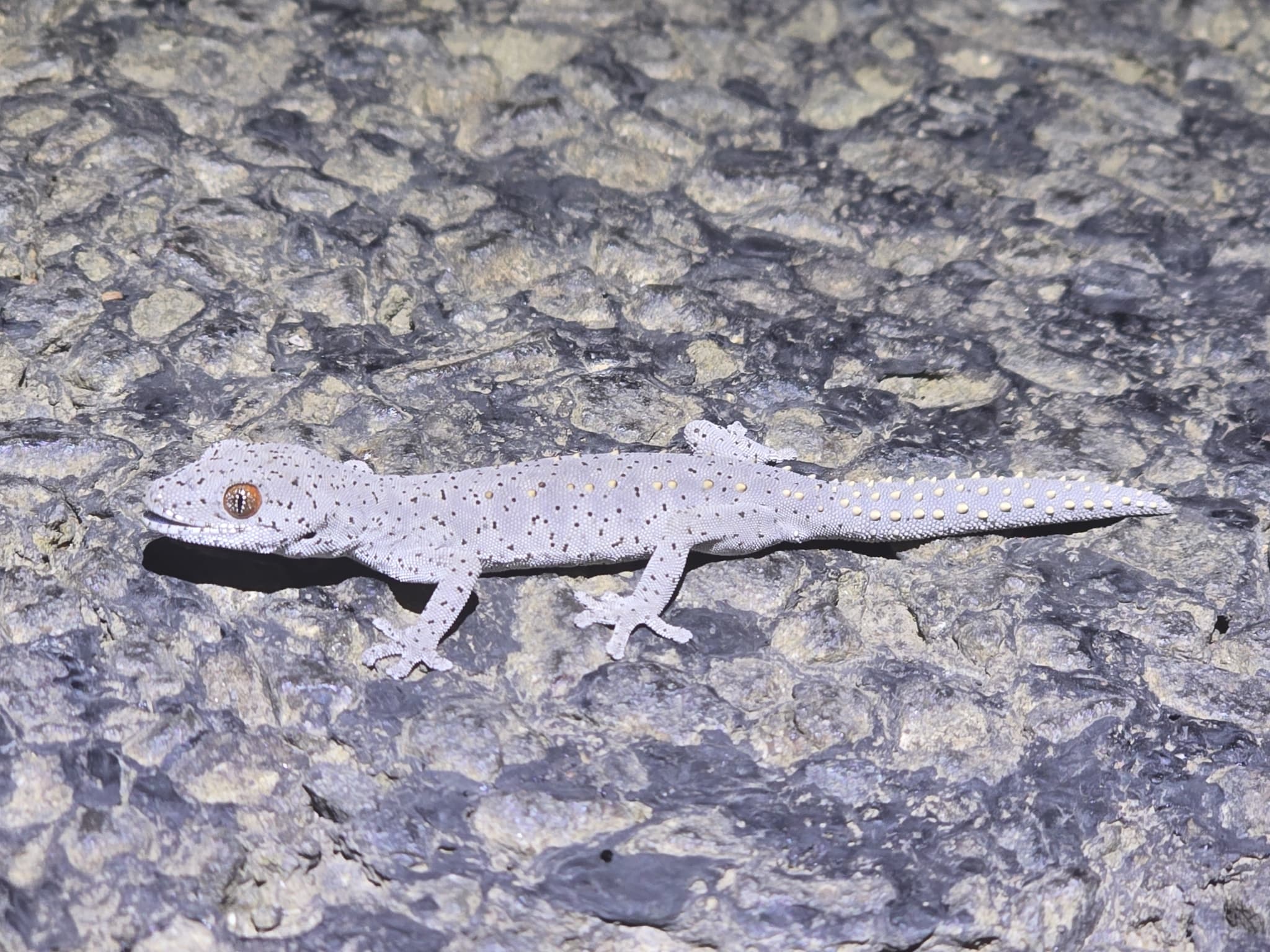
Representative Eastern Spiny-tailed Gecko Strophurus williamsi on natural bark in Australia
Representative Eastern Spiny-tailed Gecko (Strophurus williamsi) in Australia. Max Tibby / CC0 1.0.
🌐 Read in Language:

⚡ At a Glance

Animal group
Also Known As
Native Australian geckos; Australian gecko lizards
Diet Category
Insectivore
Activity Rhythm
Primarily nocturnal, although individuals may bask at a shelter entrance or move by day when temperatures are mild.
Wild Lifespan
Wild longevity is poorly known for many species; captive records cannot represent the whole group
Typical Weight
From only a few grams in small desert geckos to substantially heavier giant cave and leaf-tailed forms
Conservation Status
Varies by species
💡 Key Biological Insight: Australian geckos are not one species or family; several lineages independently occupy trees, rocks, caves and desert ground.

🌳 Scientific Taxonomy Hierarchy

Australian geckos belong to suborder Gekkota within order Squamata. The Australian Faunal Directory and Atlas of Living Australia place Australian gekkotans in Carphodactylidae, Diplodactylidae, Gekkonidae and Pygopodidae. This page covers the three families containing conventionally limbed geckos and excludes pygopodids from its practical scope. Species totals change as genetic studies split cryptic populations, so no fixed count is presented as permanent.

KingdomAnimalia
PhylumChordata
ClassReptilia
OrderSquamata
FamilyCarphodactylidae, Diplodactylidae and Gekkonidae
GenusMany genera
SpeciesMany living native species; taxonomy remains active

Distinguishing Anatomical Features

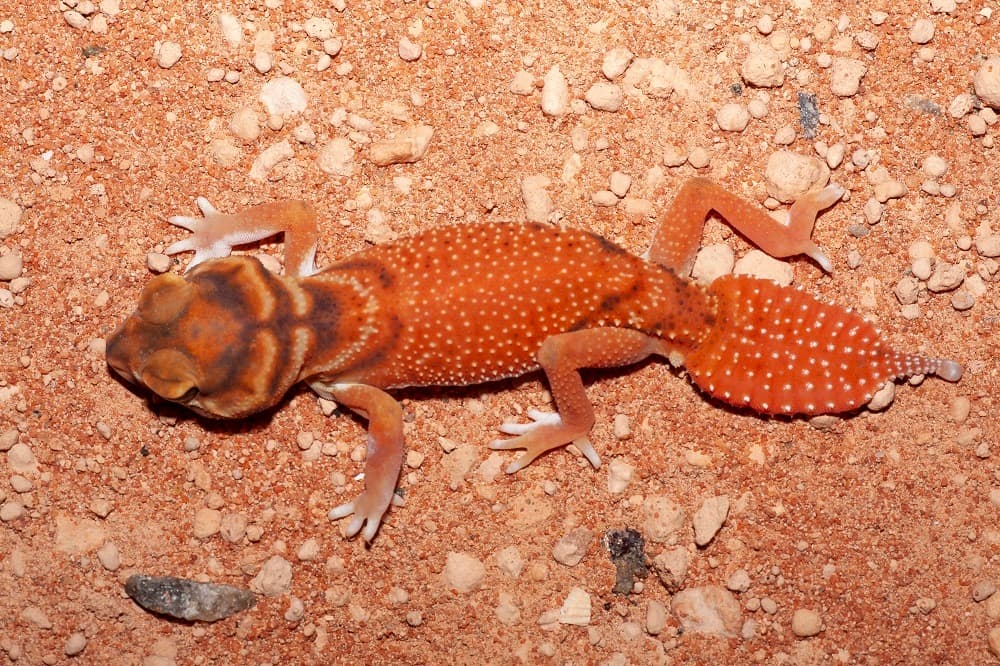
  • ✓Native Australian geckos usually have soft granular or tuberculate scales, large eyes, a broad head and five digits on each functional limb. Toe shape is highly informative: climbing forms such as velvet geckos often have expanded adhesive pads, while terrestrial knob-tailed and stone geckos have narrow clawed toes. The pupil is commonly vertical in nocturnal species. Tail form ranges from slender and prehensile to broad, leaf-like or swollen with stored fat.
  • ✓Adhesive toe pads in many climbing species
  • ✓Large eyes suited to dim light
  • ✓Tail fat storage in terrestrial forms
  • ✓Camouflage matching bark, sandstone or spinifex
  • ✓Tail shedding that distracts predators
  • ✓Soft calls used in close-range communication
  • ✓Flexible eggshells in most egg-laying species

📏 Physical Measurements

Total Lengthroughly 2.4–9.8 in total length in many limbed species
Body WeightFrom fractions of an ounce in small species to several ounces in the largest forms
Tail LengthHighly variable: slender, leaf-like, knobbed, prehensile or thickened for fat storage
WingspanNot applicable
Top SpeedNo dependable universal maximumMovement changes with context and conditions.

🎨 Appearance & Distinctive Markings

BrownGrayCreamTanReddish brownBlackWhiteYellowOrangeOlive

Skin / Covering: Dry granular or tuberculate scales, sometimes with enlarged spines or leaf-like fringes

Sexual Dimorphism: Males and females often overlap in color and body size. Mature males may show enlarged pre-anal or femoral pores and broader tail bases, but these details vary among genera and should be assessed by experienced handlers rather than inferred from one photograph.

🗺️ Geographic Distribution & Habitat

Native limbed geckos occur across mainland Australia and many offshore islands, from tropical Cape York and the Kimberley to temperate southern coasts and the arid interior. Individual species may be widespread or confined to one sandstone range, island, rainforest block or cave system.

Desert dunes, spinifex grassland, rocky ranges, caves, woodland, rainforest, coastal heath, tree hollows, bark crevices and buildings used by some adaptable species.

Country-level distribution map

Native range
FijiTanzaniaWestern SaharaCanadaUnited StatesKazakhstanUzbekistanPapua New GuineaIndonesiaArgentinaChileCongo - KinshasaSomaliaKenyaSudanChadHaitiDominican RepublicRussiaBahamasFalkland IslandsNorwayGreenlandFrench Southern TerritoriesTimor-LesteSouth AfricaLesothoMexicoUruguayBrazilBoliviaPeruColombiaPanamaCosta RicaNicaraguaHondurasEl SalvadorGuatemalaBelizeVenezuelaGuyanaSurinameFranceEcuadorPuerto RicoJamaicaCubaZimbabweBotswanaNamibiaSenegalMaliMauritaniaBeninNigerNigeriaCameroonTogoGhanaCôte d’IvoireGuineaGuinea-BissauLiberiaSierra LeoneBurkina FasoCentral African RepublicCongo - BrazzavilleGabonEquatorial GuineaZambiaMalawiMozambiqueEswatiniAngolaBurundiIsraelLebanonMadagascarPalestinian TerritoriesGambiaTunisiaAlgeriaJordanUnited Arab EmiratesQatarKuwaitIraqOmanVanuatuCambodiaThailandLaosMyanmar (Burma)VietnamNorth KoreaSouth KoreaMongoliaIndiaBangladeshBhutanNepalPakistanAfghanistanTajikistanKyrgyzstanTurkmenistanIranSyriaArmeniaSwedenBelarusUkrainePolandAustriaHungaryMoldovaRomaniaLithuaniaLatviaEstoniaGermanyBulgariaGreeceTürkiyeAlbaniaCroatiaSwitzerlandLuxembourgBelgiumNetherlandsPortugalSpainIrelandNew CaledoniaSolomon IslandsNew ZealandAustralia — Native rangeSri LankaChinaTaiwanItalyDenmarkUnited KingdomIcelandAzerbaijanGeorgiaPhilippinesMalaysiaBruneiSloveniaFinlandSlovakiaCzechiaEritreaJapanParaguayYemenSaudi ArabiaCyprusMoroccoEgyptLibyaEthiopiaDjiboutiUgandaRwandaBosnia & HerzegovinaNorth MacedoniaSerbiaMontenegroKosovoTrinidad & TobagoSouth Sudan
Highlighted countries are recorded profile locations, not precise biological range boundaries.Map boundaries: Natural Earth

Recorded Native Countries & Territories:

💡 Did You Know?

  • 💡Adhesive toe pads in many climbing species
  • 💡Large eyes suited to dim light
  • 💡Tail fat storage in terrestrial forms
  • 💡Camouflage matching bark, sandstone or spinifex
  • 💡Tail shedding that distracts predators
  • 💡Soft calls used in close-range communication
  • 💡Flexible eggshells in most egg-laying species

🌿 Conservation Status & Threats

No single assessment recorded

“There is no single conservation category for Australian geckos. Some species are widespread, while narrow-range taxa may qualify as threatened or remain data deficient. Each named species requires its own current assessment.”

CITESInternational listings and Australian wildlife laws differ by species; current official rules must be checked

⚠️ Major Threats to Australian Gecko

  • •Habitat clearing
  • •Mining of restricted rocky ranges
  • •Loss of old bark and hollow trees
  • •Inappropriate fire regimes
  • •Feral cats
  • •Invasive house geckos in some settings
  • •Illegal collection

🔄 Life Cycle & Reproduction

Wild vs. Captivity Lifespan Comparison

🌿 In the WildWild longevity is poorly known for many species; captive records cannot represent the whole group
🏠 In Captivity (with veterinary care)Licensed specialist care requires a secure species-appropriate enclosure, thermal gradient, humidity and shelter matched to the animal’s natural history.
Clutch / Litter SizeOften one or two eggs per clutch; repeated clutches and communal nests occur in some species
Incubation / GestationUsually several weeks to a few months, depending on the named species and nest temperature
Fledging / WeaningIndependent hatchling
Sexual MaturityReached after growth through multiple seasons; timing must be reported by species
Mating SystemInternal fertilization; mostly egg-laying
Nesting / Den TypeProtected rock cracks, bark spaces, soil chambers or other humid retreats

🦅 Behavior & Field Ecology

Insectivore

🌐 Ecological Food Web & Relationships: Australian geckos convert abundant nocturnal insects and spiders into food for snakes, owls, small mammals and larger lizards. They occupy narrow structural niches from tree bark to cave walls and desert sand. Species restricted to isolated ranges can be sensitive to fire, mining, clearing and invasive predators even when adaptable geckos remain common nearby.

Social Group SizeUsually solitary, with temporary courtship or shelter overlap
Activity RhythmPrimarily nocturnal, although individuals may bask at a shelter entrance or move by day when temperatures are mild.
Feeding StrategyInsectivore

🥩 Primary Prey & Preferred Diet

✓ Beetles✓ Moths✓ Cockroaches✓ Crickets✓ Spiders✓ Termites✓ Other small arthropods

📢 Communication & Territorial Signals

  • Chirps and clicks
  • Scent marks
  • Tongue sampling
  • Tail movements
  • Body posture
  • Courtship contact

🐾 Wild Temperament & Traits

• Secretive• Mostly nocturnal• Alert• Shelter-oriented• Camouflaged• Quick at close range• Nonvenomous

🤝 Human Interaction & Pet Advisory

⚠️ Strictly Wild Species
🚫

Can You Keep a Australian Gecko as a Pet?

Native reptile keeping is regulated by Australian states and territories. Legal possession may require a licence, approved source records and species-specific housing. Wild geckos must not be collected. Husbandry differs sharply between desert burrowers, arboreal velvet geckos and cool-climate species, so a geographic group page cannot serve as a care guide.

Domestication StatusWild native reptiles; captive-bred individuals are not domesticated
Danger to HumansVery low; a frightened animal may bite or shed its tail if restrained
Economic & Ecotourism RoleNocturnal insect predation, food-web support, research on adhesion and diversification, and evidence for protecting rock, bark and hollow microhabitats.

⚠️ Behavioral Risk Factors & Wildlife Safety

  • Tail loss when seized
  • Stress from handling
  • Delicate toes and skin
  • Disease transfer through poor hygiene

🌐 Ecological Food Web & Relationships

Species in this group

  • —
  • —
  • —
  • —
  • —
  • —
  • —
  • —

🦅 Natural Predators (5)

Small elapid snakesElapidae
OwlsStrigiformes
GoannasVaranus species
Feral catsFelis catus
Larger geckosGekkota

🧬 Related Species (4)

Legless geckosPygopodidaeAustralian gekkotans excluded from this limbed-gecko scope
Northern velvet geckoOedura castelnauiRepresentative arboreal native species
Thick-tailed geckoUnderwoodisaurus miliiTerrestrial southern Australian species
Asian house geckoHemidactylus frenatusIntroduced species established in parts of Australia

Australian Gecko (Gekkota of Australia) means the living, limbed gecko species native to Australia, principally members of Carphodactylidae, Diplodactylidae and Gekkonidae. It is a geographic group rather than one formal taxon. Australia also has legless pygopodids within Gekkota, but this profile keeps them separate because they are normally called legless lizards. Introduced house geckos are discussed only to prevent confusion with native species. This guide separates well-supported biology from common assumptions and covers identification, range, habitat, diet, behavior, reproduction and conservation.

Identification

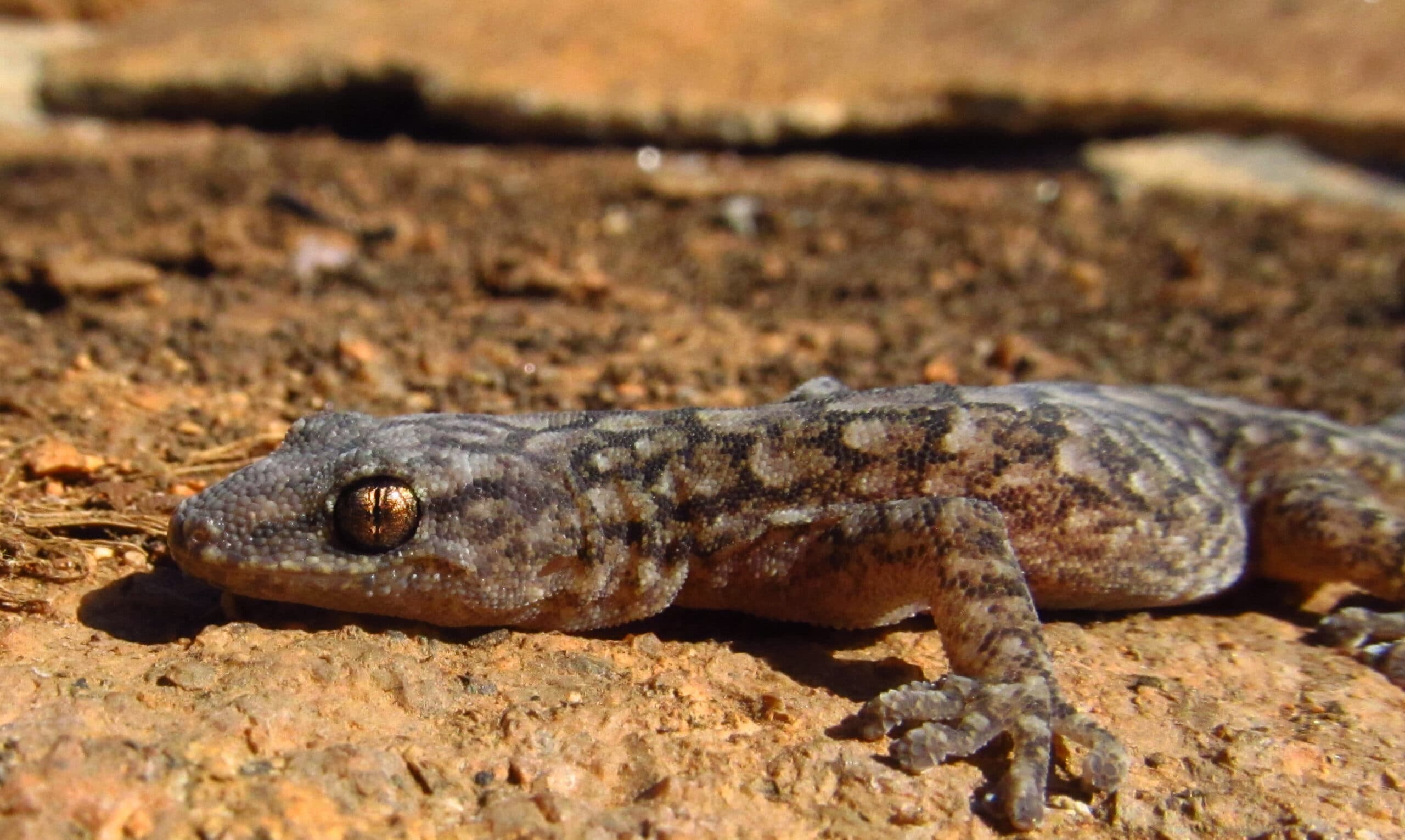
Native Australian geckos usually have soft granular or tuberculate scales, large eyes, a broad head and five digits on each functional limb. Toe shape is highly informative: climbing forms such as velvet geckos often have expanded adhesive pads, while terrestrial knob-tailed and stone geckos have narrow clawed toes. The pupil is commonly vertical in nocturnal species. Tail form ranges from slender and prehensile to broad, leaf-like or swollen with stored fat. Males and females often overlap in color and body size. Mature males may show enlarged pre-anal or femoral pores and broader tail bases, but these details vary among genera and should be assessed by experienced handlers rather than inferred from one photograph.

Identification should combine body shape, markings, size, voice or movement, and location. One feature by itself can overlap with a related animal, a juvenile, or an individual in unusual light.

Photographs are most useful when they preserve scale and show several diagnostic features. Handling or repositioning a wild australian gecko for identification can cause stress and is unnecessary.

Size and physical adaptations

Australian Gecko typically measures roughly 6–25 cm total length in many limbed species and weighs From only a few grams in small desert geckos to substantially heavier giant cave and leaf-tailed forms. The group spans many unrelated lineages, so measurements must be tied to a named species and whether snout–vent or total length was recorded.

Its useful adaptations include adhesive toe pads in many climbing species, large eyes suited to dim light, tail fat storage in terrestrial forms, camouflage matching bark, sandstone or spinifex, tail shedding that distracts predators, soft calls used in close-range communication, flexible eggshells in most egg-laying species. These traits work together in the animal’s normal setting rather than serving as isolated curiosities.

Published measurements may use different methods, life stages or sample locations. Comparing figures responsibly means checking what was measured rather than selecting the largest number available.

Range and distribution

Native limbed geckos occur across mainland Australia and many offshore islands, from tropical Cape York and the Kimberley to temperate southern coasts and the arid interior. Individual species may be widespread or confined to one sandstone range, island, rainforest block or cave system. The native range includes Australia.

A country-level map indicates broad distribution, not continuous occupation. Climate, elevation, water, vegetation, prey, breeding sites, barriers and survey effort all affect where records occur.

Records near the edge of the range deserve careful documentation because they may reflect natural movement, improved survey coverage, accidental transport or a genuine distribution change.

Habitat

Desert dunes, spinifex grassland, rocky ranges, caves, woodland, rainforest, coastal heath, tree hollows, bark crevices and buildings used by some adaptable species.

Most species shelter by day beneath bark, stones, fallen timber, exfoliating rock or in burrows and emerge after dusk. Arboreal velvet geckos climb trunks and branches, leaf-tailed geckos press against rock or bark, and knob-tailed geckos forage on open ground. Moisture, shelter temperature and intact crevices can matter as much as broad vegetation type. Protecting a population therefore requires the feeding, shelter and breeding features that make a site usable, along with connections that allow movement.

Microhabitat matters. Shade, soil, current, moisture, shelter or host plants can determine whether a small area is usable even when the surrounding landscape appears suitable.

Diet and feeding

Australian Gecko is a insectivore. Important foods include beetles, moths, cockroaches, crickets, spiders, termites, other small arthropods. Australian geckos usually hunt by waiting near a productive surface or moving slowly through vegetation and ground litter. Large eyes detect prey movement in low light, and a rapid short rush ends in a bite. Larger species may take small lizards, but arthropods dominate most diets. Feeding records from one genus should not be generalized across the group.

Diet changes with age, season, location and food supply. A dramatic prey record does not establish what most individuals eat most of the time; repeated field observations provide a stronger picture.

Feeding opportunities also create risk. An animal focused on prey may be less alert to predators, traffic or people, while contaminated prey can transfer pollutants through the food web.

Behavior and communication

Primarily nocturnal, although individuals may bask at a shelter entrance or move by day when temperatures are mild. During daylight, many Australian geckos hide where humidity is higher and temperature swings are smaller. At night they patrol trunks, rock faces, leaf litter or sand. Some defend shelter sites, while others overlap at rich feeding areas. A threatened gecko may freeze, vocalize, gape, shed its tail or dash into a narrow refuge.

Geckos use scent, posture, touch and sound. Chirps or clicks can occur during courtship, territorial encounters or alarm. Visual signals include body raising, tail movement and gaping. Chemical cues help identify shelter occupants and potential mates, while vibration may reveal nearby movement. Behavior should be interpreted in context: alarm, courtship, feeding and temperature regulation can produce very different actions from the same animal.

Daily schedules are flexible responses, not rigid rules. Weather, breeding condition, disturbance, tides or food can move activity into a different part of the day.

Reproduction and development

Most native Australian geckos lay eggs, commonly in secure crevices, beneath bark or in soil. Females of many species produce one or two eggs at a time, and communal nesting occurs in some lineages. Temperature and moisture influence incubation, while reproductive timing follows local rainfall and warmth. A few Australian geckos have unusual reproductive patterns that require species-level treatment. Often one or two eggs per clutch; repeated clutches and communal nests occur in some species Hatchlings are independent miniatures that begin hunting tiny arthropods. Their markings and proportions may differ from adults, and survival depends on small refuges that larger predators cannot enter.

Young animals face different risks and may use different microhabitats or food than adults. Breeding success depends on adult condition, suitable sites and the survival of offspring through vulnerable early stages.

Counts of eggs or young describe reproductive output, not the number expected to reach adulthood. Mortality is normally greatest during eggs, larval or juvenile stages.

Predators and ecological role

Australian geckos convert abundant nocturnal insects and spiders into food for snakes, owls, small mammals and larger lizards. They occupy narrow structural niches from tree bark to cave walls and desert sand. Species restricted to isolated ranges can be sensitive to fire, mining, clearing and invasive predators even when adaptable geckos remain common nearby. Documented or likely predators include Small elapid snakes, Owls, Goannas, Feral cats, Larger geckos.

This animal is both a consumer and a food source. Its influence comes through many repeated interactions, so ecological claims should be based on measured populations rather than assumptions drawn from appearance.

Predator and prey relationships differ among places. A species can be ecologically influential without being abundant everywhere, and its role can change across its range.

Relationship with people

Native geckos often live unnoticed around rock walls, sheds and mature trees. They reduce insects locally but are wildlife rather than pest-control tools. Observation should avoid peeling bark, dismantling rock shelters or repeatedly lighting an animal at night. A gecko found indoors can usually be guided toward an open exit without handling.

Australian geckos are nonvenomous and generally avoid people. They can shed the tail or injure delicate skin if grabbed. Do not use glue traps, and wash hands after contact with reptiles or contaminated surfaces. Wildlife rescue services should handle injured animals. Responsible observation means keeping an appropriate distance, avoiding capture or feeding, protecting habitat and following local wildlife or invasive-species guidance.

Wildlife guidance should come from the responsible local agency because collection rules, reporting requests and appropriate responses differ between native and introduced ranges.

Conservation

There is no single conservation category for Australian geckos. Some species are widespread, while narrow-range taxa may qualify as threatened or remain data deficient. Each named species requires its own current assessment. The reported global trend is No single group-wide trend; local outcomes follow habitat condition, invasive predators, fire and collection pressure.

Important pressures include habitat clearing, mining of restricted rocky ranges, loss of old bark and hollow trees, inappropriate fire regimes, feral cats, invasive house geckos in some settings, illegal collection. Global status can hide local decline or recovery, so current regional monitoring and habitat management remain necessary.

The most useful conservation action follows the documented pressure. Protecting breeding sites, reducing road deaths or limiting pollutants can require different tools in different populations.

Sources and further reading

❓ Frequently Asked Questions

Answers to frequently asked questions verified against peer-reviewed zoological research.

No. Australian gecko is a geographic group name covering many native living species in several families.