
Home/Animals/Reptilia/Bird Snake
Species profileIUCN: LC

Bird Snake

Thelotornis kirtlandii

A cryptic, rear-fanged African vine snake adapted to hunting among branches.

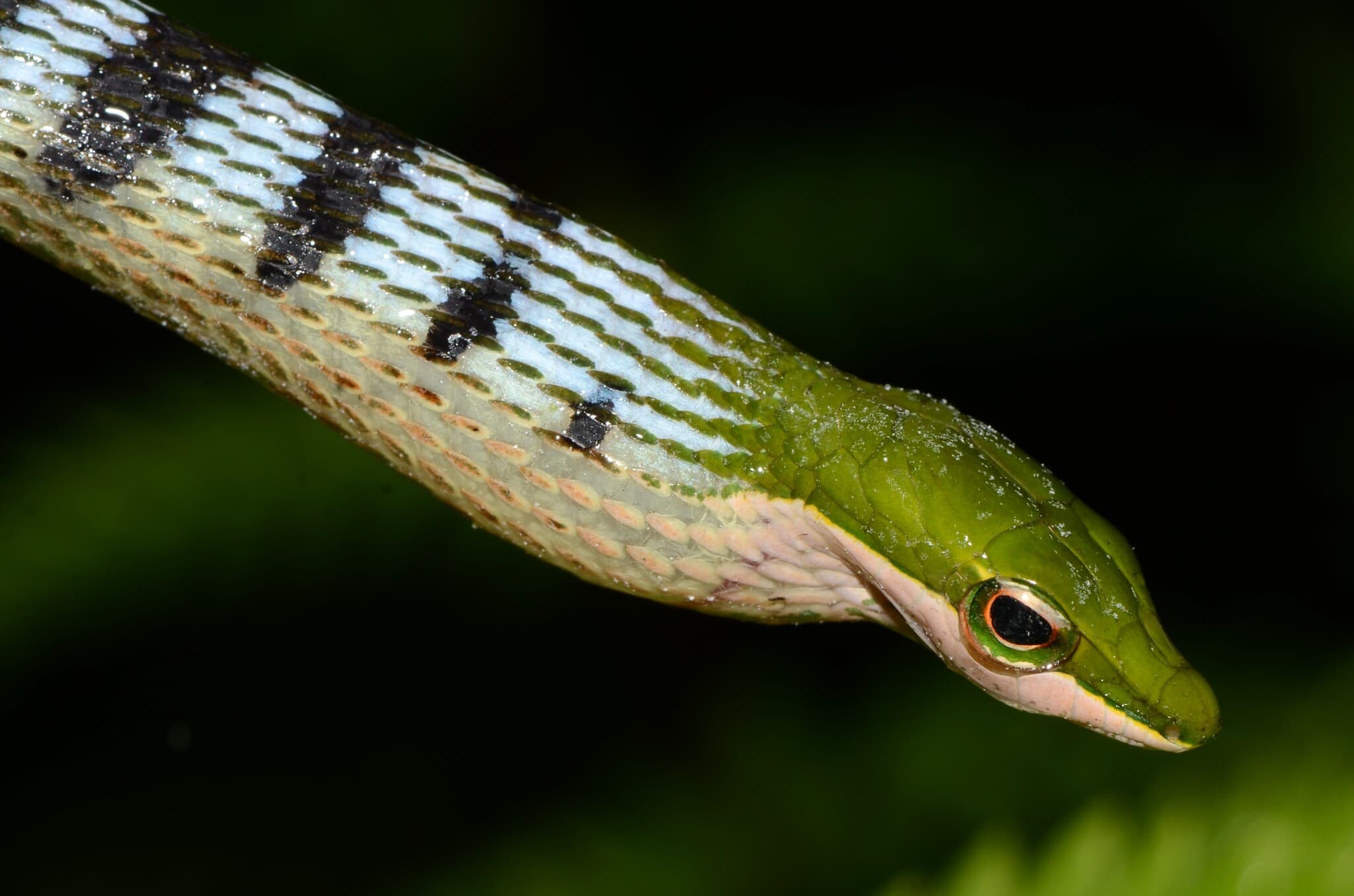
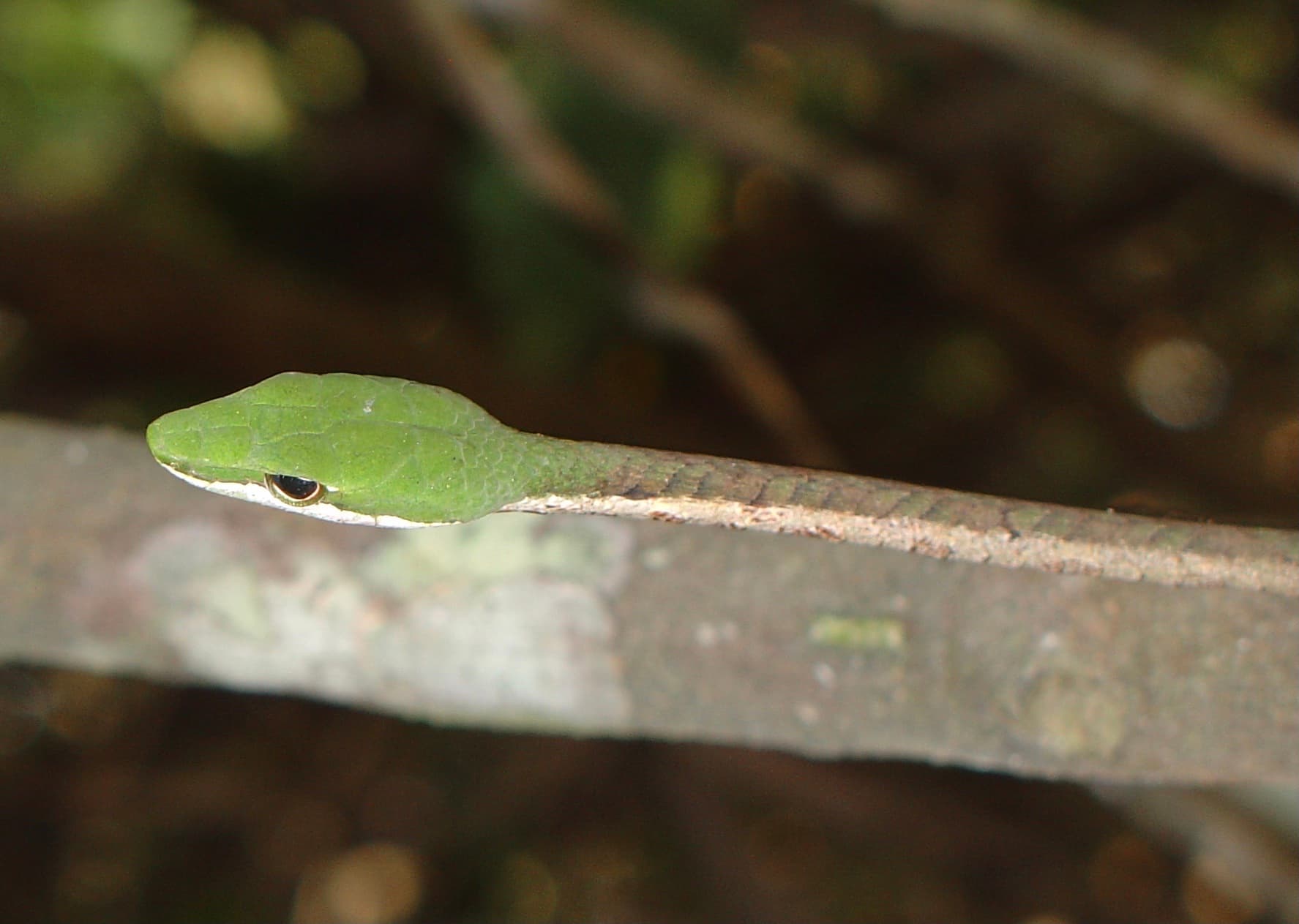
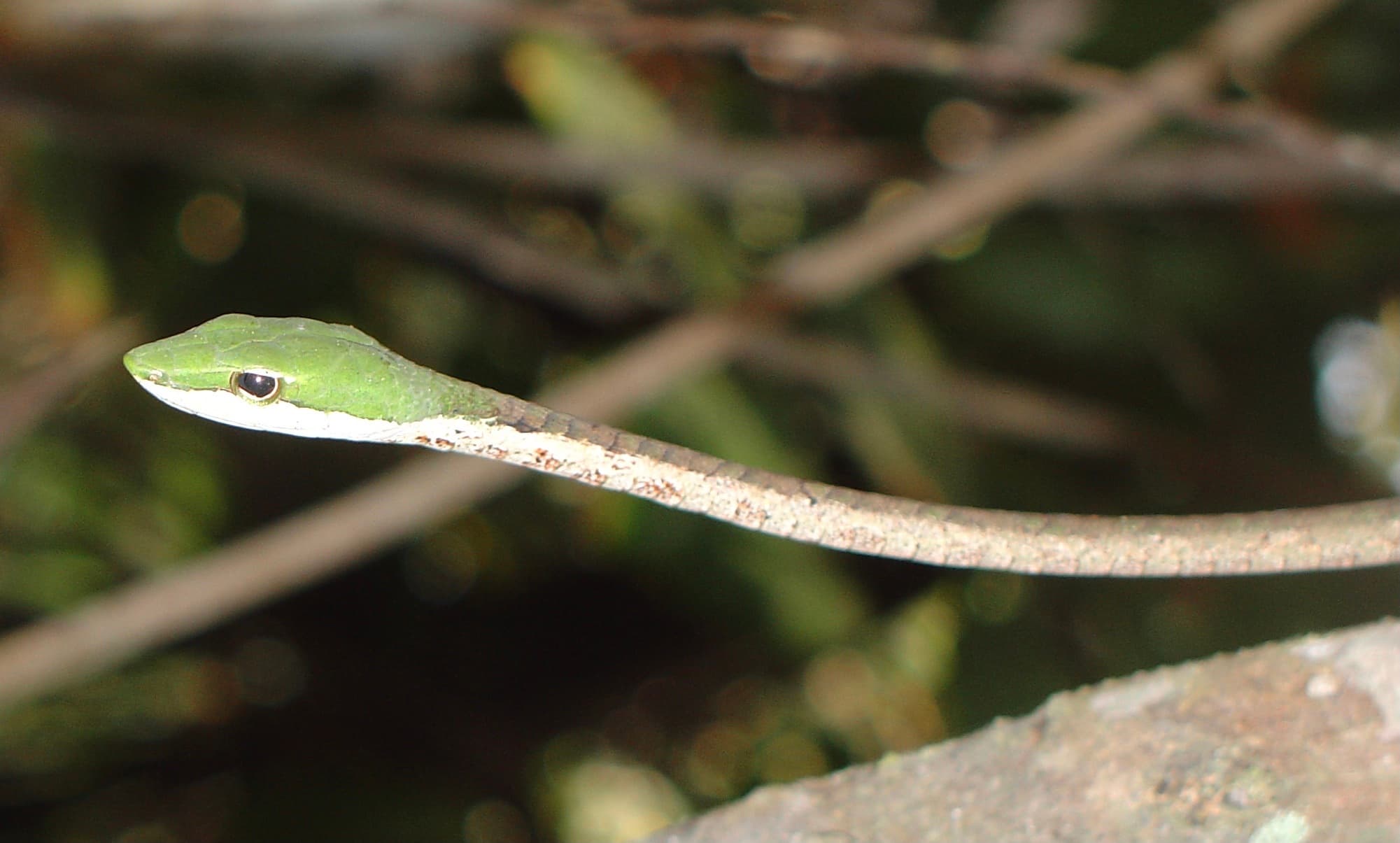
Bird Snake head and barred neck among vegetation
Marius Burger / CC0
🌐 Read in Language:

⚡ At a Glance

Species profile
Also Known As
Forest Vine Snake; Twig Snake
Diet Category
Carnivore
Activity Rhythm
Primarily diurnal and arboreal
Wild Lifespan
Not reliably quantified
Typical Weight
No dependable universal adult range
Conservation Status
LC
💡 Key Biological Insight: Its horizontal pupils and narrow head support forward vision while it hunts through branches.

🌳 Scientific Taxonomy Hierarchy

The Bird Snake profiled here is the living African species Thelotornis kirtlandii, not the North American Clonophis kirtlandii or another member of Thelotornis.

KingdomAnimalia
PhylumChordata
ClassReptilia
OrderSquamata
FamilyColubridae
GenusThelotornis
SpeciesThelotornis kirtlandii

Distinguishing Anatomical Features

  • ✓Extremely slender arboreal body
  • ✓Long tapering tail
  • ✓Elongated pointed head
  • ✓Large eyes with horizontal pupils
  • ✓Green or olive head
  • ✓Black-and-white barred neck
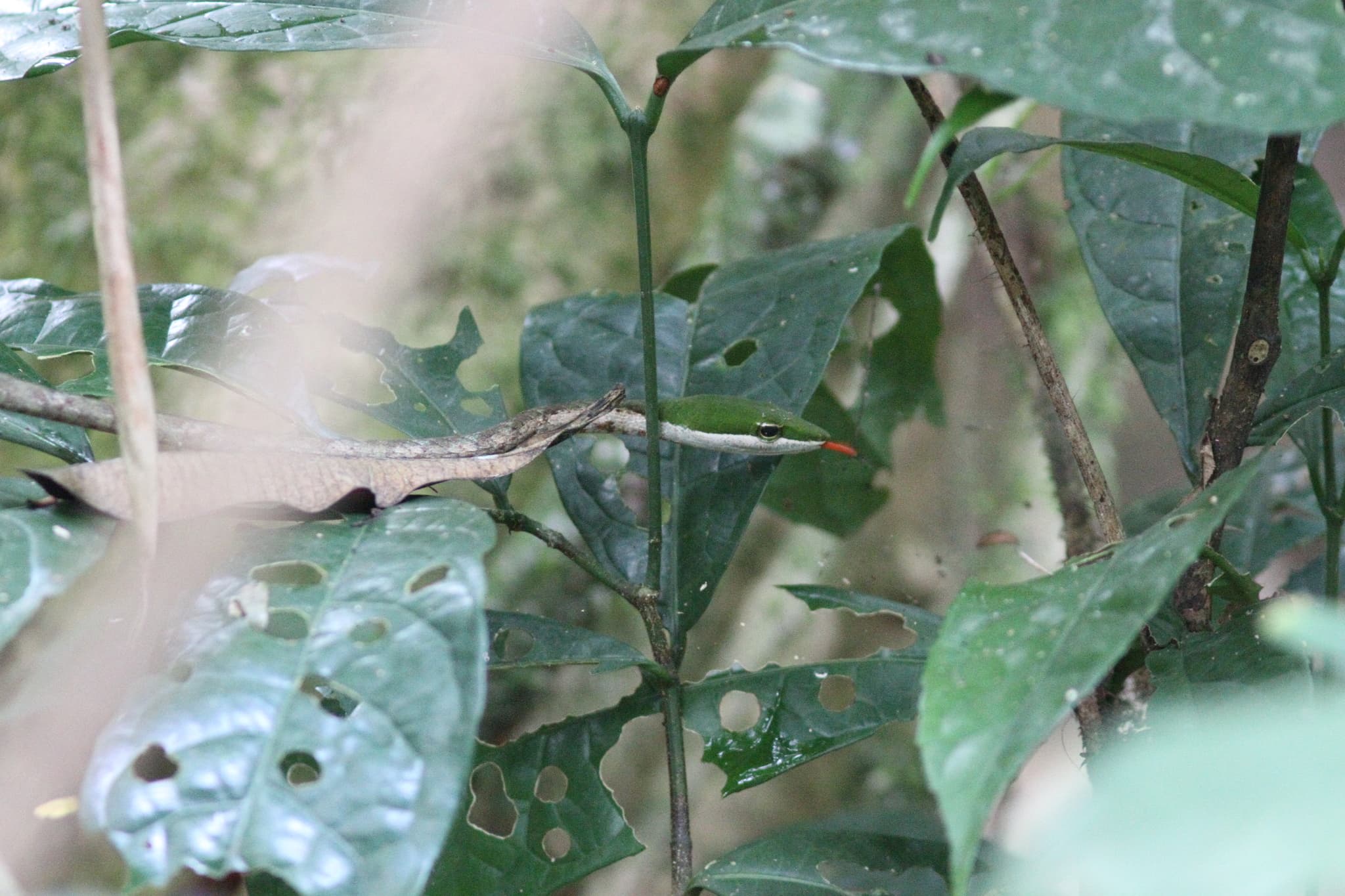
  • ✓Cryptic twig-like coloration

📏 Physical Measurements

Total LengthOften over 3.3 ft
Body WeightNo dependable universal adult range
Tail LengthVery long and tapering
WingspanNot applicable
Top SpeedNo verified universal maximumIt relies on camouflage and deliberate movement rather than sustained speed.

🎨 Appearance & Distinctive Markings

GreenOliveGrayBrownBlackWhiteTanCreamReddish brown

Skin / Covering: Dry overlapping scales

Sexual Dimorphism: Sexes are broadly similar externally; dependable field identification should not rely on color alone.

🗺️ Geographic Distribution & Habitat

Native across a broad belt of tropical West, Central and parts of East Africa.

Forest, forest edge, wooded savanna, secondary growth, plantations and other vegetated habitats with connected branches.

Country-level distribution map

Native range
FijiTanzania — Native rangeWestern SaharaCanadaUnited StatesKazakhstanUzbekistanPapua New GuineaIndonesiaArgentinaChileCongo - Kinshasa — Native rangeSomalia — Native rangeKenya — Native rangeSudanChadHaitiDominican RepublicRussiaBahamasFalkland IslandsNorwayGreenlandFrench Southern TerritoriesTimor-LesteSouth AfricaLesothoMexicoUruguayBrazilBoliviaPeruColombiaPanamaCosta RicaNicaraguaHondurasEl SalvadorGuatemalaBelizeVenezuelaGuyanaSurinameFranceEcuadorPuerto RicoJamaicaCubaZimbabweBotswanaNamibiaSenegalMaliMauritaniaBenin — Native rangeNigerNigeria — Native rangeCameroon — Native rangeTogo — Native rangeGhana — Native rangeCôte d’Ivoire — Native rangeGuinea — Native rangeGuinea-Bissau — Native rangeLiberia — Native rangeSierra Leone — Native rangeBurkina FasoCentral African Republic — Native rangeCongo - Brazzaville — Native rangeGabon — Native rangeEquatorial Guinea — Native rangeZambia — Native rangeMalawi — Native rangeMozambiqueEswatiniAngola — Native rangeBurundiIsraelLebanonMadagascarPalestinian TerritoriesGambiaTunisiaAlgeriaJordanUnited Arab EmiratesQatarKuwaitIraqOmanVanuatuCambodiaThailandLaosMyanmar (Burma)VietnamNorth KoreaSouth KoreaMongoliaIndiaBangladeshBhutanNepalPakistanAfghanistanTajikistanKyrgyzstanTurkmenistanIranSyriaArmeniaSwedenBelarusUkrainePolandAustriaHungaryMoldovaRomaniaLithuaniaLatviaEstoniaGermanyBulgariaGreeceTürkiyeAlbaniaCroatiaSwitzerlandLuxembourgBelgiumNetherlandsPortugalSpainIrelandNew CaledoniaSolomon IslandsNew ZealandAustraliaSri LankaChinaTaiwanItalyDenmarkUnited KingdomIcelandAzerbaijanGeorgiaPhilippinesMalaysiaBruneiSloveniaFinlandSlovakiaCzechiaEritreaJapanParaguayYemenSaudi ArabiaCyprusMoroccoEgyptLibyaEthiopiaDjiboutiUganda — Native rangeRwandaBosnia & HerzegovinaNorth MacedoniaSerbiaMontenegroKosovoTrinidad & TobagoSouth Sudan — Native range
Highlighted countries are recorded profile locations, not precise biological range boundaries.Map boundaries: Natural Earth

💡 Did You Know?

  • 💡Twig-like body
  • 💡Horizontal pupils
  • 💡Forward binocular vision
  • 💡Cryptic mottling
  • 💡Rear enlarged fangs
  • 💡Prehensile climbing ability
  • 💡Neck inflation display

🌿 Conservation Status & Threats

IUCN: LC — Least Concern

“The wide-ranging species is assessed as Least Concern, although habitat loss and deliberate killing may affect local populations.”

Population TrendUnknown
Wild Population EstimateNo comprehensive count
CITESCheck current national and international rules

⚠️ Major Threats to Bird Snake

  • •Forest clearing
  • •Habitat fragmentation
  • •Fire
  • •Pesticide use
  • •Deliberate killing
  • •Road mortality
  • •Loss of prey

🔄 Life Cycle & Reproduction

Wild vs. Captivity Lifespan Comparison

🌿 In the WildNot reliably quantified
🏠 In Captivity (with veterinary care)No dependable species-wide figure
Clutch / Litter SizeNot reliably quantified across the range
Incubation / GestationVaries with local temperature and humidity
Fledging / WeaningIndependent hatchlings; no parental care documented
Sexual MaturityNot reliably quantified
Mating SystemInternal fertilization; oviparous
Nesting / Den TypeProtected humid terrestrial or vegetated sites

🦅 Behavior & Field Ecology

Carnivore

🌐 Ecological Food Web & Relationships: An arboreal mesopredator that consumes small vertebrates and is itself prey for larger forest predators.

Social Group SizeUsually solitary
Activity RhythmMostly diurnal and arboreal
Feeding StrategyCarnivore

🥩 Primary Prey & Preferred Diet

✓ Lizards✓ Skinks✓ Chameleons✓ Frogs✓ Small snakes✓ Small birds✓ Other small vertebrates

📢 Communication & Territorial Signals

  • Body posture
  • Neck inflation
  • Visual display
  • Scent cues
  • Tongue-flicking
  • Swaying motion
  • Substrate vibration detection

🐾 Wild Temperament & Traits

• Cryptic• Watchful• Arboreal• Solitary• Venomous• Defensive when cornered• Slow-moving while stalking

🤝 Human Interaction & Pet Advisory

⚠️ Strictly Wild Species
🚫

Can You Keep a Bird Snake as a Pet?

Not suitable as a pet; a medically significant venomous wild snake requiring specialist legal facilities and expertise.

Domestication StatusNot domesticated
Danger to HumansHigh; venom can cause severe bleeding
Economic & Ecotourism RoleEcological research and natural control of small vertebrate prey.

⚠️ Behavioral Risk Factors & Wildlife Safety

  • Medically significant venom
  • Rear enlarged fangs
  • Potential delayed symptoms
  • Defensive strike if restrained
  • No safe reason for handling

🌐 Ecological Food Web & Relationships

🦅 Natural Predators (3)

Birds of preyAccipitriformes
Arboreal mammalsMammalia
Larger snakesSerpentes

🧬 Related Species (3)

Southern Vine SnakeThelotornis capensisRelated species formerly confused within a broader complex
Eastern Vine SnakeThelotornis mossambicanusRelated East African species
Usambara Vine SnakeThelotornis usambaricusRelated range-restricted species

Identity and Taxonomy

The Bird Snake profiled here is the living African species Thelotornis kirtlandii, also called the Forest Vine Snake or Twig Snake. It belongs to the family Colubridae and the arboreal genus Thelotornis. The Reptile Database and ITIS both recognize it as a valid species. The name “bird snake” is also applied loosely to other Thelotornis, so a sighting should be identified from locality and diagnostic details rather than the common name alone.

This species is not Kirtland’s Snake, Clonophis kirtlandii, a small North American wetland snake with a similar commemorative name. Thelotornis kirtlandii is an African, tree-dwelling, rear-fanged venomous snake. Modern references separate several forms once grouped with it, including T. capensis, T. mossambicanus, and T. usambaricus.

Appearance and Identification

A Bird Snake has an extremely slender body, a long tapering tail, a narrow neck, and an elongated head that ends in a pointed snout. The eyes are large with horizontal, keyhole-shaped pupils, giving unusually broad forward vision for a snake. Color varies, but the head is often green or olive above, while the neck carries bold black-and-white bars. The body may be gray, brown, olive, or mottled in a way that resembles twigs, lichen, and broken light.

Adults can exceed one metre, yet their narrow build makes them easy to overlook among branches. When threatened, the snake may inflate the front of its neck, exposing the contrasting skin between the scales. That display and its deliberate swaying can make the body look like vegetation moving in a breeze. Identification from a photograph should remain cautious because related vine snakes share many features and ranges meet in parts of Africa.

Range and Habitat

The species occurs widely across tropical Africa. Verified distribution records compiled by the Reptile Database include West African countries from Guinea and Sierra Leone east through Ghana, Togo, Benin, Nigeria, and Cameroon, then across Central Africa into the Democratic Republic of the Congo, Uganda, Kenya, Zambia, and neighboring regions. Records are uneven because a quiet, cryptic canopy snake is difficult to survey.

The IUCN Red List assessment associates the Bird Snake with forest, savanna, and some modified terrestrial habitats. It is strongly arboreal and uses shrubs, forest edges, secondary growth, plantations, and wooded savanna as well as mature forest. Branch networks provide hunting routes, basking sites, and camouflage. Individuals may descend, but their anatomy and behavior are specialized for moving through vegetation.

Diet and Hunting

Bird Snakes hunt small vertebrates in bushes and trees. Lizards, especially skinks and chameleons, are important prey, while frogs, small birds, and other suitably sized animals may also be taken. A focused study of diet in southern Nigeria reported both amphibian and snake prey, showing that the menu is broader than the common name suggests. Birds are possible prey, but the snake does not feed only on birds.

The snake searches slowly, using vision and chemical cues, and can remain motionless beside a likely route. Once within range it strikes and holds prey while venom acts. Its enlarged rear teeth help work venom into the bite. This feeding system is effective on small prey but also makes the animal medically significant to people. No one should handle, restrain, or attempt to relocate one without trained local help.

Behavior and Defensive Venom

Camouflage is the first defense. A resting Bird Snake aligns its narrow body with stems and may sway when it moves, breaking up the outline that predators or prey might recognize. It is generally alert and arboreal rather than confrontational. If escape is blocked, however, it can inflate the neck, display dark markings, open the mouth, and strike.

Thelotornis venom can disrupt blood clotting and cause dangerous internal bleeding. Because the fangs sit toward the rear of the upper jaw, bites are sometimes wrongly dismissed as harmless “back-fanged” bites. Severe poisoning has occurred after bites from this genus, and there is no reason to test whether an individual will bite. Anyone bitten should seek emergency medical care immediately, limit movement, remove rings or tight items, and follow local poison-center or medical guidance. Cutting, suction, ice, and tourniquets can worsen injury.

Reproduction and Life Cycle

The Reptile Database records the species as oviparous, meaning females lay eggs. Published life-history detail is much thinner than it is for common temperate snakes. Courtship, clutch timing, and incubation are influenced by local rainfall and temperature across a very large range, so one regional observation should not be presented as a universal schedule.

Eggs are placed in protected sites where humidity and temperature support development. Hatchlings emerge independent and must immediately hunt small prey while avoiding birds, mammals, and larger reptiles. Growth, age at maturity, and wild lifespan have not been measured well enough across the range to justify precise universal values. This uncertainty is scientifically useful: it identifies basic ecology that still needs field study rather than inviting invented numbers.

Conservation and Safe Coexistence

The global IUCN assessment lists Thelotornis kirtlandii as Least Concern, with an unknown population trend. Its wide distribution supports that category, but it does not mean every local population is secure. Forest clearing, fragmentation, fire, pesticide use, road mortality, and deliberate killing can reduce snakes and their prey. Cryptic animals can also disappear locally before routine surveys detect the change.

Coexistence begins with distance. Do not touch a Bird Snake or crowd it for a closer photograph. Keep children and pets away, give the animal an open route into vegetation, and contact an experienced local wildlife or snake-removal service if it is inside a building. Trimming vegetation should be done with clear visibility and protective planning in areas where venomous arboreal snakes occur. A zoomed photograph from safety is more useful than capture.

Sources and Review Notes

This profile uses the Reptile Database and ITIS for current taxonomic scope, the IUCN Red List for conservation status and broad habitat categories, and peer-reviewed diet research from the British Herpetological Society for feeding evidence. The geographic list is summarized rather than treated as a promise of presence in every district. Exact lifespan, universal adult mass, and clutch values are left unquantified where dependable species-wide evidence is lacking.

❓ Frequently Asked Questions

Answers to frequently asked questions verified against peer-reviewed zoological research.

Yes. Thelotornis kirtlandii has medically significant venom that can disrupt blood clotting and cause severe bleeding. Never handle one.