
Home/Animals/Reptilia/Black-Throated Monitor
Species profileIUCN: NE

Black-Throated Monitor

Varanus albigularis microstictus

A powerful East African rock monitor that searches savannas, burrows and termite mounds for animal prey.

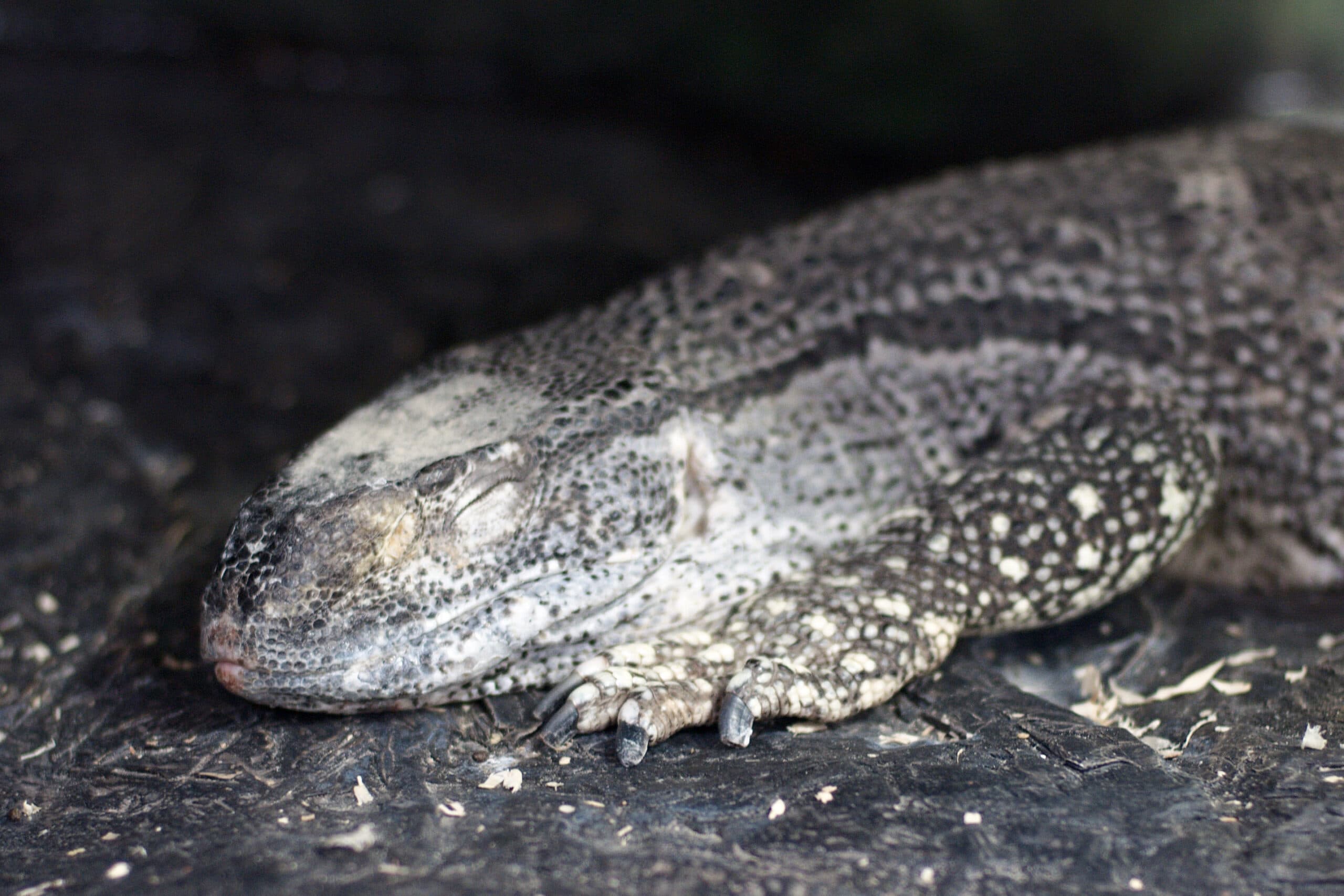
Black-Throated Monitor resting with dark throat, heavy body and pale spotted scales visible
Derrick Coetzee / Wikimedia Commons / CC0 1.0
๐ŸŒ Read in Language:

โšก At a Glance

Species profile
Also Known As
Black-Throat Monitor; East African White-Throated Monitor
Diet Category
Opportunistic predator and scavenger
Activity Rhythm
Diurnal, emerging to bask before active foraging; shelters during extreme midday heat and cool or dry periods.
Wild Lifespan
Often 15โ€“20 years in managed care; wild longevity is uncertain
Typical Weight
commonly 7โ€“20 kg in large adults, with exceptional animals heavier
Conservation Status
NE
๐Ÿ’ก Key Biological Insight: Monitor lizards repeatedly tongue-flick because the tongue carries odor particles to the vomeronasal organ, letting them follow prey hidden underground.

๐ŸŒณ Scientific Taxonomy Hierarchy

Varanus albigularis microstictus is a subspecies of the rock monitor in Varanidae and Squamata. The names Varanus albigularis ionidesi and Varanus microstictus occur in older sources and the pet trade. This profile does not apply measurements or range to the southern white-throated or Angolan subspecies.

KingdomAnimalia
PhylumChordata
ClassReptilia
OrderSquamata
FamilyVaranidae
GenusVaranus
SpeciesVaranus albigularis microstictus

Distinguishing Anatomical Features

  • โœ“The body is heavy and muscular, gray-brown to nearly black with pale cream or yellow blotches and broken bands. The throat is characteristically dark. The head is broad, the neck thick, and the nostrils sit closer to the eyes than the snout tip. Strong curved claws dig efficiently, while the long laterally compressed tail can deliver a defensive lash.
  • โœ“Forked tongue tracks chemical trails
  • โœ“Powerful claws excavate prey and shelter
  • โœ“Strong jaws crush hard-bodied prey
  • โœ“Tail lashes deter predators
  • โœ“Robust limbs support long foraging trips
  • โœ“Burrows buffer heat and drought
  • โœ“High intelligence supports flexible hunting

๐Ÿ“ Physical Measurements

Total Lengthusually 4โ€“6 ft, with exceptional individuals near 7 ft
Body Weightcommonly 15โ€“44 lb in large adults
Tail LengthLong, muscular and laterally compressed; used for balance and defense
WingspanNot applicable
Top SpeedNo dependable universal maximumMovement changes with context and conditions.

๐ŸŽจ Appearance & Distinctive Markings

BlackDark grayBrownCreamYellowBlackGrayCream

Skin / Covering: Dry pebbled scales with larger protective head and neck scales

Sexual Dimorphism: Males grow larger, develop broader heads and have more robust tail bases. Females are usually smaller, but external sexing is unreliable in juveniles.

๐Ÿ—บ๏ธ Geographic Distribution & Habitat

The accepted subspecies range extends from Ethiopia, Somalia and Djibouti south through Kenya to Tanzania. Some older accounts used the name more broadly, so locality and taxonomy should be checked before assigning records.

Dry savanna, open woodland, thorn scrub, rocky outcrop, grassland, farm edge, termite mound and seasonally dry bushland.

Country-level distribution map

Native range
FijiTanzania โ€” Native rangeWestern SaharaCanadaUnited StatesKazakhstanUzbekistanPapua New GuineaIndonesiaArgentinaChileCongo - KinshasaSomalia โ€” Native rangeKenya โ€” Native rangeSudanChadHaitiDominican RepublicRussiaBahamasFalkland IslandsNorwayGreenlandFrench Southern TerritoriesTimor-LesteSouth AfricaLesothoMexicoUruguayBrazilBoliviaPeruColombiaPanamaCosta RicaNicaraguaHondurasEl SalvadorGuatemalaBelizeVenezuelaGuyanaSurinameFranceEcuadorPuerto RicoJamaicaCubaZimbabweBotswanaNamibiaSenegalMaliMauritaniaBeninNigerNigeriaCameroonTogoGhanaCรดte dโ€™IvoireGuineaGuinea-BissauLiberiaSierra LeoneBurkina FasoCentral African RepublicCongo - BrazzavilleGabonEquatorial GuineaZambiaMalawiMozambiqueEswatiniAngolaBurundiIsraelLebanonMadagascarPalestinian TerritoriesGambiaTunisiaAlgeriaJordanUnited Arab EmiratesQatarKuwaitIraqOmanVanuatuCambodiaThailandLaosMyanmar (Burma)VietnamNorth KoreaSouth KoreaMongoliaIndiaBangladeshBhutanNepalPakistanAfghanistanTajikistanKyrgyzstanTurkmenistanIranSyriaArmeniaSwedenBelarusUkrainePolandAustriaHungaryMoldovaRomaniaLithuaniaLatviaEstoniaGermanyBulgariaGreeceTรผrkiyeAlbaniaCroatiaSwitzerlandLuxembourgBelgiumNetherlandsPortugalSpainIrelandNew CaledoniaSolomon IslandsNew ZealandAustraliaSri LankaChinaTaiwanItalyDenmarkUnited KingdomIcelandAzerbaijanGeorgiaPhilippinesMalaysiaBruneiSloveniaFinlandSlovakiaCzechiaEritreaJapanParaguayYemenSaudi ArabiaCyprusMoroccoEgyptLibyaEthiopia โ€” Native rangeDjibouti โ€” Native rangeUgandaRwandaBosnia & HerzegovinaNorth MacedoniaSerbiaMontenegroKosovoTrinidad & TobagoSouth Sudan
Highlighted countries are recorded profile locations, not precise biological range boundaries.Map boundaries: Natural Earth

๐Ÿ’ก Did You Know?

  • ๐Ÿ’กForked tongue tracks chemical trails
  • ๐Ÿ’กPowerful claws excavate prey and shelter
  • ๐Ÿ’กStrong jaws crush hard-bodied prey
  • ๐Ÿ’กTail lashes deter predators
  • ๐Ÿ’กRobust limbs support long foraging trips
  • ๐Ÿ’กBurrows buffer heat and drought
  • ๐Ÿ’กHigh intelligence supports flexible hunting

๐ŸŒฟ Conservation Status & Threats

IUCN: NE โ€” NE

โ€œThe subspecies has not been separately evaluated by the IUCN. The rock monitor species is widespread, but absence of a subspecies assessment means trade and habitat pressure should not be dismissed.โ€

Population TrendUnknown at subspecies level
Wild Population EstimateNo reliable estimate for Varanus albigularis microstictus
CITESAppendix II

โš ๏ธ Major Threats to Black-Throated Monitor

  • โ€ขHabitat conversion
  • โ€ขPersecution
  • โ€ขRoad mortality
  • โ€ขWild collection
  • โ€ขPoorly documented trade
  • โ€ขPesticide reduction of prey
  • โ€ขFree-ranging dogs
  • โ€ขDrought

๐Ÿ”„ Life Cycle & Reproduction

Wild vs. Captivity Lifespan Comparison

๐ŸŒฟ In the WildOften 15โ€“20 years in managed care; wild longevity is uncertain
๐Ÿ  In Captivity (with veterinary care)Legal care demands extensive space, deep substrate, high basking heat, UVB, varied food, hygiene and professional handling protocols.
Clutch / Litter SizeOften 10โ€“30 eggs, with larger clutches reported for the rock monitor species
Incubation / GestationApproximately 120โ€“180 days depending on nest temperature and moisture
Fledging / WeaningIndependent hatchling roughly 25โ€“35 cm long
Sexual MaturityOften 3โ€“5 years depending on growth
Mating SystemInternal fertilization; egg-laying
Nesting / Den TypeExcavated soil chamber, burrow or termite mound

๐Ÿฆ… Behavior & Field Ecology

Opportunistic predator and scavenger

๐ŸŒ Ecological Food Web & Relationships: Black-Throated Monitors consume insects, snails, rodents, eggs, carrion and small vertebrates, acting as both predator and scavenger. Their digging aerates soil and opens shelters later used by smaller animals. They are prey for large raptors, snakes and mammalian carnivores, especially when young.

Social Group SizeSolitary except during courtship and competition
Activity RhythmDiurnal, emerging to bask before active foraging; shelters during extreme midday heat and cool or dry periods.
Feeding StrategyOpportunistic predator and scavenger

๐Ÿฅฉ Primary Prey & Preferred Diet

โœ“ Beetlesโœ“ Grasshoppersโœ“ Snailsโœ“ Millipedesโœ“ Bird eggsโœ“ Rodentsโœ“ Small reptiles

๐Ÿ“ข Communication & Territorial Signals

  • Tongue-flick scent sampling
  • Pheromones
  • Visual recognition
  • Hissing
  • Body inflation
  • Tail lashing

๐Ÿพ Wild Temperament & Traits

โ€ข Intelligentโ€ข Activeโ€ข Powerfulโ€ข Mostly solitaryโ€ข Curiousโ€ข Defensive if cornered

๐Ÿค Human Interaction & Pet Advisory

โš ๏ธ Strictly Wild Species
๐Ÿšซ

Can You Keep a Black-Throated Monitor as a Pet?

This is an expert-only reptile requiring room-sized secure housing, deep diggable substrate, intense basking heat, strong UVB, a varied whole-prey and invertebrate diet, enrichment and an experienced veterinarian. Overfeeding and sedentary housing cause obesity. Only documented legal captive-bred animals should be considered.

Domestication StatusWild subspecies; not domesticated
Danger to HumansModerate injury risk from powerful jaws, claws and tail; not dangerously venomous to people
Economic & Ecotourism RoleControl of insects and rodents, scavenging, soil disturbance, research on monitor cognition, and education about African savanna predators.

โš ๏ธ Behavioral Risk Factors & Wildlife Safety

  • Strong jaws cause deep lacerations
  • Large claws scratch severely
  • Tail strikes can bruise
  • Poor restraint escalates defensive behavior

๐ŸŒ Ecological Food Web & Relationships

๐Ÿฆ… Natural Predators (5)

Martial EaglePolemaetus bellicosus
African Rock PythonPython sebae
LeopardPanthera pardus
Spotted HyenaCrocuta crocuta
Domestic DogCanis familiaris

๐Ÿงฌ Related Species (4)

White-Throated MonitorVaranus albigularis albigularisSouthern subspecies
Angolan White-Throated MonitorVaranus albigularis angolensisWestern subspecies
Savannah MonitorVaranus exanthematicusSimilar but distinct species
Nile MonitorVaranus niloticusMore aquatic African relative

Black-Throated Monitor (Varanus albigularis microstictus) is the East African subspecies of the rock monitor, a large terrestrial lizard found from Ethiopia and Somalia south through Kenya and Tanzania. It has a broad head, strong claws, a dark throat and a muscular tail. An active forager, it uses its forked tongue and acute sense of smell to locate insects, eggs, mollusks and small vertebrates. This guide separates well-supported biology from common assumptions and covers identification, range, habitat, diet, behavior, reproduction and conservation.

Identification

The body is heavy and muscular, gray-brown to nearly black with pale cream or yellow blotches and broken bands. The throat is characteristically dark. The head is broad, the neck thick, and the nostrils sit closer to the eyes than the snout tip. Strong curved claws dig efficiently, while the long laterally compressed tail can deliver a defensive lash. Males grow larger, develop broader heads and have more robust tail bases. Females are usually smaller, but external sexing is unreliable in juveniles.

Identification should combine body shape, markings, size, voice or movement, and location. One feature by itself can overlap with a related animal, a juvenile, or an individual in unusual light.

Photographs are most useful when they preserve scale and show several diagnostic features. Handling or repositioning a wild black-throated monitor for identification can cause stress and is unnecessary.

Size and physical adaptations

Black-Throated Monitor typically measures usually 1.2โ€“1.8 m, with exceptional individuals near 2.1 m and weighs commonly 7โ€“20 kg in large adults, with exceptional animals heavier. Reports above these ranges often involve obese captive animals or uncertain subspecies identification.

Its useful adaptations include forked tongue tracks chemical trails, powerful claws excavate prey and shelter, strong jaws crush hard-bodied prey, tail lashes deter predators, robust limbs support long foraging trips, burrows buffer heat and drought, high intelligence supports flexible hunting. These traits work together in the animal’s normal setting rather than serving as isolated curiosities.

Published measurements may use different methods, life stages or sample locations. Comparing figures responsibly means checking what was measured rather than selecting the largest number available.

Range and distribution

The accepted subspecies range extends from Ethiopia, Somalia and Djibouti south through Kenya to Tanzania. Some older accounts used the name more broadly, so locality and taxonomy should be checked before assigning records. The native range includes Ethiopia, Somalia, Djibouti, Kenya, Tanzania.

A country-level map indicates broad distribution, not continuous occupation. Climate, elevation, water, vegetation, prey, breeding sites, barriers and survey effort all affect where records occur.

Records near the edge of the range deserve careful documentation because they may reflect natural movement, improved survey coverage, accidental transport or a genuine distribution change.

Habitat

Dry savanna, open woodland, thorn scrub, rocky outcrop, grassland, farm edge, termite mound and seasonally dry bushland.

This monitor travels widely while foraging but needs deep burrows, rock crevices or abandoned animal dens for shelter. It digs into termite mounds and soft soil for prey and nesting. Basking sites warm the body each morning, while shade and underground refuges prevent overheating. Protecting a population therefore requires the feeding, shelter and breeding features that make a site usable, along with connections that allow movement.

Microhabitat matters. Shade, soil, current, moisture, shelter or host plants can determine whether a small area is usable even when the surrounding landscape appears suitable.

Diet and feeding

Black-Throated Monitor is a opportunistic predator and scavenger. Important foods include beetles, grasshoppers, snails, millipedes, bird eggs, rodents, small reptiles. The monitor walks with frequent tongue flicks, investigates holes and digs vigorously when scent reveals prey. Invertebrates and mollusks form an important part of the diet, while eggs, rodents, reptiles, carrion and other items are taken opportunistically. Broad crushing teeth help process snails and armored arthropods.

Diet changes with age, season, location and food supply. A dramatic prey record does not establish what most individuals eat most of the time; repeated field observations provide a stronger picture.

Feeding opportunities also create risk. An animal focused on prey may be less alert to predators, traffic or people, while contaminated prey can transfer pollutants through the food web.

Behavior and communication

Diurnal, emerging to bask before active foraging; shelters during extreme midday heat and cool or dry periods. Black-Throated Monitors are mostly terrestrial but can climb when young or when seeking refuge. A threatened animal may inflate its body, hiss, gape, lash the tail and bite. It normally escapes into a burrow or crevice. Captive calmness reflects habituation and should not be confused with domestication.

Tongue flicking and scent dominate prey and mate detection. Vision recognizes movement and familiar routes. Courtship uses close following and contact. Hissing, body inflation, gaping, tail lashing and biting communicate escalating defense. Behavior should be interpreted in context: alarm, courtship, feeding and temperature regulation can produce very different actions from the same animal.

Daily schedules are flexible responses, not rigid rules. Weather, breeding condition, disturbance, tides or food can move activity into a different part of the day.

Reproduction and development

Mating follows favorable seasonal conditions and increased activity. Males track females chemically and may wrestle rivals. Fertilization is internal. Females dig nest chambers in soil or termite mounds, where stable warmth and humidity support development. Often 10โ€“30 eggs, with larger clutches reported for the rock monitor species Hatchlings emerge after seasonal rains soften nest material, sometimes requiring the female or natural erosion to open a termite mound. Young are independent immediately and focus on insects and other small prey. Growth is rapid when food and warmth are abundant.

Young animals face different risks and may use different microhabitats or food than adults. Breeding success depends on adult condition, suitable sites and the survival of offspring through vulnerable early stages.

Counts of eggs or young describe reproductive output, not the number expected to reach adulthood. Mortality is normally greatest during eggs, larval or juvenile stages.

Predators and ecological role

Black-Throated Monitors consume insects, snails, rodents, eggs, carrion and small vertebrates, acting as both predator and scavenger. Their digging aerates soil and opens shelters later used by smaller animals. They are prey for large raptors, snakes and mammalian carnivores, especially when young. Documented or likely predators include Martial Eagle, African Rock Python, Leopard, Spotted Hyena, Domestic Dog.

This animal is both a consumer and a food source. Its influence comes through many repeated interactions, so ecological claims should be based on measured populations rather than assumptions drawn from appearance.

Predator and prey relationships differ among places. A species can be ecologically influential without being abundant everywhere, and its role can change across its range.

Relationship with people

The monitor can reduce agricultural pests but may raid poultry nests, producing conflict. Secure coops and waste rather than killing wildlife. Give a wild animal space and let it reach cover. International trade requires legal documentation, and capture should not undermine local populations.

A large monitor can bite, scratch and tail-whip. Its teeth and oral bacteria can cause severe tissue injury. Never corner or hand-feed one. Wash wounds, control bleeding and seek urgent medical care for deep bites. Captive work requires barriers, secure rooms and trained handlers. Responsible observation means keeping an appropriate distance, avoiding capture or feeding, protecting habitat and following local wildlife or invasive-species guidance.

Wildlife guidance should come from the responsible local agency because collection rules, reporting requests and appropriate responses differ between native and introduced ranges.

Conservation

The subspecies has not been separately evaluated by the IUCN. The rock monitor species is widespread, but absence of a subspecies assessment means trade and habitat pressure should not be dismissed. The reported global trend is Unknown at subspecies level.

Important pressures include habitat conversion, persecution, road mortality, wild collection, poorly documented trade, pesticide reduction of prey, free-ranging dogs, drought. Global status can hide local decline or recovery, so current regional monitoring and habitat management remain necessary.

The most useful conservation action follows the documented pressure. Protecting breeding sites, reducing road deaths or limiting pollutants can require different tools in different populations.

Sources and further reading

โ“ Frequently Asked Questions

Answers to frequently asked questions verified against peer-reviewed zoological research.

It is Varanus albigularis microstictus, an East African subspecies of the rock monitor.