
Home/Animals/Reptilia/Blind Snake
Animal group

Blind Snake

Scolecophidia

Small burrowing snakes with reinforced skulls, reduced eyes and specialized diets centered on ants, termites and other tiny invertebrates.

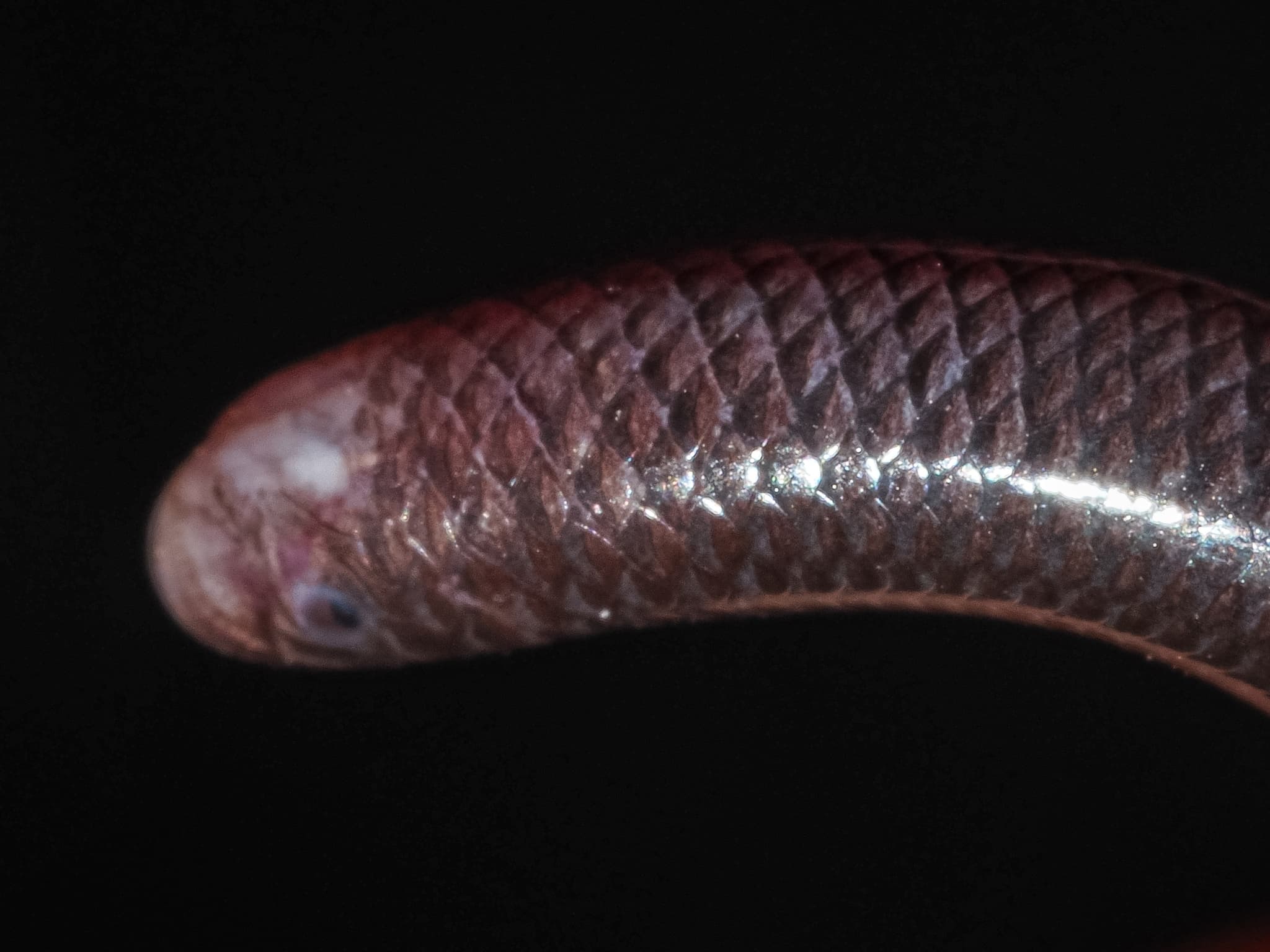
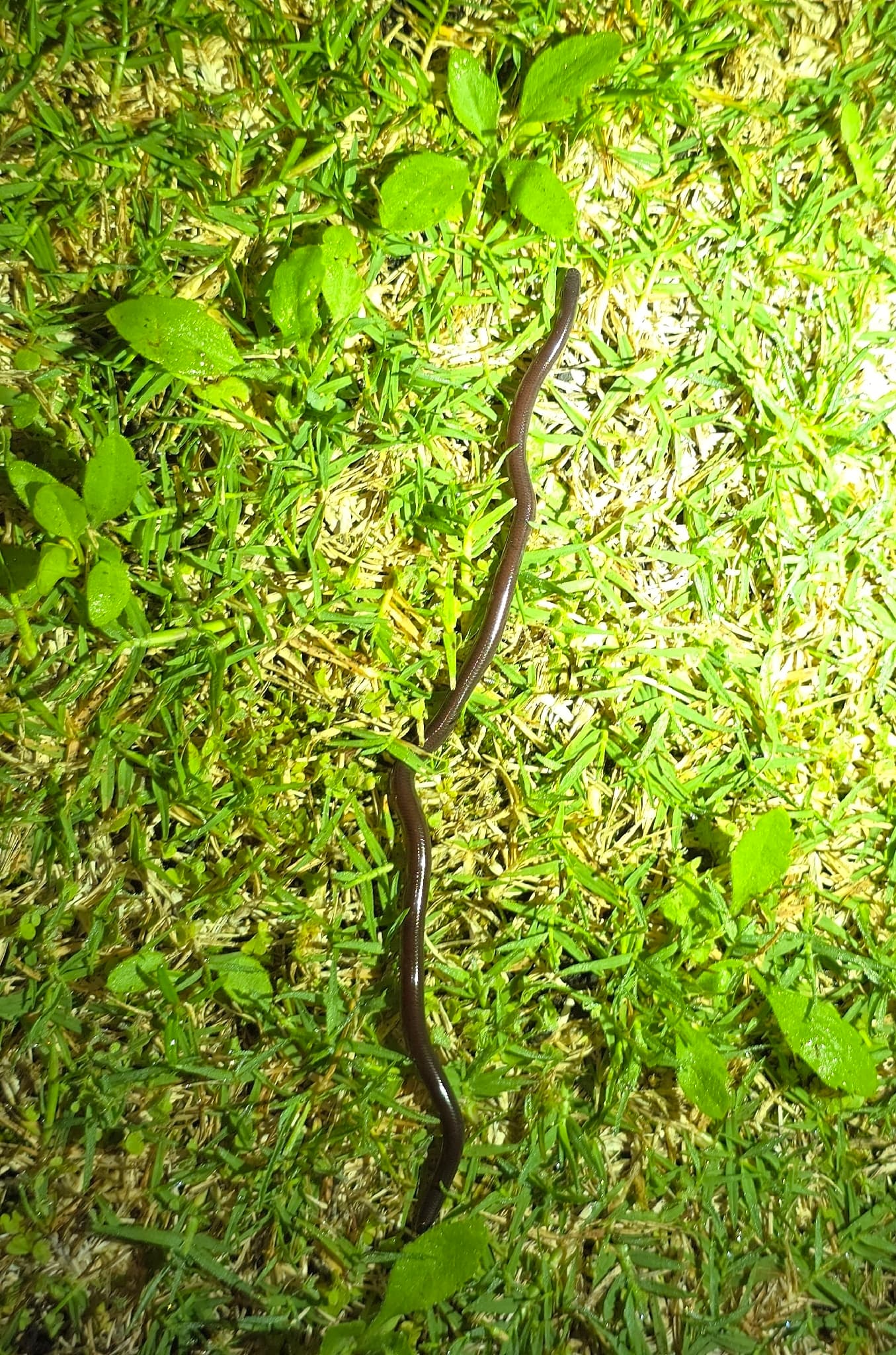
Representative Brahminy blindsnake Indotyphlops braminus in a close macro view
Representative Brahminy blindsnake (Indotyphlops braminus) in close view. Carey_Knox_Southern_Scales / CC0 1.0.
🌐 Read in Language:

⚡ At a Glance

Animal group
Also Known As
Blindsnakes; threadsnakes; worm snakes
Diet Category
Insectivore
Activity Rhythm
Mostly subterranean and secretive, with surface activity often increasing at night or after heavy rain.
Wild Lifespan
Wild longevity is poorly known for most species
Typical Weight
From less than a gram in the smallest threadsnakes to substantially more in the largest typhlopids
Conservation Status
Varies by species
💡 Key Biological Insight: Blind snakes are not eyeless: their reduced eyes can usually register light even though they cannot form detailed images.

🌳 Scientific Taxonomy Hierarchy

ITIS recognizes Scolecophidia as a valid infraorder within Serpentes. Modern studies divide living blindsnakes among families including Anomalepididae, Gerrhopilidae, Leptotyphlopidae, Typhlopidae and Xenotyphlopidae. Family limits and deeper relationships continue to be tested with anatomical and molecular evidence.

KingdomAnimalia
PhylumChordata
ClassReptilia
OrderSquamata
FamilySeveral families
GenusMany genera
SpeciesHundreds of living species

Distinguishing Anatomical Features

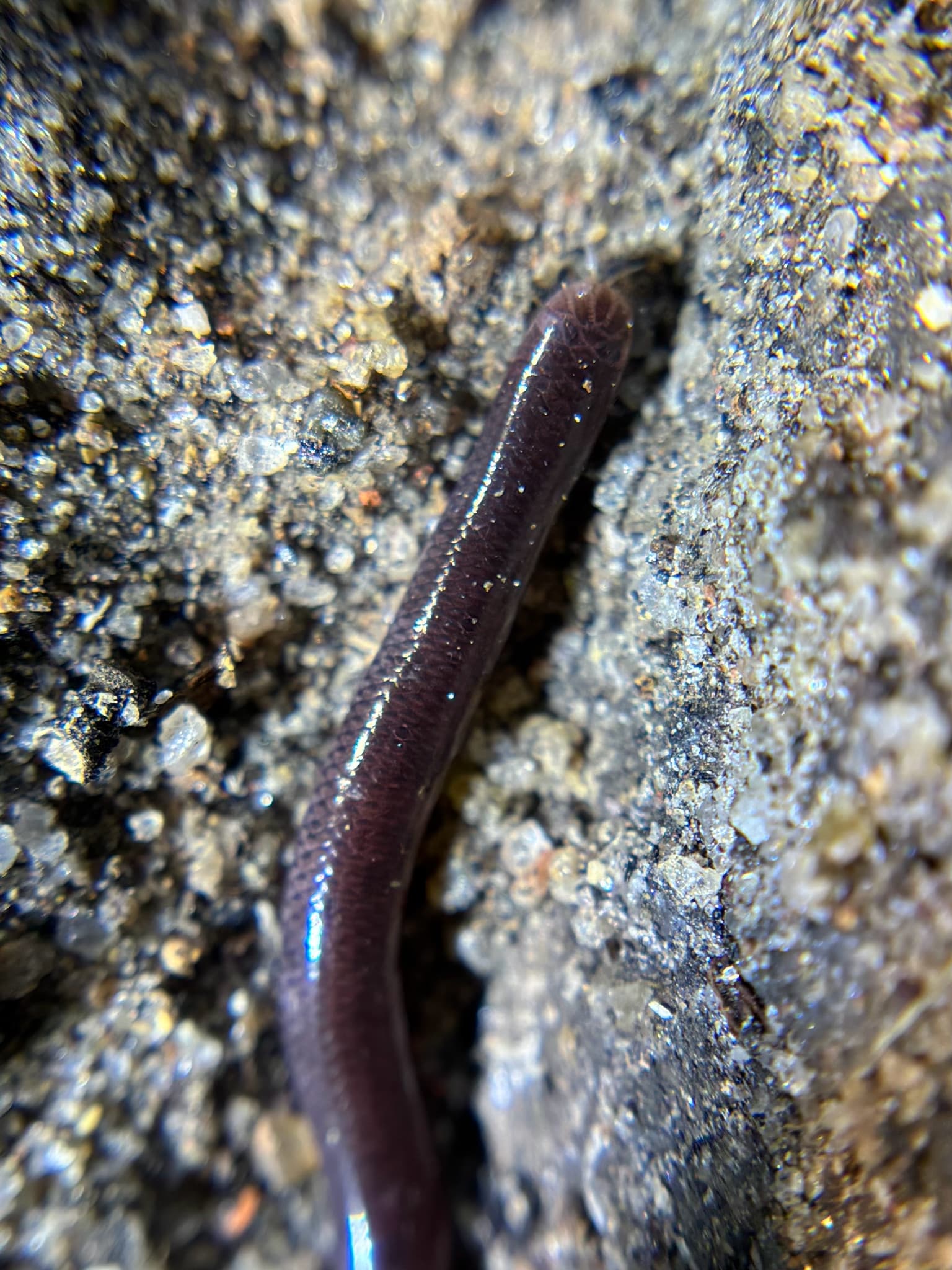
  • ✓Blind snakes usually have narrow cylindrical bodies, short tails and smooth glossy scales of similar size around the body. The head is compact and often difficult to distinguish from the neck. Eyes are reduced beneath scales but can detect changes in light. A small spine may tip the tail in some species. These snakes can resemble earthworms, but they have dry scales, a forked tongue and the coordinated movement of a vertebrate snake.
  • ✓Reinforced skull for burrowing
  • ✓Reduced eyes protected by scales
  • ✓Smooth cylindrical body
  • ✓Forked tongue and chemical sensing
  • ✓Specialized jaws for tiny prey
  • ✓Short spine-tipped tail in many species
  • ✓Chemical defenses against social insects

📏 Physical Measurements

Total Lengthabout 2 in–3.3 ft across the group, with many species below 12 in
Body WeightFrom a fraction of an ounce to several ounces
Tail LengthUsually very short and blunt or spine-tipped
WingspanNot applicable
Top SpeedNo dependable universal maximumMovement changes with context and conditions.

🎨 Appearance & Distinctive Markings

PinkBrownGrayBlackReddish brownCreamYellowWhite

Skin / Covering: Dry, smooth, closely fitted scales

Sexual Dimorphism: The sexes are usually difficult to distinguish externally. Relative tail length, scale counts and internal reproductive anatomy can differ, but reliable sexing requires species-level expertise.

🗺️ Geographic Distribution & Habitat

Living blindsnakes occur across tropical and subtropical Africa, Asia, Australia, the Americas and many islands. Individual species may have tiny island ranges, while the parthenogenetic Brahminy blindsnake has spread widely through transported soil and plants.

Loose soil, leaf litter, termite and ant nests, rotting wood, rocky crevices, savannas, forests, gardens and semideserts.

Country-level distribution map

Native range
FijiTanzaniaWestern SaharaCanadaUnited States — Native rangeKazakhstanUzbekistanPapua New GuineaIndonesia — Native rangeArgentinaChileCongo - KinshasaSomaliaKenya — Native rangeSudanChadHaitiDominican RepublicRussiaBahamasFalkland IslandsNorwayGreenlandFrench Southern TerritoriesTimor-LesteSouth Africa — Native rangeLesothoMexico — Native rangeUruguayBrazil — Native rangeBoliviaPeruColombiaPanamaCosta RicaNicaraguaHondurasEl SalvadorGuatemalaBelizeVenezuelaGuyanaSurinameFranceEcuadorPuerto RicoJamaicaCubaZimbabweBotswanaNamibiaSenegalMaliMauritaniaBeninNigerNigeriaCameroonTogoGhanaCôte d’IvoireGuineaGuinea-BissauLiberiaSierra LeoneBurkina FasoCentral African RepublicCongo - BrazzavilleGabonEquatorial GuineaZambiaMalawiMozambiqueEswatiniAngolaBurundiIsraelLebanonMadagascarPalestinian TerritoriesGambiaTunisiaAlgeriaJordanUnited Arab EmiratesQatarKuwaitIraqOmanVanuatuCambodiaThailandLaosMyanmar (Burma)VietnamNorth KoreaSouth KoreaMongoliaIndia — Native rangeBangladeshBhutanNepalPakistanAfghanistanTajikistanKyrgyzstanTurkmenistanIranSyriaArmeniaSwedenBelarusUkrainePolandAustriaHungaryMoldovaRomaniaLithuaniaLatviaEstoniaGermanyBulgariaGreeceTürkiyeAlbaniaCroatiaSwitzerlandLuxembourgBelgiumNetherlandsPortugalSpainIrelandNew CaledoniaSolomon IslandsNew ZealandAustralia — Native rangeSri LankaChinaTaiwanItalyDenmarkUnited KingdomIcelandAzerbaijanGeorgiaPhilippinesMalaysiaBruneiSloveniaFinlandSlovakiaCzechiaEritreaJapanParaguayYemenSaudi ArabiaCyprusMoroccoEgyptLibyaEthiopiaDjiboutiUgandaRwandaBosnia & HerzegovinaNorth MacedoniaSerbiaMontenegroKosovoTrinidad & TobagoSouth Sudan
Highlighted countries are recorded profile locations, not precise biological range boundaries.Map boundaries: Natural Earth

💡 Did You Know?

  • 💡Reinforced skull for burrowing
  • 💡Reduced eyes protected by scales
  • 💡Smooth cylindrical body
  • 💡Forked tongue and chemical sensing
  • 💡Specialized jaws for tiny prey
  • 💡Short spine-tipped tail in many species
  • 💡Chemical defenses against social insects

🌿 Conservation Status & Threats

No single assessment recorded

“There is no single conservation assessment for all blind snakes. Many species are poorly surveyed, while island and narrow-range taxa can be vulnerable to habitat loss and invasive predators.”

CITESListings and national wildlife protections differ by species

⚠️ Major Threats to Blind Snake

  • •Soil disturbance
  • •Habitat clearing
  • •Pesticides
  • •Mining and quarrying
  • •Invasive predators
  • •Small-range habitat loss
  • •Illegal collection

🔄 Life Cycle & Reproduction

Wild vs. Captivity Lifespan Comparison

🌿 In the WildWild longevity is poorly known for most species
🏠 In Captivity (with veterinary care)Specialist care is difficult because correct soil moisture, temperature, shelter and live prey must match the named species.
Clutch / Litter SizeUsually a small clutch, though counts vary by species and some threadsnakes may lay more than ten eggs
Incubation / GestationSpecies- and temperature-dependent; often several weeks
Fledging / WeaningIndependent hatchling
Sexual MaturityPoorly documented for many species
Mating SystemInternal fertilization; mostly egg-laying, with parthenogenesis in the Brahminy blindsnake
Nesting / Den TypeHumid soil chambers, decaying wood or protected cavities

🦅 Behavior & Field Ecology

Insectivore

🌐 Ecological Food Web & Relationships: Blind snakes are specialized predators of abundant underground invertebrates and their immature stages. They are eaten by birds, mammals, frogs, lizards and other snakes. Their movements through litter and soil connect hidden invertebrate communities with surface food webs.

Social Group SizeUsually solitary outside breeding or shared rich feeding sites
Activity RhythmMostly subterranean and secretive, with surface activity often increasing at night or after heavy rain.
Feeding StrategyInsectivore

🥩 Primary Prey & Preferred Diet

✓ Ant larvae and pupae✓ Termite larvae and pupae✓ Small insects✓ Soft-bodied arthropods✓ Arthropod eggs

📢 Communication & Territorial Signals

  • Pheromones
  • Tongue sampling
  • Touch
  • Ground vibration
  • Defensive musk

🐾 Wild Temperament & Traits

• Secretive• Fossorial• Nonaggressive• Slow on the surface• Sensitive to drying• Nonvenomous

🤝 Human Interaction & Pet Advisory

⚠️ Strictly Wild Species
🚫

Can You Keep a Blind Snake as a Pet?

Blind snakes are unsuitable casual pets. Their subterranean habitat, tiny specialized prey and poorly known husbandry make long-term care difficult. Wildlife collection and possession rules differ by place; wild animals should not be taken.

Domestication StatusWild and not domesticated
Danger to HumansVery low
Economic & Ecotourism RoleControl of social-insect brood, support of soil food webs, and research on snake evolution, burrowing and chemical ecology.

⚠️ Behavioral Risk Factors & Wildlife Safety

  • Stress and injury from handling
  • Rapid dehydration when exposed
  • Defensive musk
  • Confusion with other small animals

🌐 Ecological Food Web & Relationships

Species in this group

  • —
  • —
  • —
  • —
  • —

🦅 Natural Predators (5)

OwlsStrigiformes
Other snakesSerpentes
Frogs and toadsAnura
Small mammalsMammalia
LizardsSquamata

🧬 Related Species (4)

Brahminy blindsnakeIndotyphlops braminusParthenogenetic and widely introduced species
Texas blindsnakeRena dulcisNorth American threadsnake
Typical blindsnakesTyphlopidaeLargest family-level radiation
ThreadsnakesLeptotyphlopidaeVery slender blindsnake family

Blind Snake (Scolecophidia) refers here to the living snake lineages traditionally grouped as Scolecophidia. It is a broad taxonomic profile, not a single species. The group includes typical blindsnakes, threadsnakes and several smaller families distributed mainly in tropical and subtropical regions. This guide separates well-supported biology from common assumptions and covers identification, range, habitat, diet, behavior, reproduction and conservation.

Identification

Blind snakes usually have narrow cylindrical bodies, short tails and smooth glossy scales of similar size around the body. The head is compact and often difficult to distinguish from the neck. Eyes are reduced beneath scales but can detect changes in light. A small spine may tip the tail in some species. These snakes can resemble earthworms, but they have dry scales, a forked tongue and the coordinated movement of a vertebrate snake. The sexes are usually difficult to distinguish externally. Relative tail length, scale counts and internal reproductive anatomy can differ, but reliable sexing requires species-level expertise.

Identification should combine body shape, markings, size, voice or movement, and location. One feature by itself can overlap with a related animal, a juvenile, or an individual in unusual light.

Photographs are most useful when they preserve scale and show several diagnostic features. Handling or repositioning a wild blind snake for identification can cause stress and is unnecessary.

Size and physical adaptations

Blind Snake typically measures about 5–100 cm across the group, with many species below 30 cm and weighs From less than a gram in the smallest threadsnakes to substantially more in the largest typhlopids. Size varies enormously among families and species; published measurements should identify total length and the named taxon.

Its useful adaptations include reinforced skull for burrowing, reduced eyes protected by scales, smooth cylindrical body, forked tongue and chemical sensing, specialized jaws for tiny prey, short spine-tipped tail in many species, chemical defenses against social insects. These traits work together in the animal’s normal setting rather than serving as isolated curiosities.

Published measurements may use different methods, life stages or sample locations. Comparing figures responsibly means checking what was measured rather than selecting the largest number available.

Range and distribution

Living blindsnakes occur across tropical and subtropical Africa, Asia, Australia, the Americas and many islands. Individual species may have tiny island ranges, while the parthenogenetic Brahminy blindsnake has spread widely through transported soil and plants. The native range includes Tropical and subtropical regions worldwide except Antarctica.

A country-level map indicates broad distribution, not continuous occupation. Climate, elevation, water, vegetation, prey, breeding sites, barriers and survey effort all affect where records occur.

Records near the edge of the range deserve careful documentation because they may reflect natural movement, improved survey coverage, accidental transport or a genuine distribution change.

Habitat

Loose soil, leaf litter, termite and ant nests, rotting wood, rocky crevices, savannas, forests, gardens and semideserts.

Most species spend much of their lives underground or beneath cover where humidity remains stable. Rain can bring them to the surface, and prey-rich ant or termite colonies concentrate feeding activity. Soil texture and moisture strongly shape local distribution. Protecting a population therefore requires the feeding, shelter and breeding features that make a site usable, along with connections that allow movement.

Microhabitat matters. Shade, soil, current, moisture, shelter or host plants can determine whether a small area is usable even when the surrounding landscape appears suitable.

Diet and feeding

Blind Snake is a insectivore. Important foods include ant larvae and pupae, termite larvae and pupae, small insects, soft-bodied arthropods, arthropod eggs. Many blindsnakes enter social-insect nests and rapidly swallow larvae and pupae. Threadsnakes use repeated lower-jaw movements called mandibular raking. Chemical secretions can reduce attacks from ants and help the snake feed within a defended colony.

Diet changes with age, season, location and food supply. A dramatic prey record does not establish what most individuals eat most of the time; repeated field observations provide a stronger picture.

Feeding opportunities also create risk. An animal focused on prey may be less alert to predators, traffic or people, while contaminated prey can transfer pollutants through the food web.

Behavior and communication

Mostly subterranean and secretive, with surface activity often increasing at night or after heavy rain. A blind snake usually pushes through soil with its compact head, braces with body bends and anchors with the short tail. When exposed it seeks cover quickly. Defensive responses include writhing, releasing musk and pressing the tail spine; the spine does not inject venom.

Chemical information dominates. Tongue flicking carries molecules to the vomeronasal organs, helping locate prey, mates and familiar shelter. Touch and ground vibration also matter underground, while vision has a limited role. Behavior should be interpreted in context: alarm, courtship, feeding and temperature regulation can produce very different actions from the same animal.

Daily schedules are flexible responses, not rigid rules. Weather, breeding condition, disturbance, tides or food can move activity into a different part of the day.

Reproduction and development

Reproduction differs among lineages. Many blind snakes lay small clutches of elongate eggs in protected humid sites. Some females coil around eggs. The Brahminy blindsnake is famous for obligate parthenogenesis, but that unusual system must not be generalized to the whole group. Usually a small clutch, though counts vary by species and some threadsnakes may lay more than ten eggs Hatchlings are independent and begin taking very small soft-bodied prey. Their survival depends on moist soil, intact cover and access to social-insect colonies.

Young animals face different risks and may use different microhabitats or food than adults. Breeding success depends on adult condition, suitable sites and the survival of offspring through vulnerable early stages.

Counts of eggs or young describe reproductive output, not the number expected to reach adulthood. Mortality is normally greatest during eggs, larval or juvenile stages.

Predators and ecological role

Blind snakes are specialized predators of abundant underground invertebrates and their immature stages. They are eaten by birds, mammals, frogs, lizards and other snakes. Their movements through litter and soil connect hidden invertebrate communities with surface food webs. Documented or likely predators include Owls, Other snakes, Frogs and toads, Small mammals, Lizards.

This animal is both a consumer and a food source. Its influence comes through many repeated interactions, so ecological claims should be based on measured populations rather than assumptions drawn from appearance.

Predator and prey relationships differ among places. A species can be ecologically influential without being abundant everywhere, and its role can change across its range.

Relationship with people

People often find blind snakes after rain, while gardening or inside plant pots. They are harmless wildlife and should be allowed to return to cover. Identification matters because earthworms and small snakes require different handling, and introduced Brahminy blindsnakes may be subject to local biosecurity advice.

Blind snakes are nonvenomous and do not present a meaningful danger to people or pets. Their bodies are delicate and dry quickly in sun or wind. Avoid grasping, stretching or testing the tail spine. Responsible observation means keeping an appropriate distance, avoiding capture or feeding, protecting habitat and following local wildlife or invasive-species guidance.

Wildlife guidance should come from the responsible local agency because collection rules, reporting requests and appropriate responses differ between native and introduced ranges.

Conservation

There is no single conservation assessment for all blind snakes. Many species are poorly surveyed, while island and narrow-range taxa can be vulnerable to habitat loss and invasive predators. The reported global trend is No meaningful group-wide trend is available.

Important pressures include soil disturbance, habitat clearing, pesticides, mining and quarrying, invasive predators, small-range habitat loss, illegal collection. Global status can hide local decline or recovery, so current regional monitoring and habitat management remain necessary.

The most useful conservation action follows the documented pressure. Protecting breeding sites, reducing road deaths or limiting pollutants can require different tools in different populations.

Sources and further reading

❓ Frequently Asked Questions

Answers to frequently asked questions verified against peer-reviewed zoological research.

Their eyes are strongly reduced and covered by scales, but most can still detect light and darkness.