
Home/Animals/Reptilia/Blood Python
Species profileIUCN: LC

Blood Python

Python brongersmai

A powerfully built Southeast Asian python whose short tail, broad head and rich red pattern suit a life of ambush in humid lowlands.

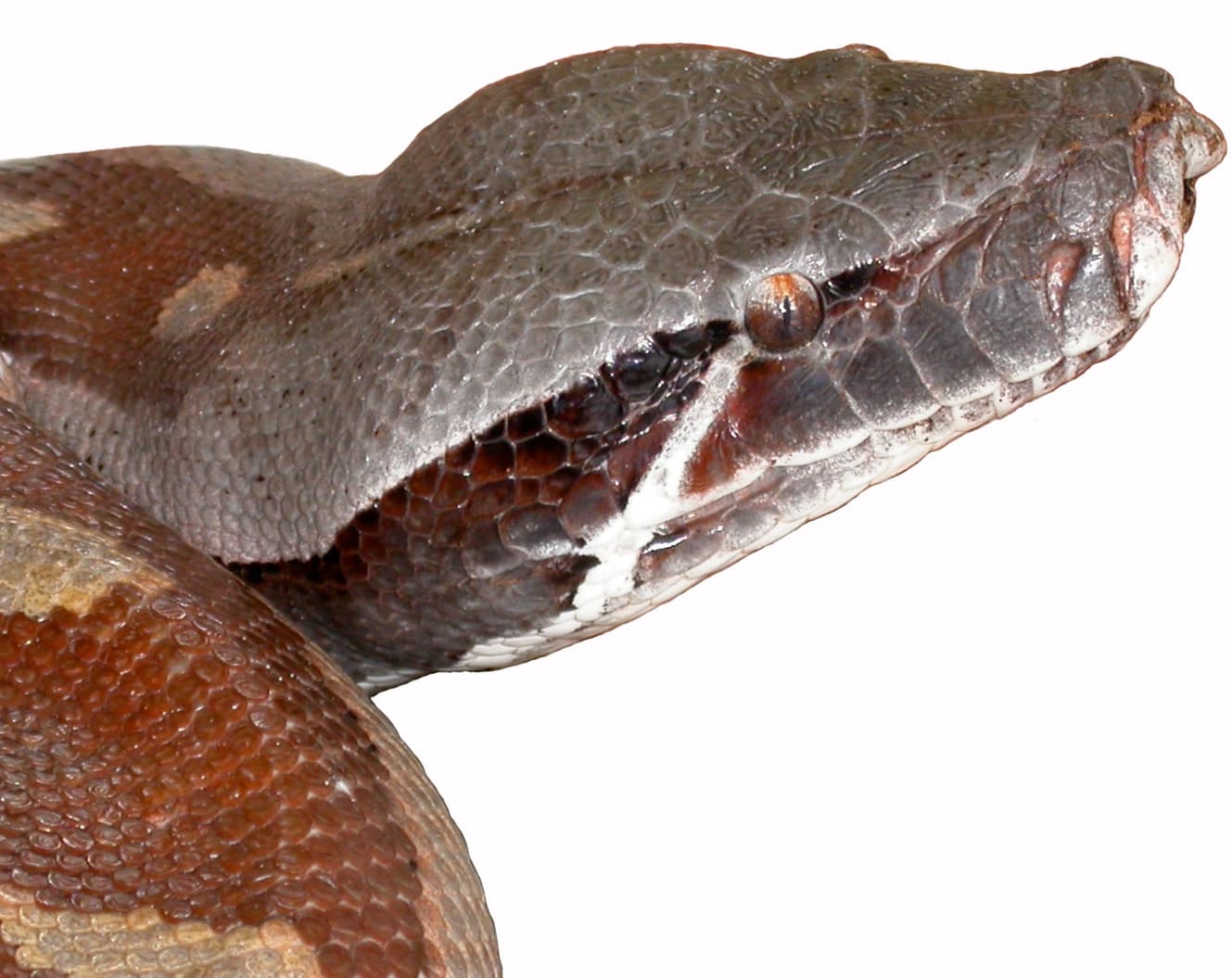
Blood Python head showing broad jaws, dark eye stripe and red-brown patterned scales
Tigerpython / Wikimedia Commons / CC BY 3.0
๐ŸŒ Read in Language:

โšก At a Glance

Species profile
Also Known As
Red Blood Python; Brongersmaโ€™s Short-Tailed Python; Malaysian Blood Python
Diet Category
Ambush predator of warm-blooded vertebrates
Activity Rhythm
Mostly crepuscular or nocturnal, resting concealed by day; activity rises after rain and during breeding movements.
Wild Lifespan
Often 15โ€“20 years in managed care; wild longevity is less certain
Typical Weight
commonly 5โ€“15 kg in large adults, with females heavier
Conservation Status
LC
๐Ÿ’ก Key Biological Insight: Blood Pythons can appear almost cylindrical because their body is exceptionally deep and muscular relative to its length.

๐ŸŒณ Scientific Taxonomy Hierarchy

Python brongersmai belongs to Pythonidae and order Squamata. It was formerly treated as a subspecies of Python curtus but genetic and morphological work supports species rank. This profile excludes the Bornean short-tailed python Python breitensteini and Sumatran short-tailed python Python curtus.

KingdomAnimalia
PhylumChordata
ClassReptilia
OrderSquamata
FamilyPythonidae
GenusPython
SpeciesPython brongersmai

Distinguishing Anatomical Features

  • โœ“The head is broad and wedge-shaped, the neck narrow, and the body exceptionally thick. Smooth glossy scales carry pale tan to deep brick-red saddles bordered by dark brown or black. Pale stripes extend behind the eyes. The tail is abruptly short compared with most pythons. Heat-sensitive pits along the lips help locate warm prey.
  • โœ“Heavy body anchors powerful constriction
  • โœ“Labial heat pits detect warm prey
  • โœ“Cryptic blotches break up the outline
  • โœ“Short tail suits ground-level ambush
  • โœ“Flexible jaws swallow large prey
  • โœ“Slow metabolism permits long intervals between meals
  • โœ“Female coils generate and regulate incubation heat

๐Ÿ“ Physical Measurements

Total Lengthusually 4โ€“6 ft, with exceptional females approaching 8.5 ft
Body Weightcommonly 11โ€“33 lb in large adults
Tail LengthVery short, tapering abruptly behind the body
WingspanNot applicable
Top SpeedNo dependable universal maximumMovement changes with context and conditions.

๐ŸŽจ Appearance & Distinctive Markings

RedOrangeBrownBlackYellowTanRedBrownYellow

Skin / Covering: Dry overlapping smooth scales

Sexual Dimorphism: Females usually become longer and substantially heavier than males. Males have proportionally longer tails and pelvic spurs, but safe sexing requires an experienced professional.

๐Ÿ—บ๏ธ Geographic Distribution & Habitat

Native populations occur in southern Thailand, Peninsular Malaysia, eastern Sumatra and islands in the Strait of Malacca; records also extend into Vietnam, while the Singapore type locality reflects the historical regional range. Taxonomic boundaries with other short-tailed pythons require care.

Humid lowland forest, swamp forest, marsh edge, river margin, dense scrub, rubber estate and oil-palm plantation up to about 650 m.

Country-level distribution map

Native range
FijiTanzaniaWestern SaharaCanadaUnited StatesKazakhstanUzbekistanPapua New GuineaIndonesia โ€” Native rangeArgentinaChileCongo - KinshasaSomaliaKenyaSudanChadHaitiDominican RepublicRussiaBahamasFalkland IslandsNorwayGreenlandFrench Southern TerritoriesTimor-LesteSouth AfricaLesothoMexicoUruguayBrazilBoliviaPeruColombiaPanamaCosta RicaNicaraguaHondurasEl SalvadorGuatemalaBelizeVenezuelaGuyanaSurinameFranceEcuadorPuerto RicoJamaicaCubaZimbabweBotswanaNamibiaSenegalMaliMauritaniaBeninNigerNigeriaCameroonTogoGhanaCรดte dโ€™IvoireGuineaGuinea-BissauLiberiaSierra LeoneBurkina FasoCentral African RepublicCongo - BrazzavilleGabonEquatorial GuineaZambiaMalawiMozambiqueEswatiniAngolaBurundiIsraelLebanonMadagascarPalestinian TerritoriesGambiaTunisiaAlgeriaJordanUnited Arab EmiratesQatarKuwaitIraqOmanVanuatuCambodiaThailand โ€” Native rangeLaosMyanmar (Burma)Vietnam โ€” Native rangeNorth KoreaSouth KoreaMongoliaIndiaBangladeshBhutanNepalPakistanAfghanistanTajikistanKyrgyzstanTurkmenistanIranSyriaArmeniaSwedenBelarusUkrainePolandAustriaHungaryMoldovaRomaniaLithuaniaLatviaEstoniaGermanyBulgariaGreeceTรผrkiyeAlbaniaCroatiaSwitzerlandLuxembourgBelgiumNetherlandsPortugalSpainIrelandNew CaledoniaSolomon IslandsNew ZealandAustraliaSri LankaChinaTaiwanItalyDenmarkUnited KingdomIcelandAzerbaijanGeorgiaPhilippinesMalaysia โ€” Native rangeBruneiSloveniaFinlandSlovakiaCzechiaEritreaJapanParaguayYemenSaudi ArabiaCyprusMoroccoEgyptLibyaEthiopiaDjiboutiUgandaRwandaBosnia & HerzegovinaNorth MacedoniaSerbiaMontenegroKosovoTrinidad & TobagoSouth Sudan
Highlighted countries are recorded profile locations, not precise biological range boundaries.Map boundaries: Natural Earth

๐Ÿ’ก Did You Know?

  • ๐Ÿ’กHeavy body anchors powerful constriction
  • ๐Ÿ’กLabial heat pits detect warm prey
  • ๐Ÿ’กCryptic blotches break up the outline
  • ๐Ÿ’กShort tail suits ground-level ambush
  • ๐Ÿ’กFlexible jaws swallow large prey
  • ๐Ÿ’กSlow metabolism permits long intervals between meals
  • ๐Ÿ’กFemale coils generate and regulate incubation heat

๐ŸŒฟ Conservation Status & Threats

IUCN: LC โ€” Least Concern

โ€œThe IUCN lists the Blood Python as Least Concern because it is widespread and adaptable. However, habitat conversion and substantial trade warrant continued monitoring, especially where wild-caught snakes may be misdeclared as captive-bred.โ€

Population TrendNot adequately quantified; harvest and habitat pressures vary by region
Wild Population EstimateNo reliable global total; locally common in some plantations and wetlands
CITESAppendix II

โš ๏ธ Major Threats to Blood Python

  • โ€ขCommercial skin trade
  • โ€ขPet-trade collection
  • โ€ขLaundering of wild-caught animals
  • โ€ขForest loss
  • โ€ขRoad mortality
  • โ€ขPersecution
  • โ€ขPoor harvest monitoring
  • โ€ขPlantation expansion

๐Ÿ”„ Life Cycle & Reproduction

Wild vs. Captivity Lifespan Comparison

๐ŸŒฟ In the WildOften 15โ€“20 years in managed care; wild longevity is less certain
๐Ÿ  In Captivity (with veterinary care)Use traceable captive-bred stock, quarantine, secure housing, measured feeding, humidity control and veterinary care; never release a captive python.
Clutch / Litter SizeUsually about 8โ€“30 eggs, depending on female size
Incubation / GestationRoughly 55โ€“75 days under warm humid conditions
Fledging / WeaningIndependent hatchling about 30โ€“45 cm long and 25โ€“60 g
Sexual MaturityOften 3โ€“5 years, depending on growth and condition
Mating SystemInternal fertilization; egg-laying
Nesting / Den TypeSheltered humid ground cavity or similar protected site

๐Ÿฆ… Behavior & Field Ecology

Ambush predator of warm-blooded vertebrates

๐ŸŒ Ecological Food Web & Relationships: Blood Pythons suppress rodents in forests and agricultural mosaics and provide prey for large raptors and carnivores. Their ability to occupy oil-palm estates shows ecological flexibility, yet those landscapes expose them to roads, workers and commercial collection. Harvest data therefore needs monitoring rather than assumptions from local abundance.

Social Group SizeSolitary except during courtship and maternal brooding
Activity RhythmMostly crepuscular or nocturnal, resting concealed by day; activity rises after rain and during breeding movements.
Feeding StrategyAmbush predator of warm-blooded vertebrates

๐Ÿฅฉ Primary Prey & Preferred Diet

โœ“ Ratsโœ“ Miceโœ“ Squirrelsโœ“ Small birdsโœ“ Ground birdsโœ“ Occasional other small mammals

๐Ÿ“ข Communication & Territorial Signals

  • Tongue-flick scent sampling
  • Heat detection
  • Pheromones
  • Courtship contact
  • Hissing
  • Defensive posture

๐Ÿพ Wild Temperament & Traits

โ€ข Secretiveโ€ข Sedentaryโ€ข Powerfulโ€ข Mostly solitaryโ€ข Ambush-orientedโ€ข Defensive if restrained

๐Ÿค Human Interaction & Pet Advisory

๐Ÿพ Domestic / Pet Companion
๐Ÿถ

Blood Python as a Pet Companion

Captive-bred blood pythons can thrive with expert care, but they are not beginner snakes. They need secure floor space, controlled humidity, clean dry resting areas, a thermal gradient, appropriately sized prey and an experienced reptile veterinarian. Overfeeding causes obesity, while persistently wet dirty substrate causes disease.

Domestication StatusCaptive-bred color lines exist, but the species is not domesticated
Danger to HumansLow venom risk because none is present, but moderate mechanical injury risk from bites and constriction
Economic & Ecotourism RoleRodent control, tropical food webs, sustainable-use research, and education about python biology and responsible captive breeding.

โš ๏ธ Behavioral Risk Factors & Wildlife Safety

  • Strong jaws can cause deep punctures
  • Large adults can constrict forcefully
  • Retained teeth may complicate a bite
  • Improper solo handling increases risk

๐ŸŒ Ecological Food Web & Relationships

๐Ÿฆ… Natural Predators (5)

King CobraOphiophagus hannah
Reticulated PythonMalayopython reticulatus
Crested Serpent EagleSpilornis cheela
Sunda Leopard CatPrionailurus javanensis
Wild PigSus scrofa

๐Ÿงฌ Related Species (4)

Sumatran Short-Tailed PythonPython curtusWestern Sumatran relative
Bornean Short-Tailed PythonPython breitensteiniBornean relative
Reticulated PythonMalayopython reticulatusLarger Southeast Asian python
Burmese PythonPython bivittatusMainland Asian relative

Blood Python (Python brongersmai) is a heavy-bodied, nonvenomous constrictor native to southern Thailand, Peninsular Malaysia, eastern Sumatra and nearby islands. Adults are short for their mass, with muscular bodies patterned in red, orange, brown, yellow and black. They spend long periods concealed near the ground and strike passing mammals or birds from close range. This guide separates well-supported biology from common assumptions and covers identification, range, habitat, diet, behavior, reproduction and conservation.

Identification

The head is broad and wedge-shaped, the neck narrow, and the body exceptionally thick. Smooth glossy scales carry pale tan to deep brick-red saddles bordered by dark brown or black. Pale stripes extend behind the eyes. The tail is abruptly short compared with most pythons. Heat-sensitive pits along the lips help locate warm prey. Females usually become longer and substantially heavier than males. Males have proportionally longer tails and pelvic spurs, but safe sexing requires an experienced professional.

Identification should combine body shape, markings, size, voice or movement, and location. One feature by itself can overlap with a related animal, a juvenile, or an individual in unusual light.

Photographs are most useful when they preserve scale and show several diagnostic features. Handling or repositioning a wild blood python for identification can cause stress and is unnecessary.

Size and physical adaptations

Blood Python typically measures usually 1.2โ€“1.8 m, with exceptional females approaching 2.6 m and weighs commonly 5โ€“15 kg in large adults, with females heavier. The species is unusually massive for its length; captive obesity can greatly exceed healthy wild proportions.

Its useful adaptations include heavy body anchors powerful constriction, labial heat pits detect warm prey, cryptic blotches break up the outline, short tail suits ground-level ambush, flexible jaws swallow large prey, slow metabolism permits long intervals between meals, female coils generate and regulate incubation heat. These traits work together in the animal’s normal setting rather than serving as isolated curiosities.

Published measurements may use different methods, life stages or sample locations. Comparing figures responsibly means checking what was measured rather than selecting the largest number available.

Range and distribution

Native populations occur in southern Thailand, Peninsular Malaysia, eastern Sumatra and islands in the Strait of Malacca; records also extend into Vietnam, while the Singapore type locality reflects the historical regional range. Taxonomic boundaries with other short-tailed pythons require care. The native range includes Thailand, Vietnam, Malaysia, Indonesia, Singapore.

A country-level map indicates broad distribution, not continuous occupation. Climate, elevation, water, vegetation, prey, breeding sites, barriers and survey effort all affect where records occur.

Records near the edge of the range deserve careful documentation because they may reflect natural movement, improved survey coverage, accidental transport or a genuine distribution change.

Habitat

Humid lowland forest, swamp forest, marsh edge, river margin, dense scrub, rubber estate and oil-palm plantation up to about 650 m.

The python remains close to ground cover, waterlogged vegetation, root tangles or burrows where humidity is high and prey routes are predictable. It can persist in plantations, but apparent abundance there does not replace intact forest or demonstrate that harvesting is harmless. Protecting a population therefore requires the feeding, shelter and breeding features that make a site usable, along with connections that allow movement.

Microhabitat matters. Shade, soil, current, moisture, shelter or host plants can determine whether a small area is usable even when the surrounding landscape appears suitable.

Diet and feeding

Blood Python is a ambush predator of warm-blooded vertebrates. Important foods include rats, mice, squirrels, small birds, ground birds, occasional other small mammals. A concealed python detects prey by scent and heat, strikes quickly, wraps muscular coils around the animal and constricts until circulation stops. It swallows the prey whole, usually head-first, then rests while digestion raises its metabolic rate. Adults can wait weeks between successful meals.

Diet changes with age, season, location and food supply. A dramatic prey record does not establish what most individuals eat most of the time; repeated field observations provide a stronger picture.

Feeding opportunities also create risk. An animal focused on prey may be less alert to predators, traffic or people, while contaminated prey can transfer pollutants through the food web.

Behavior and communication

Mostly crepuscular or nocturnal, resting concealed by day; activity rises after rain and during breeding movements. Wild blood pythons are secretive and depend on stillness rather than pursuit. If trapped they may hiss, brace the body and deliver a rapid defensive bite. They do not chase people. The reputation for unpredictable aggression often reflects rough restraint, excessive heat or poorly acclimated wild-caught animals.

Tongue flicks deliver chemical cues to the vomeronasal organ. Heat pits provide a thermal image at close range. Courtship involves scent, body contact and male pelvic spurs. Hissing and a tense S-shaped posture warn that a defensive strike may follow. Behavior should be interpreted in context: alarm, courtship, feeding and temperature regulation can produce very different actions from the same animal.

Daily schedules are flexible responses, not rigid rules. Weather, breeding condition, disturbance, tides or food can move activity into a different part of the day.

Reproduction and development

Mating is seasonal, and males follow female scent trails. Fertilization is internal. A female deposits a clutch in a sheltered humid site, coils tightly around it and uses muscular contractions to maintain incubation temperature. Usually about 8โ€“30 eggs, depending on female size The brooding female rarely feeds and adjusts her coils to manage heat and moisture. Hatchlings cut through the shell with an egg tooth, are independent after emergence and begin feeding after the first shed. No care continues after hatching.

Young animals face different risks and may use different microhabitats or food than adults. Breeding success depends on adult condition, suitable sites and the survival of offspring through vulnerable early stages.

Counts of eggs or young describe reproductive output, not the number expected to reach adulthood. Mortality is normally greatest during eggs, larval or juvenile stages.

Predators and ecological role

Blood Pythons suppress rodents in forests and agricultural mosaics and provide prey for large raptors and carnivores. Their ability to occupy oil-palm estates shows ecological flexibility, yet those landscapes expose them to roads, workers and commercial collection. Harvest data therefore needs monitoring rather than assumptions from local abundance. Documented or likely predators include King Cobra, Reticulated Python, Crested Serpent Eagle, Sunda Leopard Cat, Wild Pig.

This animal is both a consumer and a food source. Its influence comes through many repeated interactions, so ecological claims should be based on measured populations rather than assumptions drawn from appearance.

Predator and prey relationships differ among places. A species can be ecologically influential without being abundant everywhere, and its role can change across its range.

Relationship with people

The species contributes to rodent control but is collected for leather, meat and the pet trade. Ethical demand should favor traceable captive-bred animals, because laundering wild snakes as captive-bred has been reported. In the wild, give the snake space and contact trained wildlife personnel only when removal is truly necessary.

Blood Pythons are nonvenomous, but a large individual has strong jaws and coils. Never grab or corner one. A bite should be washed and medically assessed for deep punctures or infection. Captive handling requires support for the whole body, calm routines and another experienced adult for large animals. Responsible observation means keeping an appropriate distance, avoiding capture or feeding, protecting habitat and following local wildlife or invasive-species guidance.

Wildlife guidance should come from the responsible local agency because collection rules, reporting requests and appropriate responses differ between native and introduced ranges.

Conservation

The IUCN lists the Blood Python as Least Concern because it is widespread and adaptable. However, habitat conversion and substantial trade warrant continued monitoring, especially where wild-caught snakes may be misdeclared as captive-bred. The reported global trend is Not adequately quantified; harvest and habitat pressures vary by region.

Important pressures include commercial skin trade, pet-trade collection, laundering of wild-caught animals, forest loss, road mortality, persecution, poor harvest monitoring, plantation expansion. Global status can hide local decline or recovery, so current regional monitoring and habitat management remain necessary.

The most useful conservation action follows the documented pressure. Protecting breeding sites, reducing road deaths or limiting pollutants can require different tools in different populations.

Sources and further reading

โ“ Frequently Asked Questions

Answers to frequently asked questions verified against peer-reviewed zoological research.

No. They subdue prey by constriction, although a defensive bite from a large snake can cause serious punctures.