
Species profileIUCN: NT

Bush Dog

Speothos venaticus

A compact, web-footed South American canid that hunts cooperatively through forest and wetland.

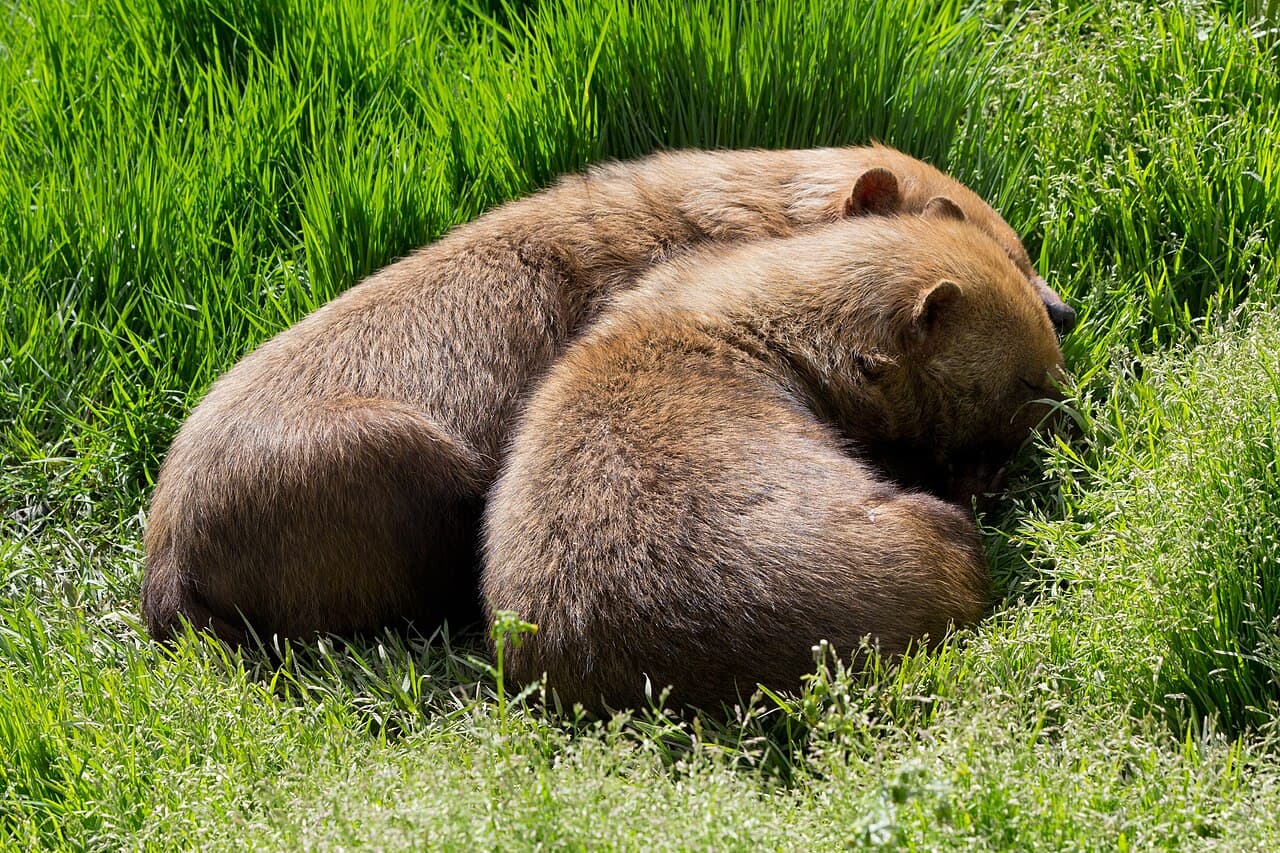
Two bush dogs Speothos venaticus resting together at Madrid Zoo
Carlos Delgado / Wikimedia Commons / CC BY-SA 3.0
๐ŸŒ Read in Language:

โšก At a Glance

Species profile
Also Known As
Vinegar dog, water dog, forest dog
Diet Category
Carnivore specializing in medium-sized vertebrate prey
Activity Rhythm
Mostly diurnal in field reports, with timing varying by disturbance, prey and local conditions.
Wild Lifespan
Wild lifespan is poorly known; captive animals can live more than 10 years
Typical Weight
about 5โ€“8 kg
Conservation Status
NT
๐Ÿ’ก Key Biological Insight: Bush dogs can hunt as a coordinated group on land and in water, sometimes pursuing prey much larger than a single dog.

๐ŸŒณ Scientific Taxonomy Hierarchy

The bush dog is the only living species in genus Speothos. Several geographic subspecies have been proposed, but this page treats the species Speothos venaticus across its full range.

KingdomAnimalia
PhylumChordata
ClassMammalia
OrderCarnivora
FamilyCanidae
GenusSpeothos
SpeciesSpeothos venaticus

Distinguishing Anatomical Features

  • โœ“A low, elongated body rides on short sturdy legs beneath a broad head, short muzzle and small rounded ears. Dense fur is reddish tan on the head and shoulders and darkens toward the hindquarters and short tail. The feet are partly webbed, an unusual feature among canids.
  • โœ“Partly webbed feet aid swimming
  • โœ“Short legs move efficiently through dense undergrowth
  • โœ“Powerful jaws restrain relatively large prey
  • โœ“Pack coordination allows cooperative hunting
  • โœ“Close-set compact body retains maneuverability in cover

๐Ÿ“ Physical Measurements

Total Lengthabout 22โ€“30 in head and body
Body Weightabout 11โ€“18 lb
Tail Lengthabout 5โ€“6 in
WingspanNot applicable
Top SpeedNo dependable universal maximumMovement changes with context and conditions.

๐ŸŽจ Appearance & Distinctive Markings

Reddish tanDark brownBlackish brownCreamRust

Skin / Covering: Dense short fur

Sexual Dimorphism: Males and females look much alike; males average only slightly larger, so sex is difficult to judge from appearance alone.

๐Ÿ—บ๏ธ Geographic Distribution & Habitat

A broad but patchy Neotropical range extends from Panama through northern and central South America to Paraguay and northeastern Argentina. The species is naturally scarce and records are widely separated.

Lowland and montane forest, seasonally flooded forest, gallery forest, wet savanna and other habitats near water.

Country-level distribution map

Native range
FijiTanzaniaWestern SaharaCanadaUnited StatesKazakhstanUzbekistanPapua New GuineaIndonesiaArgentina โ€” Native rangeChileCongo - KinshasaSomaliaKenyaSudanChadHaitiDominican RepublicRussiaBahamasFalkland IslandsNorwayGreenlandFrench Southern TerritoriesTimor-LesteSouth AfricaLesothoMexicoUruguayBrazil โ€” Native rangeBolivia โ€” Native rangePeru โ€” Native rangeColombia โ€” Native rangePanama โ€” Native rangeCosta RicaNicaraguaHondurasEl SalvadorGuatemalaBelizeVenezuela โ€” Native rangeGuyana โ€” Native rangeSuriname โ€” Native rangeFranceEcuador โ€” Native rangePuerto RicoJamaicaCubaZimbabweBotswanaNamibiaSenegalMaliMauritaniaBeninNigerNigeriaCameroonTogoGhanaCรดte dโ€™IvoireGuineaGuinea-BissauLiberiaSierra LeoneBurkina FasoCentral African RepublicCongo - BrazzavilleGabonEquatorial GuineaZambiaMalawiMozambiqueEswatiniAngolaBurundiIsraelLebanonMadagascarPalestinian TerritoriesGambiaTunisiaAlgeriaJordanUnited Arab EmiratesQatarKuwaitIraqOmanVanuatuCambodiaThailandLaosMyanmar (Burma)VietnamNorth KoreaSouth KoreaMongoliaIndiaBangladeshBhutanNepalPakistanAfghanistanTajikistanKyrgyzstanTurkmenistanIranSyriaArmeniaSwedenBelarusUkrainePolandAustriaHungaryMoldovaRomaniaLithuaniaLatviaEstoniaGermanyBulgariaGreeceTรผrkiyeAlbaniaCroatiaSwitzerlandLuxembourgBelgiumNetherlandsPortugalSpainIrelandNew CaledoniaSolomon IslandsNew ZealandAustraliaSri LankaChinaTaiwanItalyDenmarkUnited KingdomIcelandAzerbaijanGeorgiaPhilippinesMalaysiaBruneiSloveniaFinlandSlovakiaCzechiaEritreaJapanParaguay โ€” Native rangeYemenSaudi ArabiaCyprusMoroccoEgyptLibyaEthiopiaDjiboutiUgandaRwandaBosnia & HerzegovinaNorth MacedoniaSerbiaMontenegroKosovoTrinidad & TobagoSouth Sudan
Highlighted countries are recorded profile locations, not precise biological range boundaries.Map boundaries: Natural Earth

๐Ÿ’ก Did You Know?

  • ๐Ÿ’กPartly webbed feet aid swimming
  • ๐Ÿ’กShort legs move efficiently through dense undergrowth
  • ๐Ÿ’กPowerful jaws restrain relatively large prey
  • ๐Ÿ’กPack coordination allows cooperative hunting
  • ๐Ÿ’กClose-set compact body retains maneuverability in cover

๐ŸŒฟ Conservation Status & Threats

IUCN: NT โ€” Near Threatened

โ€œThe IUCN Red List classifies the bush dog as Near Threatened. Habitat loss and fragmentation, declining prey, disease from domestic dogs and direct killing are causing concern across its naturally low-density range.โ€

Population Trend๐Ÿ“‰ Decreasing
Wild Population EstimateNo reliable global total exists; field studies consistently describe the species as rare or difficult to detect.
CITESCITES Appendix I

โš ๏ธ Major Threats to Bush Dog

  • โ€ขForest loss and fragmentation
  • โ€ขLoss of prey
  • โ€ขDisease transmitted by domestic dogs
  • โ€ขRoad mortality
  • โ€ขRetaliatory killing
  • โ€ขIsolation of small populations

๐Ÿ”„ Life Cycle & Reproduction

Wild vs. Captivity Lifespan Comparison

๐ŸŒฟ In the WildWild lifespan is poorly known; captive animals can live more than 10 years
๐Ÿ  In Captivity (with veterinary care)Captive records commonly exceed a decade, with exceptional individuals living longer.
Clutch / Litter SizeUsually three to six pups, with larger litters recorded.
Incubation / GestationGestation lasts about 65โ€“70 days.
Fledging / WeaningAdults regurgitate food and remain near the den. Young depend on the family group for protection and learn group hunting over many months.
Sexual MaturityAround one year, with breeding often later
Mating SystemUsually a socially monogamous breeding pair within a pack
Nesting / Den TypeHollow log, natural cavity or abandoned armadillo burrow

๐Ÿฆ… Behavior & Field Ecology

Carnivore specializing in medium-sized vertebrate prey

๐ŸŒ Ecological Food Web & Relationships: Bush dogs are predators of rodents and other vertebrates and share prey landscapes with jaguars, pumas and other carnivores. Their large home ranges and low densities make connected habitat especially important.

Social Group SizeFamily packs commonly containing several related animals
Activity RhythmMostly diurnal in field reports, with timing varying by disturbance, prey and local conditions.
Feeding StrategyCarnivore specializing in medium-sized vertebrate prey

๐Ÿฅฉ Primary Prey & Preferred Diet

โœ“ Pacasโœ“ Agoutisโœ“ Armadillosโœ“ Small deerโœ“ Large rodentsโœ“ Birds and reptiles

๐Ÿ“ข Communication & Territorial Signals

  • High-pitched contact calls
  • Whines and growls
  • Urine marking
  • Body posture

๐Ÿพ Wild Temperament & Traits

โ€ข Social within its groupโ€ข Secretive around peopleโ€ข Persistent hunter

๐Ÿค Human Interaction & Pet Advisory

โš ๏ธ Strictly Wild Species
๐Ÿšซ

Can You Keep a Bush Dog as a Pet?

A wild social carnivore with extensive space, hunting and group needs; it is unsuitable and generally illegal to keep as a private pet.

Domestication StatusWild and not domesticated
Danger to HumansLow to people, though a pack is a capable predator
Economic & Ecotourism RoleControls prey populations, contributes to Neotropical predator diversity and serves as an indicator of connected, productive habitat.

โš ๏ธ Behavioral Risk Factors & Wildlife Safety

  • Powerful teeth can cause injury if an animal is cornered
  • Pack members may defend pups or a den
  • Disease can pass between wild and domestic canids

๐ŸŒ Ecological Food Web & Relationships

๐Ÿฆ… Natural Predators (4)

JaguarPanthera onca
PumaPuma concolor
Domestic DogCanis lupus familiaris
HumansHomo sapiens

๐Ÿงฌ Related Species (3)

Maned WolfChrysocyon brachyurusLong-legged South American canid and close evolutionary relative
Short-Eared DogAtelocynus microtisSecretive Amazonian forest canid
Crab-Eating FoxCerdocyon thousMore adaptable South American canid

Bush Dog (Speothos venaticus) is a short-legged wild canid of Central and South America, adapted for dense vegetation, swimming and coordinated pack hunting. This guide separates well-supported biology from common assumptions and covers identification, range, habitat, diet, behavior, reproduction and conservation.

Identification

A low, elongated body rides on short sturdy legs beneath a broad head, short muzzle and small rounded ears. Dense fur is reddish tan on the head and shoulders and darkens toward the hindquarters and short tail. The feet are partly webbed, an unusual feature among canids. Males and females look much alike; males average only slightly larger, so sex is difficult to judge from appearance alone.

Identification should combine body shape, markings, size, voice or movement, and location. One feature by itself can overlap with a related animal, a juvenile, or an individual in unusual light.

Photographs are most useful when they preserve scale and show several diagnostic features. Handling or repositioning a wild bush dog for identification can cause stress and is unnecessary.

Size and physical adaptations

Bush Dog typically measures about 57โ€“75 cm head and body and weighs about 5โ€“8 kg. Adults stand roughly 25โ€“30 cm at the shoulder. The compact outline can make a bush dog look more like a mustelid than a long-legged canid.

Its useful adaptations include partly webbed feet aid swimming, short legs move efficiently through dense undergrowth, powerful jaws restrain relatively large prey, pack coordination allows cooperative hunting, close-set compact body retains maneuverability in cover. These traits work together in the animal’s normal setting rather than serving as isolated curiosities.

Published measurements may use different methods, life stages or sample locations. Comparing figures responsibly means checking what was measured rather than selecting the largest number available.

Range and distribution

A broad but patchy Neotropical range extends from Panama through northern and central South America to Paraguay and northeastern Argentina. The species is naturally scarce and records are widely separated. The native range includes Panama, Colombia, Venezuela, Guyana, Suriname, French Guiana, Brazil, Ecuador, Peru, Bolivia, Paraguay, Argentina.

A country-level map indicates broad distribution, not continuous occupation. Climate, elevation, water, vegetation, prey, breeding sites, barriers and survey effort all affect where records occur.

Records near the edge of the range deserve careful documentation because they may reflect natural movement, improved survey coverage, accidental transport or a genuine distribution change.

Habitat

Lowland and montane forest, seasonally flooded forest, gallery forest, wet savanna and other habitats near water.

Bush dogs travel through dense cover, follow riverbanks and use hollow logs or abandoned burrows as dens. Many field records occur close to streams, but they can also cross drier savanna and fragmented mosaics. Protecting a population therefore requires the feeding, shelter and breeding features that make a site usable, along with connections that allow movement.

Microhabitat matters. Shade, soil, current, moisture, shelter or host plants can determine whether a small area is usable even when the surrounding landscape appears suitable.

Diet and feeding

Bush Dog is a carnivore specializing in medium-sized vertebrate prey. Important foods include pacas, agoutis, armadillos, small deer, large rodents, birds and reptiles. Individuals search with the pack and use scent and calls to coordinate pursuit. Groups can drive prey through dense vegetation or toward water, where strong swimming helps continue the chase.

Diet changes with age, season, location and food supply. A dramatic prey record does not establish what most individuals eat most of the time; repeated field observations provide a stronger picture.

Feeding opportunities also create risk. An animal focused on prey may be less alert to predators, traffic or people, while contaminated prey can transfer pollutants through the food web.

Behavior and communication

Mostly diurnal in field reports, with timing varying by disturbance, prey and local conditions. Bush dogs are among the most social South American canids. A breeding pair and their offspring travel, rest and hunt together, maintaining contact with frequent high-pitched calls. They swim readily and may dive while pursuing prey.

Whines, squeaks and other high-pitched vocalizations carry through thick vegetation. Scent from urine and glands also conveys identity, reproductive condition and use of space. Behavior should be interpreted in context: alarm, courtship, feeding and temperature regulation can produce very different actions from the same animal.

Daily schedules are flexible responses, not rigid rules. Weather, breeding condition, disturbance, tides or food can move activity into a different part of the day.

Reproduction and development

A dominant pair normally breeds within a close social group. Other adults may help guard, feed and transport pups, making cooperative care important. Usually three to six pups, with larger litters recorded. Pups are born in a sheltered den, open their eyes after roughly two weeks and begin taking solid food while still nursing. They accompany the group as coordination improves.

Young animals face different risks and may use different microhabitats or food than adults. Breeding success depends on adult condition, suitable sites and the survival of offspring through vulnerable early stages.

Counts of eggs or young describe reproductive output, not the number expected to reach adulthood. Mortality is normally greatest during eggs, larval or juvenile stages.

Predators and ecological role

Bush dogs are predators of rodents and other vertebrates and share prey landscapes with jaguars, pumas and other carnivores. Their large home ranges and low densities make connected habitat especially important. Documented or likely predators include Jaguar, Puma, Domestic Dog, Humans.

This animal is both a consumer and a food source. Its influence comes through many repeated interactions, so ecological claims should be based on measured populations rather than assumptions drawn from appearance.

Predator and prey relationships differ among places. A species can be ecologically influential without being abundant everywhere, and its role can change across its range.

Relationship with people

Bush dogs rarely threaten people. Conflict can occur where packs take poultry or small livestock, while domestic dogs bring canine distemper, parvovirus and rabies into remaining habitat.

Observe from a respectful distance, never approach a den or feed a wild pack, and keep domestic dogs vaccinated and controlled near protected habitat. Any cornered wild carnivore can bite. Responsible observation means keeping an appropriate distance, avoiding capture or feeding, protecting habitat and following local wildlife or invasive-species guidance.

Wildlife guidance should come from the responsible local agency because collection rules, reporting requests and appropriate responses differ between native and introduced ranges.

Conservation

The IUCN Red List classifies the bush dog as Near Threatened. Habitat loss and fragmentation, declining prey, disease from domestic dogs and direct killing are causing concern across its naturally low-density range. The reported global trend is Decreasing.

Important pressures include forest loss and fragmentation, loss of prey, disease transmitted by domestic dogs, road mortality, retaliatory killing, isolation of small populations. Global status can hide local decline or recovery, so current regional monitoring and habitat management remain necessary.

The most useful conservation action follows the documented pressure. Protecting breeding sites, reducing road deaths or limiting pollutants can require different tools in different populations.

Sources and further reading

โ“ Frequently Asked Questions

Answers to frequently asked questions verified against peer-reviewed zoological research.

They occur patchily from Panama through much of South America to Paraguay and northeastern Argentina, mainly in forests, wetlands and savannas near water.