
Identity and Taxonomy
The Northern Caiman Lizard, Dracaena guianensis, is a living semi-aquatic lizard of northern South America. It belongs to the family Teiidae, alongside tegus and whiptails. The Reptile Database recognizes it as a distinct species and lists Northern Caiman Lizard and Guyana Caiman Lizard as English names. “Caiman lizard” can also refer to its southern relative, Dracaena paraguayensis, so this page uses the northern species as its defined scope.
The name describes a resemblance to crocodilian caimans rather than close ancestry. Large, heavy scales cover the back and tail, and the tail is flattened for swimming. Those features give the animal a crocodile-like outline, but it is a teiid lizard with a very different skull, limbs, diet, and life history.
Appearance and Identification
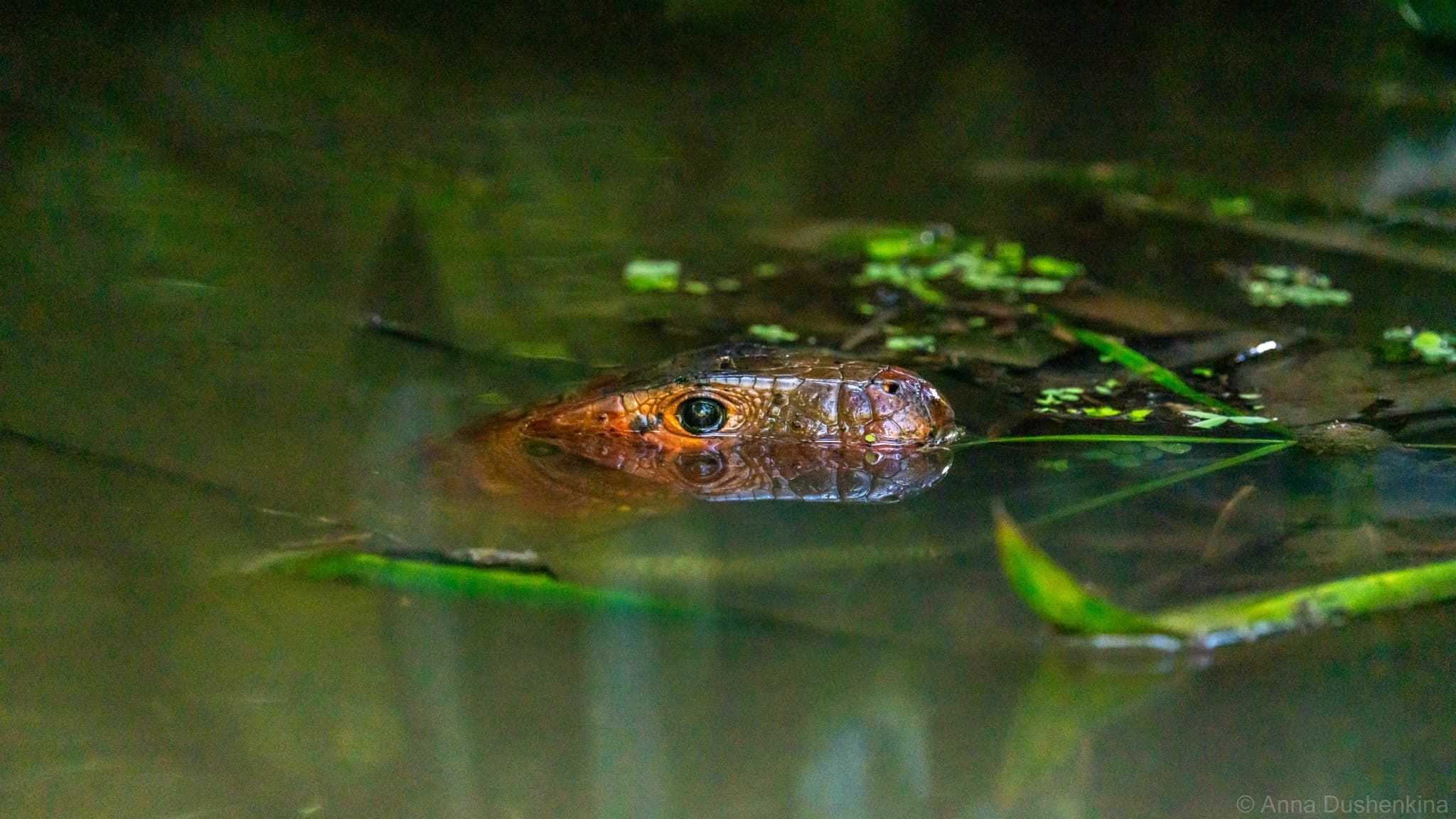
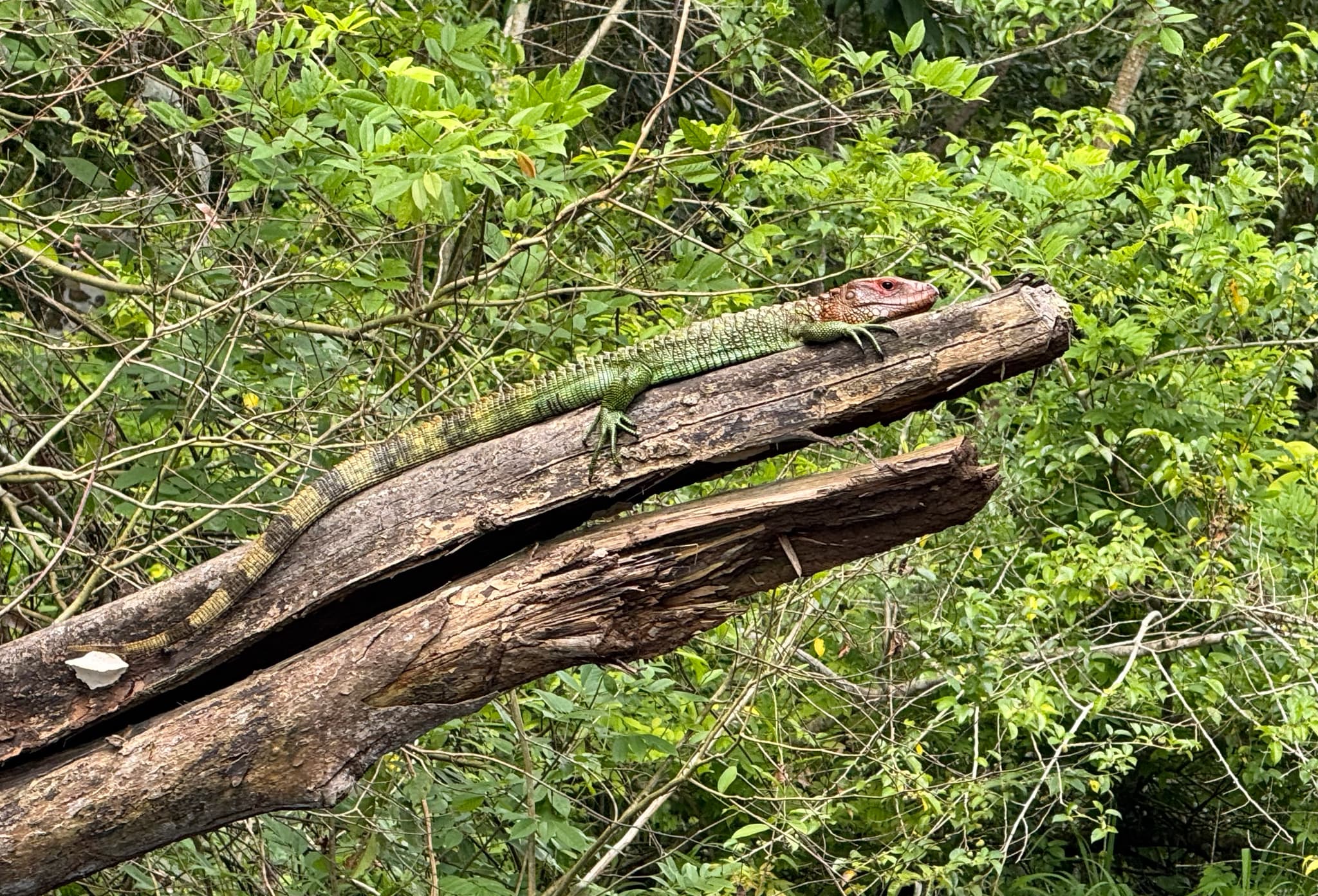
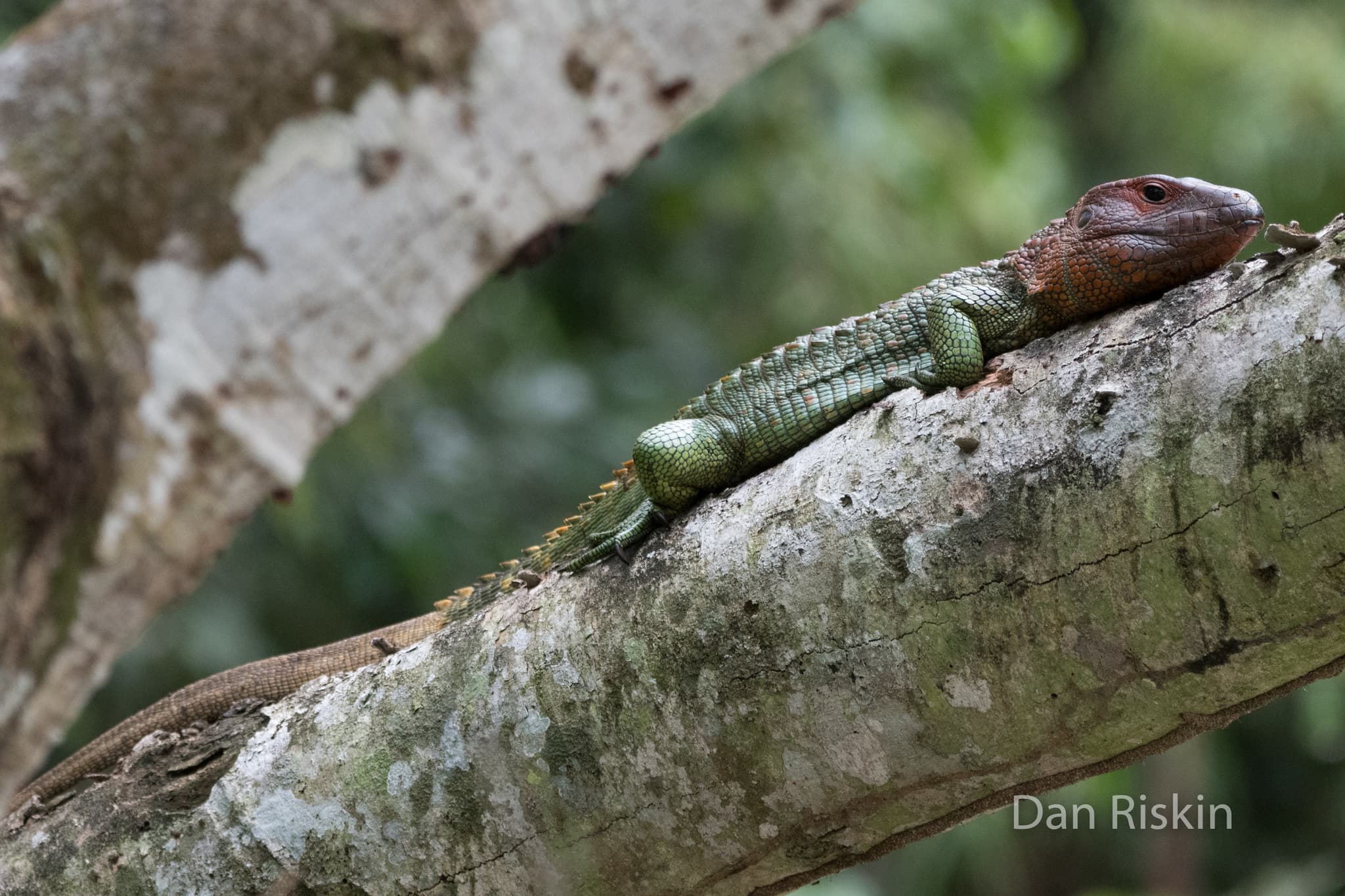
Adults have a powerful body, short sturdy limbs, a broad head, and a long laterally compressed tail. The body is usually rich green with dark bands or markings, while the head ranges from rusty orange to reddish brown. Rows of raised scales reinforce the caiman-like effect. A transparent third eyelid can protect the eye underwater while still allowing the lizard to see.
The Smithsonian’s National Zoo describes the species as a large reptile, and published zoo accounts commonly place total adult length near one to 1.2 metres, much of it tail. Males tend to be larger and broader-headed than females. Color alone is not enough for identification because lighting, age, condition, and the related Paraguayan Caiman Lizard can change the overall appearance.
Range and Wetland Habitat
The species is native to the Amazon and Guiana regions of northern South America. Verified records include Brazil, Colombia, Ecuador, Peru, French Guiana, and nearby areas, with some national boundaries less well documented than river-basin records. It lives around slow rivers, flooded forest, oxbow lakes, swamps, marshes, and seasonally inundated woodland.
Water, overhanging vegetation, and secure banks form one connected habitat. A lizard may bask on a branch, drop into water when alarmed, swim between feeding sites, and shelter in vegetation or burrows. Seasonal floods expand access to food and cover, while dry periods concentrate animals along permanent channels. Removing riverside forest therefore affects both terrestrial resting sites and aquatic foraging areas.
Diet and Feeding Adaptations
Caiman lizards specialize in hard-shelled aquatic prey, especially snails. The French National Museum of Natural History highlights crustaceans and particularly snails in the diet. Broad rear teeth and strong jaw muscles crush shells; the lizard manipulates the prey, swallows the soft tissues, and rejects or passes shell fragments. Crabs, freshwater mussels, insects, fish, amphibians, and other small animals may supplement the menu.
This feeding role links wetlands and surrounding forest. By consuming abundant mollusks and other aquatic animals, the lizard transfers nutrients and influences prey populations. It hunts in shallow water, along banks, and among submerged roots, using vision, smell, and active searching. Young animals take smaller prey until the skull and crushing teeth develop enough for larger shells.
Behavior and Daily Life
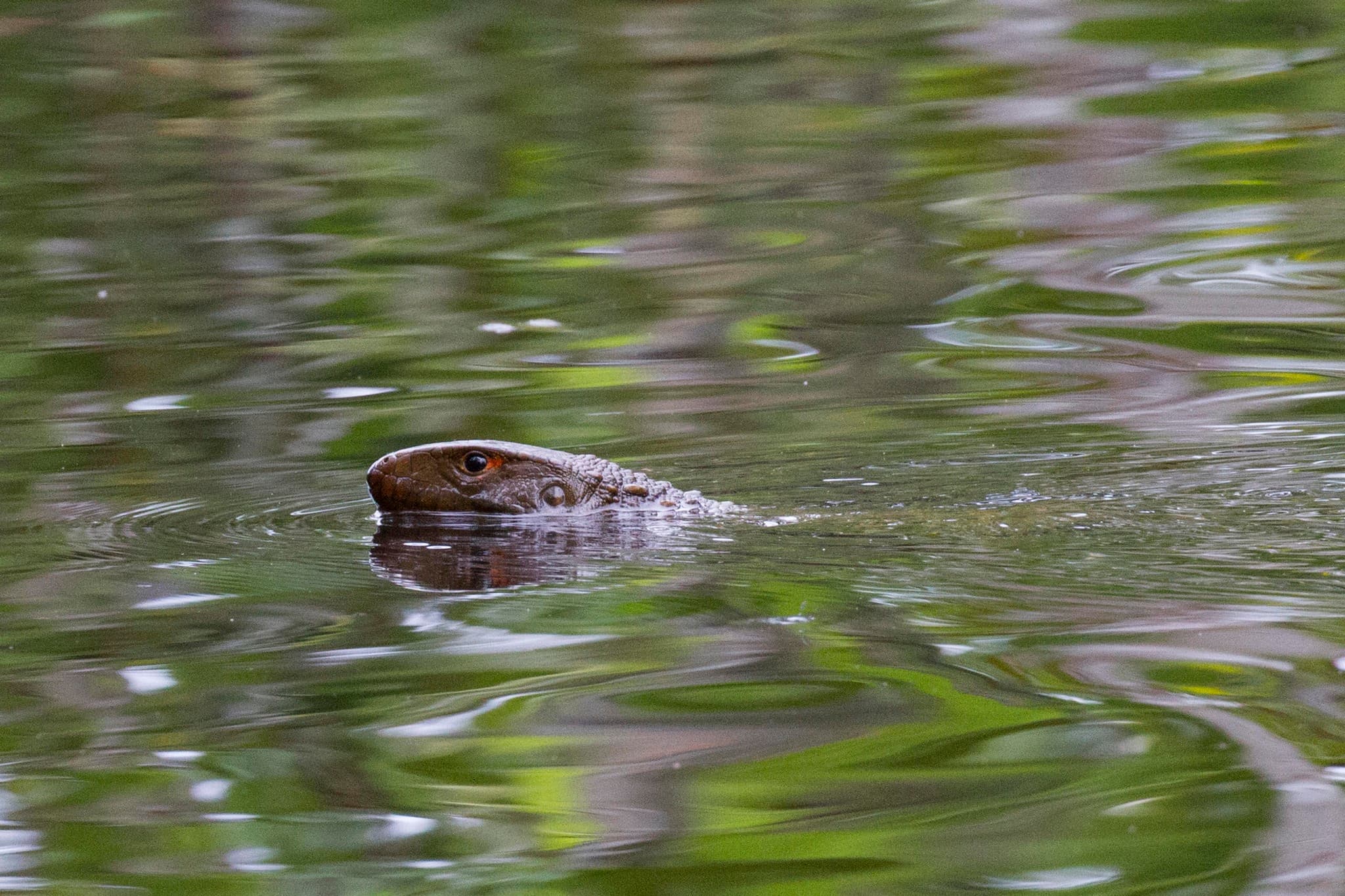
The Northern Caiman Lizard is usually active by day. It is an excellent swimmer that propels itself with side-to-side movements of the compressed tail, while the limbs help steer and climb. Individuals bask to raise body temperature, then move into water or shade to forage and cool. Strong claws provide grip on trunks and muddy banks.
When threatened, a lizard commonly escapes into water. If cornered or restrained, it can bite, scratch, and strike with the muscular tail. These are defensive actions, not evidence that the animal hunts people. Wild individuals should be watched from a distance. Approaching along a narrow bank can block the safest escape route and force a defensive response.
Reproduction and Life Cycle
Caiman lizards reproduce by laying eggs. Females use protected terrestrial nest sites above normal water level, including soil or existing cavities, so embryos are not flooded. Timing varies across the range with rainfall, river levels, and local temperature. Published accounts give modest clutch sizes, but field data remain thinner than captive observations and should not be turned into one rigid value for every population.
Hatchlings are independent and enter a landscape where both land and water matter. They face predation from large fish, snakes, birds, and mammals. Growth depends on food and suitable temperatures. Lifespan in the wild is poorly quantified; zoo longevity cannot be assumed to represent average survival in wetlands exposed to predators, drought, disease, and human disturbance.
Conservation and Human Interaction
The Northern Caiman Lizard is globally assessed as Least Concern, but local pressures remain important. Wetland drainage, mining pollution, deforestation, fire, hunting, road expansion, and capture for trade can reduce populations. Historically, heavy skins were used in leather markets. Modern legal protections and trade rules differ among countries, and a global category does not replace local monitoring.
Its large adult size, strong bite, aquatic needs, and demand for exceptional space make this a poor choice for most private keepers. Never collect a wild animal. Responsible viewing protects riverbank vegetation, avoids disturbing basking sites, and prevents discarded fishing line or plastic from entering wetlands. Photographs should show normal behavior without baiting, handling, or blocking access to water.
Sources and Review Notes
This profile uses the Reptile Database and ITIS for current species scope, Smithsonian’s National Zoo for anatomy and natural history, and the French National Museum of Natural History for aquatic feeding ecology. Distribution is summarized from taxonomic records rather than expanded beyond verified countries. Uncertain lifespan, mass, and clutch values are identified honestly instead of filled with unsupported precision.