
Identity and Taxonomic Scope
Carpet viper is a broad common name for living venomous snakes in the genus Echis, also called saw-scaled vipers. This page covers the genus rather than treating every carpet viper as one species. The group includes the Indian saw-scaled viper, Echis carinatus, the West African carpet viper, E. ocellatus, the painted carpet viper, E. coloratus, and several other recognized species. Their ranges, body sizes, reproductive biology, and conservation circumstances differ, so values from one member should never be applied to the entire genus without qualification.
The Reptile Database records the accepted species and taxonomic literature for Echis. Members belong to Viperidae, the viper family, and Viperinae, the true vipers. All are extant snakes. Their shared body plan, strongly keeled scales, and characteristic defensive display make the group recognizable, but species identification often requires locality, scale counts, and pattern details assessed by trained specialists.
Appearance and Identification
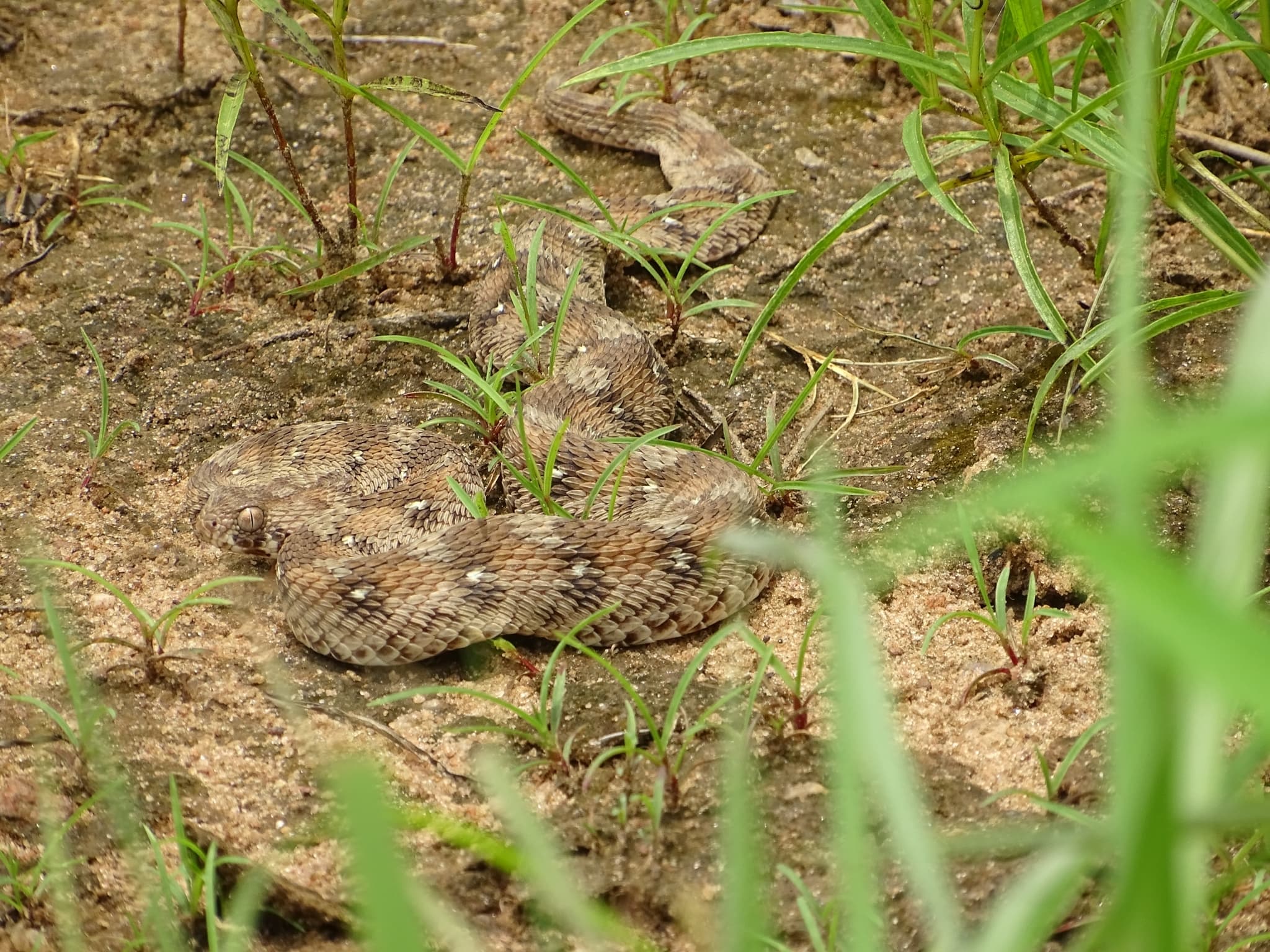
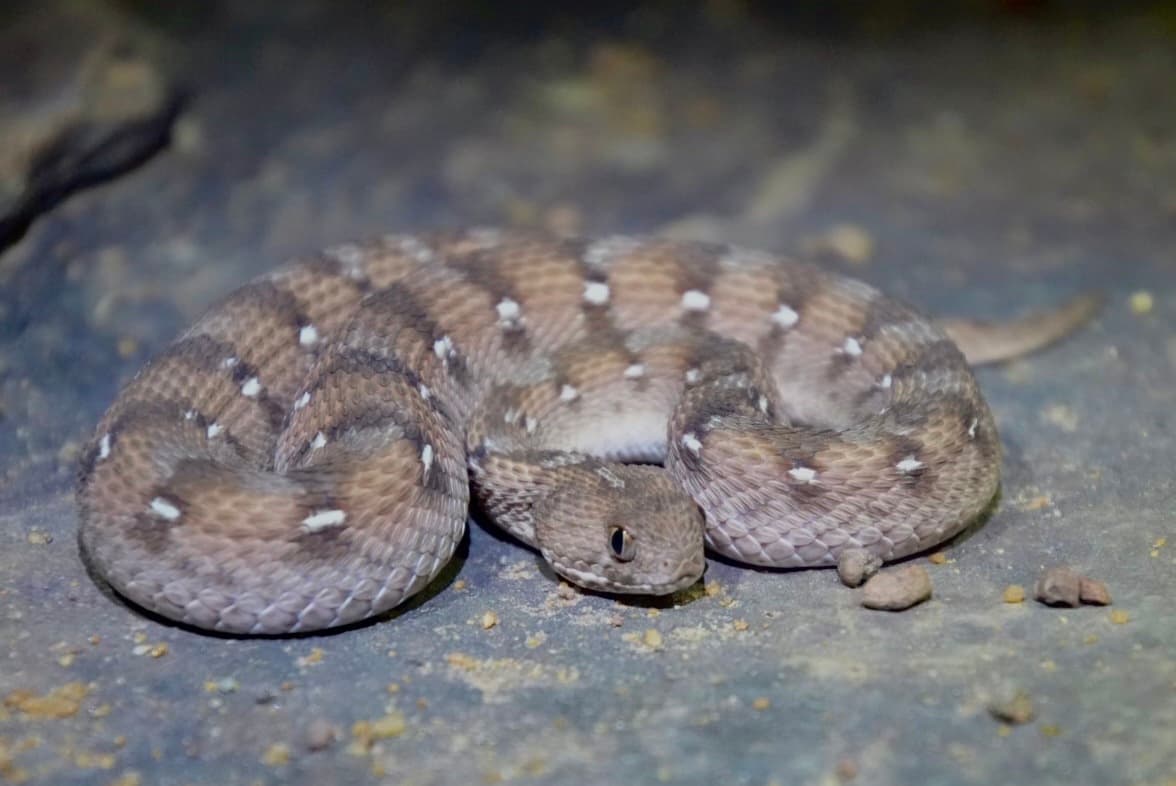
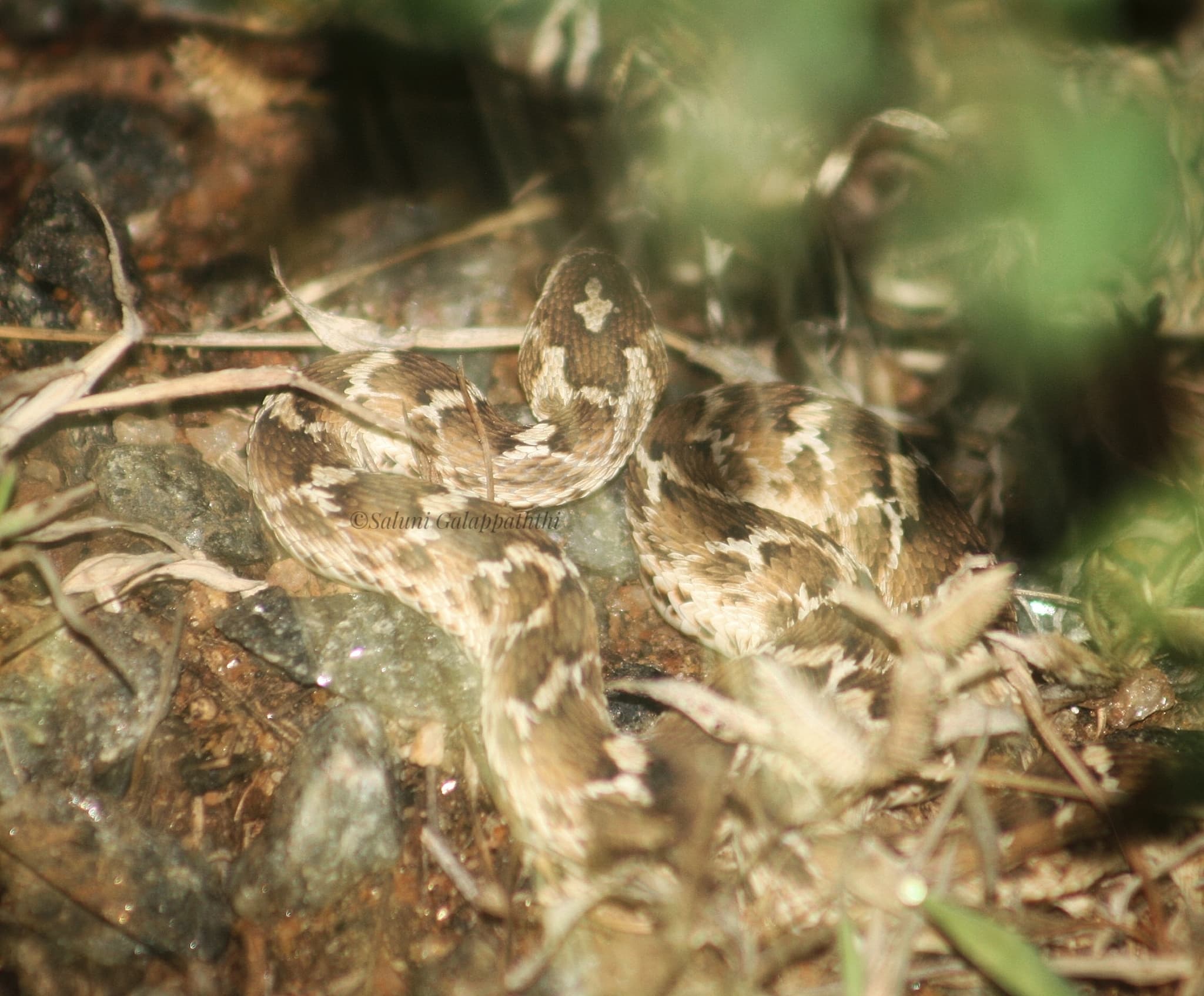
Carpet vipers are generally small to medium-sized, stout snakes with short tails, broad heads, vertical pupils, and rough scales. Many wear a complex carpet-like pattern of pale loops, spots, crossbars, or zigzags over tan, gray, reddish, or brown ground colors. That pattern provides excellent concealment on sand, gravel, dry soil, and broken rock. Color can vary within a species and may closely match local ground, so it is an unreliable basis for handling or approaching a snake.
The genus is famous for rows of sharply keeled lateral scales angled along the body. A threatened snake forms tight opposing loops and rubs these scales together, producing a dry rasping or sizzling warning called stridulation. The movement can continue while the snake holds its head ready to strike. Carpet vipers have long, hinged front fangs that fold against the roof of the mouth when not in use. No observer should try to inspect those features; photographs taken from a safe distance and geographic records are safer identification aids.
Range and Habitat
As a genus, Echis spans a wide belt from West, North, and East Africa through the Arabian Peninsula and parts of the Middle East to Pakistan, India, and Sri Lanka. Individual species occupy much smaller pieces of that combined range. The World Health Organization guidelines for Africa distinguish several African carpet vipers and their habitats, including West African savannas, semi-desert, rocky hills, oases, and dry northeastern landscapes. The Indian saw-scaled viper and its relatives extend the group eastward into dry parts of South Asia.
Typical sites include thorn scrub, sandy plains, dry grassland, open savanna, rocky slopes, wadis, cultivated margins, village edges, and rodent-rich storage areas. Shelter is found beneath stones, in cracks, inside burrows, or under vegetation. Many species become more active at night or during cooler hours, especially after hot days. Rain can bring prey and snakes onto paths and farm fields. Because camouflage is so effective, people often step close before noticing one.
Diet, Hunting, and Ecological Role
Carpet vipers are ambush and active-search predators. Diet varies with species, age, season, and locality, but commonly includes rodents, lizards, frogs, small birds, scorpions, centipedes, and large insects. Young snakes may rely more heavily on arthropods and small reptiles, while adults in productive habitats can take more vertebrate prey. Heat, scent, movement, and substrate vibration help them detect animals moving nearby.
A viper strikes rapidly, injects venom through its front fangs, and releases or holds prey depending on circumstances. Venom begins immobilizing the animal and breaking down tissues, reducing the risk that a struggling rodent will injure a relatively small snake. Carpet vipers in turn may be eaten by raptors, mongooses, monitor lizards, and other snakes. By consuming rodents and invertebrates, they participate in food webs around farms and settlements, even though close contact with people creates a serious health hazard.
Behavior and Defensive Warning
Most carpet vipers are solitary and secretive. They conserve energy by remaining still for long periods, then move when temperatures and prey conditions are favorable. Some cross loose sand with sidewinding movements that reduce contact with a hot or unstable surface. Others crawl in the familiar serpentine pattern over firm ground. Their cryptic colors work best when the snake remains motionless, which also makes accidental encounters more likely.
The rasping scale display is a clear warning, not an invitation to approach. A disturbed snake coils into a figure-eight or crescent arrangement, shifts its body loops against each other, and may strike quickly from that posture. It can reach farther than an observer expects. Giving the animal several meters of space and a clear escape route is the safest response. Never pin, pick up, kill, or attempt to move a carpet viper; many bites occur during deliberate interaction after the snake has already been seen.
Venom, Snakebite, and First Response
Carpet vipers are among the most medically important snake groups. The World Health Organization snake gallery identifies Echis across Africa, the Middle East, and South Asia as a major cause of snakebite envenoming. Their venoms can disrupt clotting, damage blood vessels and local tissue, cause persistent bleeding, swelling, shock, and kidney injury. Effects and effective antivenoms vary by species and region, which is why professional medical assessment is essential.
After a suspected bite, move away from the snake, keep the person calm and as still as possible, remove rings or tight items, immobilize the limb, and arrange urgent transport to an appropriate medical facility. Follow local emergency guidance. Do not cut or suck the wound, apply ice, use electric shock, or place a tight arterial tourniquet. Do not waste time trying to capture the snake. A safe photograph may help clinicians only if it can be taken without delaying care or risking another bite. WHO guidance emphasizes timely access to suitable antivenom and supportive treatment.
Reproduction and Life Cycle
Reproduction is not uniform across Echis. Some species lay eggs, while others give birth to live young. Clutch or litter size, timing, maturity, and survival depend on the particular species and environment. This variation is another reason a genus-level page should not advertise one universal life cycle. Mating generally involves internal fertilization, and females select sheltered sites or retain developing young according to their reproductive mode.
Newborn and hatchling carpet vipers are independent and venomous from the beginning. They receive no prolonged parental care and must find small prey and secure cover. Growth responds to food availability and climate, and lifespan in the wild is poorly measured for many members. Captive figures cannot safely be treated as wild averages. Field studies, museum specimens, and carefully documented observations continue to clarify the biology of individual species.
Conservation and Safe Coexistence
There is no single conservation status for the whole genus. Species and regional populations face different conditions, and some remain poorly surveyed. Habitat conversion, intensive agriculture, road traffic, indiscriminate killing, quarrying, and collection can reduce local populations. At the same time, human changes that concentrate rodents may draw snakes near homes and grain stores. Conservation and bite prevention therefore meet in practical landscape management.
Communities can reduce risk by wearing closed footwear and using a light after dark, clearing concealed rubbish near homes, storing grain securely, controlling rodents, sealing low gaps, and avoiding sleeping directly on the floor where medically important snakes occur. The WHO snakebite overview notes that rural workers and children bear a disproportionate burden. Education, reliable transport, trained health staff, and regionally appropriate antivenom protect people without encouraging unnecessary killing of wildlife.
Sources and Review Notes
This genus-level profile uses the Reptile Database for taxonomic scope and WHO material for geographic, medical, prevention, and treatment context. Species-specific measurements, reproductive values, population trends, and conservation categories are intentionally qualified because they cannot be generalized across every Echis. The representative photographs must name the species shown. Readers should consult local wildlife authorities and medical services for identification and bite guidance relevant to their region.