
Home/Animals/Reptilia/Central Ranges Taipan
Species profileIUCN: NE

Central Ranges Taipan

Oxyuranus temporalis

A rarely recorded desert taipan discovered by science in the twenty-first century.

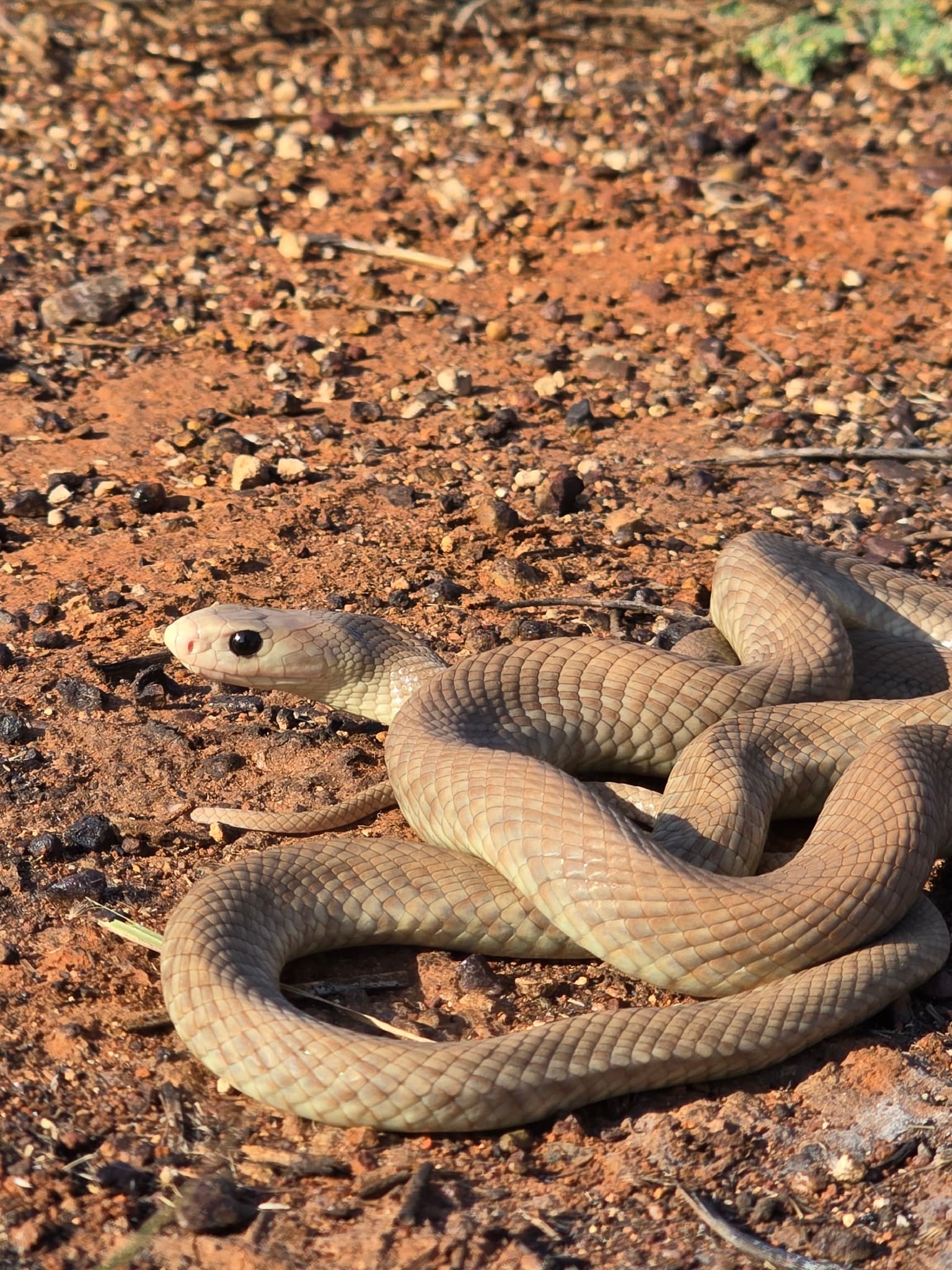
Wild Central Ranges Taipan coiled on red desert gravel
Jess Young / CC BY-NC 4.0
๐ŸŒ Read in Language:

โšก At a Glance

Species profile
Also Known As
Western Desert Taipan; Centralian Taipan
Diet Category
Carnivore; small mammals strongly suspected
Activity Rhythm
Poorly documented; surface-active in suitable conditions
Wild Lifespan
Unknown
Typical Weight
No dependable species-wide range
Conservation Status
NE
๐Ÿ’ก Key Biological Insight: The species was formally described only in 2007 from remote central Australian desert country.

๐ŸŒณ Scientific Taxonomy Hierarchy

The Central Ranges or Western Desert Taipan is the living species Oxyuranus temporalis, described in 2007 and distinct from the inland and coastal taipans.

KingdomAnimalia
PhylumChordata
ClassReptilia
OrderSquamata
FamilyElapidae
GenusOxyuranus
SpeciesOxyuranus temporalis

Distinguishing Anatomical Features

  • โœ“Single primary temporal scale
  • โœ“Six lower labial scales
  • โœ“Long rectangular head
  • โœ“Slender powerful body
  • โœ“Smooth scales
  • โœ“Pale to olive-brown coloration
  • โœ“Fixed front fangs

๐Ÿ“ Physical Measurements

Total LengthKnown adults exceed 3.3 ft; maximum poorly documented
Body WeightNo dependable universal range
Tail LengthLong and tapering
WingspanNot applicable
Top SpeedNo verified maximumCapable of rapid defensive movement.

๐ŸŽจ Appearance & Distinctive Markings

Sandy brownOlive brownCreamTanGrayYellowish brownReddish brown

Skin / Covering: Smooth overlapping scales

Sexual Dimorphism: Not adequately documented.

๐Ÿ—บ๏ธ Geographic Distribution & Habitat

Endemic to remote arid central and western Australia.

Red sandy plains, rocky ranges, spinifex grassland, open mallee and desert shrubland with burrows and crevices.

Country-level distribution map

Native range
FijiTanzaniaWestern SaharaCanadaUnited StatesKazakhstanUzbekistanPapua New GuineaIndonesiaArgentinaChileCongo - KinshasaSomaliaKenyaSudanChadHaitiDominican RepublicRussiaBahamasFalkland IslandsNorwayGreenlandFrench Southern TerritoriesTimor-LesteSouth AfricaLesothoMexicoUruguayBrazilBoliviaPeruColombiaPanamaCosta RicaNicaraguaHondurasEl SalvadorGuatemalaBelizeVenezuelaGuyanaSurinameFranceEcuadorPuerto RicoJamaicaCubaZimbabweBotswanaNamibiaSenegalMaliMauritaniaBeninNigerNigeriaCameroonTogoGhanaCรดte dโ€™IvoireGuineaGuinea-BissauLiberiaSierra LeoneBurkina FasoCentral African RepublicCongo - BrazzavilleGabonEquatorial GuineaZambiaMalawiMozambiqueEswatiniAngolaBurundiIsraelLebanonMadagascarPalestinian TerritoriesGambiaTunisiaAlgeriaJordanUnited Arab EmiratesQatarKuwaitIraqOmanVanuatuCambodiaThailandLaosMyanmar (Burma)VietnamNorth KoreaSouth KoreaMongoliaIndiaBangladeshBhutanNepalPakistanAfghanistanTajikistanKyrgyzstanTurkmenistanIranSyriaArmeniaSwedenBelarusUkrainePolandAustriaHungaryMoldovaRomaniaLithuaniaLatviaEstoniaGermanyBulgariaGreeceTรผrkiyeAlbaniaCroatiaSwitzerlandLuxembourgBelgiumNetherlandsPortugalSpainIrelandNew CaledoniaSolomon IslandsNew ZealandAustralia โ€” Native rangeSri LankaChinaTaiwanItalyDenmarkUnited KingdomIcelandAzerbaijanGeorgiaPhilippinesMalaysiaBruneiSloveniaFinlandSlovakiaCzechiaEritreaJapanParaguayYemenSaudi ArabiaCyprusMoroccoEgyptLibyaEthiopiaDjiboutiUgandaRwandaBosnia & HerzegovinaNorth MacedoniaSerbiaMontenegroKosovoTrinidad & TobagoSouth Sudan
Highlighted countries are recorded profile locations, not precise biological range boundaries.Map boundaries: Natural Earth

Recorded Native Countries & Territories:

๐Ÿ’ก Did You Know?

  • ๐Ÿ’กFixed front fangs
  • ๐Ÿ’กPotent prey-subduing venom
  • ๐Ÿ’กChemical trail sensing
  • ๐Ÿ’กDesert camouflage
  • ๐Ÿ’กHeat-avoiding refuge use
  • ๐Ÿ’กRapid strike
  • ๐Ÿ’กFlexible jaw apparatus

๐ŸŒฟ Conservation Status & Threats

IUCN: NE โ€” NE

โ€œToo few records exist for a confident population estimate; conservation assessment must distinguish data scarcity from abundance.โ€

Population TrendUnknown
Wild Population EstimateNo comprehensive count
CITESNot generally listed; protected by Australian wildlife laws

โš ๏ธ Major Threats to Central Ranges Taipan

  • โ€ขRoad mortality
  • โ€ขAltered fire regimes
  • โ€ขMining disturbance
  • โ€ขClimate change
  • โ€ขInvasive predators
  • โ€ขPrey fluctuations
  • โ€ขIllegal collection

๐Ÿ”„ Life Cycle & Reproduction

Wild vs. Captivity Lifespan Comparison

๐ŸŒฟ In the WildUnknown
๐Ÿ  In Captivity (with veterinary care)Insufficient species-specific evidence
Clutch / Litter SizeUnknown for this species
Incubation / GestationUnknown in the wild
Fledging / WeaningIndependent hatchlings; no parental care expected
Sexual MaturityUnknown
Mating SystemInternal fertilization; oviparity expected for taipans
Nesting / Den TypeUnconfirmed; sheltered terrestrial site expected

๐Ÿฆ… Behavior & Field Ecology

Carnivore

๐ŸŒ Ecological Food Web & Relationships: A rarely observed desert predator likely helping regulate small-mammal populations while serving as prey when young.

Social Group SizeUsually observed singly
Activity RhythmPoorly documented and condition-dependent
Feeding StrategyCarnivore

๐Ÿฅฉ Primary Prey & Preferred Diet

โœ“ Small mammalsโœ“ Rodentsโœ“ Possibly other small vertebrates

๐Ÿ“ข Communication & Territorial Signals

  • Scent trails
  • Tongue-flicking
  • Body posture
  • Forebody elevation
  • Head orientation
  • Substrate vibration detection
  • Defensive striking

๐Ÿพ Wild Temperament & Traits

โ€ข Alertโ€ข Fast-movingโ€ข Solitaryโ€ข Secretiveโ€ข Highly venomousโ€ข Defensive when corneredโ€ข Desert-adapted

๐Ÿค Human Interaction & Pet Advisory

๐Ÿพ Domestic / Pet Companion
๐Ÿถ

Central Ranges Taipan as a Pet Companion

Not suitable as a pet; possession requires specialist legal authority, secure professional facilities, antivenom planning and expert venomous-snake protocols.

Domestication StatusNot domesticated
Danger to HumansExtreme; medically significant taipan venom
Economic & Ecotourism RoleBiodiversity research, venom research and remote-region conservation awareness.

โš ๏ธ Behavioral Risk Factors & Wildlife Safety

  • Potent venom
  • Fixed front fangs
  • Rapid repeated strikes
  • Possible paralysis
  • Coagulation disturbance

๐ŸŒ Ecological Food Web & Relationships

๐Ÿฆ… Natural Predators (3)

Large raptorsAccipitriformes
Large monitor lizardsVaranus
Feral cats and foxesFelis catus and Vulpes vulpes

๐Ÿงฌ Related Species (2)

Inland TaipanOxyuranus microlepidotusClose relative from central-eastern arid Australia
Coastal TaipanOxyuranus scutellatusClose relative of northern and eastern Australia

Identity and Discovery

The Central Ranges Taipan, Oxyuranus temporalis, is a living, highly venomous snake endemic to arid central Australia. It is also called the Western Desert Taipan. Scientists described the species in 2007 after a specimen collected in Western Australia proved genetically and anatomically distinct from the coastal and inland taipans. The original peer-reviewed species description placed it in the elapid family alongside those two close relatives.

The species name temporalis refers to its distinctive temporal scaling. ITIS recognizes the name and both common names. This is a species-level profile; it does not substitute photographs, ranges, or venom claims from the much better known Inland Taipan, O. microlepidotus, or Coastal Taipan, O. scutellatus.

Appearance and Identification

The Central Ranges Taipan is a large, slender-bodied snake with a long rectangular head that is distinct from the neck. Known individuals have varied from pale sandy brown to darker olive-brown, with a lighter cream or yellowish head in some animals. Smooth scales and a plain or subtly shaded body fit the red-soil and spinifex landscapes where the snake has been recorded.

Reliable identification depends on scale counts and arrangement, not color alone. The original description distinguished it from other taipans by a single primary temporal scale, six lower labial scales, and other head-scale details. These features are unsafe for an untrained observer to examine. Any unidentified large brown snake in central Australia should be treated as venomous and left untouched.

Range and Habitat

Verified records come from remote central and western desert country in Western Australia, the Northern Territory, and adjoining interior regions. The Reptile Database summarizes the known taxonomic record, while later observations have extended knowledge beyond the type locality. Even so, confirmed localities remain sparse, and an absence of records can reflect low survey effort rather than a true gap.

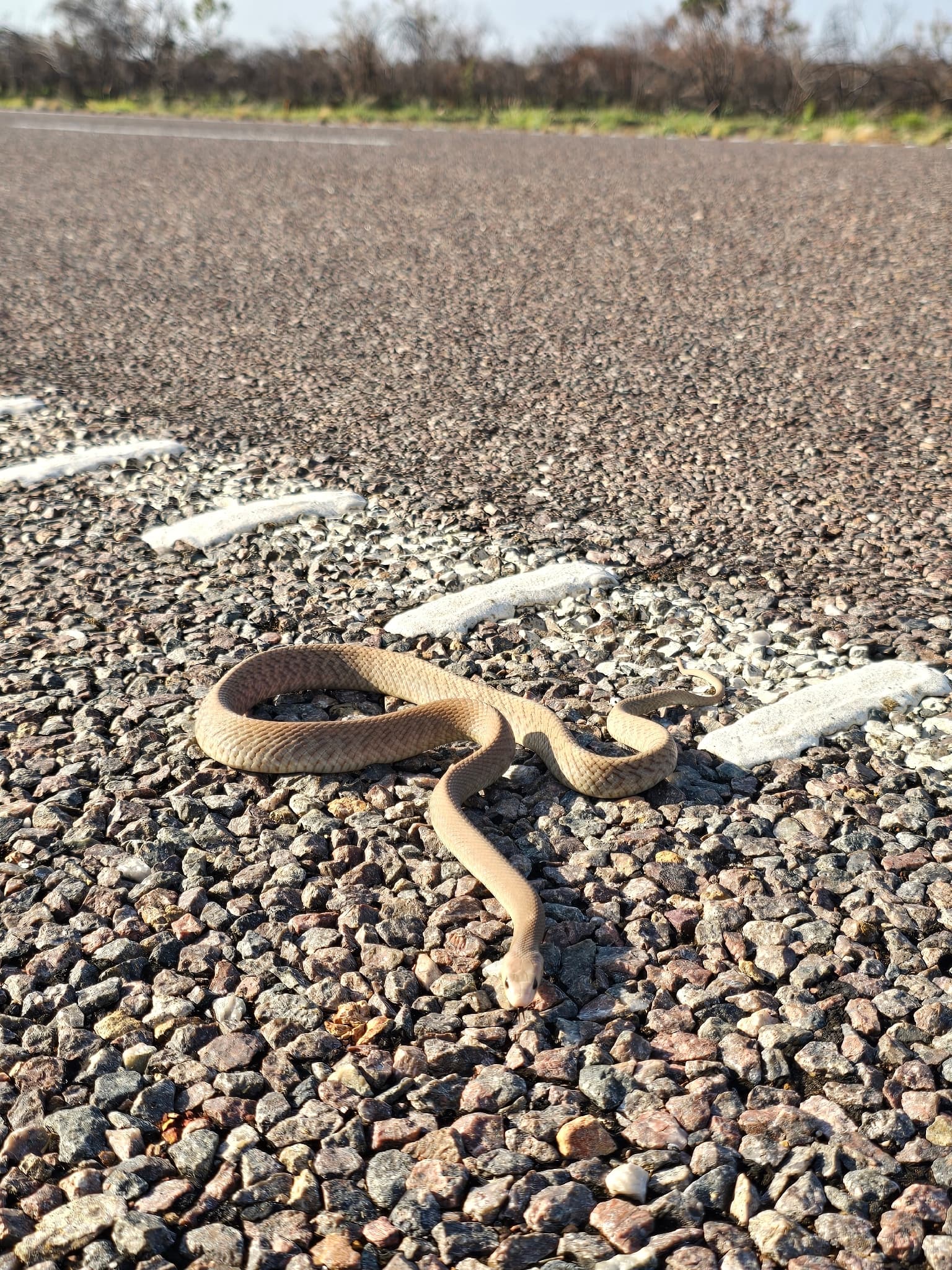
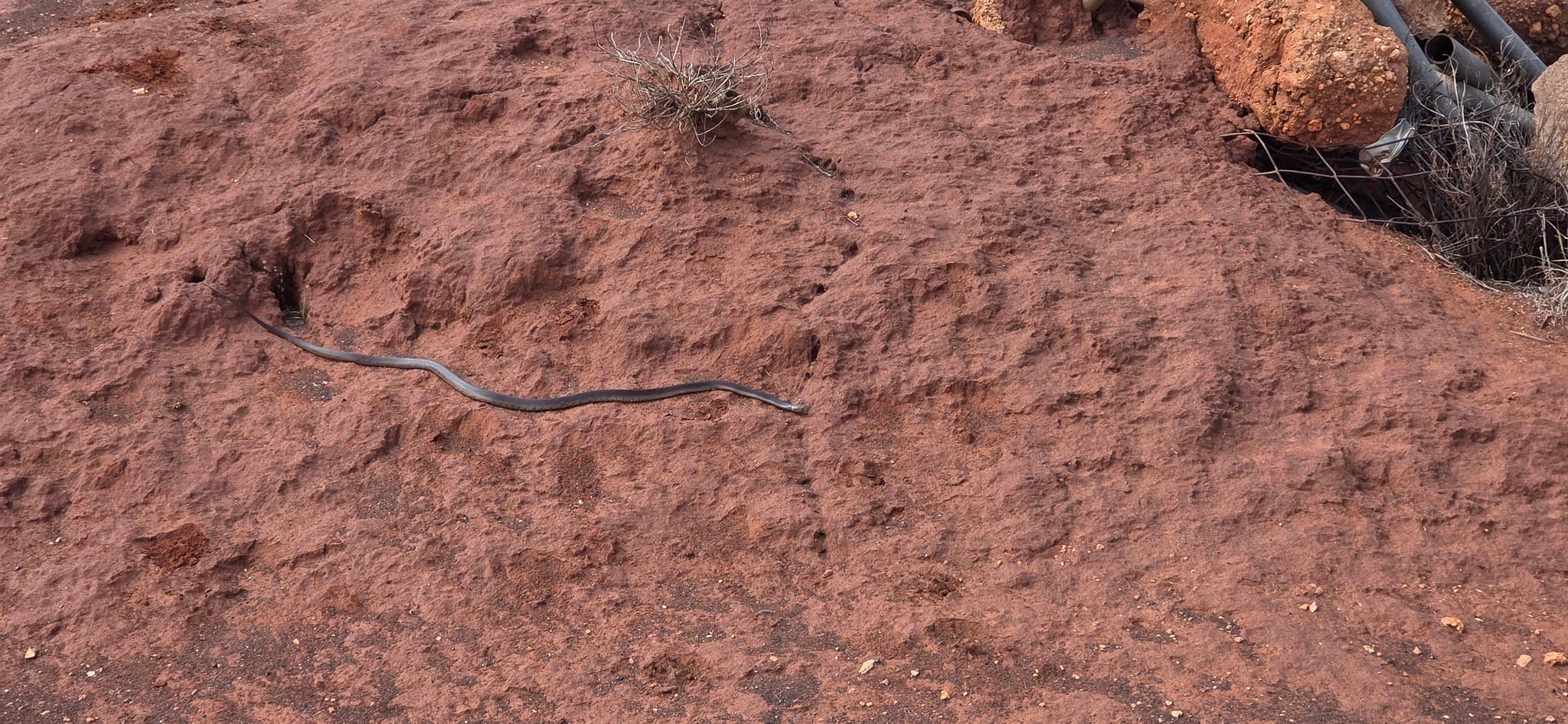
Recorded habitats include red sandy plains, rocky ranges, open mallee, spinifex grassland, and shrubland. Deep cracks, animal burrows, rock crevices, and vegetation provide refuge from extreme heat. Activity likely shifts with season, temperature, and prey abundance. Roads create dangerous open surfaces: several recent observations involve snakes crossing or lying on remote roads, where vehicles are an immediate threat.

Diet and Hunting

Direct dietary records are limited because the species is rarely encountered. Its close relatives are active mammal hunters, and the original specimen contained evidence consistent with small-mammal feeding. Rodents are therefore a well-supported likely prey base, but a complete species-wide menu has not been documented. Reptiles or other small vertebrates may also be taken where available.

Taipans combine excellent chemical sensing, forward searching, speed, fixed front fangs, and potent venom to subdue prey quickly. A hunting snake may investigate burrows or move across open ground between shelter sites. Venom reduces the risk of injury from struggling prey. That ecological function should be separated from human danger: the animal is not seeking people, yet any close approach can create a life-threatening bite risk.

Behavior and Venom

Very little is known about daily behavior in the wild. Observations show alert snakes capable of rapid movement and defensive postures when approached. Like other taipans, the species is expected to avoid unnecessary conflict when an escape route exists. It may raise the forebody, flatten or angle the head, and make fast repeated strikes if cornered.

All taipans must be considered medically dangerous. The Australian clinical guide to venomous bites includes O. temporalis among taipans. Taipan venom can cause paralysis, abnormal clotting, muscle damage, and collapse. A suspected bite is an emergency: keep the person still, apply pressure immobilization with a firm bandage and splint, call emergency services, and do not wash the bite site, cut it, suck it, or use a tourniquet.

Reproduction and Life Cycle

No broad field study has established clutch size, breeding season, age at maturity, or lifespan for this rare species. Other taipans lay eggs, making oviparity the expected reproductive mode, but details from related snakes should not be presented as direct measurements of O. temporalis. The holotype was a female, and later observations include animals of different sizes, yet the sample remains too small for confident demographic averages.

Eggs would need a sheltered site buffered from desert temperature extremes and dehydration. Hatchlings receive no parental care and must find small prey and refuge immediately. Survival probably depends on rainfall-driven rodent cycles, suitable burrows, and connected cover. These are plausible ecological links that require further field evidence.

Conservation and Responsible Observation

The Central Ranges Taipan is known from few records, which makes population trend difficult to measure. Remote habitat offers protection from intensive development in some areas, but road mortality, altered fire regimes, invasive predators, mining activity, and climate-driven changes to prey and cover may still matter. Sparse data should be treated as uncertainty, not proof of either abundance or imminent decline.

Never approach, handle, pin, or relocate this snake. From inside a vehicle or at a long distance, a photograph can provide useful locality evidence without blocking the animalโ€™s path. Record time and general habitat while protecting sensitive coordinates, then submit the observation to an appropriate museum, wildlife authority, or biodiversity platform. Only trained, authorized specialists should collect diagnostic measurements or venom samples.

Sources and Review Notes

This profile uses the 2007 Zootaxa description for diagnostic characters and discovery history, ITIS and the Reptile Database for current taxonomy, Western Australian museum material for regional context, and an Australian clinical guideline for first-aid information. Exact population size, lifespan, reproductive values, speed, and a complete diet are not claimed because published evidence remains scarce. New verified records may materially change what is known.

โ“ Frequently Asked Questions

Answers to frequently asked questions verified against peer-reviewed zoological research.

Yes. It is a taipan and must be considered extremely venomous. Any suspected bite requires immediate pressure immobilization and emergency medical care.