
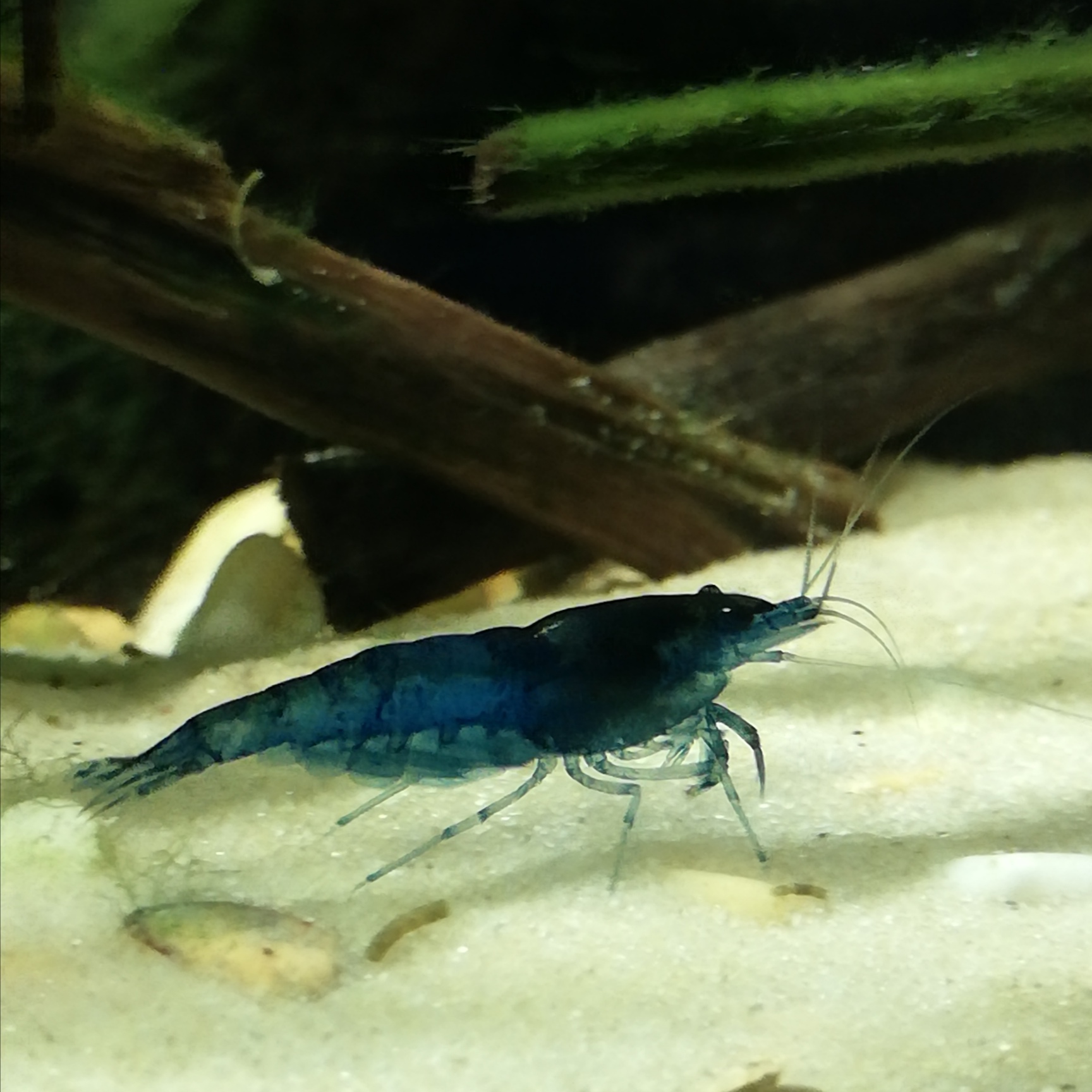
Cherry Shrimp (Neocaridina davidi) is a small atyid shrimp native to East Asia. Wild animals are usually translucent brown, while the familiar cherry-red appearance is a captive-selected color form of the same species. This guide separates well-supported biology from common assumptions and covers identification, range, habitat, diet, behavior, reproduction and conservation.
Identification
Adults have a compact, slightly arched body, a toothed rostrum, long antennae, five pairs of walking legs and a muscular abdomen ending in a broad tail fan. Wild shrimp are translucent tan or brown with fine mottling. Aquarium lines may be red, orange, yellow, blue, dark brown or patterned; color alone is therefore not a dependable species diagnosis. Mature females are generally larger and deeper-bodied, with a broader curved abdomen for carrying eggs. Females often show stronger color in selected lines and may reveal a pale ovarian saddle behind the head. Males are usually smaller, slimmer and more translucent.
Identification should combine body shape, markings, size, voice or movement, and location. One feature by itself can overlap with a related animal, a juvenile, or an individual in unusual light.
Photographs are most useful when they preserve scale and show several diagnostic features. Handling or repositioning a wild cherry shrimp for identification can cause stress and is unnecessary.
Size and physical adaptations
Cherry Shrimp typically measures usually 2–3 cm; large females may approach 4 cm and weighs Typically well under 1 g. USGS reports a maximum body length near 40 mm, but most aquarium adults are smaller and females commonly exceed males.
Its useful adaptations include brush-like feeding setae scrape biofilm from surfaces, translucent wild coloration camouflages shrimp among plants and leaf litter, rapid tail flips propel the body away from danger, females brood eggs beneath the abdomen, direct development produces miniature benthic juveniles. These traits work together in the animal’s normal setting rather than serving as isolated curiosities.
Published measurements may use different methods, life stages or sample locations. Comparing figures responsibly means checking what was measured rather than selecting the largest number available.
Range and distribution
Native range summaries place the species in East and Southeast Asia, including parts of China, Taiwan, Korea and Vietnam. Aquarium releases have established populations in warm or thermally altered waters in Europe, Japan, North America, Brazil and Réunion. The native range includes China, Taiwan, Korean Peninsula, Vietnam.
A country-level map indicates broad distribution, not continuous occupation. Climate, elevation, water, vegetation, prey, breeding sites, barriers and survey effort all affect where records occur.
Records near the edge of the range deserve careful documentation because they may reflect natural movement, improved survey coverage, accidental transport or a genuine distribution change.
Habitat
Freshwater streams, ponds, canals and vegetated margins with submerged plants, stones, wood, leaf litter and abundant biofilm.
Shrimp graze continuously over plants and hard surfaces, shelter within dense vegetation and retreat into crevices after molting. Stable introduced populations can occupy warm streams and modified urban waters. Protecting a population therefore requires the feeding, shelter and breeding features that make a site usable, along with connections that allow movement.
Microhabitat matters. Shade, soil, current, moisture, shelter or host plants can determine whether a small area is usable even when the surrounding landscape appears suitable.
Diet and feeding
Cherry Shrimp is a omnivorous grazer, detritivore and scavenger. Important foods include algae films, diatoms, bacteria-rich biofilm, decaying leaves, fine organic particles, tiny animal remains. The front limbs repeatedly pick and brush edible material from submerged surfaces. Biofilm is especially important to juveniles, while adults also consume soft algae, detritus and carrion. Captive shrimp need varied food rather than relying on visible algae alone.
Diet changes with age, season, location and food supply. A dramatic prey record does not establish what most individuals eat most of the time; repeated field observations provide a stronger picture.
Feeding opportunities also create risk. An animal focused on prey may be less alert to predators, traffic or people, while contaminated prey can transfer pollutants through the food web.
Behavior and communication
Active during day and night, often bolder in groups and under plant cover. Cherry shrimp spend much of their time walking over plants, wood and substrate while grazing. They gather at concentrated food, hide during vulnerable molts and escape sudden disturbance with a forceful backward tail flip.
Waterborne chemical cues help individuals locate food and reproductive partners. Antennae provide touch and chemical sensing at close range, while posture and movement convey immediate threat or courtship information. Behavior should be interpreted in context: alarm, courtship, feeding and temperature regulation can produce very different actions from the same animal.
Daily schedules are flexible responses, not rigid rules. Weather, breeding condition, disturbance, tides or food can move activity into a different part of the day.
Reproduction and development
After a female molts, males locate her through chemical cues. Fertilized eggs are attached beneath her abdomen and ventilated with the swimmerets until fully formed juveniles hatch. Commonly about 20–40 eggs, varying with female size and conditions Development is direct: embryos complete larval development inside the eggs, and hatchlings emerge as tiny bottom-dwelling shrimp rather than free-swimming marine larvae. Juveniles graze biofilm and grow through repeated molts.
Young animals face different risks and may use different microhabitats or food than adults. Breeding success depends on adult condition, suitable sites and the survival of offspring through vulnerable early stages.
Counts of eggs or young describe reproductive output, not the number expected to reach adulthood. Mortality is normally greatest during eggs, larval or juvenile stages.
Predators and ecological role
By consuming biofilm, algae and decomposing material, cherry shrimp help recycle nutrients and transfer microbial production to fish and other predators. Their high reproductive output and direct development also help released aquarium populations establish outside the native range. Documented or likely predators include Freshwater Fish, Dragonfly Nymphs, Crayfish, Aquatic Birds.
This animal is both a consumer and a food source. Its influence comes through many repeated interactions, so ecological claims should be based on measured populations rather than assumptions drawn from appearance.
Predator and prey relationships differ among places. A species can be ecologically influential without being abundant everywhere, and its role can change across its range.
Relationship with people
Selective breeding has produced numerous color lines sold worldwide for aquariums. That trade supports aquaculture and education but also creates release pathways; established populations have appeared far beyond the native range.
Keep shrimp in a mature, cycled aquarium with stable water, plants or other cover and shrimp-safe filtration. Avoid copper exposure unless a qualified aquatic veterinarian directs treatment. Never release shrimp, plants or aquarium water into drains or natural waterways. Responsible observation means keeping an appropriate distance, avoiding capture or feeding, protecting habitat and following local wildlife or invasive-species guidance.
Wildlife guidance should come from the responsible local agency because collection rules, reporting requests and appropriate responses differ between native and introduced ranges.
Conservation
Neocaridina davidi has not been globally assessed by the IUCN Red List. It can be abundant in aquariums and introduced habitats, but those populations do not substitute for assessment of native wild populations. The reported global trend is Unknown in the native range; expanding in some introduced regions.
Important pressures include freshwater pollution, habitat alteration, collection and genetic mixing, aquarium release outside the native range, disease and parasite transport. Global status can hide local decline or recovery, so current regional monitoring and habitat management remain necessary.
The most useful conservation action follows the documented pressure. Protecting breeding sites, reducing road deaths or limiting pollutants can require different tools in different populations.
