
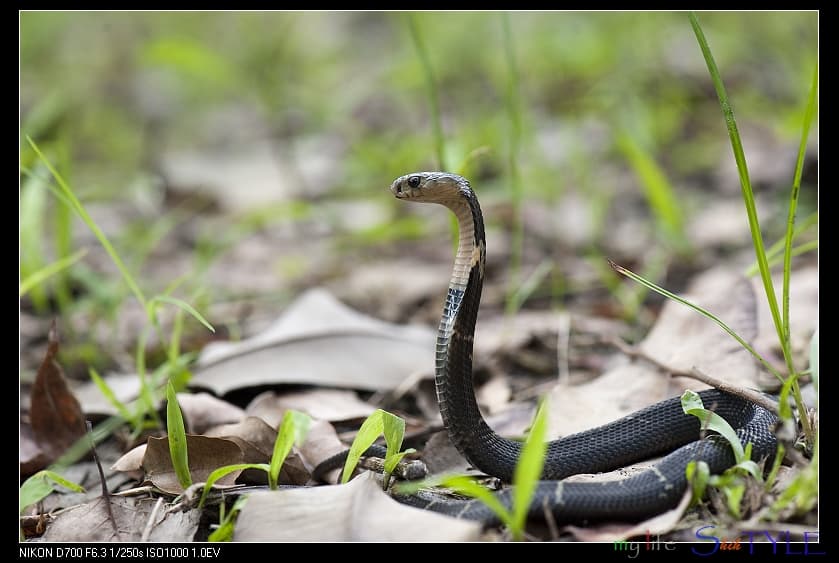
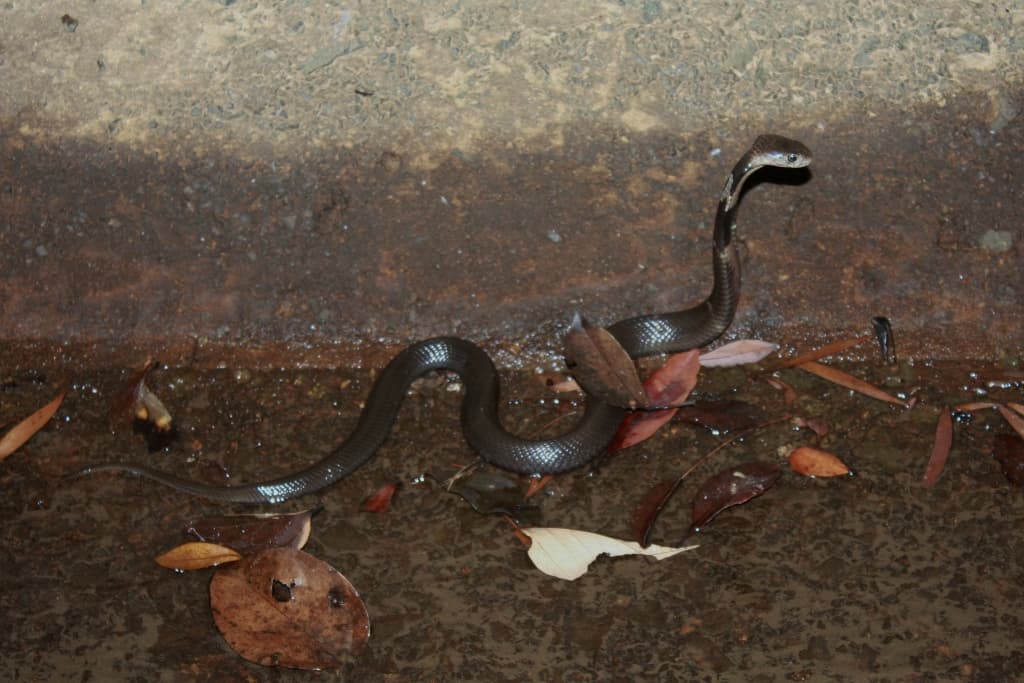
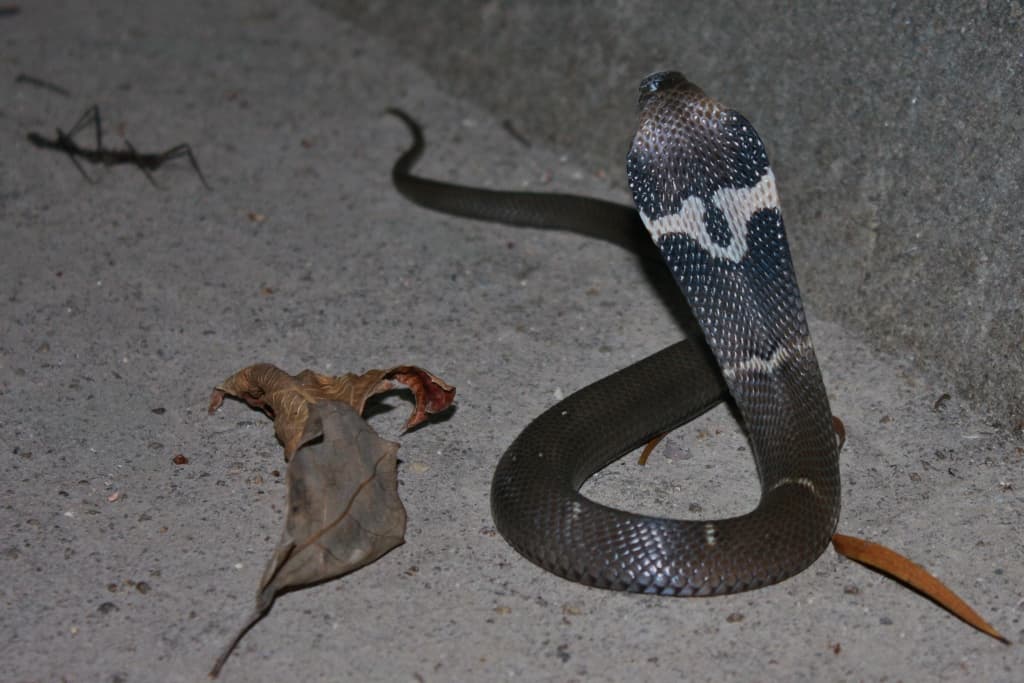
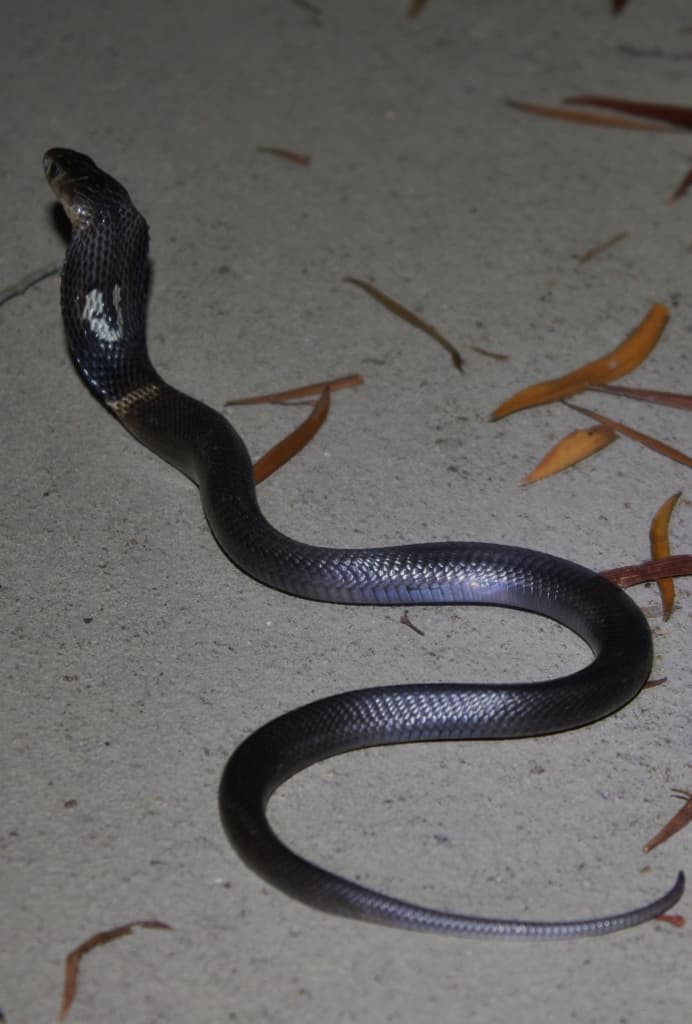
Chinese Cobra (Naja atra) is a living, medically important elapid snake native to southern China and northern Vietnam. It can spread the ribs of its neck into a hood when threatened, but this display is a warning rather than an invitation to approach. The species lives in varied lowland and foothill habitats, including farmland edges and settlements where rodents and frogs are available. Its venom can cause severe local tissue damage and systemic illness, so any suspected bite is an emergency. This profile covers identification, current taxonomy, range, habitat, diet, behavior, reproduction, ecological role, human safety and conservation.
Identification
The Chinese cobra is a medium to large cobra with a relatively broad head, smooth glossy scales and a neck that can expand into a hood. Adults are often dark brown, charcoal or black above, sometimes with paler crossbands or speckling. The underside is lighter and may carry darker markings. A hood mark can vary from a clear spectacle-like pattern to a less complete pale design, so it should not be used alone for identification. Young snakes may show stronger banding than older individuals.
Body color changes across the range and can also vary within one population. Identification should combine location, scale arrangement, hood pattern and other diagnostic characters used by trained herpetologists. Several Asian cobras overlap or resemble one another, and dangerous snakes should never be handled for a closer look. A distant photograph can help a qualified local expert, but personal safety comes first.
Taxonomy and scientific name
Naja atra belongs to the family Elapidae, which includes cobras, kraits, coral snakes and many Australasian venomous snakes. The Reptile Database recognizes it as a valid species described by Theodore Cantor in 1842. Older references often treated Asian cobras as subspecies of the Indian cobra, so names such as Naja naja atra can appear in historical papers. Current work treats the Chinese cobra as a separate species.
A 2022 taxonomic study designated a neotype and clarified distinctions among Chinese cobras, including the newly described Naja fuxi. This matters because old locality records from southwestern China may require rechecking. Modern distribution statements should follow current species boundaries rather than combining every record once labeled “Chinese cobra.”
Range and distribution
The confirmed range includes southern China, Taiwan and northern Vietnam. Chinese records extend across areas south of the Yangtze River, including coastal and inland provinces, while the Reptile Database notes that some records from Yunnan are questionable under current taxonomy. Hong Kong’s Agriculture, Fisheries and Conservation Department lists the species among the territory’s venomous land snakes.
A country or province on a range map does not mean the snake occupies every location. Elevation, climate, prey, shelter and land use shape local occurrence. Reliable records need accurate identification because the monocled cobra and other Naja species occur in neighboring regions. Museum vouchers, genetic data and well-documented observations provide stronger evidence than an unverified photograph.
Habitat
Chinese cobras use a broad range of warm habitats, including woodland edges, shrubland, grassland, agricultural country, stream valleys and areas near villages. They shelter in burrows, rock spaces, dense vegetation and human-made structures. This flexibility can bring them close to people, especially where rodents concentrate around crops, animal feed or rubbish.
Season and weather affect how the snake uses habitat. Warm, humid conditions can increase surface activity, while excessive heat or cold sends it to shelter. A suitable landscape includes prey-rich feeding areas and secure refuges. Clearing every bank and field edge may reduce cover, but poorly managed waste can simultaneously attract rodents and snakes into buildings. Habitat management should reduce risky encounters without indiscriminate killing.
Diet and feeding
The Chinese cobra is a carnivore that takes frogs, toads, rodents, other snakes and additional small vertebrates. Diet varies with age, location and availability. It hunts with chemical cues and vision, striking quickly and injecting venom through fixed front fangs. The venom immobilizes prey and begins tissue damage before swallowing.
As with other predators, one unusual prey record does not define the whole diet. Studies of stomach contents, feces and repeated field observations give a better picture. Young cobras generally take smaller prey than adults. Hunting rodents and amphibians places the species in both terrestrial and wet-edge food webs, but any pest-control benefit does not make close contact safe.
Behavior and defense
A Chinese cobra usually attempts to retreat when it has space. If cornered, surprised or blocked, it may raise the front of its body, expand its hood, hiss and strike. Some observations report defensive venom projection, but the species is not as specialized for spitting as the true spitting cobras. People should still protect their eyes and move away without sudden pursuit.
Activity can occur by day or night depending on temperature, season and disturbance. Tongue-flicking gathers chemical information about prey, mates and surroundings. Hooding enlarges the apparent outline and communicates danger visually. These behaviors reduce the need for physical contact when a threat backs away. Attempting to kill or capture the snake sharply increases bite risk.
Reproduction and development
The Chinese cobra is oviparous, meaning females lay eggs. Reproductive timing changes across the range, but mating and egg-laying generally follow seasonal warming. Females place eggs in protected, humid sites where temperature and moisture support development. Incubation conditions influence development rate and hatchling traits.
Published clutch sizes vary with female size and study population, so a single number should not be treated as universal. Hatchlings are venomous and independent from birth. They receive no prolonged parental care and must find prey, shelter and suitable temperatures immediately. Juveniles face predation from birds, mammals and larger snakes, while roads and human persecution add further risk.
Predators and ecological role
Chinese cobras consume rodents, amphibians, snakes and other vertebrates, helping transfer energy through southern Chinese and northern Vietnamese food webs. They are also prey, particularly when young, for raptors, mammalian carnivores and larger snakes. King cobras can prey on other snakes, including cobras where ranges overlap.
The ecological role changes among farmland, forest edge and village landscapes. A healthy predator population depends on prey, refuge and movement routes, while excessive persecution can remove animals faster than local recruitment replaces them. Conservation claims should rely on regional monitoring because a species can remain widespread while declining in heavily exploited areas.
Relationship with people and bite safety
The Chinese cobra is capable of fatal envenomation. Hong Kong authorities classify it among land snakes that can inflict lethal bites. Venom effects may include intense pain, swelling, blistering, tissue destruction and systemic neurological or cardiovascular complications. Severity depends on venom dose, bite location, treatment delay and individual health. A bite that initially looks minor can worsen.
For a suspected bite, move away from the snake, keep the person still and call emergency medical services immediately. Remove rings or tight items before swelling develops. Do not cut the wound, suck out venom, apply ice, use electric shock or attempt to catch the snake. Follow local medical guidance on immobilization because first-aid recommendations differ among venom types and regions. A photograph taken from safety may help identification, but treatment must not wait for one.
Conservation
The Chinese cobra is affected by habitat change, road mortality, deliberate killing and collection for food, traditional uses and the live-animal trade. Legal protection and trade controls differ among jurisdictions. CITES listings and national regulations should be checked in their current form before making claims about possession or movement.
Reducing conflict requires practical steps: control rodents without poisoning entire food webs, seal gaps around buildings, keep storage areas tidy, use lighting carefully and contact trained snake responders. Protecting connected habitat and enforcing wildlife-trade law can reduce pressure on wild populations. Local agencies are the best source for current conservation status and response procedures.