
Cobras in this profile means the living species of the genus Naja, often called true cobras. These venomous elapid snakes live across Africa and Asia and share the ability to spread elongated neck ribs into a hood. The Reptile Database currently recognizes 43 species in the genus, although taxonomy continues to change as genetic, scale and geographic evidence separates old species complexes. King cobras, rinkhals and shield-nosed cobras carry “cobra” in their common names but belong to other genera and are outside this profile’s scope. This guide covers true-cobra identification, range, habitat, venom, feeding, behavior, reproduction, ecology, safety and conservation.
What counts as a true cobra?
True cobras belong to Naja in the family Elapidae. The genus includes African and Asian lineages such as the Cape cobra, Egyptian cobra, Indian cobra, monocled cobra, Chinese cobra and several spitting cobras. A common name is not a taxonomic boundary. The king cobra is Ophiophagus hannah, while the rinkhals is Hemachatus haemachatus. Both can spread a hood, but neither is a member of Naja.
Species lists are revised when researchers compare anatomy, venom, mitochondrial and nuclear DNA, and geography. Some names once treated as wide-ranging single species now represent several species. The current count should therefore be read as a dated taxonomic snapshot, not a permanent total. Reliable profiles identify the genus-level scope and label every photograph to species.
Identification and hood display
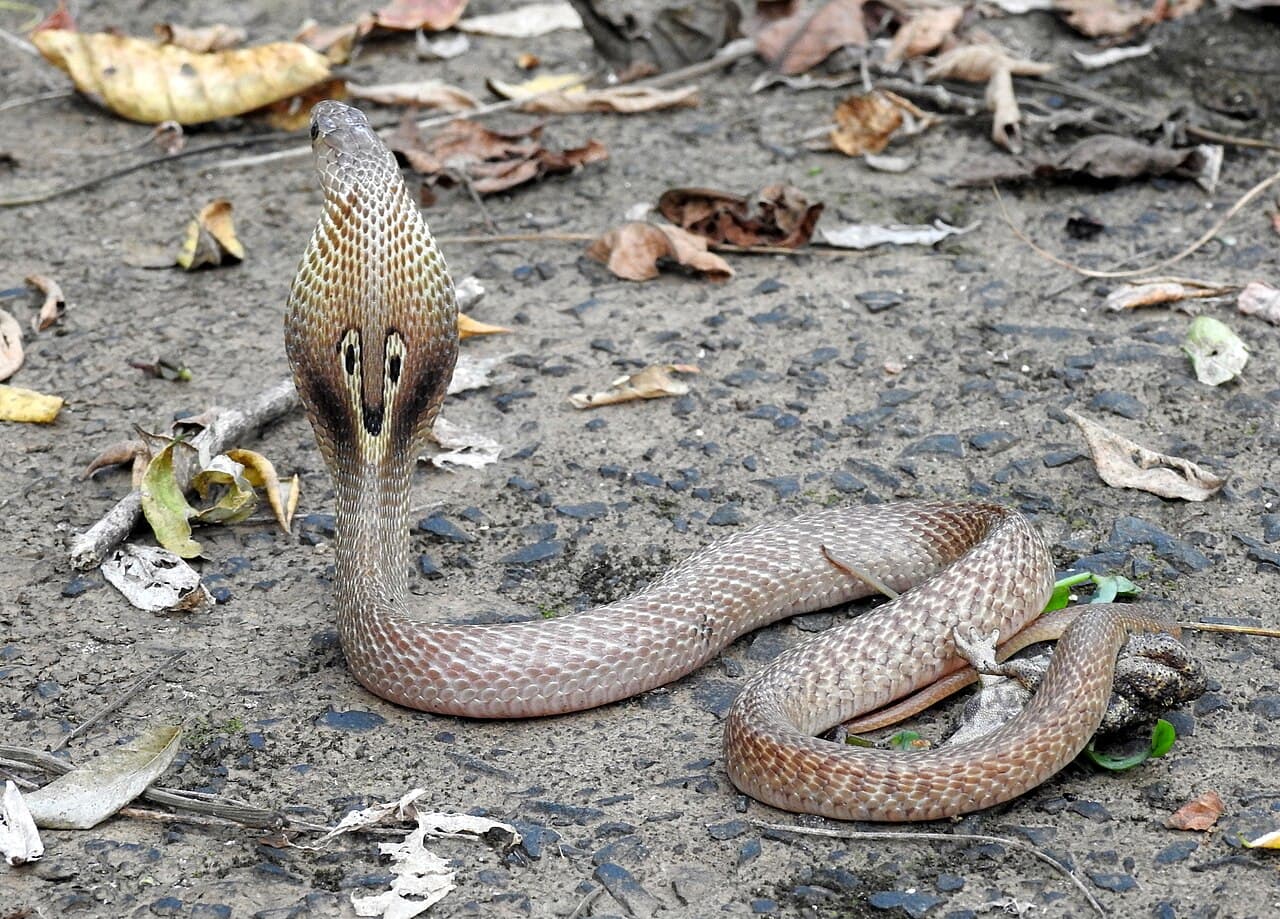
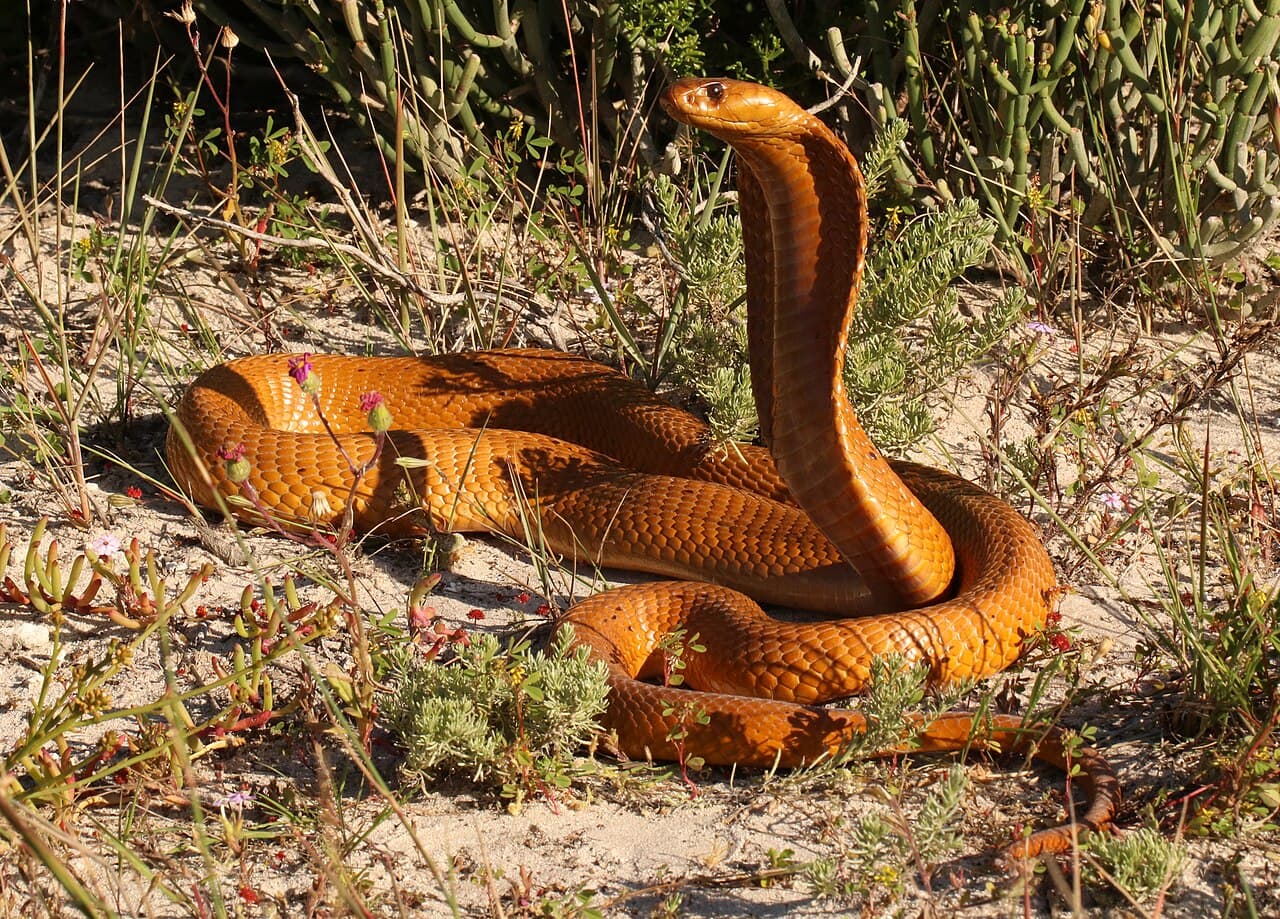
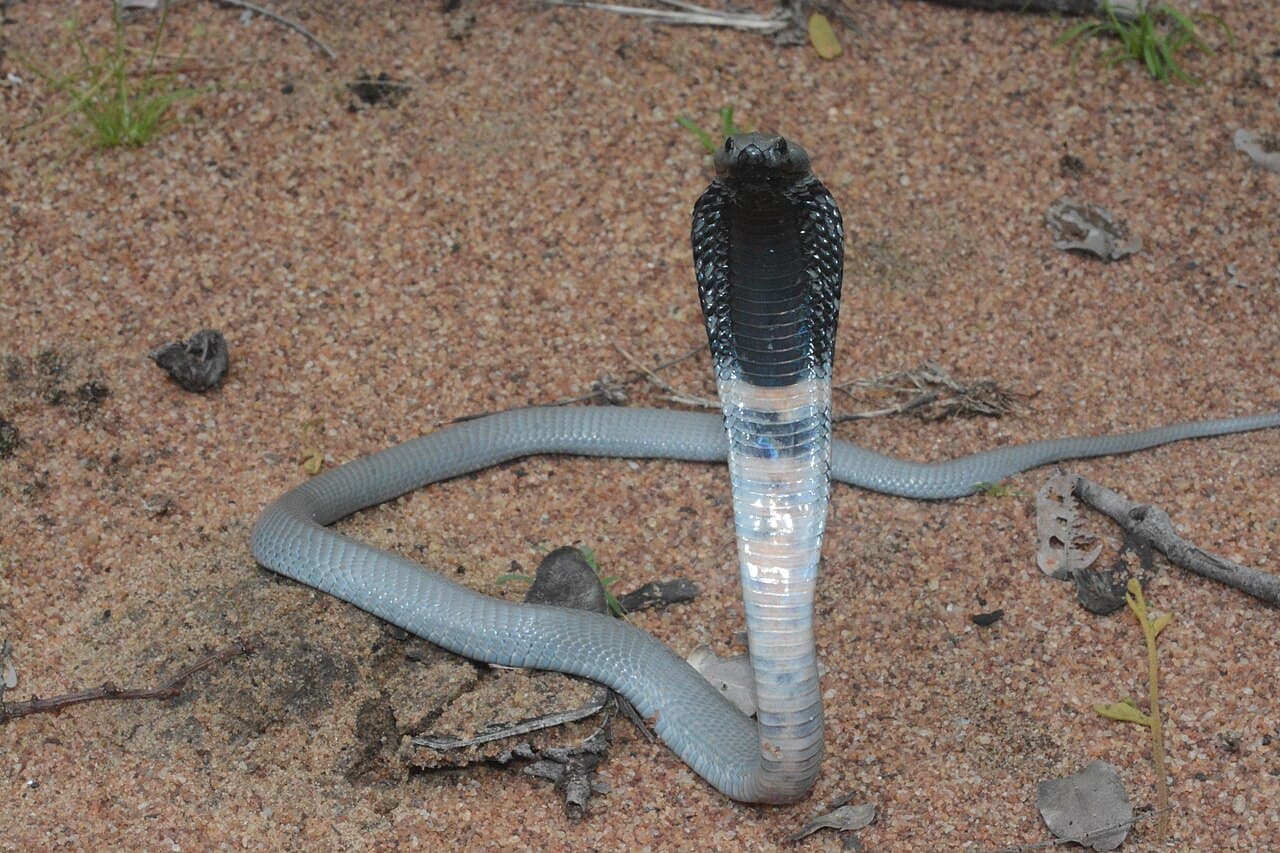
Cobras are slender to moderately heavy snakes with fixed front fangs, relatively large heads and specialized neck ribs. When threatened, a cobra can raise its forebody and rotate those ribs outward, stretching loose skin into a hood. The display makes the animal look larger and places contrasting markings where a predator can see them. Hoods differ in width and pattern among species.
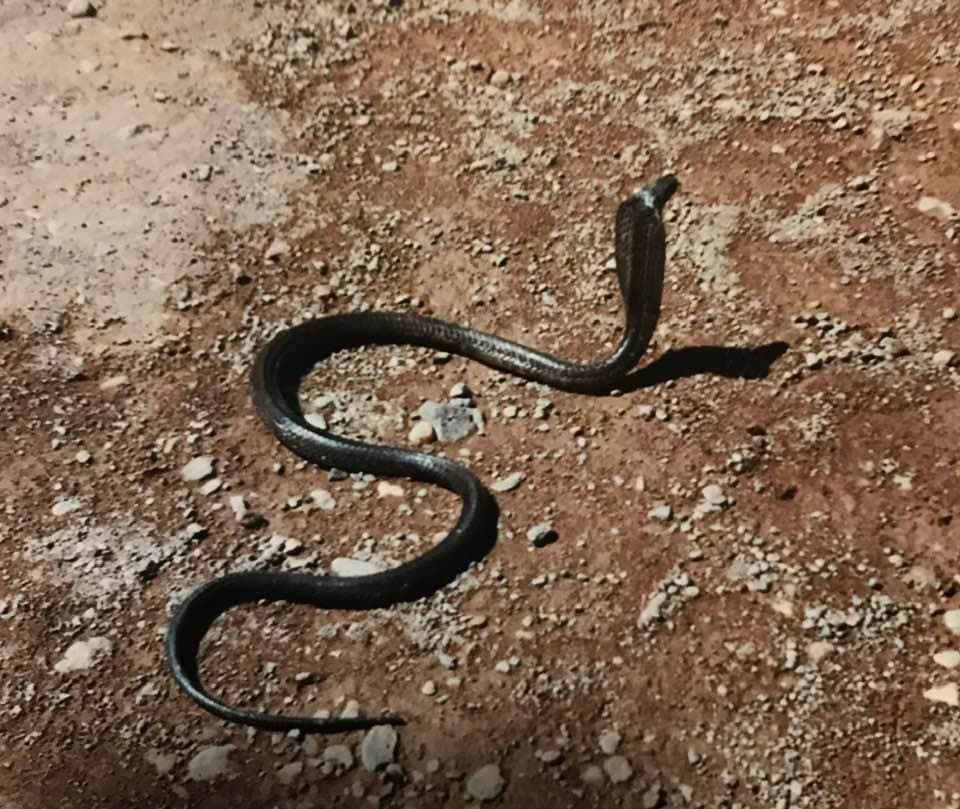
Color ranges from pale yellow and reddish brown to olive, gray and nearly black. Some species show bands, spots or a spectacle-shaped hood mark; others are plain. Juveniles can look different from adults. Hooding alone does not identify a species because several non-Naja snakes flatten their necks. Location, scale arrangement and expert review remain essential, and no one should approach a cobra to inspect markings.
Range and habitat
True cobras occur naturally across much of sub-Saharan Africa, North Africa, the Arabian Peninsula, South Asia, Southeast Asia and parts of East Asia. No single species occupies that entire span. Forest cobras use humid woodland and forest edges, while Cape cobras occupy dry southern African landscapes. Asian species may live in farms, scrub, grassland, wetlands, woodland and settlements.
The genus succeeds in varied habitats because different species evolved under different climates. Most need secure refuges such as burrows, rock spaces, dense vegetation, termite mounds or structures. Water and prey shape local use even in dry regions. Agricultural expansion can remove natural cover while increasing rodents, creating new encounters near houses and storage areas.
Diet and hunting
Cobras are carnivores. Depending on species and size, they eat rodents, amphibians, lizards, birds, eggs and other snakes. Some are broad generalists, while local populations concentrate on prey that is seasonally abundant. Juveniles usually take smaller animals than adults.
A cobra uses tongue-flicking and chemical senses to locate prey, then strikes with fixed front fangs. Venom immobilizes prey and begins disrupting tissues or nervous function. The snake follows and swallows the animal whole. Diet should be described from repeated observations or stomach-content studies because a spectacular single record does not show what most individuals normally eat.
Venom and spitting
All true cobras are venomous, but venom composition and clinical effects vary. Many venoms contain neurotoxins that interfere with nerve signaling, along with cytotoxins and other components that damage cells, affect circulation or intensify pain. A bite can cause local swelling and tissue injury, paralysis, breathing failure or death. The response to one species cannot be assumed for another.
Spitting cobras can project venom toward the eyes through specialized fang openings. The behavior is defensive and is especially effective against a large approaching threat. Venom in the eyes can cause intense pain and corneal injury. Immediate irrigation with abundant clean water and urgent medical assessment are required. Ordinary eyeglasses are not a reason to approach a spitting cobra.
Behavior and communication
Most cobras avoid contact when an escape route is available. A surprised or cornered animal may raise its forebody, spread its hood, hiss, make short advances or strike. These signals communicate danger. Chasing, pinning or attempting to kill the snake converts a warning encounter into close contact and raises bite risk.
Activity patterns differ among species, seasons and climates. A cobra may forage by day during cool periods and shift toward night in hot weather. Chemical cues help locate prey and mates, while posture provides a visible warning. Some species shelter in burrows or termite mounds; others use vegetation, rock piles or buildings. “Aggressive” is a poor description when the behavior is a response to blocked escape.
Reproduction and development
True cobras generally lay eggs after internal fertilization. Females select protected sites with suitable humidity and temperature, including burrows, cavities or decomposing vegetation. Clutch size and incubation vary among species and populations. Some females remain near a nest for part of development, but prolonged parental care is not universal across the genus.
Hatchlings are independent and venomous. They must find small prey, shelter and suitable temperatures immediately. Young cobras face predation from birds, mammals and other snakes, while roads and people create additional hazards. Reproductive figures should always name the species because a clutch size reported for an Indian cobra does not automatically apply to an African spitting cobra.
Predators and ecological role
Cobras act as mid- to upper-level predators. By consuming rodents, frogs, lizards, birds and snakes, they transfer energy among terrestrial and wet-edge food webs. They also become prey. Raptors, mammalian carnivores and snake-eating snakes can kill cobras, especially juveniles. King cobras specialize in eating snakes and can take true cobras where ranges overlap.
Their effect depends on local abundance and prey communities. A cobra in farmland may consume rodents, while one near wetlands may take more amphibians. It is reasonable to recognize their ecological role without claiming that their presence alone controls pests or proves ecosystem health.
Safety around cobras
Any suspected cobra bite is a medical emergency. Move away from the snake, keep the person still and call emergency services. Remove rings or tight items before swelling begins. Do not cut the wound, suck venom, apply ice, use electric shock or attempt to capture the snake. Follow local clinical guidance on immobilization because recommendations differ among venom types and regions.
If venom enters the eyes, rinse immediately and continuously with clean water, then obtain urgent medical care. Keep children and pets away from a cobra and contact trained local responders if it cannot leave safely. A distant photograph may help experts, but treatment should never wait for identification.
Conservation
Conservation status differs across the 43 recognized species. Some remain widespread; others have restricted ranges or face intense exploitation. Shared pressures include habitat loss, roads, deliberate killing, collection for food and traditional uses, and illegal trade. CITES regulates international trade in many cobra species, while national laws vary.
Effective action must match the species and place. Protecting habitat, reducing persecution, regulating trade, improving waste and rodent management, and supporting trained snake responders can all reduce losses. A genus-level profile cannot replace species-level assessments, so local decisions should use current regional data.