
Home/Animals/Aves/Common Ostrich
Species profileIUCN: LC

Common Ostrich

Struthio camelus

The worldโ€™s largest living bird, a swift flightless runner of African savannas and deserts.

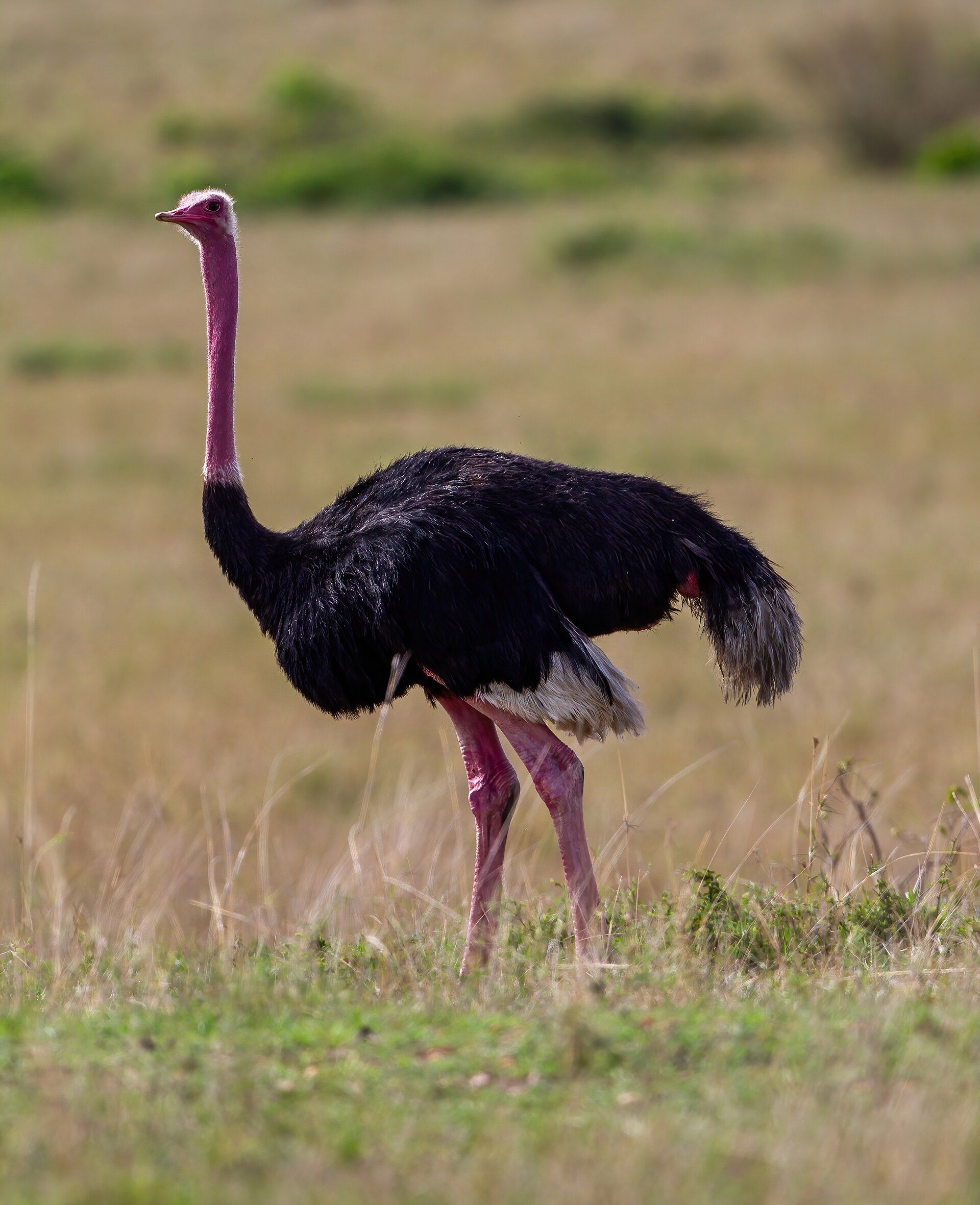
Adult common ostrich standing in African grassland
Josefito123 / Wikimedia Commons / CC BY 4.0
๐ŸŒ Read in Language:

โšก At a Glance

Species profile
Diet Category
Omnivore, primarily herbivorous
Activity Rhythm
Diurnal
Wild Lifespan
Often 30โ€“40 years
Typical Weight
About 90โ€“156 kg
Conservation Status
LC
๐Ÿ’ก Key Biological Insight: Long legs produce strides of several metres

๐ŸŒณ Scientific Taxonomy Hierarchy

The common ostrich is one of two living ostrich species; the Somali ostrich is now widely treated separately.

KingdomAnimalia
PhylumChordata
ClassAves
OrderStruthioniformes
FamilyStruthionidae
GenusStruthio
SpeciesStruthio camelus

Distinguishing Anatomical Features

  • โœ“Enormous flightless bird with long bare legs and neck, two-toed feet, small head and loose plumage.
  • โœ“Long legs produce strides of several metres
  • โœ“Two-toed feet reduce distal limb mass
  • โœ“Large eyes scan open ground
  • โœ“Wings aid balance and display

๐Ÿ“ Physical Measurements

Total LengthAbout 6.9โ€“9.2 ft tall
Body WeightAbout 198โ€“344 lb
Tail LengthSee total length
WingspanNot applicable

๐ŸŽจ Appearance & Distinctive Markings

BlackWhiteGray brownPink

Skin / Covering: Feathers

Sexual Dimorphism: Adult males are mainly black and white; females are smaller and gray-brown.

๐Ÿ—บ๏ธ Geographic Distribution & Habitat

Open regions of sub-Saharan Africa and the Sahel, with introduced feral populations in a few areas.

Savanna, semi-desert, dry grassland and open scrub with visibility and access to scattered food and water.

Country-level distribution map

Native range
FijiTanzania โ€” Native rangeWestern SaharaCanadaUnited StatesKazakhstanUzbekistanPapua New GuineaIndonesiaArgentinaChileCongo - KinshasaSomaliaKenya โ€” Native rangeSudan โ€” Native rangeChad โ€” Native rangeHaitiDominican RepublicRussiaBahamasFalkland IslandsNorwayGreenlandFrench Southern TerritoriesTimor-LesteSouth Africa โ€” Native rangeLesothoMexicoUruguayBrazilBoliviaPeruColombiaPanamaCosta RicaNicaraguaHondurasEl SalvadorGuatemalaBelizeVenezuelaGuyanaSurinameFranceEcuadorPuerto RicoJamaicaCubaZimbabweBotswana โ€” Native rangeNamibia โ€” Native rangeSenegal โ€” Native rangeMali โ€” Native rangeMauritania โ€” Native rangeBeninNiger โ€” Native rangeNigeriaCameroonTogoGhanaCรดte dโ€™IvoireGuineaGuinea-BissauLiberiaSierra LeoneBurkina FasoCentral African RepublicCongo - BrazzavilleGabonEquatorial GuineaZambiaMalawiMozambiqueEswatiniAngolaBurundiIsraelLebanonMadagascarPalestinian TerritoriesGambiaTunisiaAlgeriaJordanUnited Arab EmiratesQatarKuwaitIraqOmanVanuatuCambodiaThailandLaosMyanmar (Burma)VietnamNorth KoreaSouth KoreaMongoliaIndiaBangladeshBhutanNepalPakistanAfghanistanTajikistanKyrgyzstanTurkmenistanIranSyriaArmeniaSwedenBelarusUkrainePolandAustriaHungaryMoldovaRomaniaLithuaniaLatviaEstoniaGermanyBulgariaGreeceTรผrkiyeAlbaniaCroatiaSwitzerlandLuxembourgBelgiumNetherlandsPortugalSpainIrelandNew CaledoniaSolomon IslandsNew ZealandAustraliaSri LankaChinaTaiwanItalyDenmarkUnited KingdomIcelandAzerbaijanGeorgiaPhilippinesMalaysiaBruneiSloveniaFinlandSlovakiaCzechiaEritreaJapanParaguayYemenSaudi ArabiaCyprusMoroccoEgyptLibyaEthiopia โ€” Native rangeDjiboutiUgandaRwandaBosnia & HerzegovinaNorth MacedoniaSerbiaMontenegroKosovoTrinidad & TobagoSouth Sudan
Highlighted countries are recorded profile locations, not precise biological range boundaries.Map boundaries: Natural Earth

๐Ÿ’ก Did You Know?

  • ๐Ÿ’กLong legs produce strides of several metres
  • ๐Ÿ’กTwo-toed feet reduce distal limb mass
  • ๐Ÿ’กLarge eyes scan open ground
  • ๐Ÿ’กWings aid balance and display

๐ŸŒฟ Conservation Status & Threats

IUCN: LC โ€” Least Concern

โ€œLeast Concern globally, although some subspecies and regional populations have declined or disappeared.โ€

Population Trend๐Ÿ“‰ Decreasing
Wild Population EstimateNo single dependable current total is presented here.

โš ๏ธ Major Threats to Common Ostrich

  • โ€ขHunting and egg collection
  • โ€ขFencing and habitat change
  • โ€ขRegional drought
  • โ€ขTrade in wild birds

๐Ÿ”„ Life Cycle & Reproduction

Wild vs. Captivity Lifespan Comparison

๐ŸŒฟ In the WildOften 30โ€“40 years
๐Ÿ  In Captivity (with veterinary care)Can differ under managed care.
Clutch / Litter SizeDominant hens often lay 7โ€“10 eggs; communal nests may contain many more
Incubation / GestationAbout 42 days of incubation
Fledging / WeaningYoung become independent after a species-specific period of parental care.
Sexual MaturityAbout 2โ€“4 years
Mating SystemSpecies-specific courtship and mating
Nesting / Den TypeA shallow communal ground scrape excavated by the male.

๐Ÿฆ… Behavior & Field Ecology

Omnivore, primarily herbivorous

๐ŸŒ Ecological Food Web & Relationships: Consumer and prey within its native food web.

Social Group SizeLoose groups, with complex breeding groups around a dominant male and hen
Activity RhythmDiurnal
Feeding StrategyOmnivore, primarily herbivorous

๐Ÿฅฉ Primary Prey & Preferred Diet

โœ“ Grassesโœ“ Seedsโœ“ Leavesโœ“ Fruit and insects

๐Ÿ“ข Communication & Territorial Signals

  • Vocal signals
  • Posture
  • Scent or visual cues

๐Ÿพ Wild Temperament & Traits

โ€ข Alertโ€ข Wildโ€ข Adapted to its habitat

๐Ÿค Human Interaction & Pet Advisory

โš ๏ธ Strictly Wild Species
๐Ÿšซ

Can You Keep a Common Ostrich as a Pet?

Not suitable as a pet.

Domestication StatusWild and not domesticated
Danger to HumansAvoid close contact
Economic & Ecotourism RoleEcological, educational and wildlife-viewing value.

โš ๏ธ Behavioral Risk Factors & Wildlife Safety

  • Wild animals may defend themselves when cornered

๐ŸŒ Ecological Food Web & Relationships

๐Ÿฆ… Natural Predators (3)

LionPanthera leo
Spotted HyenaCrocuta crocuta
Black-backed JackalLupulella mesomelas

๐Ÿงฌ Related Species (2)

Somali OstrichStruthio molybdophanesClosest living species
Greater RheaRhea americanaConvergent South American flightless bird

Common Ostrich (Struthio camelus) is the worldโ€™s largest living bird, a swift flightless runner of african savannas and deserts. This evidence-based guide covers identification, range, habitat, diet, behaviour, reproduction and conservation without repeating the FAQ block shown elsewhere on the page.

Taxonomic scope

Common Ostrich (Struthio camelus) is the worldโ€™s largest living bird, a swift flightless runner of african savannas and deserts. The common ostrich is one of two living ostrich species; the Somali ostrich is now widely treated separately. This distinction matters because names and appearances can hide important biological relationships. A reliable profile begins with the animal’s actual taxonomic scope rather than treating every familiar label as a separate species.

Key field marks include enormous flightless bird with long bare legs and neck, two-toed feet, small head and loose plumage. Adult males are mainly black and white; females are smaller and gray-brown. Together, these traits are more useful for identification than colour alone, because age, season, light and geographic variation can all change how an individual looks.

Largest bird

Typical measurements are About 2.1โ€“2.8 m tall (About 6.9โ€“9.2 ft tall), with a weight of About 90โ€“156 kg (About 198โ€“344 lb). Body size varies with sex, age, season, food and location, so these figures describe a practical range rather than a limit that every individual must fit.

Its physical design reflects the demands of its way of life. Important adaptations include long legs produce strides of several metres, two-toed feet reduce distal limb mass, large eyes scan open ground, wings aid balance and display. Each reduces the cost of moving, feeding or surviving in the conditions this animal regularly experiences.

African range

Open regions of sub-Saharan Africa and the Sahel, with introduced feral populations in a few areas. Recorded native locations include Senegal, Niger, Chad, Ethiopia, Kenya, Tanzania, Namibia, Botswana, South Africa. Distribution maps show broad presence, but they should not be read as proof that the animal occupies every place inside a shaded country or region.

Local occurrence depends on usable habitat, prey or food, shelter, breeding sites and safe connections between them. Populations may therefore be common in one valley, island or watershed and absent from apparently similar areas nearby.

Open habitat

Savanna, semi-desert, dry grassland and open scrub with visibility and access to scattered food and water. Habitat quality depends on structure as well as climate: animals need places to feed, hide, rest and reproduce, and those features may change over short distances.

Seasonal conditions alter how the habitat is used. Food peaks, snow or ice, drought, flooding and human disturbance can shift daily movements. Protecting a species consequently requires more than preserving a point on a map; the working ecological system around it must remain intact.

Plant diet

Common Ostrich is a omnivore, primarily herbivorous. Important foods include grasses, seeds, leaves, fruit and insects. Availability changes through the year, and individuals adjust where and how long they forage rather than following one fixed menu.

Feeding also connects this animal to the wider ecosystem. By consuming, moving or storing food and by becoming prey itself, it transfers energy through its community. Diet evidence should come from field observations and analysed remains, not from dramatic isolated records.

Running anatomy

Activity is described as diurnal. Typical behaviour includes runs at roughly 70 km/h in bursts, swallows grit to grind food, uses wings in courtship and sharp turns. These actions help individuals find resources, warn others, maintain space or reduce exposure to predators.

Loose groups, with complex breeding groups around a dominant male and hen Communication may involve posture, scent, touch and calls. What appears simple from a distance often carries precise information about identity, alarm, breeding condition or ownership of a site.

Social groups

A shallow communal ground scrape excavated by the male. provides shelter from weather and enemies. The location and structure of that refuge can be as important as food, especially when young are immobile or when adults must conserve energy.

Repeated use of paths, dens, nests or colony sites makes them vulnerable to disturbance. Observers should keep their distance, avoid blocking access and never handle young or alter a shelter to obtain a photograph.

Communal nest

Breeding occurs often timed to local rains and food. Dominant hens often lay 7โ€“10 eggs; communal nests may contain many more are produced after about 42 days of incubation. Young depend on parental protection and food while their movement, insulation and foraging skills develop.

Sexual maturity is reached about 2โ€“4 years. Reproductive success depends on adult condition and local resources, so a population can contain visible adults yet decline when too few young survive to replace them.

Eggs and chicks

Natural pressures include predation, severe weather, competition and variable food. Known predators or major sources of mortality include Lion, Spotted Hyena, Black-backed Jackal. Avoidance, camouflage, shelter and vigilance reduce risk but cannot remove it.

Human activity can add faster pressures. Roads, pollution, disturbance, habitat conversion and altered food webs may act together, which is why local monitoring often reveals problems that a broad global category cannot show.

Regional threats

Least Concern globally, although some subspecies and regional populations have declined or disappeared. The reported population trend is Decreasing. Major concerns include hunting and egg collection, fencing and habitat change, regional drought, trade in wild birds. Conservation decisions should use the species’ current assessment and local evidence.

Effective protection retains habitat connections, breeding and resting sites, and dependable food. It also reduces preventable mortality and measures results over time. Responsible wildlife viewing supports that work when people keep distance, follow local rules and avoid feeding wild animals.

Sources and further reading

โ“ Frequently Asked Questions

Answers to frequently asked questions verified against peer-reviewed zoological research.

Adults can reach roughly 70 kilometres per hour in short bursts and sustain lower running speeds over distance.