
Home/Animals/Reptilia/Coral Snake
Animal group

Coral Snake

Micrurus and Micruroides

Secretive American elapids whose varied warning bands protect potent neurotoxic venom systems.

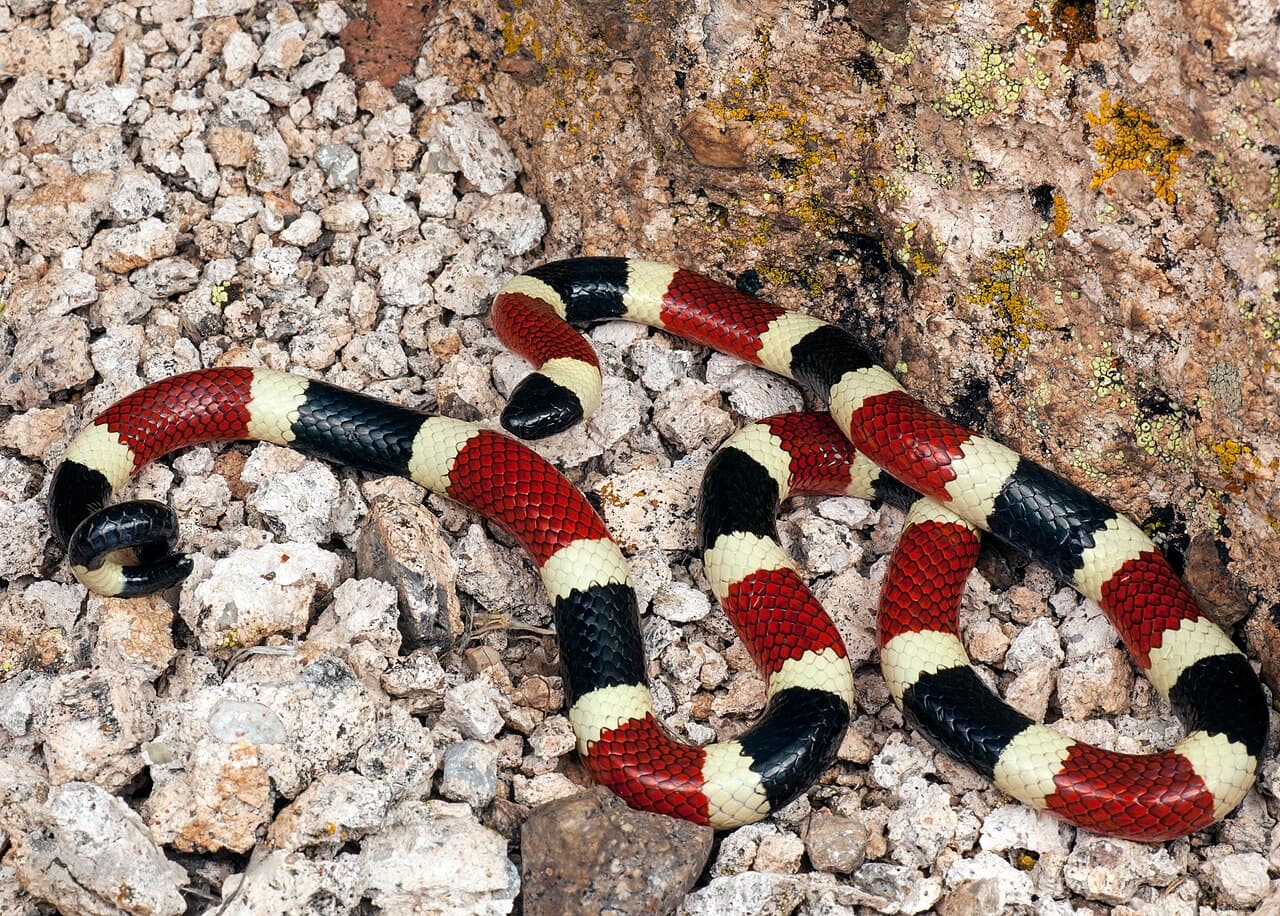
Arizona Coral Snake with red, cream and black rings on rocky ground
David Jahn / CC BY-SA 2.0
๐ŸŒ Read in Language:

โšก At a Glance

Animal group
Also Known As
American coral snakes; New World coral snakes
Diet Category
Carnivore
Activity Rhythm
Usually secretive; surface activity often increases after rain or at night
Wild Lifespan
Poorly measured for most species
Typical Weight
Species and individual size produce a broad range
Conservation Status
Varies by species
๐Ÿ’ก Key Biological Insight: Color rhymes cannot safely identify coral snakes across their American range.

๐ŸŒณ Scientific Taxonomy Hierarchy

This profile covers living American coral snakes in Micrurus and Micruroides. It excludes harmless mimics and Old World snakes that also use the coral-snake common name.

KingdomAnimalia
PhylumChordata
ClassReptilia
OrderSquamata
FamilyElapidae
GenusMicrurus and Micruroides
SpeciesMultiple living species

Distinguishing Anatomical Features

  • โœ“Fixed front fangs
  • โœ“Slender cylindrical body
  • โœ“Small head
  • โœ“Smooth scales
  • โœ“Often complete contrasting rings
  • โœ“Secretive ground or litter use
  • โœ“Neurotoxic venom components

๐Ÿ“ Physical Measurements

Total Lengthroughly 16โ€“59 in across representative species
Body WeightNot meaningfully summarized for the whole group
Tail LengthModerate tapering tail
WingspanNot applicable
Top SpeedNo dependable universal maximumDefensive strikes are rapid; the safest response is distance.

๐ŸŽจ Appearance & Distinctive Markings

RedBlackYellowWhiteCreamOrangeGrayBrown

Skin / Covering: Smooth, dry overlapping scales

Sexual Dimorphism: Sex differences are usually subtle and species-specific; tail proportions may differ.

๐Ÿ—บ๏ธ Geographic Distribution & Habitat

American coral snakes occur from the southern United States through Central America and across much of tropical and subtropical South America.

Leaf litter, loose soil, forest, scrub, savanna, wetlands, foothills and agricultural mosaics, depending on species.

Country-level distribution map

Native range
FijiTanzaniaWestern SaharaCanadaUnited States โ€” Native rangeKazakhstanUzbekistanPapua New GuineaIndonesiaArgentina โ€” Native rangeChileCongo - KinshasaSomaliaKenyaSudanChadHaitiDominican RepublicRussiaBahamasFalkland IslandsNorwayGreenlandFrench Southern TerritoriesTimor-LesteSouth AfricaLesothoMexico โ€” Native rangeUruguay โ€” Native rangeBrazil โ€” Native rangeBolivia โ€” Native rangePeru โ€” Native rangeColombia โ€” Native rangePanama โ€” Native rangeCosta Rica โ€” Native rangeNicaragua โ€” Native rangeHonduras โ€” Native rangeEl Salvador โ€” Native rangeGuatemala โ€” Native rangeBelize โ€” Native rangeVenezuela โ€” Native rangeGuyana โ€” Native rangeSuriname โ€” Native rangeFranceEcuador โ€” Native rangePuerto RicoJamaicaCubaZimbabweBotswanaNamibiaSenegalMaliMauritaniaBeninNigerNigeriaCameroonTogoGhanaCรดte dโ€™IvoireGuineaGuinea-BissauLiberiaSierra LeoneBurkina FasoCentral African RepublicCongo - BrazzavilleGabonEquatorial GuineaZambiaMalawiMozambiqueEswatiniAngolaBurundiIsraelLebanonMadagascarPalestinian TerritoriesGambiaTunisiaAlgeriaJordanUnited Arab EmiratesQatarKuwaitIraqOmanVanuatuCambodiaThailandLaosMyanmar (Burma)VietnamNorth KoreaSouth KoreaMongoliaIndiaBangladeshBhutanNepalPakistanAfghanistanTajikistanKyrgyzstanTurkmenistanIranSyriaArmeniaSwedenBelarusUkrainePolandAustriaHungaryMoldovaRomaniaLithuaniaLatviaEstoniaGermanyBulgariaGreeceTรผrkiyeAlbaniaCroatiaSwitzerlandLuxembourgBelgiumNetherlandsPortugalSpainIrelandNew CaledoniaSolomon IslandsNew ZealandAustraliaSri LankaChinaTaiwanItalyDenmarkUnited KingdomIcelandAzerbaijanGeorgiaPhilippinesMalaysiaBruneiSloveniaFinlandSlovakiaCzechiaEritreaJapanParaguay โ€” Native rangeYemenSaudi ArabiaCyprusMoroccoEgyptLibyaEthiopiaDjiboutiUgandaRwandaBosnia & HerzegovinaNorth MacedoniaSerbiaMontenegroKosovoTrinidad & TobagoSouth Sudan
Highlighted countries are recorded profile locations, not precise biological range boundaries.Map boundaries: Natural Earth

๐Ÿ’ก Did You Know?

  • ๐Ÿ’กFixed front fangs deliver venom
  • ๐Ÿ’กSlender bodies enter narrow refuges
  • ๐Ÿ’กChemical sensing tracks elongated prey
  • ๐Ÿ’กWarning colors discourage predators
  • ๐Ÿ’กTail displays can divert attacks
  • ๐Ÿ’กSecretive habits reduce exposure
  • ๐Ÿ’กSmooth scales aid movement through litter

๐ŸŒฟ Conservation Status & Threats

No single assessment recorded

โ€œThe group has no single conservation category. Range size, abundance and threats differ among species.โ€

CITESCheck current species-level national and international rules

โš ๏ธ Major Threats to Coral Snake

  • โ€ขHabitat loss
  • โ€ขRoad mortality
  • โ€ขDeliberate killing
  • โ€ขCollection
  • โ€ขForest fragmentation
  • โ€ขPollution
  • โ€ขClimate-driven habitat change

๐Ÿ”„ Life Cycle & Reproduction

Wild vs. Captivity Lifespan Comparison

๐ŸŒฟ In the WildPoorly measured for most species
๐Ÿ  In Captivity (with veterinary care)Captive records do not represent typical wild survival
Clutch / Litter SizeSpecies and female size influence clutch size
Incubation / GestationTemperature, moisture and species influence incubation
Fledging / WeaningIndependent venomous hatchlings
Sexual MaturitySpecies and environment influence age at maturity
Mating SystemInternal fertilization; American coral snakes lay eggs
Nesting / Den TypeProtected humid soil, litter, vegetation or cavities

๐Ÿฆ… Behavior & Field Ecology

Carnivore

๐ŸŒ Ecological Food Web & Relationships: American coral snakes prey on elongated reptiles and amphibians in soil and leaf-litter food webs. Raptors, mammals and snake-eating snakes can prey on them, while their warning colors shape regional mimicry systems.

Social Group SizeUsually solitary
Activity RhythmOften nocturnal or crepuscular, with species and seasonal differences
Feeding StrategyCarnivore

๐Ÿฅฉ Primary Prey & Preferred Diet

โœ“ Small snakesโœ“ Worm lizardsโœ“ Caeciliansโœ“ Lizardsโœ“ Eelsโœ“ Frogsโœ“ Other small vertebrates

๐Ÿ“ข Communication & Territorial Signals

  • Tongue-flicking and chemical cues
  • Hood display
  • Hissing
  • Body elevation
  • Defensive striking
  • Scent trails during breeding
  • Touch during mating

๐Ÿพ Wild Temperament & Traits

โ€ข Secretiveโ€ข Evasiveโ€ข Venomousโ€ข Mostly solitaryโ€ข Fossorial or litter-dwellingโ€ข Seasonally activeโ€ข Defensive when cornered

๐Ÿค Human Interaction & Pet Advisory

โš ๏ธ Strictly Wild Species
๐Ÿšซ

Can You Keep a Coral Snake as a Pet?

Coral snakes are unsuitable for private keeping. They require licensed specialist facilities, secure systems, trained staff and species-appropriate emergency planning. Never collect or handle a wild animal.

Domestication StatusWild venomous snake; never domesticated
Danger to HumansVenomous; every suspected bite requires immediate emergency assessment
Economic & Ecotourism RoleEcological control of small vertebrates and scientific value in venom, evolution and mimicry research.

โš ๏ธ Behavioral Risk Factors & Wildlife Safety

  • Neurotoxic venom components
  • Possible delayed weakness
  • Respiratory paralysis in severe cases
  • Small fang marks may look minor
  • Antivenom coverage is region-specific

๐ŸŒ Ecological Food Web & Relationships

Species in this group

  • Eastern coral snake โ€” Micrurus fulvius
  • Texas coral snake โ€” Micrurus tener
  • Central American coral snake โ€” Micrurus nigrocinctus
  • South American coral snake โ€” Micrurus lemniscatus
  • Amazon coral snake โ€” Micrurus spixii
  • Aquatic coral snake โ€” Micrurus surinamensis
  • Red-tailed coral snake โ€” Micrurus mipartitus
  • Argentine coral snake โ€” Micrurus pyrrhocryptus
  • Brazilian coral snake โ€” Micrurus corallinus
  • Panamanian coral snake โ€” Micrurus stewarti
  • Arizona coral snake โ€” Micruroides euryxanthus

๐Ÿฆ… Natural Predators (3)

RaptorsAccipitriformes
Snake-eating snakesSerpentes
Mammalian carnivoresCarnivora

๐Ÿงฌ Related Species (2)

CobrasNajaElapid relatives with fixed front fangs
False coral snakesMultiple non-elapid generaUnrelated snakes with convergent warning patterns

What the Name Coral Snake Covers

Coral snake is a common name for several lineages of small, fixed-front-fanged snakes in the family Elapidae. This profile focuses on the living American coral snakes: the diverse genus Micrurus and the Arizona coral snake in Micruroides. It does not treat harmless look-alikes as coral snakes, and it does not assume that every red, yellow, white, and black snake belongs to this group. Asian species also called coral snakes belong to other genera and need their own taxonomic accounts.

Species limits within Micrurus continue to change as researchers compare anatomy, venom, geography, and DNA. For that reason, this page avoids presenting one permanent species total. The Reptile Database provides a current genus list, while museum records document the extraordinary variation within named species. The essential scope is clear: these are living American elapids, not the many unrelated snakes that imitate their colors.

Identification and Warning Colors

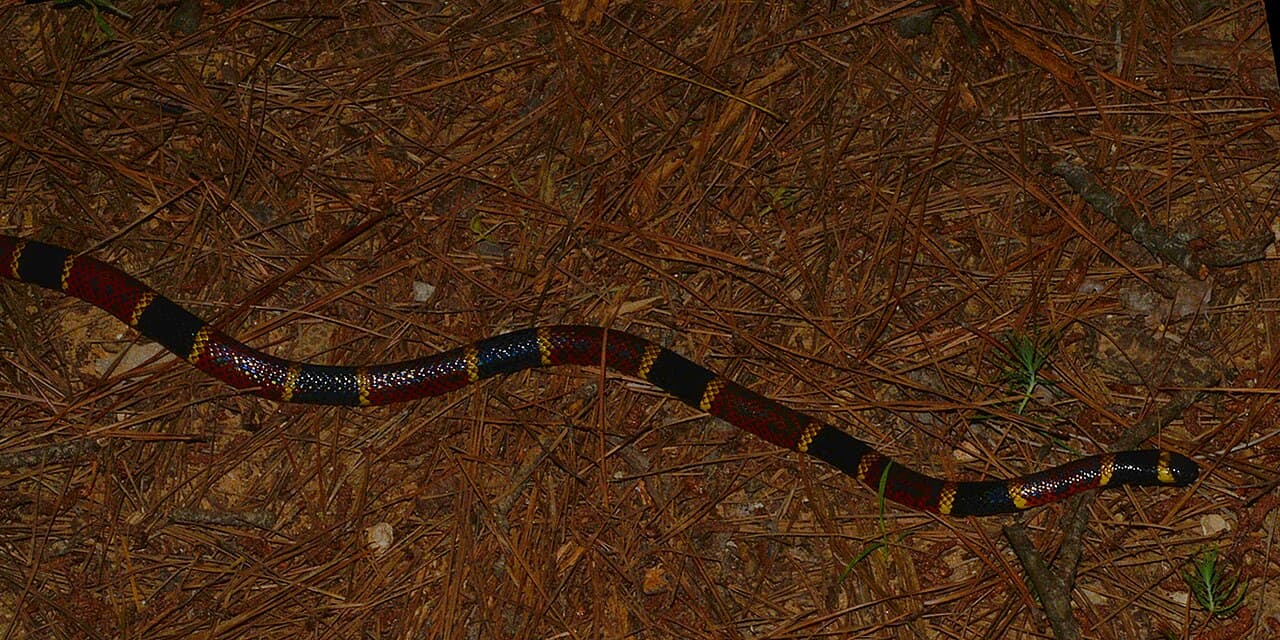
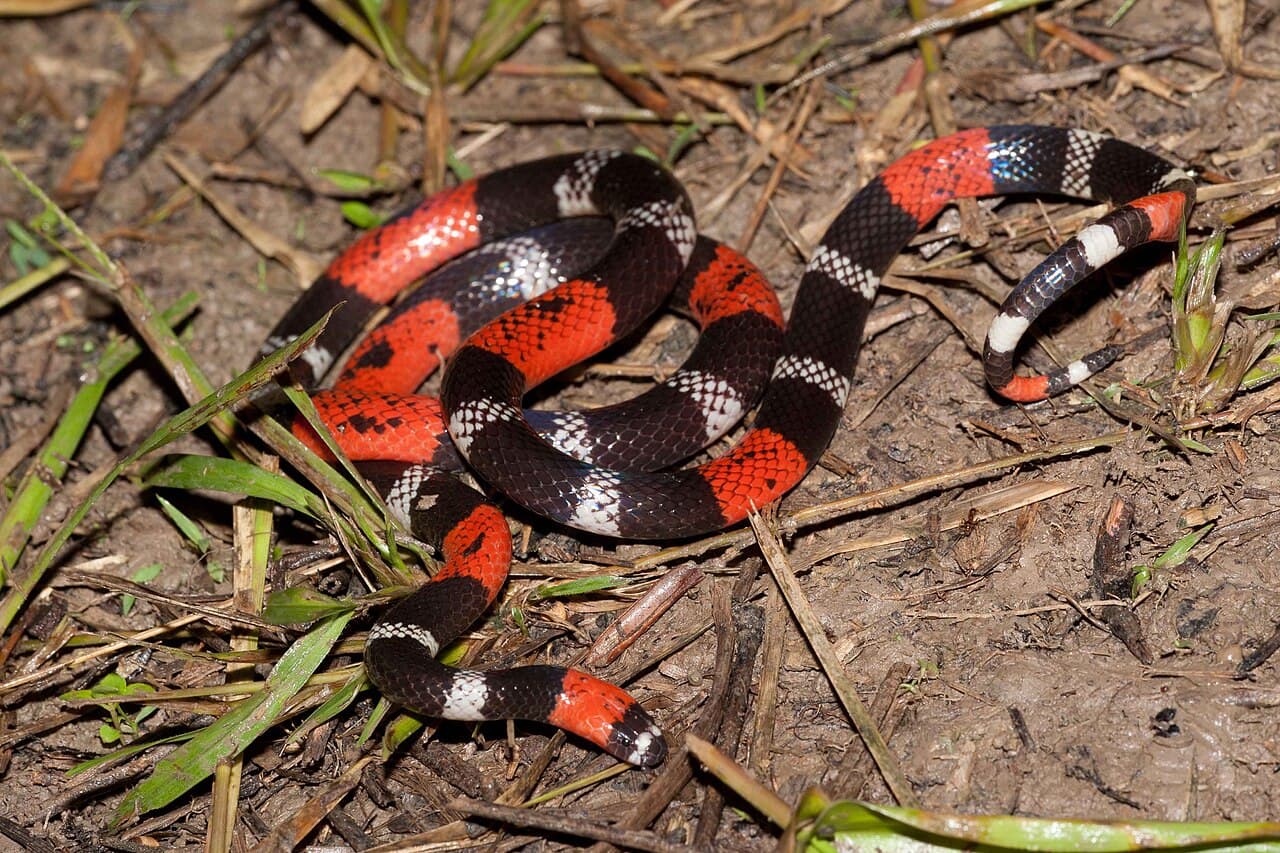
Many American coral snakes have complete rings of red, black, and pale yellow or white, but the order, width, and number of rings differ among species and populations. Some are mostly black with narrow pale bands; others have red heads, black heads, or patterns that change from juvenile to adult. Their bodies are usually slender and cylindrical, with smooth scales, small heads, and short tails. They possess short, immovable fangs at the front of the upper jaw.

Popular color rhymes are unsafe. They fail across much of Central and South America, do not cover every coral snake, and can also describe harmless mimics incorrectly. Lighting, mud, injury, and individual variation make quick color judgments worse. The safe response to any unknown banded snake is to leave it alone, keep children and pets away, and use a distant photograph for identification by a qualified local expert.

Range and Habitat

American coral snakes range from the southern United States through Mexico and Central America into much of tropical South America. No single species occupies that whole area. The Arizona coral snake lives in the southwestern United States and northwestern Mexico, while different Micrurus species inhabit the southeastern United States, rainforests, dry forests, savannas, foothills, wetlands, and agricultural mosaics farther south.

Most spend much of their time concealed under leaf litter, soil, logs, stones, or dense vegetation. Rain and seasonal humidity can bring them to the surface, especially at dusk or during the night. Their secretive habits reduce encounters with people but also make population trends difficult to measure. Habitat conversion, roads, deliberate killing, and collection can affect particular species even when the wider group remains broadly distributed.

Diet and Hunting

Coral snakes are predators of elongated animals that can be followed into tight spaces. Depending on species and locality, prey includes small snakes, worm lizards, caecilians, lizards, eels, and sometimes frogs or other small vertebrates. A coral snake searches with tongue flicks, transferring scent particles to the vomeronasal organs in the roof of its mouth. It seizes prey with the front fangs and maintains a bite long enough to deliver venom.

This diet gives coral snakes a distinct ecological role. They move energy through underground and leaf-litter food webs and help regulate other small reptiles and amphibians. They can in turn be eaten by raptors, mammals, and snake-eating snakes. Their warning patterns have also shaped complex mimicry systems involving harmless and mildly venomous species.

Behavior, Defense, and Reproduction

A coral snake normally tries to escape or remain hidden. If cornered, some species flatten or coil the body, make abrupt movements, hide the head beneath loops, and raise or curl the tail. This can divert an attacker toward the less vulnerable end. A quiet animal is not safe to touch, and a defensive display should never be used to provoke a photograph.

American coral snakes lay eggs, although clutch size, season, incubation, and age at maturity differ among species and climates. Females place eggs in protected humid sites such as loose soil, litter, rotting vegetation, or sheltered cavities. Hatchlings are independent and venomous. Adults are generally solitary except during courtship and mating, and direct field observations remain scarce for many tropical species.

Venom and Medical Risk

Coral snakes are medically important elapids. Their venoms often contain neurotoxins that interfere with communication between nerves and muscles. Serious envenoming may cause weakness, drooping eyelids, difficulty speaking or swallowing, and respiratory paralysis. Pain and swelling can be modest early on, so the appearance of the bite does not reliably predict danger. The World Health Organization snakebite guidelines emphasize urgent assessment and supportive care for venomous snakebite.

Any suspected coral snake bite is an emergency. Keep the person still, remove rings or tight clothing near the affected limb, call emergency services and a poison center, and arrange rapid transport to a hospital. Do not cut, suck, ice, electrically shock, or tourniquet the wound. Do not attempt to capture the snake. Antivenom choice is regional and species-specific; the U.S. Food and Drug Administration describes North American coral snake antivenom for specified Micrurus envenomations, not as a universal treatment for every coral snake.

Conservation and Coexistence

There is no single conservation category for American coral snakes. Each species needs its own assessment because range size, habitat, abundance, and threats differ. Forest specialists may be vulnerable to clearing and fragmentation, while species that cross roads face vehicle mortality. Fear-driven killing is avoidable and can remove a secretive predator that rarely seeks contact with people.

Coexistence begins with distance. Wear shoes and use a light outdoors at night, move boards and debris with tools rather than bare hands, and avoid placing fingers into unseen cavities. Around homes, reduce clutter and address prey and shelter sources without handling snakes. A trapped snake should be left to a trained local wildlife professional. Museum resources from the Smithsonian Institution also show why preserved specimens, verified locality records, and careful taxonomy matter for understanding these elusive animals.

Sources and Review Notes

This profile was reviewed against the Reptile Database for taxonomic scope, World Health Organization guidance for snakebite management, the U.S. Food and Drug Administration for the limited indication of North American coral snake antivenom, and Smithsonian collection resources for verified species records. Because taxonomy and medical products change, readers should use current regional authorities for identification and treatment decisions.

โ“ Frequently Asked Questions

Answers to frequently asked questions verified against peer-reviewed zoological research.

No. Many harmless and mildly venomous snakes mimic coral-snake colors, while some true coral snakes do not match familiar ring patterns.