
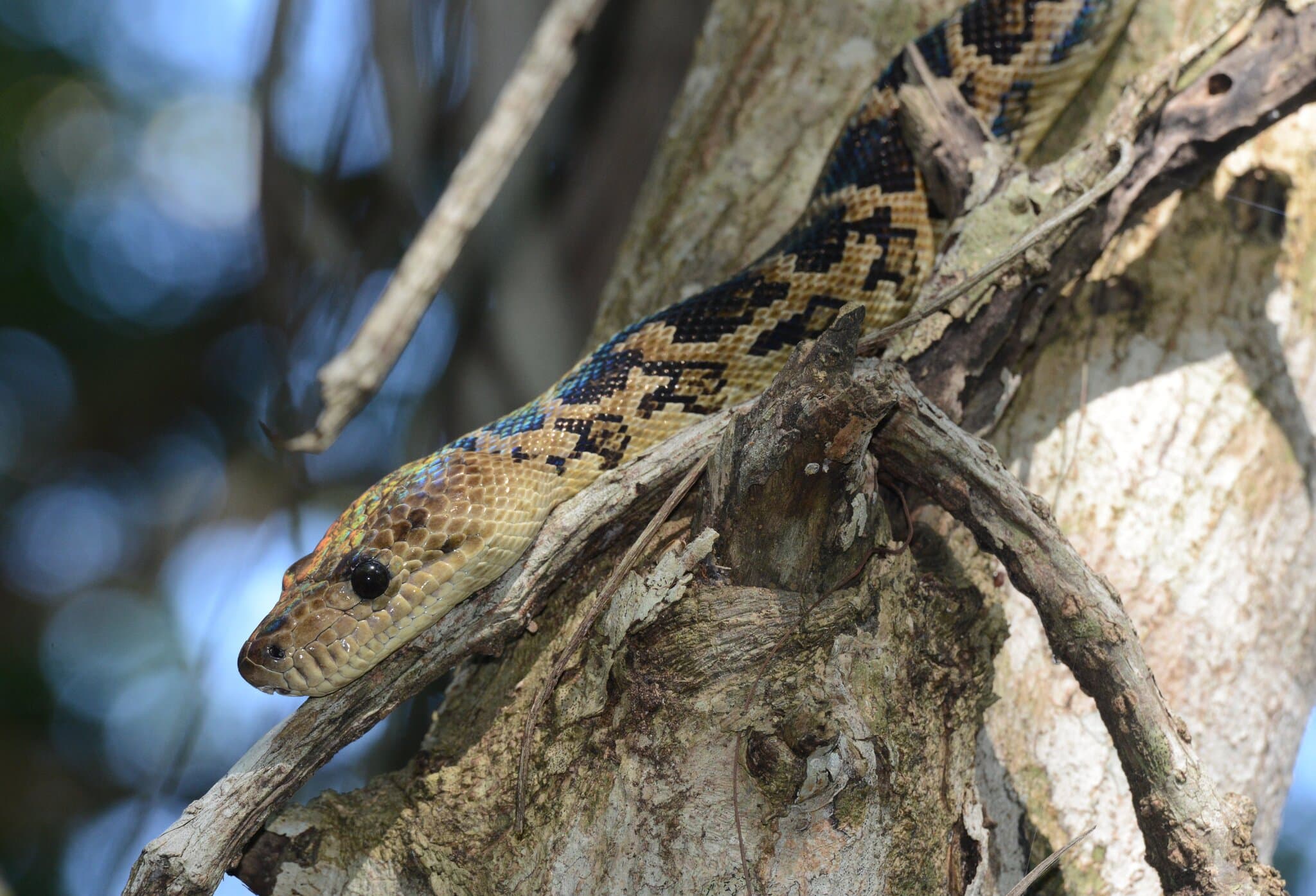
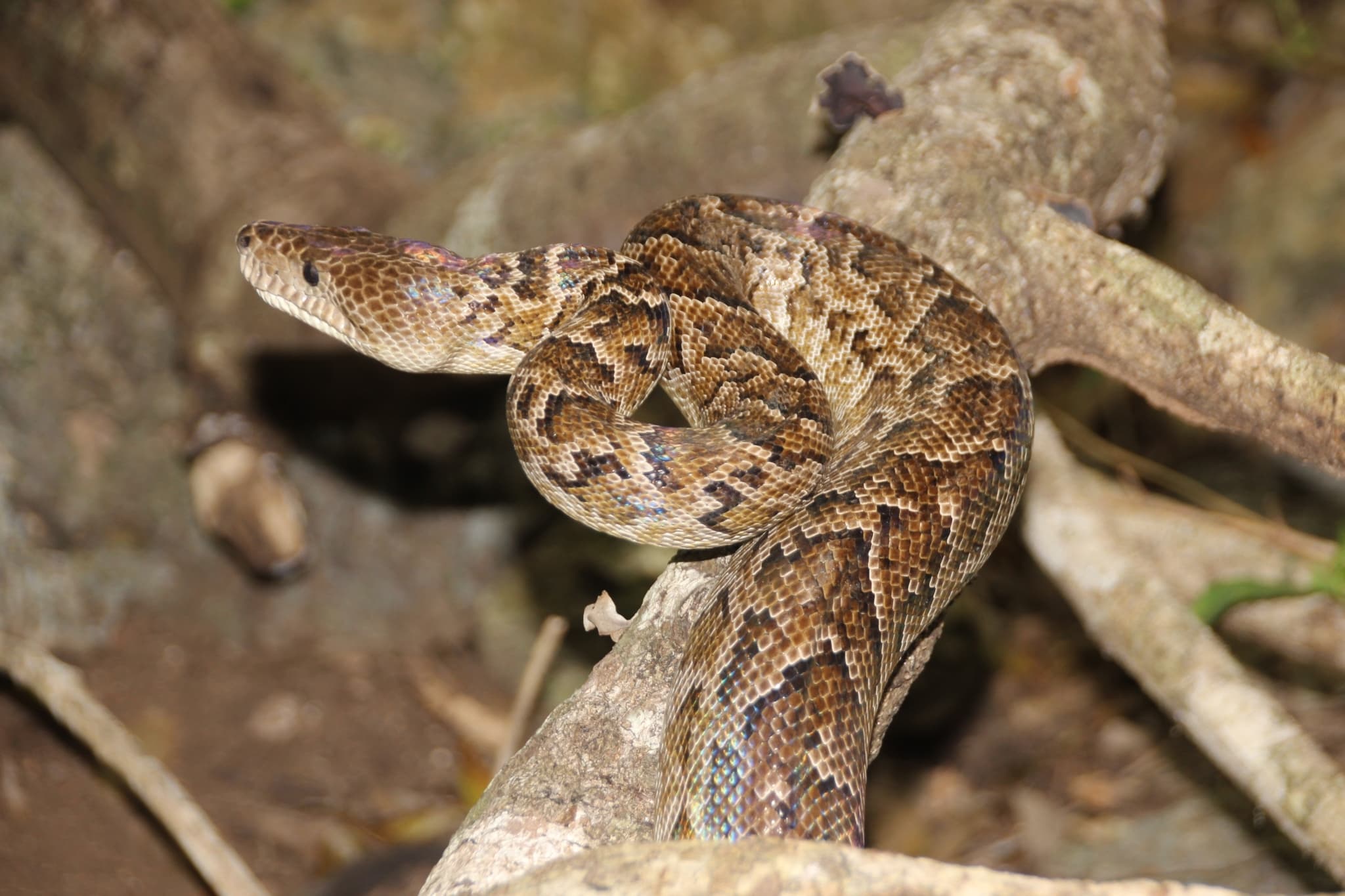
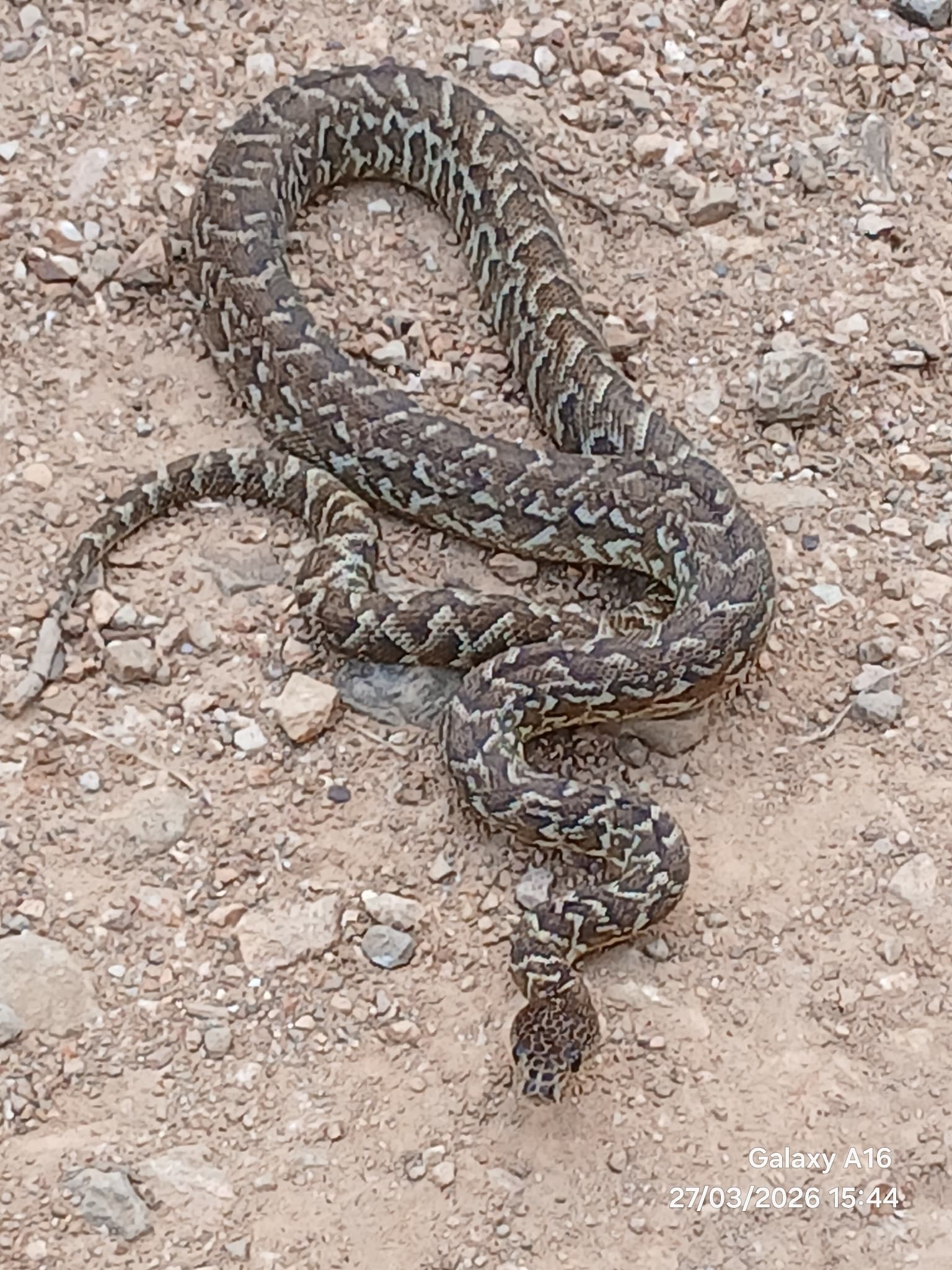
The Cuban boa (Chilabothrus angulifer) is Cuba’s largest native snake and one of the island’s leading terrestrial predators. This living, nonvenomous boa occurs nowhere else in the wild. Its heavy body, heat-sensitive facial pits and powerful constriction suit a hunter that takes rodents, birds, bats and other vertebrates in habitats ranging from dry coastal scrub to humid forest and cave country. Although the species remains widespread enough for a global Least Concern assessment, persecution, habitat change and collection can still harm local populations.
Identity and taxonomy
The Cuban boa is a species in the boa family, Boidae. Its currently accepted scientific name is Chilabothrus angulifer, while older books and legal records may call it Epicrates angulifer. That synonym matters because conservation rules, museum labels and research papers do not all use the same genus. The Harvard Museum of Comparative Zoology and ITIS place the species in Chilabothrus, a West Indian radiation of boas. This profile therefore concerns one species rather than every snake called a Cuban boa or tree boa.
Adults have a broad head, muscular neck and thick trunk. Dark brown or black angular markings cross a tan, bronze or reddish background, producing strong camouflage against rock, leaf litter and mottled bark. The pattern and ground color vary. Heat-sensitive pits along the lips help the snake locate warm-bodied prey, including in darkness. Like other snakes, it samples airborne and surface chemicals with a forked tongue and transfers them to the vomeronasal system in the roof of the mouth.
Range and habitat
The species is endemic to Cuba. The IUCN assessment records it across most of the country, on Isla de la Juventud and in the Canarreos and Sabana-Camagüey archipelagos, from sea level to about 1,214 metres. Its estimated extent of occurrence is roughly 223,381 square kilometres. Records span forests, limestone landscapes, caves, scrub and some human-modified settings. This breadth helps explain its global status, but a large mapped range does not mean that boas are equally common everywhere.
Shelter is essential. Rock fissures, caves, hollow trees, dense vegetation and other protected retreats provide cover from heat, predators and people. Cave entrances are especially important where bats emerge along narrow flight paths. Young boas often use elevated vegetation, while very large individuals spend more time on or near the ground. Habitat use changes with body size, season, prey and local conditions rather than fitting a simple “tree snake” label.
Diet and hunting
Cuban boas are ambush predators. They seize prey with the mouth, wrap muscular coils around it and maintain pressure until circulation and breathing fail. Constriction is more accurately described as disrupting blood flow and respiration than as crushing bones. Documented prey includes rats and other mammals, birds, bats, lizards and sometimes frogs. Juveniles begin with smaller animals and widen their prey range as their jaws, body mass and strength increase.
Bat hunting is the species’ best-known behavior. At some cave mouths several boas position themselves where emerging bats must pass. Research observations indicate that snakes can choose positions that increase the group’s hunting success. The finding is evidence of coordinated spatial behavior, but it should not be inflated into claims of human-like planning or permanent social groups. Most of the time Cuban boas are solitary, and cave aggregations arise around a concentrated feeding opportunity.
As a top predator on an island, the boa can influence several parts of the food web. It suppresses some rodent populations, consumes native prey and may also take introduced mammals. At the same time, hatchlings and smaller boas can be eaten by birds of prey and other predators. The snake’s role changes with age because a newborn and a large adult hunt at very different scales.
Activity and behavior
The species is most active from dusk through the night, although weather, temperature and reproductive activity can bring movement at other times. It climbs well, crosses rough limestone and can swim between nearby shores or cays. A boa generally relies on camouflage and stillness before using force. When threatened, it may pull the head into a defensive curve, hiss and strike. It is not venomous, but a large wild snake has strong jaws and should be observed from a respectful distance.
Cuban boas use chemical cues during courtship and probably in other close encounters. Males may compete physically for access to females. Field tracking has shown that individuals can maintain home ranges while shifting shelter and foraging sites. Such movement data are valuable because an animal can appear secure inside one retreat even when roads, clearing or persecution make the surrounding landscape dangerous.
Reproduction and development
Cuban boas give birth to live young rather than laying eggs. Reproduction is slow compared with that of many small snakes: females require substantial body reserves and do not necessarily breed every year. Field and managed-colony records show that litter size varies greatly with the female’s size and condition. A Toledo Zoo conservation report described a monitored female that produced 22 offspring, close to the upper end recorded in that long-running field program.
A peer-reviewed captive-colony study examined 42 mothers, 62 litters and 306 newborns. It found a slightly male-biased total and a relationship between maternal size and litter sex ratio. Those results illuminate reproductive allocation under the study conditions; they do not establish a fixed sex ratio for every wild Cuban population. Newborns are independent and must find shelter and appropriately sized prey without parental care. Growth and survival depend strongly on food, climate and safe refuge.
Conservation
The IUCN Red List classifies the Cuban boa as Least Concern, based on an assessment made in 2016 and published in 2021. The assessment cites its broad distribution, presence in protected areas, apparent stable trend and tolerance of some disturbed settings. It also notes that the species was considered Near Threatened in Cuba’s national red list and calls for more research on population trends, ecology, harvest and threats. It is covered by CITES Appendix II under the older name Epicrates angulifer, so international trade is controlled.
Important pressures include intentional killing, habitat degradation, road mortality, collection and uses in trade or traditional practices. Large snakes are vulnerable to fear-driven persecution even where they help limit rodents. Cave colonies can be disturbed at feeding and shelter sites, while forest fragmentation can isolate retreat areas from seasonal foraging and breeding habitat. Protecting the species therefore requires more than preserving isolated patches: connected habitat, public education and long-term monitoring all matter.
Living alongside Cuban boas
A wild Cuban boa should be left where it is whenever people are not in immediate danger. Keeping distance, bringing pets indoors and contacting trained local wildlife personnel is safer than trying to capture or kill the snake. Removing rodents and securing food waste can also reduce encounters around buildings. Because the species is nonvenomous, fear often exceeds the actual risk, but its size still demands respect.
Captive breeding has placed Cuban boas in specialist collections, yet captive availability does not erase wild-conservation concerns. Prospective keepers must check local law, verify lawful origin and understand the space, secure enclosure, heat control and veterinary support required by a very large constrictor. The species is unsuitable for casual acquisition. Its greater value lies in the ecological work it performs in Cuba and in what long-term research can teach about island predators.