
Home/Animals/Reptilia/DeKay's Brown Snake
Species profileIUCN: LC

DeKay's Brown Snake

Storeria dekayi

A small, secretive North American snake that hunts slugs and earthworms in leaf litter and city gardens.

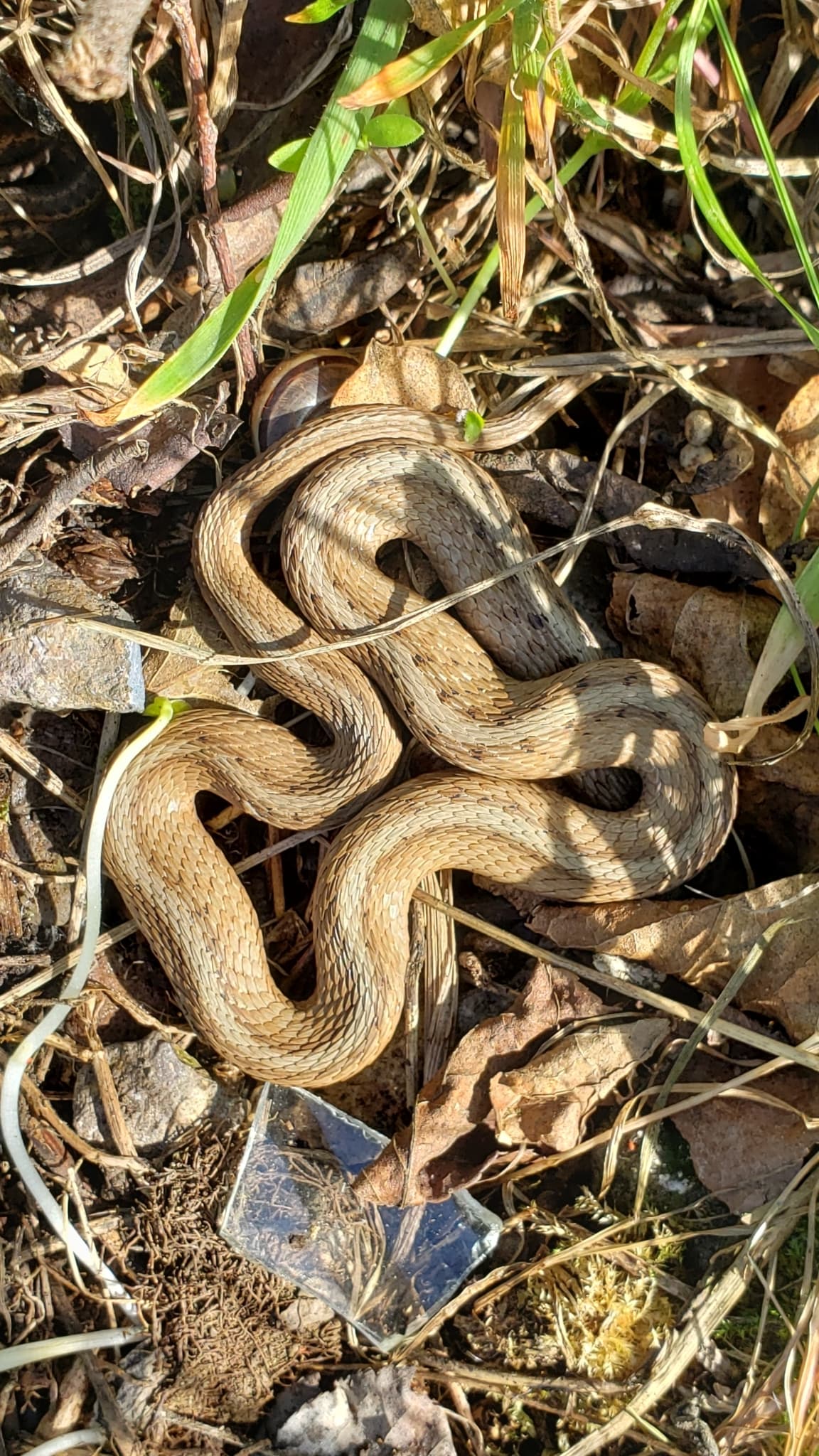
DeKay's brown snake Storeria dekayi coiled among grass and leaf litter
Tigran Tadevosyan / CC BY 4.0
🌐 Read in Language:

⚡ At a Glance

Species profile
Also Known As
DeKay's Brownsnake, Brown Snake, Northern Brown Snake
Diet Category
Carnivore; mainly earthworms, slugs and snails
Activity Rhythm
Secretive; active in mild, damp conditions and often hidden by day
Wild Lifespan
Poorly quantified
Typical Weight
Small and lightweight; no dependable species-wide range
Conservation Status
LC
💡 Key Biological Insight: Specialized jaws and teeth help it pull soft-bodied prey such as snails from their shells.

🌳 Scientific Taxonomy Hierarchy

DeKay's Brown Snake is a living North American colubrid in the genus Storeria. This profile covers Storeria dekayi, not Australia's venomous brown snakes or the unrelated brown water snake.

KingdomAnimalia
PhylumChordata
ClassReptilia
OrderSquamata
FamilyColubridae
GenusStoreria
SpeciesStoreria dekayi

Distinguishing Anatomical Features

  • ✓Small slender body
  • ✓Keeled dorsal scales
  • ✓Paired dark spots along the back
  • ✓Pale middorsal stripe in many individuals
  • ✓Dark vertical mark behind the eye
  • ✓Pale belly with tiny dark dots near the edges

📏 Physical Measurements

Total LengthUsually about 9–13 in; occasionally longer
Body WeightNo dependable species-wide range
Tail LengthShort to moderate, tapering
WingspanNot applicable
Top SpeedNo verified maximumIt usually freezes, hides or crawls away rather than relying on sustained speed.

🎨 Appearance & Distinctive Markings

Light brownGray-brownDark brownTanCreamBlack

Skin / Covering: Keeled overlapping scales

Sexual Dimorphism: Adult females average larger-bodied than males; males usually have proportionally longer tails.

🗺️ Geographic Distribution & Habitat

Native from southern Canada through much of the eastern and central United States into Mexico and parts of Central America.

Moist woodland edges, meadows, marsh borders, gardens, parks, vacant lots and other places with ground cover and invertebrate prey.

Country-level distribution map

Native range
FijiTanzaniaWestern SaharaCanada — Native rangeUnited States — Native rangeKazakhstanUzbekistanPapua New GuineaIndonesiaArgentinaChileCongo - KinshasaSomaliaKenyaSudanChadHaitiDominican RepublicRussiaBahamasFalkland IslandsNorwayGreenlandFrench Southern TerritoriesTimor-LesteSouth AfricaLesothoMexico — Native rangeUruguayBrazilBoliviaPeruColombiaPanamaCosta RicaNicaraguaHonduras — Native rangeEl SalvadorGuatemala — Native rangeBelizeVenezuelaGuyanaSurinameFranceEcuadorPuerto RicoJamaicaCubaZimbabweBotswanaNamibiaSenegalMaliMauritaniaBeninNigerNigeriaCameroonTogoGhanaCôte d’IvoireGuineaGuinea-BissauLiberiaSierra LeoneBurkina FasoCentral African RepublicCongo - BrazzavilleGabonEquatorial GuineaZambiaMalawiMozambiqueEswatiniAngolaBurundiIsraelLebanonMadagascarPalestinian TerritoriesGambiaTunisiaAlgeriaJordanUnited Arab EmiratesQatarKuwaitIraqOmanVanuatuCambodiaThailandLaosMyanmar (Burma)VietnamNorth KoreaSouth KoreaMongoliaIndiaBangladeshBhutanNepalPakistanAfghanistanTajikistanKyrgyzstanTurkmenistanIranSyriaArmeniaSwedenBelarusUkrainePolandAustriaHungaryMoldovaRomaniaLithuaniaLatviaEstoniaGermanyBulgariaGreeceTürkiyeAlbaniaCroatiaSwitzerlandLuxembourgBelgiumNetherlandsPortugalSpainIrelandNew CaledoniaSolomon IslandsNew ZealandAustraliaSri LankaChinaTaiwanItalyDenmarkUnited KingdomIcelandAzerbaijanGeorgiaPhilippinesMalaysiaBruneiSloveniaFinlandSlovakiaCzechiaEritreaJapanParaguayYemenSaudi ArabiaCyprusMoroccoEgyptLibyaEthiopiaDjiboutiUgandaRwandaBosnia & HerzegovinaNorth MacedoniaSerbiaMontenegroKosovoTrinidad & TobagoSouth Sudan
Highlighted countries are recorded profile locations, not precise biological range boundaries.Map boundaries: Natural Earth

💡 Did You Know?

  • 💡Keeled scales improve traction in litter
  • 💡Cryptic brown coloration
  • 💡Small head enters narrow refuges
  • 💡Flexible skull and jaws handle soft prey
  • 💡Chemical tracking with a forked tongue
  • 💡Tolerance of some urban habitats

🌿 Conservation Status & Threats

IUCN: LC — Least Concern

“Widespread and globally secure, though local populations can lose cover and prey through development, pesticides, intensive landscaping and free-ranging cats.”

Population Trend📈 Stable
Wild Population EstimateNo reliable complete count
CITESNot listed

⚠️ Major Threats to DeKay's Brown Snake

  • •Loss of leaf litter and ground cover
  • •Pesticide reduction of invertebrate prey
  • •Road mortality
  • •Outdoor cats
  • •Deliberate killing
  • •Urban soil compaction

🔄 Life Cycle & Reproduction

Wild vs. Captivity Lifespan Comparison

🌿 In the WildPoorly documented
🏠 In Captivity (with veterinary care)Poorly documented
Clutch / Litter SizeLive litter usually 3–26 young in Virginia; up to 41 reported across the range
Incubation / GestationNot applicable; embryos develop inside the female
Fledging / WeaningIndependent newborns; not applicable
Sexual MaturityReached at small adult size; timing varies with climate and growth
Mating SystemInternal fertilization; live-bearing
Nesting / Den TypeNo egg nest; females give birth in sheltered habitat

🦅 Behavior & Field Ecology

Carnivore

🌐 Ecological Food Web & Relationships: A small invertebrate predator that moves energy from soil and litter communities to birds, mammals and larger snakes.

Social Group SizeUsually solitary
Activity RhythmSecretive and moisture-dependent; often active at dusk, at night or after rain
Feeding StrategyCarnivore

🥩 Primary Prey & Preferred Diet

✓ Earthworms✓ Slugs✓ Snails✓ Soft-bodied insects✓ Occasional small amphibians

📢 Communication & Territorial Signals

  • Chemical cues
  • Tongue-flicking
  • Body posture
  • Touch during courtship
  • Substrate vibration detection

🐾 Wild Temperament & Traits

• Secretive• Docile• Nonvenomous• Ground-dwelling• Moisture-seeking

🤝 Human Interaction & Pet Advisory

⚠️ Strictly Wild Species
🚫

Can You Keep a DeKay's Brown Snake as a Pet?

Wild animals should remain in place; keeping may be regulated and their earthworm-and-slug diet is specialized

Domestication StatusNot domesticated
Danger to HumansHarmless to people; nonvenomous
Economic & Ecotourism RoleGarden invertebrate control, environmental education and urban biodiversity

⚠️ Behavioral Risk Factors & Wildlife Safety

  • May release musk defensively
  • Unnecessary handling can injure the snake

🌐 Ecological Food Web & Relationships

🧬 Related Species (2)

Red-bellied SnakeStoreria occipitomaculataClose congener with a red or orange belly
Florida Brown SnakeStoreria victaClosely related southeastern species often treated separately

🌍 Ecological Equivalents Across Continents

Rough Earth SnakeVirginia striatula

DeKay’s Brown Snake (Storeria dekayi) is a small, nonvenomous snake native to much of eastern and central North America. Adults commonly fit across an open hand, although wild snakes should be observed without handling. Their brown or gray scales, paired dark spots and quiet habit make them easy to overlook in leaf litter, gardens and vacant lots. Unlike Australia’s medically dangerous Eastern Brown Snake, this species is harmless to people. It spends much of its life under cover, feeding on earthworms, slugs and snails and becoming food for birds, mammals and larger snakes.

Identity and taxonomy

DeKay’s Brown Snake belongs to the colubrid genus Storeria. The accepted species name is Storeria dekayi, and “DeKay’s Brownsnake,” “brown snake” and “northern brown snake” are widely used English names. The broad name brown snake causes confusion because it is also applied to unrelated snakes on several continents. This profile concerns the small North American species only.

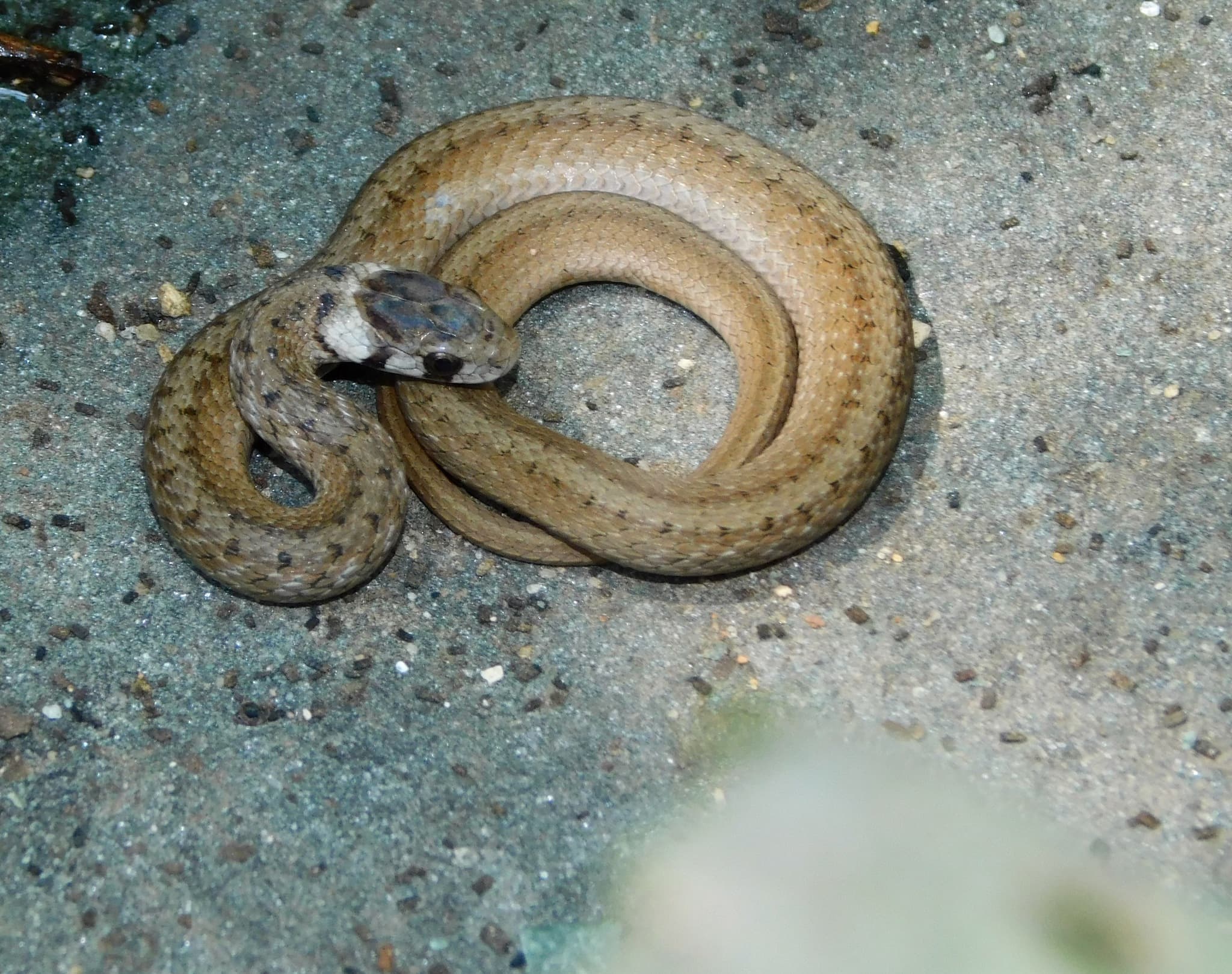
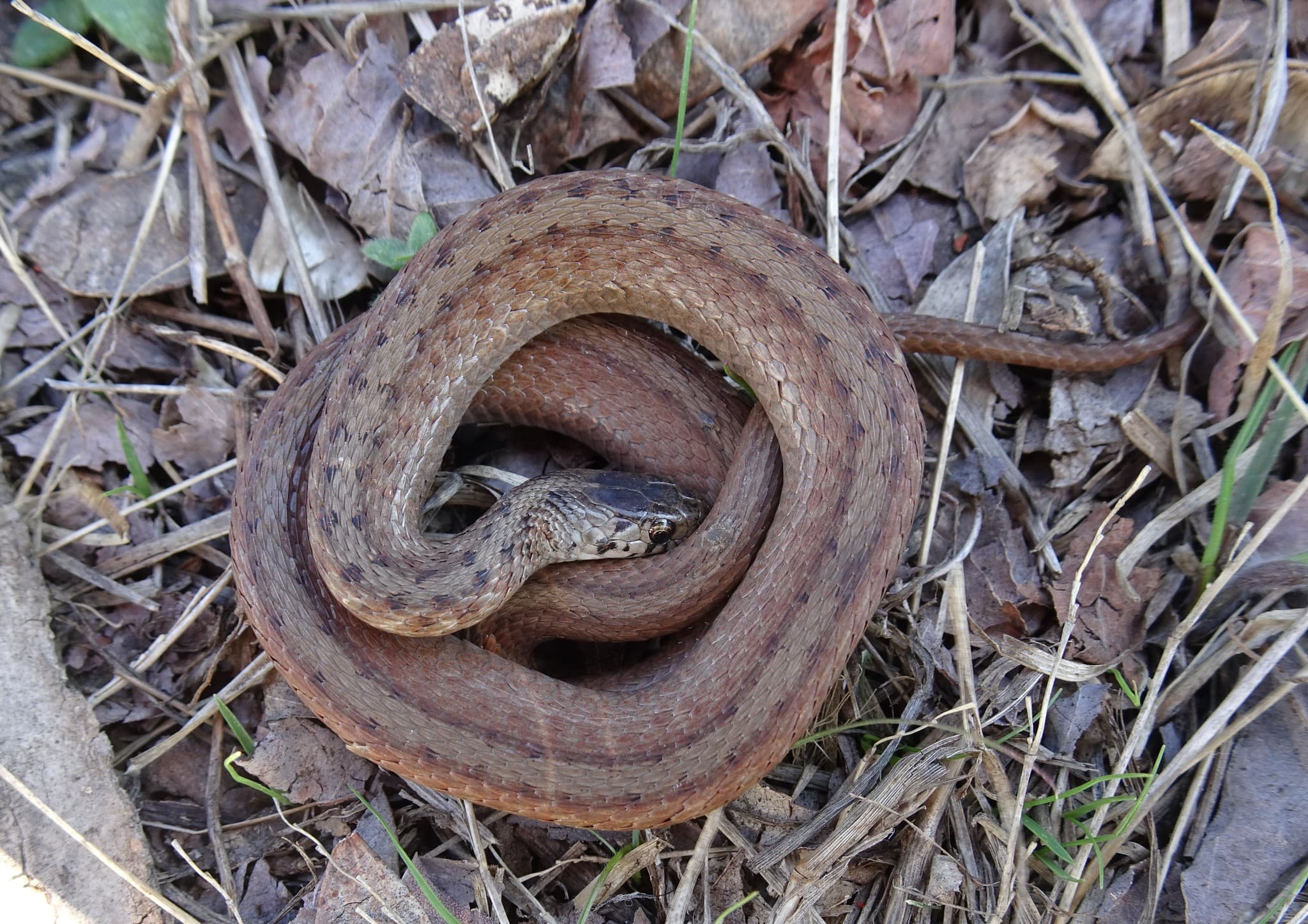
The head is blunt and only slightly wider than the neck. Keeled scales give the body a textured surface. Most individuals are light brown, gray-brown or dark brown, with two rows of small dark spots along the back. A paler stripe often runs between those rows, and some spots connect as narrow crossbars. A short dark mark behind the eye and dark streaks on the lip scales are useful clues. The belly is cream or gray and usually plain except for tiny dark marks near its edges.

Size and identification

This is a genuinely small snake. The National Park Service reports a typical northern form between about 9 and 20.75 inches long, while many adults fall near 9 to 13 inches. Females average larger-bodied than males, and males usually have proportionally longer tails. Newborns are only several inches long and may have a pale collar that fades with age.

Several harmless species share the same habitat. Red-bellied snakes usually have a bright red or orange underside and three pale neck spots. Rough earth snakes lack the paired dorsal spots typical of Storeria dekayi. Young garter snakes tend to show stronger longitudinal striping. Identification should use several traits together rather than color alone. A photograph taken from a respectful distance is safer and more useful than capturing an animal.

Range and habitat

DeKay’s Brown Snake ranges from southern Canada through the United States east of the Rocky Mountains and south into Mexico, with populations extending into parts of Guatemala and Honduras. Its distribution is broad, but abundance changes with soil moisture, winter severity, prey and shelter. Northern animals spend a substantial part of the year below ground, while southern populations can remain active for longer periods.

The species favors damp places with loose cover: woodland edges, meadows, marsh borders, stream margins, gardens, parks, cemeteries and vacant lots. Logs, flat stones, bark, boards and deep leaf litter hold moisture and provide protection. The snake can persist in cities when ground cover and invertebrate prey remain. Intensive mowing, removal of all fallen leaves, pesticide use and soil compaction can turn apparently green spaces into poor habitat.

Diet and feeding

Earthworms and slugs form the core of the diet, and snails are also important. DeKay’s Brown Snake may take soft-bodied insects and occasional tiny frogs or fish, but it is not a rodent hunter. Its narrow head and specialized jaws suit small, slippery prey. Curved teeth help grip snails and pull the soft body from the shell. Chemical cues collected by the forked tongue guide searching through soil and damp litter.

This feeding niche matters in gardens and forests. The snake consumes invertebrates that graze plants and decomposing material, then transfers that energy to predators such as racers, kingsnakes, hawks, robins, raccoons, skunks and opossums. Free-ranging domestic cats also kill these small snakes. Because the species depends on soil animals, pesticides can harm it indirectly even when a chemical is not aimed at reptiles.

Daily life and defenses

Most of the day is spent concealed beneath cover or within loose soil. Activity increases in mild, damp weather and after rain, when worms and slugs approach the surface. In cold regions the snakes overwinter below the frost line, sometimes using shared retreats. Their small size reduces travel costs but also makes dehydration and predation constant risks.

When exposed, a brown snake may freeze, crawl toward cover or flatten its body to appear larger. If picked up, it can release strong-smelling musk and may make a tiny defensive strike, but its teeth and jaws pose no meaningful danger to people. Handling can injure the snake and removes protective skin oils, so the best response is to let it continue on its way. If one enters a building, gently guiding it toward an open exit with a container is safer than grabbing it.

Reproduction and growth

DeKay’s Brown Snakes give birth to live young rather than laying shelled eggs. Mating occurs mainly in spring. Embryos develop within the female for roughly three to four months, and births usually occur from July through September. Virginia records include litters of 3 to 26 young, while larger litters have been reported elsewhere. Female size, food supply and local climate influence reproductive output.

Newborns receive no parental care. They immediately seek tiny earthworms, slugs and secure crevices. Growth is fastest when moisture and prey are reliable. The species’ lifespan in the wild is poorly documented, partly because secretive individuals are difficult to recapture over many years. Seasonal shelter, intact litter and freedom from cats and lawn equipment probably determine survival more strongly than distance traveled.

Conservation and coexistence

The species is widespread and globally secure, with a NatureServe rank of G5 and an IUCN assessment of Least Concern. That broad status does not guarantee every local population. Urban cleanup can remove the boards, litter and rough ground once used as shelter, while pesticides reduce worms and mollusks. Roads, outdoor cats and deliberate killing add local mortality. In colder parts of the range, isolated populations may deserve closer attention.

Simple landscaping choices help. Leave some fallen leaves beneath shrubs, retain logs where safe, reduce pesticide use and keep cats indoors. Move garden materials carefully and replace cover after looking underneath. A resident brown snake offers quiet evidence that soil and litter still support a functioning food web. Its presence requires no control program, and it provides a useful chance to distinguish harmless native wildlife from genuinely risky species.

Sources

❓ Frequently Asked Questions

Answers to frequently asked questions verified against peer-reviewed zoological research.

No. It is a small nonvenomous colubrid that is harmless to people and usually tries to hide or escape.