
Desert Kingsnake Overview
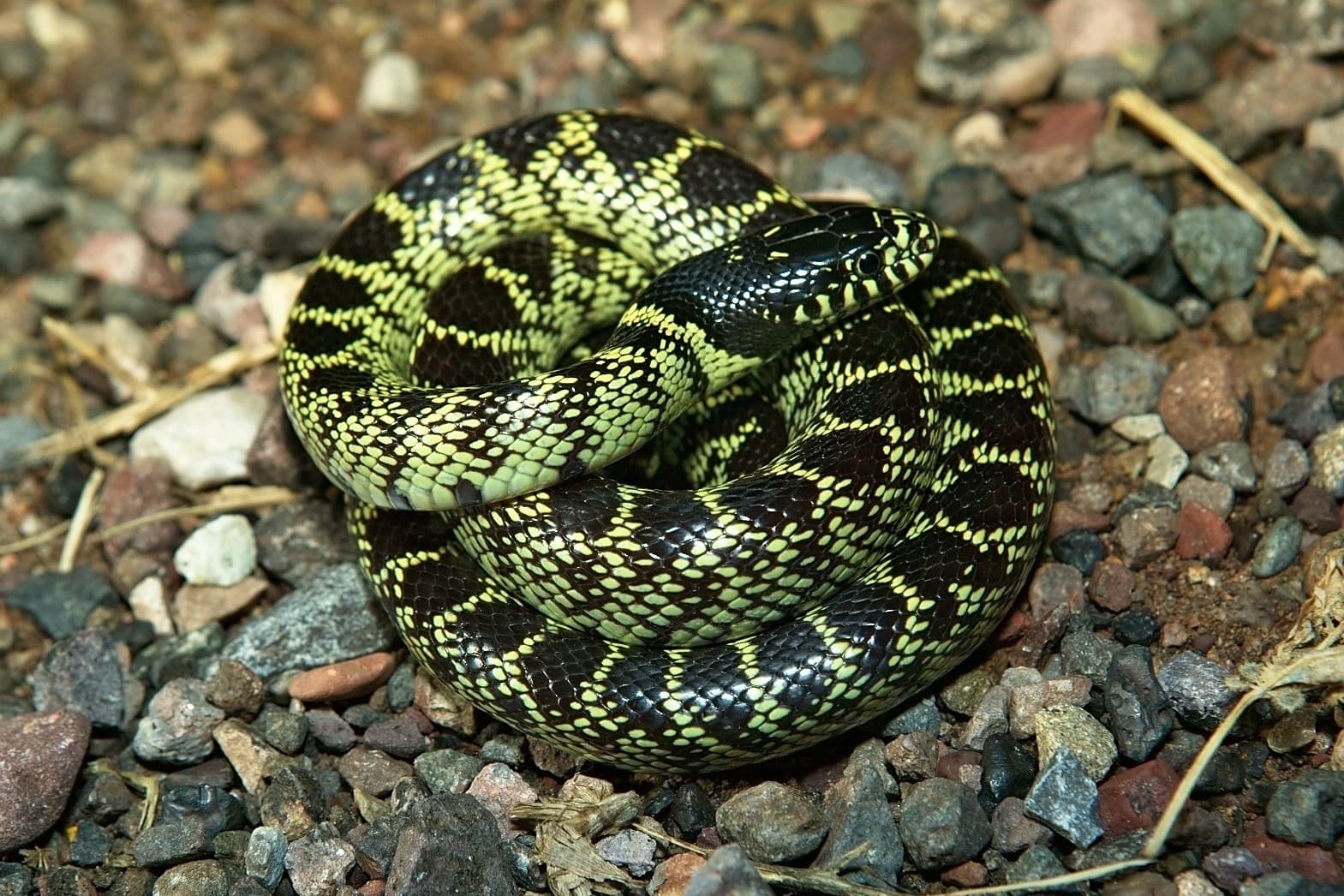
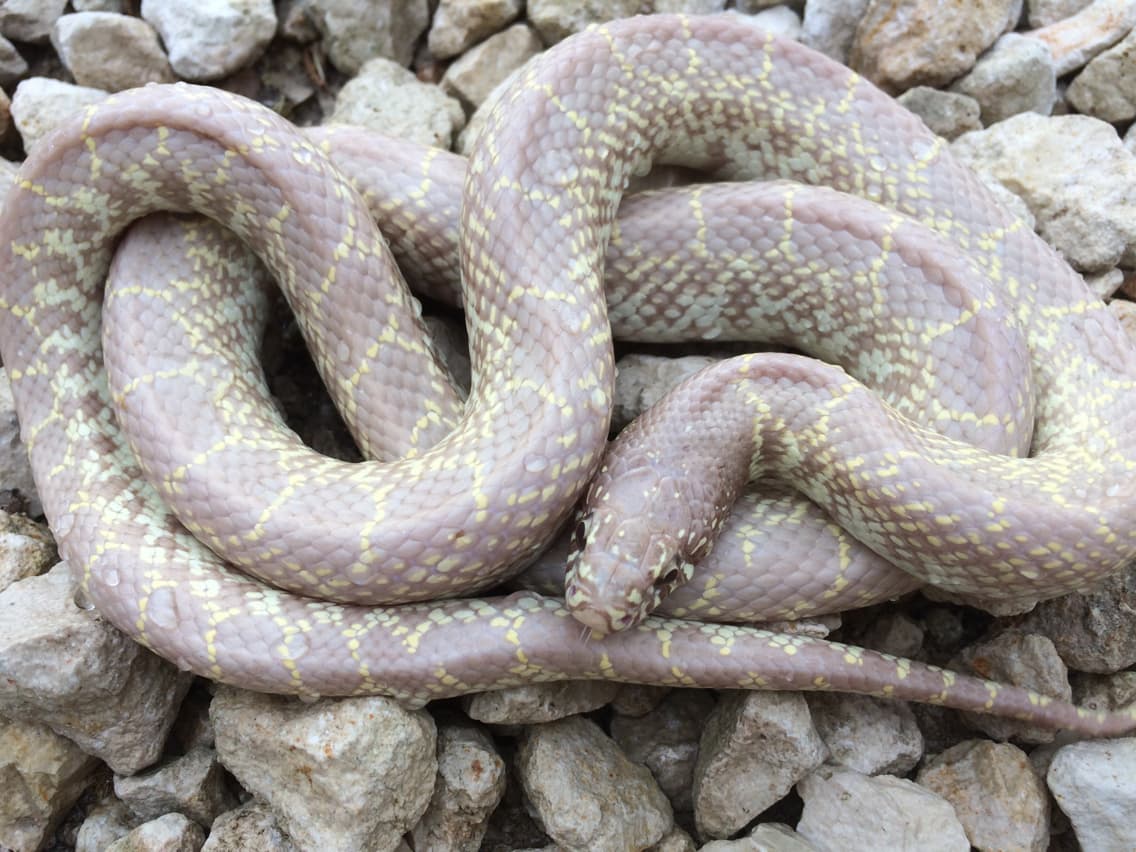
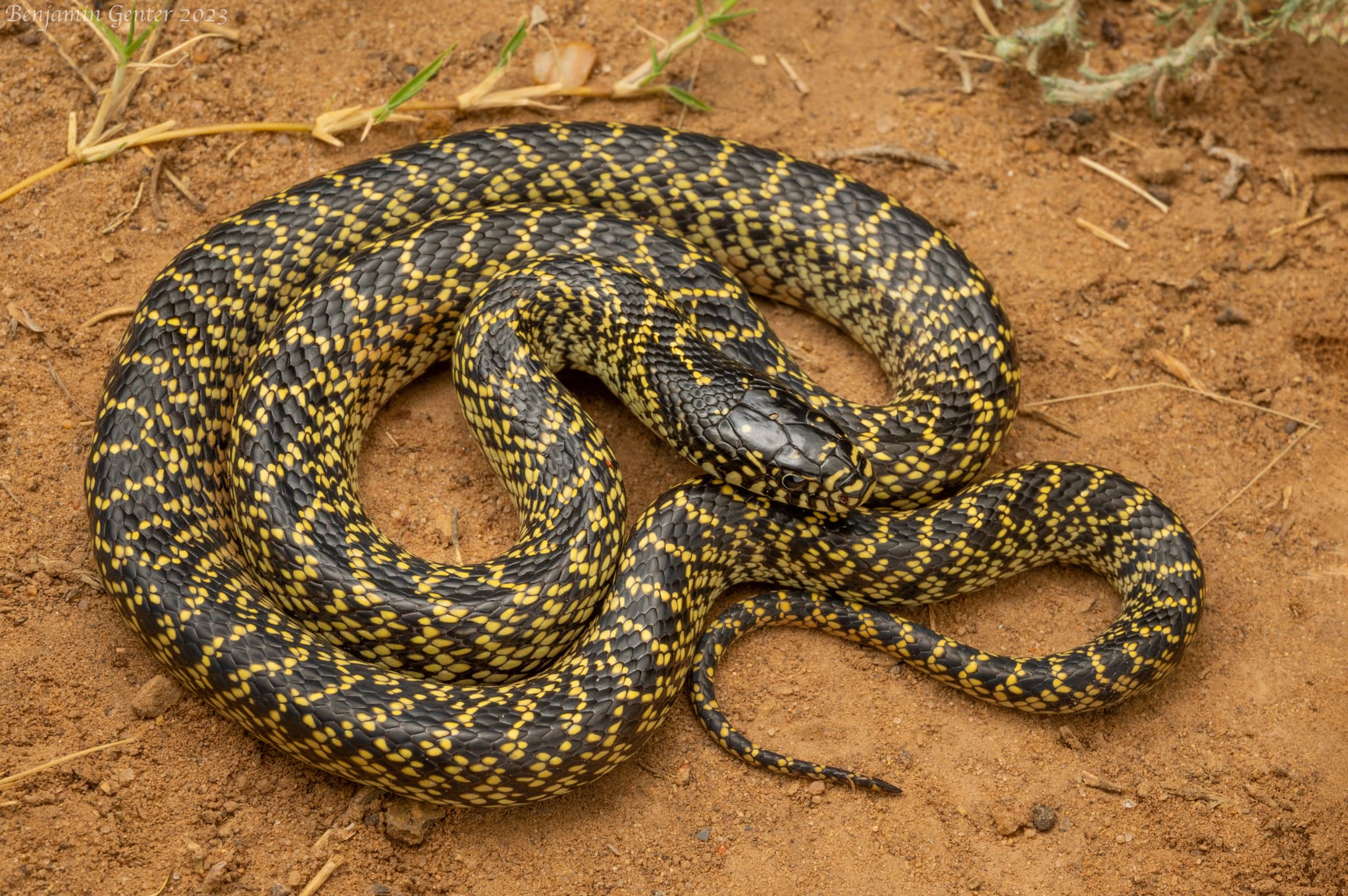
The Desert Kingsnake (Lampropeltis splendida) is a living, nonvenomous colubrid of the American Southwest and northern Mexico. Once widely treated as a subspecies of the common kingsnake, it is now recognized as a species by modern references including the Integrated Taxonomic Information System and the Reptile Database. Its name fits both its range and its appearance: adults are glossy black or deep brown, heavily stippled with yellow or cream. The pale markings often form broken crossbands around a chain of dark dorsal saddles.
This is a medium-to-large constrictor rather than a venomous snake. Typical adults measure roughly 90–114 centimeters, while exceptional individuals can approach 152 centimeters. Smooth scales give the body a polished finish. The head is usually dark, and yellow patterning may begin behind it like a loose collar. Pattern intensity varies widely, so some snakes appear strongly banded while others look almost speckled.
Range and Habitat
Desert Kingsnakes occur from central and western Texas through New Mexico to southeastern Arizona, with scattered northern records, and south across parts of northern and north-central Mexico. The Reptile Database lists Mexican records from states including Chihuahua, Coahuila, Durango, Nuevo León, San Luis Potosí, Tamaulipas and Zacatecas. This distribution centers on the Chihuahuan Desert and adjacent grasslands, river valleys and rocky country.
The common name can be misleading if it suggests bare dunes. IUCN habitat categories include shrubland, grassland, savanna, open forest, inland wetlands, rocky areas and modified terrestrial places. Desert Kingsnakes often use cover that buffers heat and dryness: rodent burrows, rock crevices, dense vegetation, debris and shaded soil. Riparian strips and irrigated edges can support prey even within dry landscapes. During extreme daytime heat they remain sheltered and become active at cooler hours, especially at night or after seasonal rain.
Diet and Hunting
Like other kingsnakes, this species is an active predator with a broad vertebrate diet. It takes rodents, lizards, reptile eggs and other snakes. The ability to eat snakes—including venomous species—is one reason kingsnakes attract so much attention, but resistance to some venoms is not universal immunity. A Desert Kingsnake still relies on quick seizure, muscular coils and constriction to subdue dangerous prey while reducing its chance of being bitten.
The snake explores with frequent tongue flicks, carrying airborne and surface chemicals to the vomeronasal organs in the roof of its mouth. Once it locates prey, it grasps with recurved teeth and wraps the body around the victim. Constriction interrupts circulation rapidly. Flexible jaws and mobile skull bones then allow the snake to swallow prey whole, usually head first. The same searching behavior helps it locate buried reptile eggs and prey concealed beneath cover.
Behavior and Seasonal Activity
Desert Kingsnakes are usually solitary. Activity changes with temperature: spring and mild autumn weather can bring movement around dusk or even by day, while summer activity shifts toward night. In winter or during severe cold they shelter underground and greatly reduce activity. They do not defend a social territory in the mammalian sense, though individuals may repeatedly use favorable refuges and hunting areas.
When threatened, a kingsnake generally tries concealment or escape first. If cornered it may flatten or tense the body, vibrate the tail in dry vegetation, release strong-smelling musk, strike and bite. Tail vibration can sound rattlesnake-like when leaves amplify it, but the Desert Kingsnake has no rattle. Its bite lacks venom. Wild snakes should still be left where they are: handling stresses the animal, and any unidentified snake should be treated cautiously until an expert confirms the species.
Reproduction and Development
Desert Kingsnakes are oviparous, meaning females lay eggs. Courtship and mating occur after seasonal emergence, with timing varying across the large range. Females place clutches in warm, humid, protected sites such as loose soil, decaying vegetation, abandoned burrows or spaces beneath cover. The nest site supplies the stable moisture needed for development even though the surrounding climate may be dry.
Egg number and incubation time vary with the female and local conditions, so a single figure should not be treated as universal. Hatchlings receive no parental care after emerging. They begin life as independent predators and usually show a clearer, more strongly contrasting version of the adult pattern. Growth depends on food, temperature and the length of the active season. Sexual maturity arrives only after repeated feeding and growth cycles rather than at a fixed calendar age everywhere.
Ecological Role and Conservation
By consuming rodents and reptiles, Desert Kingsnakes transfer energy among several levels of the desert food web. They are also prey for raptors, mammalian carnivores and larger snakes. Their use of burrows, washes, grasslands and rocky refuges links them to habitat features that also support many other desert animals. Removing snakes can therefore alter local predator-prey relationships rather than simply reducing an unwanted species.
The IUCN Red List assesses Lampropeltis splendida as Least Concern with a stable population trend. The assessment cites its broad range and many known locations. That global category does not mean every local population is secure. Road mortality, persecution, illegal collection, intensive land conversion and the loss of ground cover can cause local declines. Maintaining connected habitat and leaving natural cover in place helps this secretive predator persist.
Living Safely Alongside Desert Kingsnakes
A Desert Kingsnake near a home is usually passing through or following prey. It is nonvenomous and can help limit rodents, so the safest response is to give it room and keep pets away. Never pick up a snake that has not been confidently identified. If relocation is necessary, contact a trained local wildlife responder rather than attempting to catch it with household tools.
Reducing conflict starts with sealing gaps around buildings, controlling spilled animal feed and removing rodent attractants. Outdoor clutter beside walls can shelter both prey and snakes; moving it away from occupied structures lowers surprise encounters without stripping wildlife habitat from the entire property. On roads, drivers can slow and allow a crossing snake to pass. These simple steps protect people and an ecologically useful native predator.