
Home/Animals/Reptilia/Mojave Desert Tortoise
Species profileIUCN: CR

Mojave Desert Tortoise

Gopherus agassizii

A long-lived desert engineer that survives heat and drought by spending most of its life in protective burrows.

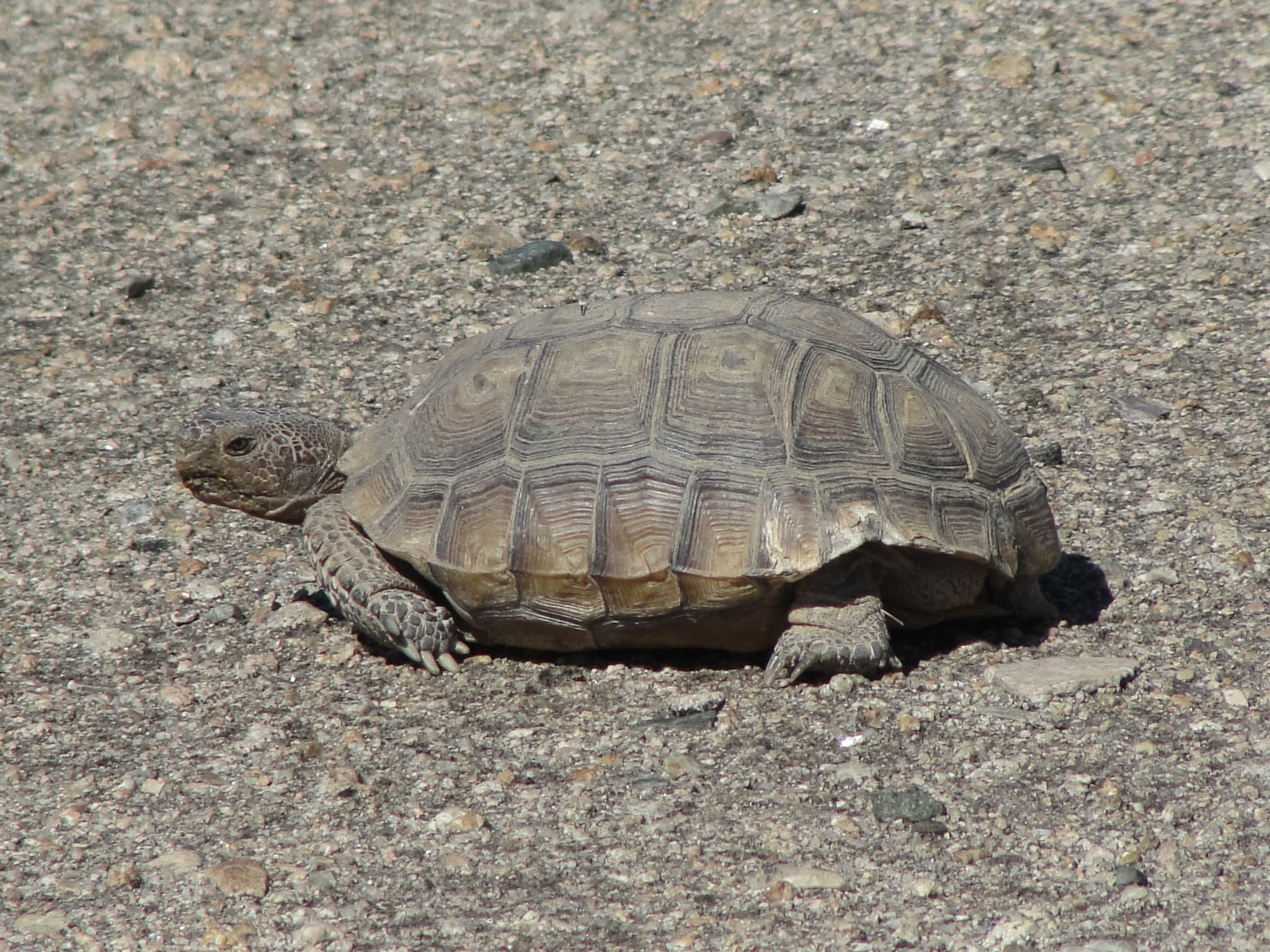
Mojave Desert Tortoise Gopherus agassizii walking across natural gravel in California
Wendy St. John / CC BY-SA 4.0
๐ŸŒ Read in Language:

โšก At a Glance

Species profile
Also Known As
Agassiz's Desert Tortoise; Mojave Desert Tortoise
Diet Category
Herbivore; native grasses, wildflowers, leaves, cactus pads and fruit
Activity Rhythm
Seasonal; most active in spring and after favorable rains
Wild Lifespan
Roughly 50โ€“80 years, sometimes longer
Typical Weight
About 3.6โ€“6.8 kg (8โ€“15 lb)
Conservation Status
CR
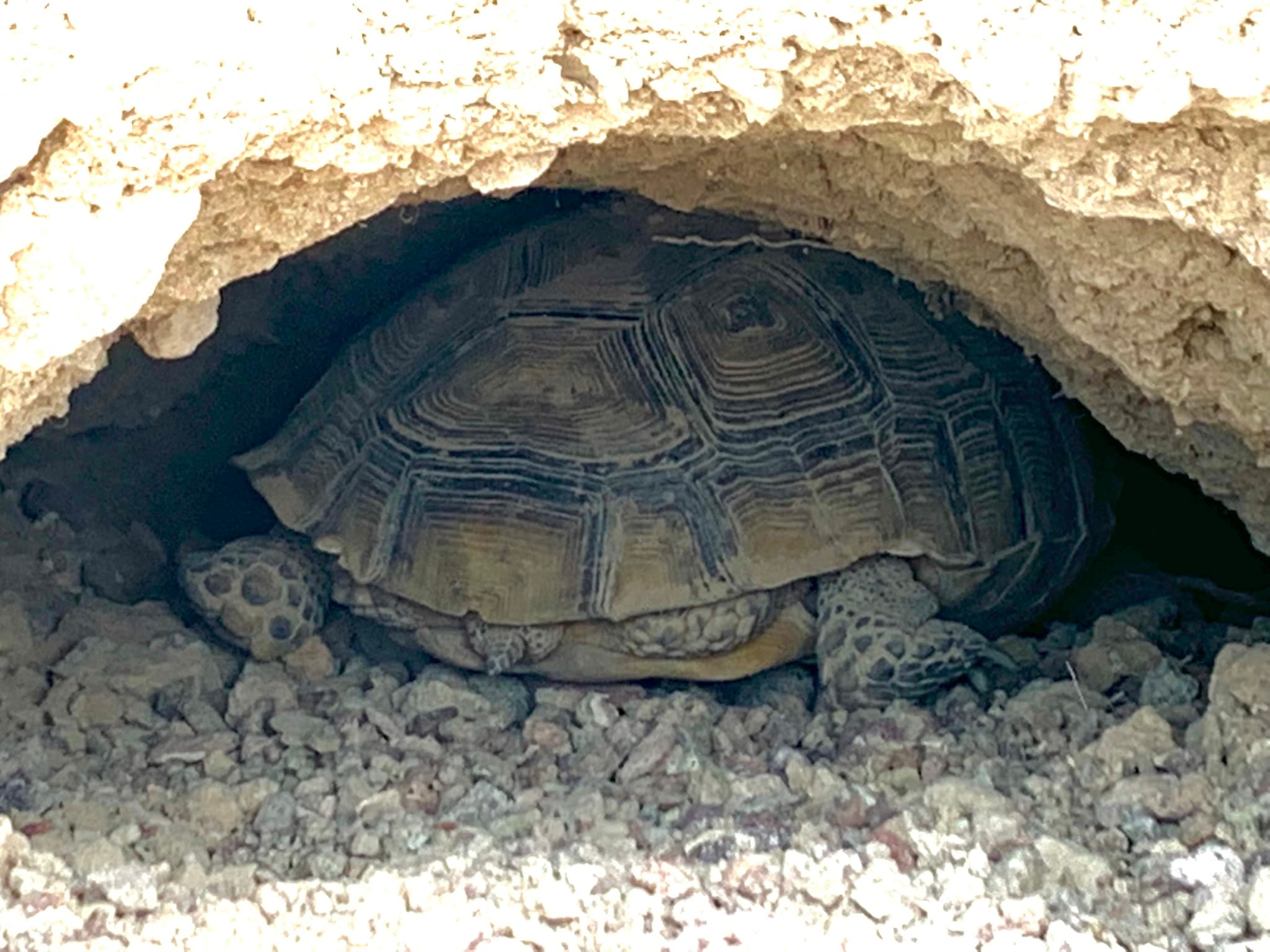
๐Ÿ’ก Key Biological Insight: It may spend about 95 percent of its life in burrows that buffer desert heat, cold and dryness.

๐ŸŒณ Scientific Taxonomy Hierarchy

This profile covers the living Mojave or Agassiz's Desert Tortoise, Gopherus agassizii, north and west of the Colorado River. The Sonoran Desert Tortoise is a separate species, Gopherus morafkai.

KingdomAnimalia
PhylumChordata
ClassReptilia
OrderTestudines
FamilyTestudinidae
GenusGopherus
SpeciesGopherus agassizii

Distinguishing Anatomical Features

  • โœ“High-domed shell
  • โœ“Brown, gray or dark carapace
  • โœ“Paler plastron
  • โœ“Flattened digging forelegs
  • โœ“Elephant-like hind legs
  • โœ“Short tail

๐Ÿ“ Physical Measurements

Total LengthShell usually 8โ€“15 in
Body WeightAbout 8โ€“15 lb
Tail LengthShort
WingspanNot applicable
Top SpeedSlow walking; no useful fixed maximumSurvival depends on burrows and timing rather than speed.

๐ŸŽจ Appearance & Distinctive Markings

BrownGrayTanBlackCreamYellow-brown

Skin / Covering: Keratinized shell plates and dry scales

Sexual Dimorphism: Adult males are generally larger and develop a longer gular horn, concave plastron and longer tail.

๐Ÿ—บ๏ธ Geographic Distribution & Habitat

Native to the Mojave region north and west of the Colorado River.

Sandy flats, creosote scrub, alluvial fans, washes, canyons and rocky foothills with soil suitable for stable burrows.

Country-level distribution map

Native range
FijiTanzaniaWestern SaharaCanadaUnited States โ€” Native rangeKazakhstanUzbekistanPapua New GuineaIndonesiaArgentinaChileCongo - KinshasaSomaliaKenyaSudanChadHaitiDominican RepublicRussiaBahamasFalkland IslandsNorwayGreenlandFrench Southern TerritoriesTimor-LesteSouth AfricaLesothoMexicoUruguayBrazilBoliviaPeruColombiaPanamaCosta RicaNicaraguaHondurasEl SalvadorGuatemalaBelizeVenezuelaGuyanaSurinameFranceEcuadorPuerto RicoJamaicaCubaZimbabweBotswanaNamibiaSenegalMaliMauritaniaBeninNigerNigeriaCameroonTogoGhanaCรดte dโ€™IvoireGuineaGuinea-BissauLiberiaSierra LeoneBurkina FasoCentral African RepublicCongo - BrazzavilleGabonEquatorial GuineaZambiaMalawiMozambiqueEswatiniAngolaBurundiIsraelLebanonMadagascarPalestinian TerritoriesGambiaTunisiaAlgeriaJordanUnited Arab EmiratesQatarKuwaitIraqOmanVanuatuCambodiaThailandLaosMyanmar (Burma)VietnamNorth KoreaSouth KoreaMongoliaIndiaBangladeshBhutanNepalPakistanAfghanistanTajikistanKyrgyzstanTurkmenistanIranSyriaArmeniaSwedenBelarusUkrainePolandAustriaHungaryMoldovaRomaniaLithuaniaLatviaEstoniaGermanyBulgariaGreeceTรผrkiyeAlbaniaCroatiaSwitzerlandLuxembourgBelgiumNetherlandsPortugalSpainIrelandNew CaledoniaSolomon IslandsNew ZealandAustraliaSri LankaChinaTaiwanItalyDenmarkUnited KingdomIcelandAzerbaijanGeorgiaPhilippinesMalaysiaBruneiSloveniaFinlandSlovakiaCzechiaEritreaJapanParaguayYemenSaudi ArabiaCyprusMoroccoEgyptLibyaEthiopiaDjiboutiUgandaRwandaBosnia & HerzegovinaNorth MacedoniaSerbiaMontenegroKosovoTrinidad & TobagoSouth Sudan
Highlighted countries are recorded profile locations, not precise biological range boundaries.Map boundaries: Natural Earth

Recorded Native Countries & Territories:

๐Ÿ’ก Did You Know?

  • ๐Ÿ’กWater-storing urinary bladder
  • ๐Ÿ’กPowerful digging forelegs
  • ๐Ÿ’กHeat-buffering burrows
  • ๐Ÿ’กVery low water loss
  • ๐Ÿ’กSeasonal dormancy
  • ๐Ÿ’กLong lifespan

๐ŸŒฟ Conservation Status & Threats

IUCN: CR โ€” Critically Endangered

โ€œThe current IUCN assessment lists Gopherus agassizii as Critically Endangered; the Mojave population is federally threatened in the United States.โ€

Population Trend๐Ÿ“‰ Decreasing
Wild Population EstimateNo complete count; many monitored populations have declined severely
CITESAppendix II as a member of Testudinidae

โš ๏ธ Major Threats to Mojave Desert Tortoise

  • โ€ขHabitat loss and fragmentation
  • โ€ขRoad mortality
  • โ€ขDisease
  • โ€ขInvasive-grass wildfire
  • โ€ขDrought
  • โ€ขSubsidized ravens and other predators
  • โ€ขOff-road vehicles
  • โ€ขIllegal collection and release

๐Ÿ”„ Life Cycle & Reproduction

Wild vs. Captivity Lifespan Comparison

๐ŸŒฟ In the WildRoughly 50โ€“80 years or more
๐Ÿ  In Captivity (with veterinary care)Can exceed many decades
Clutch / Litter Size1โ€“10 eggs; 0โ€“3 clutches in a year
Incubation / GestationAbout 67โ€“104 days
Fledging / WeaningIndependent at hatching; not applicable
Sexual MaturityUsually about 13โ€“20 years
Mating SystemInternal fertilization; females can store sperm
Nesting / Den TypeExcavated soil nest

๐Ÿฆ… Behavior & Field Ecology

Herbivore

๐ŸŒ Ecological Food Web & Relationships: A herbivore and ecosystem engineer whose burrows create shelter used by other desert animals.

Social Group SizeUsually solitary
Activity RhythmSurface-active mainly in favorable spring and autumn conditions and after rain
Feeding StrategyHerbivore

๐Ÿฅฉ Primary Prey & Preferred Diet

โœ“ Native grassesโœ“ Annual wildflowersโœ“ Leavesโœ“ Cactus pads and fruit

๐Ÿ“ข Communication & Territorial Signals

  • Scent
  • Body posture
  • Touch
  • Hisses
  • Grunts
  • Shell contact during contests

๐Ÿพ Wild Temperament & Traits

โ€ข Shyโ€ข Slow-movingโ€ข Burrow-dependentโ€ข Nonaggressiveโ€ข Sensitive to disturbance

๐Ÿค Human Interaction & Pet Advisory

โš ๏ธ Strictly Wild Species
๐Ÿšซ

Can You Keep a Mojave Desert Tortoise as a Pet?

Wild animals must not be collected; captive-care and adoption rules are tightly regulated

Domestication StatusNot domesticated
Danger to HumansHarmless to people; legally protected and vulnerable to handling
Economic & Ecotourism RoleConservation research, education, cultural importance and ecosystem function

โš ๏ธ Behavioral Risk Factors & Wildlife Safety

  • Handling can cause loss of stored bladder water
  • Relocation can separate animals from known resources
  • Captive release can spread disease

๐ŸŒ Ecological Food Web & Relationships

๐Ÿงฌ Related Species (2)

Sonoran Desert TortoiseGopherus morafkaiClosest neighboring desert-tortoise species east and south of the Colorado River
Texas TortoiseGopherus berlandieriRelated North American gopher tortoise

๐ŸŒ Ecological Equivalents Across Continents

Gopher TortoiseGopherus polyphemus

Mojave Desert Tortoise Overview

The Desert Tortoise profiled here is the Mojave or Agassiz’s Desert Tortoise, Gopherus agassizii. That exact scope matters because genetic research split the former broad โ€œdesert tortoiseโ€ into multiple living species. G. agassizii occurs mainly north and west of the Colorado River in southeastern California, southern Nevada, southwestern Utah and northwestern Arizona. The Sonoran Desert Tortoise east and south of that boundary is generally Gopherus morafkai.

This Mojave species has a high-domed brown, gray or dark shell, a lighter plastron underneath, stout elephant-like hind legs and flattened forelimbs armed with strong claws for digging. U.S. Fish and Wildlife Service measurements place adult shell length around 8โ€“15 inches and weight around 8โ€“15 pounds. Males tend to grow larger and develop a longer gular projection at the front of the plastron.

Range and Desert Habitat

Mojave Desert Tortoises occupy sandy flats, alluvial fans, washes, rocky foothills and canyons. Creosote-bush scrub is especially characteristic, but the species uses a mosaic of plant communities and terrain. Suitable soil must allow burrow construction while remaining stable enough not to collapse. Burrows moderate conditions that would be lethal on the surface: they stay cooler during summer days, warmer during winter nights and more humid than exposed desert air. This shelter strategy is one example in How Animals Survive Extreme Desert Heat.

A tortoise may know and reuse several shelters within its home range. National Park Service accounts estimate that individuals spend about 95 percent of their lives inside burrows or other cover. They emerge mainly during favorable spring weather and again around late-summer or autumn rains. This hidden lifestyle makes an apparently empty landscape deceptive; intact burrows and the vegetation around them may support tortoises that are rarely seen.

Diet and Water Conservation

The Mojave Desert Tortoise is primarily herbivorous. It eats native grasses, annual wildflowers, leaves, cactus pads and fruit. Food quality changes sharply between wet years and drought, and nutritious spring growth is especially important for reproduction and growth. Invasive annual grasses can replace diverse native forage while also creating continuous fuel for unusually frequent wildfire.

Water management is central to survival. Moist plants supply part of a tortoise’s needs, but individuals also drink rapidly from temporary puddles after rain. A large urinary bladder stores water that can later be reabsorbed. Because a frightened tortoise may empty its bladder, picking one up can waste a critical reserve. During drought, tortoises retreat underground, reduce activity and slow water loss rather than wandering continuously in search of water.

Seasonal Behavior and Movement

Most surface activity occurs when temperature and moisture are favorable. Adults forage, seek mates and travel among burrows in spring; some emerge again after summer storms or during mild autumn weather. Winter cold and severe summer heat bring long periods of dormancy. This seasonal rhythm explains why tortoises sometimes cross roads during a short window even though they remain unseen for much of the year.

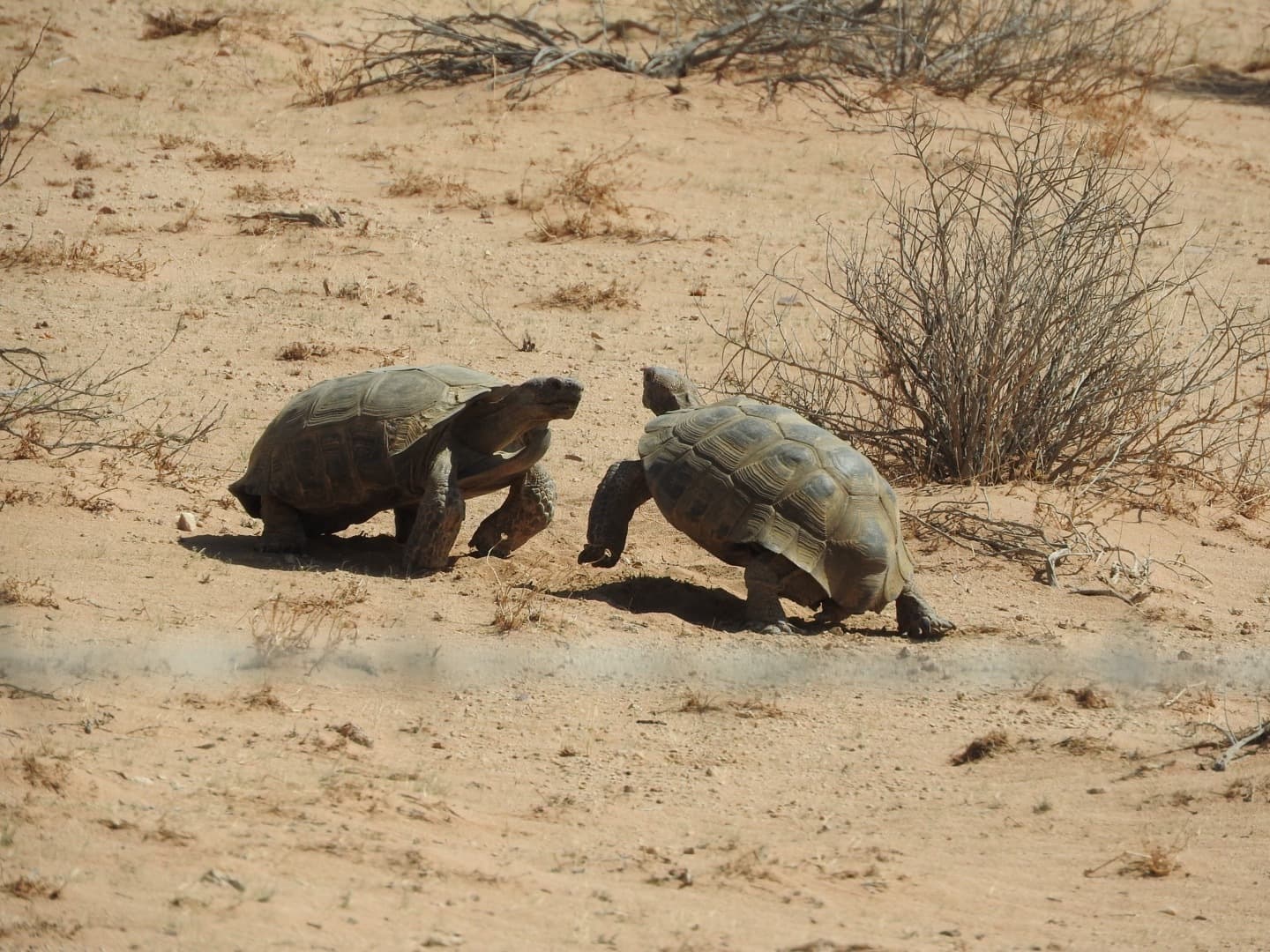
They are largely solitary, but burrows, water sources and courtship can bring individuals together. Males may ram rivals or use the projecting front of the shell during contests. Communication includes posture, touch, scent and a surprising range of hisses, grunts and other sounds. Their slow walking speed does not mean aimless movement: adults learn the locations of shelter, forage and drinking sites across a familiar home range.

Reproduction and Long Life

Desert Tortoises mature slowly, commonly at about 13โ€“20 years. Females excavate nests and lay hard-shelled eggs, often producing more than one clutch when food and water permit. A major scientific review reports 1โ€“10 eggs per clutch, zero to three clutches per year and incubation of roughly 67โ€“104 days. Nest temperature influences hatchling sex.

Hatchlings receive no parental care and begin life with small, relatively soft shells. Ravens, coyotes, kit foxes, badgers and other predators can take eggs or young. National Park Service accounts indicate that very few hatchlings survive to maturity, but adults that do can live roughly 50โ€“80 years or longer. That combination of late maturity and high juvenile mortality means an adult killed today cannot be quickly replaced.

Conservation Status and Threats

The current IUCN assessment treats Gopherus agassizii as Critically Endangered and documents severe long-term declines. The Mojave population has also been federally listed as threatened in the United States since 1990. Status labels differ because legal listings and global Red List categories use different processes, dates and criteria; both indicate serious conservation concern.

Habitat loss, degradation and fragmentation come from urban growth, roads, utilities, energy development, military activity, recreation, grazing and agriculture. Vehicles kill tortoises directly and can crush burrows. Invasive grasses promote more frequent fire. Upper respiratory disease, drought and subsidized predators add pressure. Pet release is another risk because captive tortoises can spread disease or disrupt local populations.

How People Can Protect Desert Tortoises

Watch wild tortoises from a respectful distance and never remove one from the desert. In most situations, do not touch, feed or offer water. If a tortoise is in immediate danger on a road, follow local wildlife-agency guidance; where moving is advised, place it only a short distance in the direction it was already traveling. Never relocate it to a distant โ€œbetterโ€ habitat because unfamiliar terrain may separate it from known burrows and water sites.

Drivers should slow in mapped tortoise habitat, check beneath parked vehicles before moving and avoid driving off established routes. Visitors should protect burrows, control dogs and pack out litter that can attract ravens. Captive tortoises must never be released; owners should contact an authorized adoption or wildlife program. These actions protect the long-lived adults on which recovery depends.

Sources

โ“ Frequently Asked Questions

Answers to frequently asked questions verified against peer-reviewed zoological research.

They live mainly north and west of the Colorado River in southeastern California, southern Nevada, southwestern Utah and northwestern Arizona.