
Home/Animals/Reptilia/Dwarf Crocodile
Species profileIUCN: VU

Dwarf Crocodile

Osteolaemus tetraspis

A small, heavily armored forest crocodilian that hunts at night in the quiet swamps, creeks and pools of West and Central Africa.

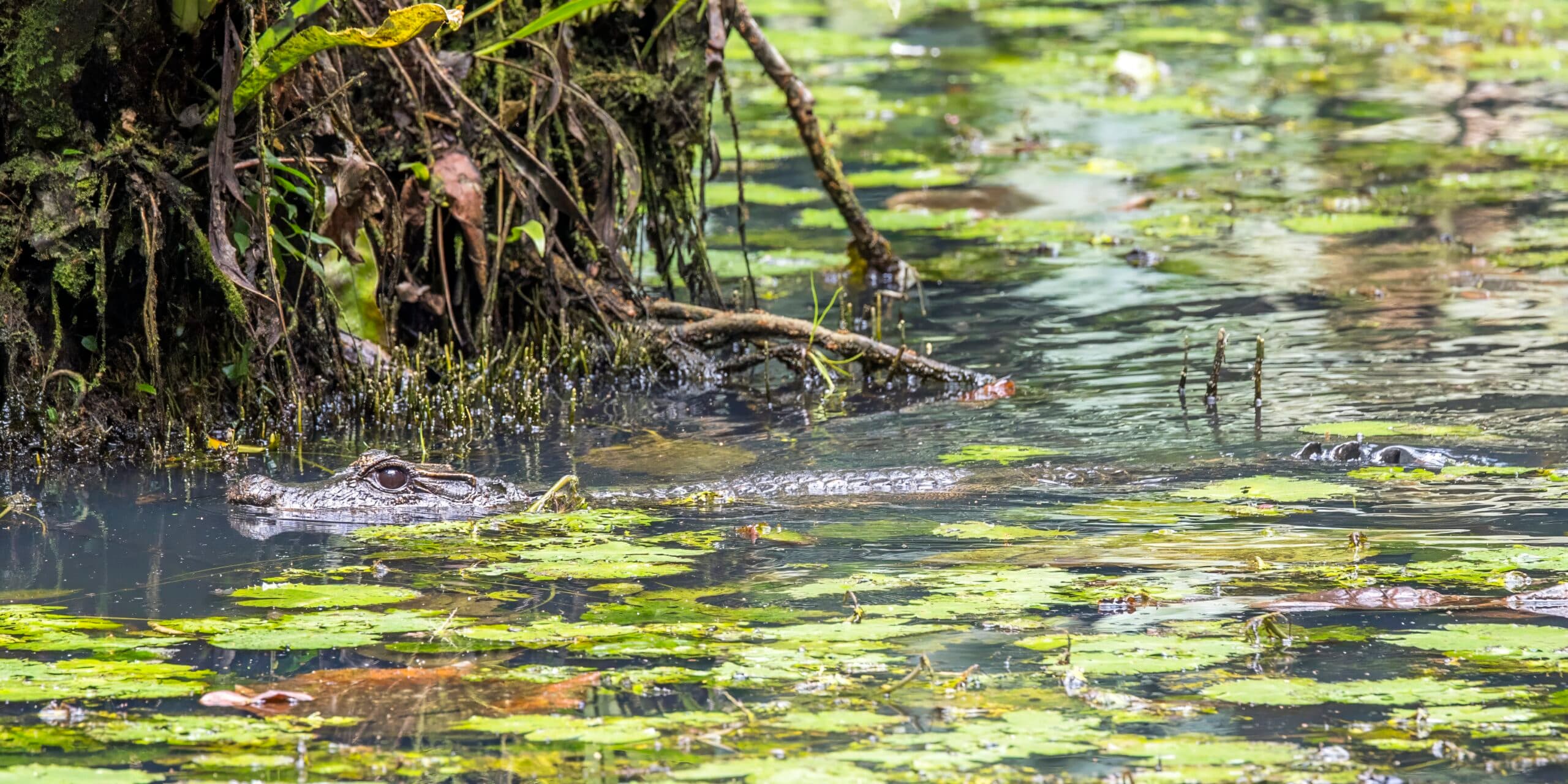
Wild Dwarf Crocodile swimming through a forest pool in Ankasa, Ghana
Charles J. Sharp / Wikimedia Commons / CC BY-SA 4.0
๐ŸŒ Read in Language:

โšก At a Glance

Species profile
Also Known As
African Dwarf Crocodile; West African Dwarf Crocodile; Broad-Nosed Crocodile
Diet Category
Carnivore
Activity Rhythm
Mostly nocturnal, resting in water, cover or burrows during the day.
Wild Lifespan
Wild longevity is poorly measured; crocodilians can live for several decades
Typical Weight
commonly about 18โ€“32 kg, with large males sometimes heavier
Conservation Status
VU
๐Ÿ’ก Key Biological Insight: The genus name Osteolaemus refers to the unusually bony throat region, while tetraspis refers to four large shield-like plates behind the head.

๐ŸŒณ Scientific Taxonomy Hierarchy

Osteolaemus tetraspis is a living species in the family Crocodylidae and order Crocodylia. Current references recognize Osteolaemus osborni as a separate Congo dwarf crocodile. Additional genetic lineages within what has historically been called O. tetraspis may eventually receive formal names, so this profile follows the named species while avoiding claims that every dwarf crocodile population is taxonomically identical.

KingdomAnimalia
PhylumChordata
ClassReptilia
OrderCrocodylia
FamilyCrocodylidae
GenusOsteolaemus
SpeciesOsteolaemus tetraspis

Distinguishing Anatomical Features

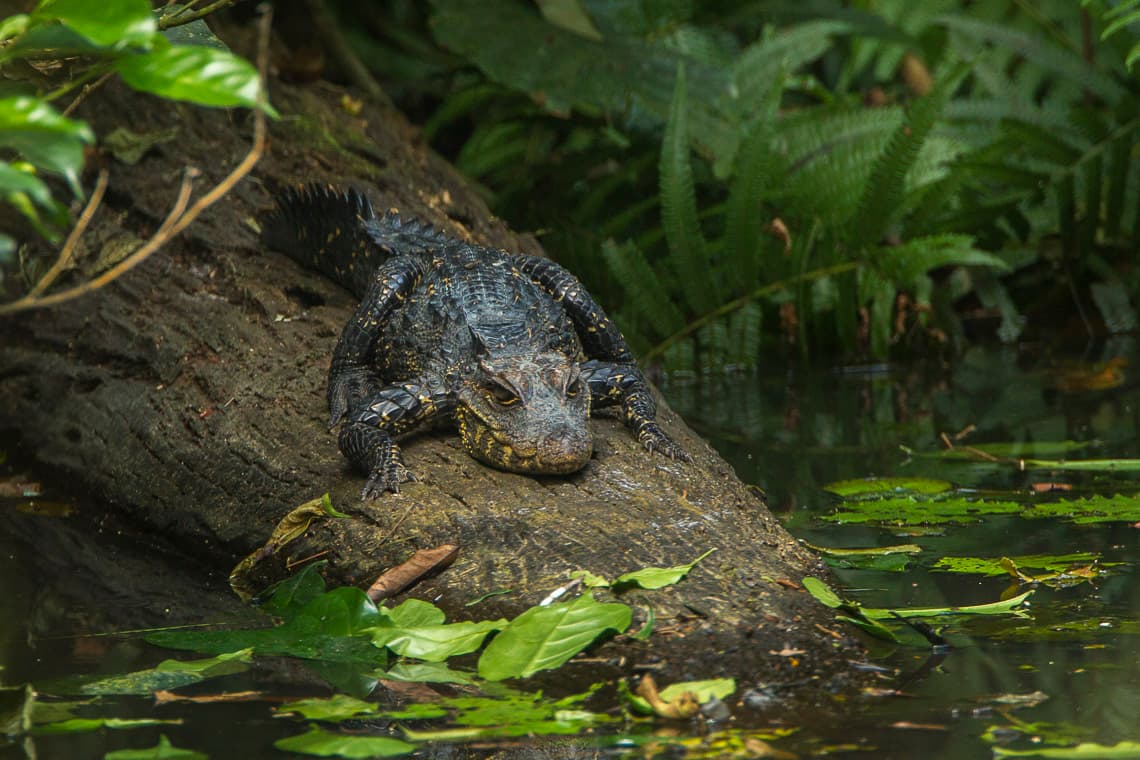
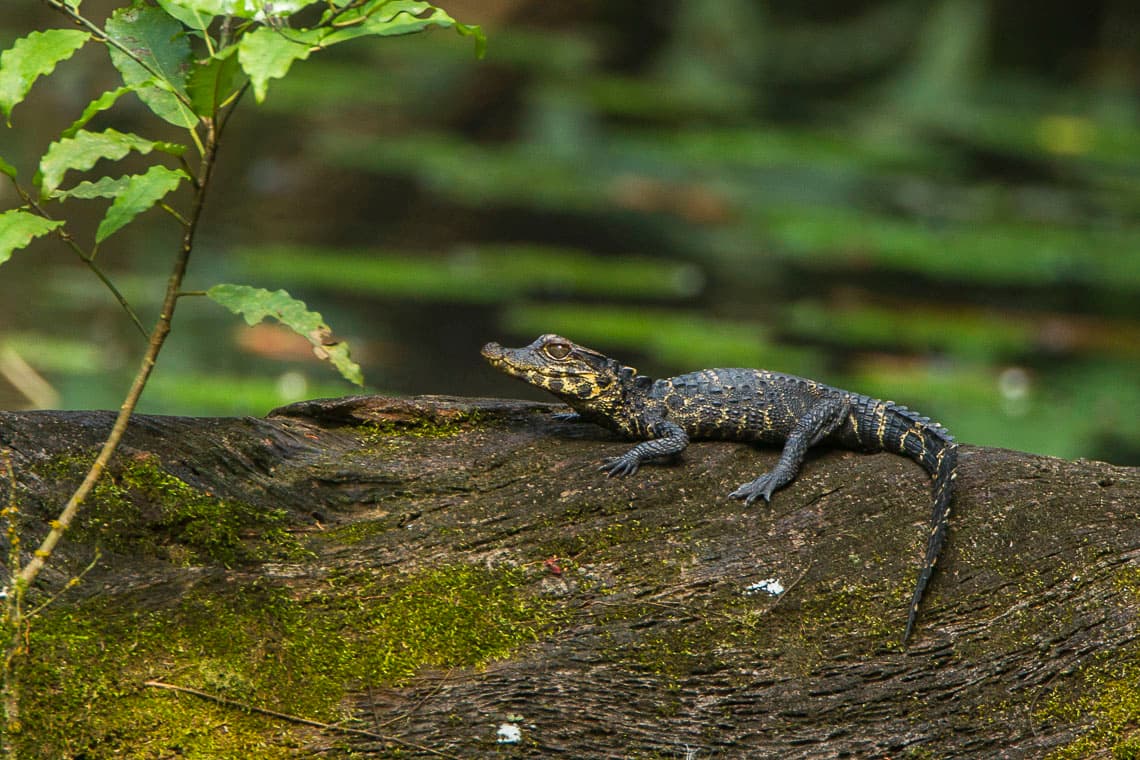
  • โœ“The snout is short and broad, the body dark brown to nearly black, and the head, neck and back carry exceptionally heavy bony armor. Adults often have yellowish or cream markings along the sides and belly, while juveniles show brighter banding and spotting. Four enlarged nuchal shields form a square behind the head, a feature reflected in the species name tetraspis. The eyes and nostrils sit high on the head for watching and breathing at the water surface.
  • โœ“Heavy osteoderms protect the body
  • โœ“Short broad snout crushes hard prey
  • โœ“High-set eyes and nostrils aid surface watching
  • โœ“Reflective eyes improve night vision
  • โœ“Strong tail propels the animal through water
  • โœ“Webbed feet support movement in swamp mud
  • โœ“Palatal valve helps keep water from the throat

๐Ÿ“ Physical Measurements

Total Lengthusually about 3.3โ€“4.9 ft as adults; large individuals approach 6.6 ft
Body Weightcommonly about 40โ€“70 lb, with large males sometimes heavier
Tail LengthStrong laterally flattened tail used for propulsion
WingspanNot applicable
Top SpeedNo dependable universal maximumMovement changes with context and conditions.

๐ŸŽจ Appearance & Distinctive Markings

Dark BrownBlackGrayCreamYellowBlackGrayCream

Skin / Covering: Thick scales reinforced by extensive bony osteoderms

Sexual Dimorphism: Males average larger and develop broader, heavier heads. Females are usually smaller, but size overlaps; reliable sex determination requires expert examination and should not involve approaching or restraining a wild crocodilian.

๐Ÿ—บ๏ธ Geographic Distribution & Habitat

A patchy forest-zone distribution across West and Central Africa, from Senegal and nearby countries east through the Gulf of Guinea forests toward Cameroon, Gabon and the Congo region. Taxonomic revision means some eastern records historically assigned to Osteolaemus tetraspis may represent O. osborni or unnamed lineages.

Tropical rainforest swamps, flooded forest, shaded ponds, marshes, small slow-moving rivers and creeks with dense bankside cover.

Country-level distribution map

Native range
FijiTanzaniaWestern SaharaCanadaUnited StatesKazakhstanUzbekistanPapua New GuineaIndonesiaArgentinaChileCongo - KinshasaSomaliaKenyaSudanChadHaitiDominican RepublicRussiaBahamasFalkland IslandsNorwayGreenlandFrench Southern TerritoriesTimor-LesteSouth AfricaLesothoMexicoUruguayBrazilBoliviaPeruColombiaPanamaCosta RicaNicaraguaHondurasEl SalvadorGuatemalaBelizeVenezuelaGuyanaSurinameFranceEcuadorPuerto RicoJamaicaCubaZimbabweBotswanaNamibiaSenegal โ€” Native rangeMali โ€” Native rangeMauritaniaBenin โ€” Native rangeNigerNigeria โ€” Native rangeCameroon โ€” Native rangeTogo โ€” Native rangeGhana โ€” Native rangeCรดte dโ€™Ivoire โ€” Native rangeGuinea โ€” Native rangeGuinea-Bissau โ€” Native rangeLiberia โ€” Native rangeSierra Leone โ€” Native rangeBurkina Faso โ€” Native rangeCentral African Republic โ€” Native rangeCongo - Brazzaville โ€” Native rangeGabon โ€” Native rangeEquatorial Guinea โ€” Native rangeZambiaMalawiMozambiqueEswatiniAngola โ€” Native rangeBurundiIsraelLebanonMadagascarPalestinian TerritoriesGambia โ€” Native rangeTunisiaAlgeriaJordanUnited Arab EmiratesQatarKuwaitIraqOmanVanuatuCambodiaThailandLaosMyanmar (Burma)VietnamNorth KoreaSouth KoreaMongoliaIndiaBangladeshBhutanNepalPakistanAfghanistanTajikistanKyrgyzstanTurkmenistanIranSyriaArmeniaSwedenBelarusUkrainePolandAustriaHungaryMoldovaRomaniaLithuaniaLatviaEstoniaGermanyBulgariaGreeceTรผrkiyeAlbaniaCroatiaSwitzerlandLuxembourgBelgiumNetherlandsPortugalSpainIrelandNew CaledoniaSolomon IslandsNew ZealandAustraliaSri LankaChinaTaiwanItalyDenmarkUnited KingdomIcelandAzerbaijanGeorgiaPhilippinesMalaysiaBruneiSloveniaFinlandSlovakiaCzechiaEritreaJapanParaguayYemenSaudi ArabiaCyprusMoroccoEgyptLibyaEthiopiaDjiboutiUgandaRwandaBosnia & HerzegovinaNorth MacedoniaSerbiaMontenegroKosovoTrinidad & TobagoSouth Sudan
Highlighted countries are recorded profile locations, not precise biological range boundaries.Map boundaries: Natural Earth

๐Ÿ’ก Did You Know?

  • ๐Ÿ’กHeavy osteoderms protect the body
  • ๐Ÿ’กShort broad snout crushes hard prey
  • ๐Ÿ’กHigh-set eyes and nostrils aid surface watching
  • ๐Ÿ’กReflective eyes improve night vision
  • ๐Ÿ’กStrong tail propels the animal through water
  • ๐Ÿ’กWebbed feet support movement in swamp mud
  • ๐Ÿ’กPalatal valve helps keep water from the throat

๐ŸŒฟ Conservation Status & Threats

IUCN: VU โ€” Vulnerable

โ€œThe IUCN Crocodile Specialist Group lists the Dwarf Crocodile as Vulnerable, based on an older assessment that is complicated by later taxonomic discoveries. Habitat loss and hunting remain serious, while population status differs among forest regions and genetic lineages.โ€

Population Trend๐Ÿ“‰ Decreasing
Wild Population EstimateNo reliable global total; locally common in some intact forests and depleted near heavy hunting
CITESCITES Appendix I

โš ๏ธ Major Threats to Dwarf Crocodile

  • โ€ขBushmeat hunting
  • โ€ขForest clearing
  • โ€ขWetland drainage
  • โ€ขOil and mining development
  • โ€ขFishing-net entanglement
  • โ€ขRoad access into remote forests
  • โ€ขTaxonomic uncertainty that obscures population trends

๐Ÿ”„ Life Cycle & Reproduction

Wild vs. Captivity Lifespan Comparison

๐ŸŒฟ In the WildWild longevity is poorly measured; crocodilians can live for several decades
๐Ÿ  In Captivity (with veterinary care)Accredited facilities require reinforced barriers, separate keeper access, filtered water, dry shelter, thermal gradients, nesting substrate and protocols that prevent direct contact.
Clutch / Litter SizeOften about 10โ€“20 eggs, with regional and individual variation
Incubation / GestationRoughly 85โ€“105 days, depending on temperature and nest conditions
Fledging / WeaningIndependent-feeding hatchling protected briefly near the nesting female
Sexual MaturityUsually after several years of growth; dependable wild estimates vary
Mating SystemInternal fertilization; mound-nesting egg layer
Nesting / Den TypeVegetation mound on shaded ground close to water

๐Ÿฆ… Behavior & Field Ecology

Carnivore

๐ŸŒ Ecological Food Web & Relationships: Dwarf Crocodiles link aquatic and forest food webs. They consume crabs, mollusks, fish, amphibians and small land animals, while eggs and young feed monitor lizards, snakes, birds and mammals. Their movements between forest pools transfer nutrients, and their dependence on shaded water makes them indicators of intact swamp-forest systems.

Social Group SizeUsually solitary outside courtship, nesting and temporary young groups
Activity RhythmMostly nocturnal, resting in water, cover or burrows during the day.
Feeding StrategyCarnivore

๐Ÿฅฉ Primary Prey & Preferred Diet

โœ“ Crabs and other crustaceansโœ“ Fishโœ“ Frogsโœ“ Snails and mollusksโœ“ Large insectsโœ“ Small mammalsโœ“ Birds and reptiles

๐Ÿ“ข Communication & Territorial Signals

  • Low-frequency calls
  • Hatchling vocalizations
  • Water vibration
  • Head slaps
  • Body posture
  • Scent marking
  • Touch during courtship

๐Ÿพ Wild Temperament & Traits

โ€ข Secretiveโ€ข Nocturnalโ€ข Usually solitaryโ€ข Forest dependentโ€ข Patient ambush hunterโ€ข Defensive at close range

๐Ÿค Human Interaction & Pet Advisory

โš ๏ธ Strictly Wild Species
๐Ÿšซ

Can You Keep a Dwarf Crocodile as a Pet?

A Dwarf Crocodile is not a private pet. It is a protected CITES Appendix I crocodilian requiring specialized legal facilities, secure pools and land areas, water treatment, controlled temperatures, expert teams and lifelong veterinary management. Private acquisition may be illegal and wild capture threatens local populations.

Domestication StatusWild crocodilian; never domesticated
Danger to HumansCapable of a severe bite despite being the smallest living crocodile
Economic & Ecotourism RoleSwamp-forest food webs, control of aquatic prey, research on crocodilian evolution and community-based conservation.

โš ๏ธ Behavioral Risk Factors & Wildlife Safety

  • Powerful jaws can crush and tear tissue
  • Sudden strikes are difficult to predict in dense cover
  • A cornered animal can thrash forcefully
  • Bites from aquatic reptiles carry infection risk

๐ŸŒ Ecological Food Web & Relationships

๐Ÿฆ… Natural Predators (5)

LeopardPanthera pardus
African Rock PythonPython sebae
Nile MonitorVaranus niloticus
African Fish EagleIcthyophaga vocifer
African CivetCivettictis civetta

๐Ÿงฌ Related Species (4)

Congo Dwarf CrocodileOsteolaemus osborniRecognized Congo Basin congener
Nile CrocodileCrocodylus niloticusMuch larger African crocodilian
West African CrocodileCrocodylus suchusLarger relative in West and Central Africa
African Slender-Snouted CrocodileMecistops cataphractusLong-snouted forest and river relative

Dwarf Crocodile (Osteolaemus tetraspis) is a compact crocodilian of tropical African forests. Adults rarely exceed about two metres and are far smaller than Nile Crocodiles, but they retain powerful jaws, armored skin and effective night vision. They usually occupy shaded pools, swamps and slow creeks rather than large open rivers. The species is living but taxonomically complex: genetic work has revealed deep lineages within African dwarf crocodiles, and some Congo populations are now treated as the separate species Osteolaemus osborni. This guide separates well-supported biology from common assumptions and covers identification, range, habitat, diet, behavior, reproduction and conservation.

Identification

The snout is short and broad, the body dark brown to nearly black, and the head, neck and back carry exceptionally heavy bony armor. Adults often have yellowish or cream markings along the sides and belly, while juveniles show brighter banding and spotting. Four enlarged nuchal shields form a square behind the head, a feature reflected in the species name tetraspis. The eyes and nostrils sit high on the head for watching and breathing at the water surface. Males average larger and develop broader, heavier heads. Females are usually smaller, but size overlaps; reliable sex determination requires expert examination and should not involve approaching or restraining a wild crocodilian.

Identification should combine body shape, markings, size, voice or movement, and location. One feature by itself can overlap with a related animal, a juvenile, or an individual in unusual light.

Photographs are most useful when they preserve scale and show several diagnostic features. Handling or repositioning a wild dwarf crocodile for identification can cause stress and is unnecessary.

Size and physical adaptations

Dwarf Crocodile typically measures usually about 1.0โ€“1.5 m as adults; large individuals approach 2 m and weighs commonly about 18โ€“32 kg, with large males sometimes heavier. Published measurements vary among regions and lineages. Total length includes the muscular tail.

Its useful adaptations include heavy osteoderms protect the body, short broad snout crushes hard prey, high-set eyes and nostrils aid surface watching, reflective eyes improve night vision, strong tail propels the animal through water, webbed feet support movement in swamp mud, palatal valve helps keep water from the throat. These traits work together in the animal’s normal setting rather than serving as isolated curiosities.

Published measurements may use different methods, life stages or sample locations. Comparing figures responsibly means checking what was measured rather than selecting the largest number available.

Range and distribution

A patchy forest-zone distribution across West and Central Africa, from Senegal and nearby countries east through the Gulf of Guinea forests toward Cameroon, Gabon and the Congo region. Taxonomic revision means some eastern records historically assigned to Osteolaemus tetraspis may represent O. osborni or unnamed lineages. The native range includes Angola, Benin, Burkina Faso, Cameroon, Central African Republic, Republic of the Congo, Cรดte dโ€™Ivoire, Equatorial Guinea, Gabon, Gambia, Ghana, Guinea, Guinea-Bissau, Liberia, Mali, Nigeria, Senegal, Sierra Leone, Togo.

A country-level map indicates broad distribution, not continuous occupation. Climate, elevation, water, vegetation, prey, breeding sites, barriers and survey effort all affect where records occur.

Records near the edge of the range deserve careful documentation because they may reflect natural movement, improved survey coverage, accidental transport or a genuine distribution change.

Habitat

Tropical rainforest swamps, flooded forest, shaded ponds, marshes, small slow-moving rivers and creeks with dense bankside cover.

Dwarf Crocodiles favor small, quiet waters beneath forest cover and generally avoid the broad open channels used by larger crocodiles. They shelter in bank holes, submerged root systems, hollow logs and dense vegetation. During wet periods they can move through flooded forest; in drier periods they concentrate around permanent pools or retreat into burrows. Intact forest around the water supplies shade, prey, nesting material and refuge. Protecting a population therefore requires the feeding, shelter and breeding features that make a site usable, along with connections that allow movement.

Microhabitat matters. Shade, soil, current, moisture, shelter or host plants can determine whether a small area is usable even when the surrounding landscape appears suitable.

Diet and feeding

Dwarf Crocodile is a carnivore. Important foods include crabs and other crustaceans, fish, frogs, snails and mollusks, large insects, small mammals, birds and reptiles. Most hunting occurs from dusk through the night. The crocodile waits at the water edge or moves slowly through shallow pools, taking fish, frogs and invertebrates with a sudden sideways snap. Its broad rear teeth can crush snails and crabs. Larger individuals also take small vertebrates that approach the water.

Diet changes with age, season, location and food supply. A dramatic prey record does not establish what most individuals eat most of the time; repeated field observations provide a stronger picture.

Feeding opportunities also create risk. An animal focused on prey may be less alert to predators, traffic or people, while contaminated prey can transfer pollutants through the food web.

Behavior and communication

Mostly nocturnal, resting in water, cover or burrows during the day. This species is secretive and usually solitary. It may remain hidden in a burrow or beneath roots through daylight and emerge after dark to patrol quiet water and the forest floor. Dwarf Crocodiles can travel over land between pools, especially during rain. A threatened individual may hiss, inflate the body, thrash and bite; its small size compared with other crocodiles does not make close approach safe.

Adults use low-frequency sounds, water vibration, scent and body posture during courtship and territorial encounters. Young produce calls before and after hatching that can attract the attending female. Head slaps, splashes and raised postures advertise presence at close range, while scent from skin and cloacal glands may help mark reproductive sites. Behavior should be interpreted in context: alarm, courtship, feeding and temperature regulation can produce very different actions from the same animal.

Daily schedules are flexible responses, not rigid rules. Weather, breeding condition, disturbance, tides or food can move activity into a different part of the day.

Reproduction and development

Courtship and nesting are linked to local rainfall and water level. A female builds a mound of decaying vegetation close to water, deposits the eggs inside and guards the site. Heat from decomposition helps incubate the clutch. She responds to hatchling calls, opens the nest and may carry young gently toward water. Often about 10โ€“20 eggs, with regional and individual variation Hatchlings are strongly patterned miniature crocodiles. They feed on insects, small crustaceans, tadpoles and tiny fish, then shift toward larger prey as the jaws and body grow. Maternal attendance improves access to the water, but young still face heavy predation.

Young animals face different risks and may use different microhabitats or food than adults. Breeding success depends on adult condition, suitable sites and the survival of offspring through vulnerable early stages.

Counts of eggs or young describe reproductive output, not the number expected to reach adulthood. Mortality is normally greatest during eggs, larval or juvenile stages.

Predators and ecological role

Dwarf Crocodiles link aquatic and forest food webs. They consume crabs, mollusks, fish, amphibians and small land animals, while eggs and young feed monitor lizards, snakes, birds and mammals. Their movements between forest pools transfer nutrients, and their dependence on shaded water makes them indicators of intact swamp-forest systems. Documented or likely predators include Leopard, African Rock Python, Nile Monitor, African Fish Eagle, African Civet.

This animal is both a consumer and a food source. Its influence comes through many repeated interactions, so ecological claims should be based on measured populations rather than assumptions drawn from appearance.

Predator and prey relationships differ among places. A species can be ecologically influential without being abundant everywhere, and its role can change across its range.

Relationship with people

Forest communities encounter dwarf crocodiles while fishing, traveling at night and hunting bushmeat. Despite their size, wild animals must be given space. Conservation depends on protecting swamp forest, reducing unsustainable hunting and monitoring trade. Researchers often survey eyeshine at night and work with local hunters because the species is difficult to detect by day.

Never enter dense water-edge cover to approach a crocodilian. Keep children and pets away from occupied pools, use lights when traveling near water after dark and follow local wildlife guidance. A bite can crush tissue and introduce infection; serious injuries need urgent medical care. Trapping or handling requires trained, licensed teams. Responsible observation means keeping an appropriate distance, avoiding capture or feeding, protecting habitat and following local wildlife or invasive-species guidance.

Wildlife guidance should come from the responsible local agency because collection rules, reporting requests and appropriate responses differ between native and introduced ranges.

Conservation

The IUCN Crocodile Specialist Group lists the Dwarf Crocodile as Vulnerable, based on an older assessment that is complicated by later taxonomic discoveries. Habitat loss and hunting remain serious, while population status differs among forest regions and genetic lineages. The reported global trend is Probably decreasing overall, with substantial regional uncertainty.

Important pressures include bushmeat hunting, forest clearing, wetland drainage, oil and mining development, fishing-net entanglement, road access into remote forests, taxonomic uncertainty that obscures population trends. Global status can hide local decline or recovery, so current regional monitoring and habitat management remain necessary.

The most useful conservation action follows the documented pressure. Protecting breeding sites, reducing road deaths or limiting pollutants can require different tools in different populations.

Sources and further reading

โ“ Frequently Asked Questions

Answers to frequently asked questions verified against peer-reviewed zoological research.

They inhabit shaded swamps, forest pools, marshes and small slow-moving waterways across parts of West and Central Africa.