
Animal group

Eagle

Accipitridae

An informal group of powerful birds of prey spread across several lineages in the hawk and eagle family.

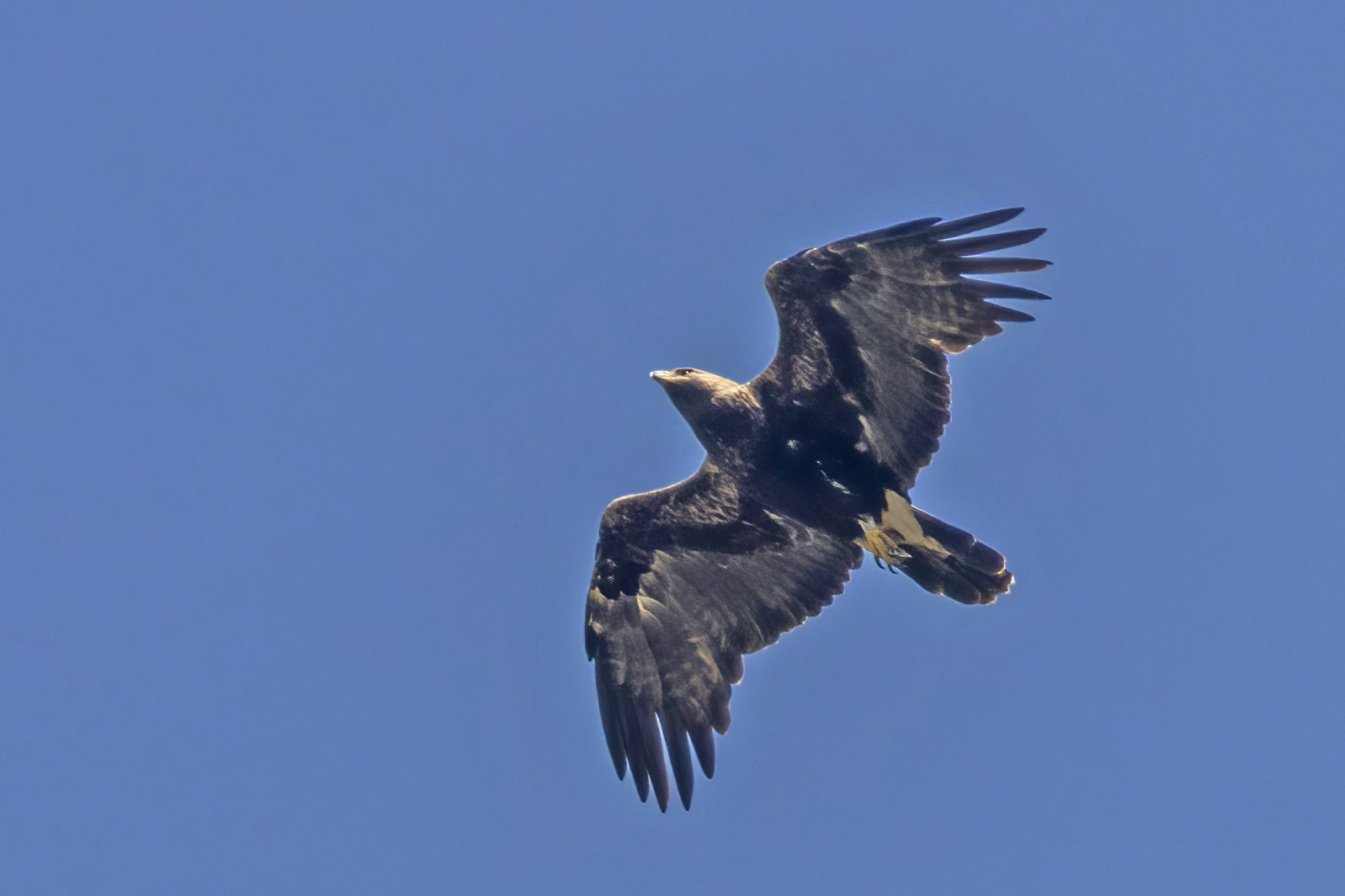
Eastern imperial eagle flying with broad wings spread
Charles J. Sharp / Wikimedia Commons / CC BY-SA 4.0; photograph shows an eastern imperial eagle
๐ŸŒ Read in Language:

โšก At a Glance

Animal group
Also Known As
Aquiline raptor; sea eagle and fish eagle for particular groups
Diet Category
Carnivore and scavenger; prey differs by species
Activity Rhythm
Mostly diurnal
Wild Lifespan
Species-specific; many large eagles can live for decades
Typical Weight
From under 1 kg to more than 6 kg across species and sex
Conservation Status
Varies by species
๐Ÿ’ก Key Biological Insight: Birds called eagles occur in several evolutionary lineages, so the name does not represent one formal taxonomic group.

๐ŸŒณ Scientific Taxonomy Hierarchy

Eagle is an informal name for multiple lineages within Accipitridae; it is not a formal taxonomic rank and does not include every member of the family.

KingdomAnimalia
PhylumChordata
ClassAves
OrderAccipitriformes
FamilyAccipitridae

Distinguishing Anatomical Features

  • โœ“Strong grasping feet with curved talons
  • โœ“Deeply hooked bill for tearing food
  • โœ“Large eyes and high visual acuity
  • โœ“Broad wings adapted for soaring or forest maneuvering

๐Ÿ“ Physical Measurements

Total LengthSpecies-specific
Body WeightUnder 2.2 lb to more than 13 lb
Tail LengthSpecies-specific
WingspanRoughly 3.3โ€“8.2 ft

๐ŸŽจ Appearance & Distinctive Markings

BrownBlackWhiteGrayGolden napeChestnutCreamYellow bare parts

Skin / Covering: Feathers, with scaled feet and keratin bill and talons

Sexual Dimorphism: Females are usually larger than males; plumage is similar between sexes in many species.

๐Ÿ—บ๏ธ Geographic Distribution & Habitat

Every continent except Antarctica

Mountains, tundra, forest, grassland, savanna, desert, wetlands, rivers, lakes, coasts and tropical rainforest, depending on species.

Country-level distribution map

Native range
FijiTanzania โ€” Native rangeWestern SaharaCanada โ€” Native rangeUnited States โ€” Native rangeKazakhstan โ€” Native rangeUzbekistan โ€” Native rangePapua New Guinea โ€” Native rangeIndonesia โ€” Native rangeArgentina โ€” Native rangeChile โ€” Native rangeCongo - Kinshasa โ€” Native rangeSomalia โ€” Native rangeKenya โ€” Native rangeSudan โ€” Native rangeChad โ€” Native rangeHaitiDominican RepublicRussia โ€” Native rangeBahamasFalkland IslandsNorway โ€” Native rangeGreenlandFrench Southern TerritoriesTimor-Leste โ€” Native rangeSouth Africa โ€” Native rangeLesothoMexico โ€” Native rangeUruguay โ€” Native rangeBrazil โ€” Native rangeBolivia โ€” Native rangePeru โ€” Native rangeColombia โ€” Native rangePanama โ€” Native rangeCosta Rica โ€” Native rangeNicaragua โ€” Native rangeHonduras โ€” Native rangeEl SalvadorGuatemala โ€” Native rangeBelize โ€” Native rangeVenezuela โ€” Native rangeGuyana โ€” Native rangeSuriname โ€” Native rangeFrance โ€” Native rangeEcuador โ€” Native rangePuerto RicoJamaicaCubaZimbabwe โ€” Native rangeBotswana โ€” Native rangeNamibia โ€” Native rangeSenegal โ€” Native rangeMali โ€” Native rangeMauritania โ€” Native rangeBenin โ€” Native rangeNiger โ€” Native rangeNigeria โ€” Native rangeCameroon โ€” Native rangeTogo โ€” Native rangeGhana โ€” Native rangeCรดte dโ€™Ivoire โ€” Native rangeGuinea โ€” Native rangeGuinea-Bissau โ€” Native rangeLiberia โ€” Native rangeSierra Leone โ€” Native rangeBurkina Faso โ€” Native rangeCentral African Republic โ€” Native rangeCongo - Brazzaville โ€” Native rangeGabon โ€” Native rangeEquatorial Guinea โ€” Native rangeZambia โ€” Native rangeMalawi โ€” Native rangeMozambique โ€” Native rangeEswatiniAngola โ€” Native rangeBurundi โ€” Native rangeIsrael โ€” Native rangeLebanon โ€” Native rangeMadagascar โ€” Native rangePalestinian TerritoriesGambia โ€” Native rangeTunisia โ€” Native rangeAlgeria โ€” Native rangeJordan โ€” Native rangeUnited Arab Emirates โ€” Native rangeQatarKuwaitIraq โ€” Native rangeOman โ€” Native rangeVanuatuCambodia โ€” Native rangeThailand โ€” Native rangeLaos โ€” Native rangeMyanmar (Burma) โ€” Native rangeVietnam โ€” Native rangeNorth Korea โ€” Native rangeSouth Korea โ€” Native rangeMongolia โ€” Native rangeIndia โ€” Native rangeBangladesh โ€” Native rangeBhutan โ€” Native rangeNepal โ€” Native rangePakistan โ€” Native rangeAfghanistan โ€” Native rangeTajikistan โ€” Native rangeKyrgyzstan โ€” Native rangeTurkmenistan โ€” Native rangeIran โ€” Native rangeSyria โ€” Native rangeArmenia โ€” Native rangeSweden โ€” Native rangeBelarus โ€” Native rangeUkraine โ€” Native rangePoland โ€” Native rangeAustria โ€” Native rangeHungary โ€” Native rangeMoldova โ€” Native rangeRomania โ€” Native rangeLithuania โ€” Native rangeLatvia โ€” Native rangeEstonia โ€” Native rangeGermany โ€” Native rangeBulgaria โ€” Native rangeGreece โ€” Native rangeTรผrkiye โ€” Native rangeAlbania โ€” Native rangeCroatia โ€” Native rangeSwitzerland โ€” Native rangeLuxembourgBelgium โ€” Native rangeNetherlands โ€” Native rangePortugal โ€” Native rangeSpain โ€” Native rangeIreland โ€” Native rangeNew CaledoniaSolomon IslandsNew ZealandAustralia โ€” Native rangeSri Lanka โ€” Native rangeChina โ€” Native rangeTaiwanItaly โ€” Native rangeDenmark โ€” Native rangeUnited Kingdom โ€” Native rangeIceland โ€” Native rangeAzerbaijan โ€” Native rangeGeorgia โ€” Native rangePhilippines โ€” Native rangeMalaysia โ€” Native rangeBrunei โ€” Native rangeSlovenia โ€” Native rangeFinland โ€” Native rangeSlovakia โ€” Native rangeCzechia โ€” Native rangeEritrea โ€” Native rangeJapan โ€” Native rangeParaguay โ€” Native rangeYemen โ€” Native rangeSaudi Arabia โ€” Native rangeCyprusMorocco โ€” Native rangeEgypt โ€” Native rangeLibya โ€” Native rangeEthiopia โ€” Native rangeDjibouti โ€” Native rangeUganda โ€” Native rangeRwanda โ€” Native rangeBosnia & Herzegovina โ€” Native rangeNorth Macedonia โ€” Native rangeSerbia โ€” Native rangeMontenegro โ€” Native rangeKosovoTrinidad & TobagoSouth Sudan โ€” Native range
Highlighted countries are recorded profile locations, not precise biological range boundaries.Map boundaries: Natural Earth

๐Ÿ’ก Did You Know?

  • ๐Ÿ’กLarge eyes resolve distant prey while the bird is soaring.
  • ๐Ÿ’กPowerful toes and talons seize and hold prey.
  • ๐Ÿ’กBroad wings exploit thermals and ridge lift.
  • ๐Ÿ’กForest species combine rounded wings with long tails for maneuvering.

๐ŸŒฟ Conservation Status & Threats

No single assessment recorded

โ€œEagles have no single IUCN category. Every species is assessed separately, from widespread Least Concern species to Critically Endangered endemics.โ€

CITESListings differ by species; many raptors are covered by CITES trade controls

โš ๏ธ Major Threats to Eagle

  • โ€ขHabitat destruction and fragmentation
  • โ€ขElectrocution and power-line collision
  • โ€ขPoisoning and contaminated carcasses
  • โ€ขShooting and persecution
  • โ€ขNest disturbance and illegal trade
  • โ€ขDeclining prey populations

๐Ÿ”„ Life Cycle & Reproduction

Wild vs. Captivity Lifespan Comparison

๐ŸŒฟ In the WildSpecies-specific; many can survive for decades
๐Ÿ  In Captivity (with veterinary care)Species-specific
Clutch / Litter SizeOften 1โ€“3 eggs, depending on species
Incubation / GestationSpecies-specific; commonly several weeks
Fledging / WeaningSpecies-specific; large eagles often remain in the nest for months
Sexual MaturityOften several years in large species
Mating SystemUsually socially monogamous breeding pairs
Nesting / Den TypeLarge stick nest in a tree, on a cliff, on the ground or on a structure

๐Ÿฆ… Behavior & Field Ecology

Carnivore and scavenger

๐ŸŒ Ecological Food Web & Relationships: Top or mid-level predators and scavengers that influence prey communities and recycle carrion.

Social Group SizeUsually solitary or paired; seasonal gatherings occur
Activity RhythmDiurnal
Feeding StrategyCarnivore and scavenger

๐Ÿฅฉ Primary Prey & Preferred Diet

โœ“ Fishโœ“ Mammalsโœ“ Birdsโœ“ Reptilesโœ“ Carrion

๐Ÿ“ข Communication & Territorial Signals

  • Whistles, yelps, chirps or cackles
  • Display flights
  • Postures and plumage displays
  • Food and nesting material exchanges

๐Ÿพ Wild Temperament & Traits

โ€ข Alertโ€ข Territorial near nestsโ€ข Patient while soaring or watching from a perch

๐Ÿค Human Interaction & Pet Advisory

โš ๏ธ Strictly Wild Species
๐Ÿšซ

Can You Keep a Eagle as a Pet?

Not pets; possession is heavily regulated or prohibited and expert licensed care is required.

Domestication StatusWild and not domesticated; some species have long histories in falconry
Danger to HumansLow when undisturbed
Economic & Ecotourism RoleImportant to ecotourism, cultural identity, environmental monitoring and ecosystem function.

โš ๏ธ Behavioral Risk Factors & Wildlife Safety

  • Large talons and bills can injure people who approach nests or handle a bird

๐ŸŒ Ecological Food Web & Relationships

Species in this group

  • Golden Eagle โ€” Aquila chrysaetos
  • Bald Eagle โ€” Haliaeetus leucocephalus
  • White-tailed Eagle โ€” Haliaeetus albicilla
  • Harpy Eagle โ€” Harpia harpyja
  • Philippine Eagle โ€” Pithecophaga jefferyi
  • Martial Eagle โ€” Polemaetus bellicosus
  • Wedge-tailed Eagle โ€” Aquila audax
  • Short-toed Snake Eagle โ€” Circaetus gallicus

๐Ÿฆ… Natural Predators (2)

Larger RaptorsAccipitriformes
HumansHomo sapiens

๐Ÿงฌ Related Species (3)

HawksAccipitridaeClose relatives within the same family
KitesAccipitridaeClose relatives within the same family
Old World VulturesAccipitridaeScavenging relatives within the same family

Eagles are large or medium-sized birds of prey known for powerful feet, hooked bills and keen vision. The name does not identify one species or even one single branch of the bird family tree. It is an informal label applied to dozens of species in several lineages within the hawk and eagle family, Accipitridae.

Golden eagles, sea eagles, snake eagles, harpy eagles and booted eagles differ in ancestry, habitat, prey and conservation status. They live on every continent except Antarctica, from tropical rainforest and coastal wetlands to mountains, deserts and Arctic tundra. This overview explains what these birds share while keeping species-level differences clear.

What birds are called eagles?

Most eagles belong to order Accipitriformes and family Accipitridae, together with many hawks, kites and Old World vultures. โ€œEagleโ€ is based largely on size, build and tradition rather than a formal taxonomic rank. Some birds called hawks are more closely related to particular eagles than those eagles are to other eagle groups.

Major groups include booted eagles such as the golden eagle in subfamily Aquilinae; sea eagles and fish eagles such as the bald eagle and white-tailed eagle; snake eagles in Circaetinae; and large tropical forest specialists such as the harpy eagle. Modern genetic research continues to refine their genera. The IOC World Bird List, for example, recently restored Icthyophaga for several fish and sea eagles formerly placed in Haliaeetus.

Familiar eagle species

  • Golden eagle (Aquila chrysaetos) โ€” a wide-ranging hunter of open country across the Northern Hemisphere.
  • Bald eagle (Haliaeetus leucocephalus) โ€” a North American sea eagle strongly associated with rivers, lakes and coasts.
  • White-tailed eagle (Haliaeetus albicilla) โ€” a huge Eurasian sea eagle.
  • Harpy eagle (Harpia harpyja) โ€” a powerful canopy hunter of tropical American forests.
  • Martial eagle (Polemaetus bellicosus) โ€” a large African eagle of savannas and open woodland.
  • Philippine eagle (Pithecophaga jefferyi) โ€” a forest endemic of the Philippines.
  • Short-toed snake eagle (Circaetus gallicus) โ€” a specialist predator of reptiles across parts of Europe, Africa and Asia.
  • Wedge-tailed eagle (Aquila audax) โ€” Australia’s largest bird of prey by wingspan.

These examples cannot share one measurement or Red List category. A species profile is needed for exact size, range and conservation information.

Size, wings and flight

Eagles generally have broad wings, strong bodies, large heads and deeply hooked bills. Their feet end in curved talons that close around prey. Size ranges widely: smaller species may weigh under one kilogram, while the heaviest females of the largest sea and forest eagles can exceed six kilograms. Females are usually larger than males, a pattern called reversed sexual size dimorphism.

Wing shape reflects habitat and hunting style. Long, broad wings help golden and steppe eagles soar on rising air over open landscapes. Forest eagles often have shorter, rounded wings and long tails for maneuvering between trees. Sea eagles combine broad wings with heavy bodies and powerful feet.

Many eagles conserve energy by circling in thermals or using uplift along ridges. Soaring is not simply effortless drifting: the bird continually adjusts its wings and tail to hold position, gain altitude or travel toward a hunting area.

Eyesight, beaks and talons

Large forward-facing eyes provide sharp distance vision and an overlapping field useful for judging depth. The retina contains dense light-sensitive cells, allowing an eagle to resolve distant detail better than a human. Species that hunt in open country can scan enormous areas while soaring.

The feet usually make first contact with prey. Tendons and strong muscles close the toes, while curved talons pierce and grip. A hooked bill tears food into pieces after capture. Beak and foot proportions differ: fish-eating eagles have adaptations for slippery prey, snake eagles have thickly scaled legs, and forest eagles use exceptionally robust feet on arboreal mammals and birds.

Global range and habitats

Eagles occur across North and South America, Europe, Africa, Asia and Australia, as well as many oceanic islands. No eagle is native to Antarctica. Species richness is especially high in Africa and Asia, but every inhabited continent supports distinctive forms.

Habitats include tundra, boreal forest, mountains, steppe, desert, savanna, rainforest, mangroves, rivers, lakes and seacoasts. Access to prey, safe nest sites and suitable air currents often matters more than vegetation alone. Some species migrate thousands of kilometers; others remain near a territory throughout the year.

A world map for โ€œeagleโ€ can only show the combined distribution of the group. It does not mean that every highlighted country contains every eagle species.

Diet and hunting strategies

Eagles are carnivores, but their prey spans fish, mammals, birds, reptiles, amphibians, carrion and large invertebrates. Golden eagles commonly hunt rabbits, hares and ground squirrels. Bald eagles take fish and also steal food or scavenge. Snake eagles specialize on reptiles, while harpy eagles hunt mammals and birds in the forest canopy.

A hunting eagle may watch from a perch, search while soaring, fly low over terrain or wait beside water. Capture success depends on weather, prey behavior, experience and habitat. Eagles do not routinely carry animals equal to their own body mass over long distances; exaggerated lifting claims ignore the limits of flight.

Territories and communication

Many species live alone or in pairs outside migration and food gatherings. Breeding adults defend a nesting territory through calls, display flights and pursuit. Courtship may include mutual soaring, dives, rolling displays or passing sticks and food.

Eagle voices are more varied than movie soundtracks suggest. Some give whistles, yelps, chirps or cackles rather than a deep scream. Film and television often substitute the piercing call of a red-tailed hawk for a bald eagle, whose natural calls are higher and more chattering.

Nests, eggs and young

Eagles build some of the largest bird nests, usually from sticks. Depending on the species, nests sit in tall trees, on cliffs, on the ground or occasionally on human structures. A pair may reuse and enlarge the same nest over many years until it becomes massive.

Clutches are generally small, often one to three eggs. Incubation and fledging time differ greatly among species. The female usually performs more incubation, while the male supplies much of the early food, but both parents may incubate, guard and feed young.

In some large eagles, the first-hatched chick attacks or outcompetes its younger sibling, especially when food is scarce. Young birds remain dependent after their first flight while they develop hunting and flight skills. Large species often mature slowly and may not breed for several years.

Conservation across eagle species

Eagles have no single conservation status. Some, including the bald eagle, have recovered strongly after legal protection, habitat management and restrictions on harmful pesticides. Others remain at serious risk. The Philippine eagle is Critically Endangered, while the harpy eagle and martial eagle face continuing pressure from forest loss, persecution and other threats.

Common dangers include habitat destruction, electrocution and collision with power infrastructure, poisoning, shooting, disturbance at nests, declining prey and illegal trade. Veterinary drugs and poisoned carcasses can harm scavenging species. Wind-energy planning also requires careful siting and monitoring where flight routes create collision risk.

Effective conservation protects large connected habitats, reduces dangerous infrastructure, prevents poisoning and persecution, and monitors each species separately. A recovery program designed for a fish-eating sea eagle may not address the needs of a tropical forest eagle.

Sources and further reading

โ“ Frequently Asked Questions

Answers to frequently asked questions verified against peer-reviewed zoological research.

No. Eagle is an informal name applied to dozens of bird-of-prey species across several lineages in the family Accipitridae.