
Eastern Diamondback Rattlesnake Overview
The Eastern Diamondback Rattlesnake (Crotalus adamanteus) is a living pit viper of the southeastern United States and the largest rattlesnake by mass. Its dark, pale-bordered diamonds, broad head and prominent rattle make an adult distinctive, yet the snake depends more on camouflage and warning than pursuit of danger. It spends much of its life hidden in palmetto, wiregrass, pine litter or the burrows of other animals. Encounters deserve distance and calm because the species has long fangs and medically significant venom.
This profile covers one species, not every diamondback rattlesnake. The Western Diamondback is a different species with a more westerly range and different markings. Eastern Diamondbacks are heavy-bodied ambush predators whose ecological value comes from controlling rodents and other small vertebrates. They do not hunt people, and most bites follow close approach, accidental contact or attempts to capture or kill the snake.
Range and Habitat
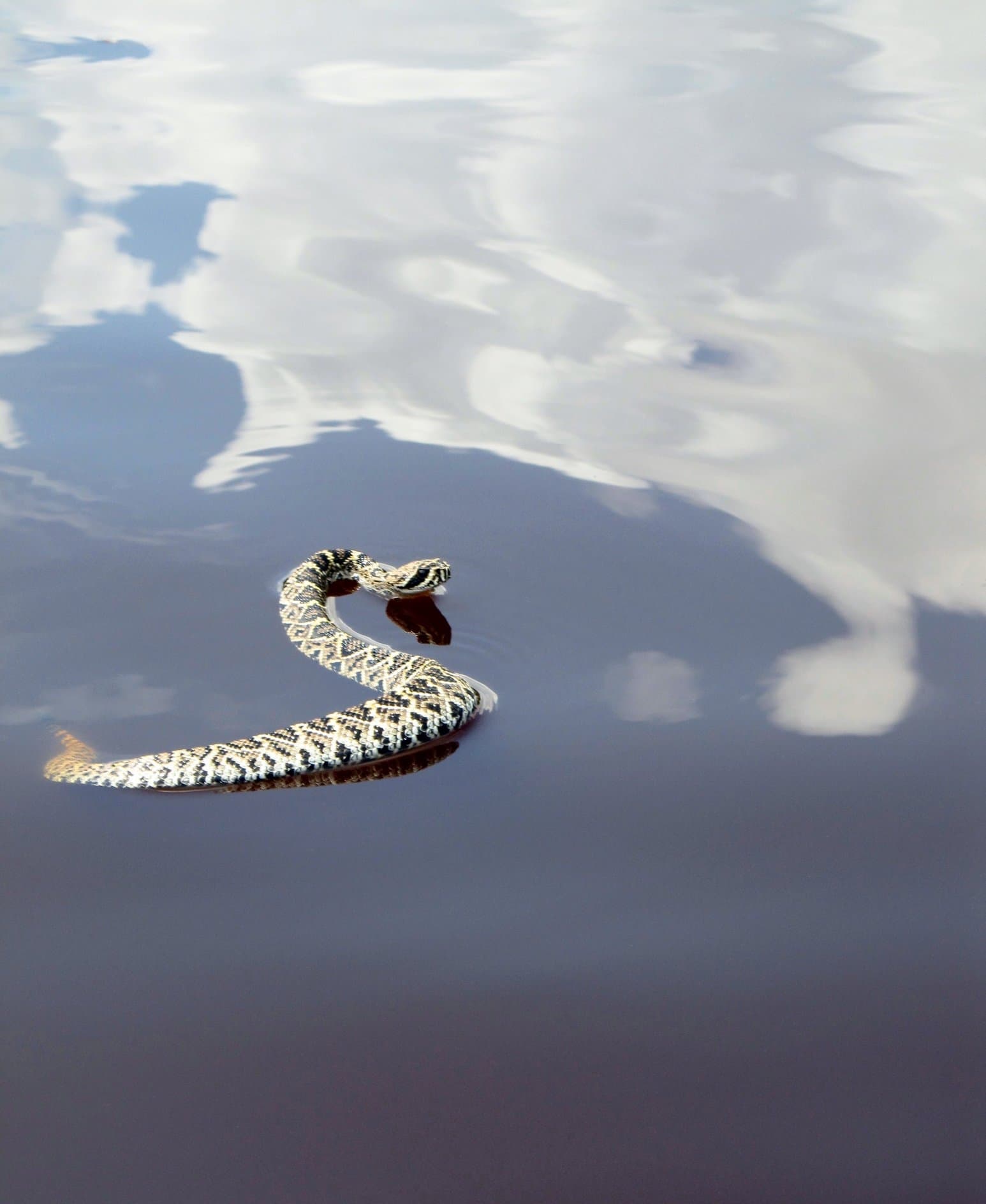
The species is native to the southeastern coastal plain. Its present range includes Florida and portions of Georgia, South Carolina, North Carolina, Alabama, Mississippi and Louisiana, with historical records extending through suitable coastal habitat. It is especially associated with dry, open longleaf-pine and turkey-oak country, palmetto flatwoods, scrub, maritime forest, coastal hammocks and barrier islands. Wetlands and shallow water are not absolute barriers; Eastern Diamondbacks can swim between patches of habitat.
Gopher Tortoise burrows are important shelters in many landscapes. A rattlesnake may use a burrow to escape heat, cold, fire or predators without harming the tortoise. Fallen logs, stump holes and mammal burrows provide other refuges. Frequent low-intensity fire helps maintain the open ground layer and abundant prey typical of longleaf-pine ecosystems. When development, dense roads and fire suppression fragment those systems, snakes lose both safe cover and the connected routes needed to find mates and seasonal shelter.
Appearance and Senses
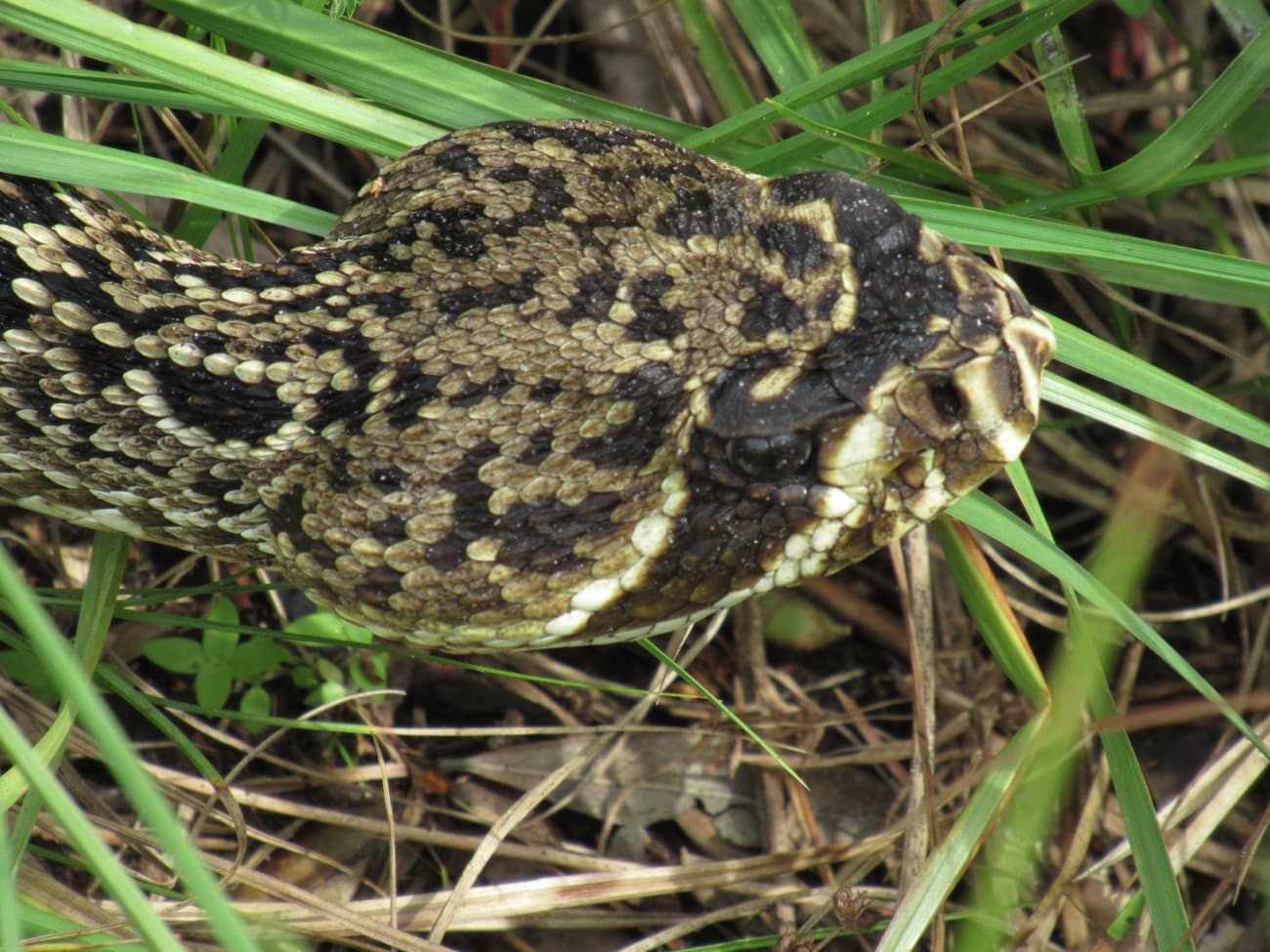
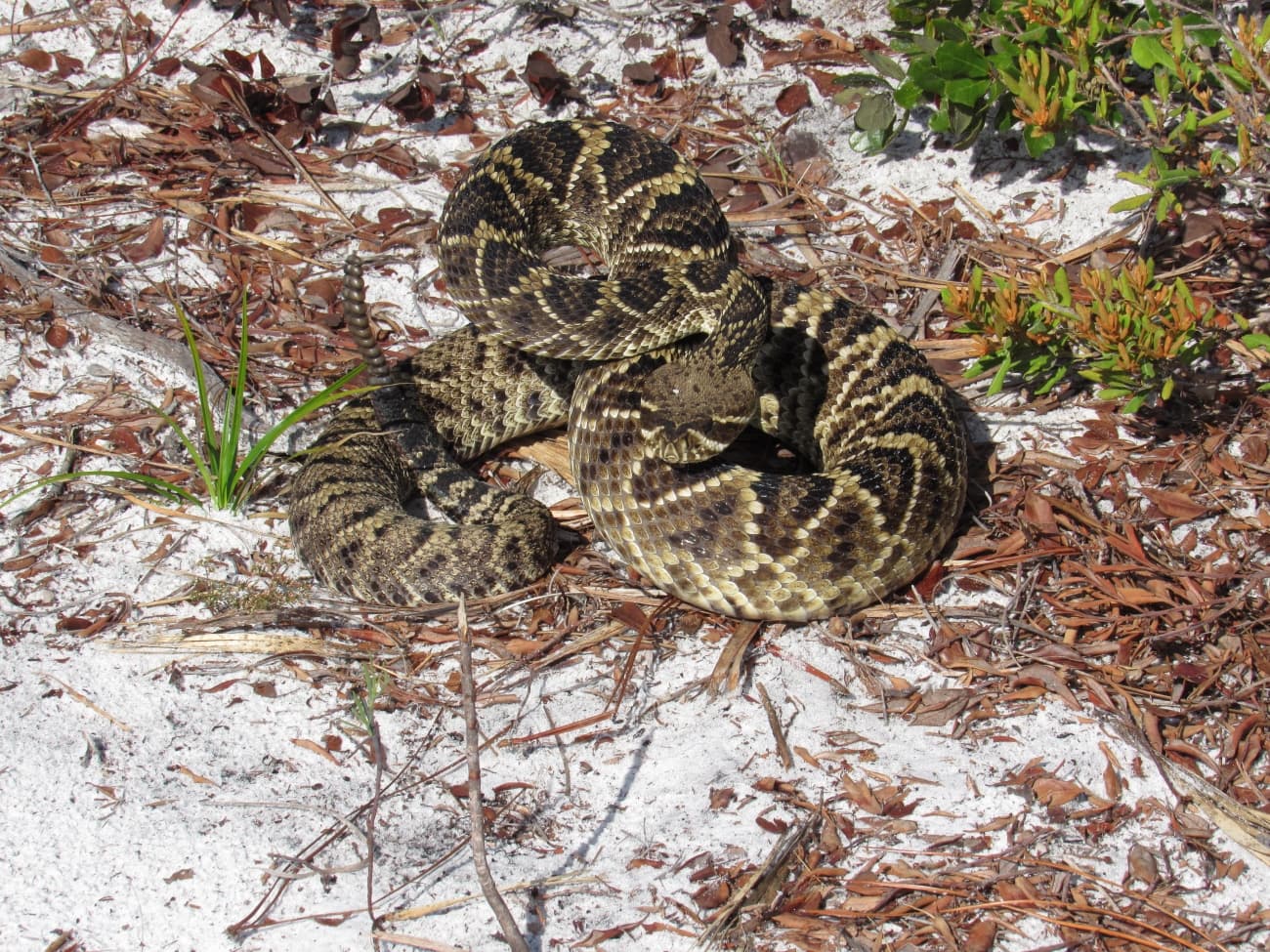
An adult has a thick body marked by a chain of dark brown or black diamonds edged in cream or yellow. Two pale diagonal stripes cross each side of the face, and the tail ends in darker bands before the rattle. Scales are strongly keeled, producing a rough texture. The triangular-looking head is broad behind the eyes, but head shape alone is not a safe identification tool because many harmless snakes flatten their heads defensively.
Heat-sensitive pits between the eyes and nostrils detect warm prey, especially in low light. The forked tongue samples airborne and ground-borne chemicals and delivers them to the vomeronasal organs in the roof of the mouth. Like other snakes, it has no external ears, but it detects vibration through the body and inner ear. The rattle consists of interlocking keratin segments. A new segment is added when the snake sheds, but segments break and shedding frequency varies, so counting them cannot reveal age.
Diet and Hunting
Eastern Diamondbacks eat mainly mammals, including rats, mice, rabbits and squirrels, while birds can also be taken. Young snakes concentrate on smaller prey. The snake usually waits beside a travel route, strikes quickly and injects venom through hinged hollow fangs. It may release a mammal after the strike and follow the scent trail until the immobilized prey is found. Flexible jaws and mobile skull bones then allow the prey to be swallowed whole.
Venom begins digestion as well as subduing prey. Its composition is complex and can cause tissue injury, bleeding disorders, swelling and systemic illness in humans. That medical danger does not make the snake aggressive. Remaining motionless is often its first defense, followed by escape, rattling, body inflation and a coiled warning posture. A strike is a costly last resort because venom and exposed fangs are valuable feeding tools.
Daily Life and Seasonal Behavior
Activity changes with temperature. In warm weather the snake may move at dawn, dusk or night, while cooler seasons can bring daytime basking. Individuals travel between foraging sites, shelters, basking places and breeding areas, but they also spend long periods concealed. Home ranges may overlap, and males make wider movements during the mating season. The species is generally solitary except during courtship, mating or temporary use of the same shelter.
In the northern part of the range, winter activity becomes limited and snakes use underground refuges. Southern Florida animals may remain active through much of the year. Fire-adapted habitat does not mean snakes are immune to fire; survival depends on burrows and other protected spaces. Prescribed burning conducted with ecological care can improve habitat over time by restoring the open vegetation structure on which the wider community depends.
Reproduction and Life Cycle
Mating occurs mainly in late summer and autumn, although timing varies by region. Males locate females using chemical cues and may engage in ritualized combat, raising and pressing against one another without using venom. Females give birth to live young rather than laying exposed eggs. A litter commonly contains several to more than a dozen neonates after a long reproductive cycle, and females may not reproduce every year.
Newborns possess venom, functional fangs and a small prebutton at the tail tip. Their first shed produces the initial free rattle segment. The young receive no extended parental care and must find cover and small prey immediately. Growth is slow compared with many short-lived rodents, and reaching maturity takes several years. This low reproductive pace makes the loss of breeding adults difficult for depleted populations to replace.
Conservation and Threats
The Eastern Diamondback is not currently listed under the U.S. Endangered Species Act, but it has declined across substantial parts of its range. Habitat conversion, road mortality, deliberate killing, collection and the loss of open longleaf-pine habitat are major concerns. Organized rattlesnake roundups historically removed large numbers, although some events have shifted toward educational wildlife festivals. State protections and collection rules vary, so the absence of a federal listing does not mean unrestricted take is legal.
Conservation works best at landscape scale. Protecting longleaf-pine systems, Gopher Tortoise burrows and movement corridors benefits the snake along with many other coastal-plain species. Road planning, wildlife crossings and public education reduce avoidable mortality. Scientists also need reliable occurrence records because secretive snakes are difficult to survey. Observations should be made from a safe distance, and precise locations should be shared responsibly where illegal collection is a concern.
Safety and Living Alongside the Species
Never approach, handle or attempt to move an Eastern Diamondback. Give the animal a wide escape route, keep children and pets back, and contact a trained local wildlife professional when a snake is in an occupied building or another situation that cannot be resolved by distance. Around homes, reduce rodent food, remove clutter beside structures and supervise dogs in brushy habitat. Snake fencing can help at selected sites when correctly designed and maintained.
If a bite occurs, call emergency services immediately, keep the person still and remove rings or tight clothing before swelling advances. Do not cut the wound, apply ice, use suction or place a tourniquet. Modern hospital care and antivenom are the appropriate treatment. Safe coexistence rests on recognizing the snake’s warning signals and leaving it alone. A photographed animal in natural habitat is more valuable alive, where it continues its role as a native predator.