
Home/Animals/Reptilia/Eastern Fence Lizard
Species profileIUCN: LC

Eastern Fence Lizard

Sceloporus undulatus

A spiny-scaled woodland climber whose males advertise territories with blue bellies and rapid push-ups.

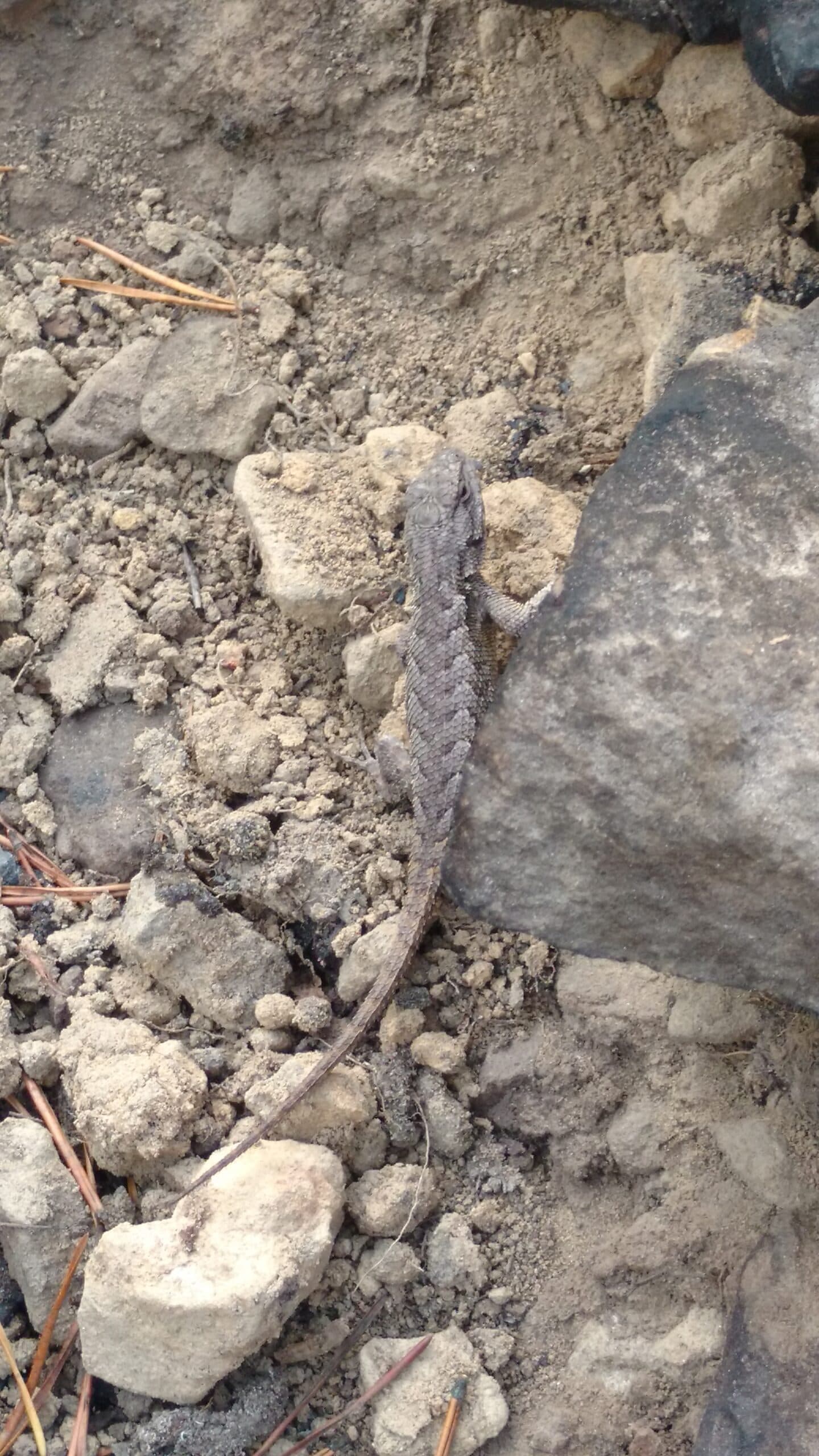
Eastern Fence Lizard with rough gray-brown scales camouflaged against rock in Kentucky
Dmvaske / Wikimedia Commons / CC BY 4.0
๐ŸŒ Read in Language:

โšก At a Glance

Species profile
Also Known As
Fence Swift; Pine Swift; Wood Lizard
Diet Category
Primarily insectivorous
Activity Rhythm
Diurnal and strongly dependent on sunshine and surface temperature; inactive in underground or protected shelters during winter.
Wild Lifespan
Average around 4 years; some individuals may live more than 5 years
Typical Weight
usually 10โ€“25 g in adults
Conservation Status
LC
๐Ÿ’ก Key Biological Insight: Eastern Fence Lizards introduced to areas with invasive fire ants have evolved longer legs and stronger escape responses within relatively few generations.

๐ŸŒณ Scientific Taxonomy Hierarchy

Sceloporus undulatus belongs to Phrynosomatidae and the diverse spiny-lizard genus Sceloporus. Genetic studies separated several western populations once included in the broad fence-lizard complex into species such as S. consobrinus, S. cowlesi and S. tristichus. This profile follows the restricted Eastern Fence Lizard primarily east of the Mississippi River.

KingdomAnimalia
PhylumChordata
ClassReptilia
OrderSquamata
FamilyPhrynosomatidae
GenusSceloporus
SpeciesSceloporus undulatus

Distinguishing Anatomical Features

  • โœ“The back is gray, brown, bronze or rusty with narrow wavy dark crossbands. Pointed overlapping keeled scales create a rough, spiny texture. The belly is pale. Adult males have vivid blue or blue-black patches edged with dark pigment on the throat and sides of the belly; females and juveniles usually show weaker color and stronger dorsal patterning.
  • โœ“Keeled scales provide rough protection
  • โœ“Cryptic bands match bark and leaf litter
  • โœ“Claws grip trunks and rocks
  • โœ“Tail release distracts predators
  • โœ“Blue patches signal rivals and mates
  • โœ“Basking rapidly raises body temperature
  • โœ“Fast sprints reach tree refuge

๐Ÿ“ Physical Measurements

Total Lengthabout 3.5โ€“7.5 in total length
Body Weightusually 0.35โ€“0.9 oz in adults
Tail LengthLong, tapering and capable of breaking at fracture planes and partially regenerating
WingspanNot applicable
Top SpeedNo dependable universal maximumMovement changes with context and conditions.

๐ŸŽจ Appearance & Distinctive Markings

GrayBrownBronzeRustBlueBlackBronzeBlueBlack

Skin / Covering: Dry pointed overlapping scales with strong keels

Sexual Dimorphism: Males have enlarged post-anal scales, broader heads and conspicuous blue throat and belly patches. Females are generally less colorful and may grow slightly larger in body length in some populations.

๐Ÿ—บ๏ธ Geographic Distribution & Habitat

The modern species occupies much of the eastern United States, broadly from the Mid-Atlantic and southern Great Lakes through the Southeast to northern Florida and west toward the Mississippi drainage. Older maps extending far across the Great Plains often include populations now assigned to other Sceloporus species.

Dry open pine or hardwood woodland, forest edge, rocky outcrop, old field, stump, log pile, fence line and sunny suburban woodlot.

Country-level distribution map

Native range
FijiTanzaniaWestern SaharaCanadaUnited States โ€” Native rangeKazakhstanUzbekistanPapua New GuineaIndonesiaArgentinaChileCongo - KinshasaSomaliaKenyaSudanChadHaitiDominican RepublicRussiaBahamasFalkland IslandsNorwayGreenlandFrench Southern TerritoriesTimor-LesteSouth AfricaLesothoMexicoUruguayBrazilBoliviaPeruColombiaPanamaCosta RicaNicaraguaHondurasEl SalvadorGuatemalaBelizeVenezuelaGuyanaSurinameFranceEcuadorPuerto RicoJamaicaCubaZimbabweBotswanaNamibiaSenegalMaliMauritaniaBeninNigerNigeriaCameroonTogoGhanaCรดte dโ€™IvoireGuineaGuinea-BissauLiberiaSierra LeoneBurkina FasoCentral African RepublicCongo - BrazzavilleGabonEquatorial GuineaZambiaMalawiMozambiqueEswatiniAngolaBurundiIsraelLebanonMadagascarPalestinian TerritoriesGambiaTunisiaAlgeriaJordanUnited Arab EmiratesQatarKuwaitIraqOmanVanuatuCambodiaThailandLaosMyanmar (Burma)VietnamNorth KoreaSouth KoreaMongoliaIndiaBangladeshBhutanNepalPakistanAfghanistanTajikistanKyrgyzstanTurkmenistanIranSyriaArmeniaSwedenBelarusUkrainePolandAustriaHungaryMoldovaRomaniaLithuaniaLatviaEstoniaGermanyBulgariaGreeceTรผrkiyeAlbaniaCroatiaSwitzerlandLuxembourgBelgiumNetherlandsPortugalSpainIrelandNew CaledoniaSolomon IslandsNew ZealandAustraliaSri LankaChinaTaiwanItalyDenmarkUnited KingdomIcelandAzerbaijanGeorgiaPhilippinesMalaysiaBruneiSloveniaFinlandSlovakiaCzechiaEritreaJapanParaguayYemenSaudi ArabiaCyprusMoroccoEgyptLibyaEthiopiaDjiboutiUgandaRwandaBosnia & HerzegovinaNorth MacedoniaSerbiaMontenegroKosovoTrinidad & TobagoSouth Sudan
Highlighted countries are recorded profile locations, not precise biological range boundaries.Map boundaries: Natural Earth

Recorded Native Countries & Territories:

๐Ÿ’ก Did You Know?

  • ๐Ÿ’กKeeled scales provide rough protection
  • ๐Ÿ’กCryptic bands match bark and leaf litter
  • ๐Ÿ’กClaws grip trunks and rocks
  • ๐Ÿ’กTail release distracts predators
  • ๐Ÿ’กBlue patches signal rivals and mates
  • ๐Ÿ’กBasking rapidly raises body temperature
  • ๐Ÿ’กFast sprints reach tree refuge

๐ŸŒฟ Conservation Status & Threats

IUCN: LC โ€” Least Concern

โ€œThe Eastern Fence Lizard is widespread and assessed as Least Concern. Local populations can decline when open woodland closes completely, basking structures are removed or pesticides reduce prey.โ€

Population TrendStable overall
Wild Population EstimateNo reliable range-wide estimate; common in suitable open woodland
CITESNot listed

โš ๏ธ Major Threats to Eastern Fence Lizard

  • โ€ขForest conversion
  • โ€ขLoss of open woodland structure
  • โ€ขRoad mortality
  • โ€ขDomestic cats
  • โ€ขPesticide reduction of prey
  • โ€ขRemoval of logs and snags
  • โ€ขWild collection
  • โ€ขSevere fire or development

๐Ÿ”„ Life Cycle & Reproduction

Wild vs. Captivity Lifespan Comparison

๐ŸŒฟ In the WildAverage around 4 years; some individuals may live more than 5 years
๐Ÿ  In Captivity (with veterinary care)Captive care requires specialist lighting, heat, varied live prey, supplements, secure climbing space and veterinary support.
Clutch / Litter SizeUsually 3โ€“13 eggs; some southern females lay multiple clutches
Incubation / GestationAbout 8โ€“10 weeks depending on soil temperature and moisture
Fledging / WeaningIndependent hatchling about 4โ€“6 cm total length
Sexual MaturityUsually 1โ€“2 years
Mating SystemInternal fertilization; egg-laying
Nesting / Den TypeShallow chamber 3โ€“7 cm deep in loose warm soil

๐Ÿฆ… Behavior & Field Ecology

Primarily insectivorous

๐ŸŒ Ecological Food Web & Relationships: Fence lizards consume large numbers of insects and spiders and convert that prey into food for snakes, birds and mammals. They are important model organisms for research on thermal biology, sexual signaling, predator response and rapid adaptation. Fallen logs and open canopy patches support both the lizards and a broad community of woodland insects.

Social Group SizeSolitary except for territorial encounters and courtship
Activity RhythmDiurnal and strongly dependent on sunshine and surface temperature; inactive in underground or protected shelters during winter.
Feeding StrategyPrimarily insectivorous

๐Ÿฅฉ Primary Prey & Preferred Diet

โœ“ Antsโœ“ Beetlesโœ“ Spidersโœ“ Grasshoppersโœ“ Caterpillarsโœ“ Centipedesโœ“ Snails

๐Ÿ“ข Communication & Territorial Signals

  • Push-up displays
  • Head bobs
  • Blue color signals
  • Body flattening
  • Chemical secretions
  • Ground vibrations

๐Ÿพ Wild Temperament & Traits

โ€ข Alertโ€ข Fastโ€ข Territorialโ€ข Diurnalโ€ข Arborealโ€ข Harmless

๐Ÿค Human Interaction & Pet Advisory

โš ๏ธ Strictly Wild Species
๐Ÿšซ

Can You Keep a Eastern Fence Lizard as a Pet?

Wild fence lizards are difficult to maintain well and should remain in their habitat. Where legal, captive care would require strong UVB lighting, precise basking temperatures, varied live invertebrates, supplementation, climbing structure and seasonal rhythms. Taking wild animals removes breeding adults and may violate nongame regulations.

Domestication StatusWild species; not domesticated
Danger to HumansHarmless to people; minor nip or scratch possible if handled
Economic & Ecotourism RoleInsect control, prey for woodland predators, a model for evolutionary and thermal research, and an accessible ambassador for native reptile conservation.

โš ๏ธ Behavioral Risk Factors & Wildlife Safety

  • Small teeth can pinch skin
  • Rough scales and claws may scratch
  • Handling can cause stress
  • Tail loss harms the lizard even when it escapes

๐ŸŒ Ecological Food Web & Relationships

๐Ÿฆ… Natural Predators (5)

Black Rat SnakePantherophis obsoletus
Prairie KingsnakeLampropeltis calligaster
Red-Shouldered HawkButeo lineatus
Domestic CatFelis catus
RoadrunnerGeococcyx californianus

๐Ÿงฌ Related Species (4)

Prairie LizardSceloporus consobrinusWestern relative formerly included
Plateau Fence LizardSceloporus tristichusSouthwestern relative
Western Fence LizardSceloporus occidentalisPacific relative
Florida Scrub LizardSceloporus woodiLocalized southeastern relative

Eastern Fence Lizard (Sceloporus undulatus) is a medium-sized lizard of open forests and woodland edges in the eastern United States. It basks on trunks, logs, rocks and old fences, then darts around the far side of a tree when approached. Males use bright blue belly patches, head bobs and push-up displays during territorial and courtship encounters. This guide separates well-supported biology from common assumptions and covers identification, range, habitat, diet, behavior, reproduction and conservation.

Identification

The back is gray, brown, bronze or rusty with narrow wavy dark crossbands. Pointed overlapping keeled scales create a rough, spiny texture. The belly is pale. Adult males have vivid blue or blue-black patches edged with dark pigment on the throat and sides of the belly; females and juveniles usually show weaker color and stronger dorsal patterning. Males have enlarged post-anal scales, broader heads and conspicuous blue throat and belly patches. Females are generally less colorful and may grow slightly larger in body length in some populations.

Identification should combine body shape, markings, size, voice or movement, and location. One feature by itself can overlap with a related animal, a juvenile, or an individual in unusual light.

Photographs are most useful when they preserve scale and show several diagnostic features. Handling or repositioning a wild eastern fence lizard for identification can cause stress and is unnecessary.

Size and physical adaptations

Eastern Fence Lizard typically measures about 9โ€“19 cm total length and weighs usually 10โ€“25 g in adults. Body size varies with latitude, age, sex and food supply; snout-to-vent length is more consistent than total length after tail loss.

Its useful adaptations include keeled scales provide rough protection, cryptic bands match bark and leaf litter, claws grip trunks and rocks, tail release distracts predators, blue patches signal rivals and mates, basking rapidly raises body temperature, fast sprints reach tree refuge. These traits work together in the animal’s normal setting rather than serving as isolated curiosities.

Published measurements may use different methods, life stages or sample locations. Comparing figures responsibly means checking what was measured rather than selecting the largest number available.

Range and distribution

The modern species occupies much of the eastern United States, broadly from the Mid-Atlantic and southern Great Lakes through the Southeast to northern Florida and west toward the Mississippi drainage. Older maps extending far across the Great Plains often include populations now assigned to other Sceloporus species. The native range includes United States.

A country-level map indicates broad distribution, not continuous occupation. Climate, elevation, water, vegetation, prey, breeding sites, barriers and survey effort all affect where records occur.

Records near the edge of the range deserve careful documentation because they may reflect natural movement, improved survey coverage, accidental transport or a genuine distribution change.

Habitat

Dry open pine or hardwood woodland, forest edge, rocky outcrop, old field, stump, log pile, fence line and sunny suburban woodlot.

The lizard chooses sunny vertical or elevated perches near rapid cover. Tree trunks, fallen logs, rocks, fences and buildings provide basking and lookout sites. It avoids persistently wet or deeply shaded habitat. At night or in cold weather it shelters under bark, logs, rocks or in shallow soil and crevices. Protecting a population therefore requires the feeding, shelter and breeding features that make a site usable, along with connections that allow movement.

Microhabitat matters. Shade, soil, current, moisture, shelter or host plants can determine whether a small area is usable even when the surrounding landscape appears suitable.

Diet and feeding

Eastern Fence Lizard is a primarily insectivorous. Important foods include ants, beetles, spiders, grasshoppers, caterpillars, centipedes, snails. Eastern Fence Lizards wait from a perch, watch for movement and make short dashes to seize prey. Ants, beetles, spiders, grasshoppers, flies, caterpillars and other arthropods dominate the diet. Females increase feeding before egg production. Small amounts of plant matter may be swallowed incidentally, but the species is adapted chiefly to animal prey.

Diet changes with age, season, location and food supply. A dramatic prey record does not establish what most individuals eat most of the time; repeated field observations provide a stronger picture.

Feeding opportunities also create risk. An animal focused on prey may be less alert to predators, traffic or people, while contaminated prey can transfer pollutants through the food web.

Behavior and communication

Diurnal and strongly dependent on sunshine and surface temperature; inactive in underground or protected shelters during winter. A basking lizard flattens its body toward the sun, raises body temperature and then forages or displays. When disturbed it often runs up the nearest trunk and circles to the opposite side. Males defend overlapping territories with push-ups and head bobs. Captured lizards may bite, feign death or release the tail.

Vision dominates social communication. Males expose blue belly and throat patches while performing stereotyped push-ups, head bobs and body flattening. These displays announce ownership and court females. Chemical cues from femoral and post-anal glands also carry reproductive information, while vibration warns of approaching animals. Behavior should be interpreted in context: alarm, courtship, feeding and temperature regulation can produce very different actions from the same animal.

Daily schedules are flexible responses, not rigid rules. Weather, breeding condition, disturbance, tides or food can move activity into a different part of the day.

Reproduction and development

Courtship begins after spring emergence. A male displays and approaches a receptive female, and fertilization is internal. Females dig shallow nests in warm loose soil. Young females may lay one clutch, while larger older females can produce several clutches during a long warm season. Usually 3โ€“13 eggs; some southern females lay multiple clutches Leathery eggs absorb water and enlarge during incubation. Hatchlings emerge from summer into early autumn and receive no parental care. They grow rapidly during their first warm season, feeding on tiny arthropods. Many mature by the following breeding season, although timing varies with latitude and growth.

Young animals face different risks and may use different microhabitats or food than adults. Breeding success depends on adult condition, suitable sites and the survival of offspring through vulnerable early stages.

Counts of eggs or young describe reproductive output, not the number expected to reach adulthood. Mortality is normally greatest during eggs, larval or juvenile stages.

Predators and ecological role

Fence lizards consume large numbers of insects and spiders and convert that prey into food for snakes, birds and mammals. They are important model organisms for research on thermal biology, sexual signaling, predator response and rapid adaptation. Fallen logs and open canopy patches support both the lizards and a broad community of woodland insects. Documented or likely predators include Black Rat Snake, Prairie Kingsnake, Red-Shouldered Hawk, Domestic Cat, Roadrunner.

This animal is both a consumer and a food source. Its influence comes through many repeated interactions, so ecological claims should be based on measured populations rather than assumptions drawn from appearance.

Predator and prey relationships differ among places. A species can be ecologically influential without being abundant everywhere, and its role can change across its range.

Relationship with people

The species is harmless and benefits gardens and woodlands by eating arthropods. People should leave basking sites, fallen logs and leaf litter where safe, avoid pesticides and keep cats indoors. Never grab a lizard by the tail because it may break off. Collection and possession rules vary among states and protected areas.

Eastern Fence Lizards are neither venomous nor poisonous. A handled adult may nip, but it cannot cause serious injury. Wash any minor scratch or bite with soap and water. The best practice is observation without capture because handling raises stress and can trigger tail loss. Responsible observation means keeping an appropriate distance, avoiding capture or feeding, protecting habitat and following local wildlife or invasive-species guidance.

Wildlife guidance should come from the responsible local agency because collection rules, reporting requests and appropriate responses differ between native and introduced ranges.

Conservation

The Eastern Fence Lizard is widespread and assessed as Least Concern. Local populations can decline when open woodland closes completely, basking structures are removed or pesticides reduce prey. The reported global trend is Stable overall.

Important pressures include forest conversion, loss of open woodland structure, road mortality, domestic cats, pesticide reduction of prey, removal of logs and snags, wild collection, severe fire or development. Global status can hide local decline or recovery, so current regional monitoring and habitat management remain necessary.

The most useful conservation action follows the documented pressure. Protecting breeding sites, reducing road deaths or limiting pollutants can require different tools in different populations.

Sources and further reading

โ“ Frequently Asked Questions

Answers to frequently asked questions verified against peer-reviewed zoological research.

Its scientific name is Sceloporus undulatus, a spiny lizard in the family Phrynosomatidae.