
Home/Animals/Reptilia/Eastern Rat Snake
Species profileIUCN: NE

Eastern Rat Snake

Pantherophis alleghaniensis

A large nonvenomous woodland constrictor that climbs trees and helps control rodents.

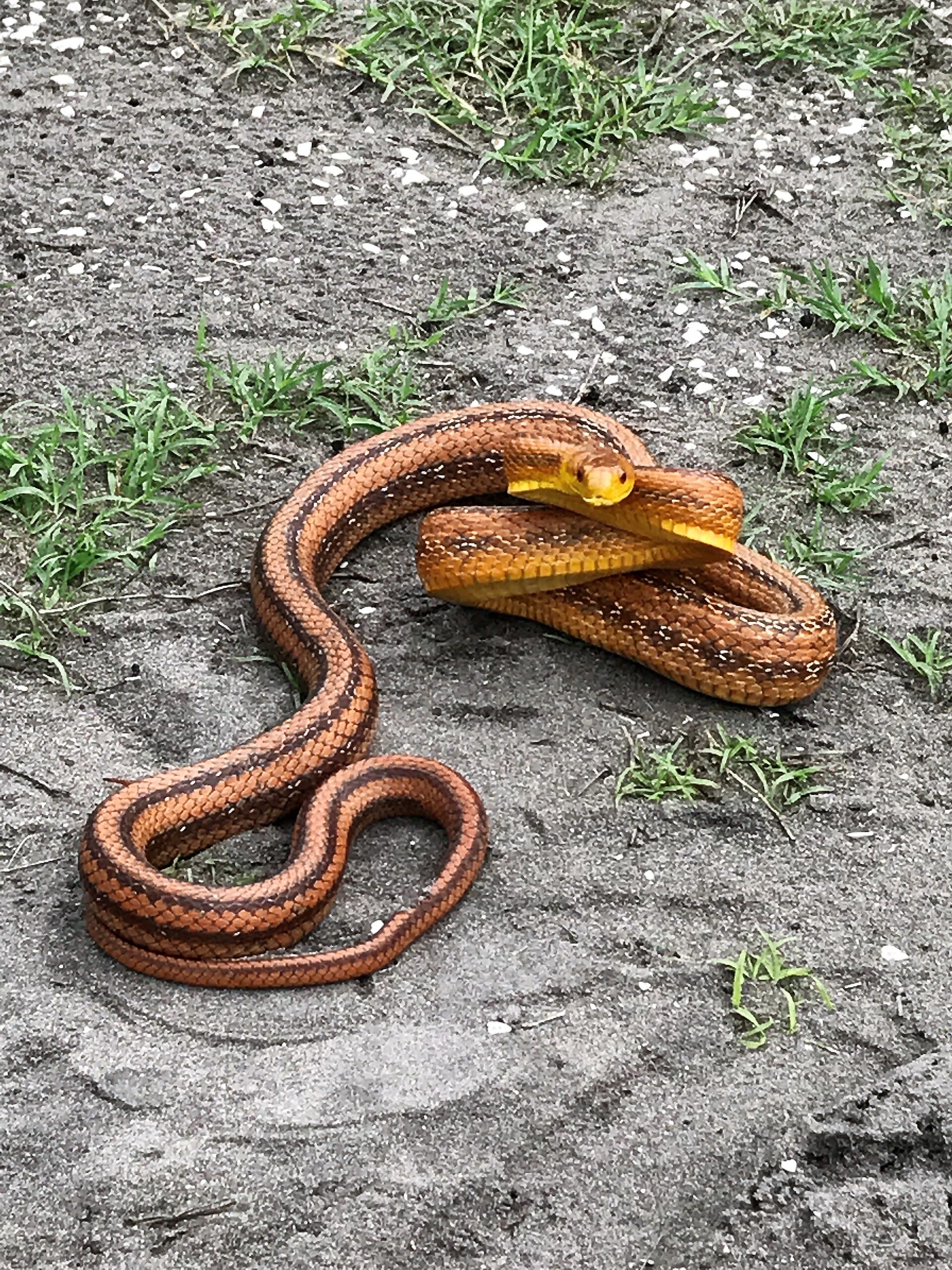
Wild yellow-form Eastern Rat Snake coiled on sandy ground in Florida
M.Aurelius / CC0 1.0
🌐 Read in Language:

⚡ At a Glance

Species profile
Also Known As
Eastern Ratsnake; Black Rat Snake; Pilot Snake
Diet Category
Carnivore
Activity Rhythm
Mostly diurnal in cool weather; can be active by day or night in summer
Wild Lifespan
Often more than 10 years; exact wild maximum varies
Typical Weight
Variable; large adults commonly exceed 1 kg
Conservation Status
NE
💡 Key Biological Insight: It climbs rough tree bark and masonry using muscular pressure and angled belly scales.

🌳 Scientific Taxonomy Hierarchy

This profile follows the U.S. Fish and Wildlife Service use of Pantherophis alleghaniensis for the living Eastern Rat Snake; names and species boundaries in the eastern rat-snake complex differ among modern authorities.

KingdomAnimalia
PhylumChordata
ClassReptilia
OrderSquamata
FamilyColubridae
GenusPantherophis
SpeciesPantherophis alleghaniensis

Distinguishing Anatomical Features

  • ✓Long muscular body
  • ✓Round pupils
  • ✓Weakly keeled scales
  • ✓White or cream chin
  • ✓Dark adult coloration in northern populations
  • ✓Bold gray blotches in juveniles

📏 Physical Measurements

Total LengthUsually about 3.5–6 ft; exceptional animals exceed 6.5 ft
Body WeightOften about 1–5 lb
Tail LengthLong and tapering
WingspanNot applicable
Top SpeedNo reliable fixed maximumMoves efficiently on the ground and is an excellent climber.

🎨 Appearance & Distinctive Markings

BlackDark grayBrownYellowWhiteCreamOrange

Skin / Covering: Weakly keeled scales

Sexual Dimorphism: Females and males look similar; mature males often have proportionally longer tails.

🗺️ Geographic Distribution & Habitat

Native to eastern North America, including much of the eastern United States and southern Ontario.

Deciduous forest, rocky wooded slopes, forest edges, wetlands, farms, barns and mature suburban woodland.

Country-level distribution map

Native range
FijiTanzaniaWestern SaharaCanada — Native rangeUnited States — Native rangeKazakhstanUzbekistanPapua New GuineaIndonesiaArgentinaChileCongo - KinshasaSomaliaKenyaSudanChadHaitiDominican RepublicRussiaBahamasFalkland IslandsNorwayGreenlandFrench Southern TerritoriesTimor-LesteSouth AfricaLesothoMexicoUruguayBrazilBoliviaPeruColombiaPanamaCosta RicaNicaraguaHondurasEl SalvadorGuatemalaBelizeVenezuelaGuyanaSurinameFranceEcuadorPuerto RicoJamaicaCubaZimbabweBotswanaNamibiaSenegalMaliMauritaniaBeninNigerNigeriaCameroonTogoGhanaCôte d’IvoireGuineaGuinea-BissauLiberiaSierra LeoneBurkina FasoCentral African RepublicCongo - BrazzavilleGabonEquatorial GuineaZambiaMalawiMozambiqueEswatiniAngolaBurundiIsraelLebanonMadagascarPalestinian TerritoriesGambiaTunisiaAlgeriaJordanUnited Arab EmiratesQatarKuwaitIraqOmanVanuatuCambodiaThailandLaosMyanmar (Burma)VietnamNorth KoreaSouth KoreaMongoliaIndiaBangladeshBhutanNepalPakistanAfghanistanTajikistanKyrgyzstanTurkmenistanIranSyriaArmeniaSwedenBelarusUkrainePolandAustriaHungaryMoldovaRomaniaLithuaniaLatviaEstoniaGermanyBulgariaGreeceTürkiyeAlbaniaCroatiaSwitzerlandLuxembourgBelgiumNetherlandsPortugalSpainIrelandNew CaledoniaSolomon IslandsNew ZealandAustraliaSri LankaChinaTaiwanItalyDenmarkUnited KingdomIcelandAzerbaijanGeorgiaPhilippinesMalaysiaBruneiSloveniaFinlandSlovakiaCzechiaEritreaJapanParaguayYemenSaudi ArabiaCyprusMoroccoEgyptLibyaEthiopiaDjiboutiUgandaRwandaBosnia & HerzegovinaNorth MacedoniaSerbiaMontenegroKosovoTrinidad & TobagoSouth Sudan
Highlighted countries are recorded profile locations, not precise biological range boundaries.Map boundaries: Natural Earth

Recorded Native Countries & Territories:

💡 Did You Know?

  • 💡Strong constricting muscles
  • 💡Excellent climbing ability
  • 💡Flexible jaws
  • 💡Chemical prey tracking
  • 💡Cryptic juvenile pattern
  • 💡Seasonal brumation

🌿 Conservation Status & Threats

IUCN: NE — NE

“The species is broadly distributed and presumed numerous, yet isolated northern populations can be endangered and roads, persecution, habitat fragmentation and snake fungal disease remain concerns.”

Population TrendUnknown
Wild Population EstimateNot quantified; widespread overall but locally rare or imperiled
CITESNot listed

⚠️ Major Threats to Eastern Rat Snake

  • •Road mortality
  • •Deliberate killing
  • •Forest fragmentation
  • •Loss of winter dens
  • •Development around rocky habitat
  • •Snake fungal disease
  • •Illegal collection

🔄 Life Cycle & Reproduction

Wild vs. Captivity Lifespan Comparison

🌿 In the WildOften more than 10 years
🏠 In Captivity (with veterinary care)Can exceed 20 years with expert care
Clutch / Litter SizeUsually about 6–24 eggs
Incubation / GestationRoughly 5–7 weeks, depending on temperature
Fledging / WeaningNot applicable; hatchlings are independent immediately
Sexual MaturityUsually after several growing seasons
Mating SystemSeasonal polygyny or promiscuity
Nesting / Den TypeEggs placed in warm protected cavities, rotting wood or decaying vegetation

🦅 Behavior & Field Ecology

Carnivore

🌐 Ecological Food Web & Relationships: Controls small-mammal populations and transfers energy to hawks, owls, mammalian carnivores and larger snakes.

Social Group SizeUsually solitary
Activity RhythmSeasonally variable; often diurnal
Feeding StrategyCarnivore

🥩 Primary Prey & Preferred Diet

✓ Mice and rats✓ Voles✓ Small squirrels✓ Birds✓ Bird eggs✓ Frogs and lizards

📢 Communication & Territorial Signals

  • Chemical scent trails
  • Body posture
  • Tail vibration
  • Defensive hissing
  • Touch during courtship

🐾 Wild Temperament & Traits

• Wary• Strong climber• Generally avoids people• Defensive when cornered• Patient hunter

🤝 Human Interaction & Pet Advisory

⚠️ Strictly Wild Species
🚫

Can You Keep a Eastern Rat Snake as a Pet?

A wild native snake best left in its habitat; captive ownership depends on local law and responsible sourcing

Domestication StatusNot domesticated
Danger to HumansLow; nonvenomous
Economic & Ecotourism RoleNatural rodent control, ecosystem function, research and wildlife education

⚠️ Behavioral Risk Factors & Wildlife Safety

  • May bite if handled or cornered
  • Can release strong-smelling musk
  • Wild capture harms the snake and may violate local law

🌐 Ecological Food Web & Relationships

🧬 Related Species (2)

Western RatsnakePantherophis obsoletusA close relative west of much of the Eastern Rat Snake range
Eastern FoxsnakePantherophis vulpinusA related Great Lakes rat snake with a blotched adult pattern

🌍 Ecological Equivalents Across Continents

Corn SnakePantherophis guttatus

A large woodland snake with a complicated name

The Eastern Rat Snake is a long, powerful, nonvenomous constrictor of eastern North America. This profile follows the U.S. Fish and Wildlife Service in using Pantherophis alleghaniensis for the Eastern Rat Snake. Rat-snake names and boundaries have changed as researchers compared genetics and geography, so some modern authorities apply “central ratsnake” to part of the same complex or use other scientific names for coastal populations. That disagreement makes location and source especially important when identifying an individual. What remains clear is that these are living colubrid snakes, skilled climbers and important predators of rodents.

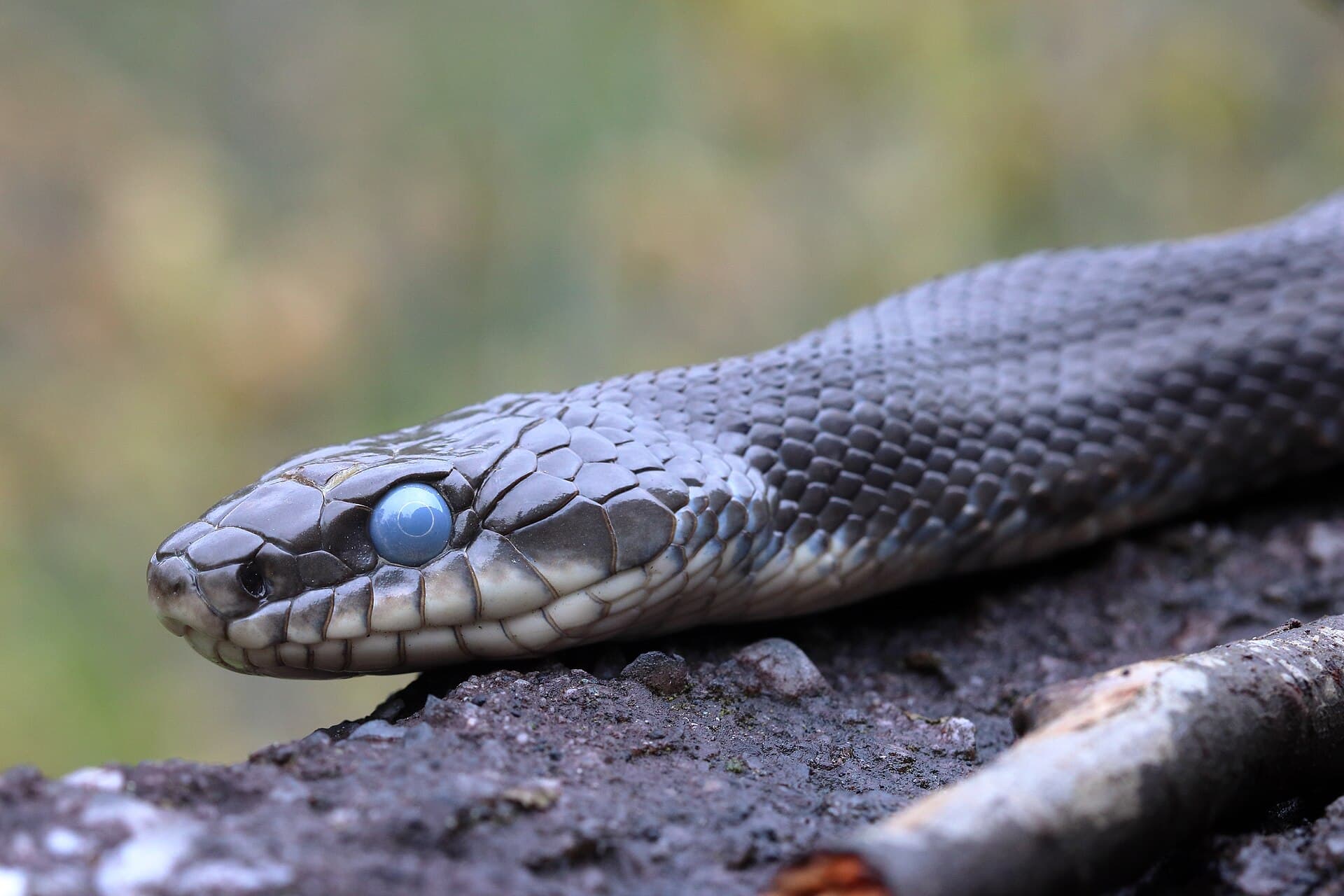
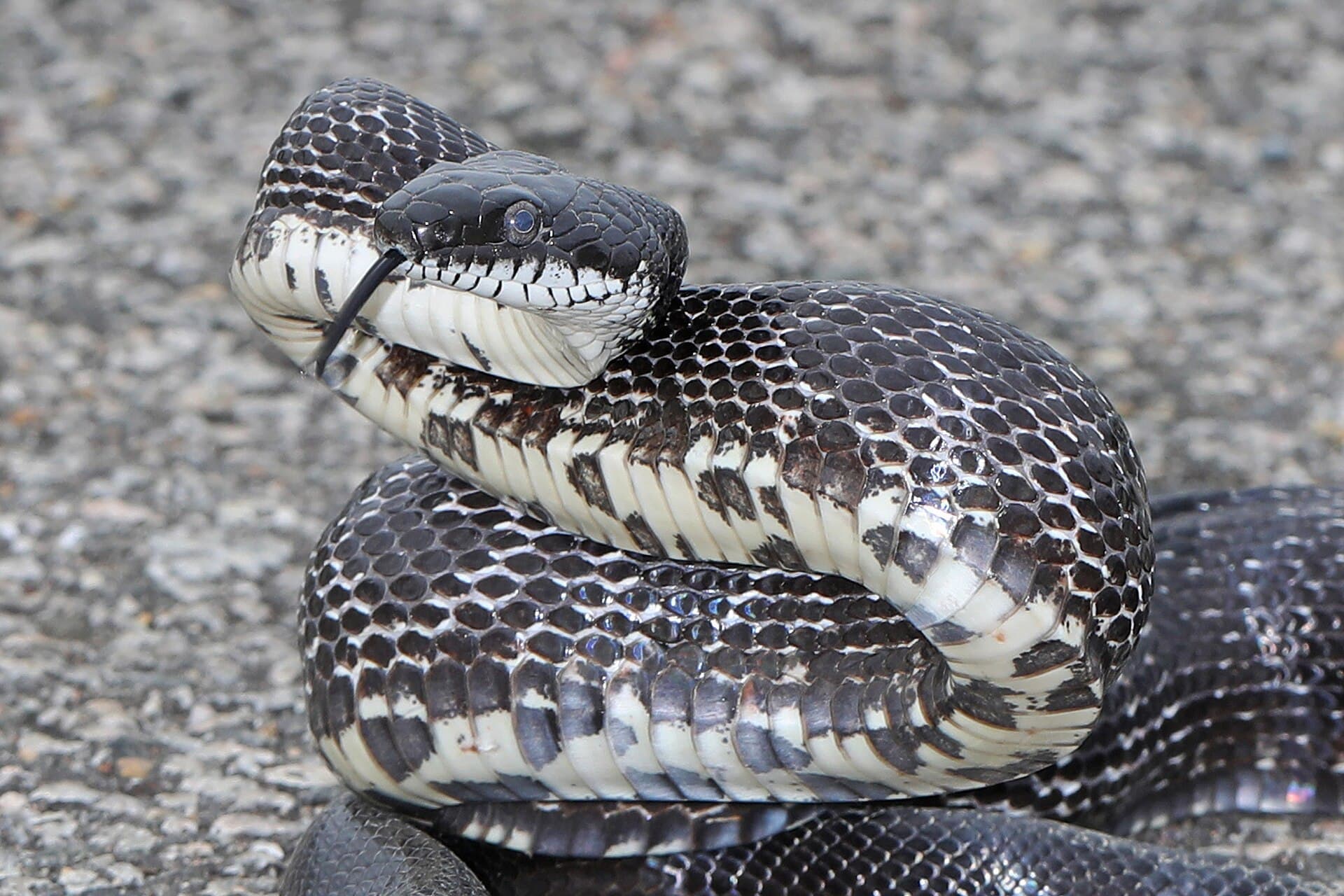
Adults are often dark gray or black over much of the northern range, with pale skin showing between the scales and a white or cream chin. Southern animals can retain yellow, orange or brown tones and longitudinal striping. Young snakes look strikingly different: they are pale gray with bold dark dorsal blotches. The pattern fades as many individuals mature, which sometimes causes harmless juveniles to be mistaken for other snakes.

Size, shape and identification

Eastern rat snakes are among the longest snakes in their region. Most adults measure roughly 1.1–1.8 metres, though exceptional animals can exceed two metres. The body is muscular but not as heavy as that of many large vipers. The head is only moderately wider than the neck, the pupils are round, and the scales are weakly keeled. Color alone is unreliable because age and geography create substantial variation.

A rat snake has no rattle and no venom-delivery apparatus. When frightened, however, it may coil, flatten parts of its body, open its mouth or vibrate its tail in dry leaves. That vibration can sound like a rattlesnake even though the tail ends in ordinary scales. Safe identification should use several features together and should never require picking up a wild snake.

Range and habitat

The species occurs through a broad portion of the eastern United States and reaches southern Ontario. The U.S. Fish and Wildlife Service species account confirms the accepted scientific identity, while the Center for North American Herpetology documents records across eastern states and Ontario. Exact mapped boundaries depend on which taxonomic treatment is followed.

Eastern rat snakes use deciduous forest, rocky wooded slopes, forest edges, wetlands, farms, barns and older neighborhoods with mature trees. They need hiding places such as hollow trunks, rock crevices, brush piles and abandoned mammal burrows. In colder parts of the range they spend winter in sheltered dens below the frost line, sometimes sharing suitable sites with other snakes.

An expert climber and patient hunter

Rat snakes move on the ground but climb remarkably well. Strong body muscles and angled belly scales help them grip rough bark, masonry and other textured surfaces. They may rest in tree cavities, hunt along limbs or enter rafters while following prey. Activity peaks during warm months, and individuals may travel between feeding areas, basking sites, summer shelters and winter dens.

The snake usually relies on camouflage or retreat. If escape is blocked, it may kink its body, release pungent musk and strike defensively. A bite can be painful but is not venomous. Giving the animal space is safer for both snake and observer; attempted capture causes most human bites and can badly injure the snake.

Diet and ecological role

Eastern rat snakes are carnivores. Adults feed mainly on mice, rats, voles and other small mammals, while also taking birds and eggs when opportunities arise. Younger snakes consume proportionally more frogs, lizards and small prey. The snake subdues a mammal by seizing it and wrapping coils around the body. Constriction stops effective circulation quickly; the snake then swallows the prey whole.

By eating rodents, rat snakes provide a useful ecological service around forests, fields and farms. They also occupy the middle of the food web. Hawks, owls, mammalian carnivores and larger snakes can prey on them, especially when the snakes are young. Their presence therefore links small-prey populations with larger predators.

Breeding and development

Mating generally occurs in spring after snakes emerge from winter dormancy. Males locate receptive females using chemical cues and may compete with other males. Females lay a clutch in a warm, protected place such as a hollow log, rotting stump, compost pile or cavity beneath debris. The National Wildlife Federation describes clutches of about six to two dozen eggs and an incubation period of roughly five to seven weeks.

The female does not build a nest or guard the hatchlings. Young snakes emerge patterned with gray and brown blotches and must hunt independently. Growth depends on climate and food. Northern animals face shorter active seasons, and survival requires finding reliable winter shelter before freezing weather.

Conservation and regional risk

Across its broad range, the rat-snake complex remains widespread, and NatureServe notes a large range and presumed large population, while also identifying uncertainty about trends and disease impacts. Local status can be much worse than the range-wide picture. Massachusetts, for example, lists the Eastern Ratsnake as endangered because only a few isolated populations remain there. Roads, persecution, habitat fragmentation and loss of secure den sites all create regional pressure.

Snake fungal disease is an additional concern under study. Because rat snakes move slowly across warm pavement and may use buildings, they are also exposed to vehicle strikes and deliberate killing. Protecting forest corridors, rock outcrops, mature cavity trees and known winter dens helps preserve local populations.

Living safely alongside rat snakes

An Eastern Rat Snake near a shed or garden is usually searching for prey or shelter. It does not chase people and should be allowed a clear escape route. Keep children and pets back, remove attractants such as spilled grain and unsecured rubbish, and seal building gaps only after confirming no animal is trapped inside. If relocation is truly necessary, contact a qualified local wildlife professional.

Never kill a snake based only on dark color or tail vibration. Observe from a distance, take a photograph if safe, and consult a regional wildlife agency or experienced herpetologist. A calm response protects a harmless native predator that helps limit rodents without chemicals.

Sources

❓ Frequently Asked Questions

Answers to frequently asked questions verified against peer-reviewed zoological research.

No. They are nonvenomous constrictors. A defensive bite can hurt, but they do not have venom fangs.