
Home/Animals/Aves/Elf Owl
Species profileIUCN: LC

Elf Owl

Micrathene whitneyi

The world's smallest owl, an insect hunter nesting in old woodpecker holes across the southwestern United States and Mexico.

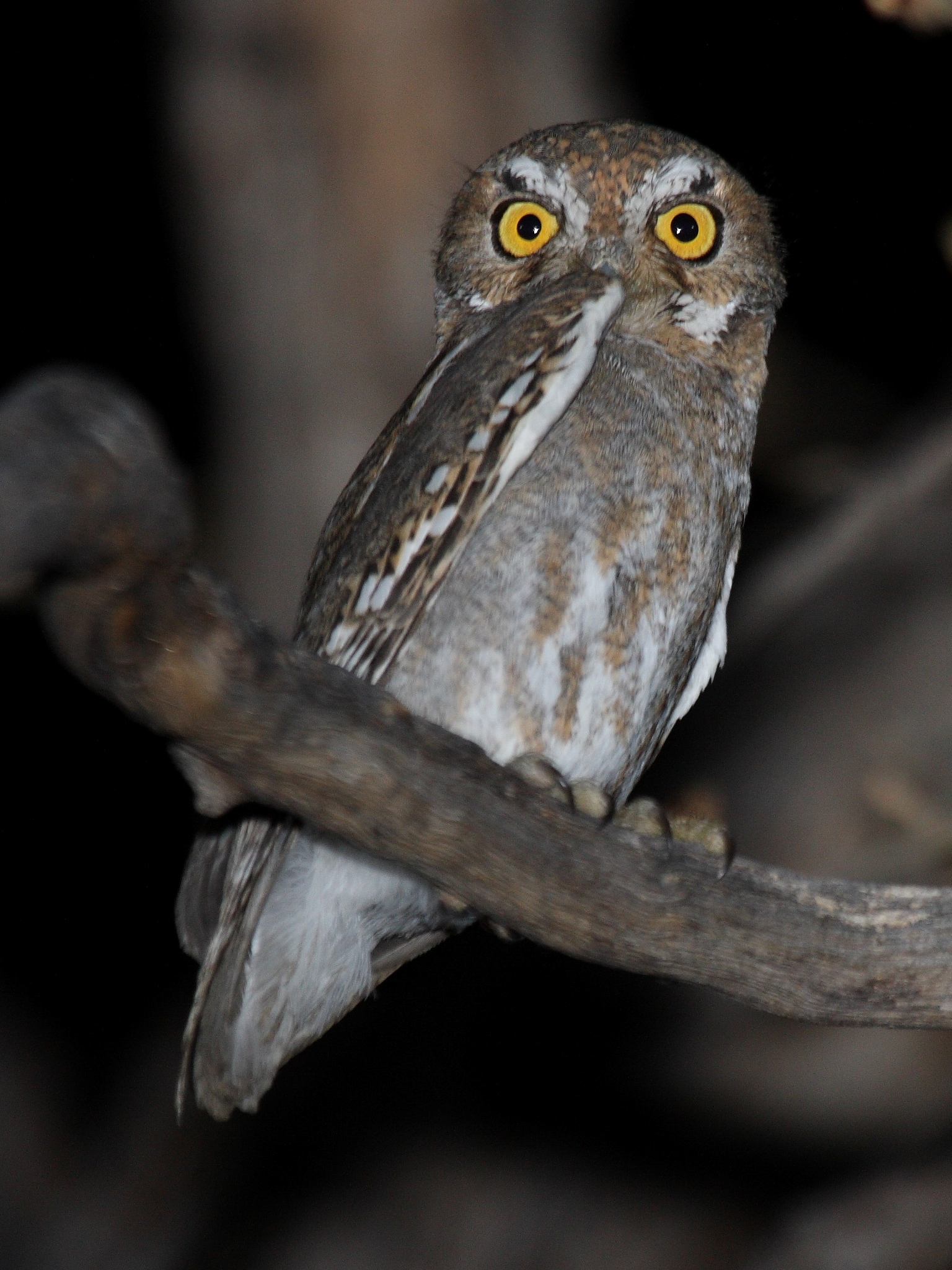
Elf owl perched at night in Madera Canyon, Arizona
Dominic Sherony / Flickr / Wikimedia Commons / CC BY-SA 2.0
๐ŸŒ Read in Language:

โšก At a Glance

Species profile
Also Known As
Whitney's owl; mochuelo de los saguaros
Diet Category
Mostly insects and other arthropods
Activity Rhythm
Strictly nocturnal
Wild Lifespan
Oldest known wild record at least 5 years 10 months
Typical Weight
About 35โ€“55 g
Conservation Status
LC
๐Ÿ’ก Key Biological Insight: Elf owls commonly nest in abandoned woodpecker holes inside saguaros and trees.

๐ŸŒณ Scientific Taxonomy Hierarchy

The elf owl is the only living species in genus Micrathene, within the typical owl family Strigidae.

KingdomAnimalia
PhylumChordata
ClassAves
OrderStrigiformes
FamilyStrigidae
GenusMicrathene
SpeciesMicrathene whitneyi

Distinguishing Anatomical Features

  • โœ“Tiny sparrow-sized body
  • โœ“Yellow eyes
  • โœ“No ear tufts
  • โœ“Pale eyebrow stripes
  • โœ“Short rounded tail

๐Ÿ“ Physical Measurements

Total Length4.7โ€“5.5 in
Body Weight1.2โ€“1.9 oz
Tail LengthShort and rounded
WingspanAbout 10.6โ€“13 in

๐ŸŽจ Appearance & Distinctive Markings

BrownGrayRufousWhite mottlingBlack facial borderYellow eyes

Skin / Covering: Feathers

Sexual Dimorphism: Females are slightly larger; plumage is similar between sexes.

๐Ÿ—บ๏ธ Geographic Distribution & Habitat

Southwestern United States and Mexico

Saguaro desert, thorn forest, wooded canyons, riparian woodland and lower pine-oak-juniper forest with nesting cavities.

Country-level distribution map

Native range
FijiTanzaniaWestern SaharaCanadaUnited States โ€” Native rangeKazakhstanUzbekistanPapua New GuineaIndonesiaArgentinaChileCongo - KinshasaSomaliaKenyaSudanChadHaitiDominican RepublicRussiaBahamasFalkland IslandsNorwayGreenlandFrench Southern TerritoriesTimor-LesteSouth AfricaLesothoMexico โ€” Native rangeUruguayBrazilBoliviaPeruColombiaPanamaCosta RicaNicaraguaHondurasEl SalvadorGuatemalaBelizeVenezuelaGuyanaSurinameFranceEcuadorPuerto RicoJamaicaCubaZimbabweBotswanaNamibiaSenegalMaliMauritaniaBeninNigerNigeriaCameroonTogoGhanaCรดte dโ€™IvoireGuineaGuinea-BissauLiberiaSierra LeoneBurkina FasoCentral African RepublicCongo - BrazzavilleGabonEquatorial GuineaZambiaMalawiMozambiqueEswatiniAngolaBurundiIsraelLebanonMadagascarPalestinian TerritoriesGambiaTunisiaAlgeriaJordanUnited Arab EmiratesQatarKuwaitIraqOmanVanuatuCambodiaThailandLaosMyanmar (Burma)VietnamNorth KoreaSouth KoreaMongoliaIndiaBangladeshBhutanNepalPakistanAfghanistanTajikistanKyrgyzstanTurkmenistanIranSyriaArmeniaSwedenBelarusUkrainePolandAustriaHungaryMoldovaRomaniaLithuaniaLatviaEstoniaGermanyBulgariaGreeceTรผrkiyeAlbaniaCroatiaSwitzerlandLuxembourgBelgiumNetherlandsPortugalSpainIrelandNew CaledoniaSolomon IslandsNew ZealandAustraliaSri LankaChinaTaiwanItalyDenmarkUnited KingdomIcelandAzerbaijanGeorgiaPhilippinesMalaysiaBruneiSloveniaFinlandSlovakiaCzechiaEritreaJapanParaguayYemenSaudi ArabiaCyprusMoroccoEgyptLibyaEthiopiaDjiboutiUgandaRwandaBosnia & HerzegovinaNorth MacedoniaSerbiaMontenegroKosovoTrinidad & TobagoSouth Sudan
Highlighted countries are recorded profile locations, not precise biological range boundaries.Map boundaries: Natural Earth

Recorded Native Countries & Territories:

๐Ÿ’ก Did You Know?

  • ๐Ÿ’กSmall size allows use of narrow woodpecker holes.
  • ๐Ÿ’กNocturnal hunting avoids daytime desert heat.
  • ๐Ÿ’กMottled plumage blends with bark and cactus.
  • ๐Ÿ’กAcute hearing locates moving arthropods in darkness.

๐ŸŒฟ Conservation Status & Threats

IUCN: LC โ€” Least Concern

โ€œGlobally Least Concern, with important regional losses where cavity-rich desert and riparian habitat has disappeared.โ€

Population Trend๐Ÿ“‰ Decreasing
Wild Population EstimatePartners in Flight estimated roughly 72,000 breeding birds in its 2020 assessment; estimates may change.
CITESCITES Appendix II as a member of Strigiformes

โš ๏ธ Major Threats to Elf Owl

  • โ€ขLoss of cavity-bearing trees and saguaros
  • โ€ขRiparian habitat clearing
  • โ€ขDevelopment, agriculture, grazing and mining
  • โ€ขLoss of insect prey
  • โ€ขNest disturbance

๐Ÿ”„ Life Cycle & Reproduction

Wild vs. Captivity Lifespan Comparison

๐ŸŒฟ In the WildAt least 5 years 10 months recorded
๐Ÿ  In Captivity (with veterinary care)Not reliably generalized
Clutch / Litter SizeUsually 3 eggs; range 1โ€“5
Incubation / GestationAbout 24 days, by the female
Fledging / WeaningYoung leave at about 28โ€“33 days
Sexual MaturityLikely breeds from about one year
Mating SystemSocially monogamous
Nesting / Den TypeOld woodpecker cavity in cactus or tree; also nest boxes

๐Ÿฆ… Behavior & Field Ecology

Insectivore and arthropod predator

๐ŸŒ Ecological Food Web & Relationships: Nocturnal predator of desert and woodland arthropods and prey for larger owls, snakes and mammals.

Social Group SizeUsually solitary or paired
Activity RhythmNocturnal
Feeding StrategyInsectivore and arthropod predator

๐Ÿฅฉ Primary Prey & Preferred Diet

โœ“ Mothsโœ“ Beetlesโœ“ Crickets and katydidsโœ“ Spiders and centipedesโœ“ Scorpions

๐Ÿ“ข Communication & Territorial Signals

  • High yapping song
  • Chattering notes
  • Alarm calls
  • Courtship feeding

๐Ÿพ Wild Temperament & Traits

โ€ข Secretive by dayโ€ข Active and agile at nightโ€ข Territorial during nesting

๐Ÿค Human Interaction & Pet Advisory

โš ๏ธ Strictly Wild Species
๐Ÿšซ

Can You Keep a Elf Owl as a Pet?

Protected wild bird and unsuitable as a pet.

Domestication StatusWild and not domesticated
Danger to HumansVery low
Economic & Ecotourism RoleBirdwatching value and natural insect predation; a useful indicator of cavity-rich desert and riparian habitat.

โš ๏ธ Behavioral Risk Factors & Wildlife Safety

  • May defend a nest but is tiny and avoids people

๐ŸŒ Ecological Food Web & Relationships

๐Ÿฆ… Natural Predators (3)

Larger OwlsStrigiformes
SnakesSerpentes
RaccoonProcyon lotor

๐Ÿงฌ Related Species (2)

Western Screech-OwlMegascops kennicottiiLarger cavity-nesting owl in overlapping habitats
Northern Pygmy-OwlGlaucidium gnomaSmall owl sometimes confused with elf owl

The elf owl (Micrathene whitneyi) is a sparrow-sized nocturnal owl of the southwestern United States and Mexico. Measuring about 12โ€“14 centimeters (4.7โ€“5.5 inches) and weighing only 35โ€“55 grams (1.2โ€“1.9 ounces), it is widely described as the world’s smallest owl.

Elf owls spend daylight hours concealed in tree or cactus cavities and emerge after dusk to catch moths, beetles, crickets, scorpions and other small prey. Northern populations migrate south for winter because their insect food becomes scarce in cold weather.

Classification and identification

The elf owl is the only living species in genus Micrathene, within the typical owl family Strigidae. It has a rounded head without ear tufts, yellow eyes, pale eyebrow stripes, a short tail and mottled brown, gray, white and rusty plumage.

Its tiny size separates it from most other owls. Western screech-owls are much larger and have ear tufts, while northern pygmy-owls have longer tails and different head markings. Juvenile elf owls look grayer and less rusty than adults.

Size, wings and silent flight

Adults are roughly the size of a sparrow, with a wingspan near 27โ€“33 centimeters (10.6โ€“13 inches). Females average slightly larger and heavier than males, although the sexes look alike. The feet are small but strong enough to seize insects and small vertebrates.

Rounded wings support quick turns among branches and cactus columns. Like other owls, specialized feather edges reduce flight noise. Quiet approach helps the owl hear prey and avoid announcing its attack, although its insect hunting does not always require complete silence.

Range and migration

Elf owls breed from parts of southern Arizona, New Mexico and Texas south through much of Mexico. Their range includes Baja California and portions of the Mexican mainland. Northern birds migrate into Mexico during autumn and return in spring, while some southern populations are resident.

The species once bred along more of the lower Colorado River and in parts of southern California, but habitat loss caused major local declines and disappearances. A broad country map cannot show these gaps, so it must be read as a general range rather than continuous occupancy.

Desert, canyon and woodland habitat

In the Sonoran Desert, elf owls use tall saguaros, mesquite woodland, palo verde and desert ironwood. They also inhabit thorn forest, wooded canyons, streamside sycamore and cottonwood groves, oak woodland and lower pine-oak-juniper forest.

The key habitat requirement is not simply desert heat. Elf owls need abundant nocturnal prey plus secure cavities for roosting and nesting. Old trees, giant columnar cacti and woodpecker populations therefore shape where they can breed. Some pairs accept correctly designed nest boxes.

Diet and hunting

Elf owls eat mostly insects and other arthropods. Moths, beetles, crickets, grasshoppers, katydids, cicadas and mantids are common foods. They also take spiders, centipedes, scorpions and vinegaroons, with small lizards, snakes or rodents captured occasionally.

A hunting bird watches from a low perch and drops onto prey, flies out to catch insects in the air, hovers near foliage or picks prey from the ground. It may remove a scorpion’s stinger or the tough wings of a large insect before eating.

Bright outdoor lights concentrate insects and can attract hunting owls, but excessive lighting also changes insect communities and exposes birds to hazards. Natural dark habitat remains important.

Desert adaptations

Small size lets an elf owl use narrow woodpecker holes that exclude many predators. Resting inside a cavity during the hottest daylight hours reduces heat and water stress. Nocturnal activity places hunting in cooler conditions when moths and many other insects are active.

Brown mottling camouflages the owl against bark and cactus tissue. Acute hearing locates moving prey in darkness, while large yellow eyes collect available light. Migration allows northern birds to follow warmer conditions and a steadier winter food supply.

Why elf owls use abandoned saguaro holes

Elf owls do not excavate their own nests. They depend on cavities made by Gila woodpeckers, gilded flickers and other woodpeckers in saguaros or trees. They also use natural holes, utility poles and nest boxes.

An old saguaro cavity offers shade, shelter and a narrow entrance. After a woodpecker abandons the chamber, the cactus forms hardened scar tissue around it. That enclosed space can protect eggs and young from weather and many larger predators.

Eggs, incubation and young

A male advertises a territory with high yapping or chattering calls and may sing from inside a potential nest cavity. Courtship includes the male bringing food to the female. Pairs are generally socially monogamous for the breeding attempt.

The female usually lays three white eggs, with reported clutches ranging from one to five. She performs the roughly 24-day incubation while the male supplies food. Newly hatched chicks are covered in white down and are helpless.

At first the female stays with the young while the male hunts. Later both parents deliver prey. Young leave the cavity at about four weeks, commonly 28โ€“33 days after hatching, and remain dependent while their flight and hunting skills improve.

Predators and defense

Snakes, larger owls and mammals may prey on eggs, chicks or adults. The small entrance of a nest cavity provides the first defense. When a predator is discovered, a pair may call and fly around it, sometimes joined by neighboring elf owls in a mobbing response.

An elf owl threatened at close range may crouch, raise its wings, snap its bill or attempt to escape into cover. Its survival strategy relies more on concealment and inaccessible cavities than on overpowering attackers.

Conservation status and threats

The elf owl is assessed globally as Least Concern, but that category does not mean every population is stable. Loss of desert riparian woodland, old cavity-bearing trees, saguaros and thorn forest has caused regional declines. Development, agriculture, grazing, mining and altered water systems can remove nesting and feeding habitat.

Conservation depends on protecting mature cactus and woodland, retaining woodpecker-created cavities, restoring streamside trees and limiting disturbance during nesting. Proper nest boxes can supplement cavities in suitable habitat, but they cannot replace a functioning landscape with abundant prey.

Sources and further reading

โ“ Frequently Asked Questions

Answers to frequently asked questions verified against peer-reviewed zoological research.

Adults measure about 12โ€“14 centimeters and weigh roughly 35โ€“55 grams, making this the world's smallest owl.