
Home/Animals/Mammalia/European Hedgehog
Species profileIUCN: NT

European Hedgehog

Erinaceus europaeus

A nocturnal western European mammal protected by thousands of keratin spines and a powerful rolling defense.

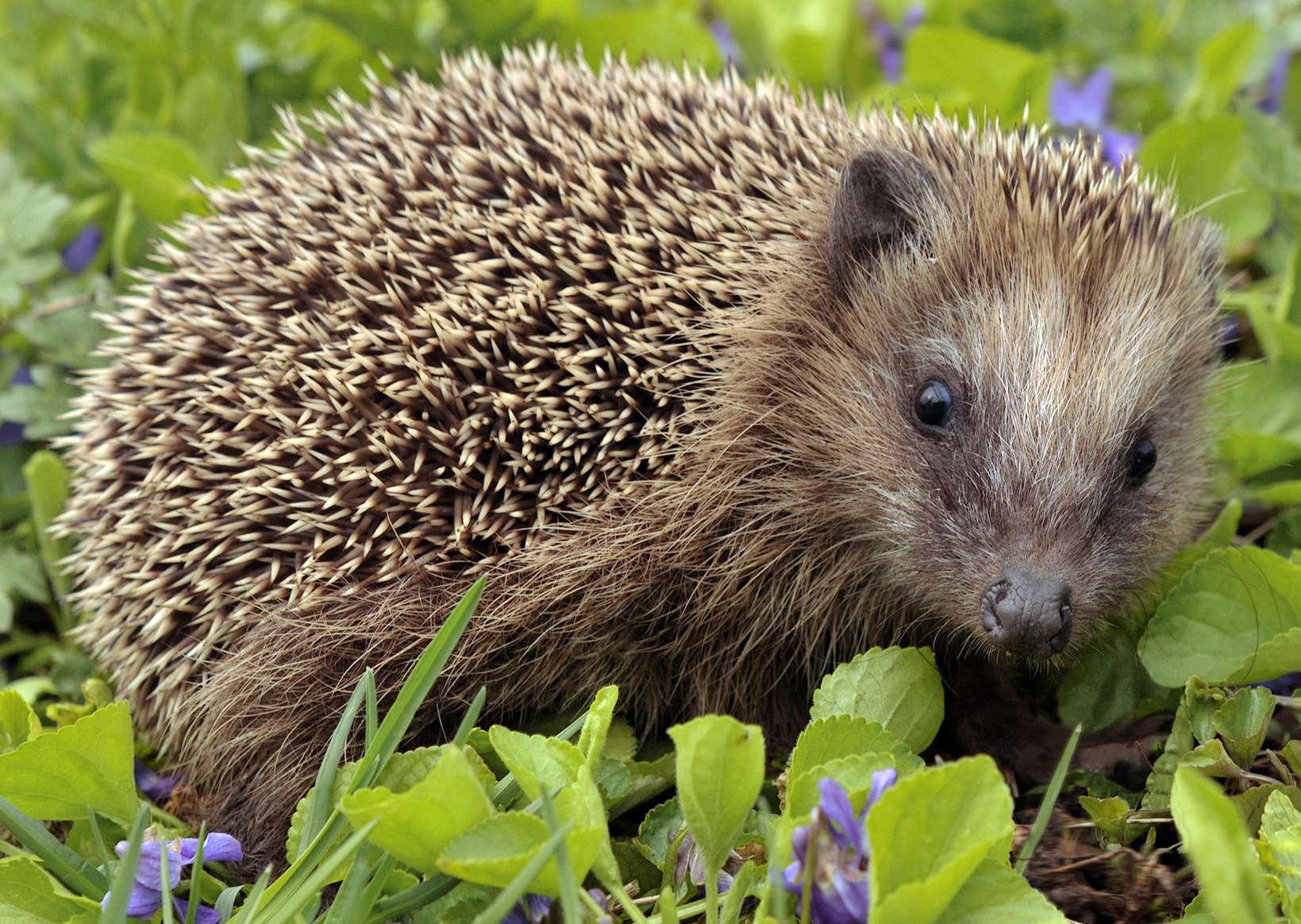
Young European hedgehog walking through short green vegetation
Michael Gรคbler / Wikimedia Commons / CC BY-SA 3.0
๐ŸŒ Read in Language:

โšก At a Glance

Species profile
Also Known As
Western European hedgehog, common hedgehog, brown-breasted hedgehog
Diet Category
Omnivore with an invertebrate-dominated diet
Activity Rhythm
Nocturnal
Wild Lifespan
Many die young; survivors may live about 4โ€“7 years or longer
Typical Weight
Commonly about 450โ€“1,500 g, changing strongly by season
Conservation Status
NT
๐Ÿ’ก Key Biological Insight: An adult commonly carries about 5,000โ€“7,000 spines, which are modified hairs made of keratin.

๐ŸŒณ Scientific Taxonomy Hierarchy

The European or western European hedgehog is one species in genus Erinaceus and family Erinaceidae.

KingdomAnimalia
PhylumChordata
ClassMammalia
OrderEulipotyphla
FamilyErinaceidae
GenusErinaceus
SpeciesErinaceus europaeus

Distinguishing Anatomical Features

  • โœ“Brown face and breast
  • โœ“Pointed mobile snout
  • โœ“Roughly 5,000โ€“7,000 banded spines
  • โœ“Can enclose its face, legs and belly in a tight spiny ball

๐Ÿ“ Physical Measurements

Total LengthAbout 8.7โ€“11 in
Body WeightAbout 1โ€“3.3 lb
Tail LengthAbout 0.8 in
WingspanNot applicable

๐ŸŽจ Appearance & Distinctive Markings

BrownGray-brownCreamBlack spine bandsWhite spine tipsOccasional pale color variants

Skin / Covering: Coarse fur beneath and modified keratin hairs forming dorsal spines

Sexual Dimorphism: Males are often slightly larger, but the sexes look similar externally.

๐Ÿ—บ๏ธ Geographic Distribution & Habitat

Western and northern Europe

Hedgerows, grassland, farmland edges, scrub, deciduous woodland margins, parks, cemeteries and connected gardens.

Country-level distribution map

Native rangeIntroduced range
FijiTanzaniaWestern SaharaCanadaUnited StatesKazakhstanUzbekistanPapua New GuineaIndonesiaArgentinaChileCongo - KinshasaSomaliaKenyaSudanChadHaitiDominican RepublicRussia โ€” Native rangeBahamasFalkland IslandsNorway โ€” Native rangeGreenlandFrench Southern TerritoriesTimor-LesteSouth AfricaLesothoMexicoUruguayBrazilBoliviaPeruColombiaPanamaCosta RicaNicaraguaHondurasEl SalvadorGuatemalaBelizeVenezuelaGuyanaSurinameFrance โ€” Native rangeEcuadorPuerto RicoJamaicaCubaZimbabweBotswanaNamibiaSenegalMaliMauritaniaBeninNigerNigeriaCameroonTogoGhanaCรดte dโ€™IvoireGuineaGuinea-BissauLiberiaSierra LeoneBurkina FasoCentral African RepublicCongo - BrazzavilleGabonEquatorial GuineaZambiaMalawiMozambiqueEswatiniAngolaBurundiIsraelLebanonMadagascarPalestinian TerritoriesGambiaTunisiaAlgeriaJordanUnited Arab EmiratesQatarKuwaitIraqOmanVanuatuCambodiaThailandLaosMyanmar (Burma)VietnamNorth KoreaSouth KoreaMongoliaIndiaBangladeshBhutanNepalPakistanAfghanistanTajikistanKyrgyzstanTurkmenistanIranSyriaArmeniaSweden โ€” Native rangeBelarusUkrainePoland โ€” Native rangeAustria โ€” Native rangeHungaryMoldovaRomaniaLithuaniaLatvia โ€” Native rangeEstonia โ€” Native rangeGermany โ€” Native rangeBulgariaGreeceTรผrkiyeAlbaniaCroatiaSwitzerland โ€” Native rangeLuxembourg โ€” Native rangeBelgium โ€” Native rangeNetherlands โ€” Native rangePortugal โ€” Native rangeSpain โ€” Native rangeIreland โ€” Native rangeNew CaledoniaSolomon IslandsNew Zealand โ€” Introduced rangeAustraliaSri LankaChinaTaiwanItaly โ€” Native rangeDenmark โ€” Native rangeUnited Kingdom โ€” Native rangeIcelandAzerbaijanGeorgiaPhilippinesMalaysiaBruneiSlovenia โ€” Native rangeFinland โ€” Native rangeSlovakia โ€” Native rangeCzechia โ€” Native rangeEritreaJapanParaguayYemenSaudi ArabiaCyprusMoroccoEgyptLibyaEthiopiaDjiboutiUgandaRwandaBosnia & HerzegovinaNorth MacedoniaSerbiaMontenegroKosovoTrinidad & TobagoSouth Sudan
Highlighted countries are recorded profile locations, not precise biological range boundaries.Map boundaries: Natural Earth

๐Ÿ’ก Did You Know?

  • ๐Ÿ’กA muscular skin sheet closes the body into a defensive ball.
  • ๐Ÿ’กA strong sense of smell locates prey at night.
  • ๐Ÿ’กHibernation reduces energy use when winter food is scarce.
  • ๐Ÿ’กFive clawed toes on each foot support digging and travel through vegetation.

๐ŸŒฟ Conservation Status & Threats

IUCN: NT โ€” Near Threatened

โ€œIUCN Near Threatened globally following the 2024-2 reassessment; national and regional classifications may be more severe.โ€

Population Trend๐Ÿ“‰ Decreasing
Wild Population EstimateNo reliable range-wide total; trends differ among countries and landscapes.
CITESNot listed

โš ๏ธ Major Threats to European Hedgehog

  • โ€ขRoad mortality
  • โ€ขHabitat fragmentation and sealed boundaries
  • โ€ขLoss of hedgerows and field margins
  • โ€ขDeclining invertebrate prey and pesticide exposure
  • โ€ขGarden machinery, uncovered drains, ponds and netting

๐Ÿ”„ Life Cycle & Reproduction

Wild vs. Captivity Lifespan Comparison

๐ŸŒฟ In the WildHigh juvenile mortality; animals surviving the first year may live several more years
๐Ÿ  In Captivity (with veterinary care)Can exceed typical wild survival under specialist care
Clutch / Litter SizeUsually about 4โ€“5 hoglets; larger litters occur
Incubation / GestationGestation lasts roughly 4โ€“5 weeks
Fledging / WeaningYoung begin outside foraging at about 3โ€“4 weeks and become independent several weeks later
Sexual MaturityUsually in the second calendar year
Mating SystemPromiscuous
Nesting / Den TypeLeaf-and-grass nursery nest beneath dense cover

๐Ÿฆ… Behavior & Field Ecology

Opportunistic omnivore; mainly invertebrates

๐ŸŒ Ecological Food Web & Relationships: Consumer of diverse ground invertebrates and prey for badgers and other capable predators.

Social Group SizeUsually solitary
Activity RhythmNocturnal, with activity sometimes increasing after rain
Feeding StrategyOpportunistic omnivore; mainly invertebrates

๐Ÿฅฉ Primary Prey & Preferred Diet

โœ“ Beetles and larvaeโœ“ Caterpillarsโœ“ Earthwormsโœ“ Earwigs and millipedesโœ“ Slugs and other available invertebrates

๐Ÿ“ข Communication & Territorial Signals

  • Snorts and grunts
  • Scent cues
  • Courtship circling and vocal sounds
  • Young produce contact calls

๐Ÿพ Wild Temperament & Traits

โ€ข Solitaryโ€ข Active and wide-ranging at nightโ€ข Defensive rolling when threatened

๐Ÿค Human Interaction & Pet Advisory

โš ๏ธ Strictly Wild Species
๐Ÿšซ

Can You Keep a European Hedgehog as a Pet?

A protected wild animal in parts of its range and unsuitable as a pet; injured animals require qualified rehabilitation advice.

Domestication StatusWild and not domesticated
Danger to HumansLow
Economic & Ecotourism RoleA flagship species for connected gardens, wildlife-friendly farming and public participation in biodiversity conservation.

โš ๏ธ Behavioral Risk Factors & Wildlife Safety

  • Wild hedgehogs may carry ticks, fleas or pathogens, so unnecessary handling should be avoided

๐ŸŒ Ecological Food Web & Relationships

๐Ÿฆ… Natural Predators (3)

European BadgerMeles meles
Red FoxVulpes vulpes
Eurasian Eagle-OwlBubo bubo

๐Ÿงฌ Related Species (3)

Northern White-breasted HedgehogErinaceus roumanicusClosely related European species with overlapping range
Southern White-breasted HedgehogErinaceus concolorRelated species of southeastern Europe and western Asia
Amur HedgehogErinaceus amurensisEast Asian member of the same genus

The European hedgehog (Erinaceus europaeus) is a nocturnal, spiny mammal native to western and northern Europe. It forages through grassland, hedgerows, woodland edges, farmland and gardens, eating mainly ground-dwelling invertebrates. When threatened, a powerful sheet of muscle draws the body into a tight ball and points thousands of spines outward.

Also called the western European hedgehog or common hedgehog, this is one particular species rather than a name for every hedgehog. The northern white-breasted hedgehog overlaps it in parts of Europe, while African pygmy hedgehogs sold as pets belong to different species. In 2024, the IUCN global assessment moved the western European hedgehog from Least Concern to Near Threatened.

Species and identification

Erinaceus europaeus belongs to the family Erinaceidae and the order Eulipotyphla, which also contains shrews and moles. It is most readily recognized by a brown face and breast, a pointed snout, small rounded ears and a dense coat of banded spines across the back and sides.

In parts of central and eastern Europe, identification can be complicated by the northern white-breasted hedgehog (Erinaceus roumanicus). That species often has a pale breast patch, but coat color varies and the ranges meet. Location and expert examination may be needed for a dependable identification.

Spines, body size and defenses

Adults are commonly about 22โ€“28 centimeters (8.7โ€“11 inches) long and may weigh roughly 450โ€“1,500 grams (1โ€“3.3 pounds), depending on age, sex, season and health. They have short legs, five toes on each foot and a small tail hidden beneath the spines and body fur.

The spines are modified hairs made from keratin. An adult carries approximately 5,000โ€“7,000, each about 2.5 centimeters (1 inch) long. They are not barbed and are not shot from the body. Muscles at the base raise them, while a broad muscle beneath the skin acts like a drawstring around the animal.

When danger approaches, the hedgehog lowers its head and curls until the soft face, legs and belly are enclosed. This defense deters many predators, although European badgers can open a curled hedgehog and are important natural predators where both species occur.

Range and habitat

The species occurs across much of western and northern Europe, from the Iberian Peninsula and Italy north to Britain, Ireland and Scandinavia, and east into parts of central Europe and European Russia. People introduced it to New Zealand, where hedgehogs are non-native predators and conservation management has a very different goal.

European hedgehogs prefer varied landscapes that combine feeding areas with dense cover. Hedgerows, scrub, field margins, deciduous woodland edges, parks, cemeteries and gardens can all provide food and nest sites. Large intensively managed fields, sealed fences, busy roads and extensive conifer plantations can divide usable habitat.

Urban and suburban gardens are valuable when animals can move between them. A single garden is rarely large enough for all nightly needs, so gaps at ground level, connected hedges and vegetation corridors help maintain access to feeding and nesting areas.

Diet and nightly foraging

European hedgehogs are opportunistic omnivores with a diet dominated by invertebrates. Beetles, caterpillars, earthworms, earwigs, millipedes, fly larvae and other soil or surface animals are frequent foods. Slugs are eaten, but they do not form the whole diet. Hedgehogs may also take carrion, eggs or small vertebrates when available.

A keen sense of smell and good hearing guide a foraging animal through vegetation after dark. Individuals commonly cover one or more kilometers in a night, and males may travel farther during the breeding season. They are generally solitary and do not defend sharply bounded feeding territories.

Milk should never be offered because it can cause digestive illness. Where supplementary feeding is appropriate, wildlife organizations recommend fresh water and suitable meat-based cat or dog food. Such food supplements natural foraging; it does not replace connected habitat rich in invertebrates.

Nocturnal behavior and self-anointing

Most activity takes place between dusk and dawn. During the day a hedgehog rests in a temporary nest beneath vegetation, logs, sheds or other cover. It may change nests frequently during the active season. Snuffling, grunting and loud eating sounds often reveal an animal before it is seen.

When a hedgehog encounters a strong or unfamiliar smell, it may lick or chew the material, produce frothy saliva and spread that saliva over its spines. This behavior is called self-anointing. Its precise function remains uncertain, so claims that it definitely provides camouflage, poison or parasite control go beyond the evidence.

Hibernation and winter nests

In colder parts of the range, declining temperatures and scarce invertebrate food trigger hibernation. Timing varies with latitude, weather, sex and body condition. In Britain it often falls between late autumn and early spring, but hibernation is not one uninterrupted sleep.

A winter nest, or hibernaculum, is a dense structure of dry leaves, grass and other vegetation built under a hedge, roots, brush, a shed or similar shelter. During torpor, body temperature, heart rate and breathing fall dramatically to conserve energy. Hedgehogs periodically wake, and some move to another nest.

Stored body fat must support the animal through winter. Disturbing a hibernation nest wastes energy, while unseasonably warm periods may cause extra arousals when little natural food is available.

Mating, hoglets and lifespan

Breeding occurs mainly during spring and summer. Courtship can be noisy: a male circles a female while she snorts, turns and pushes him away. Hedgehogs are promiscuous, and males do not help build the nursery nest or rear the young.

After a pregnancy of about four to five weeks, a female commonly gives birth to four or five hoglets, though litter size varies. Newborns are blind and their first pale spines lie beneath swollen skin, emerging soon after birth. The mother nurses them in a nursery nest. Young begin accompanying her on short foraging trips at about three to four weeks and become independent several weeks later.

Late litters face a difficult race to gain enough energy reserves before winter. Mortality is high in the first year. Animals that survive early life and their first hibernation may live several more years, though road traffic, predation, disease and accidents keep average wild survival well below maximum recorded ages.

Conservation status and threats

The IUCN Red List changed the global status of Erinaceus europaeus from Least Concern to Near Threatened in version 2024-2. This global category should not be confused with national assessments: for example, the species has a more threatened classification in Great Britain.

Important pressures include road deaths, habitat fragmentation, loss of hedges and field margins, intensive land management, declining invertebrate prey, garden hazards and predation. Pesticides may reduce food and can expose hedgehogs to harmful chemicals. Badgers are natural predators, but their effect interacts with habitat quality and cover.

Practical help includes keeping ground-level routes between gardens, retaining native cover and leaf piles, checking long grass before mowing, covering drains and holes, providing escape ramps from ponds, and inspecting bonfires before lighting. Injured animals or hedgehogs active in daylight and behaving abnormally need advice from a qualified wildlife rehabilitator.

Sources and further reading

โ“ Frequently Asked Questions

Answers to frequently asked questions verified against peer-reviewed zoological research.

They occupy western and northern Europe in hedgerows, field margins, scrub, woodland edges, parks and connected gardens; people also introduced them to New Zealand.