
Home/Animals/Reptilia/False Cobra
Species profileIUCN: LC

False Cobra

Malpolon moilensis

A fast desert snake that spreads its neck like a cobra but delivers mild prey-subduing venom through rear grooved teeth.

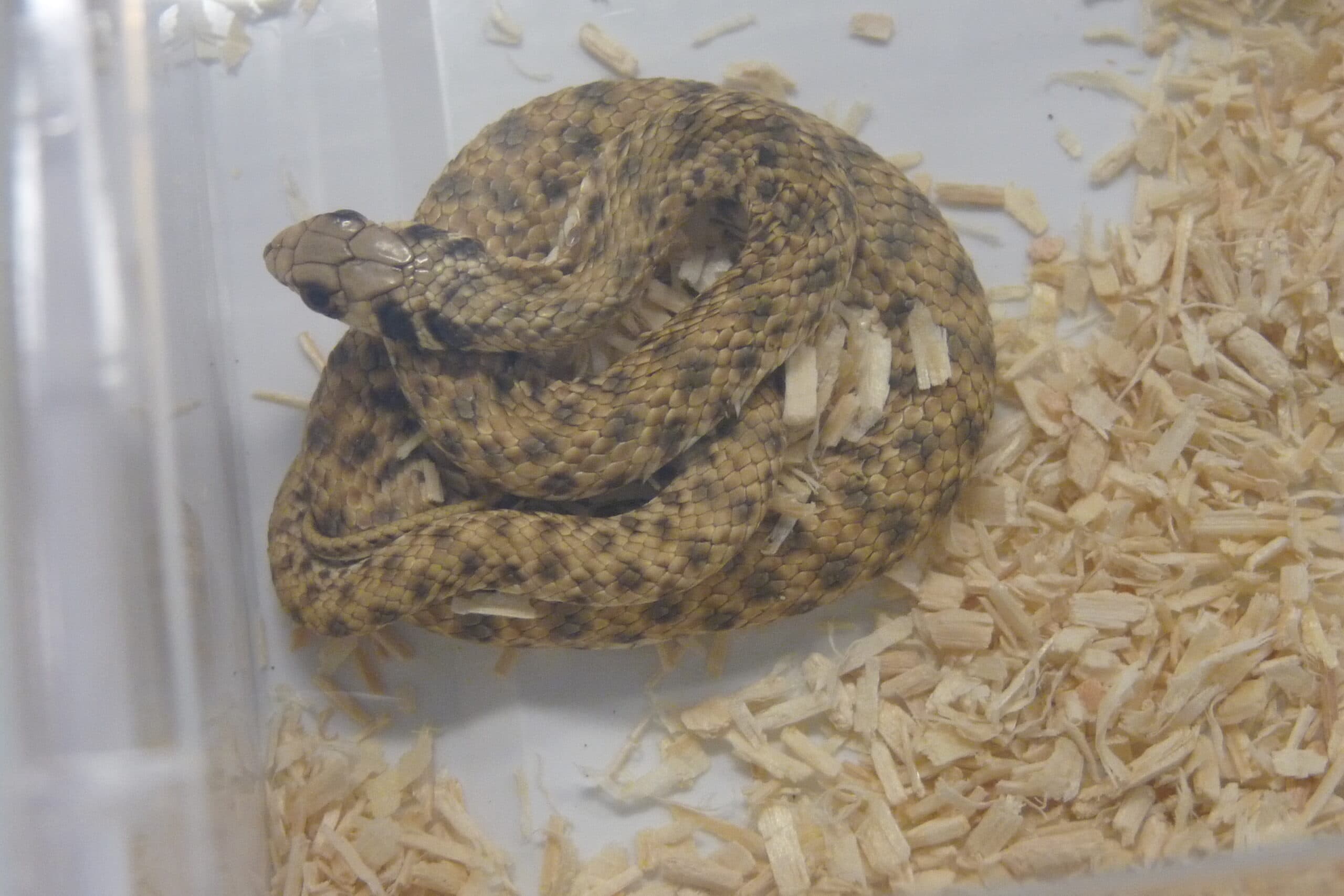
False Cobra showing a sandy brown body and elongated pointed head
Goodshort / Wikimedia Commons / CC BY-SA 3.0
๐ŸŒ Read in Language:

โšก At a Glance

Species profile
Also Known As
Moila Snake; Hooded Malpolon; Egyptian False Cobra
Diet Category
Active predator of desert vertebrates
Activity Rhythm
Diurnal and crepuscular, shifting activity away from midday during extreme heat.
Wild Lifespan
Wild lifespan is poorly quantified; likely more than 10 years for surviving adults
Typical Weight
often about 250โ€“800 g depending on length and condition
Conservation Status
LC
๐Ÿ’ก Key Biological Insight: Its hood is produced by elongated neck ribs, but the False Cobra is not a cobra and does not have front-fixed fangs.

๐ŸŒณ Scientific Taxonomy Hierarchy

Malpolon moilensis is treated here as a full species in Psammophiidae. Many recent authors place it in the genus Rhagerhis, while the Reptile Database follows phylogenetic work that retains it within Malpolon. Both Malpolon moilensis and Rhagerhis moilensis refer to the same species.

KingdomAnimalia
PhylumChordata
ClassReptilia
OrderSquamata
FamilyPsammophiidae
GenusMalpolon
SpeciesMalpolon moilensis

Distinguishing Anatomical Features

  • โœ“The body is slender to moderately robust and colored sandy beige, gray, olive or reddish brown, often with small dark flecks. Two prominent dark marks occur on the sides of the neck. The head is elongated with a pointed snout, raised brow ridges and large eyes with round pupils. Elongated neck ribs allow a narrow hood-like spread.
  • โœ“Elongated neck ribs create a false hood
  • โœ“Rear grooved teeth deliver venom to prey
  • โœ“Raised brow shades the eyes
  • โœ“Sandy colors conceal the body
  • โœ“Fast pursuit captures lizards
  • โœ“Burrow use avoids temperature extremes
  • โœ“Efficient kidneys conserve water

๐Ÿ“ Physical Measurements

Total Lengthcommonly 28โ€“47 in; exceptional adults near 5 ft
Body Weightoften about 9โ€“28 oz depending on length and condition
Tail LengthLong, slender and tapering
WingspanNot applicable
Top SpeedNo dependable universal maximumMovement changes with context and conditions.

๐ŸŽจ Appearance & Distinctive Markings

SandBeigeGrayOliveReddish brownBlackBrownGrayBlack

Skin / Covering: Smooth to lightly keeled overlapping scales

Sexual Dimorphism: Males usually grow larger and have proportionally longer tails. Females tend to be shorter and become heavier while carrying eggs.

๐Ÿ—บ๏ธ Geographic Distribution & Habitat

The False Cobra has a wide but patchy range across the Sahara and Sahel from Mauritania and Morocco east to Egypt and Sudan, and across the Arabian Peninsula and Middle East into southwestern Iran. Records cluster around suitable stony, sandy and vegetated desert rather than the most barren dune interiors.

Rocky desert, gravel plain, sandy scrub, wadis, dry steppe, oasis margins, farms and desert settlements.

Country-level distribution map

Native range
FijiTanzaniaWestern Sahara โ€” Native rangeCanadaUnited StatesKazakhstanUzbekistanPapua New GuineaIndonesiaArgentinaChileCongo - KinshasaSomaliaKenyaSudan โ€” Native rangeChad โ€” Native rangeHaitiDominican RepublicRussiaBahamasFalkland IslandsNorwayGreenlandFrench Southern TerritoriesTimor-LesteSouth AfricaLesothoMexicoUruguayBrazilBoliviaPeruColombiaPanamaCosta RicaNicaraguaHondurasEl SalvadorGuatemalaBelizeVenezuelaGuyanaSurinameFranceEcuadorPuerto RicoJamaicaCubaZimbabweBotswanaNamibiaSenegalMali โ€” Native rangeMauritania โ€” Native rangeBeninNiger โ€” Native rangeNigeriaCameroonTogoGhanaCรดte dโ€™IvoireGuineaGuinea-BissauLiberiaSierra LeoneBurkina FasoCentral African RepublicCongo - BrazzavilleGabonEquatorial GuineaZambiaMalawiMozambiqueEswatiniAngolaBurundiIsrael โ€” Native rangeLebanonMadagascarPalestinian TerritoriesGambiaTunisia โ€” Native rangeAlgeria โ€” Native rangeJordan โ€” Native rangeUnited Arab Emirates โ€” Native rangeQatar โ€” Native rangeKuwait โ€” Native rangeIraq โ€” Native rangeOman โ€” Native rangeVanuatuCambodiaThailandLaosMyanmar (Burma)VietnamNorth KoreaSouth KoreaMongoliaIndiaBangladeshBhutanNepalPakistanAfghanistanTajikistanKyrgyzstanTurkmenistanIran โ€” Native rangeSyria โ€” Native rangeArmeniaSwedenBelarusUkrainePolandAustriaHungaryMoldovaRomaniaLithuaniaLatviaEstoniaGermanyBulgariaGreeceTรผrkiyeAlbaniaCroatiaSwitzerlandLuxembourgBelgiumNetherlandsPortugalSpainIrelandNew CaledoniaSolomon IslandsNew ZealandAustraliaSri LankaChinaTaiwanItalyDenmarkUnited KingdomIcelandAzerbaijanGeorgiaPhilippinesMalaysiaBruneiSloveniaFinlandSlovakiaCzechiaEritrea โ€” Native rangeJapanParaguayYemen โ€” Native rangeSaudi Arabia โ€” Native rangeCyprusMorocco โ€” Native rangeEgypt โ€” Native rangeLibya โ€” Native rangeEthiopiaDjiboutiUgandaRwandaBosnia & HerzegovinaNorth MacedoniaSerbiaMontenegroKosovoTrinidad & TobagoSouth Sudan
Highlighted countries are recorded profile locations, not precise biological range boundaries.Map boundaries: Natural Earth

๐Ÿ’ก Did You Know?

  • ๐Ÿ’กElongated neck ribs create a false hood
  • ๐Ÿ’กRear grooved teeth deliver venom to prey
  • ๐Ÿ’กRaised brow shades the eyes
  • ๐Ÿ’กSandy colors conceal the body
  • ๐Ÿ’กFast pursuit captures lizards
  • ๐Ÿ’กBurrow use avoids temperature extremes
  • ๐Ÿ’กEfficient kidneys conserve water

๐ŸŒฟ Conservation Status & Threats

IUCN: LC โ€” Least Concern

โ€œThe IUCN assesses Malpolon moilensis as Least Concern because of its broad range. Local populations can still decline through road mortality, persecution, development and intensive agriculture.โ€

Population TrendBroadly stable but poorly measured in many desert regions
Wild Population EstimateNo global estimate; widespread in suitable arid habitat
CITESNot listed

โš ๏ธ Major Threats to False Cobra

  • โ€ขRoad mortality
  • โ€ขDeliberate killing
  • โ€ขDesert development
  • โ€ขAgricultural intensification
  • โ€ขIllegal collection
  • โ€ขPesticide exposure
  • โ€ขLoss of wadis and scrub

๐Ÿ”„ Life Cycle & Reproduction

Wild vs. Captivity Lifespan Comparison

๐ŸŒฟ In the WildWild lifespan is poorly quantified; likely more than 10 years for surviving adults
๐Ÿ  In Captivity (with veterinary care)Only legal, documented animals should be held by experienced institutions prepared for rear-fanged bites.
Clutch / Litter SizeUsually about 4โ€“18 eggs
Incubation / GestationRoughly 50โ€“80 days depending on temperature
Fledging / WeaningIndependent hatchling roughly 20โ€“30 cm long
Sexual MaturityApproximately 2โ€“3 years depending on growth
Mating SystemInternal fertilization; egg-laying
Nesting / Den TypeBurrow, rock cavity, loose soil or protected debris

๐Ÿฆ… Behavior & Field Ecology

Active predator of desert vertebrates

๐ŸŒ Ecological Food Web & Relationships: False Cobras help regulate lizards, geckos, rodents and small snakes in arid food webs. They feed raptors, monitor lizards, mongooses and larger snakes. Their movement between rocky desert, wadis and farms transfers energy across habitat edges, while burrow use connects them to rodent communities.

Social Group SizeSolitary except during courtship and occasional shared refuge
Activity RhythmDiurnal and crepuscular, shifting activity away from midday during extreme heat.
Feeding StrategyActive predator of desert vertebrates

๐Ÿฅฉ Primary Prey & Preferred Diet

โœ“ Lizardsโœ“ Geckosโœ“ Small snakesโœ“ Rodentsโœ“ Birdsโœ“ Nestlingsโœ“ Frogs

๐Ÿ“ข Communication & Territorial Signals

  • Visual tracking
  • Tongue-flick chemoreception
  • Pheromone trails
  • Ground vibration
  • Hood display
  • Hissing

๐Ÿพ Wild Temperament & Traits

โ€ข Fast-movingโ€ข Alertโ€ข Active-huntingโ€ข Mostly solitaryโ€ข Defensive if corneredโ€ข Rear-fanged

๐Ÿค Human Interaction & Pet Advisory

โš ๏ธ Strictly Wild Species
๐Ÿšซ

Can You Keep a False Cobra as a Pet?

The False Cobra is a wild rear-fanged snake and is unsuitable for casual pet keeping. Legal rules vary, and responsible institutional care requires escape-proof housing, dry refuges, a thermal gradient, appropriate prey, minimal handling and veterinary planning for bites. Wild collection should be avoided.

Domestication StatusWild species; not domesticated
Danger to HumansGenerally low to moderate medical risk, with potential local envenomation
Economic & Ecotourism RoleA predator of desert lizards and rodents, an example of defensive mimicry and a useful reminder that common names do not define snake relationships.

โš ๏ธ Behavioral Risk Factors & Wildlife Safety

  • Rear grooved teeth can deliver venom
  • Chewing increases venom exposure
  • Bites can cause swelling and pain
  • Misidentification may hide greater risk
  • Handling provokes defensive bites

๐ŸŒ Ecological Food Web & Relationships

๐Ÿฆ… Natural Predators (5)

Short-Toed Snake EagleCircaetus gallicus
Desert MonitorVaranus griseus
Egyptian MongooseHerpestes ichneumon
Horned ViperCerastes cerastes
HumanHomo sapiens

๐Ÿงฌ Related Species (4)

Montpellier SnakeMalpolon monspessulanusWestern congener
Eastern Montpellier SnakeMalpolon insignitusEastern congener
Schokari Sand RacerPsammophis schokariDesert psammophiid
Egyptian CobraNaja hajeUnrelated true cobra

False Cobra (Malpolon moilensis) is a North African and Middle Eastern snake named for its cobra-like defensive display. It can widen the neck and raise the forebody, but it is not a true cobra. Malpolon moilensis belongs to Psammophiidae and carries grooved fangs at the rear of the mouth for subduing lizards, rodents and other small prey. This guide separates well-supported biology from common assumptions and covers identification, range, habitat, diet, behavior, reproduction and conservation.

Identification

The body is slender to moderately robust and colored sandy beige, gray, olive or reddish brown, often with small dark flecks. Two prominent dark marks occur on the sides of the neck. The head is elongated with a pointed snout, raised brow ridges and large eyes with round pupils. Elongated neck ribs allow a narrow hood-like spread. Males usually grow larger and have proportionally longer tails. Females tend to be shorter and become heavier while carrying eggs.

Identification should combine body shape, markings, size, voice or movement, and location. One feature by itself can overlap with a related animal, a juvenile, or an individual in unusual light.

Photographs are most useful when they preserve scale and show several diagnostic features. Handling or repositioning a wild false cobra for identification can cause stress and is unnecessary.

Size and physical adaptations

False Cobra typically measures commonly 70โ€“120 cm; exceptional adults near 1.5 m and weighs often about 250โ€“800 g depending on length and condition. Most individuals are well under the exceptional maximum length.

Its useful adaptations include elongated neck ribs create a false hood, rear grooved teeth deliver venom to prey, raised brow shades the eyes, sandy colors conceal the body, fast pursuit captures lizards, burrow use avoids temperature extremes, efficient kidneys conserve water. These traits work together in the animal’s normal setting rather than serving as isolated curiosities.

Published measurements may use different methods, life stages or sample locations. Comparing figures responsibly means checking what was measured rather than selecting the largest number available.

Range and distribution

The False Cobra has a wide but patchy range across the Sahara and Sahel from Mauritania and Morocco east to Egypt and Sudan, and across the Arabian Peninsula and Middle East into southwestern Iran. Records cluster around suitable stony, sandy and vegetated desert rather than the most barren dune interiors. The native range includes Morocco, Western Sahara, Algeria, Tunisia, Libya, Egypt, Chad, Mauritania, Niger, Mali, Sudan, Eritrea, Israel, Jordan, Syria, Iraq, Iran, Saudi Arabia, Qatar, Kuwait, United Arab Emirates, Oman, Yemen.

A country-level map indicates broad distribution, not continuous occupation. Climate, elevation, water, vegetation, prey, breeding sites, barriers and survey effort all affect where records occur.

Records near the edge of the range deserve careful documentation because they may reflect natural movement, improved survey coverage, accidental transport or a genuine distribution change.

Habitat

Rocky desert, gravel plain, sandy scrub, wadis, dry steppe, oasis margins, farms and desert settlements.

The snake uses rodent burrows, stone cracks, shrubs and human debris for shade and refuge. It forages across open ground during suitable temperatures and may enter irrigated fields where lizards and rodents gather. In severe midday heat or winter cold it remains concealed underground or beneath cover. Protecting a population therefore requires the feeding, shelter and breeding features that make a site usable, along with connections that allow movement.

Microhabitat matters. Shade, soil, current, moisture, shelter or host plants can determine whether a small area is usable even when the surrounding landscape appears suitable.

Diet and feeding

False Cobra is a active predator of desert vertebrates. Important foods include lizards, geckos, small snakes, rodents, birds, nestlings, frogs. The False Cobra hunts actively using vision and scent rather than waiting in ambush. It pursues lizards across open ground and probes burrows or shrubs. Prey is gripped and worked backward toward enlarged grooved teeth, allowing saliva with venom components to enter the wound before the animal is swallowed.

Diet changes with age, season, location and food supply. A dramatic prey record does not establish what most individuals eat most of the time; repeated field observations provide a stronger picture.

Feeding opportunities also create risk. An animal focused on prey may be less alert to predators, traffic or people, while contaminated prey can transfer pollutants through the food web.

Behavior and communication

Diurnal and crepuscular, shifting activity away from midday during extreme heat. This alert snake moves quickly with the head raised while searching. When threatened it may stop, lift the forebody, spread the neck, hiss and make short strikes, closely resembling a cobra at first glance. It usually uses the display to gain space for escape. A captured individual may bite and chew persistently.

Vision detects moving lizards and approaching threats across open terrain. Tongue flicks bring chemical traces to the vomeronasal organ, guiding prey searches and courtship. Ground vibrations provide warning. The hood, raised posture, hiss and forward feints form a conspicuous defensive signal. Behavior should be interpreted in context: alarm, courtship, feeding and temperature regulation can produce very different actions from the same animal.

Daily schedules are flexible responses, not rigid rules. Weather, breeding condition, disturbance, tides or food can move activity into a different part of the day.

Reproduction and development

Courtship follows seasonal warming in many regions. Males follow female scent and align their bodies during mating. The female deposits a clutch in a protected cavity where warmth and humidity are more stable than on the surface. There is no parental care after laying. Usually about 4โ€“18 eggs Embryos grow within leathery eggs underground or beneath cover. Hatchlings emerge independent and begin hunting small geckos, lizards and insects or tiny vertebrates. Repeated shedding accompanies rapid early growth, while maturity takes several seasonal cycles.

Young animals face different risks and may use different microhabitats or food than adults. Breeding success depends on adult condition, suitable sites and the survival of offspring through vulnerable early stages.

Counts of eggs or young describe reproductive output, not the number expected to reach adulthood. Mortality is normally greatest during eggs, larval or juvenile stages.

Predators and ecological role

False Cobras help regulate lizards, geckos, rodents and small snakes in arid food webs. They feed raptors, monitor lizards, mongooses and larger snakes. Their movement between rocky desert, wadis and farms transfers energy across habitat edges, while burrow use connects them to rodent communities. Documented or likely predators include Short-Toed Snake Eagle, Desert Monitor, Egyptian Mongoose, Horned Viper, Human.

This animal is both a consumer and a food source. Its influence comes through many repeated interactions, so ecological claims should be based on measured populations rather than assumptions drawn from appearance.

Predator and prey relationships differ among places. A species can be ecologically influential without being abundant everywhere, and its role can change across its range.

Relationship with people

The defensive hood often leads people to mistake this snake for a true cobra and kill it. Safe identification should rely on a distant photograph, location and expert review. Give the animal an open escape route and contact local responders if it enters a building. Never grab the tail or attempt to test whether it will hood.

Bites are uncommon and usually cause local pain or swelling, but rear-fanged venom effects are not fully predictable. Wash the wound, remove rings, keep the person calm and seek medical advice, especially after prolonged chewing, swelling or systemic symptoms. Do not cut, suck or tightly tourniquet the bite. Responsible observation means keeping an appropriate distance, avoiding capture or feeding, protecting habitat and following local wildlife or invasive-species guidance.

Wildlife guidance should come from the responsible local agency because collection rules, reporting requests and appropriate responses differ between native and introduced ranges.

Conservation

The IUCN assesses Malpolon moilensis as Least Concern because of its broad range. Local populations can still decline through road mortality, persecution, development and intensive agriculture. The reported global trend is Broadly stable but poorly measured in many desert regions.

Important pressures include road mortality, deliberate killing, desert development, agricultural intensification, illegal collection, pesticide exposure, loss of wadis and scrub. Global status can hide local decline or recovery, so current regional monitoring and habitat management remain necessary.

The most useful conservation action follows the documented pressure. Protecting breeding sites, reducing road deaths or limiting pollutants can require different tools in different populations.

Sources and further reading

โ“ Frequently Asked Questions

Answers to frequently asked questions verified against peer-reviewed zoological research.

Its scientific name is Malpolon moilensis; some references place it in the genus Rhagerhis.