
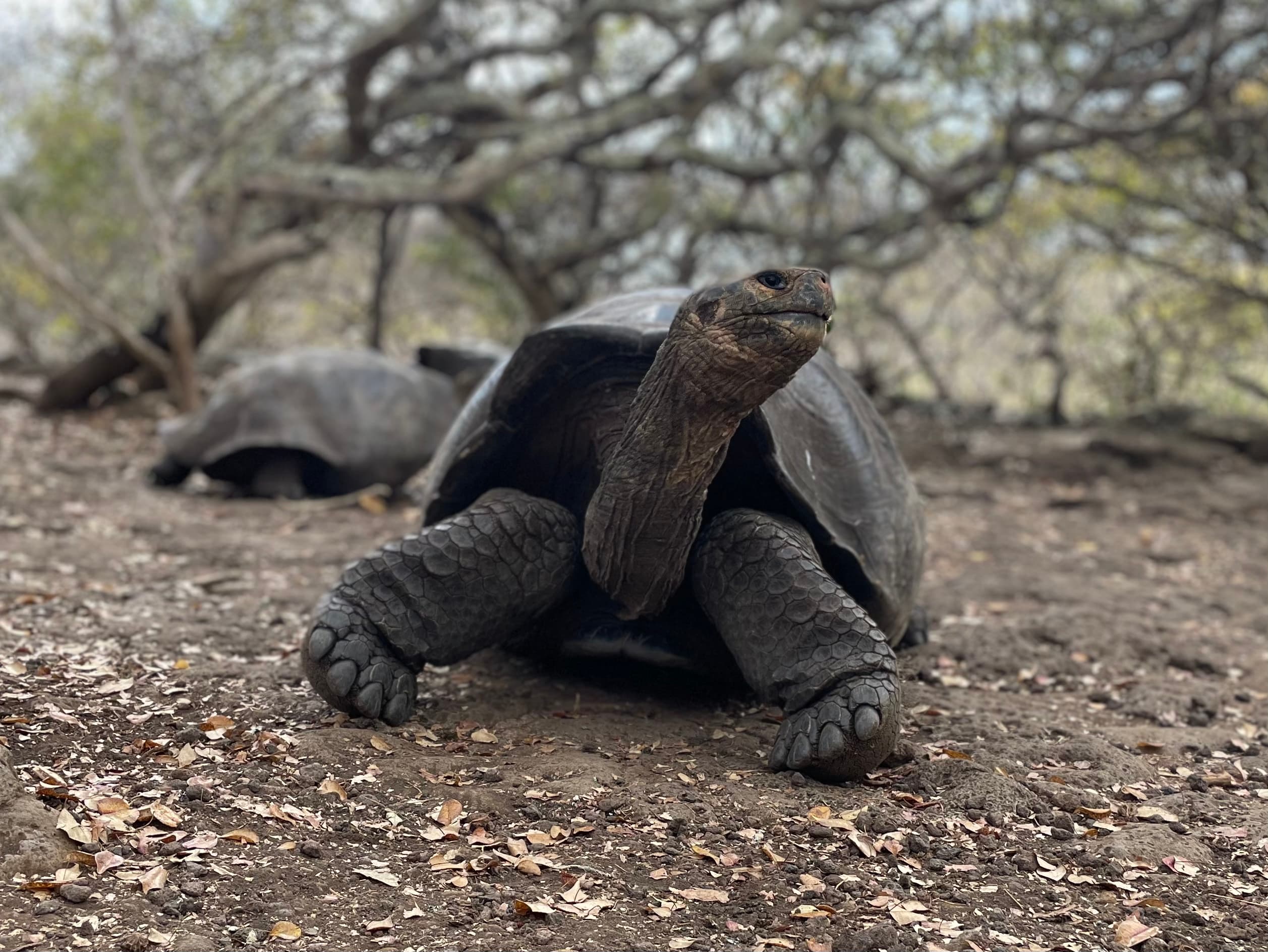
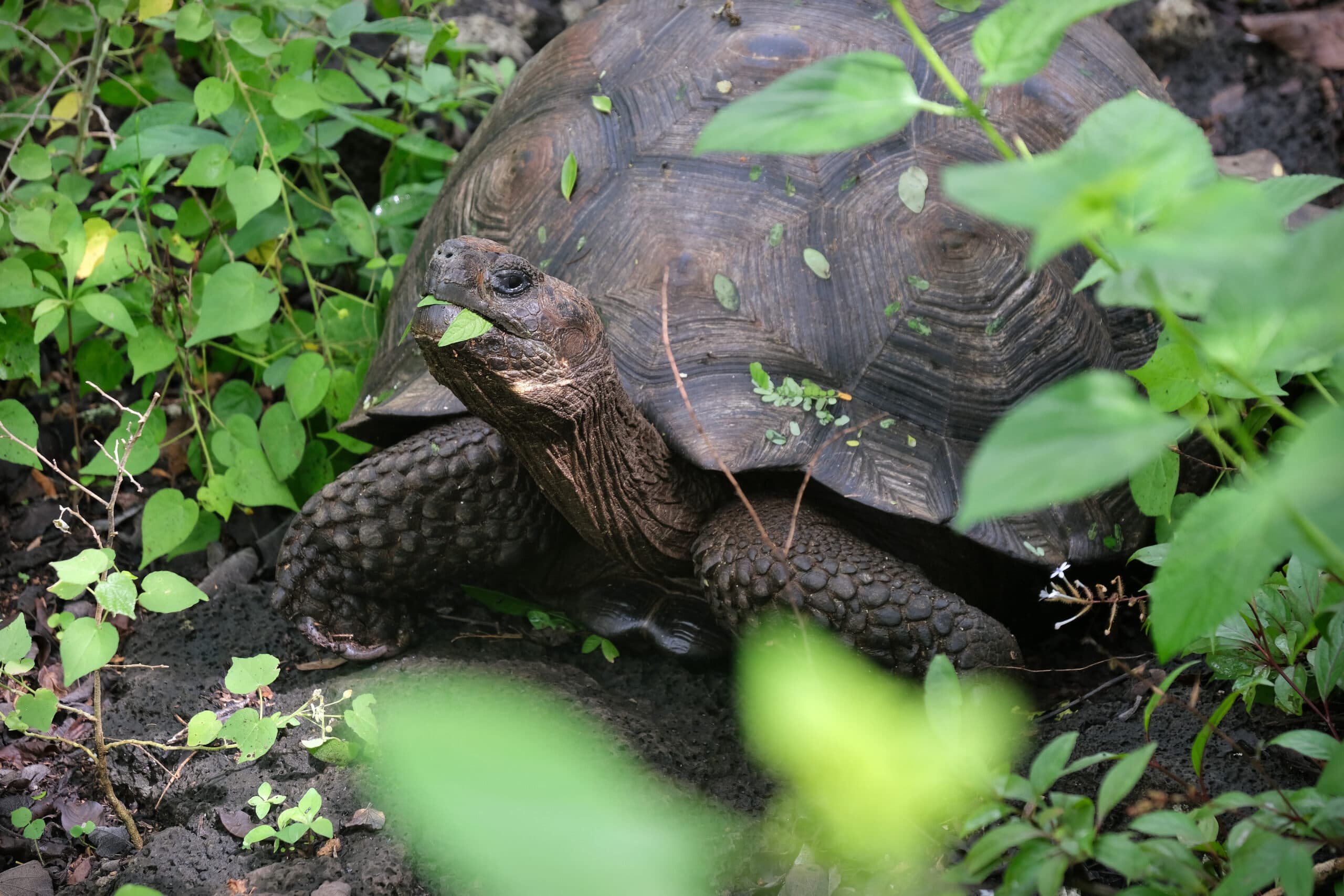
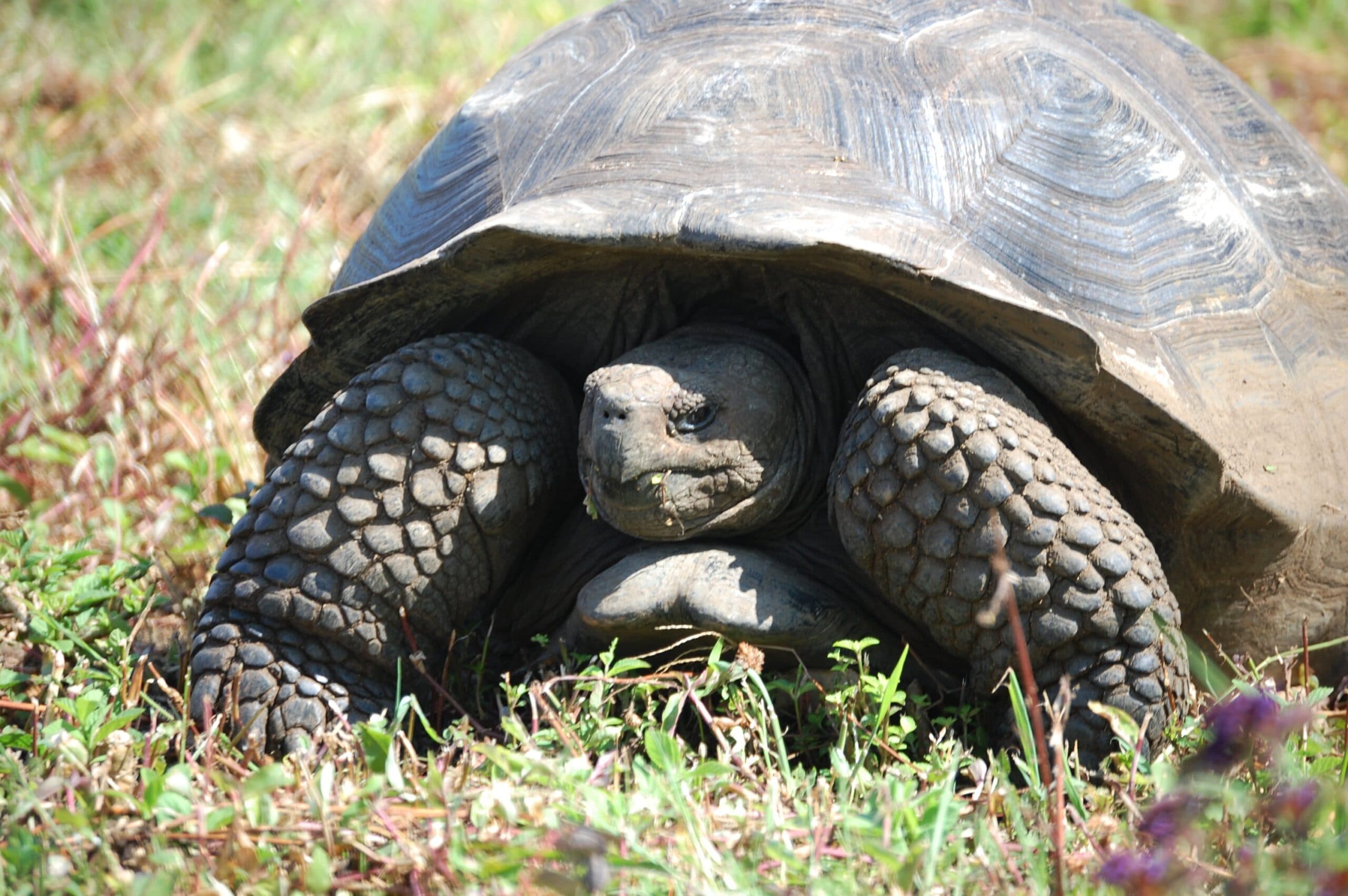
Galápagos tortoises are a group of giant land tortoises found only in Ecuador’s Galápagos archipelago. They are not one uniform species spread evenly across the islands. Modern references treat the island and volcano populations as a species complex in the genus Chelonoidis, with taxonomic arrangements that differ among authorities. Their huge bodies, long lives and ability to move seeds make them among the most influential herbivores in the islands’ terrestrial ecosystems.
A species complex shaped by islands and volcanoes
Galápagos giant tortoises belong to family Testudinidae and order Testudines. The Reptile Database treats Chelonoidis niger as a species complex and notes that named forms have been ranked either as subspecies or separate species. Galápagos Conservancy uses a multiple-species treatment and describes 15 historical species, including extinct lineages. This page therefore covers the Galápagos tortoise complex rather than assigning every population one conservation category.
Isolation helped populations diverge. Some inhabited separate islands, while others lived around different volcanoes on the large island of Isabela. Genetic history is complicated by occasional movement and past human transport. Names such as the western Santa Cruz tortoise, San Cristóbal tortoise and Española tortoise refer to distinct island lineages. Readers should check a population-specific assessment when a precise scientific name or threat category matters.
Domed and saddle-backed shells reflect different habitats
Galápagos tortoises have massive shells, pillar-like legs, thick scaly skin and toothless beaks. Shell form differs among populations. A domed carapace curves low over the neck and is common in wetter highlands where ground vegetation is abundant. A saddle-backed shell rises above the shoulders, allowing the neck to extend higher toward cactus pads and other vegetation in dry country. Intermediate forms also occur.
Shell shape is only one part of the animal’s response to habitat. Long necks, powerful limbs and large body stores help tortoises move through seasonal landscapes. Dark shells absorb solar heat, but tortoises must regulate temperature by changing activity, seeking shade or resting in mud and shallow pools. Their slow pace should not be confused with immobility: tagged animals can travel long distances between feeding, resting and nesting areas.
Life follows the islands’ wet and dry seasons
Activity depends on temperature, rain and food. In warm periods tortoises often forage early and late, avoiding the hottest middle of the day. In cooler conditions they may become active around midday. On islands with an elevation gradient, some adults migrate between productive highlands and warmer, drier lowlands. Galápagos Conservancy reports tracked tortoises on Wolf Volcano making seasonal movements of more than 20 kilometres.
Water is taken eagerly when available, yet tortoises can endure long dry periods by lowering activity and relying on stored water and energy. Survival ability varies with body size, health and local conditions, so famous claims about going a year without food or water should not be treated as a safe or normal husbandry standard. Wild tortoises choose among microhabitats and respond to rain in ways a confined animal cannot.
Diet and seed dispersal make tortoises ecosystem engineers
These tortoises are primarily herbivorous. Their foods include grasses, herbs, leaves, cactus pads, flowers and fruit. Diet changes across islands, elevations and seasons. By cropping vegetation, trampling paths and opening patches, a large tortoise changes the structure of its surroundings. Mud wallows and resting sites can create small habitats used by other organisms.
Seed movement is especially important. Fruit may be swallowed with intact seeds, carried during a long, slow journey and deposited in nutrient-rich dung. Galápagos Conservancy research has found thousands of seeds in individual droppings. That service can help native plants disperse, although tortoises can also spread invasive guava and other introduced plants. Their ecological effect depends on which plants are available in the landscape.
Breeding is slow and early life is dangerous
Males compete by raising their heads, opening their mouths and using body height in displays; physical pushing can follow. Females travel to suitable nesting ground and dig flask-shaped chambers with their hind feet. Clutch size and incubation vary among populations and environmental conditions. Like many reptiles, hatchling sex can be influenced by nest temperature during development.
Eggs and young tortoises are far more vulnerable than large adults. Native predators take some hatchlings, while introduced rats, pigs, dogs and ants have caused severe losses in certain populations. Growth is slow, maturity takes decades and adults may live beyond a century. These traits mean a population can retain old adults for years while failing to recruit enough young, masking a serious decline.
People caused collapse across the archipelago
From the eighteenth century onward, sailors collected enormous numbers of tortoises for meat and oil. Their ability to survive voyages without regular feeding made them tragically convenient stores of fresh meat. Later settlers altered habitats, and introduced mammals ate eggs, killed young or competed for vegetation. Several island lineages disappeared, including the Pinta tortoise represented in modern memory by Lonesome George.
Threats now differ by island. Invasive predators remain important in some nesting areas. Fences, roads and farms can obstruct migration on inhabited islands, and illegal killing still occurs locally. Invasive plants alter food and habitat, while changing rainfall and temperature can affect movement, nesting conditions and food availability. Because the complex contains separate lineages, recovery in one population does not erase risk in another.
Recovery combines breeding, release and habitat repair
Conservation teams have protected nests, raised hatchlings through their most vulnerable years and returned juveniles to native islands. Galápagos Conservancy reports that more than 10,000 young tortoises have been rewilded through programs working with the Galápagos National Park Directorate. Española recovered from a founding group of only 15 surviving adults, demonstrating what sustained breeding and habitat management can accomplish.
Removing goats, pigs and rats has allowed vegetation and nesting success to recover on several islands. Managers also study genetics to avoid mixing distinct lineages carelessly and to identify ancestry retained in hybrid animals. Reintroduction decisions require long-term monitoring because tortoises reshape vegetation, disperse both native and introduced seeds and may interact with human land use.
Living safely alongside giant tortoises
Wild tortoises should be observed without touching, feeding or blocking their route. Visitors need to follow Galápagos National Park rules and keep a respectful distance. A tortoise that approaches a road or path is still choosing its own route; crowding it for a photograph can interrupt feeding or movement. Vehicles are a serious hazard where roads cross seasonal ranges.
Galápagos tortoises are protected wildlife and are not appropriate private pets. Their immense adult size, longevity, specialized environmental needs and conservation status require professional management. Support for habitat protection, invasive-species control and responsible tourism benefits both tortoises and the island communities whose economies and identity are closely linked to the archipelago.