
A living gecko found only in New Caledonia
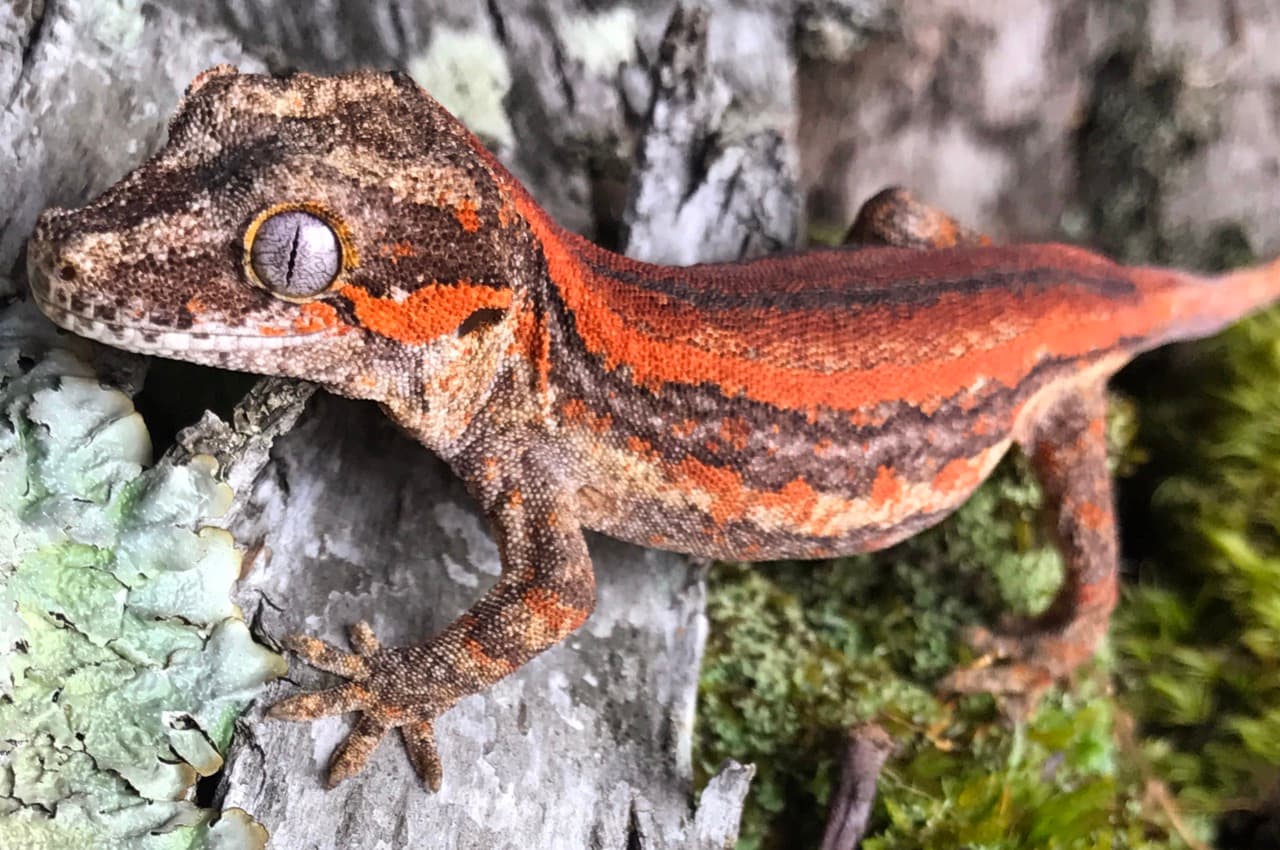
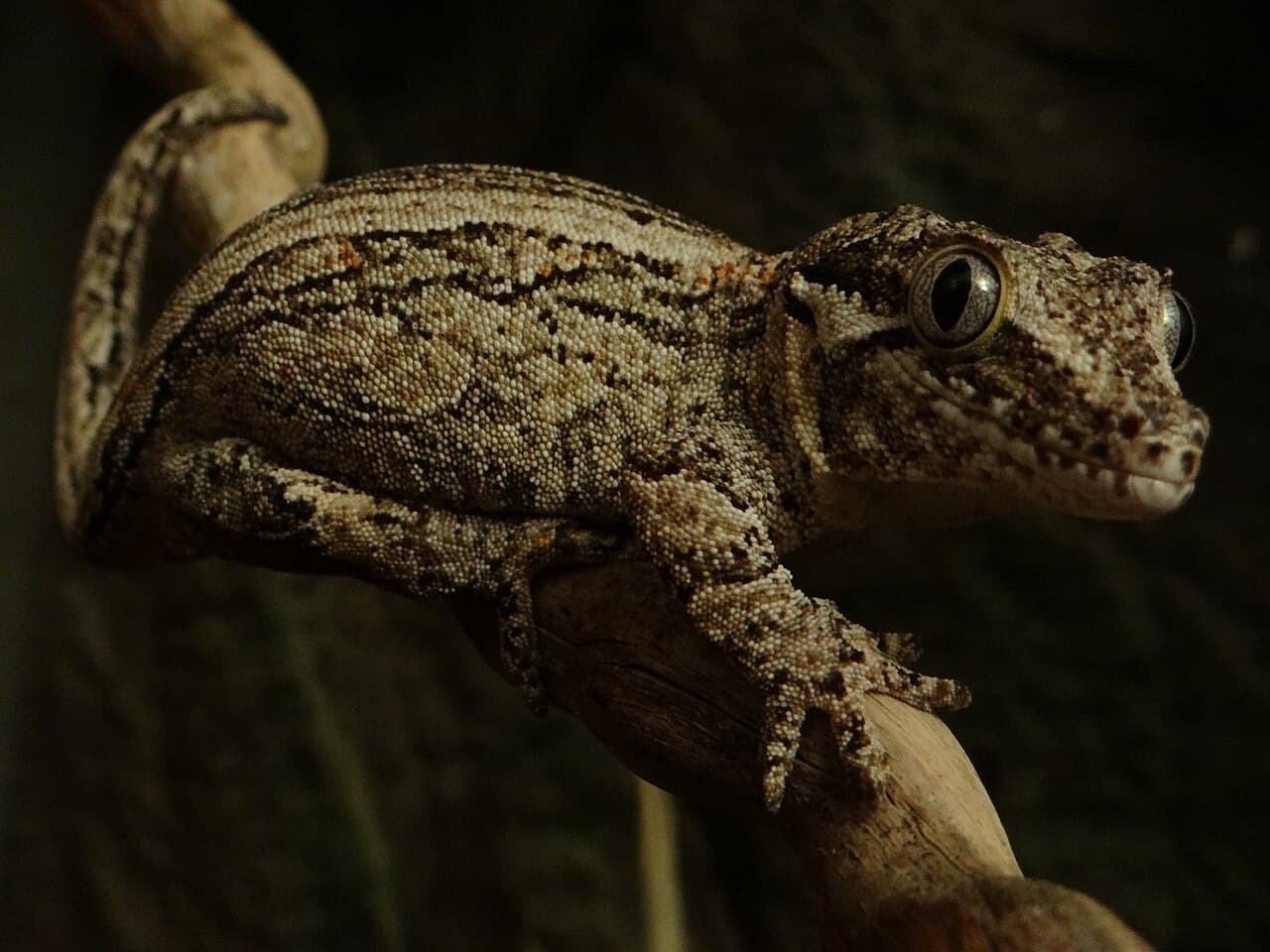
The Gargoyle Gecko, Rhacodactylus auriculatus, is a living diplodactylid lizard native to New Caledonia in the southwest Pacific. Its common name refers to the small raised crests above the eyes and along the head, which can give the animal a sculpted, almost stone-faced appearance. It is not related to gargoyles, of course, and those crests are neither horns nor weapons. They are part of a broad head carried on a compact, muscular body.
This is a species profile, rather than a profile of every New Caledonian gecko. The Reptile Database recognizes Rhacodactylus auriculatus as a current species in the family Diplodactylidae. Its natural distribution is confined to the southern part of Grande Terre, New Caledonia’s main island. Although it is familiar in specialist reptile collections, the wild animal belongs to a narrow island landscape with distinctive forests, shrublands and geological conditions.
Appearance and remarkable color variation
Gargoyle geckos are medium-sized, robust geckos. Adults are commonly about 15–18 centimetres long including the tail, while especially large animals may approach 20 centimetres. A broad, angular head, large lidless eyes and adhesive toe pads help distinguish the species. The tail can curl around supports and assists with balance while the gecko climbs through shrubs and low trees.
Color and pattern vary dramatically. Individuals may be gray, brown, cream, orange or reddish, with stripes, blotches or reticulated markings. The same animal can also appear lighter or darker as temperature, activity and background change. This reversible shift is often called “firing up” or “firing down” by keepers, but it is normal physiological color change rather than a new permanent pattern. The variation helps the gecko blend with bark, lichen and shadowed vegetation.
Range, elevation and habitat
The species is endemic to New Caledonia, meaning it occurs naturally nowhere else. Endemia New Caledonia reports records from the southern part of Grande Terre, including ultramafic landscapes, from low elevations to about 1,100 metres. Its estimated extent of occurrence is about 10,915 square kilometres, but suitable habitat is patchy within that outline.
Gargoyle geckos use humid forest, shrubland and vegetation around forest openings. The Bowling Green State University Herpetarium describes the species as semi-arboreal and associated with scrub forest and forest clearings. It often stays closer to the ground than some larger New Caledonian geckos, moving among trunks, branches, dense shrubs and sheltered crevices. Cover is important during the day, when a resting animal is vulnerable to heat, dehydration and predators.
Nocturnal movement and communication
A Gargoyle Gecko usually shelters through daylight and becomes active after dusk. Large eyes collect light in dim conditions, while adhesive toe pads and curved claws provide grip on bark and foliage. The species can climb, jump across short gaps and descend headfirst on textured surfaces. It may return repeatedly to a secure daytime refuge after nighttime foraging.
These geckos are generally solitary outside breeding encounters. Scent and close-range body cues help animals assess one another. They can also produce squeaks, growls or other short sounds when alarmed or during social interactions. A threatened gecko may gape, bite or shed its tail. Unlike some related geckos, a lost Gargoyle Gecko tail can regenerate, though the replacement may differ in shape and texture from the original.
An opportunistic omnivore
Gargoyle geckos eat both animal and plant foods. Invertebrates such as insects and spiders supply protein, while soft fruit, nectar and other sugary plant material provide readily available energy. Larger individuals may opportunistically take very small vertebrates, including other lizards, but such prey should not be treated as the whole diet. Feeding choices shift with season, body size and what is locally available.
This mixed diet connects several parts of the island food web. The gecko reduces populations of small arthropods and may move seeds after eating fruit. It is also prey for larger reptiles, birds and introduced mammals. Its ability to forage both on the ground and in low vegetation allows it to exploit a range of nighttime food sources.
Eggs, growth and life cycle
Gargoyle geckos reproduce by laying eggs. Courtship and mating occur when conditions are favorable, and a female typically deposits two leathery eggs in a protected, humid place. More than one clutch may be produced during a breeding season. Incubation time varies with temperature and moisture, commonly lasting roughly two to three months.
Hatchlings are independent as soon as they emerge. Their small size makes concealment especially important, and young geckos feed on correspondingly small invertebrates and soft foods. Growth continues over several years. Reliable maximum lifespan in the wild has not been established, but carefully managed captive animals can live well beyond a decade. Captive longevity should not be assumed to describe survival under natural predation, fire and habitat change.
Conservation status and real threats
Endemia lists the Gargoyle Gecko as Least Concern, reflecting its fairly broad distribution in southern New Caledonia and its occurrence at numerous sites. Least Concern does not mean free from pressure. Wildfire can remove forest and shrub cover, while mining and associated development can fragment habitat on the mineral-rich ultramafic soils of Grande Terre. Repeated burning may prevent damaged vegetation from recovering.
Introduced predators create another island-wide concern. Rats, feral cats and other non-native animals can prey on native reptiles or alter their food webs. Endemia notes that the species is protected under regulations in both New Caledonia’s Northern and Southern Provinces. Protecting connected vegetation across elevations is valuable because it preserves shelter, feeding areas and routes between local populations.
Responsible observation and captive care context
Wild Gargoyle Geckos should be observed without handling, collecting or disturbing their shelters. Night searches can stress animals when bright lights, repeated touching or removal of bark and rocks are involved. Visitors should follow local access rules, disinfect field equipment between sites and leave every refuge as they found it.
The species is established in the captive reptile trade, but it is not domesticated. Anyone considering one must check local law, choose a documented captive-bred animal and be prepared for more than a decade of specialist care. A vertically oriented enclosure needs climbing structure, cover, appropriate temperature and humidity gradients, clean water and a nutritionally complete diet. This wild-species profile is not a substitute for veterinary advice or a detailed husbandry plan.