
Home/Animals/Reptilia/Garter Snake
Animal group

Garter Snake

Thamnophis

A varied North and Central American snake genus whose members occupy gardens, grasslands, forests and wetlands.

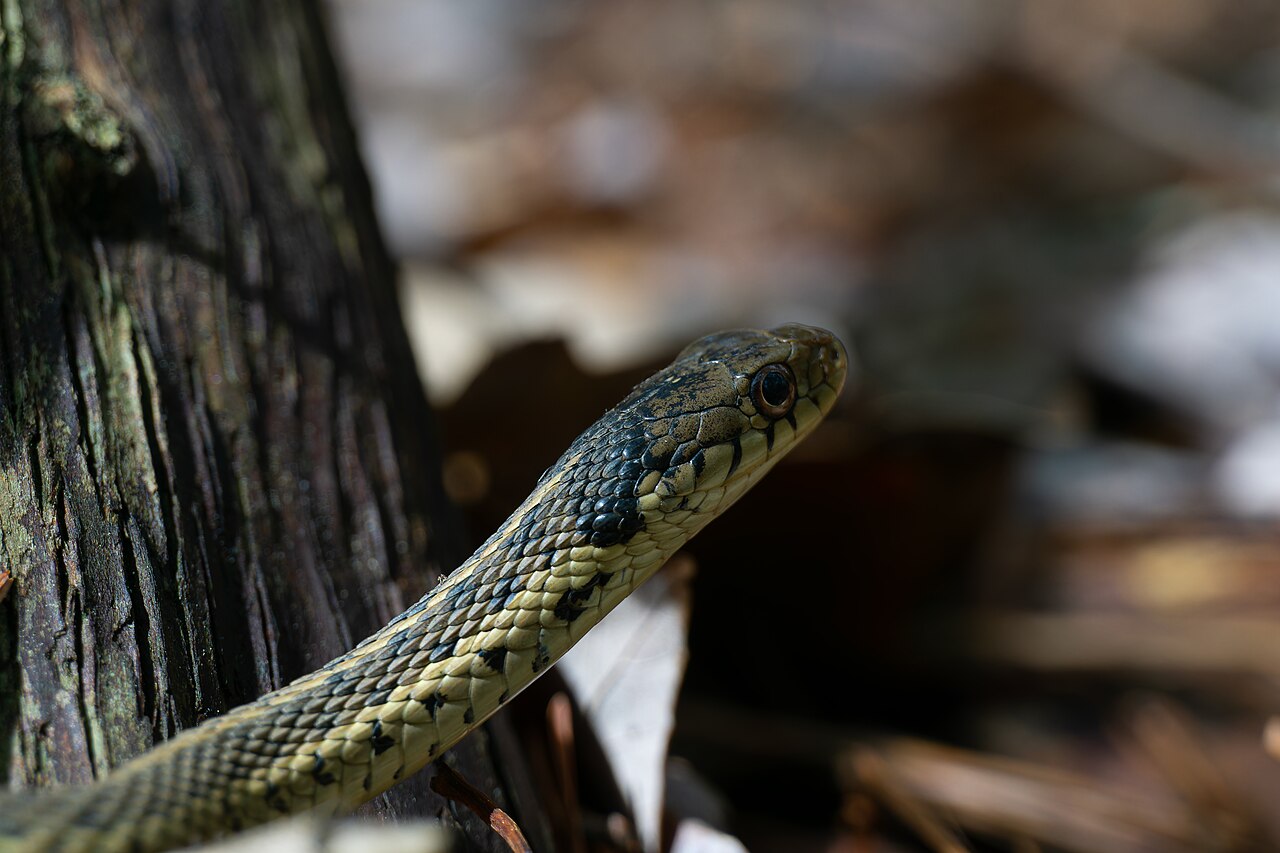
Eastern garter snake Thamnophis sirtalis sirtalis showing longitudinal stripes and keeled scales
Jasper Shide / Wikimedia Commons / CC0 1.0
๐ŸŒ Read in Language:

โšก At a Glance

Animal group
Also Known As
Gartersnake, ribbon snake
Diet Category
Carnivorous, with prey varying strongly among species
Activity Rhythm
Usually active by day or around dawn and dusk, with seasonal shifts driven by temperature.
Wild Lifespan
Different among member species; several can live beyond a decade in protected conditions
Typical Weight
broadly different among member species, sexes and conditions
Conservation Status
Varies by species
๐Ÿ’ก Key Biological Insight: Female garter snakes give birth to live young rather than laying shelled eggs in a nest.

๐ŸŒณ Scientific Taxonomy Hierarchy

Garter snakes are species in genus Thamnophis, family Colubridae and subfamily Natricinae. Common names also include several ribbon snakes. Species boundaries and counts change as taxonomists study Mexican and Central American populations, so this genus-level profile avoids treating traits of the common garter snake as universal.

KingdomAnimalia
PhylumChordata
ClassReptilia
OrderSquamata
FamilyColubridae
GenusThamnophis
SpeciesMultiple species in genus Thamnophis

Distinguishing Anatomical Features

  • โœ“Many species have one pale stripe along the back and one on each side over a brown, olive, gray or black ground color. Others are checkered, spotted, faintly striped or nearly plain. Keeled scales create a ridged texture, and the head is usually only moderately wider than the neck. Location and scale details are essential for a confident species identification.
  • โœ“Keeled scales add surface texture
  • โœ“Longitudinal stripes can disrupt detection during rapid movement
  • โœ“Some species swim and forage efficiently in water
  • โœ“Saliva contains prey-subduing toxins of low significance to people
  • โœ“Live birth allows reproduction in cool climates

๐Ÿ“ Physical Measurements

Total Lengthroughly 14โ€“55 in across the genus
Body Weightbroadly different among member species, sexes and conditions
Tail LengthProportion differs among member species and sexes
WingspanNot applicable
Top SpeedNo dependable universal maximumMovement changes with context and conditions.

๐ŸŽจ Appearance & Distinctive Markings

BrownOliveBlackGrayYellowOrangeRedBlueCream

Skin / Covering: Dry overlapping keeled scales

Sexual Dimorphism: Across many species, adult females are longer and heavier-bodied than males, while males have proportionally longer tails. The degree of difference varies and cannot identify every individual.

๐Ÿ—บ๏ธ Geographic Distribution & Habitat

The genus occurs from southern Canada across most of the United States and Mexico into parts of Central America. Each species has its own range; no single garter snake occupies the entire genus distribution.

Collectively found in wetlands, stream margins, grasslands, forests, shrublands, deserts, farms, parks and suburban gardens.

Country-level distribution map

Native range
FijiTanzaniaWestern SaharaCanada โ€” Native rangeUnited States โ€” Native rangeKazakhstanUzbekistanPapua New GuineaIndonesiaArgentinaChileCongo - KinshasaSomaliaKenyaSudanChadHaitiDominican RepublicRussiaBahamasFalkland IslandsNorwayGreenlandFrench Southern TerritoriesTimor-LesteSouth AfricaLesothoMexico โ€” Native rangeUruguayBrazilBoliviaPeruColombiaPanamaCosta Rica โ€” Native rangeNicaragua โ€” Native rangeHonduras โ€” Native rangeEl Salvador โ€” Native rangeGuatemala โ€” Native rangeBelize โ€” Native rangeVenezuelaGuyanaSurinameFranceEcuadorPuerto RicoJamaicaCubaZimbabweBotswanaNamibiaSenegalMaliMauritaniaBeninNigerNigeriaCameroonTogoGhanaCรดte dโ€™IvoireGuineaGuinea-BissauLiberiaSierra LeoneBurkina FasoCentral African RepublicCongo - BrazzavilleGabonEquatorial GuineaZambiaMalawiMozambiqueEswatiniAngolaBurundiIsraelLebanonMadagascarPalestinian TerritoriesGambiaTunisiaAlgeriaJordanUnited Arab EmiratesQatarKuwaitIraqOmanVanuatuCambodiaThailandLaosMyanmar (Burma)VietnamNorth KoreaSouth KoreaMongoliaIndiaBangladeshBhutanNepalPakistanAfghanistanTajikistanKyrgyzstanTurkmenistanIranSyriaArmeniaSwedenBelarusUkrainePolandAustriaHungaryMoldovaRomaniaLithuaniaLatviaEstoniaGermanyBulgariaGreeceTรผrkiyeAlbaniaCroatiaSwitzerlandLuxembourgBelgiumNetherlandsPortugalSpainIrelandNew CaledoniaSolomon IslandsNew ZealandAustraliaSri LankaChinaTaiwanItalyDenmarkUnited KingdomIcelandAzerbaijanGeorgiaPhilippinesMalaysiaBruneiSloveniaFinlandSlovakiaCzechiaEritreaJapanParaguayYemenSaudi ArabiaCyprusMoroccoEgyptLibyaEthiopiaDjiboutiUgandaRwandaBosnia & HerzegovinaNorth MacedoniaSerbiaMontenegroKosovoTrinidad & TobagoSouth Sudan
Highlighted countries are recorded profile locations, not precise biological range boundaries.Map boundaries: Natural Earth

๐Ÿ’ก Did You Know?

  • ๐Ÿ’กKeeled scales add surface texture
  • ๐Ÿ’กLongitudinal stripes can disrupt detection during rapid movement
  • ๐Ÿ’กSome species swim and forage efficiently in water
  • ๐Ÿ’กSaliva contains prey-subduing toxins of low significance to people
  • ๐Ÿ’กLive birth allows reproduction in cool climates

๐ŸŒฟ Conservation Status & Threats

No single assessment recorded

โ€œThe genus Thamnophis has no single IUCN category. Individual species range from widespread Least Concern snakes to highly threatened endemics, so conservation must be assessed species by species.โ€

CITESCITES and national listings differ among member species; several threatened garter snakes receive federal or state protection

โš ๏ธ Major Threats to Garter Snake

  • โ€ขWetland drainage
  • โ€ขWater pollution
  • โ€ขRoad mortality
  • โ€ขIntroduced predators
  • โ€ขPersecution
  • โ€ขFragmentation of winter den routes
  • โ€ขDisease and prey decline

๐Ÿ”„ Life Cycle & Reproduction

Wild vs. Captivity Lifespan Comparison

๐ŸŒฟ In the WildDifferent among member species; several can live beyond a decade in protected conditions
๐Ÿ  In Captivity (with veterinary care)Longevity records differ greatly among species and should not be generalized.
Clutch / Litter SizeFrom a few to several dozen live young depending on species and female size.
Incubation / GestationEmbryos develop inside the mother for roughly two to three months in many temperate species, but duration differs.
Fledging / WeaningThere is no parental care after birth. Neonates must find shelter and suitable small prey immediately.
Sexual MaturityOften two to three years in temperate species; differs across the genus
Mating SystemGenerally multiple males may court a receptive female
Nesting / Den TypeNo egg nest; females give live birth in sheltered habitat

๐Ÿฆ… Behavior & Field Ecology

Carnivorous, with prey varying strongly among species

๐ŸŒ Ecological Food Web & Relationships: Garter snakes transfer energy between earthworms, amphibians, fishes and small mammals and a wide range of predators. Aquatic specialists can be sensitive indicators of healthy wetlands and native amphibian populations.

Social Group SizeMostly solitary outside seasonal aggregations
Activity RhythmUsually active by day or around dawn and dusk, with seasonal shifts driven by temperature.
Feeding StrategyCarnivorous, with prey varying strongly among species

๐Ÿฅฉ Primary Prey & Preferred Diet

โœ“ Earthwormsโœ“ Amphibiansโœ“ Fishโœ“ Slugsโœ“ Leechesโœ“ Small rodentsโœ“ Insects

๐Ÿ“ข Communication & Territorial Signals

  • Pheromone trails
  • Tongue-flicking
  • Body contact
  • Defensive posture

๐Ÿพ Wild Temperament & Traits

โ€ข Alertโ€ข Usually avoids peopleโ€ข Defensive when restrained

๐Ÿค Human Interaction & Pet Advisory

โš ๏ธ Strictly Wild Species
๐Ÿšซ

Can You Keep a Garter Snake as a Pet?

Some species are kept legally in captivity, but requirements differ and wild collection may be restricted. Captive-bred, correctly identified animals are the responsible choice where ownership is legal.

Domestication StatusSome captive-bred lines exist, but garter snakes are not domesticated
Danger to HumansLow for the genus, but bites and allergic reactions are possible
Economic & Ecotourism RolePredator and prey roles, garden pest control, wetland monitoring and research on behavior, toxin resistance and reproduction.

โš ๏ธ Behavioral Risk Factors & Wildlife Safety

  • Small rear teeth can puncture skin
  • Mild prey-subduing secretions may cause localized swelling
  • Handling stresses the animal and may trigger musking

๐ŸŒ Ecological Food Web & Relationships

Species in this group

  • โ€”
  • โ€”
  • โ€”
  • โ€”
  • โ€”
  • โ€”

๐Ÿฆ… Natural Predators (5)

HawksAccipitridae
HeronsArdeidae
RaccoonProcyon lotor
Larger SnakesSerpentes
Domestic CatFelis catus

๐Ÿงฌ Related Species (3)

Common Garter SnakeThamnophis sirtalisWidespread and highly variable species
Western Terrestrial Garter SnakeThamnophis elegansWestern species using many habitats
Checkered Garter SnakeThamnophis marcianusPatterned species of the southern United States and Mexico

Garter Snake (Thamnophis) refers here to the genus Thamnophis, a diverse group of live-bearing natricine snakes rather than to one species with one fixed size or conservation status. This guide separates well-supported biology from common assumptions and covers identification, range, habitat, diet, behavior, reproduction and conservation.

Identification

Many species have one pale stripe along the back and one on each side over a brown, olive, gray or black ground color. Others are checkered, spotted, faintly striped or nearly plain. Keeled scales create a ridged texture, and the head is usually only moderately wider than the neck. Location and scale details are essential for a confident species identification. Across many species, adult females are longer and heavier-bodied than males, while males have proportionally longer tails. The degree of difference varies and cannot identify every individual.

Identification should combine body shape, markings, size, voice or movement, and location. One feature by itself can overlap with a related animal, a juvenile, or an individual in unusual light.

Photographs are most useful when they preserve scale and show several diagnostic features. Handling or repositioning a wild garter snake for identification can cause stress and is unnecessary.

Size and physical adaptations

Garter Snake typically measures roughly 35โ€“140 cm across the genus and weighs broadly different among member species, sexes and conditions. This is a genus-wide span, not a typical size for every species. Small Mexican species may remain short while large common garter snakes can exceed one meter.

Its useful adaptations include keeled scales add surface texture, longitudinal stripes can disrupt detection during rapid movement, some species swim and forage efficiently in water, saliva contains prey-subduing toxins of low significance to people, live birth allows reproduction in cool climates. These traits work together in the animal’s normal setting rather than serving as isolated curiosities.

Published measurements may use different methods, life stages or sample locations. Comparing figures responsibly means checking what was measured rather than selecting the largest number available.

Range and distribution

The genus occurs from southern Canada across most of the United States and Mexico into parts of Central America. Each species has its own range; no single garter snake occupies the entire genus distribution. The native range includes Canada, United States, Mexico, Guatemala, Belize, Honduras, El Salvador, Nicaragua, Costa Rica.

A country-level map indicates broad distribution, not continuous occupation. Climate, elevation, water, vegetation, prey, breeding sites, barriers and survey effort all affect where records occur.

Records near the edge of the range deserve careful documentation because they may reflect natural movement, improved survey coverage, accidental transport or a genuine distribution change.

Habitat

Collectively found in wetlands, stream margins, grasslands, forests, shrublands, deserts, farms, parks and suburban gardens.

Aquatic and semiaquatic species remain close to water and hunt fish or amphibians, while terrestrial species forage through meadows, woodland edges and gardens. In cold regions many shelter communally below the frost line for winter. Protecting a population therefore requires the feeding, shelter and breeding features that make a site usable, along with connections that allow movement.

Microhabitat matters. Shade, soil, current, moisture, shelter or host plants can determine whether a small area is usable even when the surrounding landscape appears suitable.

Diet and feeding

Garter Snake is a carnivorous, with prey varying strongly among species. Important foods include earthworms, amphibians, fish, slugs, leeches, small rodents, insects. Garter snakes locate prey with vision, scent and tongue-flicking. They seize and swallow prey whole; some species use mildly toxic oral secretions and enlarged rear teeth to help subdue difficult prey.

Diet changes with age, season, location and food supply. A dramatic prey record does not establish what most individuals eat most of the time; repeated field observations provide a stronger picture.

Feeding opportunities also create risk. An animal focused on prey may be less alert to predators, traffic or people, while contaminated prey can transfer pollutants through the food web.

Behavior and communication

Usually active by day or around dawn and dusk, with seasonal shifts driven by temperature. Most forage alone, but many gather at winter dens or around mating sites. Threatened individuals may flee into cover or water, flatten the body, strike, defecate or release strong-smelling musk.

Pheromones carry information about species, sex and reproductive condition. Touch and body movement dominate during courtship and close encounters. Behavior should be interpreted in context: alarm, courtship, feeding and temperature regulation can produce very different actions from the same animal.

Daily schedules are flexible responses, not rigid rules. Weather, breeding condition, disturbance, tides or food can move activity into a different part of the day.

Reproduction and development

Mating often follows spring emergence in temperate species, when males follow female pheromones and may form large courtship groups. Timing differs in warmer regions. From a few to several dozen live young depending on species and female size. Young are born fully formed and independent. They begin hunting small prey soon after birth and grow through repeated shedding of the skin.

Young animals face different risks and may use different microhabitats or food than adults. Breeding success depends on adult condition, suitable sites and the survival of offspring through vulnerable early stages.

Counts of eggs or young describe reproductive output, not the number expected to reach adulthood. Mortality is normally greatest during eggs, larval or juvenile stages.

Predators and ecological role

Garter snakes transfer energy between earthworms, amphibians, fishes and small mammals and a wide range of predators. Aquatic specialists can be sensitive indicators of healthy wetlands and native amphibian populations. Documented or likely predators include Hawks, Herons, Raccoon, Larger Snakes, Domestic Cat.

This animal is both a consumer and a food source. Its influence comes through many repeated interactions, so ecological claims should be based on measured populations rather than assumptions drawn from appearance.

Predator and prey relationships differ among places. A species can be ecologically influential without being abundant everywhere, and its role can change across its range.

Relationship with people

Many garter snakes live safely near homes and reduce populations of slugs, rodents and other small animals. Roads, wetland loss, persecution, pollution and introduced predators threaten particular species and populations.

Watch without handling and give the snake a path to cover. A defensive animal may bite or musk; wash any bite with soap and water. Local identification matters because other snakes may share similar patterns. Responsible observation means keeping an appropriate distance, avoiding capture or feeding, protecting habitat and following local wildlife or invasive-species guidance.

Wildlife guidance should come from the responsible local agency because collection rules, reporting requests and appropriate responses differ between native and introduced ranges.

Conservation

The genus Thamnophis has no single IUCN category. Individual species range from widespread Least Concern snakes to highly threatened endemics, so conservation must be assessed species by species. The reported global trend is Different among member species and populations.

Important pressures include wetland drainage, water pollution, road mortality, introduced predators, persecution, fragmentation of winter den routes, disease and prey decline. Global status can hide local decline or recovery, so current regional monitoring and habitat management remain necessary.

The most useful conservation action follows the documented pressure. Protecting breeding sites, reducing road deaths or limiting pollutants can require different tools in different populations.

Sources and further reading

โ“ Frequently Asked Questions

Answers to frequently asked questions verified against peer-reviewed zoological research.

No. Garter snake refers to numerous species in the genus Thamnophis, including several snakes also called ribbon snakes.