
What geckos are
Geckos are a large, living branch of lizards grouped within Gekkota. The name describes a diverse evolutionary group rather than one species, so a single size, color, habitat, or conservation label cannot represent every gecko. Members occur across several families and include tiny ground-dwellers, heavy-bodied eyelid geckos, slender house geckos, vividly colored day geckos, and leaf-tailed species whose outlines nearly disappear against bark. The group belongs to the order Squamata, alongside other lizards and snakes. This profile therefore treats “gecko” as a broad taxonomic group and uses named species only as examples.
Appearance and distinctive anatomy
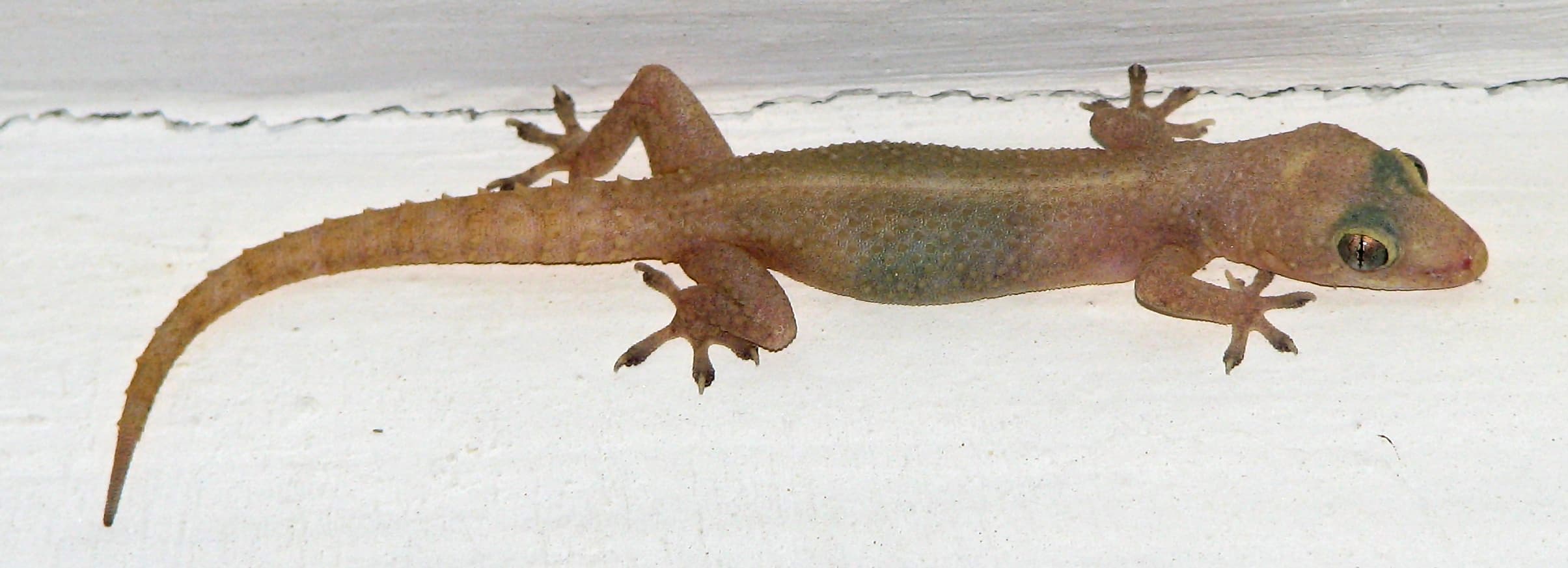
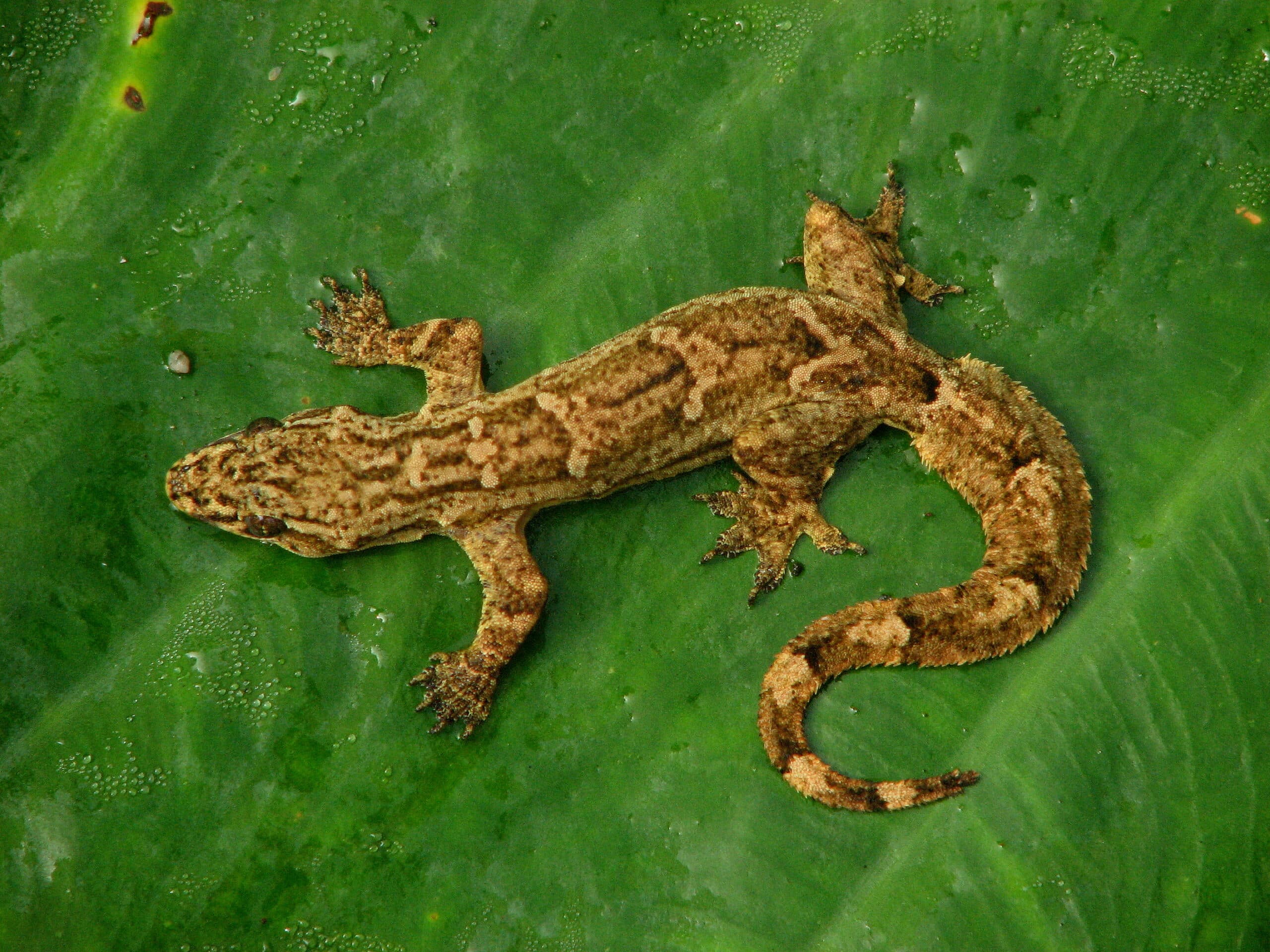
Most geckos have a relatively broad head, a flexible body, four well-developed limbs, and a tail that may store fat or detach during an escape. Their skin is covered with small scales, but surface texture varies from smooth to strongly tubercled. Colors range from muted bark browns and sandy grays to bright greens, reds, blues, and yellows. Many nocturnal species have large eyes and vertical pupils that gather light efficiently. Numerous geckos lack movable eyelids; a transparent spectacle protects the eye, and the animal may clean it with its tongue. Eyelid geckos such as leopard geckos are a useful reminder that this feature is not universal.
Adhesive toes are the group’s most famous adaptation, but they also vary. In many climbing species, broad pads carry microscopic hair-like setae. These structures divide into still finer tips that make extremely close contact with a surface, allowing the foot to grip through intermolecular forces without glue. The toes can attach and release rapidly as the animal runs. Other geckos, including leopard geckos, lack expanded adhesive pads and rely more on claws while moving over soil and rock.
Range and habitat
Geckos live across warm regions of the world, with especially high diversity in tropical and subtropical areas. Different species occupy rainforest trunks, dry scrub, rocky deserts, caves, coastal vegetation, forest floors, and human buildings. Their geographic ranges can be enormous or restricted to a single island or mountain system. House geckos have also traveled with people and established populations outside their native ranges, where lights and walls provide hunting sites and shelter.
Habitat use depends on anatomy and climate. Arboreal species exploit bark, leaves, and narrow branches. Ground species shelter beneath stones, in burrows, or among leaf litter. Desert geckos avoid dangerous daytime heat by remaining hidden until dusk. Because this is a group profile, no single range map can truthfully describe all geckos; the appropriate map is global and illustrative rather than a claim that every species occupies every highlighted country.
Activity, communication, and defense
Many geckos are nocturnal or crepuscular, although day geckos and several other lineages are active in sunlight. At night, geckos often wait near insect activity, move cautiously between perches, and use cover to avoid predators. Some species change their shade with temperature, light, or surroundings, but this is usually subtler than the dramatic changes associated with chameleons.
Geckos are unusually vocal for lizards. Depending on the species, they may chirp, click, squeak, or give repeated advertising calls. Calls can help defend space, attract mates, or signal alarm. Visual displays, scent marks, and body posture also carry information. When threatened, many species sprint into crevices or drop part of the tail. The detached tail may continue moving and distract a predator while the gecko escapes. A replacement can grow, but it is generally built differently and may not match the original in shape, color, or internal structure.
Diet and ecological role
Most geckos are predators of small animals. Insects, spiders, and other arthropods dominate many diets, while larger species may take small vertebrates or other lizards. Some geckos also consume fruit, nectar, or pollen, and the balance between animal and plant food differs among lineages. House geckos often gather near artificial lights because moths and other insects concentrate there. They are opportunistic hunters, but prey size, season, habitat, and the gecko’s own body size influence what it can capture.
Geckos connect several levels of food webs. They reduce populations of invertebrate prey and, in turn, feed snakes, birds, mammals, large spiders, and other reptiles. Fruit- and nectar-feeding species may move pollen or seeds. On islands, these relationships can be especially important because a gecko may fill ecological roles shared among many vertebrates on a continent.
Reproduction and life cycle
Reproductive patterns differ substantially across Gekkota. Many females lay small clutches, often one or two eggs, in protected cracks, beneath bark, or on firm surfaces. Some eggs have hard shells and may adhere to the laying site. Communal nesting occurs in certain species when several females use the same secure place. Incubation time depends on species and temperature. Hatchlings are independent and must find shelter and small prey soon after emerging.
Live birth has evolved in some geckos, and parthenogenesis occurs in a few lineages. Mourning geckos are a familiar example in which females can produce offspring without fertilization. Such exceptions show why broad claims about mating systems or clutch size are misleading for the whole group. Growth rate, age at maturity, and lifespan also vary with body size, climate, predation, and species.
Conservation and relationships with people
There is no valid conservation status for “geckos” as a whole. Some widespread species thrive around buildings, while narrow-range island or forest species may face severe pressure from habitat loss, invasive predators, fire, collection, or climate change. Conservation assessments must be checked species by species. Protecting small habitat patches can matter greatly when an entire species occupies only one island, limestone outcrop, or mountain forest.
People often welcome house geckos because they eat insects, and many cultures recognize their calls. Geckos are also kept in captivity, but responsible ownership requires captive-bred animals, species-appropriate heat and humidity, veterinary care, and a commitment to the animal’s full lifespan. Wild collection can damage small populations and spread disease. A gecko found indoors is usually best left alone or gently guided outside without grabbing the tail, which may detach under stress.