
What Is a Glass Lizard?
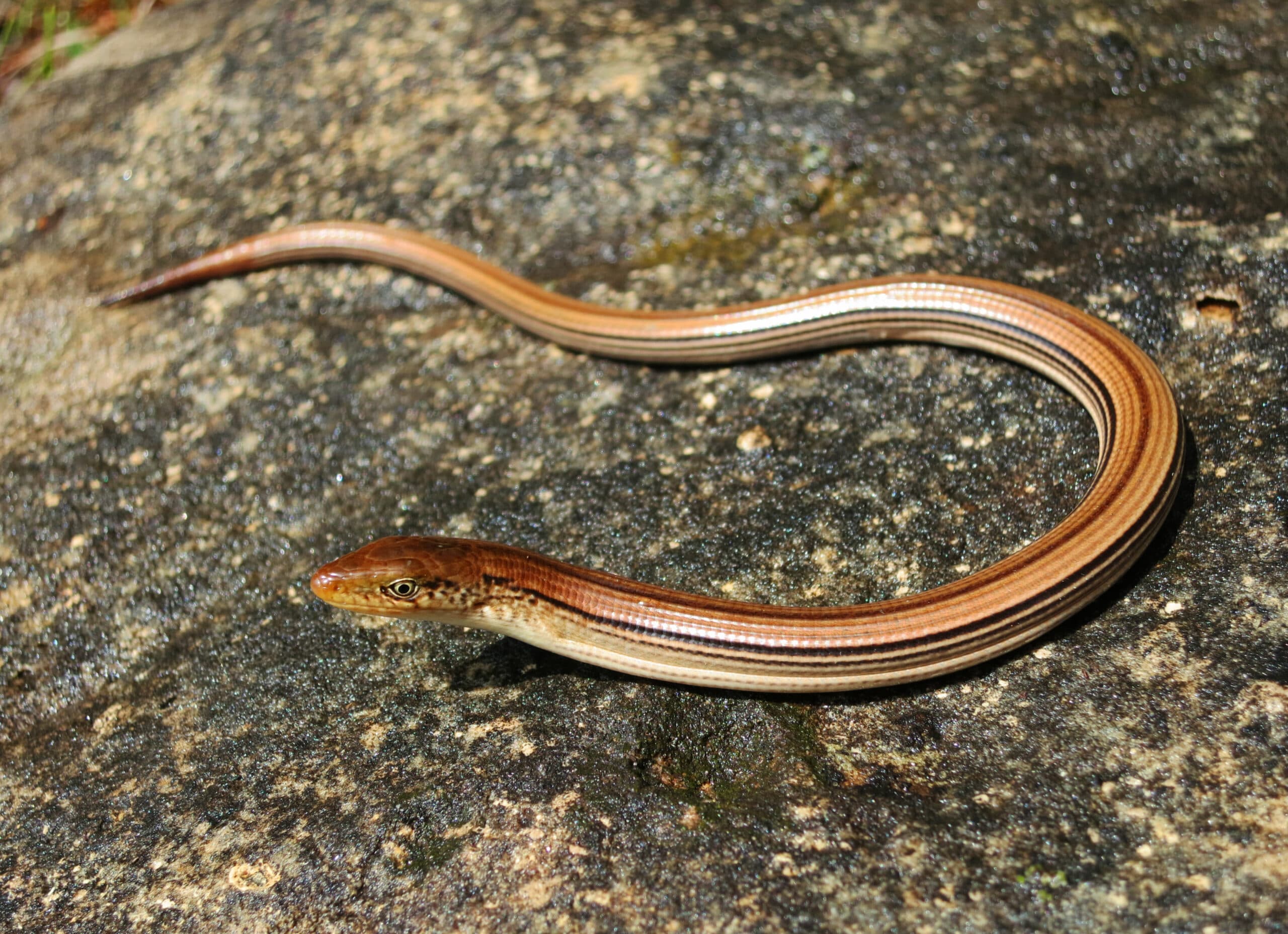
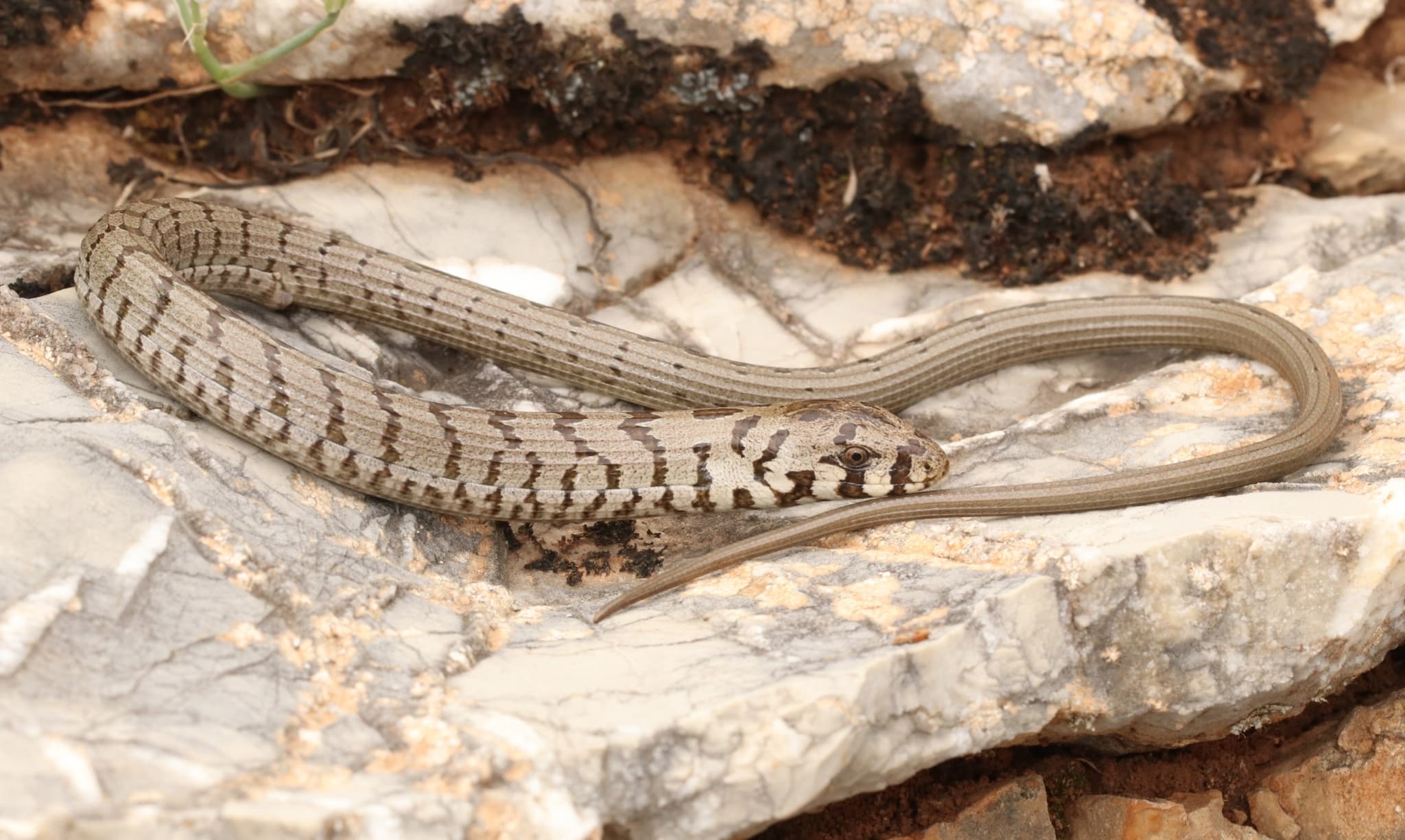
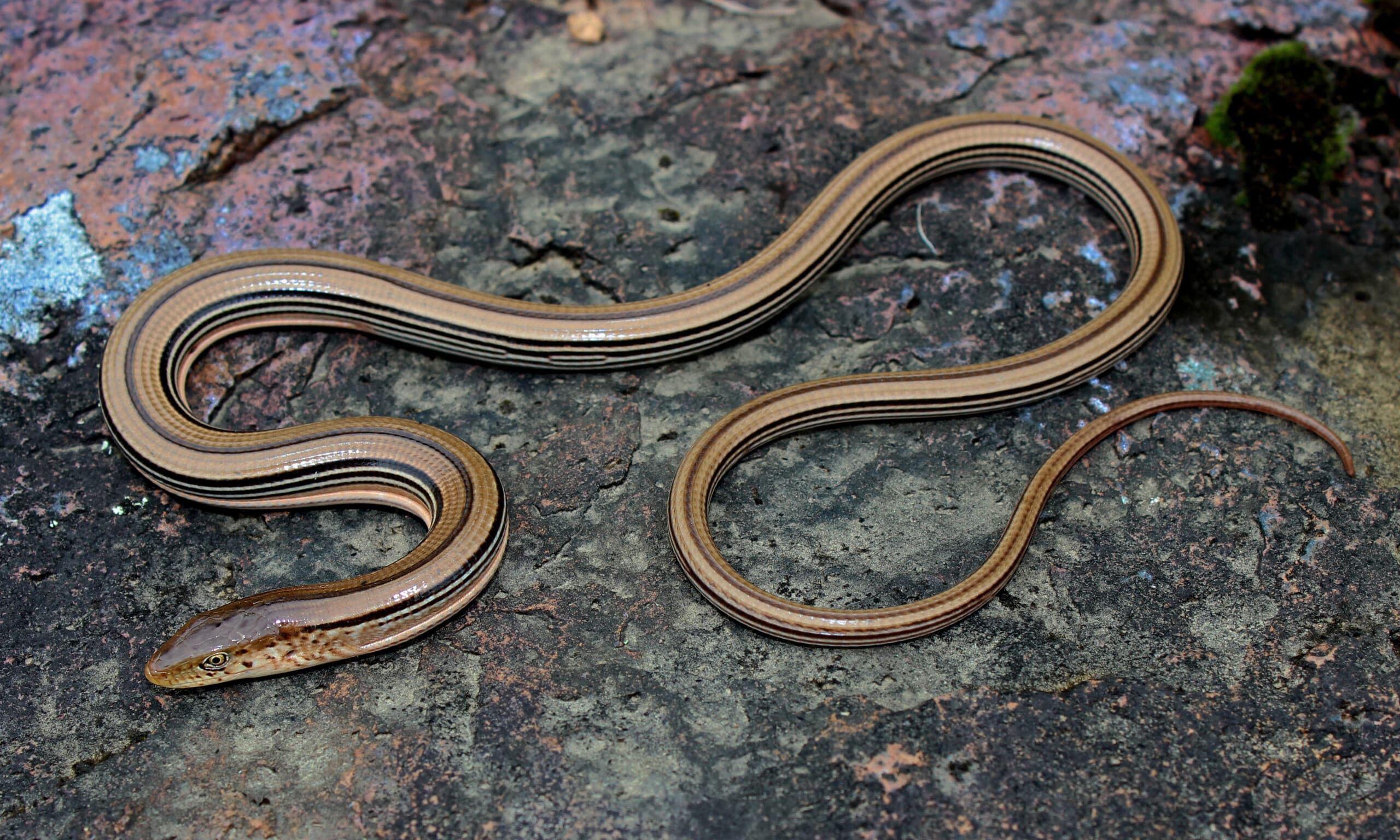
Glass lizard is a common name for several living, elongated lizards in the family Anguidae. Most have no visible front or hind legs, although tiny external hind-limb remnants occur in some species. Their long bodies and smooth movement can make them look like snakes at first glance, but they remain lizards. This profile uses the name for the living group rather than treating every glass lizard as one species. North American examples include slender glass lizards in Ophisaurus, while the much larger European glass lizard belongs to Pseudopus. Asian relatives are placed in other genera, including Dopasia. The Reptile Database documents living species individually, which is important because range, size, habitat, and conservation status cannot be assigned safely to the whole group.
How Glass Lizards Differ from Snakes
A glass lizard has several features that reveal its lizard ancestry. It has movable eyelids and can blink, while snakes have a clear fixed scale over each eye. It also has external ear openings behind the head. Many glass lizards have a stiff-sided body with a pronounced fold running along each flank. That fold helps the body expand when the animal breathes or swallows. Their jaws do not have the highly mobile construction used by snakes to engulf proportionally large prey, so glass lizards usually take smaller items they can seize and swallow directly.
The tail accounts for a striking share of the animal’s total length. When threatened, many species can detach part of it. The separated tail may continue to writhe, drawing a predator’s attention while the lizard escapes. This brittle-looking defense inspired the word “glass” in the common name. The animal does not shatter into pieces, and the tail does not magically reassemble. Regrowth is possible, but the replacement is usually shorter and structurally different from the original. Tail loss also removes stored energy, so it is an emergency defense rather than a harmless trick.
Range and Habitat
Glass lizards occur in separated regions of North America, Europe, North Africa, and Asia. The distribution depends on the species. In the southeastern United States, the eastern glass lizard, slender glass lizard, island glass lizard, and mimic glass lizard occupy different combinations of sandy uplands, coastal areas, grasslands, wetlands, and open woodland. The Florida Museum’s state lizard list records several Ophisaurus species and helps show why local identification matters.
Cover is essential even in open country. Individuals use loose soil, leaf litter, grass tussocks, rotting vegetation, mammal burrows, and spaces beneath logs or debris. Many spend much of their time concealed and emerge when temperature and moisture allow. Slender form helps them push through dense ground vegetation, but the stiff body means they do not move exactly like snakes. They often gain traction against stems, litter, or uneven soil. Habitat changes that remove ground cover can therefore reduce shelter and feeding opportunities even when a site still appears broadly “natural.”
Diet and Foraging
Glass lizards are predators of small animals. Depending on species and opportunity, prey can include insects, spiders, snails, slugs, earthworms, and small vertebrates. Larger individuals may take small rodents, nestling birds, lizards, or eggs, but there is no single diet shared in identical proportions across the group. The Animal Diversity Web account for the slender glass lizard describes a varied carnivorous diet and notes that jaw structure limits prey size.
Foraging generally occurs at ground level or within surface cover. A glass lizard uses vision and chemical cues from tongue flicking to investigate its surroundings. It seizes manageable prey with the jaws rather than constricting or injecting venom. Because glass lizards consume many invertebrates, they form part of the small-predator community in grasslands, scrub, forests, and wetlands. They are also prey for birds, mammals, and snakes, linking invertebrate-rich ground habitats with larger predators.
Daily Behavior and Defense
Activity is shaped by temperature, season, rainfall, and species. Many glass lizards are most visible during mild daylight hours and retreat when conditions become too hot, cold, or dry. They can move quickly through vegetation, yet their first defense is often concealment. If discovered, they may flee, thrash, bite, release waste, or shed the tail. None of these reactions makes them dangerous to people. They are nonvenomous and normally avoid contact.
Wild animals should be observed without capture. A person who grabs one can trigger tail loss, and a detached tail represents a real energetic cost. Even well-meant handling can also remove the animal from the exact cover or burrow it was using. Photographs taken from a respectful distance preserve natural behavior and reduce stress. Seeing a long limbless reptile is not a reason to kill it: checking for eyelids, ear openings, and a side fold can help distinguish a glass lizard from a snake without touching either animal.
Reproduction and Life Cycle
Glass lizards reproduce sexually and lay eggs, but timing and clutch size vary. Females of some Ophisaurus species place eggs in a protected nest chamber beneath cover or in loose material and remain with them during incubation. That attendance may help defend the clutch and maintain contact with a suitable nest site. Young hatch as independent miniature lizards and begin feeding on small prey.
Growth, age at maturity, and longevity are species-specific. Broad numbers can be misleading because the name covers animals from different climates and lineages. Seasonal populations may concentrate courtship and nesting in warm months, whereas timing elsewhere follows local rainfall and temperature. The safest way to interpret a record is to identify the species and location before applying life-history data.
Conservation
There is no single conservation category for “the glass lizard.” Each species must be assessed separately. Some are widespread, while others have small ranges or specialized habitat needs. The Reptile Database entry for the mimic glass lizard, for example, identifies a distinct living species rather than a variation of every other North American glass lizard. Accurate taxonomy helps agencies track the right population and prevents a common species from masking the needs of a restricted one.
Likely pressures include habitat conversion, intensive mowing, drainage, fire suppression or poorly timed fire, road mortality, pesticide effects on prey, and deliberate killing after misidentification. Conservation can protect connected patches of native grass, scrub, wetland margins, and open woodland while retaining leaf litter and other ground structure. Road planning and public education also help. A record supported by a clear photograph and precise location can contribute to local knowledge when submitted through an appropriate wildlife program.
Living Alongside Glass Lizards
Glass lizards provide quiet pest-control value by eating many insects and other small invertebrates. In gardens or natural areas, leaving some undisturbed ground cover, avoiding unnecessary pesticide use, and keeping cats from roaming can make the landscape safer. If one enters a building, give it an open escape route or contact a local wildlife professional rather than grabbing the tail.
The most useful response to a sighting is careful identification. Note whether the animal blinks, whether an ear opening is visible, and where it was found. Do not rely on body length or color alone. Local field guides or wildlife agencies can separate similar species, and professional help is appropriate whenever identification affects safety. Glass lizards reward patience: once recognized as living lizards with their own ecological role, they become less mysterious and far less likely to be harmed through fear.