
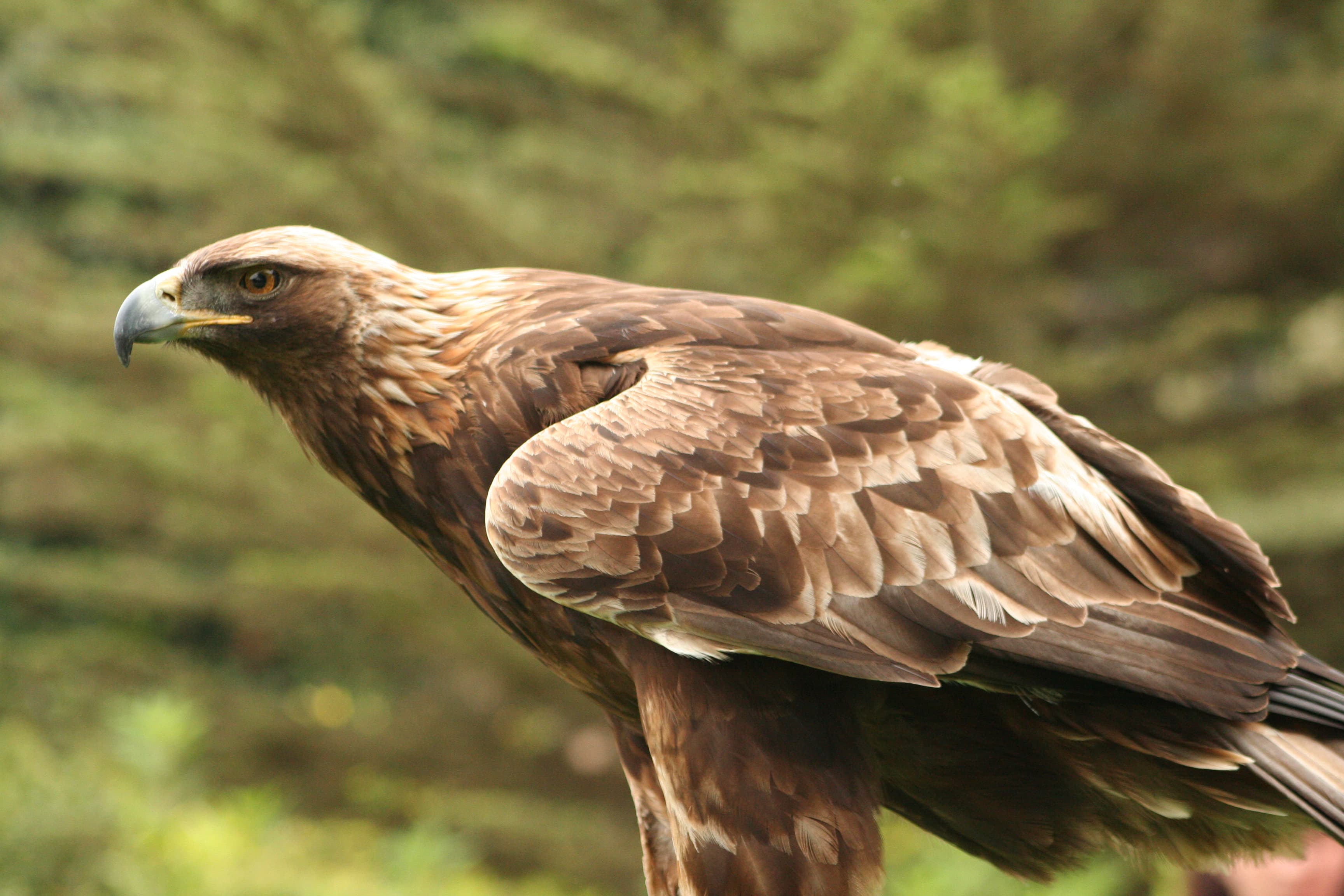
How to recognise a golden eagle
The golden eagle (Aquila chrysaetos) is a large brown raptor with golden feathers behind its head. Young birds can show white patches in the wings and at the tail base. Unlike bald eagles, golden eagles have feathered lower legs. Females are larger than males, and wingspan can reach about seven feet. The U.S. Fish and Wildlife Service describes these identification features.
Hunting country and food
Golden eagles inhabit open or semiopen landscapes across much of the Northern Hemisphere. Mountains are familiar eagle country, but grasslands, canyonlands and other open habitats also matter. They feed mainly on mammals such as rabbits, hares and ground squirrels, and also scavenge. Cornell Lab of Ornithology notes that carrion is a regular food source. An eagle feeding on a carcass has not necessarily killed that animal.
Nests and young
Pairs build large stick nests on cliffs or in trees and may reuse nests. Two eggs are typical; incubation lasts about 41–45 days. Young birds continue to receive parental care after their first flights. Northern populations may move to milder places for winter, so migration is not a universal rule for every golden eagle.
Conservation beyond a population label
Cornell identifies collisions, electrocution, poisoning and habitat changes among important threats. Lead ammunition fragments can reach eagles through scavenged prey. Nesting habitat and hunting habitat also need to be considered together: protecting a nest alone does not preserve the surrounding food supply. Regional conditions are more useful for understanding a particular population than treating one global number as a local guarantee.
Compare related birds
Browse the bird directory to compare body shape, habitat and feeding habits. For identification, use several visible features together rather than brown plumage alone.
Photo credit
Rocky, golden eagle at San Francisco Zoo, via Wikimedia Commons, CC BY 2.0. Displayed at a resized size; the layout may crop the image.
