
Home/Animals/Insecta/Golden Tortoise Beetle
Species profileIUCN: NE

Golden Tortoise Beetle

Charidotella sexpunctata

A tiny leaf beetle whose transparent shield can gleam like polished gold.

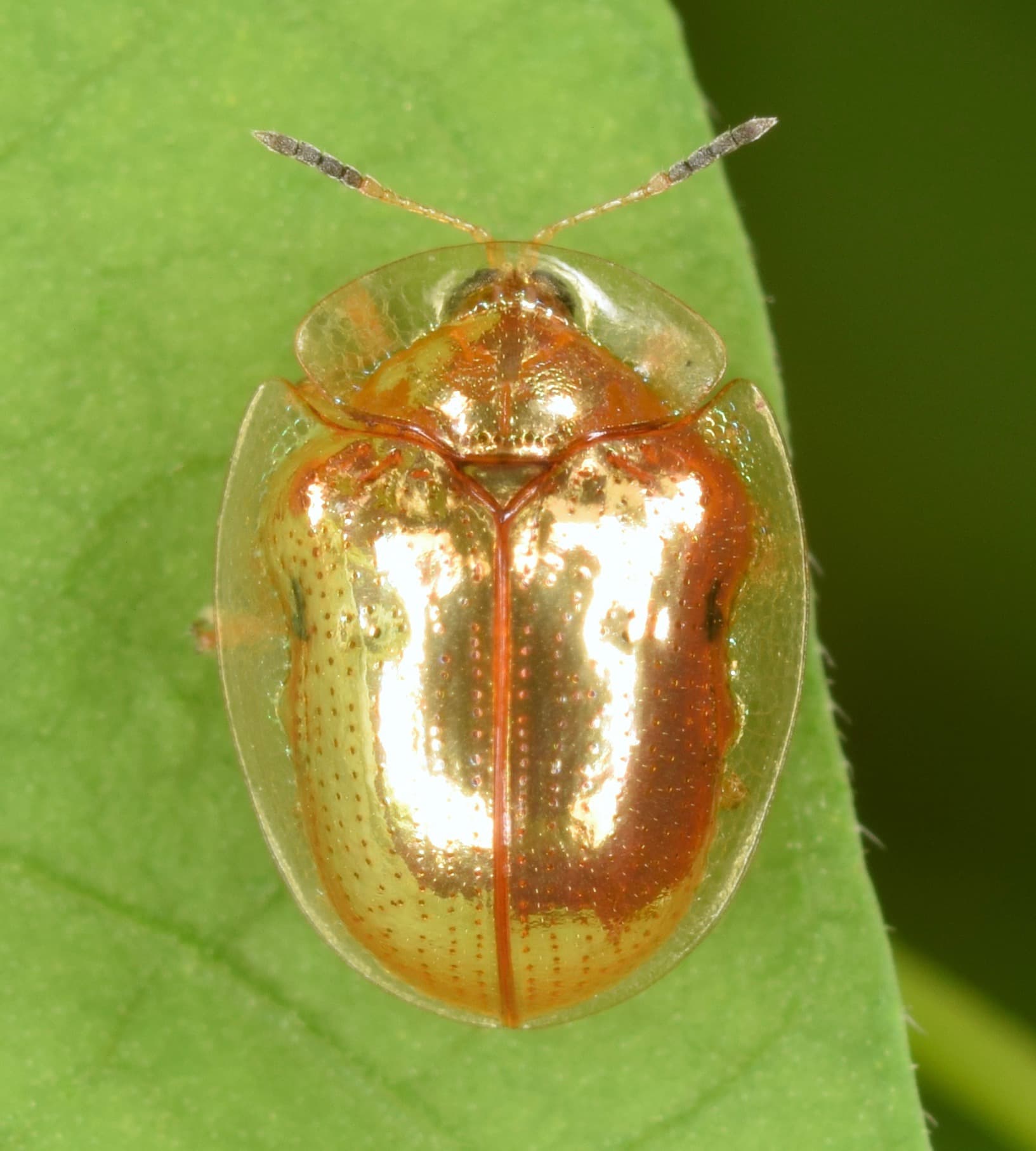
Adult Golden Tortoise Beetle gleaming gold on a green leaf
Christina Butler / CC BY 2.0
๐ŸŒ Read in Language:

โšก At a Glance

Species profile
Also Known As
Goldbug; Golden tortoise beetle
Diet Category
Herbivore
Activity Rhythm
Warm-weather leaf feeder
Wild Lifespan
Not reliably quantified
Typical Weight
Not reliably quantified
Conservation Status
NE
๐Ÿ’ก Key Biological Insight: Its metallic appearance can become duller or redder when the beetle is disturbed.

๐ŸŒณ Scientific Taxonomy Hierarchy

Charidotella sexpunctata is a living tortoise beetle species in the leaf beetle family Chrysomelidae.

KingdomAnimalia
PhylumArthropoda
ClassInsecta
OrderColeoptera
FamilyChrysomelidae
GenusCharidotella
SpeciesCharidotella sexpunctata

Distinguishing Anatomical Features

  • โœ“Rounded shield-like body
  • โœ“Transparent expanded margins
  • โœ“Reflective gold to copper center
  • โœ“Sometimes dark-spotted wing covers
  • โœ“Small 5โ€“7 mm adult
  • โœ“Legs hidden beneath body rim

๐Ÿ“ Physical Measurements

Total LengthAbout 0.20โ€“0.28 in
Body WeightNot reliably quantified
Tail LengthNot applicable
WingspanNot routinely reported
Top SpeedNo reliable fixed maximumAdults crawl on foliage and can fly between host plants.

๐ŸŽจ Appearance & Distinctive Markings

GoldOrangeCopperTransparentBlackYellow

Skin / Covering: Chitinous exoskeleton

Sexual Dimorphism: No dependable visible sex difference is used for field identification.

๐Ÿ—บ๏ธ Geographic Distribution & Habitat

Native across much of the Americas.

Sunny field edges, gardens, roadsides, disturbed ground, and woodland margins where morning-glory-family vines grow.

Country-level distribution map

Native range
FijiTanzaniaWestern SaharaCanada โ€” Native rangeUnited States โ€” Native rangeKazakhstanUzbekistanPapua New GuineaIndonesiaArgentinaChileCongo - KinshasaSomaliaKenyaSudanChadHaitiDominican RepublicRussiaBahamasFalkland IslandsNorwayGreenlandFrench Southern TerritoriesTimor-LesteSouth AfricaLesothoMexico โ€” Native rangeUruguayBrazilBoliviaPeruColombiaPanamaCosta RicaNicaraguaHondurasEl SalvadorGuatemalaBelizeVenezuelaGuyanaSurinameFranceEcuadorPuerto RicoJamaicaCubaZimbabweBotswanaNamibiaSenegalMaliMauritaniaBeninNigerNigeriaCameroonTogoGhanaCรดte dโ€™IvoireGuineaGuinea-BissauLiberiaSierra LeoneBurkina FasoCentral African RepublicCongo - BrazzavilleGabonEquatorial GuineaZambiaMalawiMozambiqueEswatiniAngolaBurundiIsraelLebanonMadagascarPalestinian TerritoriesGambiaTunisiaAlgeriaJordanUnited Arab EmiratesQatarKuwaitIraqOmanVanuatuCambodiaThailandLaosMyanmar (Burma)VietnamNorth KoreaSouth KoreaMongoliaIndiaBangladeshBhutanNepalPakistanAfghanistanTajikistanKyrgyzstanTurkmenistanIranSyriaArmeniaSwedenBelarusUkrainePolandAustriaHungaryMoldovaRomaniaLithuaniaLatviaEstoniaGermanyBulgariaGreeceTรผrkiyeAlbaniaCroatiaSwitzerlandLuxembourgBelgiumNetherlandsPortugalSpainIrelandNew CaledoniaSolomon IslandsNew ZealandAustraliaSri LankaChinaTaiwanItalyDenmarkUnited KingdomIcelandAzerbaijanGeorgiaPhilippinesMalaysiaBruneiSloveniaFinlandSlovakiaCzechiaEritreaJapanParaguayYemenSaudi ArabiaCyprusMoroccoEgyptLibyaEthiopiaDjiboutiUgandaRwandaBosnia & HerzegovinaNorth MacedoniaSerbiaMontenegroKosovoTrinidad & TobagoSouth Sudan
Highlighted countries are recorded profile locations, not precise biological range boundaries.Map boundaries: Natural Earth

๐Ÿ’ก Did You Know?

  • ๐Ÿ’กExpanded shield-like margins
  • ๐Ÿ’กLegs tuck under body rim
  • ๐Ÿ’กReflective structural color
  • ๐Ÿ’กStrong grip on leaves
  • ๐Ÿ’กLarval fecal shield
  • ๐Ÿ’กSpiny flattened larva

๐ŸŒฟ Conservation Status & Threats

IUCN: NE โ€” NE

โ€œNo global IUCN assessment was found in the sources reviewed; the species is widespread but local abundance depends on host plants and pesticide exposure.โ€

Population TrendNot assessed globally
Wild Population EstimateNo dependable global count available
CITESNot listed

โš ๏ธ Major Threats to Golden Tortoise Beetle

  • โ€ขBroad-spectrum insecticides
  • โ€ขHost-plant removal
  • โ€ขHerbicide use
  • โ€ขRoadside mowing
  • โ€ขLocal habitat clearing

๐Ÿ”„ Life Cycle & Reproduction

Wild vs. Captivity Lifespan Comparison

๐ŸŒฟ In the WildNot reliably quantified
๐Ÿ  In Captivity (with veterinary care)Not reliably quantified
Clutch / Litter SizeEggs are placed on or near host foliage; a reliable species-wide clutch figure was not used
Incubation / GestationVaries with temperature and locality
Fledging / WeaningNot applicable
Sexual MaturityAfter adult emergence and hardening
Mating SystemSexual reproduction
Nesting / Den TypeNo nest; eggs are placed on host plants

๐Ÿฆ… Behavior & Field Ecology

Herbivore

๐ŸŒ Ecological Food Web & Relationships: Consumes vine foliage and provides food for predatory insects, spiders, birds, and parasitoids.

Social Group SizeUsually solitary, with local clusters on suitable host plants
Activity RhythmMost visible in warm conditions
Feeding StrategyHerbivore

๐Ÿฅฉ Primary Prey & Preferred Diet

โœ“ Morning glory leavesโœ“ Bindweed leavesโœ“ Sweet potato leavesโœ“ Other Convolvulaceae

๐Ÿ“ข Communication & Territorial Signals

  • Chemical cues
  • Contact during courtship
  • No audible communication documented

๐Ÿพ Wild Temperament & Traits

โ€ข Harmlessโ€ข Leaf-dwellingโ€ข Defensiveโ€ข Slow-moving when observedโ€ข Capable of flight

๐Ÿค Human Interaction & Pet Advisory

โš ๏ธ Strictly Wild Species
๐Ÿšซ

Can You Keep a Golden Tortoise Beetle as a Pet?

A wild insect best observed on its host plant

Domestication StatusNot domesticated
Danger to HumansHarmless to people
Economic & Ecotourism RoleOccasional minor garden herbivore and a useful subject for nature observation, education, and macro photography

โš ๏ธ Behavioral Risk Factors & Wildlife Safety

  • Does not bite or sting
  • Handling can injure the beetle

๐ŸŒ Ecological Food Web & Relationships

๐Ÿงฌ Related Species (2)

Mottled Tortoise BeetleDeloyala guttataAnother North American tortoise beetle in the same subfamily
Argus Tortoise BeetleChelymorpha cassideaA larger related tortoise beetle associated with morning-glory-family plants

๐ŸŒ Ecological Equivalents Across Continents

Sweetpotato Tortoise BeetleAspidimorpha miliaris

A living drop of gold

The Golden Tortoise Beetle (Charidotella sexpunctata) is a small leaf beetle whose polished upper surface can look like a bead of molten metal. Adults measure only about 5โ€“7 millimetres long, yet their reflective color and clear, expanded margins make them unusually conspicuous at close range. The gold is not a fixed pigment like yellow paint. Light interacts with layered structures beneath the beetle’s transparent outer covering, and the appearance can become duller, reddish, or spotted when the insect is disturbed or its internal moisture balance changes. That shifting finish has made this species one of the best-known tortoise beetles in North America.

Identification and body plan

An adult has the rounded, shield-like outline typical of tortoise beetles. The pronotum and wing covers flare beyond the head and legs, so the insect can draw its appendages underneath a broad rim. From above, that rim is translucent while the central disc may shine gold, orange, or copper. Some individuals show dark marks on the wing covers, which explains the species name sexpunctata, meaning six-spotted. Color alone is therefore unreliable; body shape, transparent margins, size, host plant, and geographic context all help with identification. The BugGuide species account records the adult size and describes the variable reflective surface.

Range and habitat

The species is native across a broad part of the Americas. ITIS recognizes Charidotella sexpunctata as a valid living species and places it in the leaf beetle family Chrysomelidae. BugGuide reports it from southern Canada through much of the continental United States and Mexico, with the wider species range extending into Central America, the Caribbean, and South America. It is often found in sunny, weedy places where morning glories and related vines grow: field edges, gardens, roadsides, disturbed ground, and open woodland margins. Its distribution follows suitable host plants more closely than any single habitat type.

Food and host plants

Golden Tortoise Beetles are plant eaters. Adults and larvae chew leaves in the morning-glory family, Convolvulaceae. Common hosts include morning glories, bindweeds, and sweet potato. Feeding usually produces small round or irregular holes between leaf veins. A few beetles rarely cause serious harm to a vigorous vine, although larger local numbers can make the damage easier to notice. The insect is part of a broader plant-based food web: its host leaves supply energy, while predators and parasitoids use the beetle and its immature stages as food. Gardeners who find one can usually observe it without treating the plant.

Egg, larva, pupa, and adult

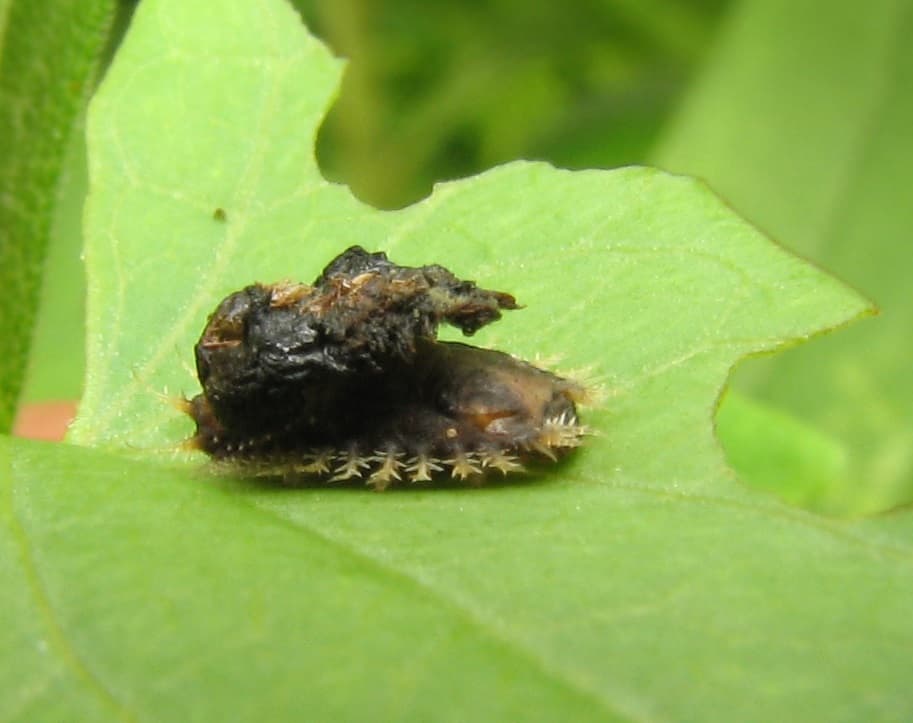
Like other beetles, this species undergoes complete metamorphosis. A female places eggs on or near suitable host foliage. The hatching larva looks very different from the polished adult. It is flattened and spiny, and it carries a movable shield made from shed skins and fecal material over its back. The forked structure at the rear holds that shield above the body. It may provide camouflage and can help deter small predators. After several feeding stages, the larva attaches to vegetation and pupates. The adult later emerges, hardens, and begins feeding and reproducing. Seasonal timing varies across the large range, so a single calendar cannot describe every population.

Defense without a shell

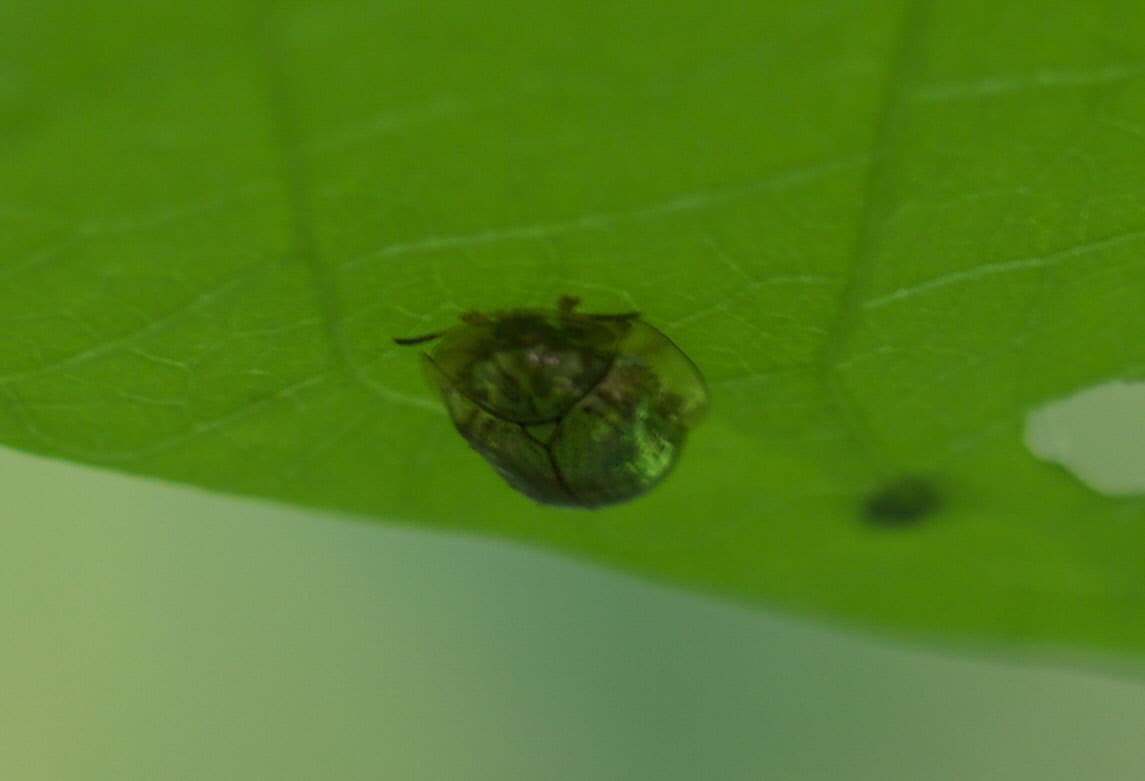
The common name โ€œtortoise beetleโ€ refers to the broad protective outline rather than a true shell. When threatened, an adult can press close to the leaf and tuck its legs and antennae under the expanded margins. That posture makes it harder for a predator to reach the softer underside. The larva uses a different defense, carrying its fecal shield like an adjustable umbrella. Color change in adults may accompany disturbance, but it should not be treated as a deliberate signal with one simple meaning. The metallic effect depends on physical structures and fluid conditions, so handling the beetle merely to watch it change color is unnecessary and can injure it.

Ecological relationships

These beetles link vigorous vines to insect predators and parasitoids. Their leaf feeding transfers plant energy into an animal that can be eaten by spiders, predatory insects, birds, and other small hunters. Eggs, larvae, pupae, and adults face different risks, which helps explain their changing defenses. A leaf-edge adult relies on concealment, shielding, and a tight grip; a slow larva adds spines and its carried cover. Natural enemies and weather usually keep populations uneven, with many plants hosting none and a few supporting several individuals.

People, gardens, and observation

Golden Tortoise Beetles do not bite or sting people and are not household pests. They may feed on ornamental morning glories or cultivated sweet potato leaves, but their presence alone does not prove that control is needed. Check several leaves, look for continuing damage, and avoid broad-spectrum insecticides that also kill pollinators and predators. Hand removal is possible for a small garden population, although the beetles should not be crushed merely for being present. Photographs taken on the plant can document color and markings without handling.

Conservation and responsible viewing

No global population estimate or formal IUCN assessment was found for this widespread species in the sources reviewed. That absence is not the same as proof that every local population is secure. Herbicide use can remove host vines, and insecticides can kill beetles directly. Roadside mowing and rapid clearing can also eliminate short-lived patches of habitat. At the same time, many host plants tolerate disturbed ground, allowing the species to live near farms and towns. The best way to see one is to inspect the undersides and upper surfaces of morning-glory-family leaves in warm weather, leaving the beetle and plant in place.

Sources and further reading

โ“ Frequently Asked Questions

Answers to frequently asked questions verified against peer-reviewed zoological research.

Layered structures beneath its transparent outer covering reflect light, creating a gold or copper appearance rather than a coat of metallic pigment.