
Meet the Gopher Snake
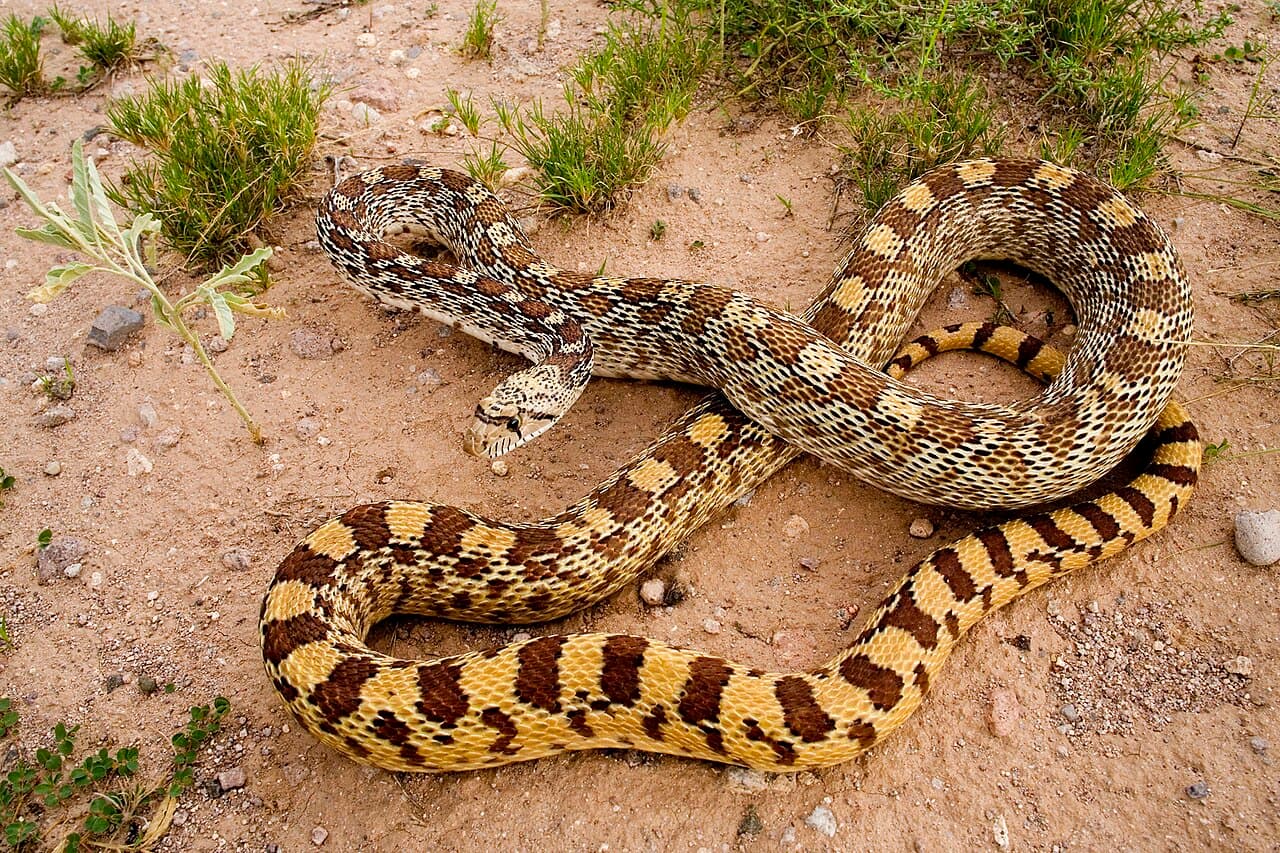
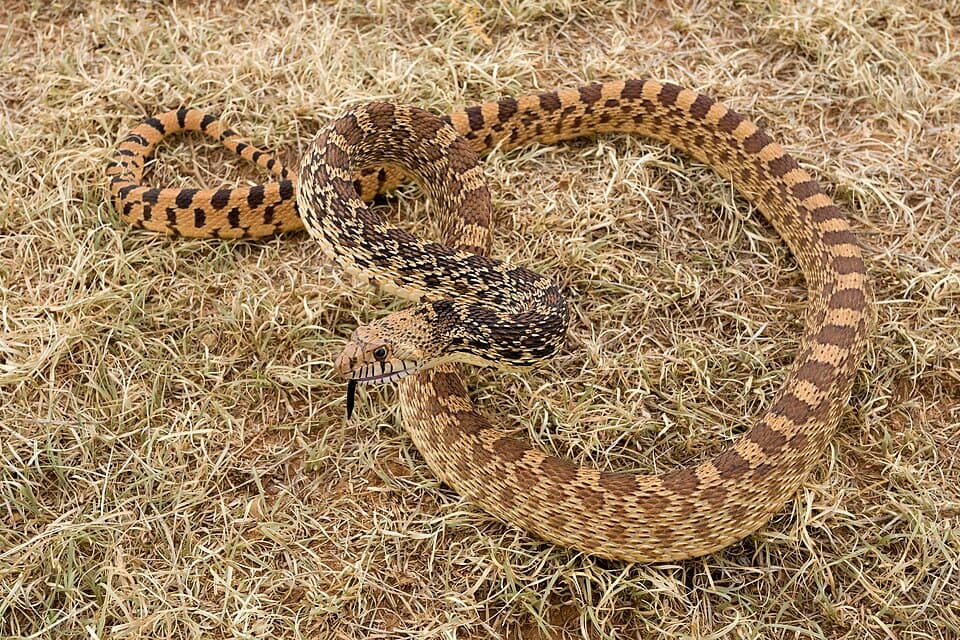
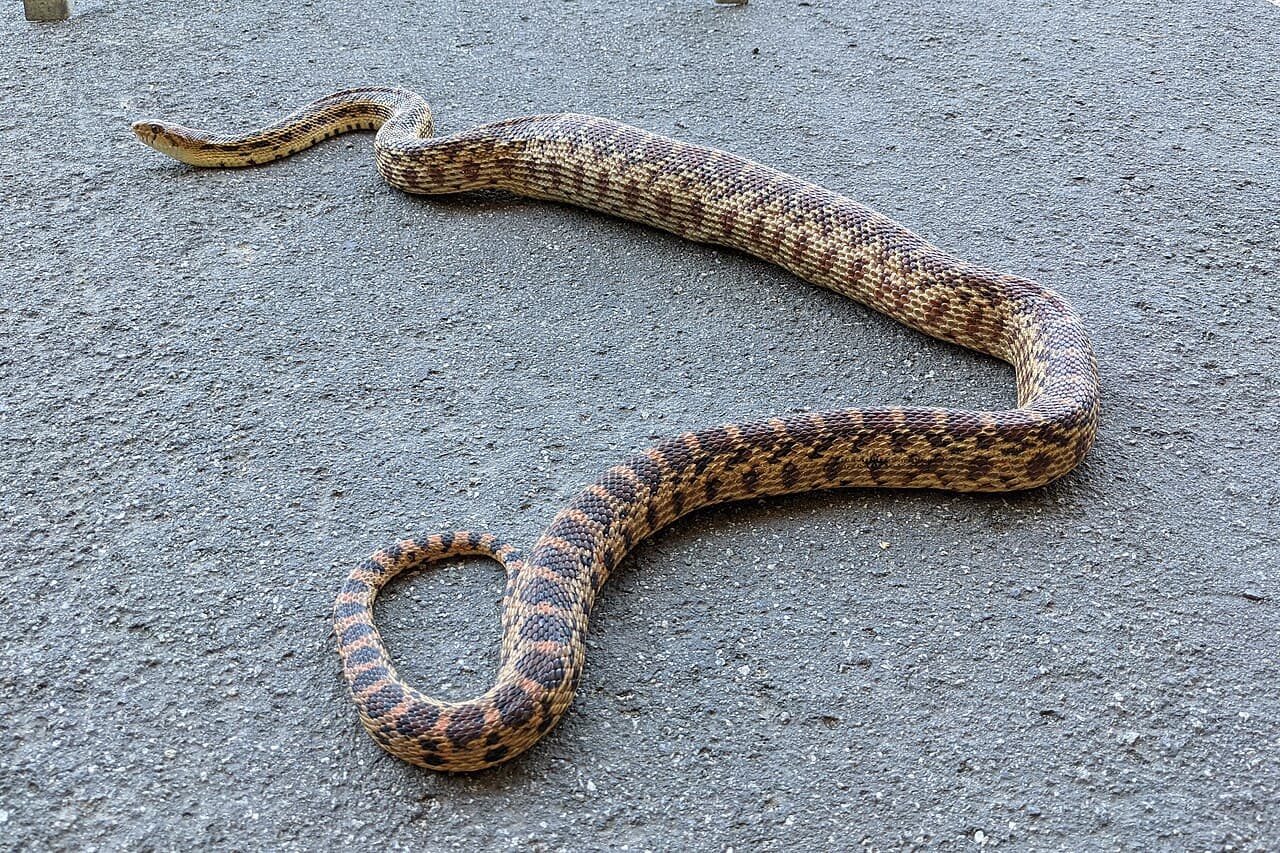
The gopher snake (Pituophis catenifer) is a large, nonvenomous North American constrictor. Its tan or cream ground color and chain of dark blotches provide camouflage in grassland, desert, scrub, open woodland, and farm country. When alarmed, it may flatten its head, coil, hiss loudly, and vibrate its tail in dry vegetation. That performance often causes people to mistake it for a rattlesnake, but a gopher snake has no rattle and subdues prey by constriction rather than venom. It is a living species in the family Colubridae, with geographically variable populations across western and central North America.
Identification and Taxonomic Scope
This profile treats the species Pituophis catenifer. Common names vary by region: “gopher snake” is widely used in the West, while “bullsnake” commonly refers to the prairie subspecies P. c. sayi. Other named forms include Pacific, Great Basin, and Sonoran gopher snakes. Taxonomic treatments do not always agree on the rank of every isolated Baja California or island population, so local names should not be assumed to represent identical populations everywhere.
Adults have keeled scales, a relatively narrow neck, large eyes, and a pointed rostral scale that helps with pushing through loose soil. Dark bars usually cross the face, and the dorsal blotches often become more bandlike toward the tail. Color varies with the landscape, ranging from pale straw and gray to yellowish or reddish brown. Animal Diversity Web reports that exceptionally large individuals may approach 2.75 meters, although many adults are substantially shorter. Young snakes resemble adults but are smaller and may show sharper contrast.
Range and Habitat
Gopher snakes occupy a broad range from southern Canada through much of the western and central United States into northern Mexico. They use prairies, sagebrush, chaparral, deserts, open forests, riparian edges, old fields, agricultural land, and some suburban margins. The California Department of Fish and Wildlife describes the species as California’s most widespread and common snake. That flexibility reflects an ability to use both open hunting grounds and nearby cover.
Burrows are central to the snake’s life. Gopher snakes enter rodent tunnels to hunt, avoid extreme heat, shelter from predators, and spend cold periods below ground. They also hide beneath rocks, logs, and dense vegetation. Although capable swimmers and climbers, they spend much of their time on or under the ground. Activity shifts with weather: daytime movement is common in mild conditions, while hot summer weather can push foraging into cooler mornings, evenings, or nights.
Diet and Hunting
Rodents form the core of the diet. Gopher snakes follow scent trails into burrows and take pocket gophers, mice, voles, ground squirrels, and other small mammals. They may also eat nestling birds, eggs, lizards, smaller snakes, and occasional insects. A snake seizes prey with its jaws, wraps one or more coils around it, and tightens the coils until circulation and breathing stop. It then swallows the prey whole.
This feeding role makes the species valuable in working landscapes. A resident snake can remove rodents that consume crops or dig through soil, without spreading poison through a food web. The snake does not need to eat every day; after a substantial meal it may remain concealed while digestion proceeds. Like other snakes, it uses a forked tongue to collect chemical particles and transfers them to the vomeronasal organ in the roof of the mouth, allowing it to trace prey through complex underground passages.
Behavior and Defense
Most encounters occur when a snake crosses a road or trail, basks near cover, or is uncovered during yard work. Its first response is usually escape. If cornered, it can inflate its body, raise the front third, produce a forceful hiss, and rapidly shake its tail. A tail striking leaves can sound remarkably like a rattle. The resemblance may discourage predators, but it also puts the snake at risk when people kill it after a hurried identification.
A defensive gopher snake can bite, and its teeth may cause punctures, but it is not venomous. The safest response is to step back and give it a route to cover. Never handle a wild snake whose identity is uncertain. From a distance, observers can look for the absence of a rattle, a long tapering tail, and the relatively slender head, while remembering that posture alone is unreliable. Hawks, coyotes, foxes, and larger snakes prey on gopher snakes; camouflage and underground shelter are therefore as important as the dramatic bluff.
Reproduction and Life Cycle
Mating generally follows spring emergence, though timing varies with latitude and local climate. Males locate receptive females by chemical cues and may compete with other males. Females lay eggs in warm, protected sites such as loose soil, abandoned mammal burrows, or communal nesting areas. Animal Diversity Web reports clutches from 2 to 24 eggs and incubation of roughly 65 to 75 days. The young receive no parental care after hatching and begin hunting small prey on their own.
Growth is fastest during the first few years and continues more slowly later in life. Males may mature earlier than females. Survival depends on finding secure winter shelters, adequate prey, and connected habitat where seasonal movements do not require repeated road crossings. Individuals may reuse favored areas over several years, making an apparently ordinary burrow network or field edge important habitat.
Conservation and Living Alongside Gopher Snakes
The species is widespread and generally considered secure, but local populations can decline. Road mortality, deliberate killing, habitat conversion, rodent poison, and the removal of burrows and cover all create pressure. Island or geographically restricted forms can face greater risks than the species as a whole. Broad conservation labels should therefore be paired with attention to local status and regulations.
People can reduce conflict by leaving an escape route, keeping pets back, removing spilled birdseed that attracts rodents, and sealing buildings only after confirming that no animal is trapped inside. Relocation should be handled by qualified local wildlife professionals where it is legal and necessary. In gardens, farms, and natural areas, a gopher snake is usually a beneficial predator doing quiet pest control. Respectful observation protects both the snake and the observer.