
Meet the Grass Snake
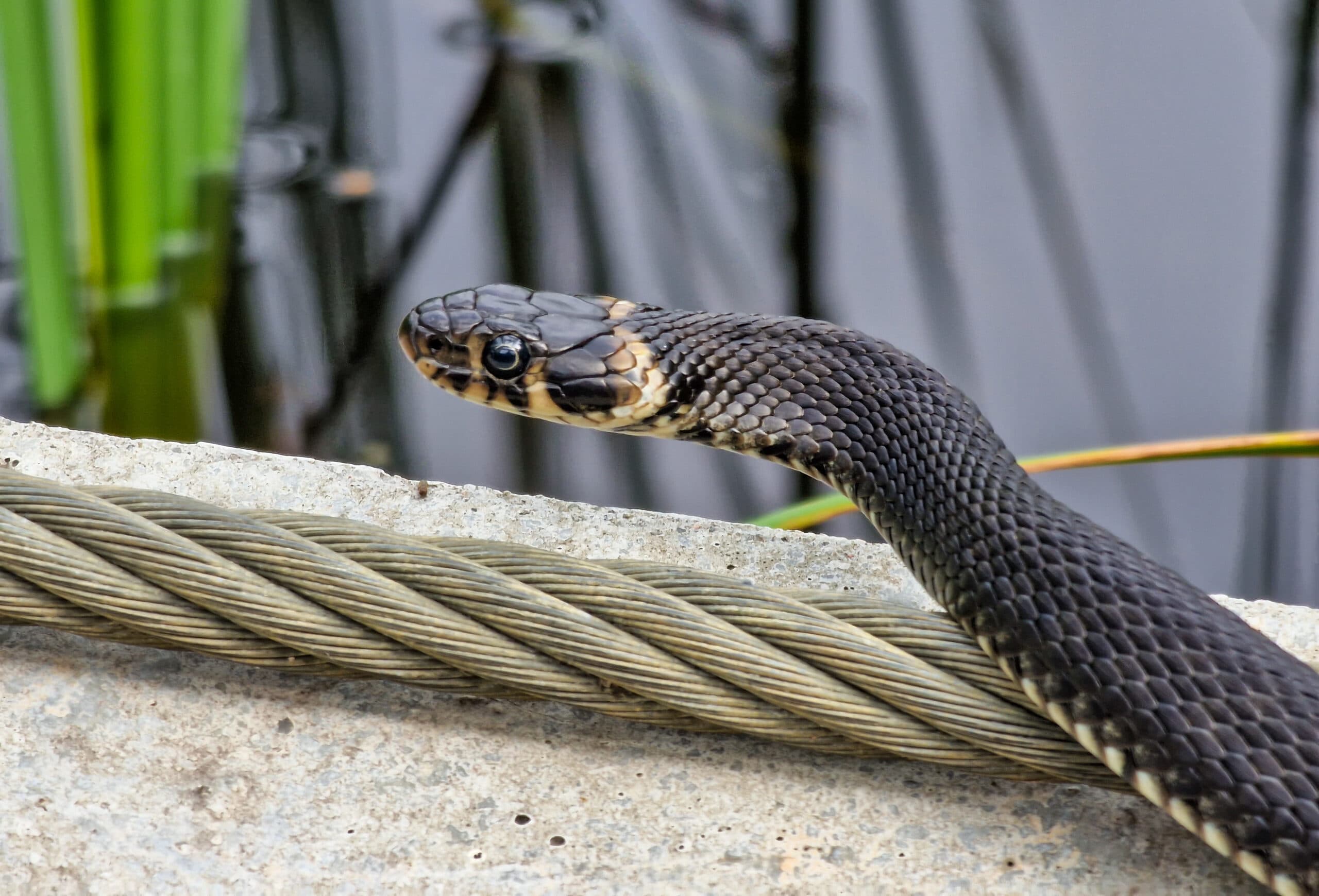
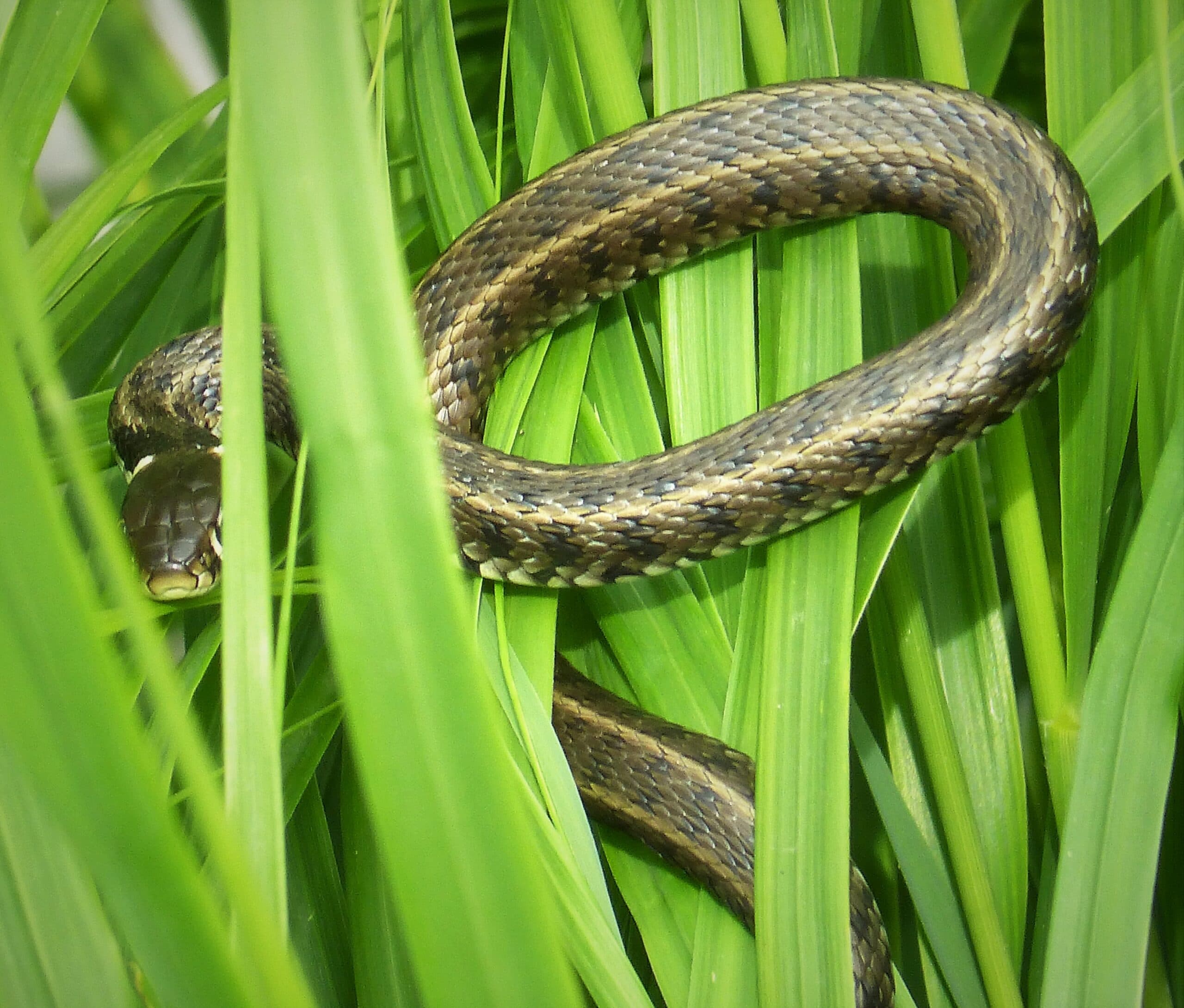
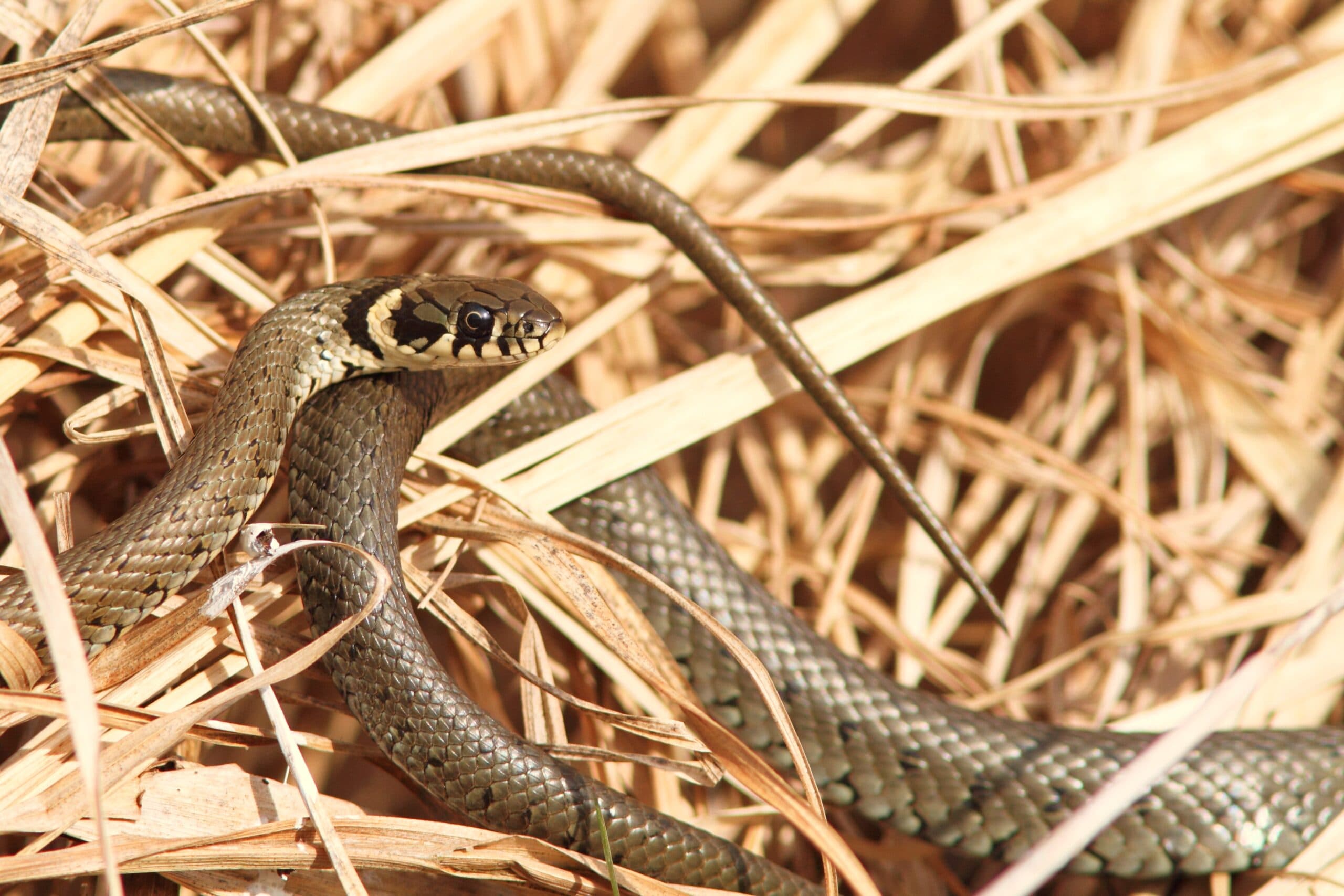
The grass snake (Natrix natrix) is a living, nonvenomous water-associated snake of Europe and western Asia. It is often recognized by the pale yellow, cream, or white patches behind the head, bordered by black markings that form a broken collar. Adults are usually olive, gray, brown, or nearly black above, with dark spots or bars along the body. They are accomplished swimmers, but the name “grass snake” also fits their frequent use of meadows, field edges, gardens, woodland margins, and sunny banks near wetlands.
This profile covers Natrix natrix as currently recognized. Modern genetic research has separated several former populations into other species, including the barred grass snake Natrix helvetica in much of western Europe and the Iberian grass snake Natrix astreptophora. Older books and photographs may still apply N. natrix to those snakes, so location and current taxonomy matter.
Identification and Taxonomy
The Reptile Database places Natrix natrix among natricine snakes in family Colubridae, while some databases recognize Natricidae at family rank. It has round pupils, strongly keeled body scales, a long tapering tail, and a head only moderately wider than the neck. The pale collar is usually easiest to see in young snakes and may fade in older animals, particularly dark or melanistic individuals. The underside has an irregular black-and-pale checker pattern that can help distinguish the species.
Females grow larger and heavier than males. Many adults measure roughly 70–120 centimeters, although large females can exceed that range. Males tend to have proportionally longer tails. A grass snake lacks venom-delivery fangs and normally tries to flee. Its round pupil alone should never be used as a universal safety test, because field identification depends on several features and regional species knowledge.
Range and Habitat
The current range of Natrix natrix extends across much of central, eastern, and southeastern Europe and into western Asia. Countries within its broad native distribution include Germany, Poland, Sweden, Finland, the Baltic states, the Balkans, Greece, Turkey, Ukraine, and Russia. The species is globally assessed as Least Concern by the IUCN, with a stable overall trend, though local populations can still decline.
Grass snakes favor landscapes that combine water, prey, cover, basking places, and secure egg-laying sites. Ponds, marshes, slow rivers, drainage ditches, reed beds, damp meadows, hedgerows, compost heaps, and woodland edges can all be useful. They may travel away from water, especially when seeking mates, nesting sites, or winter shelters. Sunny vegetation edges allow a snake to warm itself quickly while staying close to cover. Frost-free cavities under roots, in banks, or among stones provide winter refuges.
Diet and Hunting
Amphibians dominate the diet in many areas. Grass snakes take frogs, toads, newts, and tadpoles, and they also catch small fish. Young snakes begin with small amphibians, fish, and invertebrates that fit their jaws. Adults may occasionally take small mammals or nestlings, but they are not specialized rodent hunters.
A grass snake actively searches the margins of ponds and dense vegetation, using tongue flicks to collect chemical traces. It can pursue prey on land or in water. Unlike a constrictor, it usually seizes and swallows prey alive, working the jaws forward over the body. Backward-pointing teeth help hold slippery amphibians. Feeding activity rises in warm months, while digestion and movement slow as temperatures fall.
Behavior and Defense
Grass snakes depend on outside heat to regulate body temperature. A snake may bask in morning sun, then move through cover or water as it warms. It swims with the head above the surface and can dive when threatened. Seasonal activity begins after winter dormancy and ends when cold weather drives snakes back to sheltered hibernation sites; timing changes with latitude and elevation.
Defense relies more on deception and deterrence than combat. A cornered grass snake may hiss, flatten the front of its body, make closed-mouth strikes, or release a strong-smelling secretion from the cloaca. It may also roll partly onto its back, open its mouth, let the tongue hang out, and become limp in a convincing death-feigning display. If the danger passes, it watches for an escape and quickly revives. These behaviors do not make the snake dangerous to people.
Reproduction and Development
Mating commonly occurs in spring after snakes emerge from winter shelter. Several males may gather around one female, forming a loose mating ball. Females need warm, humid material in which eggs can develop. Rotting vegetation, manure piles, compost heaps, sawdust, and naturally decaying plant matter provide heat without direct parental incubation.
A typical clutch contains about 10–40 leathery eggs, although female size and local conditions create wider variation. Multiple females may use the same productive nest site. Incubation usually lasts around six to ten weeks, depending strongly on temperature. Hatchlings emerge in late summer or early autumn at about 15–20 centimeters long. They receive no parental care and must find small prey and secure shelter immediately.
Conservation and Coexistence
Although the species remains widespread, drainage of wetlands, loss of amphibian breeding ponds, road traffic, intensive mowing, pesticide use, persecution, and removal of compost or debris piles can damage local populations. A landscape may appear green yet fail to support grass snakes if ponds have no amphibians, banks offer no winter refuge, or roads cut every route between feeding and nesting areas.
Wildlife-friendly management keeps pond margins varied, leaves connected strips of cover, avoids pesticides near water, and turns compost carefully during the nesting season. Anyone finding eggs in a warm heap should replace disturbed material gently and seek local conservation advice. A snake in a garden should be given space and an open route away. Dogs and cats should be kept back. Handling is unnecessary and may trigger defensive musk or stress.