
Great Crested Flycatcher Overview
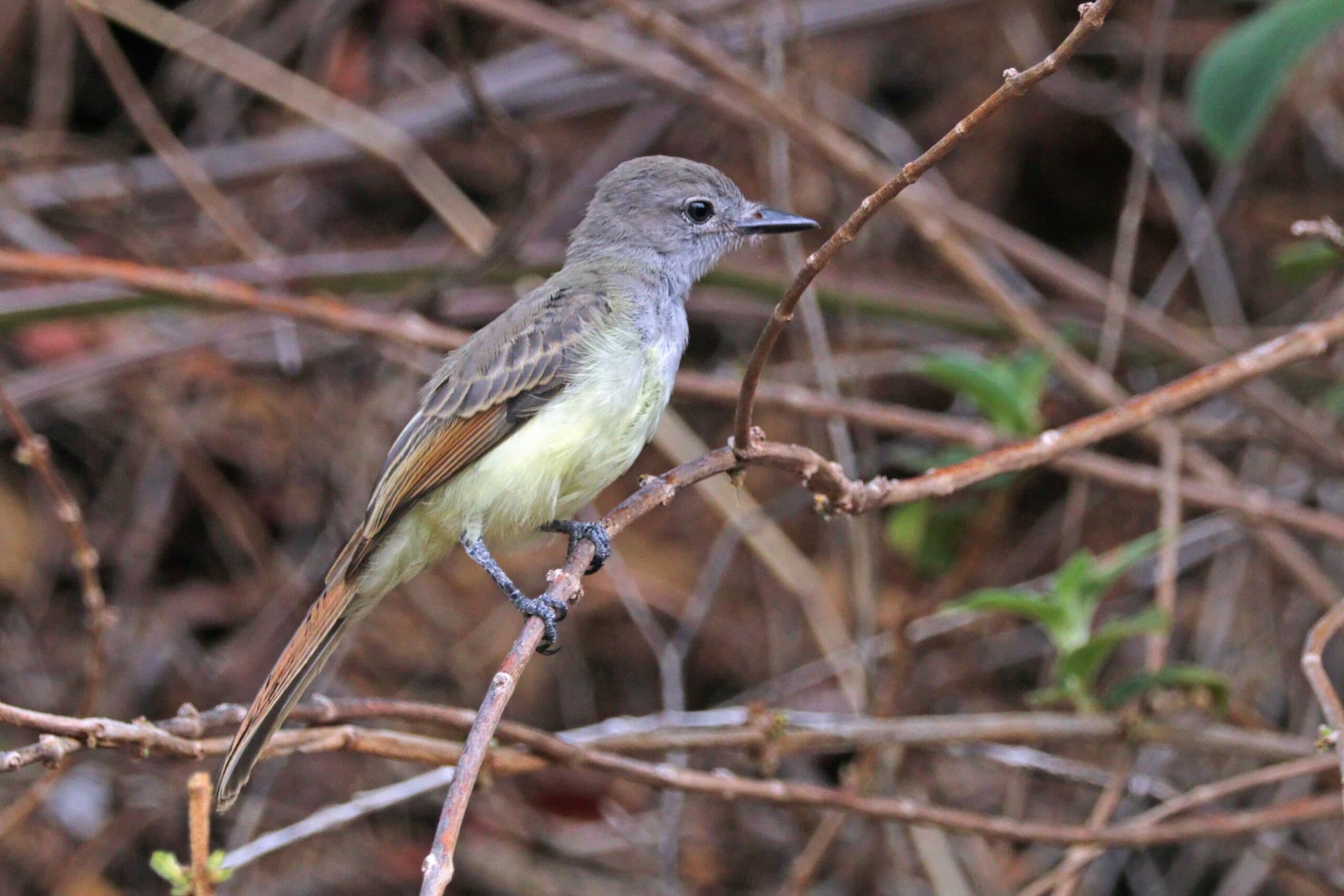
The Great Crested Flycatcher (Myiarchus crinitus) is a living tyrant flycatcher of wooded landscapes across eastern North America. It is easier to hear than to see because it hunts high in the canopy, announcing itself with a loud rising whistle. An olive-brown back, gray throat, lemon-yellow belly and warm rufous panels in the wings and tail distinguish it from many other eastern flycatchers. The slight crest can lie flat, so the name is not always an obvious field mark.
This is a species profile rather than a page for all crested flycatchers. Several members of Myiarchus look similar, especially where ranges meet in the southern United States and Central America. Voice, range, wing pattern, bill size and the amount of rufous in the tail are more dependable together than any single feature. Great Crested Flycatchers are active native insect predators and also disperse seeds after eating fruit.
Range and Migration
The breeding range extends through much of the eastern United States into southern Canada. Birds occupy the Great Lakes, Northeast, Mid-Atlantic, Southeast and portions of the central plains. Most migrate at night to wintering areas from Mexico through Central America and into northwestern South America. Some remain through winter in southern Florida and the Caribbean. Spring arrivals follow the northward growth of insect populations, while autumn movement begins as days shorten and food availability changes.
Migration exposes individuals to hazards far beyond the nesting territory. Glass, artificial light, storms, habitat loss and exhausted stopover sites can all raise mortality. A bird that breeds in a suburban oak grove may depend months later on tropical forest edge hundreds or thousands of kilometers away. Conservation therefore requires connected habitat throughout the annual cycle rather than attention to a single park or breeding site.
Woodland Habitat and Cavity Use
Great Crested Flycatchers favor mature deciduous or mixed woodland, wooded swamps, river corridors, orchards, parks and neighborhoods with tall trees. They can live in deep forest or along openings, but they need elevated perches for hunting and cavities for nesting. Natural holes and abandoned woodpecker chambers are common nest sites. Where suitable trees are scarce, the birds may use correctly designed nest boxes and occasionally other enclosed structures.
Unlike a woodpecker, the flycatcher cannot excavate a sound trunk. It depends on decay, storm damage and other cavity-makers. Removing every dead limb and snag can therefore reduce nesting opportunities even when a property still looks leafy. Safe snag retention, native trees and pesticide reduction support the bird and its prey. Nest boxes help only when their entrance size, height, drainage, ventilation and predator protection suit the species.
Appearance, Voice and Identification
An adult is a large, long-bodied flycatcher with a broad-based bill and peaked head. The upperparts are olive-brown, the throat and upper breast are cool gray, and the lower belly is yellow. Rufous edges flash in the wings and tail during flight. Males and females look much alike. Juveniles resemble adults but can show fresher feather edges and more conspicuous patterning after leaving the nest.
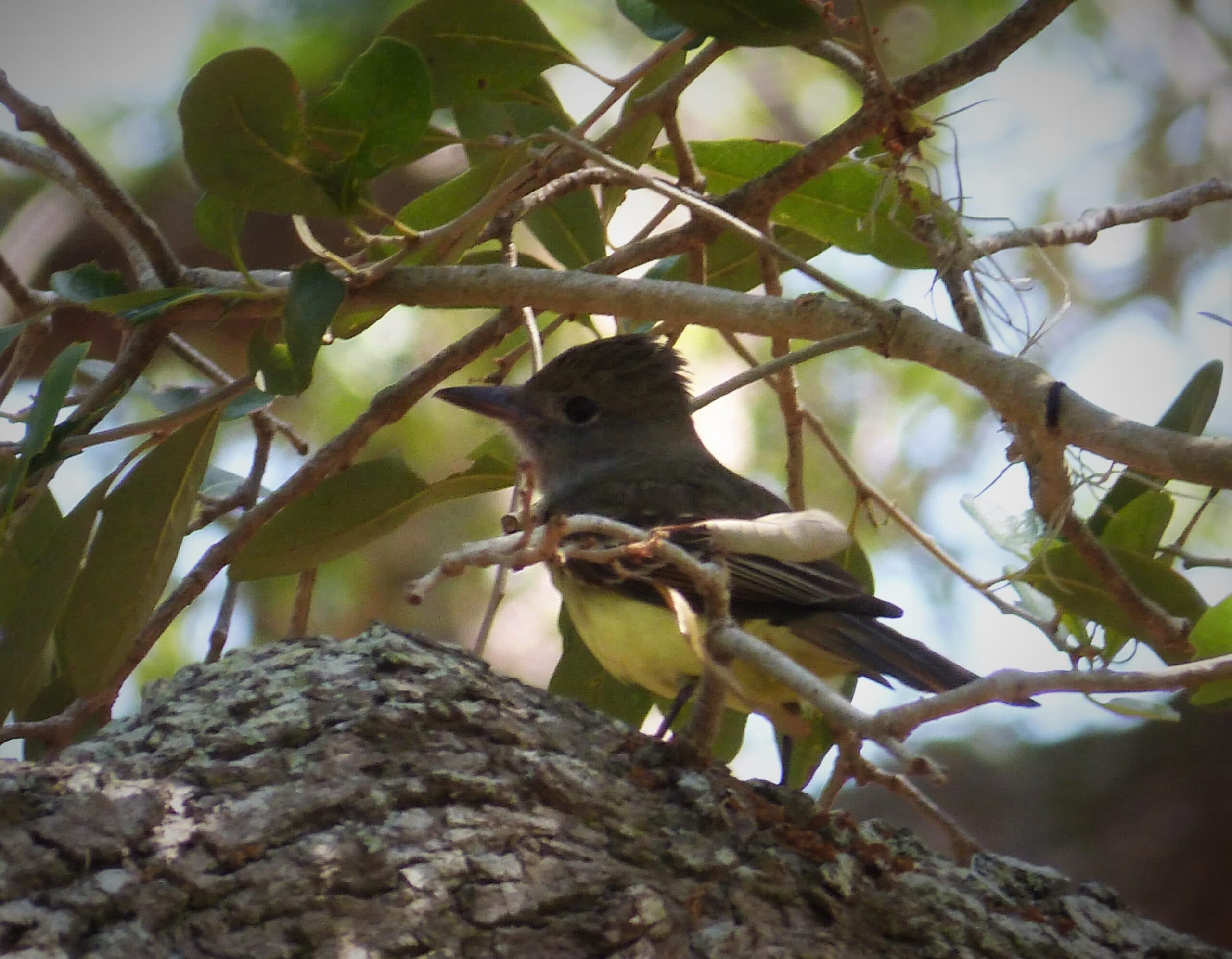
The emphatic rising wheep is often the fastest way to locate a bird hidden among leaves. A harsher series of calls serves in territorial encounters and alarm. Like other songbirds, it also communicates with posture and movement. A perched individual may raise its crown feathers, flick the tail and turn its head while scanning for prey. Observers should use voice and plumage together because several Myiarchus species share the same gray, yellow and rufous color plan.
Diet and Flycatching
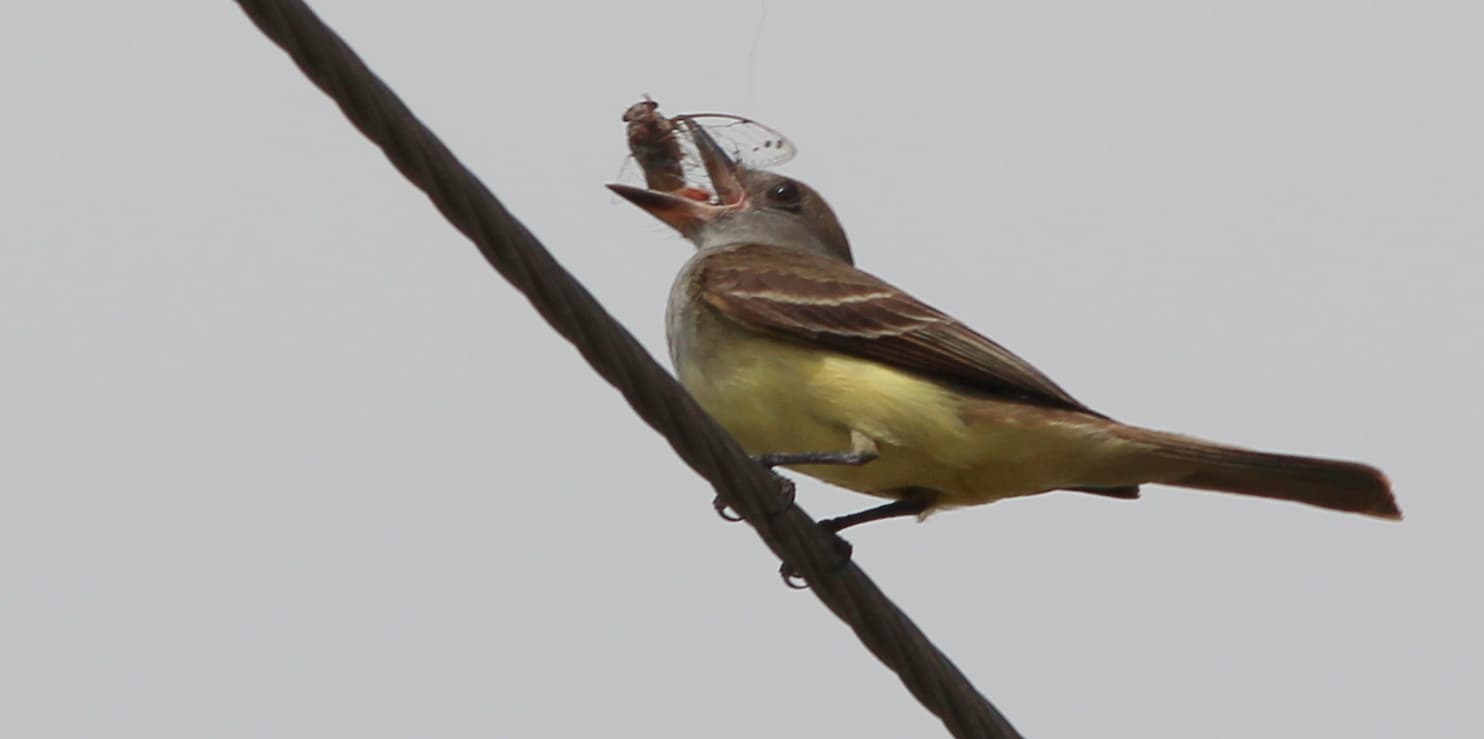
Despite its name, the species eats far more than flies. Beetles, moths, butterflies, caterpillars, crickets, katydids, true bugs and other arthropods form much of the warm-season diet. Spiders and occasional small vertebrates are also taken. The bird usually waits upright on a branch, launches after moving prey and returns to a perch. It can capture insects in midair, hover briefly beside foliage or snatch prey from leaves, bark and the ground.
Fruit becomes important when insects are less abundant, especially during migration and on the tropical wintering grounds. Berries and small fruits supply energy and water, and swallowed seeds may be carried away from the parent plant. The mixed diet helps the flycatcher cross seasons and habitats. Broad pesticide use can remove prey directly and may also expose birds through contaminated insects, so habitat management that supports diverse native invertebrates is preferable.
Nesting and the Snakeskin Habit
A pair defends a nesting territory with loud calls and chases. Both sexes bring material into the cavity, building a foundation of grasses, bark, rootlets, leaves, feathers and other fibers. Great Crested Flycatcher nests are famous for including shed snakeskin. When snakeskin is unavailable, birds sometimes carry crinkly transparent material. The behavior is real, but its exact function remains uncertain; proposed ideas include deterring predators or parasites and simply using a conspicuous, flexible lining material.
The female usually lays four to six creamy eggs marked with dark streaks or blotches and performs most or all incubation for roughly two weeks. Both parents feed the nestlings. Young remain in the cavity for about two to three weeks before fledging, with timing influenced by weather, food and disturbance. Adults continue to guard and feed inexperienced fledglings while they improve flight and hunting skills among nearby branches.
Behavior and Ecological Role
Pairs are territorial in the breeding season, while migrants and wintering birds may be less tied to a single patch. Foraging usually occurs high above the ground, and repeated short flights link favored lookout perches. The bird’s large eyes and quick turns help it track mobile insects in cluttered vegetation. It rarely spends long periods walking, because its feet and hunting style are adapted to perching and aerial pursuit.
By consuming large insects and other arthropods, Great Crested Flycatchers influence canopy food webs. Eggs, nestlings and adults in turn feed snakes, raptors, mammals and other predators. Competition for cavities connects them with woodpeckers, bluebirds, swallows, squirrels and invasive European Starlings. Their fruit-eating spreads some plant seeds, linking tropical winter habitat and temperate breeding woodland through a single migratory life.
Conservation and Watching Responsibly
The Great Crested Flycatcher is classified as Least Concern, and broad-scale populations are considered relatively stable. That status does not remove local threats. Loss of mature woodland, removal of cavity trees, pesticide exposure, window collisions, free-roaming cats and degradation of migration and winter habitat can all reduce survival or nesting success. Climate change may shift the timing and geography of suitable conditions across its long migration route.
People can help by preserving mature native trees and safe snags, planting fruiting native shrubs, reducing night lighting during migration and treating windows to prevent collisions. Cats should remain indoors or in secure outdoor enclosures. Nest boxes should be monitored without repeated disturbance and cleaned only at an appropriate season. Playback of calls should be brief or avoided near active nests, because territorial birds may waste time and energy responding to a nonexistent rival.