
A name for a small North American snake genus
“Green snake” can describe many unrelated reptiles, but this profile covers the living North American genus Opheodrys. The Reptile Database currently lists three species: the rough green snake (O. aestivus), smooth green snake (O. vernalis) and Florida rough green snake (O. carinatus). The last is a recently recognized member of the rough-green-snake complex, so older sources may treat it within O. aestivus.
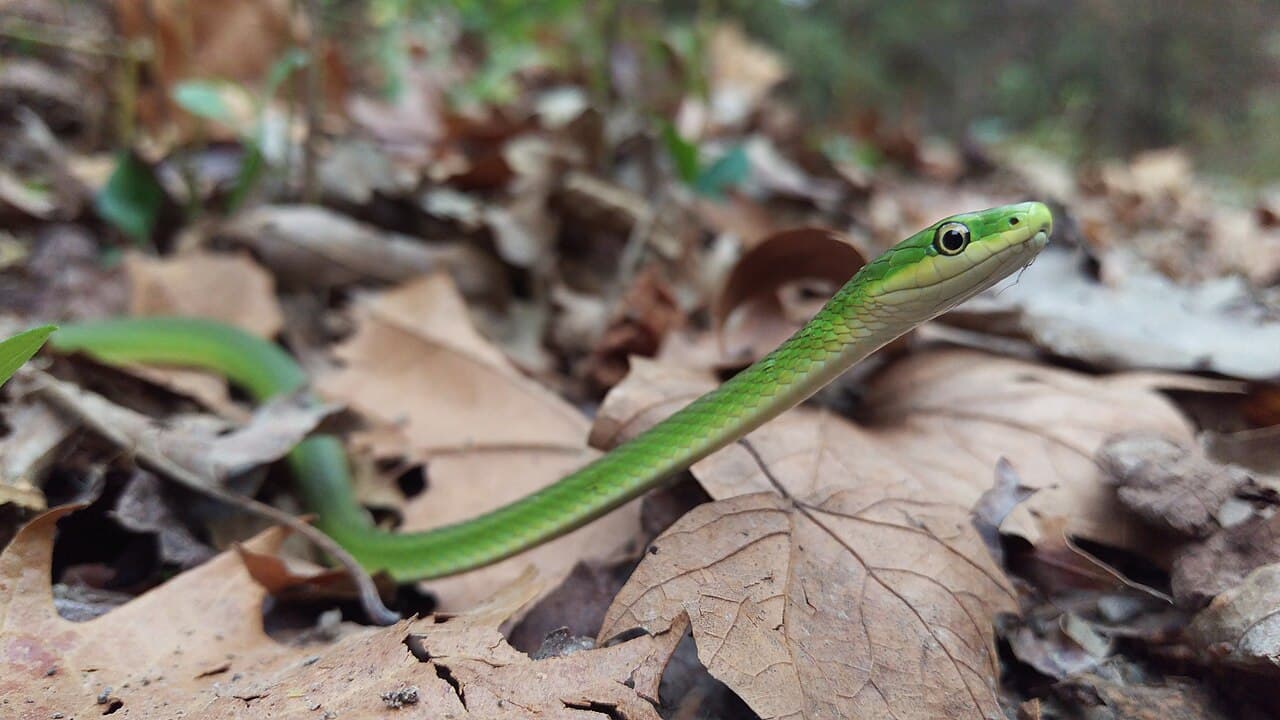
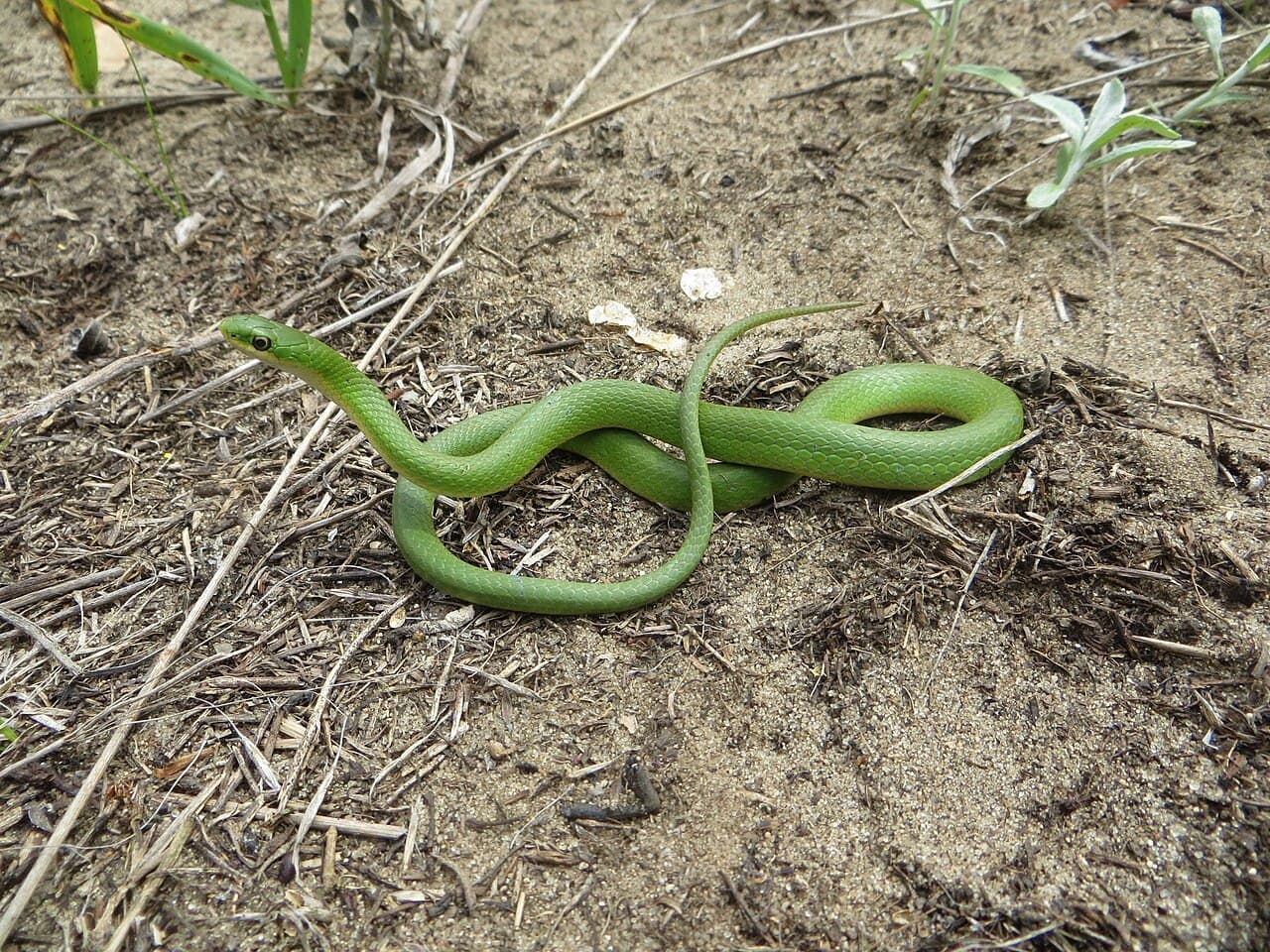
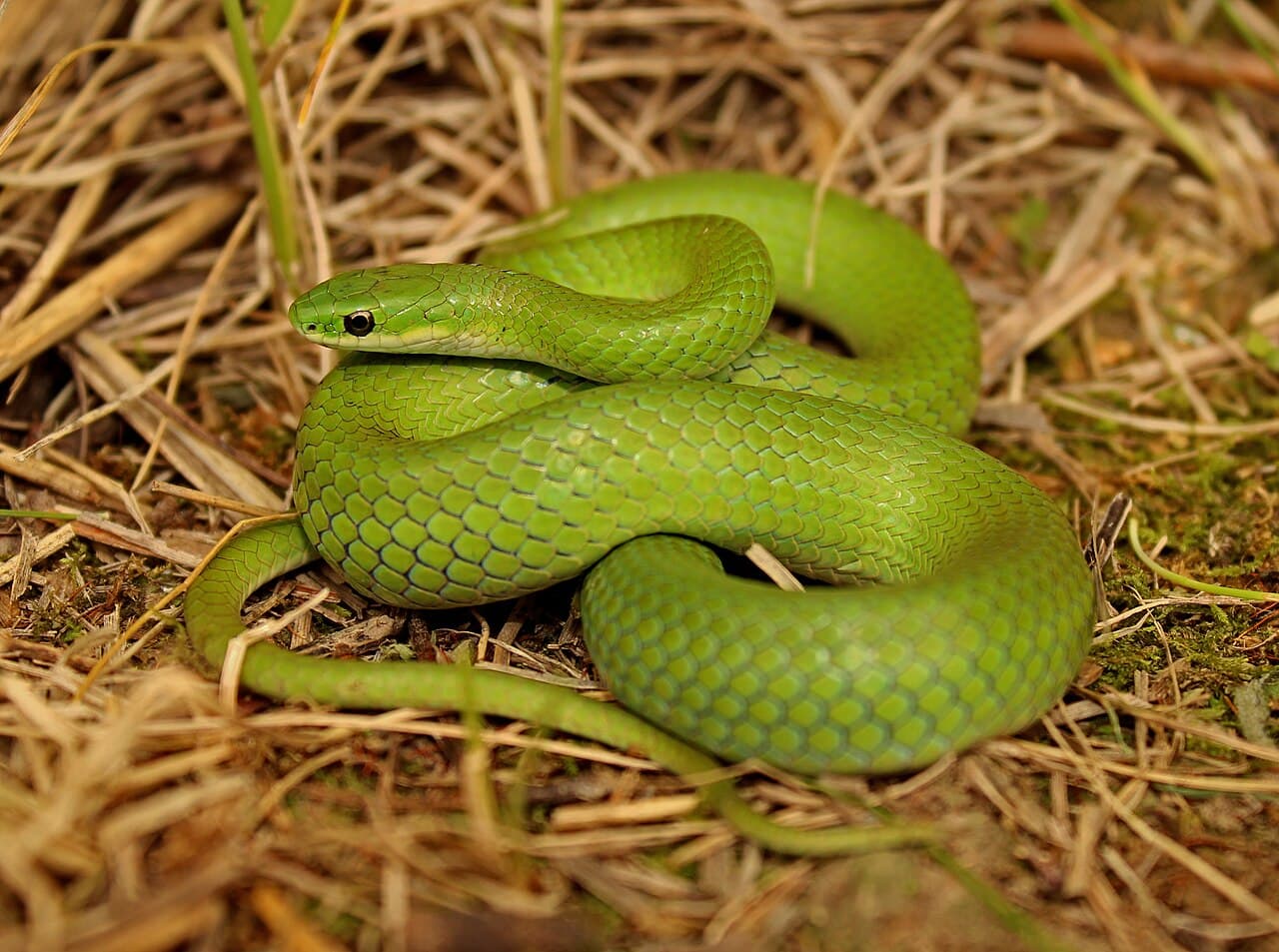
These are slender, nonvenomous colubrids whose leaf-green backs provide camouflage among grasses, shrubs and branches. A genus profile cannot assign one exact adult size, range or conservation status to every member. Species names therefore matter, and photographs here identify whether they show a rough or smooth green snake.
How rough and smooth green snakes differ
The familiar species share a narrow head, round pupils, long tapering tail and pale underside. Their clearest difference is texture. Rough green snakes have keeled dorsal scales, each with a raised ridge. Smooth green snakes have smooth dorsal scales that create a more polished appearance. Rough green snakes are also usually longer and more strongly associated with shrubs and trees.
Animal Diversity Web reports average lengths near 89 centimetres for male rough green snakes and 95 centimetres for females. Its smooth green snake account gives a usual adult range of roughly 30–66 centimetres. Green color alone is not enough for identification: recently dead specimens often turn blue as yellow pigments break down, and several unrelated snakes can also appear bright green.
Range and habitat
The genus is native to Canada, the United States and northeastern Mexico. Rough green snakes occupy much of the southeastern United States, extending north along parts of the East Coast and west through the south-central states into Mexico. Smooth green snakes occur mainly across southern Canada, the northern United States and scattered southern populations. Exact boundaries differ among species and isolated populations.
Rough green snakes favor dense vegetation along ponds, streams, forest edges, hedgerows and wet fields. They climb readily and often rest on thin branches over water or tangled plants. Smooth green snakes are more terrestrial, using meadows, prairies, bog margins, open woodland and other grassy sites. The Pennsylvania Fish and Boat Commission describes the smooth green snake as the smaller, ground-oriented counterpart of the arboreal rough green snake.
Daytime hunters hidden in vegetation
Unlike many snakes that become most active after dark, green snakes usually forage by day. Their slow, deliberate movement and matching coloration make them difficult to see even in open vegetation. A rough green snake may extend much of its body along several twigs, distributing its weight and remaining almost motionless as leaves move around it. A smooth green snake searches closer to the ground and sometimes climbs low shrubs.
Both rely on escape and camouflage rather than confrontation. When threatened, they may freeze, sway with vegetation, release defensive musk or attempt to flee. They can bite if restrained, but their small teeth and lack of venom make them a low danger to people. Handling should still be avoided because their light bodies are easily injured and capture causes stress.
An insect-centered diet
Green snakes feed mainly on small invertebrates. Caterpillars, grasshoppers, crickets, spiders and soft-bodied insects are common prey. They search through foliage and grass, visually locating movement before making a quick strike. Prey is generally swallowed alive rather than constricted.
This diet gives the snakes an ecological role distinct from rodent-eating rat snakes. By consuming herbivorous and predatory arthropods, they participate in the complex regulation of meadow and woodland-edge food webs. Green snakes are themselves eaten by birds, larger snakes, frogs and mammals. Eggs and hatchlings face especially high predation.
Breeding, eggs and winter dormancy
Green snakes mate during the warm season and lay small clutches of soft-shelled eggs in humid protected sites such as rotting wood, loose soil, leaf litter or spaces beneath rocks. Clutch size and incubation vary by species and climate. Females may share favorable nesting places, so several clutches can sometimes occur together. Hatchlings receive no parental care and begin hunting tiny prey soon after emergence.
In cold parts of the range, smooth green snakes spend winter below the frost line in burrows, rock crevices or other sheltered retreats. Rough green snakes also use protected winter refuges near the northern edge of their distribution. Seasonal dormancy reduces energy use when insects are scarce and temperatures are too low for effective movement.
Conservation varies from place to place
No single conservation label applies to the entire genus. Smooth and rough green snakes remain broadly distributed, yet local populations can decline or disappear. Prairie conversion, wetland drainage, removal of hedgerows, intensive mowing and pesticide use eliminate cover or reduce insect prey. Roads and development fragment the moist corridors used by rough green snakes.
Regional status can be much more serious than a range-wide assessment suggests. Pennsylvania lists the smooth green snake on its watchlist and the northern rough green snake as a species of concern in the state. Maintaining pesticide-free meadow margins, shrubs along water and connected forest edges benefits the snakes and their prey.
Watching green snakes responsibly
The safest observation is from a short distance without lifting the animal or stripping vegetation around it. A snake crossing a trail should be allowed to move away. Property owners can help by retaining native shrubs, delaying mowing in wildlife areas, reducing pesticide use and keeping cats indoors.
Wild green snakes generally fare poorly when collected. They require specialized insect diets, suitable humidity and carefully arranged cover, and many refuse food after capture. Local laws may also protect native reptiles. A wild individual should remain in its habitat; injured snakes should be referred to an authorized wildlife rehabilitator.