
Home/Animals/Insecta/Ground Beetle
Animal group

Ground Beetle

Carabidae

A worldwide beetle family whose fast-running predators and seed eaters shape soil-surface food webs.

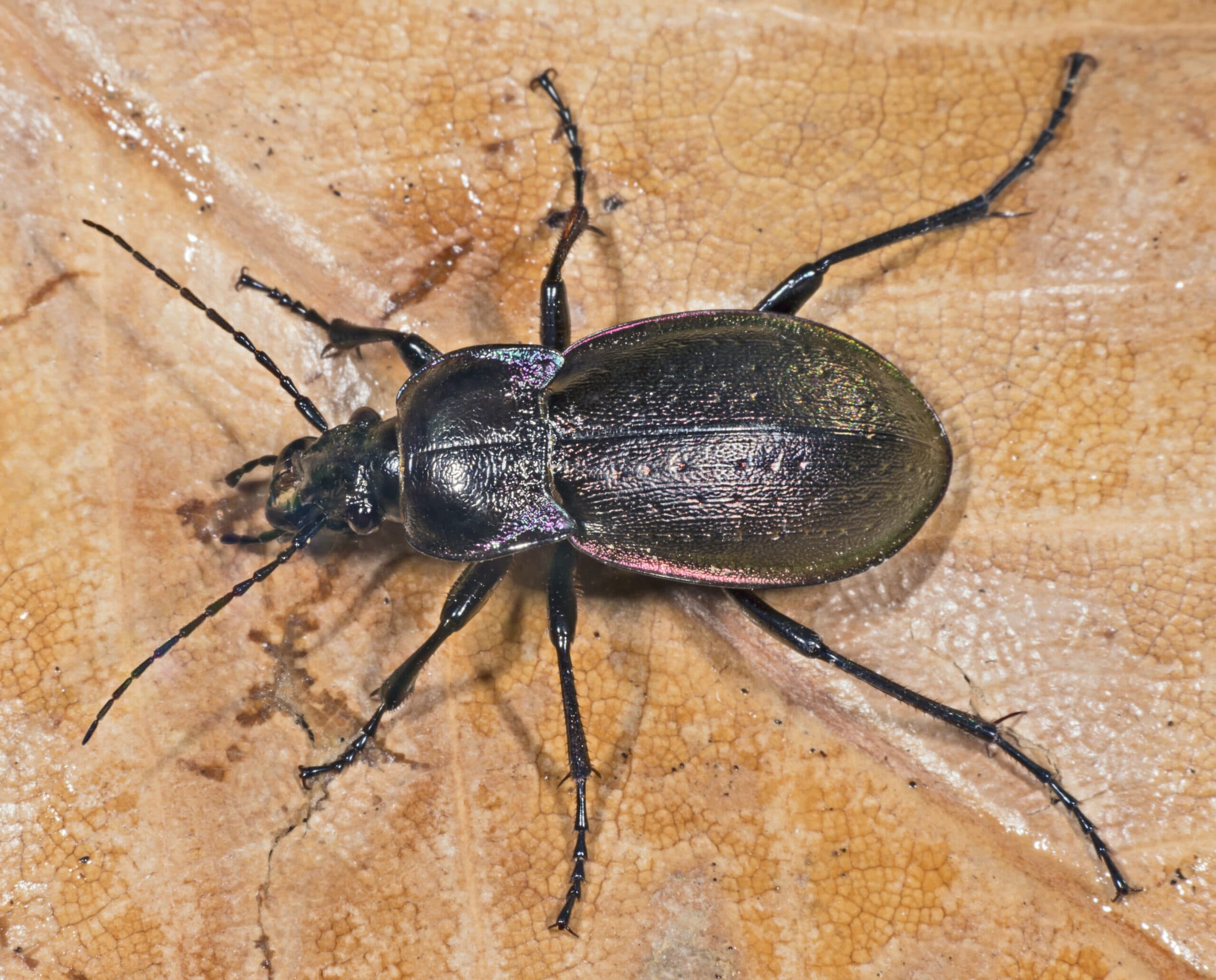
Wood ground beetle Carabus nemoralis shown as a representative carabid
Didier Descouens / Wikimedia Commons / CC BY-SA 3.0
🌐 Read in Language:

⚡ At a Glance

Animal group
Also Known As
Carabids, ground and tiger beetles
Diet Category
Mostly predatory or omnivorous; many species also destroy weed seeds
Activity Rhythm
Many are nocturnal surface runners, with important day-active and specialized exceptions.
Wild Lifespan
Adults of some species live 1–4 years; family-wide variation is large
Typical Weight
No meaningful family-wide range
Conservation Status
Varies by species
💡 Key Biological Insight: Carabids can suppress both insect pests and weeds because many eat prey as well as seeds.

🌳 Scientific Taxonomy Hierarchy

Ground beetles are the family Carabidae in the beetle order Coleoptera. The family contains tens of thousands of species, including tiger beetles in modern classifications.

KingdomAnimalia
PhylumArthropoda
ClassInsecta
OrderColeoptera
FamilyCarabidae

Distinguishing Anatomical Features

  • ✓Long running legs
  • ✓Threadlike antennae
  • ✓Strong chewing mandibles
  • ✓Often grooved hardened forewings
  • ✓Usually flattened elongated body

📏 Physical Measurements

Total Lengthroughly 0.08–1.8 in
Body WeightNo meaningful family-wide range
Tail LengthNot applicable
WingspanHighly variable; many species rarely fly or have reduced wings
Top SpeedNo family-wide maximumSome tiger beetles are exceptionally fast visual hunters.

🎨 Appearance & Distinctive Markings

BlackBrownBronzeGreenBluePurple

Skin / Covering: Hard chitinous exoskeleton

Sexual Dimorphism: Sex differences vary by species and may be subtle without close examination.

🗺️ Geographic Distribution & Habitat

Ground beetles occur worldwide except Antarctica. Each species has its own native range; the mapped countries illustrate the family’s global reach rather than a single species distribution.

Soil surfaces, litter, logs, fields, forests, grasslands, deserts, shores, caves, wetlands and gardens.

Country-level distribution map

Native range
FijiTanzaniaWestern SaharaCanada — Native rangeUnited States — Native rangeKazakhstanUzbekistanPapua New GuineaIndonesiaArgentina — Native rangeChileCongo - KinshasaSomaliaKenya — Native rangeSudanChadHaitiDominican RepublicRussiaBahamasFalkland IslandsNorwayGreenlandFrench Southern TerritoriesTimor-LesteSouth Africa — Native rangeLesothoMexico — Native rangeUruguayBrazil — Native rangeBoliviaPeruColombiaPanamaCosta RicaNicaraguaHondurasEl SalvadorGuatemalaBelizeVenezuelaGuyanaSurinameFrance — Native rangeEcuadorPuerto RicoJamaicaCubaZimbabweBotswanaNamibiaSenegalMaliMauritaniaBeninNigerNigeriaCameroonTogoGhanaCôte d’IvoireGuineaGuinea-BissauLiberiaSierra LeoneBurkina FasoCentral African RepublicCongo - BrazzavilleGabonEquatorial GuineaZambiaMalawiMozambiqueEswatiniAngolaBurundiIsraelLebanonMadagascarPalestinian TerritoriesGambiaTunisiaAlgeriaJordanUnited Arab EmiratesQatarKuwaitIraqOmanVanuatuCambodiaThailandLaosMyanmar (Burma)VietnamNorth KoreaSouth KoreaMongoliaIndia — Native rangeBangladeshBhutanNepalPakistanAfghanistanTajikistanKyrgyzstanTurkmenistanIranSyriaArmeniaSwedenBelarusUkrainePolandAustriaHungaryMoldovaRomaniaLithuaniaLatviaEstoniaGermany — Native rangeBulgariaGreeceTürkiyeAlbaniaCroatiaSwitzerlandLuxembourgBelgiumNetherlandsPortugalSpain — Native rangeIrelandNew CaledoniaSolomon IslandsNew Zealand — Native rangeAustralia — Native rangeSri LankaChina — Native rangeTaiwanItaly — Native rangeDenmarkUnited Kingdom — Native rangeIcelandAzerbaijanGeorgiaPhilippinesMalaysiaBruneiSloveniaFinlandSlovakiaCzechiaEritreaJapan — Native rangeParaguayYemenSaudi ArabiaCyprusMoroccoEgyptLibyaEthiopiaDjiboutiUgandaRwandaBosnia & HerzegovinaNorth MacedoniaSerbiaMontenegroKosovoTrinidad & TobagoSouth Sudan
Highlighted countries are recorded profile locations, not precise biological range boundaries.Map boundaries: Natural Earth

💡 Did You Know?

  • 💡Long legs for rapid ground movement
  • 💡Strong mandibles for prey or seeds
  • 💡Elytra protect the abdomen and flight wings
  • 💡Chemical glands deter predators
  • 💡Sensitive antennae detect food and surroundings

🌿 Conservation Status & Threats

No single assessment recorded

“Carabidae has no single IUCN category. Widespread species can be common while cave, island, dune and mountaintop endemics may be highly vulnerable.”

CITESNo family-wide CITES listing

⚠️ Major Threats to Ground Beetle

  • •Habitat loss and fragmentation
  • •Broad-spectrum pesticides
  • •Intensive tillage and removal of ground cover
  • •Artificial lighting
  • •Altered fire and water regimes
  • •Climate change affecting specialized species

🔄 Life Cycle & Reproduction

Wild vs. Captivity Lifespan Comparison

🌿 In the WildOften one annual generation; adults of some species live 1–4 years
🏠 In Captivity (with veterinary care)No meaningful family-wide figure
Clutch / Litter SizeOften tens to hundreds of eggs, with major differences among taxa
Incubation / GestationDevelopment time depends on taxon and temperature
Fledging / WeaningNot applicable; larvae pupate in soil before adult emergence
Sexual MaturityReached in the adult beetle stage
Mating SystemInsect mating systems differ across the family
Nesting / Den TypeEggs usually placed singly in soil or surface residue

🦅 Behavior & Field Ecology

Predator, omnivore or seed eater depending on species

🌐 Ecological Food Web & Relationships: Carabids regulate invertebrates and weed seeds, serve as prey, and are widely used as indicators of soil-surface biodiversity and environmental change.

Social Group SizeUsually solitary hunters or foragers
Activity RhythmMany are nocturnal, while tiger beetles and other lineages may hunt by day.
Feeding StrategyPredator, omnivore or seed eater depending on species

🥩 Primary Prey & Preferred Diet

✓ Caterpillars and insect larvae✓ Fly maggots and wireworms✓ Slugs and snails✓ Aphids and other arthropods✓ Weed seeds

📢 Communication & Territorial Signals

  • Chemical cues
  • Touch through antennae
  • Visual signals in some day-active species

🐾 Wild Temperament & Traits

• Fast-moving• Secretive• Defensive if handled

🤝 Human Interaction & Pet Advisory

⚠️ Strictly Wild Species
🚫

Can You Keep a Ground Beetle as a Pet?

Generally best left in habitat; specialist insect keepers must identify species and meet lawful care needs.

Domestication StatusWild insects; not domesticated.
Danger to HumansVery low
Economic & Ecotourism RoleBiological control, weed-seed consumption, ecological research and biodiversity monitoring.

⚠️ Behavioral Risk Factors & Wildlife Safety

  • Large species may pinch if handled
  • Defensive chemicals may irritate skin or eyes

🌐 Ecological Food Web & Relationships

Species in this group

  • Wood Ground Beetle — Carabus nemoralis
  • Fiery Searcher — Calosoma scrutator
  • Bombardier Beetle — Brachinus species

🦅 Natural Predators (3)

BirdsAves
Small MammalsMammalia
SpidersAraneae

🧬 Related Species (3)

LadybugsCoccinellidaeDifferent beneficial beetle family, often focused on plant-dwelling prey
Rove BeetlesStaphylinidaeDifferent ground-associated beetle family with shortened elytra
Darkling BeetlesTenebrionidaeDifferent beetle family often confused with dark carabids

A family, not a single beetle

“Ground beetle” usually means a member of the family Carabidae, a vast branch of the beetle order Coleoptera. The name covers tens of thousands of species rather than one animal with one size, diet or conservation status. Tiger beetles are also included within Carabidae in modern classifications, although their speed, large eyes and daytime hunting make them look different from the dark beetles commonly found under logs.

Carabids live on every continent except Antarctica. They occupy forests, grasslands, deserts, tundra, riverbanks, seashores, caves, farms and city gardens. Many spend most of their lives on or beneath the soil surface, but some climb plants, live beside water or run across open sand. Any general profile therefore describes family-wide patterns and must leave room for major exceptions.

Recognizing a carabid

Many ground beetles have a flattened, elongated body, long running legs, threadlike antennae and prominent chewing jaws. Hardened forewings called elytra usually show lengthwise grooves. Black and brown are common, but bronze, green, blue and purple metallic colors occur. Adults range from only a few millimetres to more than 4 centimetres, depending on species.

Identification can be difficult because darkling beetles, rove beetles and other ground-dwelling insects may look similar. Carabids generally have the first abdominal segment divided by the large hind-leg sockets, a feature used by specialists. A photograph of one representative species cannot show the full family. The featured wood ground beetle, Carabus nemoralis, illustrates a robust predatory form but does not define every carabid.

Life close to the soil

Most familiar species shelter by day beneath stones, bark, logs, leaf litter or crop residue and emerge at night. Moisture, temperature and soil structure influence where they can hunt and hide. Field margins, hedgerows, beetle banks and undisturbed ground give adults places to overwinter and provide refuge when crops are harvested or fields are cultivated.

Some species have working hind wings and fly to new habitat, while others have reduced wings and disperse mainly by walking. Flight ability can vary even within a species. Day-active tiger beetles use vision to chase prey across open ground. Cave species may lose pigment and eyes. Shoreline species time movement around flooding. This ecological variety is one reason family-wide claims must remain broad.

Predators, seed eaters and opportunists

Many adult ground beetles and their larvae prey on caterpillars, fly maggots, aphids, wireworms, slugs, snails and other small animals. Strong mandibles grasp, cut or crush food. Hunters often search rather than wait at a fixed ambush point, following touch, odor and chemical cues through litter and soil. Larvae have a smaller search area underground and may use a narrower menu than adults.

Carabidae is not uniformly carnivorous. Many species eat weed seeds, and some combine seeds with animal prey. A few feed enough on crop seed or seedlings to become pests locally. Penn State and University of Maryland extension sources describe carabids as valuable contributors to biological control, but they are one part of a food web, not a complete replacement for monitoring and integrated pest management.

Complete metamorphosis

Ground beetles pass through egg, larva, pupa and adult stages. Females usually place eggs singly in soil or surface litter. The elongated larva has six legs, strong jaws and visible body segments. It hunts or consumes seeds underground, molts through several stages and then pupates in a soil chamber before emerging as an adult.

Many temperate species produce one generation per year, but timing varies widely. A species may overwinter as an adult, larva or occasionally another stage. Penn State notes that adults of some species live one to four years. Reproductive schedules, clutch totals and lifespan cannot be assigned uniformly to a family containing so many lineages and climates.

Defenses and predators

Speed and hiding are the first defenses for many carabids. Glands near the end of the abdomen can release unpleasant or irritating chemicals that deter attackers. Bombardier beetles, which belong to Carabidae, take chemical defense to an extreme by ejecting a hot pulsed spray. Other species rely on strong jaws, armor, metallic warning colors or camouflage against soil and litter.

Ground beetles are eaten by birds, small mammals, reptiles, amphibians, spiders and larger arthropods. Their eggs and soft-bodied larvae are especially vulnerable underground. Chemical defenses do not make them dangerous household pests. A beetle handled roughly may pinch or release an odor, but ground beetles do not infest people, transmit human disease or damage buildings.

Why farmers and gardeners value them

Carabids patrol exactly where many pests spend vulnerable stages: at the soil surface, under residue and among low plants. A diverse community can consume pest larvae and weed seeds before they become visible problems. Different body sizes and feeding preferences spread that pressure across seasons and prey types. Their abundance can also help scientists evaluate how management affects farmland biodiversity.

Reduced tillage, permanent field edges, cover crops and patches of dense ground vegetation can improve shelter and prey supply. Broad-spectrum insecticides may kill beneficial beetles along with targets. Bare, frequently disturbed soil removes refuges. Conservation does not mean importing unknown beetles; it means protecting locally occurring communities and using pesticides only when monitoring shows they are needed.

Ground beetles around homes

Adults sometimes wander indoors through gaps or gather near bright exterior lights. They do not establish household colonies because indoor rooms lack suitable moist soil, prey and seasonal shelter. Sweep or cup them up and release them outdoors. Sealing door thresholds, repairing screens and switching unnecessary bright white lights near entrances to warmer or yellow lighting reduces accidental visitors.

In gardens, leave some leaf litter, stones and low plants where beetles can shelter, while keeping heavy debris away from foundations if indoor entry is a concern. Avoid treating every dark beetle as a pest. A clear photograph from above and the side can help an extension office or natural-history platform narrow the identification without injuring the animal.

Species-specific conservation

Carabidae has no single IUCN category or global population trend. Widespread agricultural species may be abundant, while beetles confined to one cave, island, dune system or mountaintop can be highly vulnerable. Habitat loss, intensive tillage, pesticides, artificial lighting, altered fire and water regimes, invasive species and climate change affect different carabids in different ways.

Protecting varied microhabitats supports the family’s ecological work. Logs, litter, field margins, wet depressions and sandy openings each favor different species. Because carabids respond quickly to environmental change and are readily sampled with pitfall traps, researchers often use their communities as indicators. The useful lesson is diversity: a functioning landscape needs more than one famous predator.

Sources

❓ Frequently Asked Questions

Answers to frequently asked questions verified against peer-reviewed zoological research.

Most are harmless and beneficial. A large beetle may pinch or release defensive chemicals if handled, but carabids do not infest people or damage buildings.